Butterflies in Room 6 by Caroline Arnold

Published by Charlesbridge
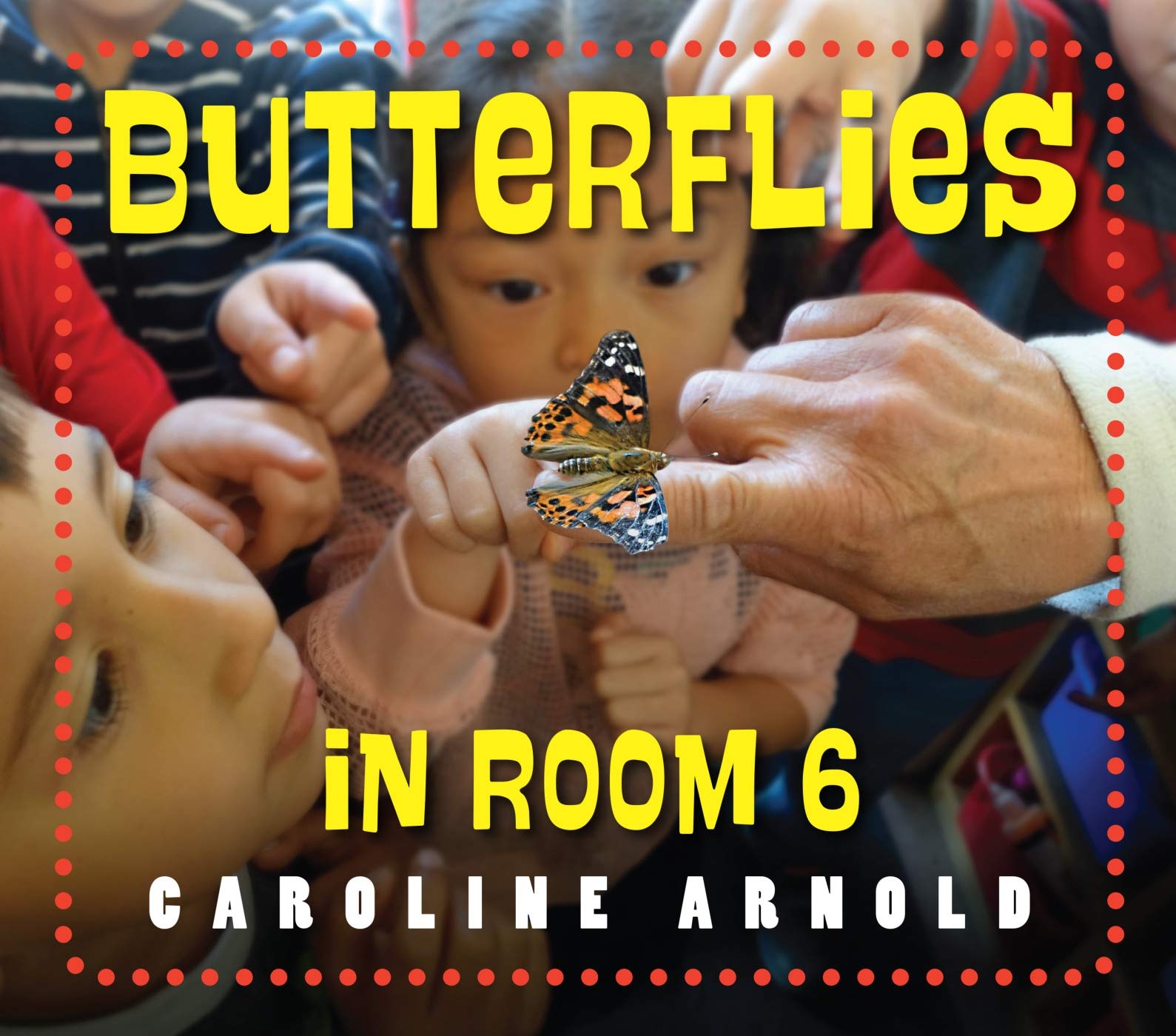
Image result for butterflies in room 6 amazon

Image result for butterflies in room 6 caroline arnold

Summary:  Mrs. Best’s kindergarten class, featured in Hatching Chicks in Room 6, is back, this time hatching butterflies.  The kids are shown observing eggs, caterpillars, chrysalises, and finally, full-grown painted lady butterflies.  They do more than observe, feeding the caterpillars, helping to move them to the cup where they’ll build their chrysalises, and getting to (gently) hold butterflies before releasing them.  Photos and text provide plenty of information about each step in the process. The camera captures kids’ expressions from concentrated attention to wonder to joy on the last page as their butterflies fly away.  Includes a page of questions; vocabulary; and lists of websites and books for more information. 40 pages; ages 4-8.

Pros:  I’d like to spend a few days hanging out in Mrs. Best’s room.  The kids look like they’re having a ball, and learning about science in the process.  There’s plenty of information about the butterfly’s life cycle; integrating it with a real class makes it accessible to young kids.

Cons:  You just know some kid is going to take the fact that larva poop is called frass and run with it.

If you would like to buy this book on Amazon, click here.
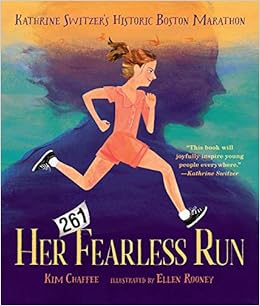
 

Her Fearless Run by Kim Chaffee, illustrated by Ellen Rooney

Published by Page Street Kids

Image result for her fearless run amazon

Summary:  Growing up in the 1950’s, Kathrine Switzer loved to run at a time when girls weren’t encouraged to pursue athletics.  At Lynchburg College, she was recruited for the men’s track team. When she transferred to Syracuse University, she was no longer allowed to compete, but she still worked out with the men.  Their coach had run the Boston Marathon many times, and Kathrine decided she wanted to try it. Registering as “K. V. Switzer”, she became the first officially registered woman to complete the race (Bobbi Gibb entered as a “bandit”, running the Boston Marathon in 1966).  When asked by reporters why she had done it, she replied simply, “I like to run. Women deserve to run too.” Includes an author’s note, a note about women and the Boston Marathon, and a bibliography. 40 pages; grades K-5.

Pros:  It’s a compelling sports story, and Kathrine comes across as down-to-earth and someone who young readers will relate to.  

Cons:  Bobbi Gibb is mentioned in the women and the Boston Marathon note as someone who completed the marathon “after hiding in the bushes and slipping into the race”, which discounts her achievement as somewhat sneaky.  This is misleading…read a more complete account of her story in last year’s Girl Running.

If you would like to read this book on Amazon, click here.


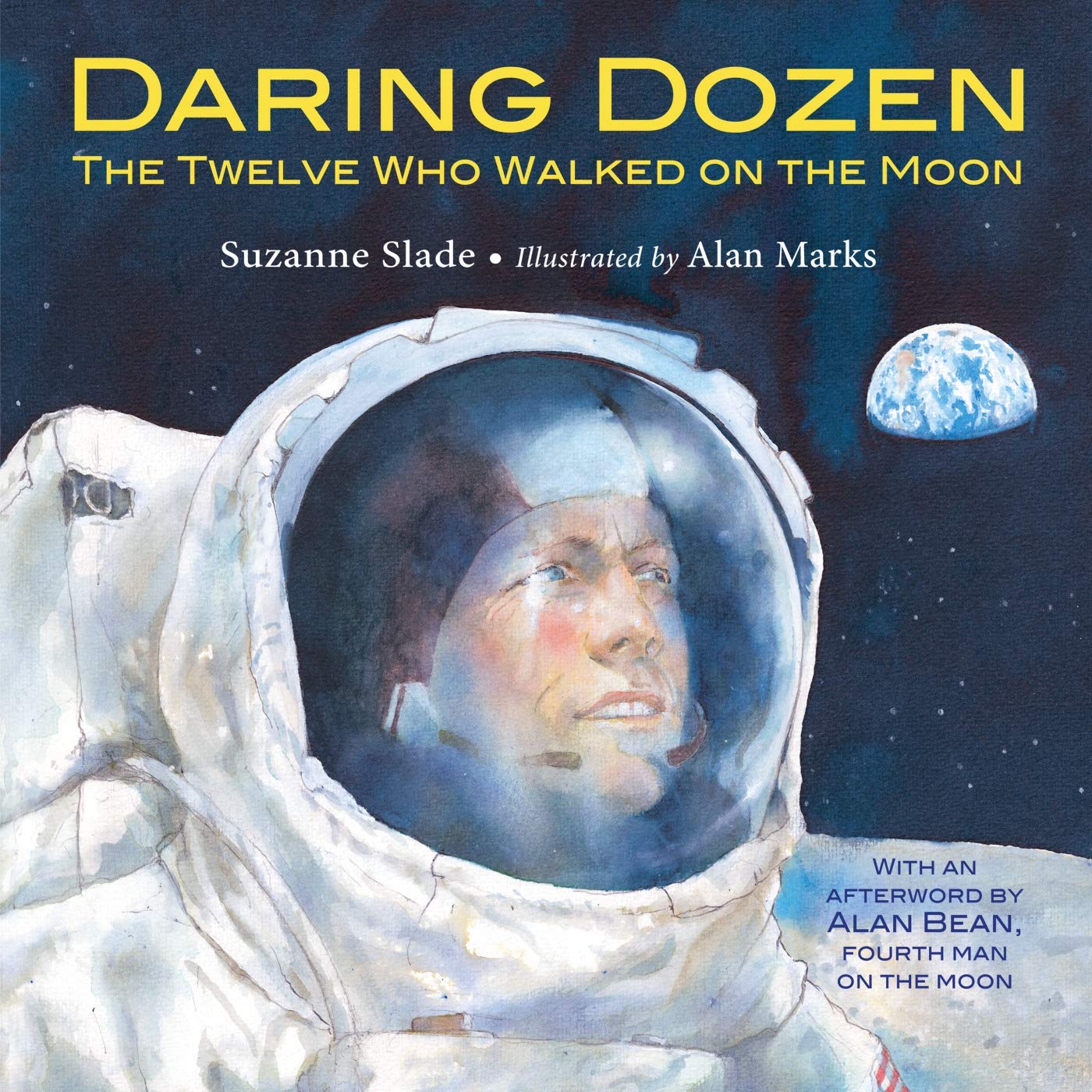
Daring Dozen: The Twelve Who Walked on the Moon by Suzanne Slade, illustrated by Alan Marks, with an afterword by Alan Bean, fourth man on the moon

Published by Charlesbridge

Image result for daring dozen

Image result for daring dozen

Summary:  Everyone knows the names Neil Armstrong and Buzz Aldrin, the first men to walk on the moon, but maybe not Gene Cernan and Jack Schmitt, the last men to do so.  In between were eight more who traveled to the moon between 1969 and 1972. This book has a few pages about each of the Apollo missions, 8 through 17, the astronauts who traveled on them, and what they accomplished on each trip.  The back matter includes an afterword by astronaut Alan Bean; a timeline to the moon from 1958-1972; additional information about the space vehicles used; and a page on each mission with photos, facts, and a summary paragraph.  48 pages; grades K-5.

Pros:  A fascinating look at the men who were well-known in their time, but tend to be forgotten today.  The author reminds readers of the courage it took, and the danger that accompanied all the missions.  She ends the timeline with the present, stating that lunar missions are currently being planned, and that kids may some day walk on the moon.

Cons:  There’s not much background given on the Apollo missions; page 1 begins with Apollo 11’s lunar module approaching the moon.

If you would like to buy this book on Amazon, click here.


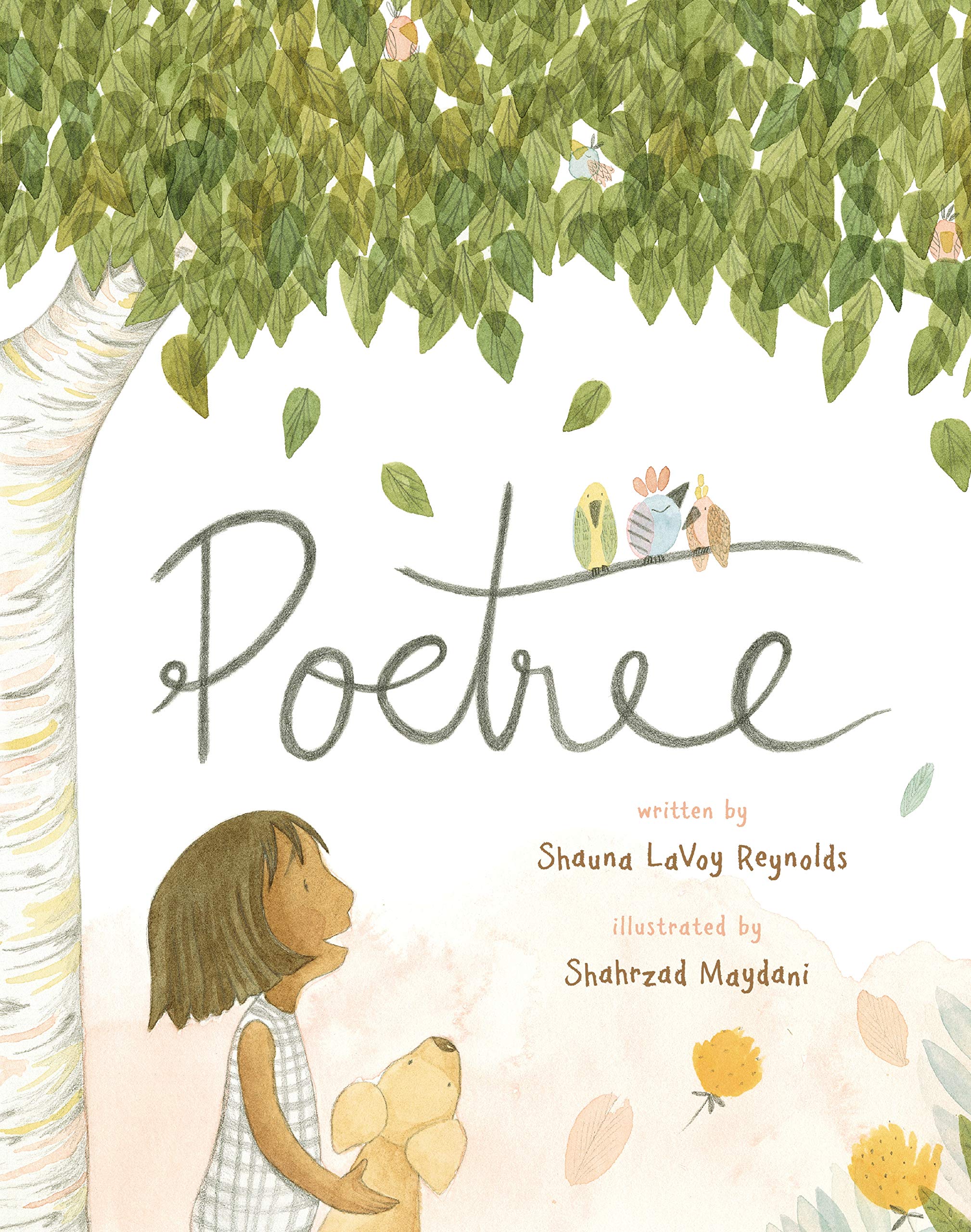
Poetree by Shauna LaVoy Reynolds, illustrated by Shahrzad Maydani

Published by Dial Books for Young Readers

Image result for poetree amazon

Image result for poetree maydani

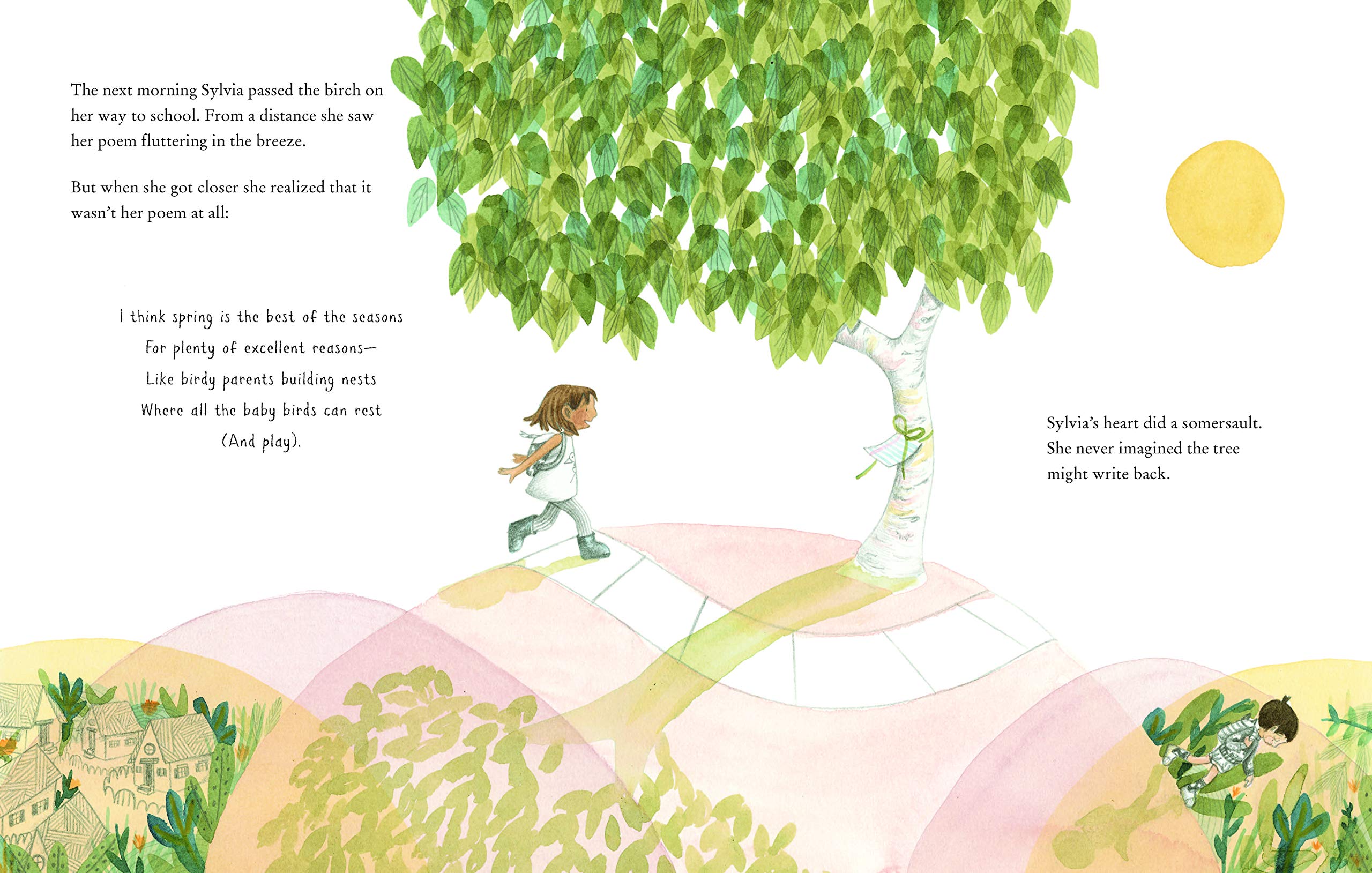
Summary:  When Sylvia celebrates spring by writing a poem, she decides to share it with a birch tree in the park, tying it around the trunk.  The next day, there’s a new poem tied to the tree, and Sylvia can’t believe it–the tree has written back! She thinks about the tree during school, which helps distract her from Walt, the most annoying boy in her class.  The class studies haiku, and Sylvia shares her creation with the tree on the way home. Once again, her efforts are reciprocated the next day. A few days later, on a visit to the tree, who should appear but Walt, who actually starts acting nice.  It turns out it is Walt, not the tree, who is writing the poems. He writes one on the spot to commemorate the beginning of their friendship: “If you want to share a poem with me/Give it to the tall birch tree/Or if you need a friend for writing/Playing with, or sit beside-ing/I’ll be here for you joyfully/Right beneath the Poetree.”  32 pages; ages 4-9.

Pros:  This lovely story of a new friendship would also make a perfect introduction to a poetry unit.

Cons:  Walt seems like a good guy…so why is he so mean at school?

If you would like to buy this book on Amazon, click here.

Gloria Takes a Stand: How Gloria Steinem Listened, Wrote, and Changed the World by Jessica M. Rinker, illustrated by Daria Peoples-Riley

Published by Bloomsbury Children’s Books

Image result for gloria takes a stand amazon

Image result for gloria takes a stand jessica rinker

Summary:  From the time she was a young girl, Gloria Steinem enjoyed learning more about the world around her.  After graduating from Smith College, she became a journalist, but grew frustrated when she was assigned articles about celebrities and scandals.  In 1971, she and Dorothy Pitman Hughes started Ms. magazine, the first magazine owned and written by women, that allowed her to write the kinds of articles she wanted.  She also became known as a speaker during a time that women were advocating for equal rights. Although girls today grow up in a much different world from the one Gloria experienced, she continues to work for equal rights for all.  Includes author’s and illustrator’s notes, a timeline of U.S. women’s history, and a bibliography. 48 pages; grades 2-5.

Pros:  An interesting look at a woman who has worked for equal rights for more than half a century.  The Ms. magazine covers on the endpapers are a fun way to see some of the other women who have been influential in this area.

Cons:  The text was somewhat rambling; I think the story could have been told in 32-40 pages.

If you would like to buy this book on Amazon, click here.
 

Focused by Alyson Gerber

Published by Scholastic Press

Image result for focused gerber amazon

Summary:  Clea’s managed to do okay in school until she hits seventh grade.  This year she’s more aware than ever of how her racing thoughts, distractibility, and tendency to blurt out whatever she’s thinking are affecting her at school, both academically and socially.  Her parents and teachers have noticed, too, and after a few failed assignments, they decide to get her tested for ADHD. Her diagnosis both scares and relieves Clea. As she begins to better understand how her brain works, she learns to ask for help when she needs it and use new strategies to help her succeed.  Clea’s passion is chess, and staying on the team motivates her to do well in school. With support from her friends, family, and counselors, Clea seems well on her way to success going forward. 304 pages; grades 4-7.

Pros:  Readers who have been diagnosed with ADHD, or know someone who has, will find this book enlightening and comforting.  Learning to ask for help and being kind to yourself are themes that will resonate with everyone.

Cons:  The seventh grade kids seemed preternaturally adept at dealing with their emotions and conflicts with one another.

If you would like to buy this book on Amazon, click here.
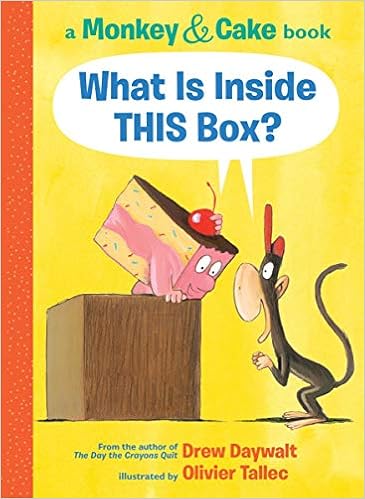
What Is Inside THIS Box? By Drew Daywalt, illustrated by Olivier Tallec

Published by Orchard Books

Image result for what is inside this box daywalt amazonImage result for what is inside this box daywalt

Summary:  Monkey claims to have a cat inside his box, but the cat will disappear as soon as the box is opened.  Cake is skeptical, until Monkey tells him he can use his own imagination to decide what the box’s contents are. Cake decides there’s a disappearing dinosaur inside.  The two friends conclude that they will never know the answer for sure, and go off for a piece of pie. The penultimate page shows a cat peeking out of the box, and on the last page, he’s riding off on the back of a big green dinosaur.  Includes some questions on the final endpaper like “Do you believe in things you can’t see?” and concludes, “Read. Laugh. Think.” 48 pages; ages 4-8.

Pros:  Another early reader series derivative of Elephant and Piggie, with two friends conversing in different colored cartoon bubbles.  The storyline, which includes a nod to Schrodinger’s cat, could provoke some interesting discussions.

Cons:  Should a slice of cake be eating a piece of pie?  

If you would like to buy this book on Amazon, click here.
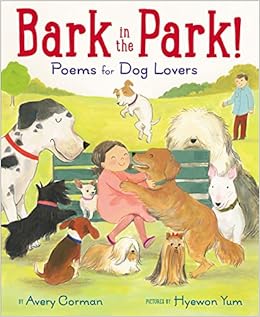
Bark in the Park: Poems for Dog Lovers by Avery Corman, illustrated by Hyewon Yum

Published by Orchard Books

Image result for bark in the park amazon

Summary:  A girl and her father walk through the city, meeting dogs of many different breeds, such as the Afghan hound: “Although he’s noble and aloof/He’s still a dog, so he still says ‘Woof!’” and the basset hound: “For things she can smell/She’s a comer and goer/She’s much like a Beagle/But longer and lower.”  38 dog breeds are covered in all, with each one getting a two- or four-line rhyme. The book concludes, “So here’s to dogs both big and little/And the others in the middle/And here’s to all the mixed breeds, too/Being friends with a dog is a dream come true.” 48 pages; ages 3-7.

Pros:  Dog lovers are almost sure to find at least one of their favorites in these pages.  The poems are short and sweet (written by the author of Kramer vs. Kramer and Oh, God!, oddly enough), and the unstintingly adorable illustrations make a perfect pairing.

Cons:  Some lines had an extra syllable or two that made them a little less than flowing.

If you would like to buy this book on Amazon, click here.

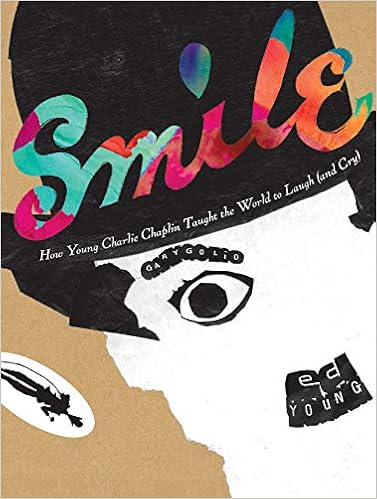
Smile: How Young Charlie Chaplin Taught the World to Laugh (And Cry) by Gary Golio, illustrated by Ed Young

Published by Candlewick

Image result for smile charlie chaplin ed young amazon

Image result for smile charlie chaplin ed young golio

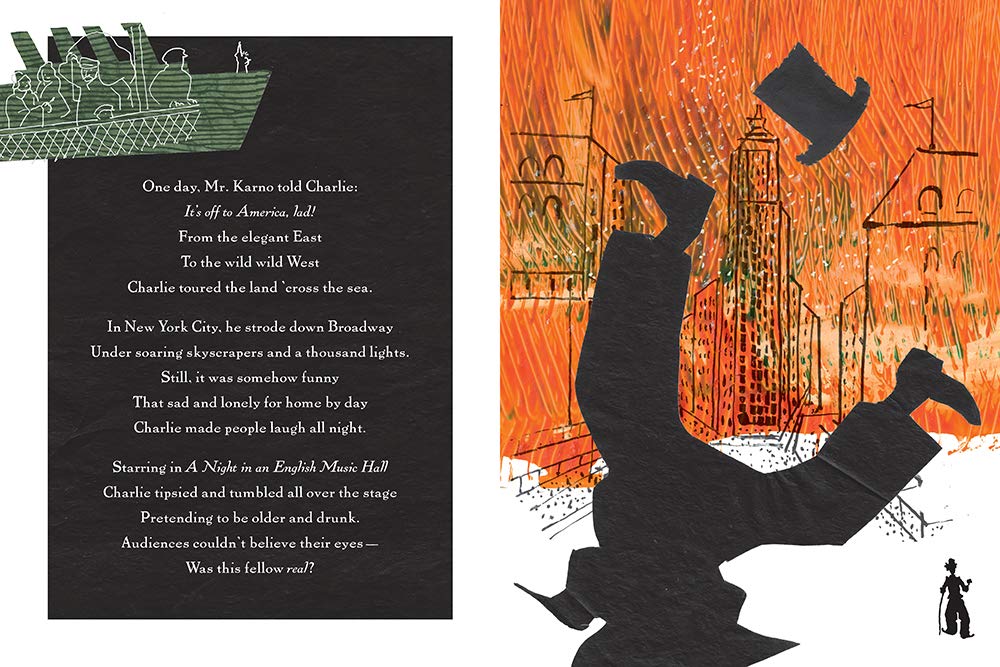
Summary: Charlie Chaplin’s life is chronicled from his impoverished childhood in London up to his creation of his iconic Little Tramp character in the early days of his movie career.  In spare text, Golio tells how the young Charlie enjoyed his mother’s stories and sometimes earned a few pennies singing and dancing in the city streets. An illness forced his mother and her two young sons into the poorhouse.  When they got out, Charlie was able to help his family when he joined a theater troupe at the age of nine. His stage career continued into adulthood, when he was spotted by Hollywood filmmaker Mack Sennett. Charlie made a movie with Sennett…it was funny, but the director wanted something even funnier.  Rummaging through the prop room, the actor found baggy pants, a small topcoat, and a bowler hat, and the Little Tramp was born. Includes an afterword, additional facts about Chaplin, and resources for further information. 48 pages; grades 2-6.

Pros:  Caldecott Medalist Ed Young has created intriguing collage illustrations that complement the brief, poetic narrative of Charlie Chaplin’s life.  Readers will enjoy the flip animation of the Little Tramp that appears in the lower right corners of the pages.

Cons:  Kids may not know who Charlie Chaplin is.

If you would like to buy this book on Amazon, click here.

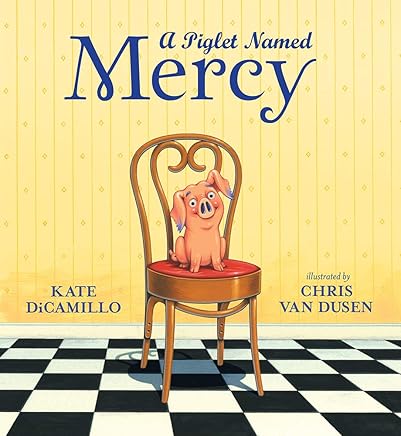
A Piglet Named Mercy by Kate DiCamillo, illustrated by Chris Van Dusen

Published by Candlewick

Image result for piglet named mercy amazon

Image result for piglet named mercy van dusen

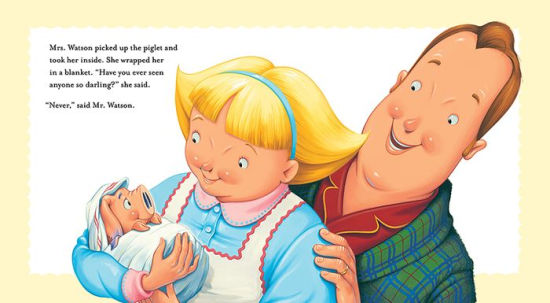
Summary:  Mercy Watson gets a backstory, as readers discover how she came to live with Mr. and Mrs. Watson when she was just a piglet.  Turns out she fell off a truck that was rumbling down Deckawoo Drive, landing not far from the Watsons’ house. It was love at first sight when the Watsons found her on their front porch.  Of course, Eugenia Lincoln gets in her two cents’ worth, while her younger sister Baby brings the piglet a bottle of milk. Mercy downs the bottle, but her fondness for buttered toast soon emerges, earning her the title of “porcine wonder” from Mr. Watson.  The last page shows Mercy in her high chair at the Watsons’ kitchen table, with everyone well on their way to happily-ever-after. 32 pages; ages 3-7.

Pros:  Mercy Watson readers will enjoy learning Mercy’s early story, while their younger siblings will get to meet all the characters that they’ll see again in the chapter books.

Cons:  I wish Kate DiCamillo would write more of the Mercy Watson early chapter books.

If you would like to buy this book on Amazon, click here.