Royal families

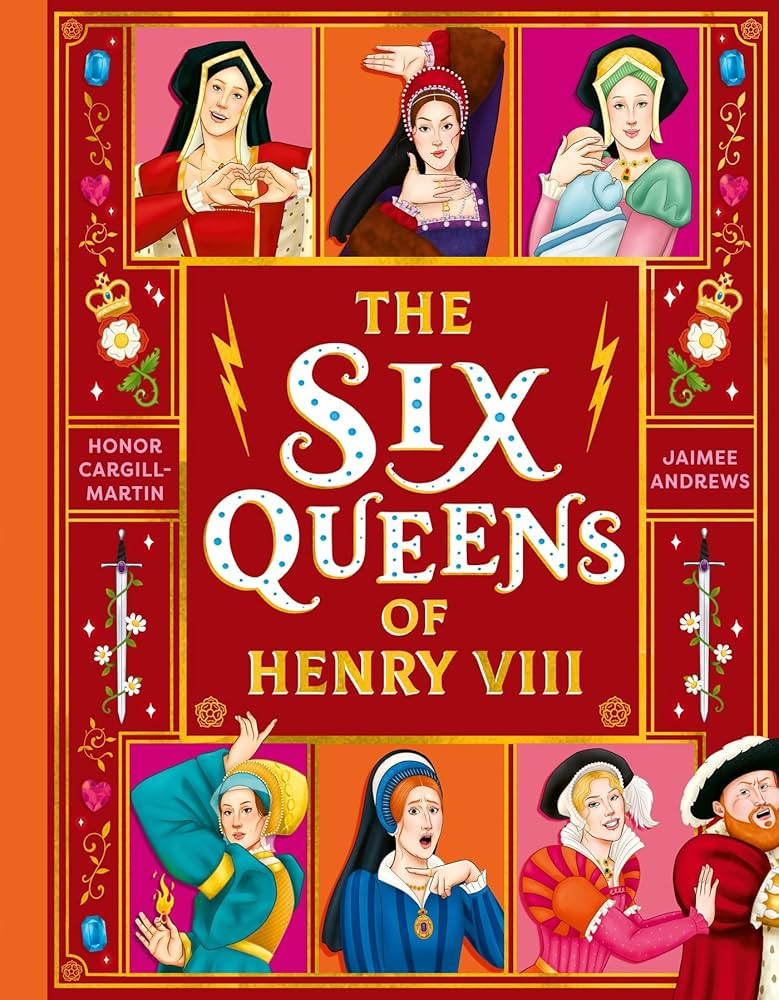
The Six Queens of Henry VIII by Honor Cargill-Martin, illustrated by Jaimee Andrews (Sourcebooks Explore, 48 pages, grades 3-8). “A Word from the Author” kicks things off by giving a brief history of the dazzling, exciting, and dangerous Tudor royal court of King Henry VIII, where six women caught the king’s eye, and, for better or worse, became queens of England. Each one is profiled with illustrations that resemble a graphic novel but contain a little more text. The emphasis is on the women, who are described as smart, educated, ambitious, and as powerful as they were allowed to be. As the author states in her introduction, “one led an army, one helped create a whole new church, and one was the first woman to publish a book under her own name in English.” After the facts of each queen’s life and marriage are given, there’s a two-page flashback scene that tells a story from the woman’s life showing her intelligence and/or courage. The book ends with a Tudor family tree, a timeline, and additional information about each of Henry’s three children, Mary, Elizabeth, and Edward.

Originally published in the UK, this book shines a spotlight on six brave, interesting, intelligent, and occasionally reckless women, relegating their husband to the background. The bold, brightly colored illustrations are lots of fun and help bring the story to life. Although there may not be a lot of interest in this topic in the US, hopefully the eye-catching cover will draw in readers who will not be disappointed.

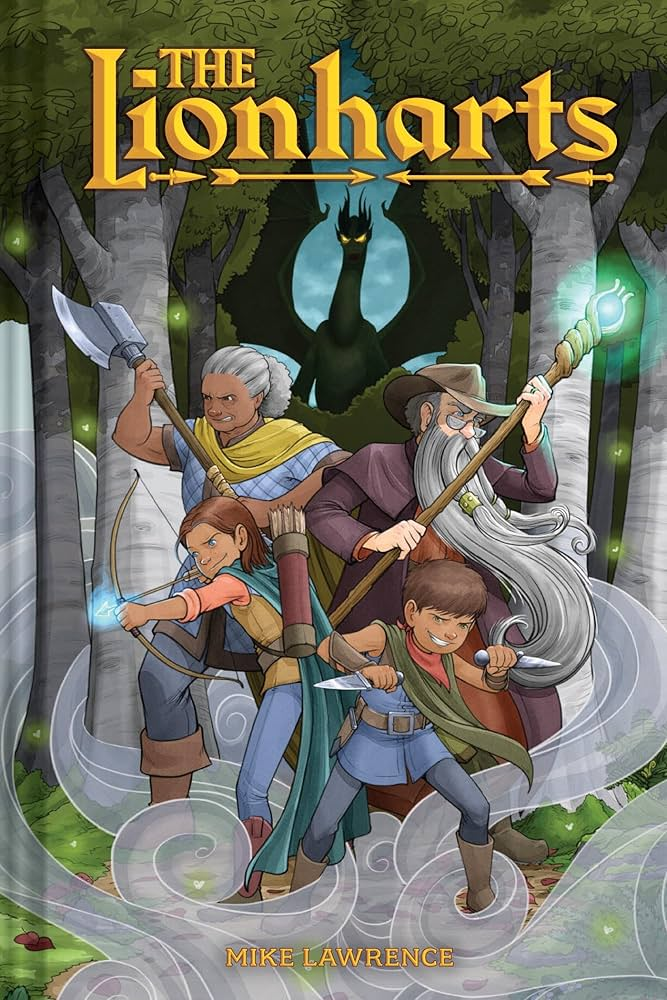
The Lionhearts by Mike Lawrence (Harry N. Abrams, 240 pages, grades 4-8). Flynt and Alder are the two sons of the renowned Lionheart family, known for fighting dragons and other troublesome creatures. While their grandparents are retired from active duty, they help out at home and with the business side of things so that the kids’ parents can go off on adventures. When the parents disappear after a mysterious woman shows up on their doorstep, the grandparents decide to come out of retirement to track them down. They insist that Flynt and Alder stay in the background, but the boys are having none of that, and when everyone realizes the enemy that they’re up against, it takes the courage, strength, and unique talents of all the Lionheart family members to defeat it. While there’s a satisfying ending for the good guys, there are also hints that their work isn’t done yet.

Although this isn’t about a royal family per se, it’s clear that the Lionhearts are treated with respect by the good people of their community and feared by the bad guys. The artwork and world building (which is based on Dungeons and Dragons) blew me away, and older elementary and middle school fantasy fans will love this graphic novel and be eagerly awaiting book 2.

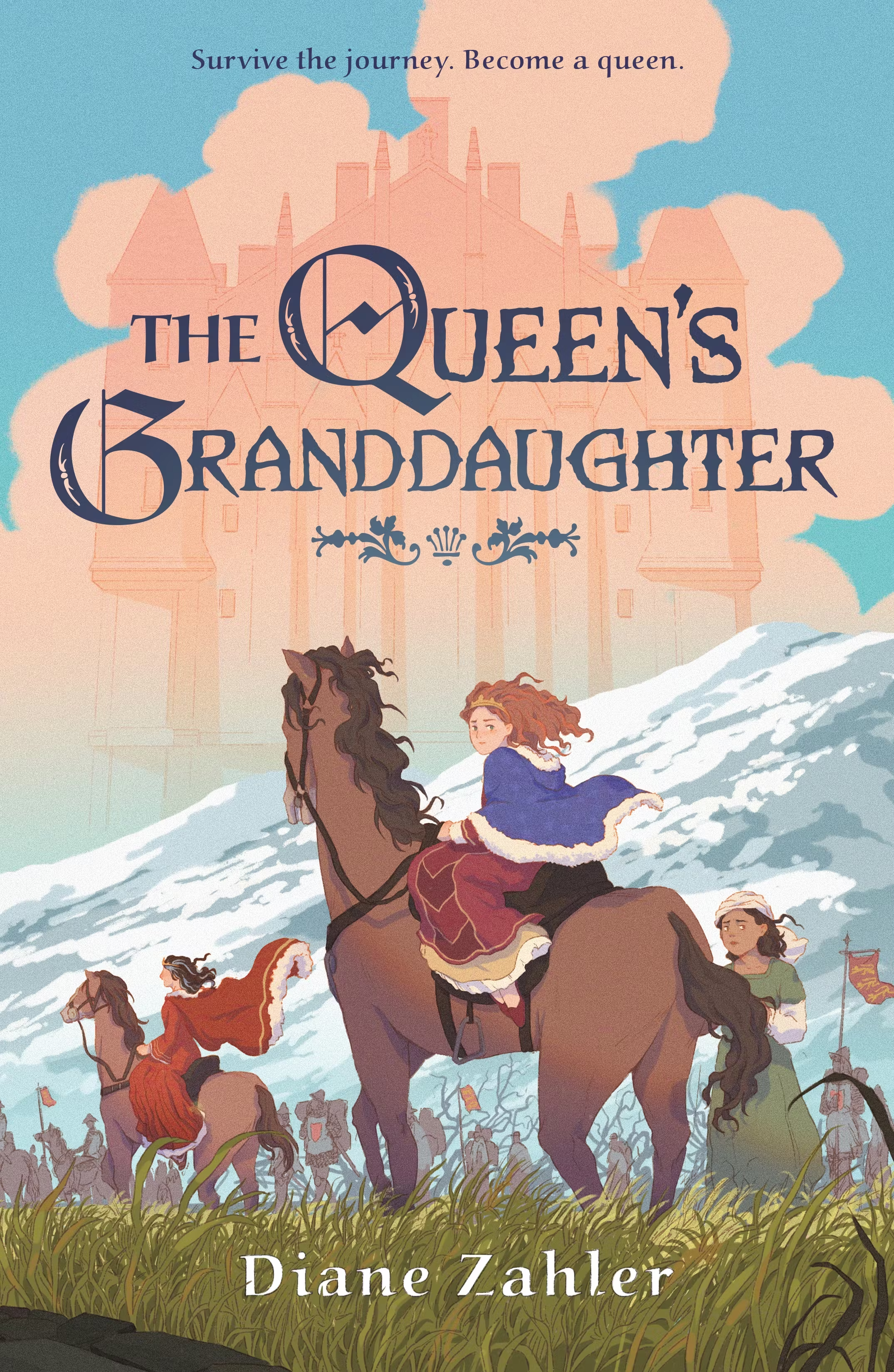
The Queen’s Granddaughter by Diane Zahler (Roaring Brook Press, 304 pages, grades 5-8). 12-year-old Blanca is excited to learn that her grandmother Eleanor (of Aquitaine) is coming to visit her family in Castille, allegedly to choose a wife for her son Prince Louis of France. Everyone is certain that Blanca’s older sister Urraca will be chosen, but at a great banquet, Eleanor makes the shocking announcement that it’s to be Blanca. Blanca is horrified to contemplate marriage, sad to leave her family, scared to move to France, but also intrigued and excited to be traveling to new places with her grandmother who is as bold and stubborn as she is. The only one from Castille who is to go with Blanca is her best friend Suna, a Muslim girl who has lived at the castle since her father died in service to the king. The travelers set off on their journey, where they face a series of dangers including a deadly blizzard and vengeful kidnappers. As she meets these challenges head on, Blanca begins to think she may have what it takes to be a queen. By the time they reach the last leg of the journey, it’s apparent that Blanca must travel to Paris alone. While she is sad to leave Eleanor and Suna, she now knows that she is ready to meet her fate. Includes additional information about Eleanor of Aquitaine, Blanca (or Blanche, as she became known), and Europe in the late twelfth century, including facts about Muslims like Suna.

It may be a challenge to convince middle schoolers to try an historical fiction novel set in the Middle Ages, but once they get to know Blanca, Eleanor, and the many other interesting characters, they’ll be hooked. The plot moves along briskly, particularly once the big journey begins, and there is plenty of page-turning adventure. I knew just about nothing about this time period, but there’s plenty of history seamlessly woven into the narrative that had me researching and learning more about the time and the people in the story.

Series starters

Phoenix (Ride On, book 1) by Kimberly Brubaker Bradley (Dial Books, 176 pages, grades 5-8). 11-year-old Harper refers to the event that blew her life up as the Bomb–her mother discovered that her dad was having an affair with the mom of Harper’s best friend Cat. Now Harper and her mom have moved to a small, dilapidated house a couple hours away from their Knoxville home and are trying to start over. The house overlooks a barn, and Harper soon finds herself curiously watching the kids who take riding lessons and beginning some tentative friendships with a few of them. When a “kill truck” transporting horses to be slaughtered dumps one of them off at the farm, Harper is immediately drawn to him, naming him Phoenix, and overseeing his near-constant care and feeding. Neither of her parents is thrilled with the idea of taking on the expense and responsibility of horse ownership, but they put off a final decision while Harper takes riding lessons and watches Phoenix slowly getting better. By the end of this series opener, Harper has discovered a love of riding and horses, has begun to reconcile with Cat, and is feeling more at home with the other kids at the barn. Includes an author’s note describing her own love of horses and how it evolved over many years.

This is a fun and fast read, introducing a lot of interesting characters and situations, and will appeal to anyone with even the slightest interest in horses. There are lots of storylines left open to lay the groundwork for book 2. It’s a little tough to say what age it’s best for–the whole dad cheating on mom situation feels like more of a middle school topic, while Harper and her friends are on the younger side for those readers.

Relic Hamilton, Genie Hunter by Joseph Coelho, illustrated by Hyun Song We (Candlewick, 288 pages, grades 4-7). 12-year-old Relic Hamilton lives with his grandfather in an apartment over the antiques store they run in London. One day while helping out in the store, Relic polishes an old lamp he finds, releasing an evil genie that sends his grandfather into a coma. This leads Relic to the discovery that Grandfather is a member of a genie-hunting society, a group that soon recruits Relic to try to help heal his grandfather. Relic is sent on an undercover mission to a school where he meets Taya, a girl who’s been taken over by the powers of the evil genie. The two of them inadvertently travel back through time where they meet up with a crew of genie-hunting pirates. Along the way, Relic uncovers his own powers and discovers courage that he didn’t know he had. In the end, the evil genie is contained, Grandfather is restored, and Relic stands at the beginning of his genie-hunting career. Stay tuned for book 2.

Readers are immediately swept into this fast-paced fantasy adventure, which will undoubtedly appeal to Rick Riordan fans. The action, short chapters, and illustrations make it a good choice for reluctant readers. Fantasy’s not my favorite genre, but I definitely got caught up in this story.

Girl power

Hattie Mae Begins Again by Sharon G. Flake (Knopf Books for Young Readers, 368 pages, grades 4-7). Hattie Mae is both excited and nervous to be traveling from her home in North Carolina to begin school at Miss Abigail’s School for Exceptional Young Ladies in Philadelphia. Over the course of her school year there, she learns to deal with a bully, make new friends, and to express her truest self. She and Miss Abigail share the secret that Miss Abigail is Hattie Mae’s cousin, and that Hattie Mae is at the school on a full scholarship. When the truth comes out, the school gets some bad publicity, and some of the students leave, a disaster as the school is trying to keep its doors open during the Great Depression. Hattie Mae must draw on her own strength, as well as her friends and family, to undo the damage and make the school a welcoming place for all.

The author draws on her family’s long history in Philadelphia to tell Hattie Mae’s story of discovering the wealthy Black community she finds herself in at Miss Abigail’s school, and how she finds her own way there. This novel in verse is a companion to 2023’s Once In a Blue Moon, the events of which are referenced near the end of the story.

Destiny of the Diamond Princess by Sherri Winston (Bloomsbury Children’s Books, 240 pages, grades 4-7). Zahara-Grace Jones has always known she’s adopted, but growing up with a loving mother and grandfather (G-Pop), she’s never really wanted to know about her birth parents. But as she approaches her 12th birthday, she starts to feel some curiosity. On the big day, she receives two gifts: her mom tells her about her birth mom, who had sworn her to secrecy until Zahara-Grace turned 12, and G-Pop gives her a DNA test. The test not only reveals her connection to the (fictional) African nation of Maliwanda, but it also alerts the king of the country that his long-lost granddaughter has been found. Before long, Zahara-Grace’s life has completely changed, as she learns she is a princess and has to balance the demands of two very different families. Not only that, but she learns that she’s the key to breaking an ancient curse that may have lead to her mother’s death. Everything comes to a head the night of the grand opening of a museum G-Pop has been redesigning, when Zahara-Grace is introduced as the princess of Maliwanda…and learns her true strength when cursed beings rise from the dead.

This is a fun Princess Diaries-inspired story that does a good job creating a story of an adoptee who feels torn between her two families. The supernatural stuff at the end was fun, but felt a bit tacked-on and rushed. I was kind of hoping for a more realistic explanation of Zahara-Grace’s friend’s betrayal, but kids will undoubtedly enjoy reading about mummies rising from the dead.

A couple of hatchlings have the best day ever

How to Hatch: A Gosling’s Guide to Breaking Free by Sara Holly Ackerman, illustrated by Galia Bernstein (Knopf Books for Young Readers, 32 pages, ages 4-8). Written as a how-to manual for a gosling about to hatch out of its egg, the main part of the text gives six steps from Breathe! to Flop! as the baby makes its exhausting sojourn into the world. Cutaway illustrations give detailed views of what’s going on inside the egg, while sidebars give additional information about each step in the process. The final illustration shows the newly-hatched gosling joining its siblings in a line behind a parent. Includes a glossary, a list of selected sources, and an author’s note about the wonder children experience when watching eggs hatch.

Spring will be here before you know it, and egg incubators will be making appearances in preschool and primary grades classrooms. This is an excellent introduction to the process, with the step-by-step instructions and illustrations explaining the process for the youngest readers and the sidebars adding more scientific information for older ones.

Ember the Fire Dragon (Dragon Hill book 1) by Tracey West, illustrated by Carolina Vázquez (Scholastic, 64 pages, ages 5-7). When Alden the Hill Dragon tells young Ember (Fire Dragon) and Gus (Mushroom Dragon) that his magic Jewel of the Hill is missing, the two friends get on the case. Although they don’t have their full dragon powers, they use some sharp detective skills to track it down. Instead of breathing fire, Ember can only sneeze sparks, so when they find the jewel hidden in a dark hole, Gus remembers the flowers that make her sneeze, and the two work together to recover the treasure. Alden hangs it up over his cave, and the forest is protected by its magic once again.

This cute series opener from Dragon Masters author Tracey West is sure to find an audience with those not quite ready for the longer chapter books. With five chapters, there’s a decent plot, and readers will undoubtedly find the illustrations enchanting. Gus gets his own book when the second installment comes out in early March.

Boston Globe-Horn Book Awards

An email alerting me to the upcoming Boston Globe-Horn Book Awards ceremony coming up this Thursday, November 6, sent me on a search for some of the books that I hadn’t read yet. You can see a complete list of winners and honor books here.

Death in the Jungle: Murder, Betrayal, and the Lost Dream of Jonestown by Candace Fleming (Anne Schwartz Books, 368 pages, grades 7 and up). Most of us know about Jonestown and the tragic end that befell more than 900 residents in the Guyana jungle. This book takes readers back to founder Jim Jones’s earliest days and shows how a bizarre mix of idealism and quest for power led him to start the People’s Temple which moved from Indiana to California, and finally to Guyana where Jones basically kept his followers imprisoned: cut off from the world and subject to his paranoid drug-fueled ravings. Individual members of the group are profiled, based on Fleming’s interviews with survivors, and their memories of enjoying being part of a warm community mixed with traumatic punishments, sleep deprivation, and overwork serve as a warning to anyone drawn to a charismatic leader like Jim Jones. Includes source notes, a bibliography, and an index.

I remember reading about this incident in the news during my own teenage years and trying to make sense of what could have possibly gone so horribly wrong. This book answers some of those question–although many are unanswerable–and is told in such a compelling style that I could not put this book down and read it in about 36 hours. It’s an especially important book for teens, as many of those interviewed were their age during the events of the story (including Jones’s son Stephan), and in many cases, a questioning attitude toward authority saved them.

Oasis by Guojing (Godwin Books, 160 pages, grades 4-7). Two children live in the desert, fending for themselves with only occasional phone calls from their mother who works in Oasis City, trying to get permission to bring her children to live with her. When the kids find a broken robot, they’re able to repair it and activate its “mother” mode, giving them an AI mom. When their human mother comes home for a few days, she discovers the AI mother, and destroys it in a fit of fear and rage. Her daughter runs off, and the mother is able to repair the robot and bring the daughter back home. The two mothers share their hopes and dreams for the children, and the AI one shows how she has been able to reproduce conditions in Oasis City to start growing plants, giving them hope that one day they can all live in the desert together. The author information relates that Guojing was inspired by “left-behind children” in China, who stay in rural areas when their parents go to find work in the city.

I had gotten this book out of the library several months ago, after seeing its five starred reviews, but I was a little put off by the dark artwork and never got around to reading it. I’m so glad I gave it another try. It’s a quick read–it only took me about 15 minutes–but it packs a powerful punch and celebrates all sorts of family connections and love. The cover says, “In a bleak and distant future, two children are lost, one robot is found, and a tendril of hope appears,” but it didn’t seem like such a distant future to me.

Up, Up, Ever Up! Junko Tabei: A Life in the Mountains by Anita Yasuda, illustrated by Yuko Shimizu (Clarion Books, 48 pages, grades 2-5). As a child, Junko Tabei dreamed of climbing mountains, and she pursued that dream when she moved to Tokyo as a young woman. Most mountaineering clubs didn’t take women, but Junko persevered until she found one that did. Even after marrying and having a daughter, Junko continued to climb and to encourage other women to join her. Eventually they planned an expedition to become the first all-female team to climb Mount Everest. Even an avalanche couldn’t stop her, and Junko realized her dream of being the first woman to reach Everest’s summit. In her later years, she became an activist for sustainable mountain climbing, researching the impact of trash and human waste on Everest and helping to mitigate some of those effects. Includes an author’s note, timeline, glossary, and bibliography.

I’m a little late to this 2024 book, but I’m breaking my rule of only reviewing books published in the current year. The Boston Globe-Horn Book Award follows the school year calendar, so it was eligible for this year’s award and was an honor book, in addition to winning a 2025 Caldecott Honor. Both are well-deserved for the beautiful ink and color illustrations that not only portray breathtaking mountain landscapes but celebrate Junko’s Japanese culture.

Graphic novels with girl power

Words Apart by Aimee Lucido, illustrated by Phillippa and Rachael Corcutt (Versify, 394 pages, grades 4-7). Olive is the younger sister who shares a love of words with her linguist dad. Maddie is the older sister, an artist who struggles in school. Since Maddie repeated kindergarten, the two girls are in the same grade. Maddie, who experienced bullying in her younger days, keeps to herself and encourages Olive to do the same. So when Olive gets a crush on a boy and starts working with him on the school paper, Maddie is jealous. On the home front, their dad has taken a job that requires him to live away from home during the week. When he returns on weekends, Maddie begins to suspect that he’s hiding a secret. All of the stresses come together, and the sisters end up hurting each other deeply. When their parents give them some difficult news, they must find a way to repair their relationship even if it will never be the same as it was.

Told in alternating voices, with Olive’s written in verse and Maddie’s in comics, this book took a much more serious turn than I was expecting, given the cover and the format. It deals with a lot of tough issues in a very relatable way. Don’t be put off by the page count, the comics and verse writing make it a pretty quick read.

Kindred Dragons by Sarah Mesinga (Harry N. Abrams, 208 pages, grades 4-8). Imagine if Anne of Green Gables were named Alice, her parents were still alive (but traveling with a theater company, hence her stay at Green Gables), and some of the other girls and women in the community were “kindreds,” entrusted by the fairies to take care of a dragon in a way that makes their lives dependent upon each other. Alice longs to be a kindred, but so far she hasn’t received an egg, although many of her friends have. When she encounters a dragon named Brim whose kindred–an elderly woman with a reputation for being a witch–is missing, she is determined to help him reunite with Miss Gilroy. Her advocacy for the two of them lands her in big trouble with her grandmother, but eventually Alice prevails. Although the reunion between Brim and Miss Gilroy ends with heartbreak, it results in a deeper bond between Alice and her grandmother and the revelation of Alice’s unique magical powers.

Even those unfamiliar with Anne of Green Gables will love this imaginative tale that celebrates both individuality and community and weaves an enchanting tale that combines magic with everyday life. The art is gorgeous, particularly the aerial views that showcase both the dragons and the Prince Edward Island scenery.

A ghostly vacation and a creepy operation

The Last Resort by Erin Entrada Kelly (Scholastic Press, 240 pages, grades 4-7). When Lila’s Grandpa Clem dies, leaving an old inn to her father, the whole family has to leave their home in Phoenix to spend the summer at the inn in Ohio, sorting out the estate. Lila’s despondent about the trip, fearing it will further estrange her from her two former best friends, who have started accusing her of being overdramatic and leaving her out of things. The inn is pretty creepy, and Lila begins seeing strange people appear and disappear, including her late grandfather who she never met. When he tells her he was murdered, Lila is determined to figure out what happened to him and teams up with her neighbor Teddy and her brother Caleb to solve the mystery. As the people around her start having nightmares that reflect their worst fears, the situation becomes increasingly desperate, and Lila finds that the personality traits she’s often been criticized for having are an asset when it comes to dealing with ghosts and haunted mansions. Thanks to Scholastic for providing me with a free copy of this book.

This is a classic Scholastic series: a bunch of popular authors each write a book in a series, combined with a gimmick that will have kids clamoring for the latest installment at their book fairs or Scholastic flyers (think 39 Clues or Horizon) In this case, a few of the illustrations have QR codes that lead readers to a site where the ghosts tell their stories and allow readers to solve mysteries. While this method of storytelling is unlikely to showcase Newbery winners like Kelly (and book 2’s Jasmine Warga) at their creative best, this is a fun ghost story with an engaging protagonist who learns that what she’s been told is “too much” is actually her own imaginative and courageous personality.

Troubling Tonsils! (Jasper Rabbit’s Creepy Tales) by Aaron Reynolds, illustrated by Peter Brown (Simon and Schuster Books for Young Readers, 88 pages, grade 1-4). Our old Creepy Carrots/Crayon/Pair of Underwear friend Jasper Rabbit introduces main character Charlie Marmot and his tonsils, then the tale begins innocently enough with Charlie coming down with a sore throat. A trip to the doctor reveals tonsillitis, and an operation is scheduled for a few days hence. Charlie’s actually excited, asking the doctor if he can put the tonsils in a jar to bring in for show-and-tell. By the time surgery day arrives, Charlie’s throat feels better, and the doctor is shocked when he does a quick pre-op check and discovers that the tonsils are gone! No one can explain this, but Charlie is sent home, where he starts to experience strange sights and sounds in the middle of the night. Finally, exhausted, he falls into a deep sleep one night, only to discover upon waking that he….

Well, now, I guess you’ll just have to read this short chapter book to find out, won’t you? To be honest, the Creepy books aren’t my favorites, but kids can’t get enough of them, and I trot them out every Halloween to universal joy. Fans will be delighted to see this new chapter book series, perfect for those who are just moving up to that level. The story is a perfect blend of funny and creepy, with an ending worthy of The Twilight Zone. Look for book 2, Unsettling Salad, in February, 2026.

Early chapter books

Sweet Magic (Witchycakes #1) by Kara LaReau, illustrated by Ariane Moreira (Random House Books for Young Readers, 80 pages, grades 1-4). Young witch Blue is still working on their magical powers, but they love being involved of all aspects of their mother’s bakery. When they’re sent out on a delivery mission, accompanied by their seagull familiar Gully, they encounter a series of opportunities to practice magic. For the most part, the magic fails, but Blue is able to help people anyway, using their own natural instincts to figure out what’s needed in each situation. Returning home, Blue’s mother assures them that imagination and kindness are just as important and magic, and that Blue is on their way to becoming a great witch. Includes a recipe for Mama Moon’s Beach Crumble.

This enchanting early chapter book by the author of The Infamous Ratsos portrays a cozy beach town and an enchanting cast of characters that will have readers heading right for book 2. Just like with the Ratsos, LaReau weaves an uplifting message into a fun story.

Hut! Hut! Hike! (Sports Zone! #1) by Andrew Maraniss, illustrated by Aishwarya Tandon (Scholastic, 96 pages, grades 1-4). Jasper and his two best friends Mo and Ruby decide to try out for their town’s flag football team. Jasper is a dedicated fan of the game and is confident that he’ll not only make the team but be one of the best players. Tryouts go pretty well, but Jasper makes a few mistakes, and he realizes that he still has a lot to learn. The three kids are thrilled to make the team, which names themselves the Frogs. The Frogs look forward to their first game against the Beagles, but when the big day arrives, the kids learn they still need some lessons in teamwork to be able to pull out a win.

The newest addition to Scholastic’s branches series is a pretty straightforward sports story interspersed with sidebars giving additional information about topics like the game of football, the specifics of flag football, and some of the greatest players from the NFL. With plenty of illustrations, including a few comic book style panels, and a fast-paced story, this is a good choice for early chapter book readers. Having said that, I still think Branches does best with fantasy books like The Last Firehawk, Dragon Masters, and Kwame’s Magic Quest. Thanks to Scholastic for providing me with a free review copy of this book.

Sci Fi graphic novels

Rodeo Hawkins and the Daughters of Mayhem by John Claude Bemis, illustrated by Nicole Miles (Holiday House, 272 pages, grades 4-7). Sidney Poblocki is trying to convince his best friend Walt to try to run away with him after another failed foster family experience when two mysterious groups appear from out of nowhere, each trying to convince him to come with them. He chooses the Paladins over Rodeo Hawkins and the Daughters of Mayhem, drinking a punch that allows him to travel through the multiverse but makes those left behind, including Walt, forget that he even existed. Before long, Sidney realizes he’s chosen the side of evil, but gets a second chance to join Rodeo and her girls, where he learns about a prophecy that someone named Sidney Poblocki will destroy the multiverse, leading the Paladins to have killed every Sidney Poblocki they’ve found before him. All of that happens before page 70, and the rest is a fast-paced story of good vs. evil, as the ragtag Daughters of Mayhem seek to stop the Paladins before they can destroy Sidney…and possibly the entire universe.

While sci-fi graphic novel is not usually my favorite genre, I have to admire the incredible world-building, adventure, and pure fun of this series starter. It seems like a graphic novel that will appeal to fans of Wings of Fire, Amulet, and Animorphs, and I was happy to see a preview for book 2 at the end. Thanks to Holiday House for providing me with an advanced copy; publication is scheduled for September 9.

Schoolbot 9000 by Sam Hepburn (Dial Books, 288 pages, grades 4-7). James is struggling with some big feelings following the death of his artist father who always supported James’s creativity. Now his mom is working all the time, and she’s gotten a HomeBot to help out. James hates the way this domestic robot surveils him at home and around his neighborhood. As if that’s not bad enough, there are new SchoolBot 9000s at school, a couple of robots guaranteed to bring up student test scores. As the machines learn about the students and teachers, they gradually start taking over more and more of the educational process, edging out the human teachers who are offered secret jobs at the company running the program. James feels like he’s the only one who can see the sinister takeover of life by robots, but is one human enough to defeat the power of artificial intelligence?

This book could hardly be more timely, not only the exploration of AI, but the increasing dependence of school administrators on technology and the emphasis above all else on raising test scores, even if that means taking away teacher autonomy and input into the educational process. Despite the weighty topics, it’s also a fun and suspenseful story, and readers will be happy to see the message on the last page: “Stay tuned for the next SchoolBot adventure!”

Cinderella stories

CeeCee: Underground Railroad by Shana Keller, illustrated by Laura Freeman (Charlesbridge, 32 pages, grades 1-5). Cecelia, or CeeCee for short, knows that her real name is different, a name that she keeps on a piece of paper hidden away from the people she works for on a Maryland plantation. The mother and two daughters there are always finding ways to scold and punish her, no matter how hard she works, but CeeCee has dreams of one day finding a better life. Binty the cook, in the role of the fairy godmother, sneaks CeeCee food and assures her that she can do anything. She also tells the girl about a prince named Moses who can give her a better life. After months of planning and secretly making herself new clothes to wear, CeeCee is runs away one night to find the mysterious prince. She’s surprised to learn that Moses is a woman named Harriet Tubman, who inspires CeeCee enough to finally share that she is named Edea, after her mama. Includes additional information about Harriet Tubman, names during slavery, Cinderella, and fairy tales.

This is a really interesting combination of Cinderella story and information about Harriet Tubman and the Underground Railroad that would make an excellent compare and contrast exercise with some of the many other versions of Cinderella. The theme of the power of names and the dehumanizing impact of taking away someone’s name could start some good discussions.

The Fairy Tale Fixers: Cinderella by Deborah Underwood, illustrated by Jorge Lacera (Clarion Books, 128 pages, grades 1-5). The Fairy Tale Fixer is just getting ready to go home to a Friday evening pancake supper, when the phone rings. It’s another mouse, and she has an emergency: the house where she lives is filled with screaming and she needs the Fixer to make things right. When the Fixer reluctantly takes the case, he discovers a girl named Cinderella being yelled at by her stepmother and stepsisters. His solution? Send Cinderella to the ball and marry her off to the prince. After all, doesn’t every girl want to marry a prince? But things go off the fairy-tale tracks at that point, and the Fixer learns that it’s a good idea to ask someone what she wants before assuming anything. Cinderella eventually gets her unconventional happily-ever-after, and the Fixer gets a new assistant and a call about a new case: an evil fairy is about to put a princess to sleep for 100 years.

The familiar story gets a fun twist in this new series opener featuring a couple of mice who fracture fairy tales. Kids just starting to read longer books will enjoy the humor and comparing the traditional story to the new version, with the end giving a preview of book 2.