Bathe the Cat by Alice B. McGinty, illustrated by David Roberts

Published by Chronicle Books

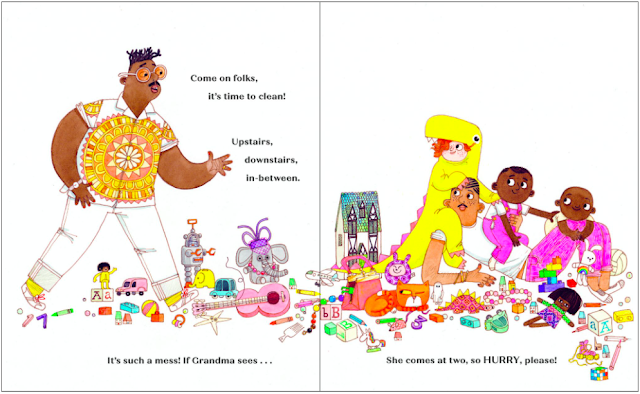
Summary:  Grandma’s coming for a visit, and it’s time to get the house whipped into shape.  The narrator posts a list of chores on the refrigerator with magnetic letters: mop the floor, mow the lawn, feed the fishes, rock the baby, bathe the cat.  Bathe the cat?!  When the cat hears that, he springs into action, making a mess of the letters on the fridge and creating a new chore list.  Family members start vacuuming the lawn and mopping the baby.  But when the cat hears “mow the cat”, it’s time for another letter scramble.  Finally, things are so mixed up, the narrator just tells everyone what to do, and this time it’s the baby who gets bathed and the cat gets rocked.  48 pages; ages 3-7.

Pros:  I could hear the sound of preschool children laughing as I read this zany book with all of its mixed-up chores.  The illustrations add to the high energy with neon pink, yellow, and orange, and lovingly depict a biracial two-dad family. 

Cons:  When Grandma appears on the last page, she looks like she wouldn’t miss a beat coming into a house with an unvacuumed rug, an unmowed lawn, and an unbathed baby, so I don’t know what all the fuss was about
.

Mardi Gras Almost Didn’t Come This Year by Kathy Z. Price, illustrated by Carl Joe Williams

Published by Atheneum Books for Young Readers

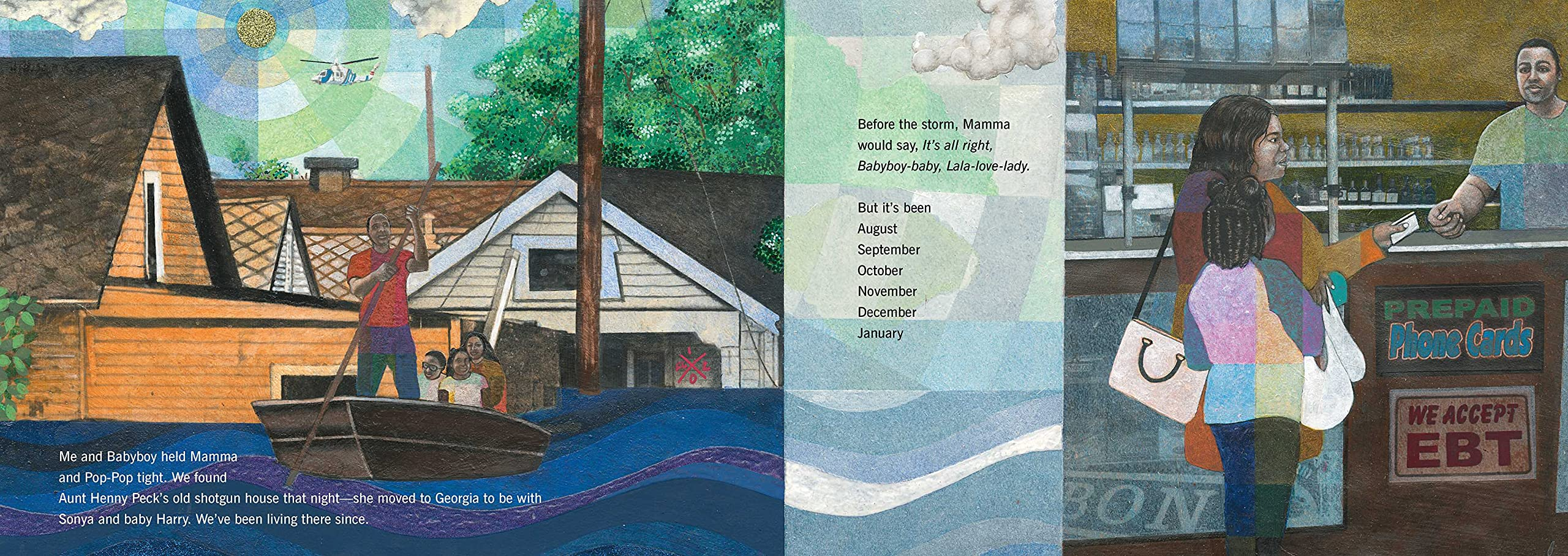
Summary:  Life has been pretty grim since Laia and her family survived Hurricane Katrina.  They’re living in temporary housing, facing a long wait for their home to be rebuilt.  Her dad hasn’t picked up his trumpet since the storm, and her mom no longer sings or dances.  Mardi Gras has always been the joyful centerpiece of the family’s year, but this year it feels wrong to celebrate.  As the festival approaches, though, Laia decides she’s going to make Mardi Gras happen for her younger brother.  She gets out his drum and is ready to play when her father walks in with some calla lilies for the family, as well as seeds to plant when their house is ready.  Then Babyboy starts tooting on his dad’s trumpet, which he’s secretly taught himself to play, and before long the family is out in the street, ready to celebrate.  The story ends on a hopeful note, with the whole family dreaming about the day their house will be rebuilt.  Includes additional information about Katrina and Mardi Gras after the hurricane and during Covid-19.  Also includes a glossary.  48 pages; grades 1-5.

Pros:  The poetic text and gorgeous mixed media illustrations really capture the spirit of New Orleans and the resilience of surviving a devastating natural disaster.  The author’s note at the end provides excellent information for understanding better the importance of Mardi Gras to the people of New Orleans.

Cons:  Readers who aren’t familiar with New Orleans, the Mardi Gras, and Katrina will need a lot of background information to fully understand the story.

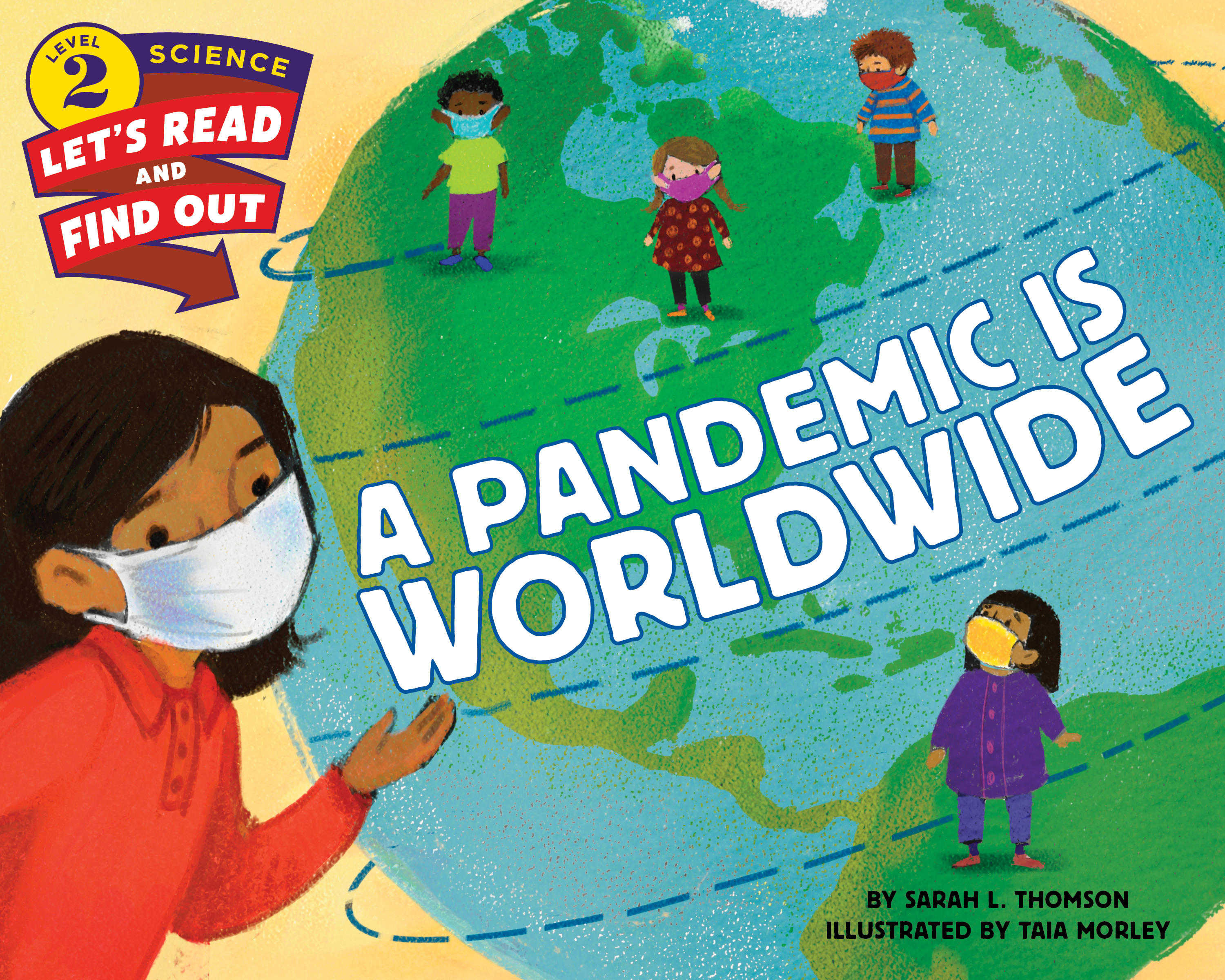
A Pandemic Is Worldwide by Sarah L. Thomson, illustrated by Taia Morley

Published by HarperCollins

Summary:  This book presents a straightforward look at what a pandemic is, with a brief history of past pandemics and an introduction to Covid 19.  There’s a quick look back at the development of vaccines and antibiotics and precautions that were taken in our current pandemic before a vaccine was developed.  The book ends on an optimistic note: “Everyone who wore a mask or washed their hands or stayed home until it was safe helped bring about the day when the pandemic was over at last.”  Includes a glossary, hand washing instructions, and a timeline of past pandemics.  40 pages; ages 4-8.

Pros:  The Let’s-Read-and-Find-Out series continues to do what it’s done well for the last 60 years: present science in a clear and understandable way to preschool and early elementary students.  At least that’s their target audience: I feel like by now I should know the difference between an outbreak, an epidemic, and a pandemic, but I learned that from reading this book.

Cons:  I wasn’t crazy about the small font.

The Puppy Problem (The Daily Bark, book 1) by Laura James, illustrated by Charlie Alder

Published by Bloomsbury Children’s Books

Summary:  When Gizmo the dachshund moves from the city to a small village called Puddle, he’s a little nervous about meeting new dogs.  Fortunately, his neighbor Jilly is a friendly Irish wolfhound with four adorable puppies.  Trouble is soon on the horizon, though, when Jilly learns that her humans are sending the puppies to new homes that are far away.  Jilly is desperate to find local places for her pups, and she and Gizmo set out to enlist the help of the other village dogs.  They hit one dead end after another until Gizmo has an idea inspired by his newspaper editor owner.  He writes up a notice for the other dogs to post, and in no time, new owners in Puddle have been found for all the puppies.  The dogs are so pleased with their success that they decide to start their own newspaper, The Daily Bark, which will undoubtedly be further explored in book 2 of this series. 128 pages; grades 2-4.

Pros:  Early chapter book readers will find it difficult to resist the four adorable puppies and the watchful dachshund on the cover of this charming book.  Filled with colorful illustrations and written in a large font, this would make a great first chapter book.

Cons:  If it takes Gizmo all night to write a 60-word notice, he’s going to have a heck of a time putting out a whole newspaper.

Olu & Greta by Diana Ejaita

Published by Rise X Penguin Workshop

Summary:  Olu and Greta are cousins who have never met, since Olu lives in Lagos, Nigeria, and Greta is from Milan, Italy.  How would they get together?  It’s too far to walk, skate, or dance, and they don’t know how to fly or operate a spaceship.  It’s possible to take a boat or plane, but that hasn’t happened yet.  So they send each other packages and talk through their computers to share their lives long-distance.  The final illustration shows them as teenagers taking a selfie.  32 pages; ages 3-8.

Pros:  This brief story with striking digital illustrations would make a great introduction to a pen pal project, or to get kids thinking or writing about what they would send to someone they had never met.

Cons:  The postal service may struggle to deliver Greta’s package, which is addressed to “Olu, Nigeria.”

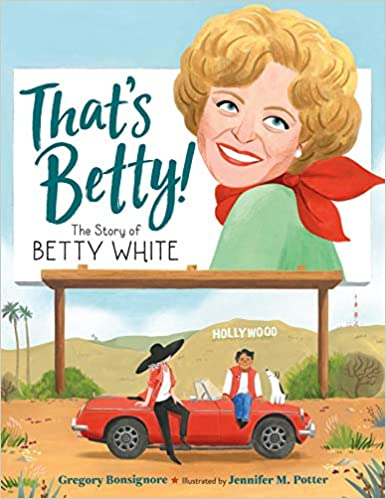
That’s Betty! The Story of Betty White by Gregory Bonsignore, illustrated by Jennifer M. Potter

Published by Henry Holt and Co.

Summary:  When the narrator gets assigned to do a project on a trailblazing woman, he chooses Betty White.  Not everyone is thrilled with his decision: his teacher and one of his dads keep asking, “Wouldn’t you rather choose someone more…traditional?”  But his mind is made up, and off he goes to the library to do his research.  A woman in sunglasses and a big hat gives him some help, adding some details about Betty’s early career as an actress and producer and continuing to her fame in The Mary Tyler Moore Show and The Golden Girls.  His presentation turns out to be a smashing success, and the mysterious lady is there to cheer him on.  As the crowd in school watches her drive off in a red convertible, it suddenly dawns on them: “That’s Betty!”  Includes a timeline (which sadly ends with the 2022 entry “Betty turns 100 years old!”), photos, and a list of sources.  48 pages; grades 1-5.

Pros:  Appropriately, this picture book biography of Betty White is somewhat unconventional with a quirky cast of characters that includes Betty herself.  Clearly the book was written to coincide with the actress’s 100th birthday, and although she didn’t make it to that milestone, the book feels appropriately celebratory.

Cons:  This is a book that may be enjoyed more by adults than kids, who may not be familiar with Betty White and her acting career.