The Civil War of Amos Abernathy by Michael Leali

Published by HarperCollins
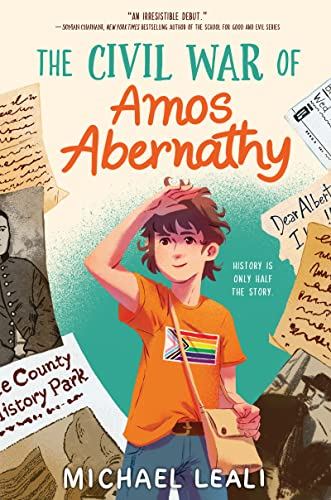
Summary:  Amos Abernathy loves history, and it’s a good thing because his mother runs the Chickaree County (Illinois) Living History Project.  Amos enjoys his work there as an interpreter, working with his best friend Chloe.  When a boy named Ben starts volunteering, Amos develops a crush, but Ben is ambivalent about whether or not he’s gay.  The three kids discover an interest in people written out of history, like those who were LGBTQ+, or Black like Chloe.  The narrative goes back and forth between Amos’s first-person narration of the present and letters he wrote the previous year to a (deceased) Civil War trans man named Albert D. J. Cashier.  In the letters, Amos describes his relationship with Ben, how it ends, and how Ben refuses to speak to him.  He also reveals a secret project that has to do with the kids presenting untold history to the public.  This presentation is the culmination of the story, where the past catches up with the present, and Amos, Ben, and Chloe get to express who they really are through their passion for history.  304 pages; grades 4-7.

Pros:  There’s lots going on in this story which would make an interesting book club choice with plenty to discuss about who has been written out of history.  The alternating chapters of letters describing the past and Amos narrating the present make for an engaging structure.

Cons:  Michael Leali makes a few rookie mistakes in this debut novel, like occasionally crossing the line between good story with a message and a story with an agenda. There also aren’t a lot of shades of gray in portraying characters who are either a little too good to be true or completely misguided/evil.

The Animal Toolkit: How Animals Use Tools by Steve Jenkins and Robin Page

Published by Clarion Books

Summary:  The introduction defines a tool as “an object that an animal manipulates and uses to affect its environment, another animal, or itself.”  Many of us probably know that certain kinds of apes and monkeys use tools, but what about the corolla spider that uses stones to build its web, or the bottlenose dolphin that catches fish in a shell?  Or, creepily, the black kite that will carry a burning stick from a wildfire to start a fire in another area to flush out prey (I wish I could unsee the cute quorra fleeing the flames).  Each page has a cut paper illustration with a brief paragraph of information; additional information on each animal is provided at the end, along with a bibliography.  32 pages; grades K-5.

Pros:  By now you know of my deep and abiding love for all things Steve Jenkins (and Robin Page for that matter), and here you have another fascinating book to wow elementary kids.

Cons:  Still experiencing grief and denial over the fact that Steve Jenkins passed away earlier this year.

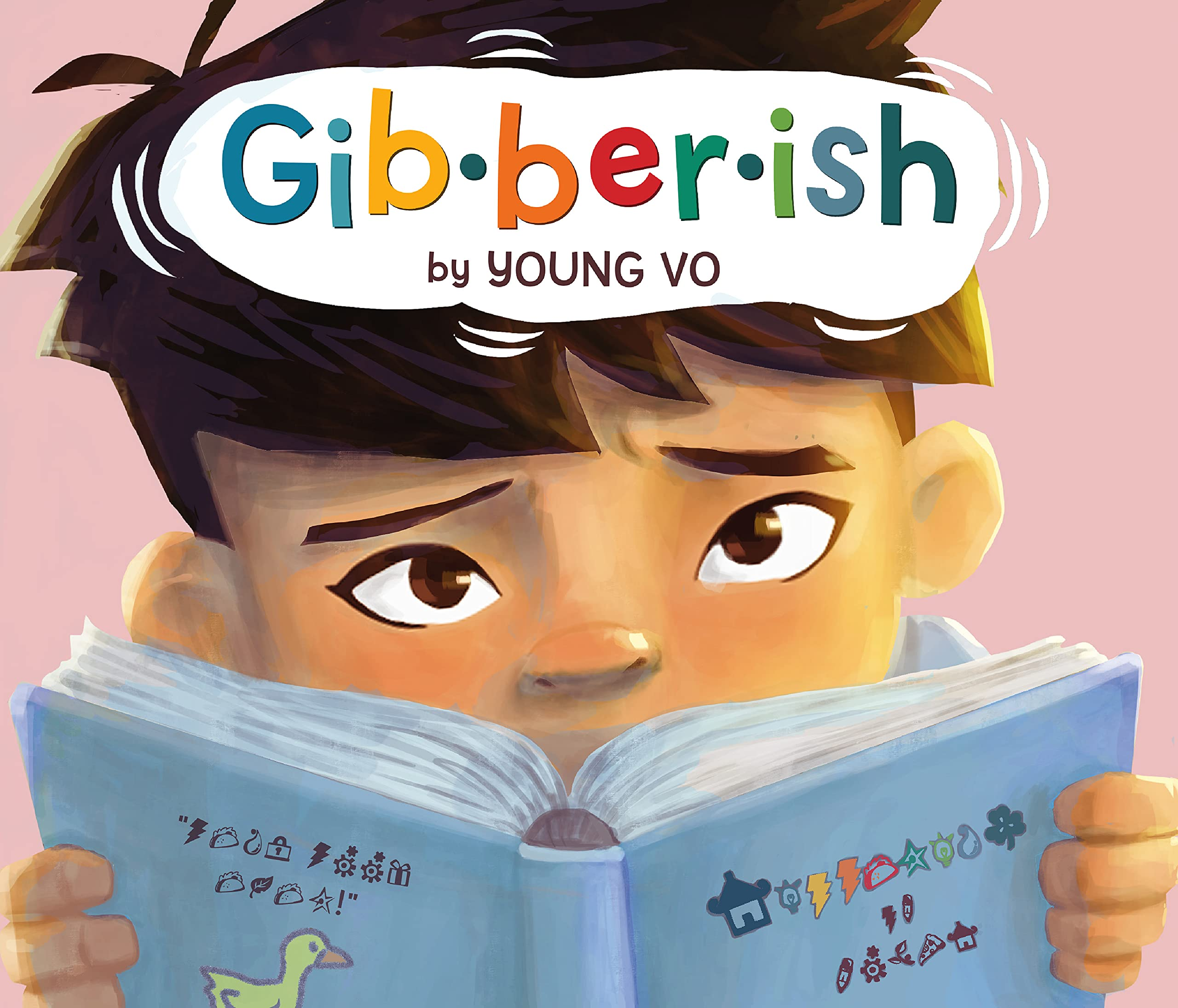
Gibberish by Young Vo

Published by Levine Querido

Summary:  Dat has sailed on a boat, flown on a plane, and today he is taking a school bus.  His mother warns him that when people speak it will sound like gibberish but tells him, “Just listen and do the best you can.”  As the day unfolds, that’s exactly what Dat does.  The world is gray, people look unfamiliar, and adults call him Dav or Dan.  But one girl keeps popping up unexpectedly, playing with him at recess, eating with him at lunch, and riding home with him on the bus.  By the time they get home, the two kids are friends who understand each other’s names and can introduce each other to their moms.  40 pages; ages 4-8.

Pros:  I love how this story builds empathy for non-English speaking kids thrown into American schools.  The illustrations are clever, incorporating a code that can be cracked if you study the endpapers, and showing how Julie gradually transitions in Dat’s eyes from a gray monster-like creature into a colorful human.

Cons:  The story sets the bar pretty high for finding success and a new friend on the first day of school.

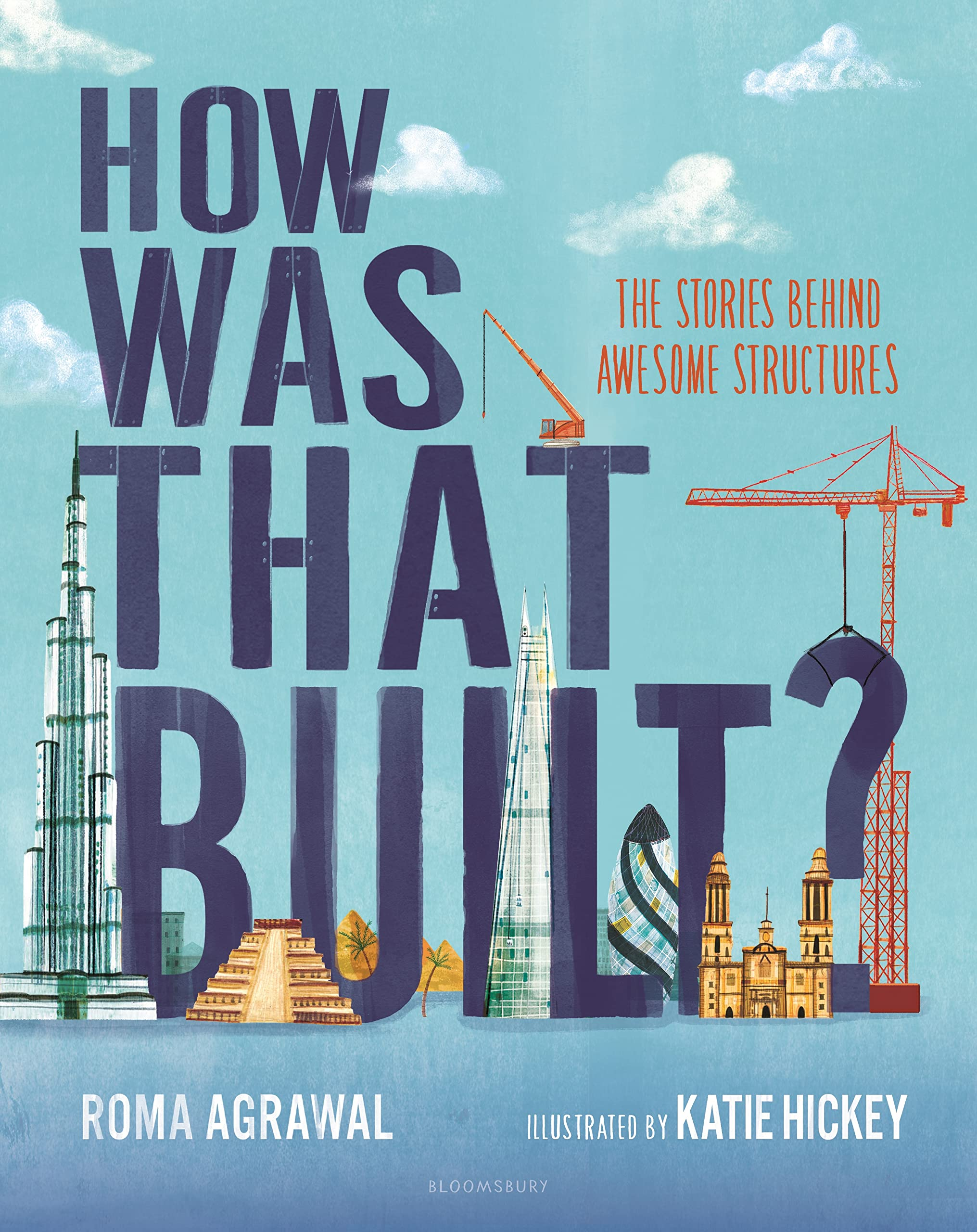
How Was That Built? The Stories Behind Awesome Structures by Roma Agrawal, illustrated by Katie Hickey

Published by Bloomsbury Children’s Books

Summary:  Written by a structural engineer, this book is divided into fifteen sections that delve into how to build in different circumstances, with examples of each.  For instance, the Brooklyn Bridge is featured in “How to Build Long”, London’s sewers in “How to Build Clean”, and the Pantheon in “How to Build a Dome”.  Each section opens with some general information, then dives into the history of the structure with plenty of illustrations to help with the explanations.  There are sections about building on ice in Antarctica and building undersea and in space.  The final two pages include some new technologies that will help engineers create structures of the future.  Includes a glossary and an engineers’ gallery featuring ten engineers.  80 pages; grades 4-8.

Pros:  This is a pretty amazing collection of information with beautiful, detailed illustrations that will fascinate readers with an inclination toward science and engineering.  

Cons: I couldn’t figure out what the criteria were for which engineers made it into the gallery at the end.

The World’s Longest Licorice Rope by Matt Myers

Published by Random House Studio

Summary:  Through luck and an assortment of odd jobs, Ben collects a bagful of nickels.  Deciding what to spend them on takes some consideration, but he finally succumbs to a salesgirl with what she claims is the world’s longest licorice rope (costing just one nickel).  “How long is it?” asks Ben.  “How long is the world?” the girl replies.  Determined to find out, Ben starts chewing.  Everywhere he goes, the girl is there to sell him (for a nickel) whatever he needs to continue the journey: a boat, snowshoes, even a carrot suit to outsmart a hungry lion.  Finally, just as he is getting tired, Ben runs into Jimmy, a boy on the other end of the licorice rope who also paid a nickel.  The girl tells them that for one more nickel, they can become friends.  The two boys burst out laughing, because, they say, “Friends are free!”.  40 pages; ages 4-8.

Pros:  This quirky and unpredictable book would make a great writing prompt to share where you might go with the world’s longest licorice rope.  The end makes a great case for exploring the world with a friend or two.

Cons:  The very tiny font.

This Is a School by John Schu, illustrated by Veronica Miller Jamison

Published by Candlewick

Summary:  “This is a school.  This is a kid.  This is a kid in a class.  This is a class in a hall.  This is a hall in a school – WELCOME!”  As school starts, kids learn that school is a place to learn and discover, to make mistakes, and to find out what they’re good at.  The school becomes a community that grows, transforms, and cares about each other.  The school community is made up of all sorts of people: teachers, students, principals, and staff, and each one of them is an important part of that community.  40 pages; ages 4-8.

Pros:  A wonderful back-to-school book that celebrates many different aspects of school through both the text and the illustrations.  A good companion to Alexandra Penfold’s All Are Welcome and a perfect springboard for discussing classroom and school communities.

Cons:  I should have reviewed this before school started. 

Passionate About Penguins by Owen Davey

Published by Flying Eye Books

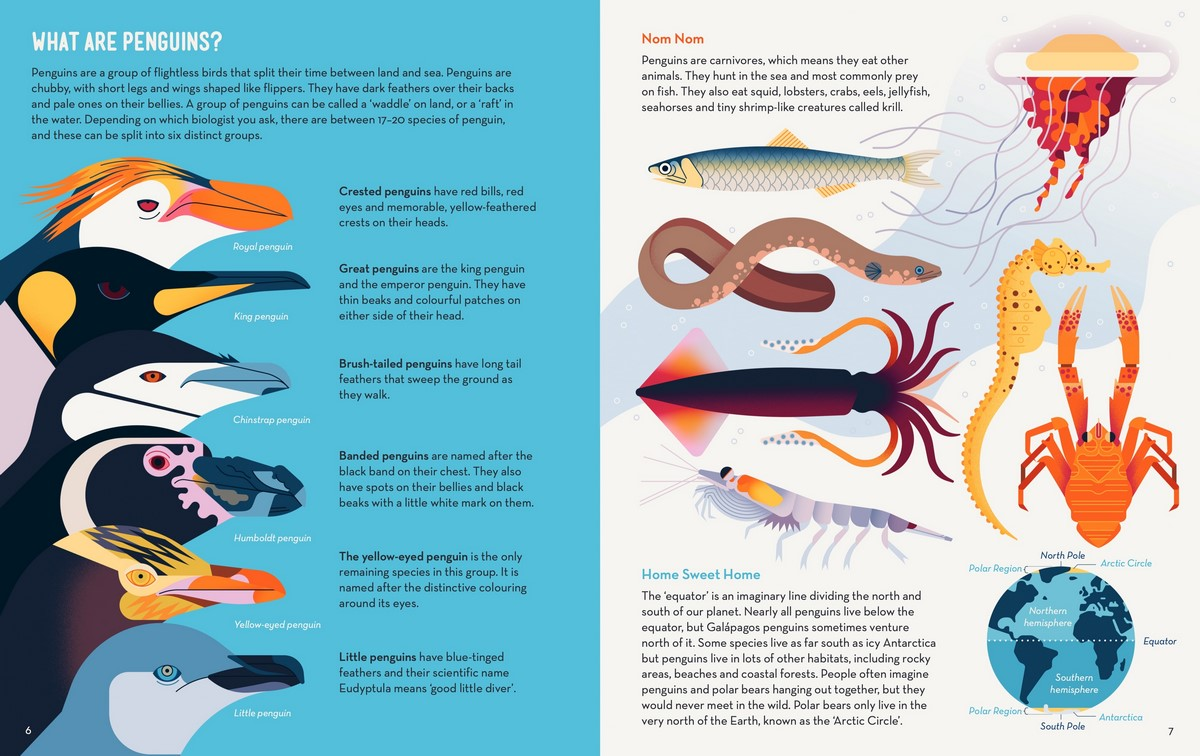
Summary:  Each two-page spread covers an aspect of penguins: different species, how they eat, their feathers, self-defense, temperature control, and more.  The format reminded me of the Eyewitness books of old, with several illustrations and paragraphs of text on each spread.  The page “To Scale” shows a human surrounded by every species of penguin, drawn to size so kids can see how they compare to each other and to a person.  Includes information on penguin conservation and what kids can do to help, as well as index.  There are eight other books in this series. The series title, About Animals, is nowhere near as creative as the book titles which include Obsessive About Octopuses and Bonkers About Beetles.  40 pages; grades 2-5.

Pros:  There’s a ton of information packed into this book in a very appealing presentation, with beautiful illustrations, clever headings (Born This Way; Ice, Ice Baby), and easily digestible bits of information.

Cons:  Some additional resources would have been useful.

Out of Range by Heidi Lang

Published by Margaret K. McElderry Books

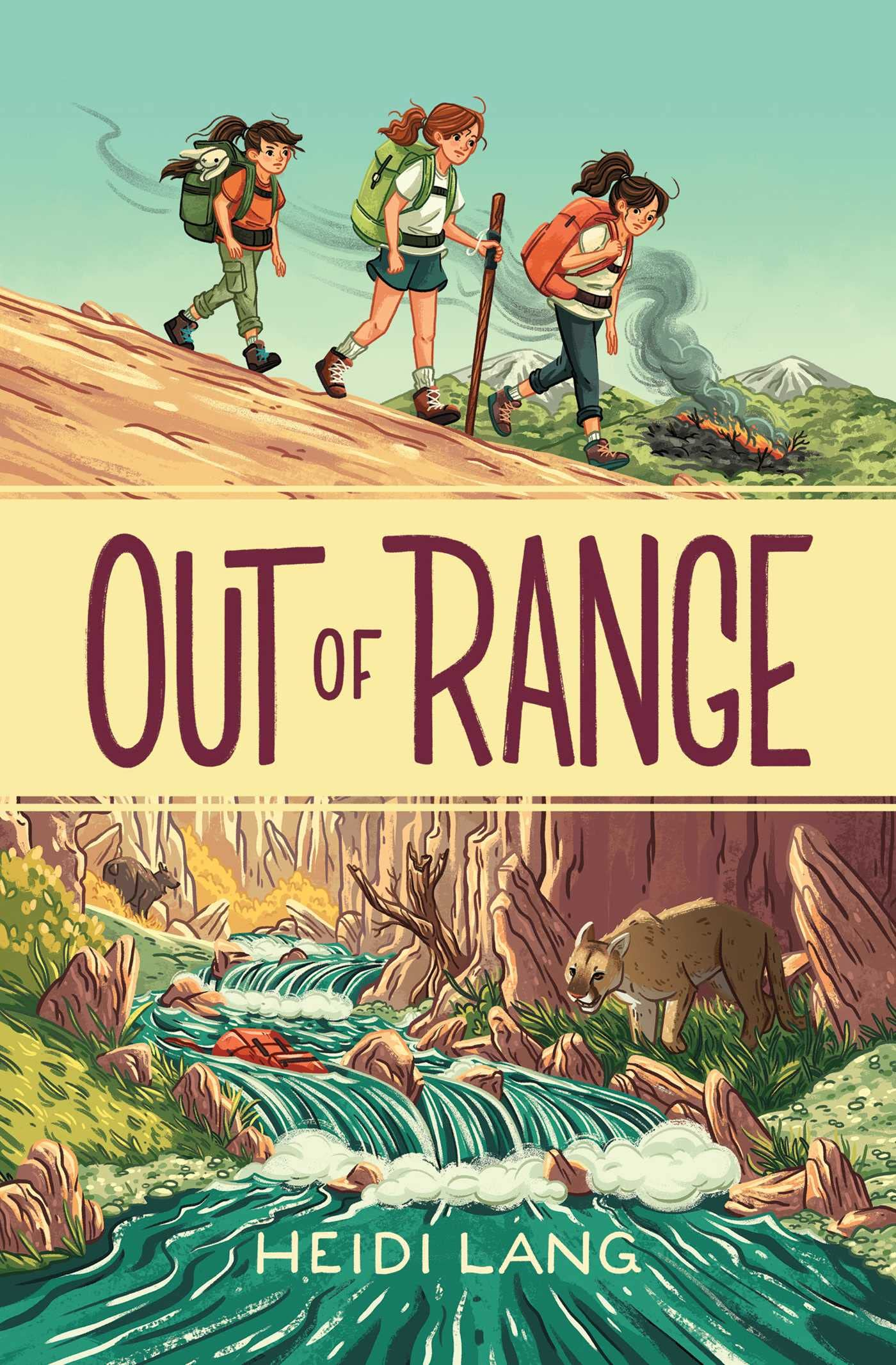
Summary:  Sisters Abby (14), Emma (12), and Ollie (9) have been sent to Camp Unplugged for two weeks by parents who are frustrated by the girls’ constant fighting.  The story opens with the three on a disciplinary hike with camp counselor Dana.  When Dana leaves them briefly to scout the area, Abby decides to turn around and head back to camp.  Soon the girls are lost and have to survive a series of life-threatening events, including Emma’s near-drowning, Abby’s bear attack, and Ollie’s ankle injury that makes walking nearly impossible.  The story alternates among the three girls’ perspectives and switches between the past and present to gradually show the reader the difficulties a move to a new home has caused them and the ensuing cruel prank war that has driven them apart.  Forced to work together to survive, the girls begin to realize that their differences are petty compared to the love they have for each other.  Includes an author’s note about her own wilderness survival story that inspired this book.  320 pages; grades 4-7.

Pros:  Part survival adventure, part family story, this is a book that’s sure to appeal to a wide audience.  Heidi Lang does a masterful job of weaving together the different points of view and slowly revealing how events and insecurities in the past have led the girls to their current dire situation.

Cons:  I had to occasionally suspend my disbelief a bit, particularly in the miraculous rescue of Mr. Snuffles.

Black Boy, Black Boy: Celebrate the Power of You by Ali Kamanda and Jorge Redmond, illustrated by Ken Daley

Published by Sourcebooks Explore

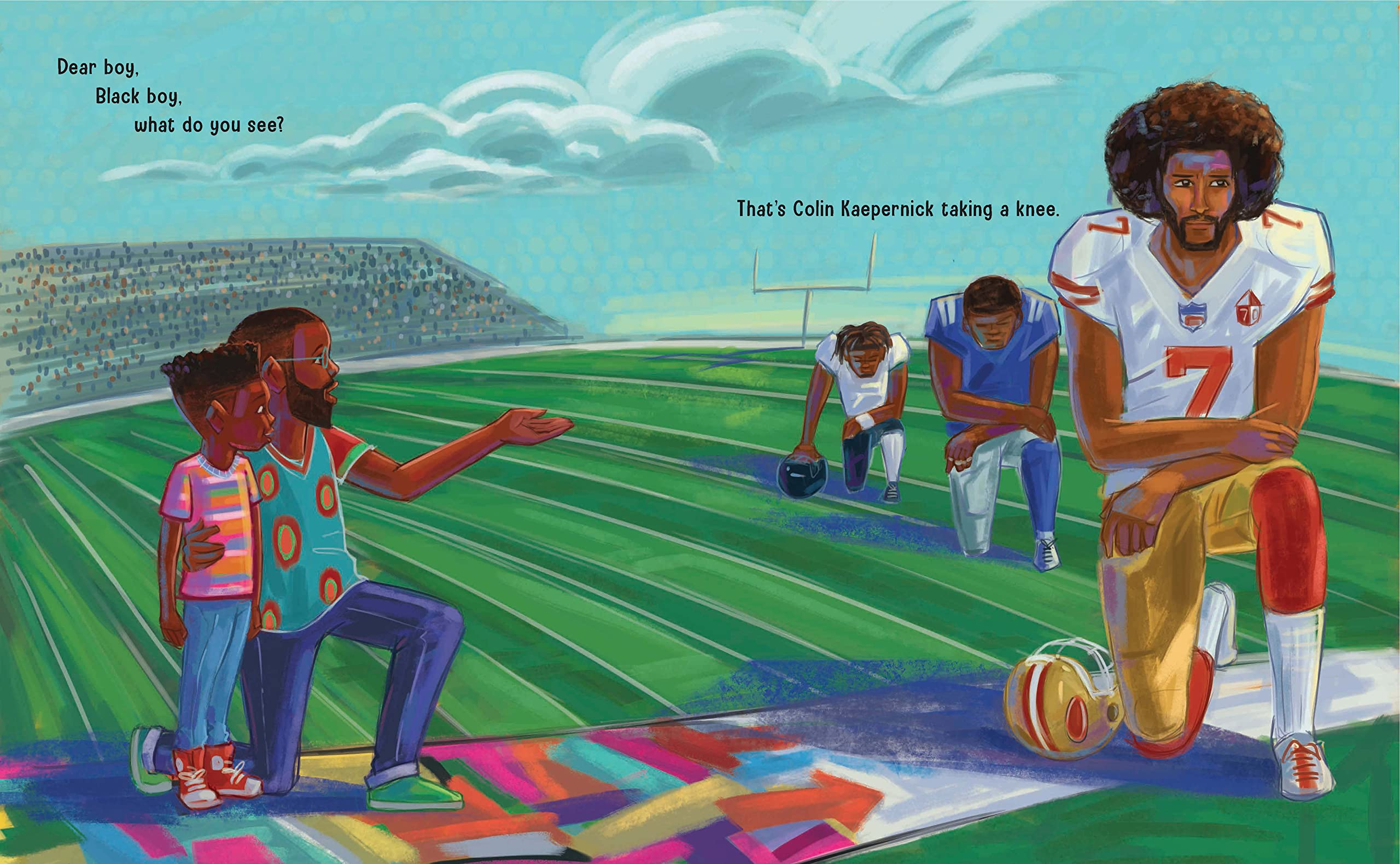
Summary:  A Black man and boy walk together on a colorful path that takes them past Black heroes from the present and past, like Colin Kaepernick (football player), Elijah McCoy (inventor), and William Goines (first Black Navy Seal).  Famous men like Dr. Martin Luther King, Jr. and Barack Obama are also on the path, which ends with the man encouraging the boy to believe in himself and work hard so that he can have his own adventurous journey.  The final page shows the boy off and running down the path on his own, with the men from the book watching him and cheering him on.  Includes brief information of the nine men mentioned in the book.  40 pages; grades K-4.

Pros:  An empowering book for Black boys that would make an excellent choice for a Black History Month read-aloud and belongs in all libraries for any time of year.  Here’s hoping there will be a Black Girl companion book.

Cons:  The rhyming felt a little forced, making me wonder if rhyming text was the best choice for this book.

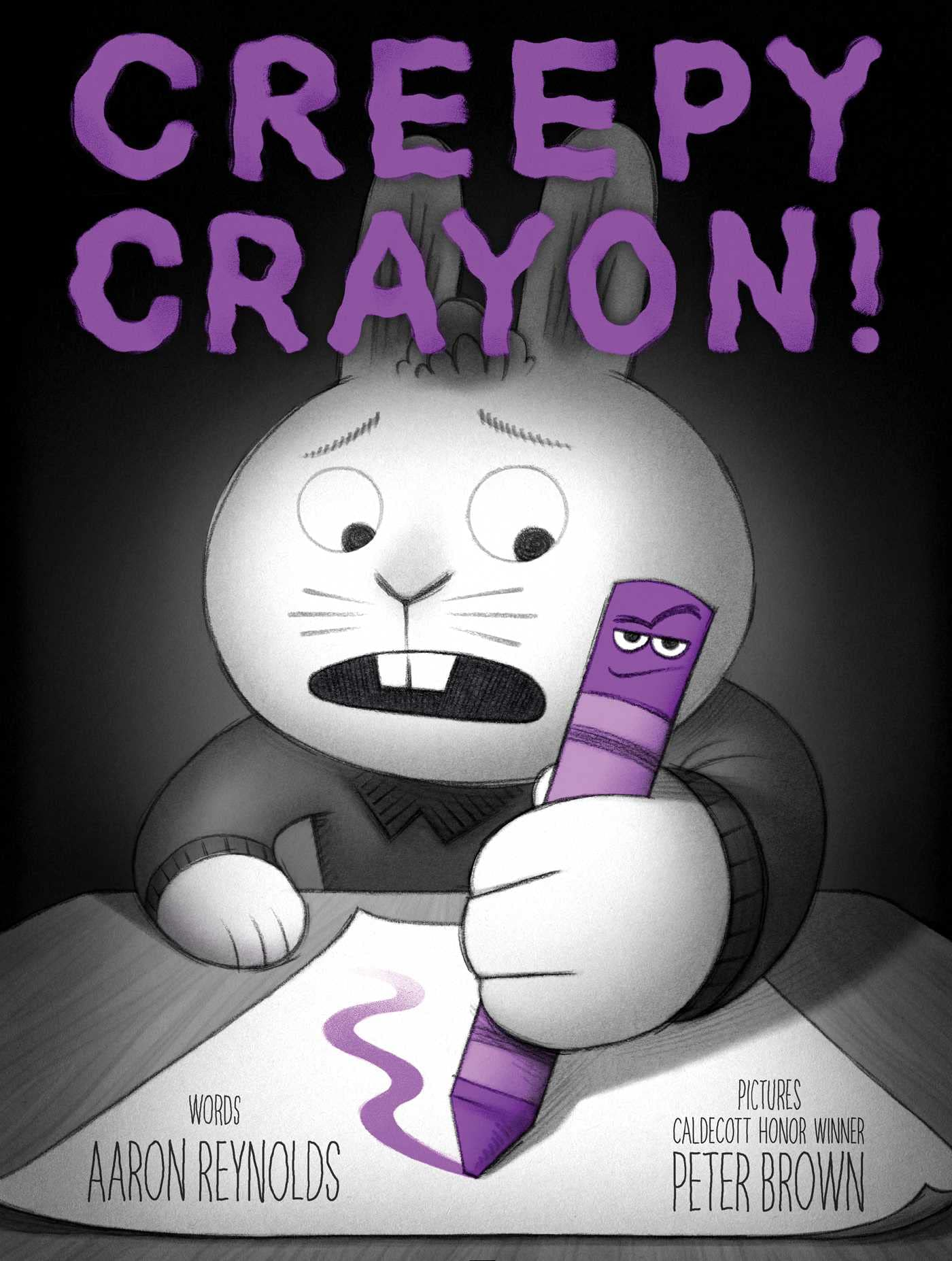
Creepy Crayon! By Aaron Reynolds, illustrated by Peter Brown

Published by Simon and Schuster Books for Young Readers

Summary:  Jasper Rabbit of Creepy Carrots and Creepy Pair of Underwear fame is back with a new reason to be scared: a purple crayon that seems to have all the answers.  Jasper’s been struggling with school (he’s failing all his subjects except art) but he discovers that when he writes his assignments with his new crayon friend, he gets straight A’s.  Jasper seems to feel like he’s losing his identity when his work is not his own and decides the crayon must be destroyed.  That’s not as easy as it looks, as the crayon turns out to have the ability to regenerate itself after being broken, melted, and thrown into the trash.  Flushing it down the toilet winds up being the most effective solution, and Jasper can enjoy whatever grades he gets, knowing that they’re the result of his own efforts.  (Creepy epilogue: the crayon travels through the sewer system and washes up on a beach where it’s discovered by Elliot Pelican.)  48 pages; ages 4-8.

Pros:  Jasper’s many fans will welcome him back (and enjoy glimpses from the other two books) just in time for the spooky fall season.  With literal bathroom humor and just the right touches of creepiness, this is sure to be another hit with young readers.

Cons:  I wasn’t so clear on what made the crayon creepy. Wouldn’t most kids like having a crayon that gave them all the right answers?