Some Bodies by Sophie Kennen, illustrated by Airin O’Callaghan

Published by Sleeping Bear Press

Summary:  “Our bodies can get us from here to there/When we have big feelings, it’s our bodies that share.  So bodies are useful, you’ll surely find/but they’re also unique–one of a kind!”  The rhyming text and illustrations explore all sorts of different bodies.  Size, color, wheelchairs, prosthetics, glasses, tattoos, top surgery, hair, and the amount covered by clothing are all touched upon in a light-hearted body-positive way.  The author is an elementary school teacher who based the book on questions and comments she’s heard in the classroom, and she includes some sample scripts for answering children’s questions, encouraging adults to have those conversations in a positive manner.  32 pages; ages 3-8.

Pros:  Both the text and the illustrations celebrate all kinds of bodies in a way that will both engage young children and encourage them to talk about what they notice about their own bodies and others’.  

Cons:  Although one of the sample questions is “Why is that man fat?” fat people are not represented in the illustrations.
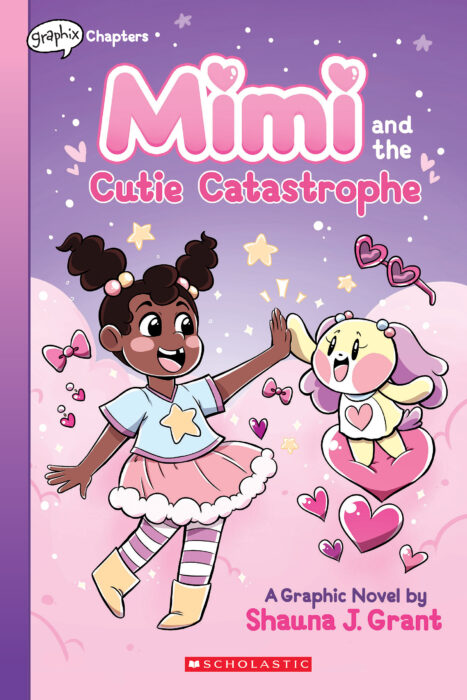
Mimi and the Cutie Catastrophe by Shauna J. Grant

Published by Scholastic Graphix

Summary:  Mimi loves pink and purple, dressing up, and playing with her magical stuffie, Penelope.  An unfortunate consequence of this is that she often gets called “cute”.  To counter this, she tries on different personalities that Penelope is able to create for her: a superhero, a smart teacher, and a cool kid.  Each one fails for one reason or another, and by the end she’s decided to be herself and to speak up for what she wants.  To her happy surprise, those around her see her as strong, smart, and cool.  80 pages; grades K-3.

Pros:  Kids will relate to Mimi’s wish to be seen as more grown up, and the repeating structure of the story makes this a good choice for beginning readers.

Cons:   The girly-girl cuteness was a little thick, as per usual with Scholastic series marketed to girls.

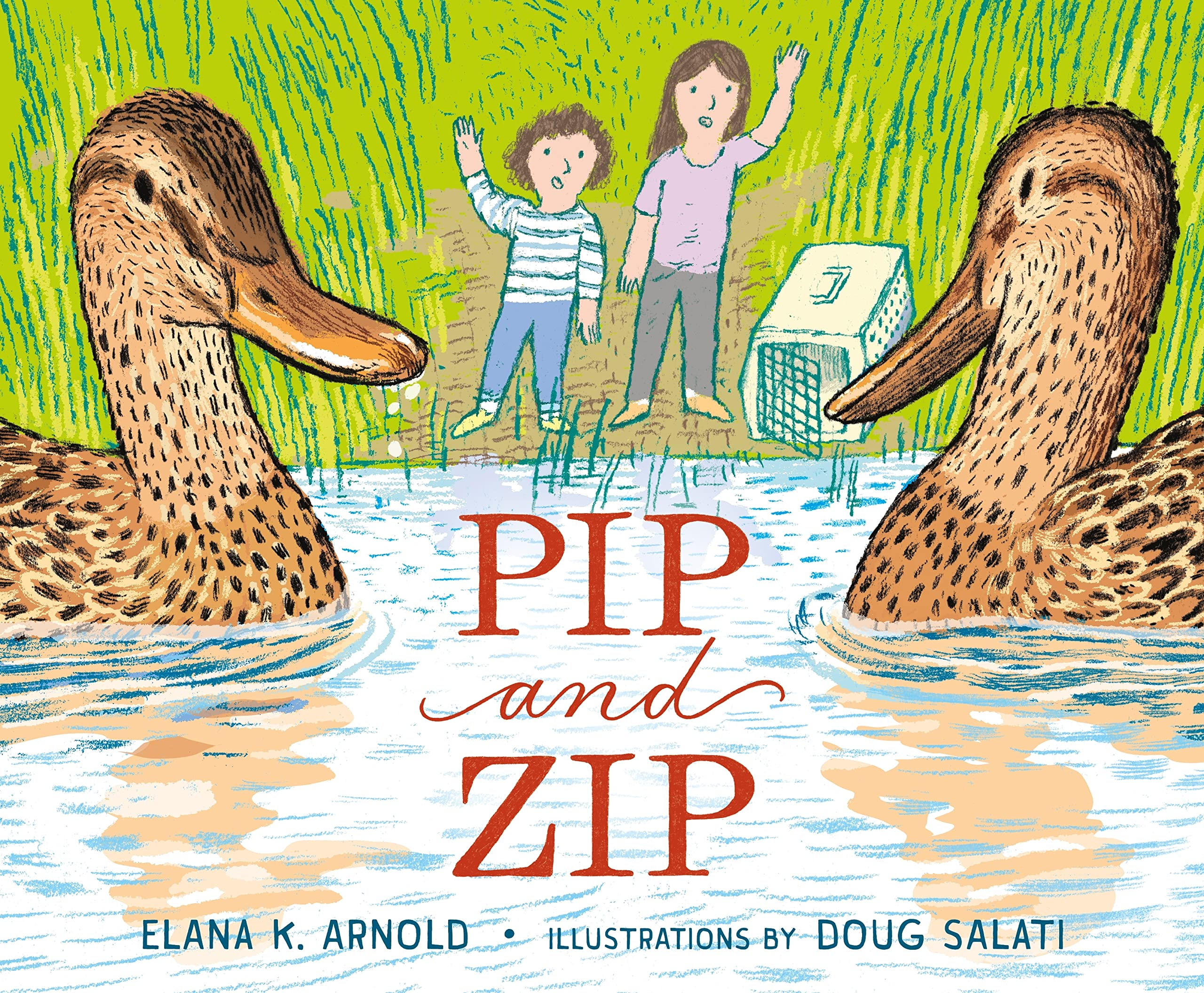
Pip and Zip by Elana K. Arnold, illustrated by Doug Salati

Published by Roaring Brook Press

Summary:  Bored by the pandemic’s stay-at-home orders, a family of four goes for a walk around the lake.  They’re surprised to find an egg floating in the water, and even more surprised when they find a second one half-buried in the mud.  They take them to their neighbor, Ted, who seems to be some sort of wildlife rehabilitator.  He explains that ducks sometimes don’t know what to do with their first eggs, and he lends them an incubator to see if they will hatch.  After a long month of waiting, both eggs hatch, and the family names the ducklings Pip and Zip for the sounds the eggs make when they open.  Ted helps them raise Pip and Zip until they learn to fly, then accompanies them to the lake to release them back into the wild.  On the last page, the family and their neighbors are out and about again, unmasked, sharing stories about their adventures.  Includes an author’s note about her family’s experiences on which she based this book and information about what to do if you find a duck egg, including several websites.  48 pages; ages 4-8.

Pros:  A fun family story that shows that joy and adventure can be found even during a dark time and includes a good environmental message.  I had never heard of Doug Salati before this year, but he seems to be launching a promising career.

Cons:  The real pandemic lasted a lot longer than this fictional one seemed to.

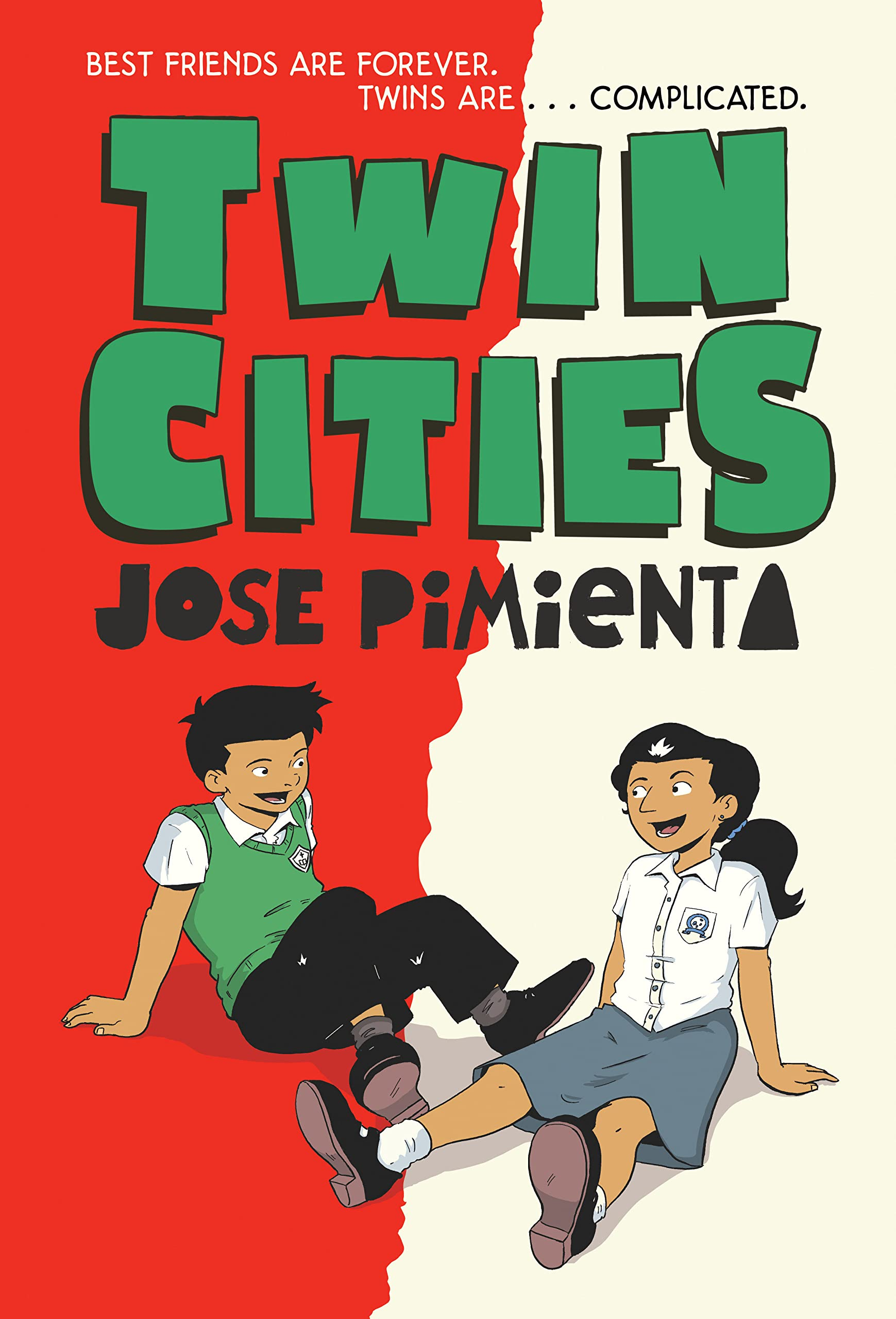
Twin Cities by Jose Pimienta

Published by Random House Graphic

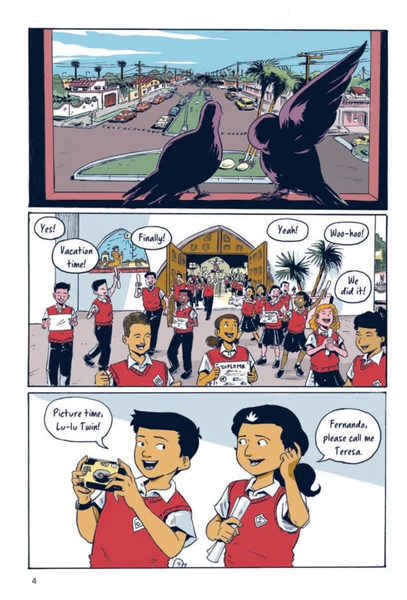
Summary:  Luisa Teresa and Luis Fernando are twins collectively known as the Lu-Lu’s.  When they get to sixth grade, though, they are eager to seek their own identities.  They start going by Teresa and Fernando, but more importantly, Teresa heads to school across the border in Calexico, California, while Fernando continues on in Mexicali, Mexico, where the family lives.  Each finds sixth grade to have its struggles.  Teresa’s workload is tough, and she has to get up early to make it to her carpool in time.  Fernando’s friends are at Teresa’s school, and he feels lonely until he befriends eighth-grader Alex who tries to recruit him to sell weed.  This activity leads to a showdown between the twins, but it also finally gets them talking about what they’ve been going through.  By the last few pages, Teresa finally has gotten her own room to work in, and Fernando is starting to make some friends his own age.  256 pages; grade 4-7.

Pros:  This fascinating look about life at the border is richly illustrated with many pictures that show what is going on in each twin’s life simultaneously.  Kids will relate to Teresa and Fernando’s struggles and learn about life in an area that may be unfamiliar to them.

Cons:  The sixth-grade protagonists make this a great elementary read, but the weed storyline may raise a few eyebrows.

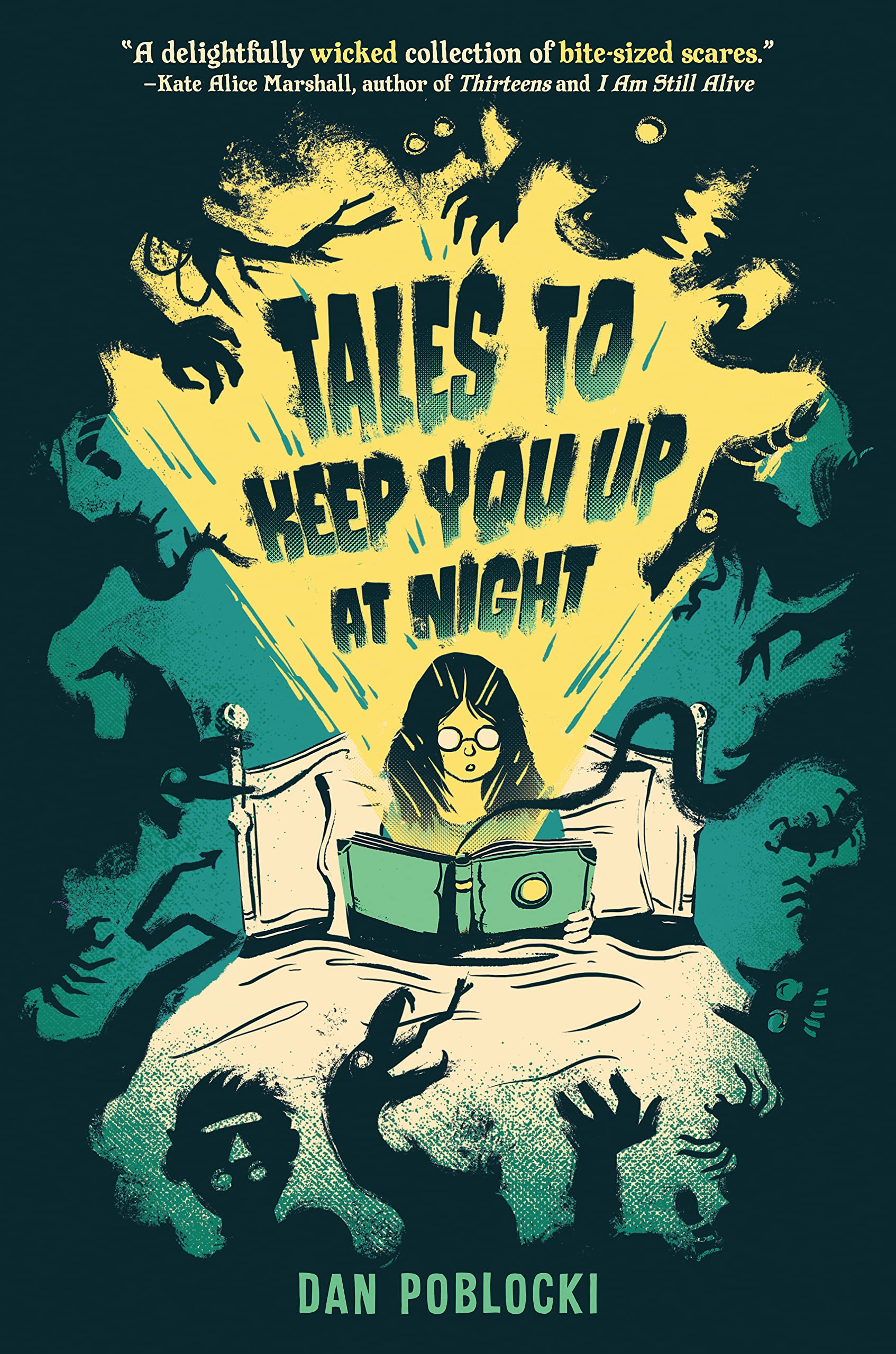
Tales to Keep You Up at Night by Dan Poblocki, illustrated by Marie Bergeron

Published by Penguin Workshop

Summary:  Amelia and her family are cleaning out her grandmother’s house after Grandma mysteriously disappeared more than a year ago (as Grandpa did a few years before).  She finds a book in the attic entitled Tales to Keep You Up at Night, which looks vaguely familiar to her.  After realizing that she had a dream about her grandmother warning her not to read the book, she goes ahead and reads it anyway.  The reader experiences the stories with her, gradually realizing that they are all connected, and, in between, sharing Amelia’s slowly dawning horror as she starts to notice different elements of the story coming to life around her.  By the time she’s finished the book she knows what’s happened to her grandparents, regrets reading it, and has a pretty terrible decision to make about what to do next.  272 pages; grades 5-8.

Pros:  Having worked in 11 schools, I feel I can pretty definitively say that kids love horror.  I wish I loved it too, so that it was not such torture for me to read a book like this, but I read it (you’re welcome), and it is very scary.  And very well done.  Poblocki cleverly weaves a wide variety of stories into the main narrative and ties them all together in a satisfying way.  It definitely lives up to its title, and those horror-loving kids will not be disappointed.

Cons:  I’ve always associated Dan Poblocki with more YA literature, but I saw this recommended for elementary so decided to give it a try.  I was on the fence until I got to the last story (“Nite Crawlers”), which led to my grades 5-8 recommendation. Yikes.

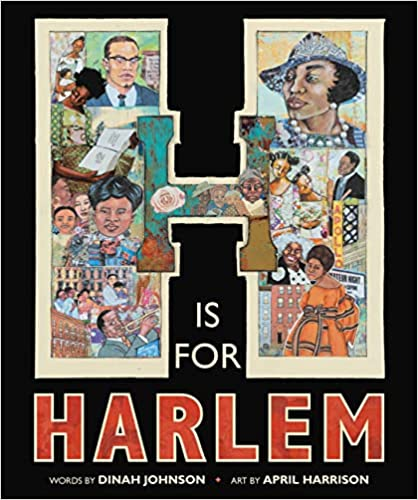
H Is for Harlem by Dinah Johnson, illustrated by April Harrison

Published by Christy Ottaviano Books

Summary:  An author’s note introduces Harlem, giving a little historical context before exploring the neighborhood from A to Z.  Whether historical (W for Madam C. J. Walker, X for Malcolm X) or contemporary (C for Harlem Children’s Zone, I for Impact Farm), the text and illustrations combine to bring Harlem to life as a vibrant neighborhood with a rich history.  Readers will learn of places to visit like the Apollo Theater and the National Jazz Museum and of performances like the Boys (and Girls) Choir of Harlem and the Harlem Globetrotters that they may want to attend someday.  48 pages; grades K-4.

Pros:  I was ready to hop on the train and take a trip to Harlem after reading this colorful book with its lively illustrations of so many fascinating people and places that have shaped this amazing neighborhood over the years. A definite contender for a Coretta Scott King Award.

Cons:  Some additional resources, particularly websites, would have been a great addition.

Skater Cielo by Rachel Katstaller

Published by Orchard Books

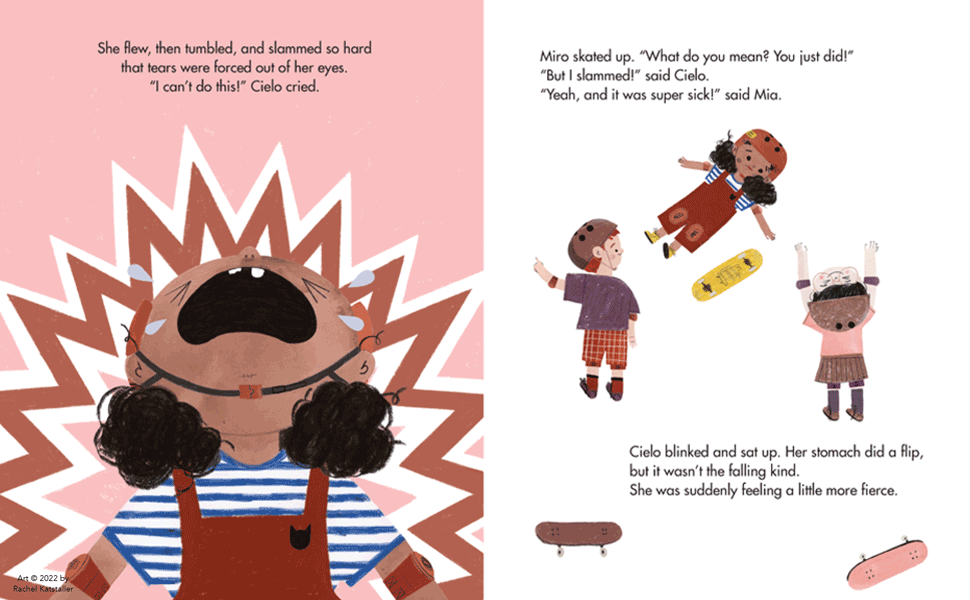
Summary:  Cielo loves to skateboard and is excited when she discovers a new park with deep pools (ramps in the shape of swimming pools) opens in her town.  She tries the biggest one, called The Whale, and ends up falling harder than she ever has before.  Her confidence shaken, she finds she can’t do her usual tricks and tearfully shoves her skateboard in a closet when she goes home.  Yet she can’t help walking past the park and watching others on The Whale.  One day a girl invites her to try again, and once again Cielo falls.  But her new friends encourage her to keep trying, and after many, many falls, Cielo finds herself flying higher than she ever has before.  Includes a glossary and an author’s note.  40 pages; ages 4-8.

Pros:  I’ve found skateboarding books to be popular with kids and this one delivers a great message about persistence, with lots of action-packed illustrations.

Cons:  Some of those falls looked pretty painful.

Pizza! A Slice of History by Greg Pizzoli

Published by Viking Books for Young Readers

Summary:  Sure, everyone loves pizza, but where did it come from originally?  A pizza-loving rat guides readers through a somewhat random assortment of facts (Americans eat 350 slices of pizza every second!) to trace its history from pizza-like (but not quite pizza) foods of the ancient world to the early pizzas of Italy (it helped that Italians, unlike other Europeans, didn’t think tomatoes were poisonous).  The immigration of four million Italians to the US between 1880 and 1924 brought pizza to America, and its popularity increased after World War II when American soldiers returned from Italy.  A review of different pizzas around the US and the world rounds things out.  “Right now somewhere in the world, someone is enjoying a pizza.  Are you?”  56 pages; grades 1-4.

Pros:  A fun and quirky nonfiction book about a topic that everyone will enjoy.  The text draws the reader in with lots of questions and the colorful cartoon illustrations are appealing.

Cons:  Some of the text could have used a bit more context, like comparing the colors of a pizza to the Italian flag with no flag pictured.  Also, I was sad to find no back matter.

The Inflatables in Bad Air Day by Beth Garrod and Jess Hitchman, illustrated by Chris Danger

Published by Scholastic

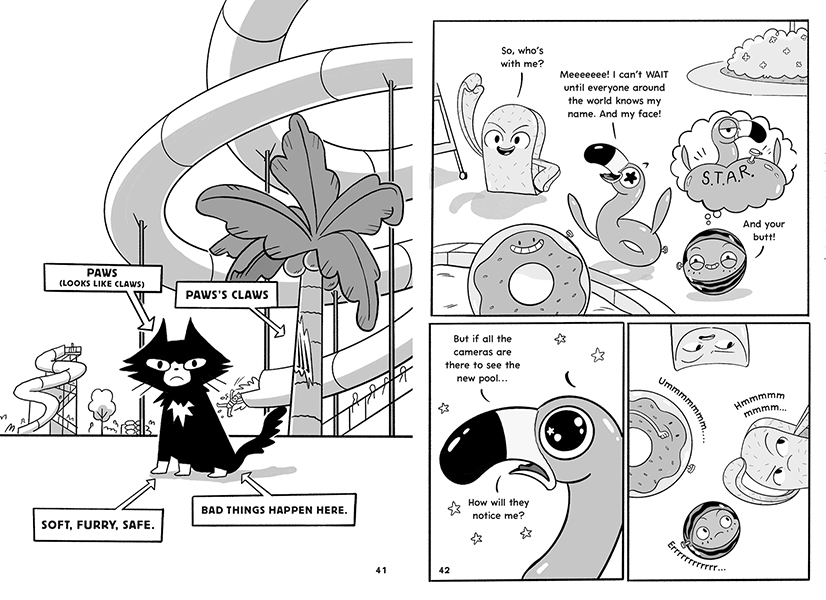
Summary:  A group of inflatable toy friends (flamingo, donut, cactus, watermelon, and raft) live in a water park and help each other out in all kinds of situations, like when they hear there’s a new wave pool opening on the other side of the park.  Seems like inflatables wouldn’t be able to travel, but where there’s a will there’s a way for this crowd.  When they get to the pool, though, Flamingo discovers that his worst nightmare is living there, and they all have to quickly find a way back home again (spoiler alert: this involves a helium tank).  There’s a happy ending for all, and I’m not full of hot air when I tell you book 2 is available now, and book 3 will arrive in October.  128 pages; grades 2-5.

Pros:  Summer may be coming to an end, but you can pretend you’re still at a pool party with this funny group of inflatable friends.  This is sure to be a hit with fans of Dog Man and other graphic novels.

Cons:  This has the look of a Branches book, but it’s more of a graphic novel than those are.  I think a larger format with color would have worked better.