Summary: Jesús is excited to be spending Saturday helping Papá with his landscaping job. It’s hot work, and Jesús is put in charge of the water jug, which Papá tells him is like a magical clock–when the jug is empty, it’s time to go home. Jesús enjoys sharing water with the customers’ pets and splashing some on his face to cool off. In no time at all, the jug is empty, and Jesús is ready to go home. Unfortunately, it’s only 10:30 and there are 11 more customers waiting! Papá straightens his son out about the “magic”, then sends him to the house to refill the jug. Lesson learned, Jesús works hard for the rest of the day, realizing that the real magic is the teamwork between him and Papá. 48 pages; ages 4-8.
Pros: A charming memory recounted by comedian Jesús Trejo. The comic style illustrations perfectly complement the funny text (be sure to check out the cartoon landscapers on the endpapers), which also shows the heartwarming bond between father and son.
Cons: I wish there had been more information about the real Jesús and his Papá.
Summary: Meesh struggles with things that come easy for most demons her age, like breathing fire and puking acid, and is often picked on by a bully named Xavier. She prefers befriending flowers and watching the Princess Nouna TV show with her grandmother. When a mysterious substance starts turning demons into stone, Meesh realizes it’s up to her to save her community. She goes off in search of Princess Nouna but is dismayed by the real-life princess when they finally meet. The two unwittingly wind up going on a series of adventures together, during which Meesh discovers some new powers. Eventually, they add a couple more kids to their group, including, much to Meesh’s surprise, Xavier. Working together, the team manages to save the demons, and a surprising twist at the end will have readers eagerly awaiting a sequel. 304 pages; grades 3-7.
Pros: This manga-style comic is sure to be a big hit, with its gorgeous art, non-stop adventures, creative world-building, and loveable team of misfits that learn to accept each other and work together to do great things.
Cons: I think this is a “me” problem, but I do struggle in fantasy graphic novels to keep track of the various characters and their worlds.
If you have even a passing interest in children’s literature, sooner or later you’re going to end up in western Massachusetts. A disproportionate number of children’s book authors and illustrators have made their homes here: Micha Archer, Holly Black, Eric Carle, Mike Curato, Tony DiTerlizzi, Mordicai Gerstein, Hollie Hobbie, Norton Juster, Jarrett Krosoczka, Julius Lester, Patricia MacLachlan, Dr. Seuss, Mo Willems, Jane Yolen, and a bunch more. If you want to cross paths with movie stars, go to L.A., but if you want to run into your kid lit favorites, you need go no further west than Amherst.
Start your day at the epicenter, the Eric Carle Museum in Amherst. The film Eric Carle, Picture Writer, shown daily at 11:30, gives a good introduction to the artist’s life and work. From there, you can take in the exhibits, currently featuring Claire A. Nivola, Christian Robinson, Eric Carle in Japan, and the connection between picture books and letter writing. If you’re lucky enough to have some kids with you, enjoy a story time and/or art project, and be sure to visit the bookstore and library. To learn about Carle’s life and art before you go, read The Art of Eric Carle (The World of Eric Carle, 2021).
Inside the Center – no weeding allowed.
The Yiddish Book Center
A logical next step is the Yiddish Book Center, just half a mile away. I learned about the center when I read The Book Rescuer: How a Mensch from Massachusetts Saved Yiddish Literature for Generations to Come by Sue Macy (Paula Wiseman Books, 2019), which gives a history of the center and its founder, Aaron Lansky. It’s a fascinating story, and if you have any interest in Judaism, Yiddish, preserving languages, or archives, you will undoubtedly find much to enjoy here. As a librarian, I tend to weed any collection with ruthless abandon, so this visit made me (briefly) reconsider my minimalist tendencies.
Emily Dickinson Museum
Drive a few miles up the road, and you’ll be in downtown Amherst, home to the main campus of the University of Massachusetts as well as the Emily Dickinson Museum. If you want a guided tour, buy your tickets online in advance (or call to get the teacher discount). You can also wander through the house on your own. If your impression of Emily Dickinson is (as mine was) the reclusive woman dressed all in white, I recommend the guided tour to get a more fleshed-out picture of the poet.
I’d read a few children’s books about Dickinson: On Wings of Words by Jennifer Berne (Chronicle, 2020), a biography that weaves in a lot of Emily’s poetry; Emily and Carlo by Marty Rhodes Figley (Charlesbridge, 2012) about Emily’s relationship with her beloved dog Carlo, and Emily by Michael Bedard (Doubleday, 1992), a historical fiction story told by one of Emily’s young neighbors, and beautifully illustrated by Barbara Cooney. A visit to the museum gift shop led me to discover a few more: Emily Writesby Jane Yolen (Henry Holt, 2020), recounts scenes from Emily’s early childhood and her first attempts at writing and Becoming Emily by Krystyna Poray Goddu (Chicago Review Press, 2019), is a longer biography for older elementary kids and young adults. For child-friendly poetry collections, try Poetry for Young People: Emily Dickinson edited by Frances Schoonmaker Bolin (Sterling, 1994) and Poetry for Kids: Emily Dickinson edited by Susan Snively (MoonDance, 2016).
Friendly fossils
Mammoth discoveries
A two-minute drive or eight-minute walk will get you to the Beneski Museum of Natural History at the University of Massachusetts. You may want to keep your car in downtown Amherst and walk, as campus parking can be a bit of a dicey proposition, especially on weekdays. Museum admission is free. This is a university museum, so kids should be old enough to treat the exhibits with respect, but anyone with an interest in paleontology or geology will find plenty to keep them interested. I’m sure all paleontology fans have their favorite books, so I’ll just mention a few of mine here: Prehistoric Actual Size by Steve Jenkins (Clarion, 2015), Mammoths on the Move by Lisa Wheeler (Clarion, 2006), and the Science Comics entry Dinosaurs: Fossils and Feathers by MK Reed (First Second, 2016)
By the time you’re through the Beneski, you’ll undoubtedly be ready for lunch, dinner, or a snack, so get back in the car and head to Northampton. The E.J. Gare parking garage is centrally located and cheap (the sign at the entrance says it all: “Where the coffee is strong and so are the women…and the first hour in this garage is always free!”). There are plenty of cafes and restaurants in downtown Northampton: Jake’s, Woodstar, and Haymarket are three of my favorites. You’ll exit the garage through Thorne’s which has some good shopping, including coffee and a bookstore.
Right next door to Thorne’s, you’ll find R. Michelson Galleries, which, in my opinion, gives the Eric Carle Museum a run for its money if you want to see original artwork from children’s literature. There’s an abundance of it on display and for sale by such luminaries as Mo Willems, Jason Chin, Carson Ellis, Mark Teague, Emily Arnold McCully, Dr. Seuss, Grace Lin, Brian Pinkney, and Maurice Sendak. It’s an art gallery, so no charge, and be sure to allow yourself plenty of time to take it all in.
Finally, Dr. Seuss fans can drive 25 minutes south to Springfield, where they can visit The Amazing World of Dr. Seuss Museum. With its mix of Seuss-inspired exhibits for kids and Ted Geisel memorabilia, there’s something for everyone. Adult admission is $25, which covers all five of the Springfield museums, featuring art, history, and science. A ten-minute drive gets you to the Zoo in Forest Park, where Ted Geisel’s father worked as Superintendent, which may have inspired Dr. Seuss’s zany animal creations. En route, you can drive past 74 Fairfield Street where young Ted lived. You might recognize the address from the picture book biography, The Boy on Fairfield Street: How Ted Geisel Grew Up to Become Dr. Seuss by Kathleen Krull (Random House, 2004). Be sure to have some actual cash on hand, as the cash-only admission to the park is $3.00 for Massachusetts residents and $5.00 for out-of-staters. There’s an additional fee for the zoo.
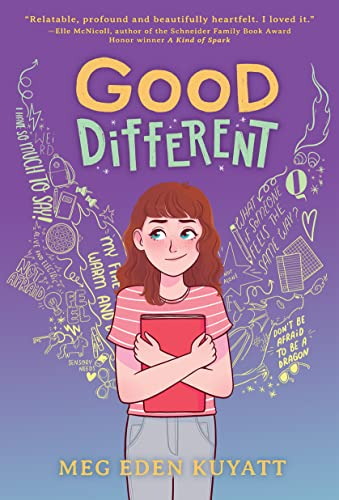
Summary: Selah works hard at being “normal”, making up rules to help her fit in at school and retreating to her room at the end of the day, exhausted from trying to hide her feelings. When a friend tries to braid her hair in class one day, Selah explodes and hits the girl. The incident puts her on probation at school and ostracizes her from most of her classmates. As Selah tries to figure out what is going on with her, she begins to think that she, her mom, and grandfather may all have autism. A sympathetic English teacher helps her to express herself through poetry, and Selah begins to share what she’s feeling, first to her family and later on to her school. As she begins to feel more comfortable with who she is, Selah comes up with a new list of rules to help her be herself and to communicate with those around her. Includes an author’s note about her own journey to an autism diagnosis and self-discovery as well as a list of resources. 288 pages; grades 4-7.
Pros: This novel in verse will be helpful to anyone with autism, or who knows someone with autism, or who sometimes feels like they don’t fit in very well. I was inspired by Selah’s powerful poems, her journey, and the ways she learned to advocate for herself.
Cons: It made me sad that no one at Selah’s seemingly caring private school had picked up on her autism in her eight years of attendance there.
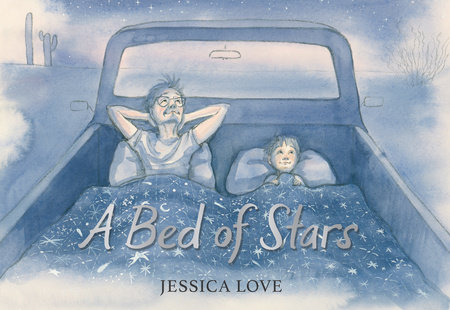
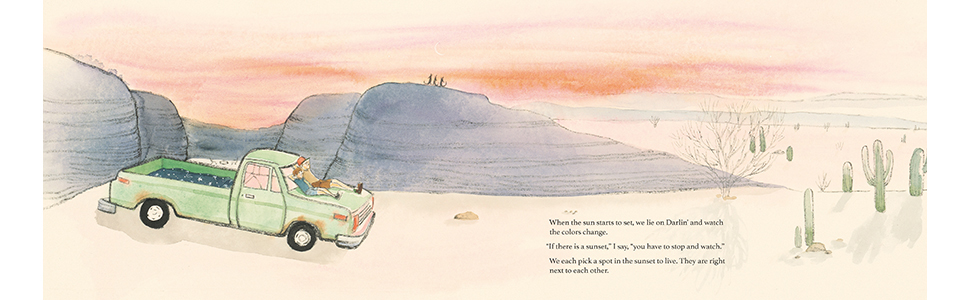
Summary: The narrator has trouble falling asleep, feeling tiny when thinking of the vastness of the universe. Dad announces one morning that the two of them are going camping, and they pack the pick-up truck and drive off to the desert. Once there, they jump in the dunes, observe beetles and birds, build a campfire, and watch the sun set. When it’s time to sleep in the bed of the pick-up, Dad explains that stars are made of the energy, just like the beetles, the birds, and the two of them. They start to name the stars after people they know, and before long, both are asleep. In the morning, they pack up and drive home, where they discover that Mom has been busy in their absence, painting glow-in-the-dark stars all over the child’s bedroom walls and ceiling. 40 pages; ages 4-8.
Pros: The watercolor paintings capture the beauty of the desert, and the simple story shows the love between parents and child and the safety that provides.
Cons: Campfires are better after sunset, not before.
Summary: Steph is in eighth grade at her Bronx Catholic school, which means she and her friends are applying to New York City high schools. Her strict Dominican mother wants her to continue at a Catholic school near home, but Steph is drawn to an arts school in Manhattan. Since the school of her dreams requires a portfolio, not an exam, Steph decides to secretly work with her art teacher and mentor, Ms. Santiago, on a portfolio and to purposely fail the high school entrance exam. Naturally, this plan drastically backfires, and Steph finds herself in trouble with both her school and her mother. Fortunately, her mother, helped by her own mother, sits down and talks to Steph, resulting in a better understanding on both sides, and ultimately, Steph’s admission to the Laguardia Arts High School. Includes a note from the creator telling more about her own life and what was the same and different from the fictional Steph. 208 pages; grades 4-7.
Pros: Fans of graphic memoirs, especially artists, will love this new addition to the canon and will root for Steph in spite of a few less-than-great choices on her part.
Cons: I was bummed to learn that the real Stephanie didn’t get to go to LaGuardia High School.
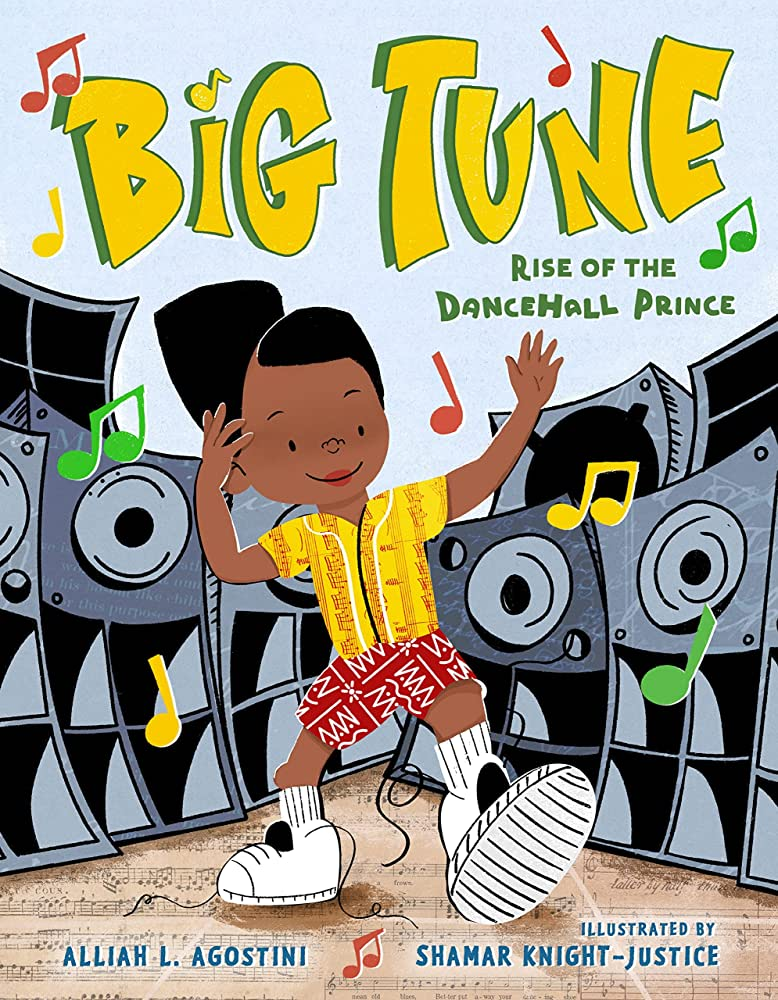
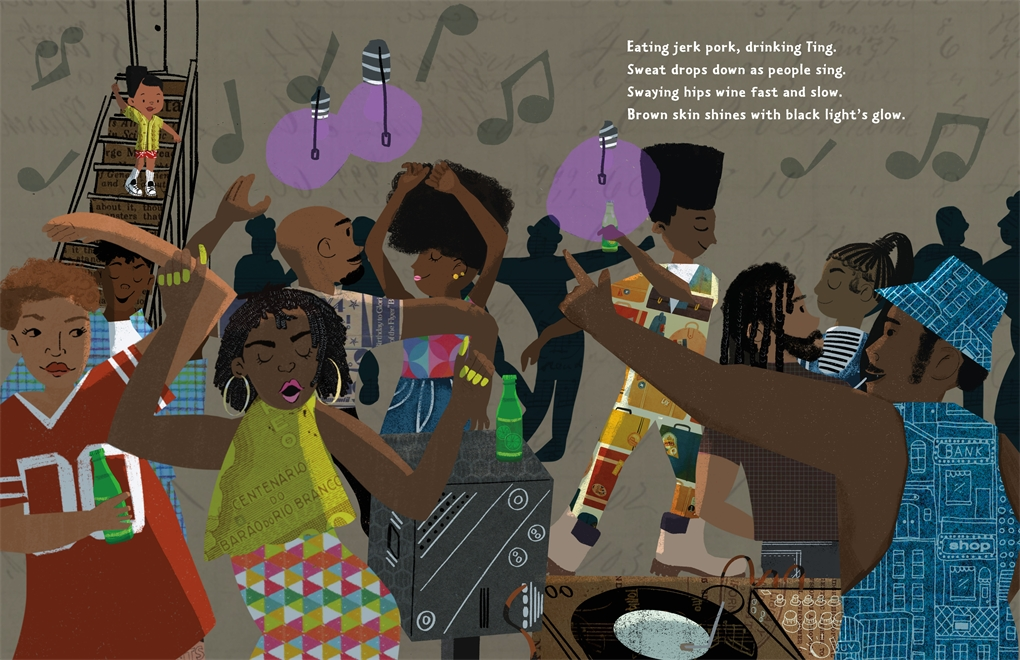
Summary: Shane comes from a family of dancers, but he’s too shy to dance at the big gatherings held every weekend. He focuses on collecting cans to buy the high-tops he wants, only busting out his dance moves in the privacy of his own room. He’s just about reached his goal when a speaker breaks, and the big dance party gets cancelled. Shane gathers his money and heads to the local music store, where he’s able to buy a new speaker. The party is saved, Shane is a hero, and he celebrates by finally going public with his dance moves. The family passes the hat, and before long, Shane has all his money back AND has become the dancehall princes. Includes an author’s note with additional information about Jamaican dancehalls and how the music influenced musicians like DJ Kool Herc and the Notorious B.I.G. 40 pages; ages 4-8.
Pros: The bouncy rhyming text and brightly colored illustrations make this a celebration of both Jamaican dancehall music and Shane, a hardworking kid who does his own thing, helps his family, and has all the moves on the dance floor.
Cons: Shane’s jerky older brothers only partially redeemed themselves at the end of the story.
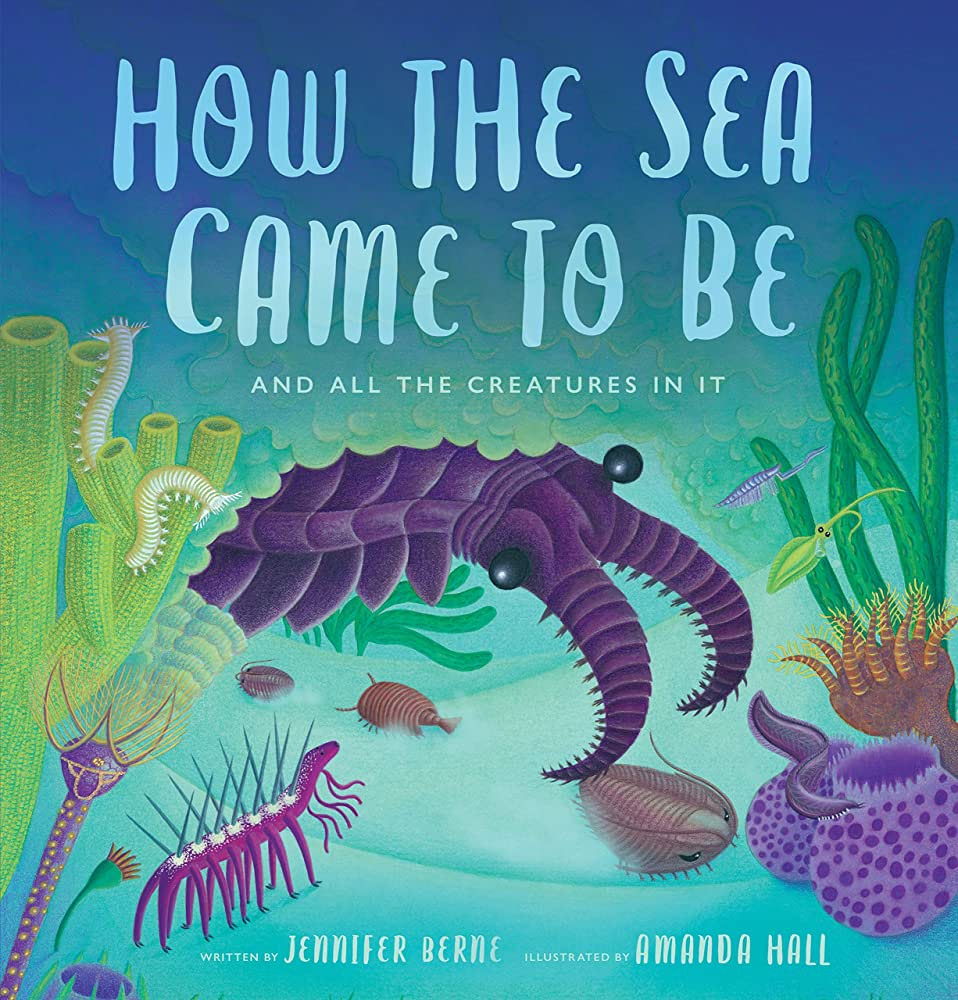
Summary: Rhyming quatrains describe the history of the sea in three parts: the birth of the sea, the birth of life, and the sea from then until now. All are accompanied by colorful illustrations that sometimes show the sun-dappled waters of the sea and other times take readers down into the black ocean depths. Includes notes from the author and illustrator; two pages of ocean creatures that include illustrations and a paragraph of information about each; a four-panel gatefold timeline showing seven eras of the Earth’s history; key terms and concepts with definitions; and two pages of additional resources. 56 pages; grades 1-5.
Pros: A spectacular nonfiction book that should be considered for a Sibert award. The rhyming text is both catchy and impressive, making this a great choice to read aloud, and the illustrations are truly spectacular, conveying both the powerful forces that created the seas and the incredible diversity of life within them. The timeline is a masterpiece, and the rest of the back matter makes this an excellent resource for research.
Cons: I would have liked the timeline to have also been incorporated into the text to show the eras of each of the three parts.
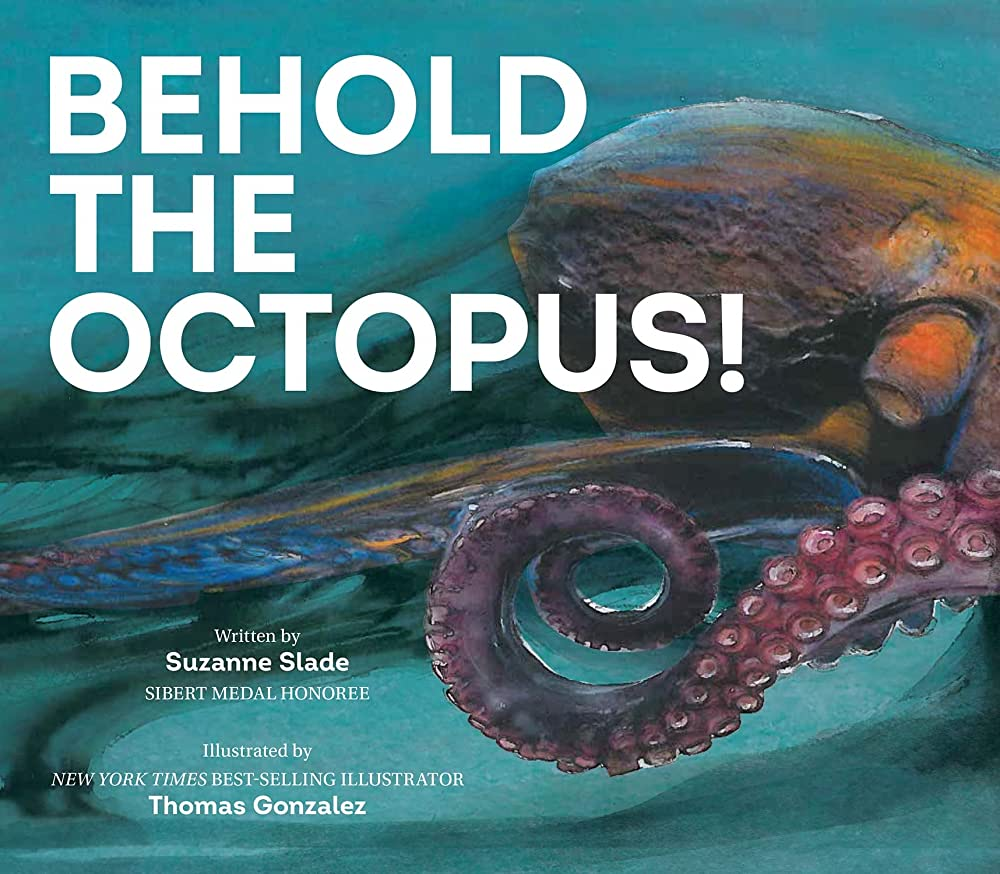
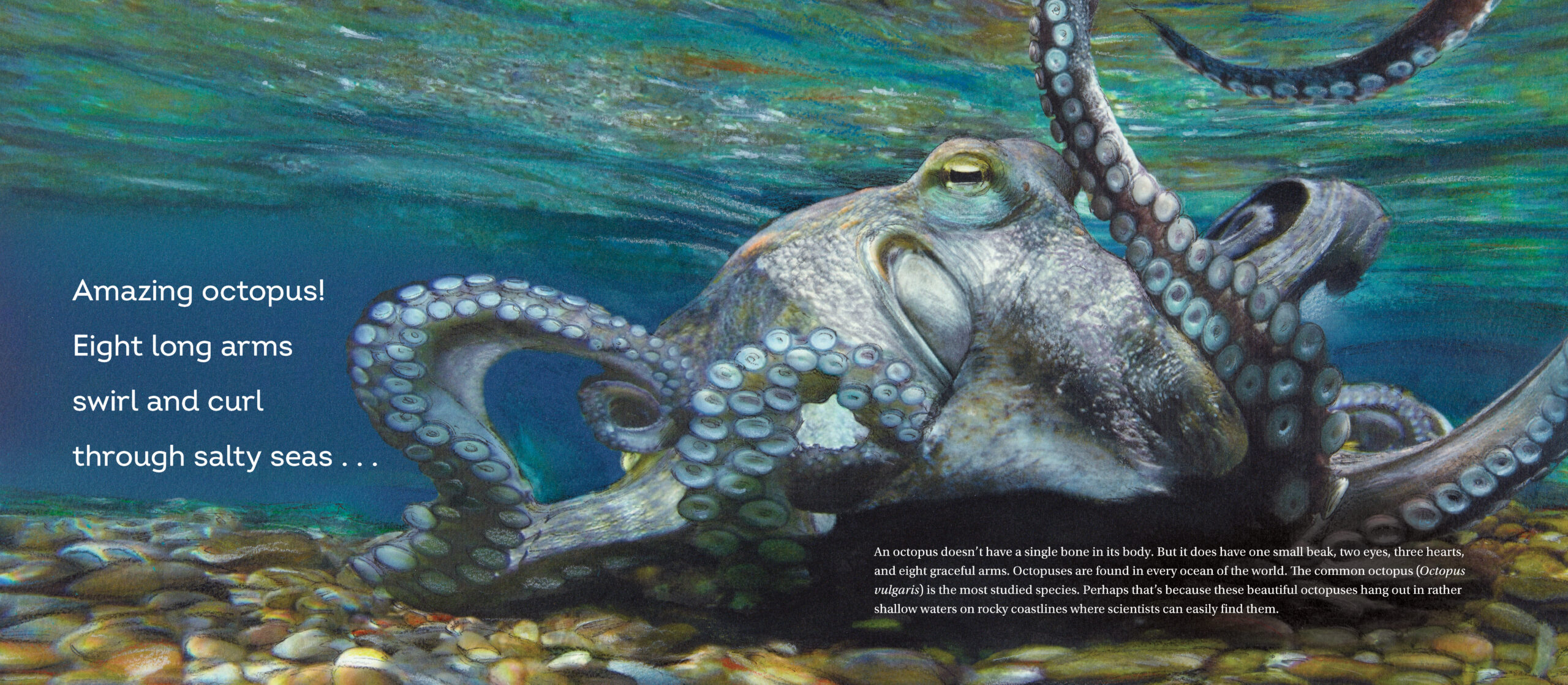
Summary: The amazing octopus is introduced in a series of two-page spreads, each one portraying a different species of octopus with a verb (hunting, changing, graphing) or adjective (luminous, dangerous) and a paragraph of information inspired by that word. Includes additional information about octopuses, several photos, a list of resources, and a bibliography. 32 pages; ages 4-8.
Pros: This visually appealing book makes an excellent octopus introduction for preschoolers but provides enough information and back matter to make it a good research resource for older kids. Fans of the Candace Fleming/Eric Rohmann books, especially Giant Squid, will want to check this out.
Cons: The last two very cool-looking octopuses in the photos at the end aren’t identified.
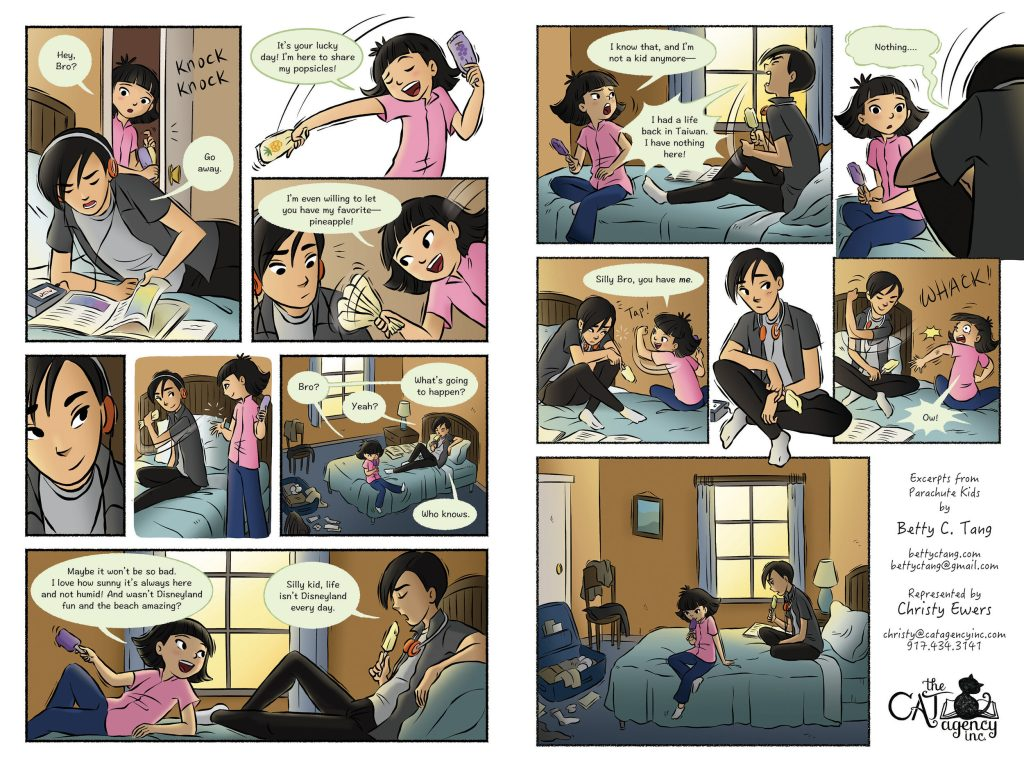
Summary: 10-year-old Feng-Li is excited to be visiting America for the first time on what she thinks is a vacation, but a week in, she discovers her father packing to leave. Turns out, her parents have decided that she and her older siblings Jia-Xi and Ke-Gāng will settle in America, where they’ll have more opportunities, and their parents will return to Taiwan and earn money to support the kids. At first, nearby family friends help out, but when the father of that family gets transferred, the kids are really on their own. Jia-Xi is trying to prepare for the SAT’s while taking care of the house and kids; Ke-Gāng is struggling with the fact that he’s gay and that the trouble he got into back home caused his parents to want the kids out of Taiwan; and Feng-Li is just trying to learn enough English to make a friend and to keep her siblings from their constant bickering. As one catastrophe follows another, the kids try to keep things going, and Feng-Li is forced to grow up fast to keep her family from falling apart. Includes an author’s note about her own experiences as a parachute kid, and how she used those experiences and those of other immigrant friends to create this story. 288 pages; grades 4-8.
Pros: A compelling graphic novel about a family faced with some unimaginably difficult times, and the three brave kids who are able to admit their mistakes and work hard to make things better. As Betty Tang says in the author’s note, “We need more diverse books, so eventually, everyone can find a piece of themselves reflected and their voices heard.” The Lins’ story adds another voice to that canon.
Cons: I was hoping Ke-Gāng would be able to come out to his family by the end of the story, but it didn’t happen.









 A Kids Book A Day