Lasagna Means I Love You by Kate O’Shaunghnessy

Published by Knopf Books for Young Readers
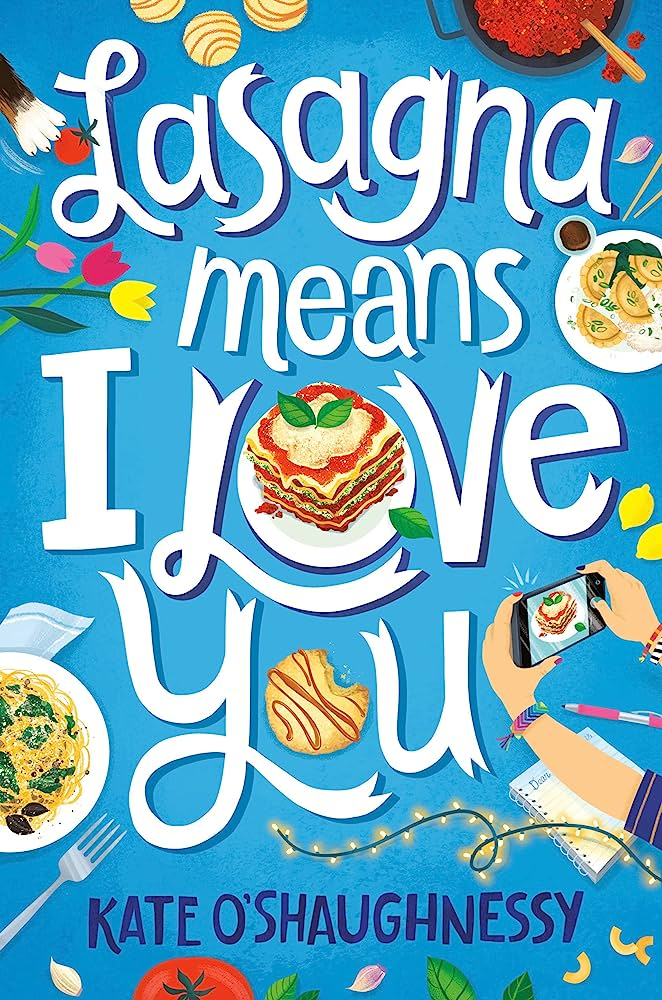
Summary:  Mo is reeling following the death of Nan, the grandmother who has raised her, and the refusal of her uncle to adopt her.  She’s placed in the foster care system, which she describes to Nan in a series of letters.  Several mishaps get her removed from her first placement, and she moves in with a wealthy couple who plan to adopt her.  Although the situation seems ideal in many ways, it gradually becomes evident that the couple isn’t ready for such a big move.  Mo feels rejected again and seeks solace with Joe, the doorman in her building that she’s befriended, and his wife.  Throughout the story, Mo learns to cook and, with her best friend, launches a website to collect family recipes with the hope of finding a recipe that will connect her with Nan.  The final resolution of Mo’s story doesn’t come as a particular surprise but is nonetheless extremely satisfying.  224 pages; grades 4-7.

Pros:  Kids in foster care don’t often appear in middle grade fiction, and Mo is a likable narrator whose story shows the heartache of trying to find a family.  The letter-writing format of the story gives it an immediacy and keeps the action moving along.

Cons:  Mo’s experience with the New York City foster care system seemed a lot rosier than I’m guessing most kids have, and there were only occasional mentions of the privilege of being a white girl offering hints of this.
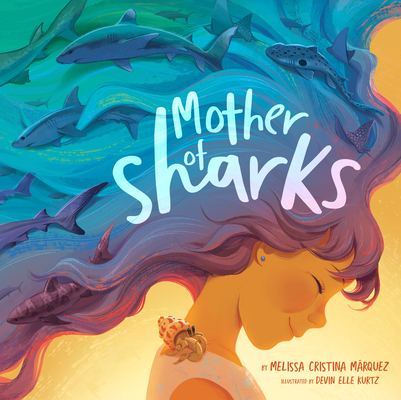
Mother of Sharks by Melissa Cristina Márquez, illustrated by Devin Elle Kurtz

Published by Penguin Workshop

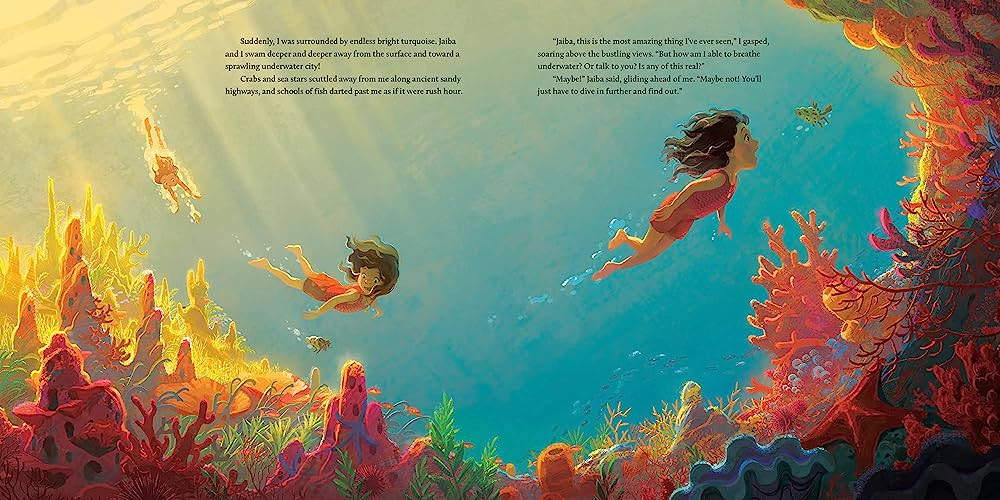
Summary:  Enjoying her last swim of the day at Puerto Rico’s Playita del Condado, Meli is amazed to find a talking hermit crab named Jaiba in one of the tidal pools.  Jaiba takes Meli on a magical journey underwater where she sees bleached coral and rescues a mako shark that’s tangled up in a plastic net. As Meli learns more from Jaiba about sharks and environmental damage that’s affecting them, she wonders if she can grow up to help them, since she’s never seen a scientist who looks like her.  Jaiba then takes her to meet one, a Hispanic woman known as the Mother of Sharks.  Inspired, Meli returns to the beach and her mom, excited to pursue her dreams.  Includes a letter from the author, a renowned marine biologist who grew up in Puerto Rico; a glossary; a list of resources; a translation of the Spanish words and phrases used in the story; and endpapers with about two dozen different types of sharks and their names. 48 pages; grades K-3.

Pros:  Gorgeous underwater illustrations (I love the cover!) depict a world that may inspire others to follow dreams of marine biology; the story offers positive affirmations that those dreams available to everyone.

Cons:  The font was small and hard to read in some of the darker-hued illustrations.

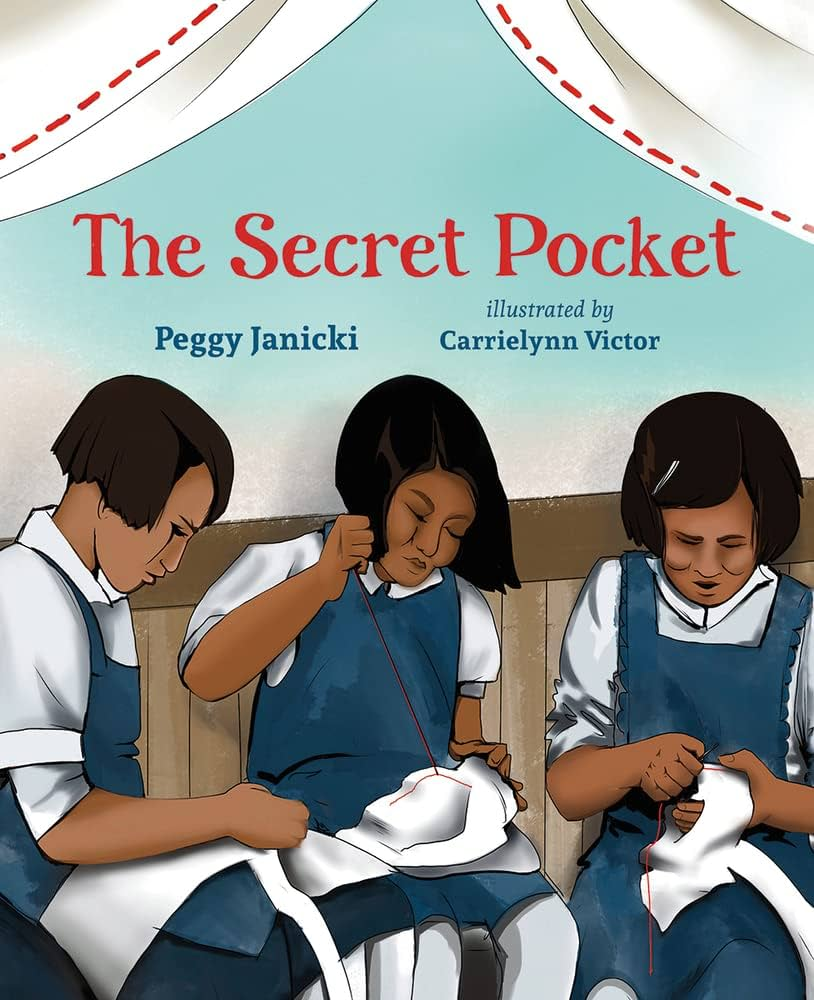
The Secret Pocket by Peggy Janicki, illustrated by Carrielynn Victor

Published by Orca Book Publishers

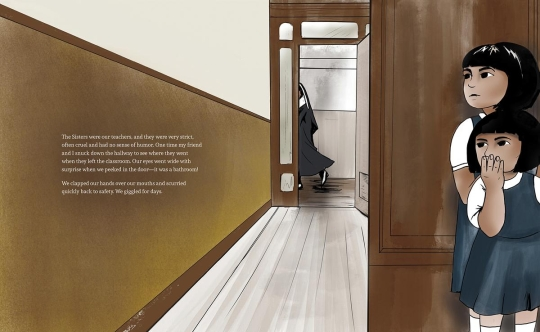
Summary:  Mary shares her earliest happy memories growing up surrounded by a loving family.  When she’s four, though, a priest and nun come to her grandparents’ home and suggest that she start attending their residential school with her older brother and sister.  Lejac is far away, and there’s never enough food to eat.  An older girl shows Mary how to eat toothpaste to make her hunger go away.  The kids go home for summer break, where they learn traditional skills from their parents.  Eventually, the girls use their sewing skill to add secret pockets to their uniforms so that they can sneak food from the kitchen.  This small act of rebellion makes the girls feel like geniuses and gives them back some power over their difficult circumstances.  Includes an author’s note about her mother, Mary, who shared this story near the end of her life, and how a secret pocket with her story is still sewn into the graduation robes at the University of Fraser Valley in Canada.  32 pages; grades 2-5.

Pros:  An important story that celebrates ingenuity and teamwork in overcoming some extremely dark circumstances and shows readers the truth about indigenous boarding schools.

Cons:  This story is pretty horrifying; the girls’ major victory was just getting enough food to eat.

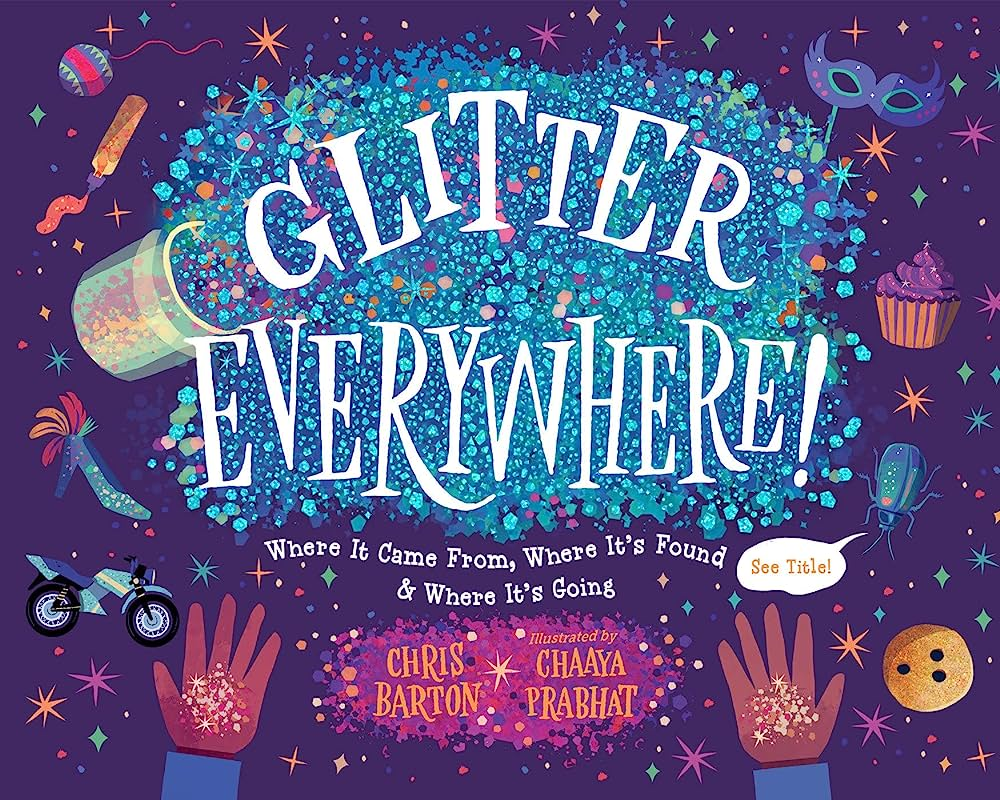
Glitter Everywhere! Where It Came From, Where It’s Found & Where It’s Going by Chris Barton, illustrated by Chaaya Prabhat

Published by Charlesbridge

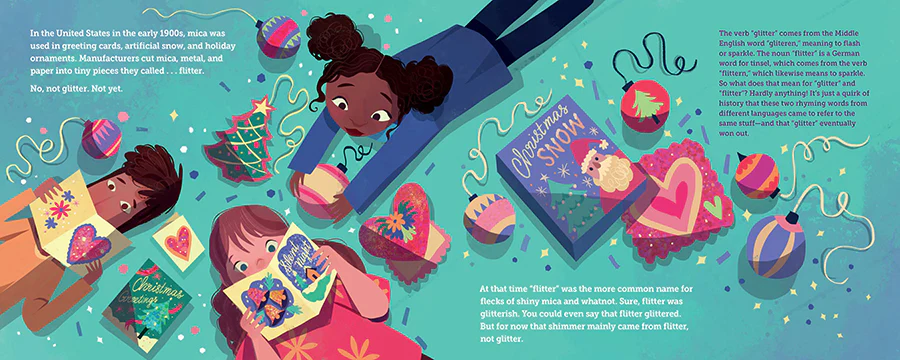
Summary:  Since early times, humans have been attracted to things that are iridescent, like beetles and mica.  In more recent history, people have learned to manufacture this iridescence, starting with “flitter”, a mix of ground-up mica, metal, and paper that was sold in the early 1900’s.  During World War II, mica was needed for industry, so a man named Henry F. Ruschmann began making plastic glitter from his factory in Bernardsville, NJ.  This product, which has become ubiquitous in our society, has its downsides, being the very definition of microplastic, a material that is wreaking all kinds of environmental havoc.  Alternative glitters are being created, so it looks as though, one way or another, glitter is here to stay.  Includes an author’s note that talks about how he researched the book, an illustrator’s note, books for further reading, and a bibliography.  48 pages; grades 2-5.

Pros:  Chris Barton tells the story of glitter with some history, some science, and a lot of humor in this extremely engaging nonfiction book.  The illustrations are lots of fun, and what kid is not going to want to read about glitter?

Cons:  My vacuum cleaner and I have kind of a love/hate relationship with glitter.

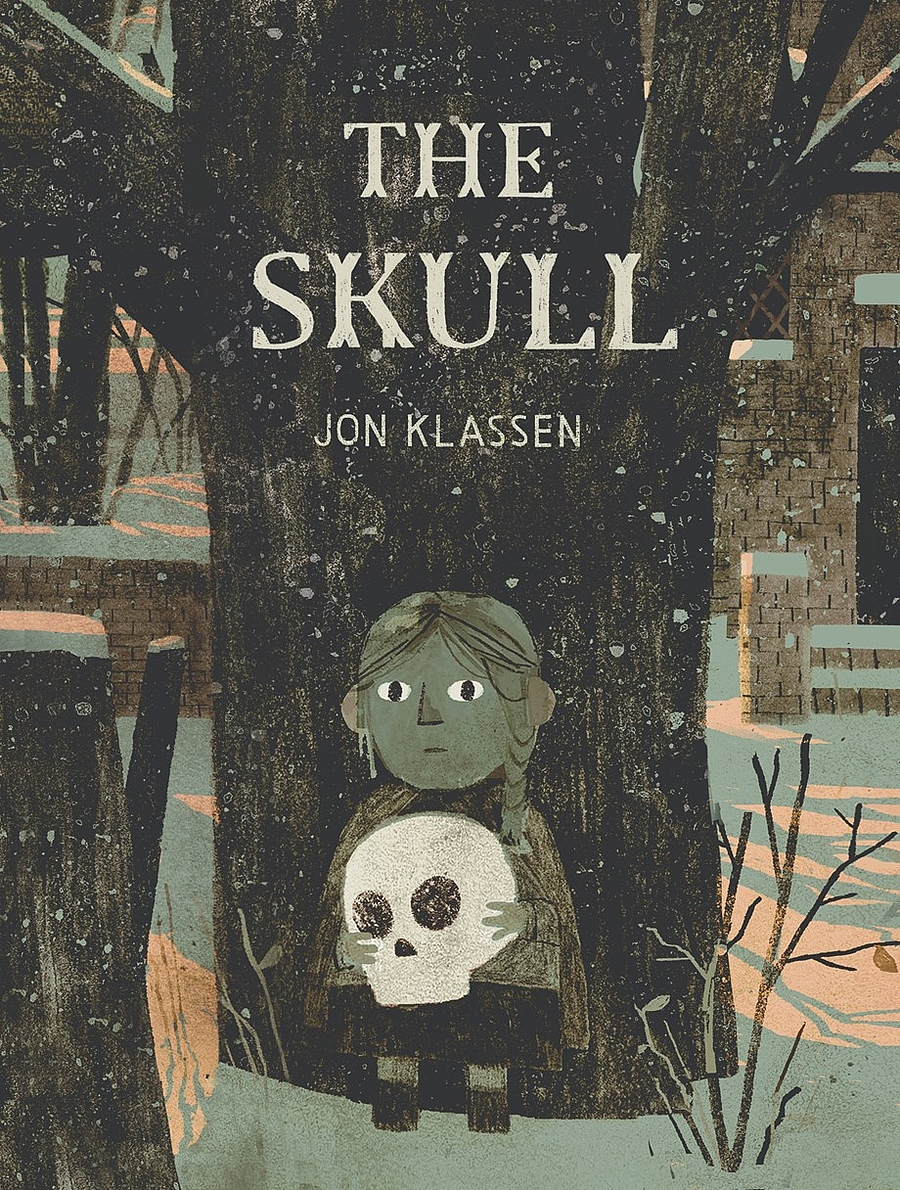
The Skull: A Tyrolean Folktale by Jon Klassen

Published by Candlewick

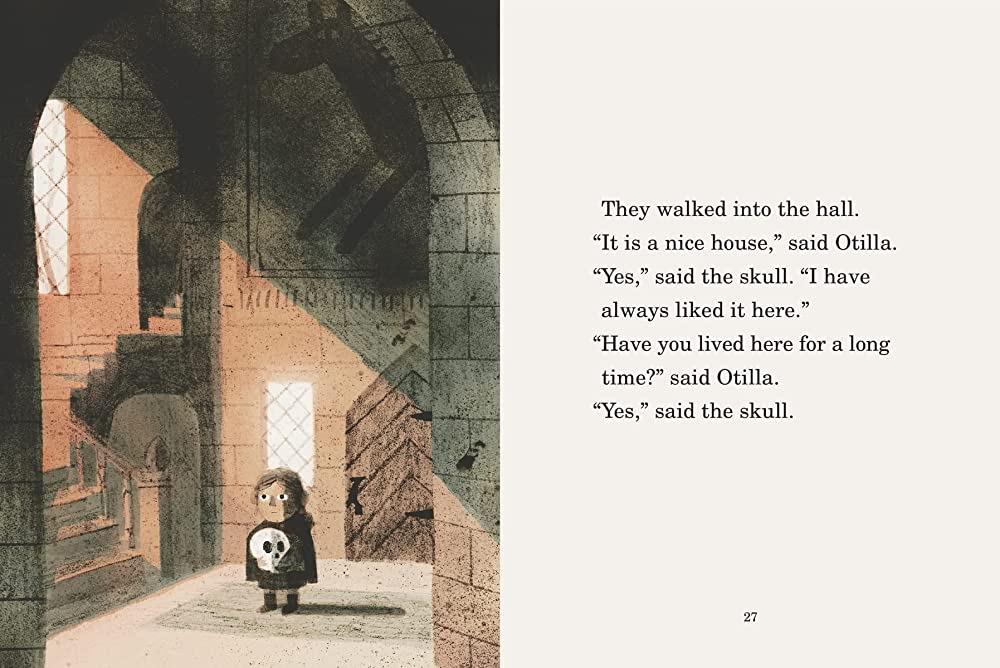
Summary:  Otilla is running away and lost in the forest.  She stumbles upon an old house that looks abandoned but turns out to be inhabited by a skull.  The skull shows her around: there are creepy masks, a dangerously high tower, and a bottomless pit.  He invites her to stay for the night but warns her of a headless skeleton that chases him every night, and “I am not as fast as I used to be.”  Sure enough, the skeleton shows up in the middle of the night, but Otilla is ready.  By the time the story ends, that skeleton will not be bothering anyone ever again, and the skull and Otilla have decided that she will stay in the house.  Includes an author’s note about how he came to write this folktale retelling which gives a pretty interesting spin on the oral tradition.  112 pages; grades 1-4.

Pros:  As usual with Jon Klassen, expect the unexpected.  This book, which looks more like a chapter book than a picture book, is told in five parts, but can probably be read in one longish sitting.  It’s creepy and funny and just dark enough to give kids the shivers.  Perfect for the Halloween season, with the distinctive Klassen illustrations that I’m sure will be considered for a Caldecott. The author’s note, featuring a wise Alaskan librarian, would make a good addition to folktale units.

Cons:  I’m always worried that Jon Klassen books are too dark and/or too weird for early elementary. Yet they never are.

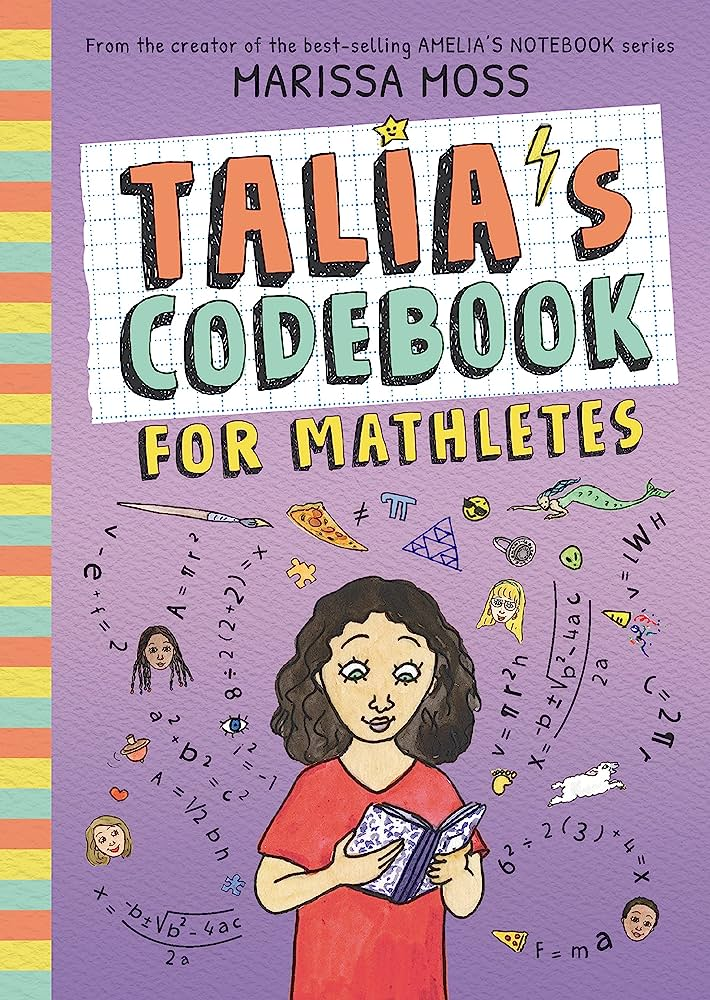
Talia’s Codebook for Mathletes by Marissa Moss

Published by Walker Books

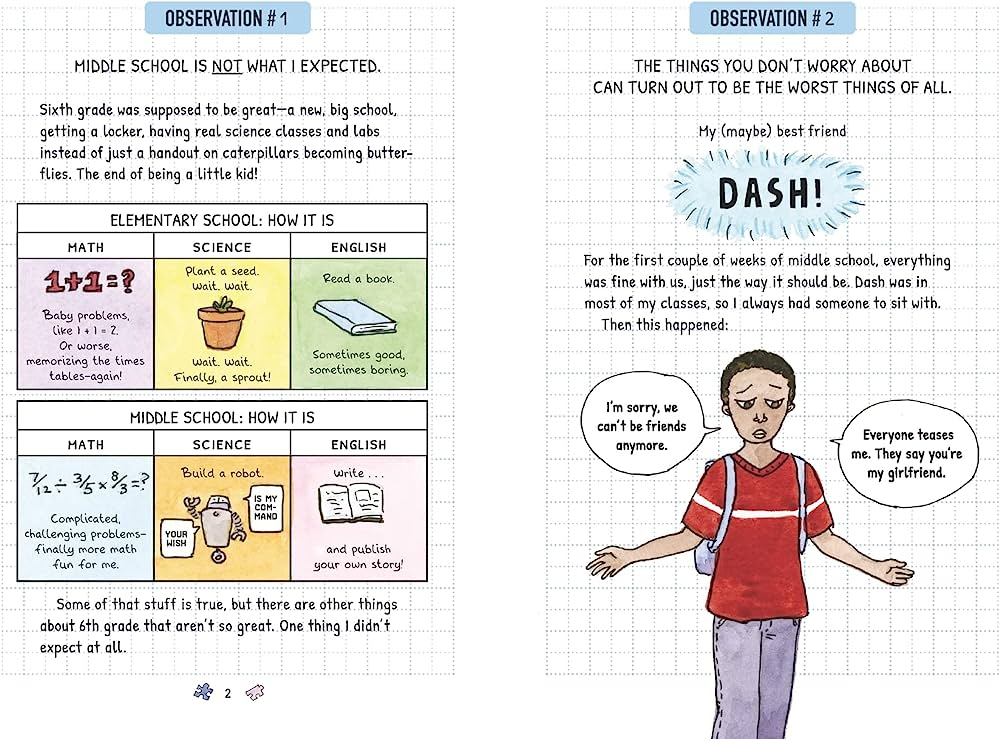
Summary:  Talia’s dealing with lots of ups and downs at the beginning of middle school, but the worst is that her neighbor and best friend Dash doesn’t want to be seen with a girl at school.  When Talia joins the mathletes, she learns that she’s the only girl, and the coach and some of the other boys treat her disrespectfully.  Fed up, she decides to form her own girls’ mathletes team.  Her two best friends aren’t interested in being on the team, but they’re supportive and help her get things going.  Much to her surprise, sixteen girls show up to the first meeting, and before long, the Mathlete Mermaids are ready for competition.  At the big meet, Talia messes up, but she learns from her mistake, and the rest of the team does well enough to win.  The boys are shocked but see that their sexism has lost them some valuable teammates, and the two teams decide to merge.  Talia has mixed feelings about this but is proud that she stepped up and created a way for girls to shine in math. Includes additional information about codes and an author’s note about her own experience with mathletes.  240 pages; grades 3-6.

Pros:  Middle school graphic novel fans will enjoy this story of STEM girl power that includes a number of fun codes, and that does an excellent job of chronicling middle school friendship and family issues without neatly resolving them all.  

Cons:  I was hoping that Talia’s parents, who focused on her mistake at the competition instead of her team’s win, would learn a lesson or two, but no such luck.

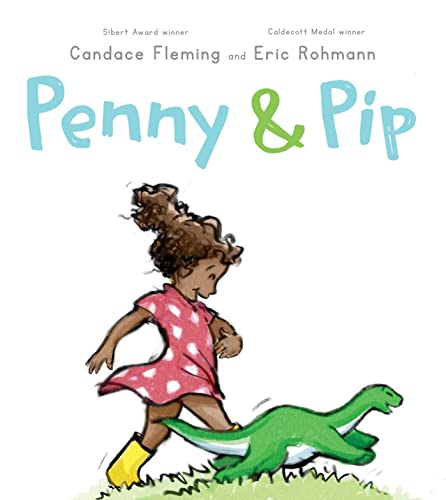
Penny & Pip by Candace Fleming, illustrated by Eric Rohmann

Published by Atheneum/Caitlyn Dlouhy Books

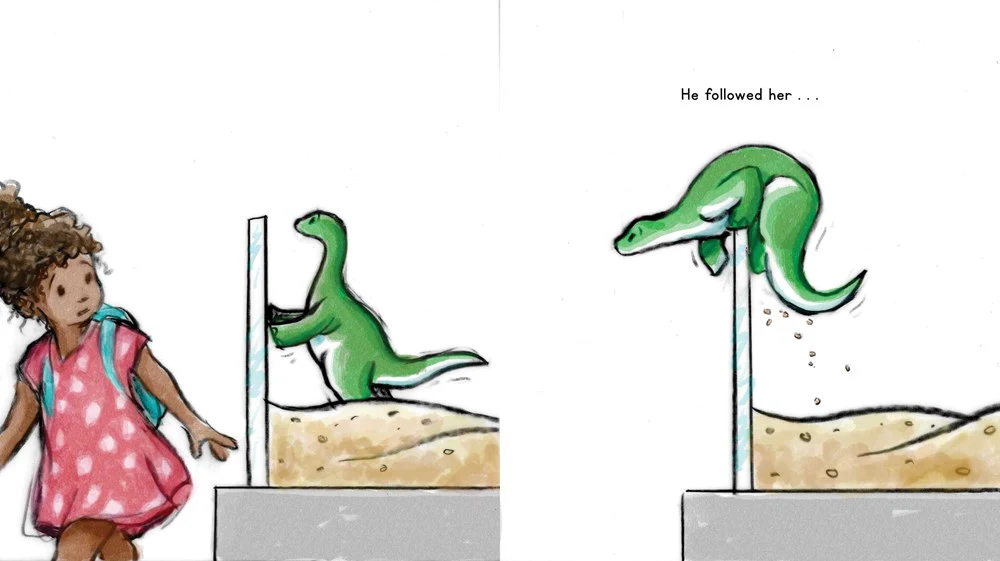
Summary:  Penny’s on a field trip to the natural history museum when “something astonishing” happens: a baby dinosaur hatches from one of the eggs on exhibit.  Only Penny notices; the baby notices, too, and it starts following Penny around the museum.  She shares her lunch, and when the baby dinosaur makes a “pip, pip” sound, she names it Pip.  When it’s time to go home, Penny doesn’t want to leave her new friend behind, but Pip doesn’t fit in her backpack.  Pip hides in the pile of stuffed animals at the gift shop, Penny pays for her new “toy,” and the two are on their way.  40 pages; ages 4-8.

Pros:  This award-winning team has produced another fun story with adorable illustrations that is sure to become a favorite of dinosaur aficionados.

Cons:  I suspect that Penny & Pip: The Next Day might not end quite this happily.

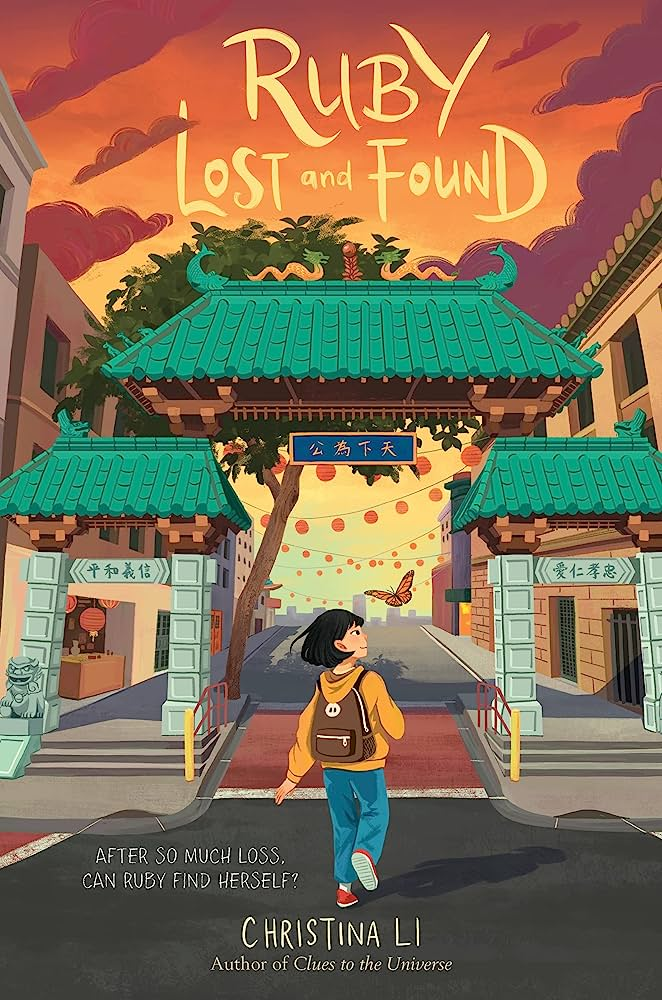
Ruby Lost and Found by Christina Li

Published by Quill Tree Books

Summary:  Ruby’s had a tough year in seventh grade: one friend moved away, another drifted away, and her beloved grandfather died.  When Ruby’s caught sneaking out of school at lunchtime, she’s sent to her grandmother’s house every weekday during the summer.  Nai-Nai spends her days at the senior center, where Ruby is forced to tag along.  To her surprise, she finds a community there with the other old ladies and Liam, a classmate who also comes with his grandmother.  As the summer goes on, Ruby slowly comes to terms with her grief over her grandfather, her changing friendships, and, most heartbreakingly, her grandmother’s signs of early dementia.  As Ruby and Liam try, and fail, to save a beloved neighborhood bakery, Ruby learns that changes are inevitable, but that having a community of family and friends can help to navigate them.  304 pages; grades 4-7.

Pros:  A beautifully written story of grief, loss, and community.  Ruby struggles realistically with her emotions and with making choices that aren’t always great, but she also learns to make amends without compromising who she is.  I’d love to see this book win some awards.

Cons:  Until the very end, Ruby’s parents come across as pretty selfish and constantly exasperated with a daughter who is truly struggling.

Remember by Joy Harjo, illustrated by Michaela Goade

Published by Random House Studio

Summary:  Former U.S. Poet Laureate Joy Harjo’s poem celebrates life: the cosmos, the Earth, the plants and animals, and people, especially parents.  “Remember you are the universe.  And this universe is you.  Remember.”  Caldecott Medalist Michaela Goade’s illustrations depict a child traveling through the universe, with images inspired by traditions from her Tlingit culture.  Includes an author’s note about poetry that encourages readers to write their own poems and an illustrator’s note with additional information about her inspirations for the pictures.  40 pages; ages 5 and up.

Pros:  This beautiful book created by two Indigenous American artists celebrates the complexity of life and the universe, reminding the reader to stop and pay attention.  A Caldecott contender for sure.

Cons:  Young readers will need some adult guidance to fully appreciate both the text and the illustrations.

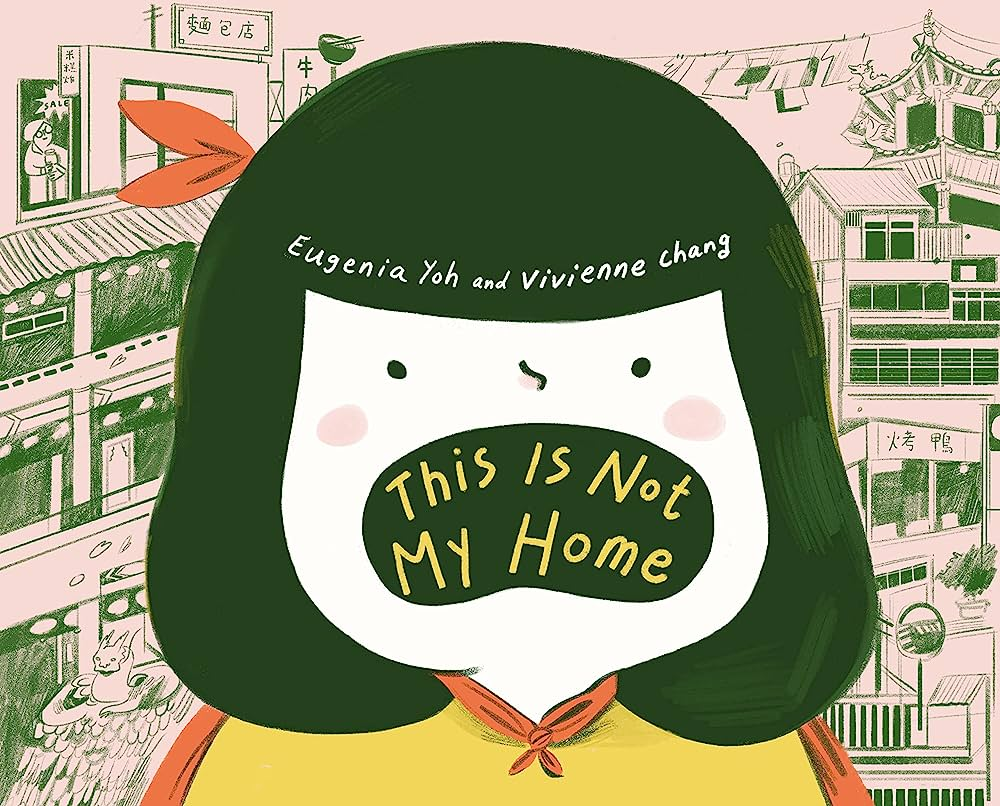
This Is Not My Home by Eugenia Yoh, illustrated by Vivienne Chang

Published by Little, Brown Books for Young Readers

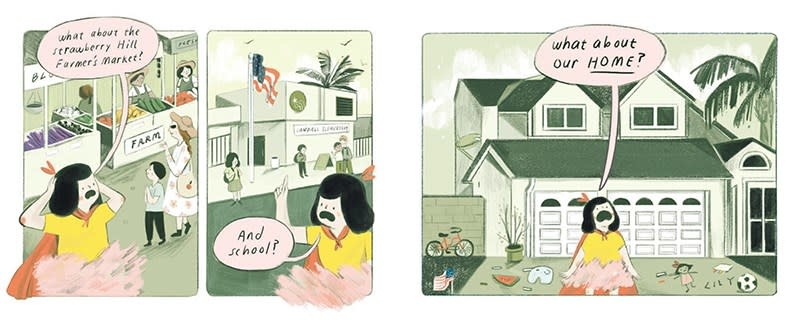
Summary:  When Lily’s mother tells her they are moving back to Taiwan to take care of Ah Ma, Lily rebels.  What about school?  The farmers’ market?  The fireflies in the park?  Her friend Jill?  Mom asks Lily to be understanding, but Lily refuses as they pack, get on the plane, and are greeted by Ah Ma.  As Lily is reluctantly guided through her new neighborhood, she keeps up a steady narration, “This is not the farmers’ market!  This is not my school!  This is not my home!”  A turning point comes when her mother calmly explains that it may not be Lily’s home, but it is her home.  A few wordless spreads show Lily making a couple of friends at school and enjoying a moped ride through the city, as calendar pages mark the passage of several months.  The last page declares, “This is my home,” in English and Mandarin.  Endpapers show Lily’s American neighborhood at the beginning and her Taiwanese one at the end.  48 pages; ages 4-8.

Pros:  A cute and funny debut picture book that poignantly captures the process of reverse immigration.

Cons:  I’m not sure I could be as patient as Lily’s mother is.