What’s Inside a Caterpillar Cocoon? And Other Questions About Moths and Butterflies by Rachel Ignotofsky

Published by Crown Books for Young Readers
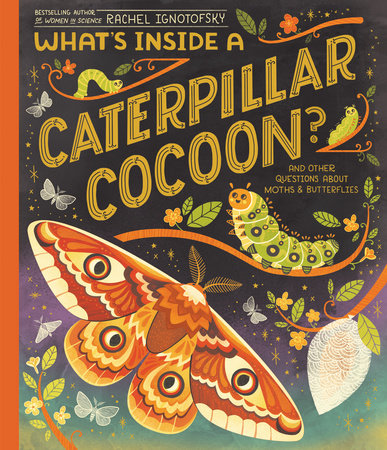
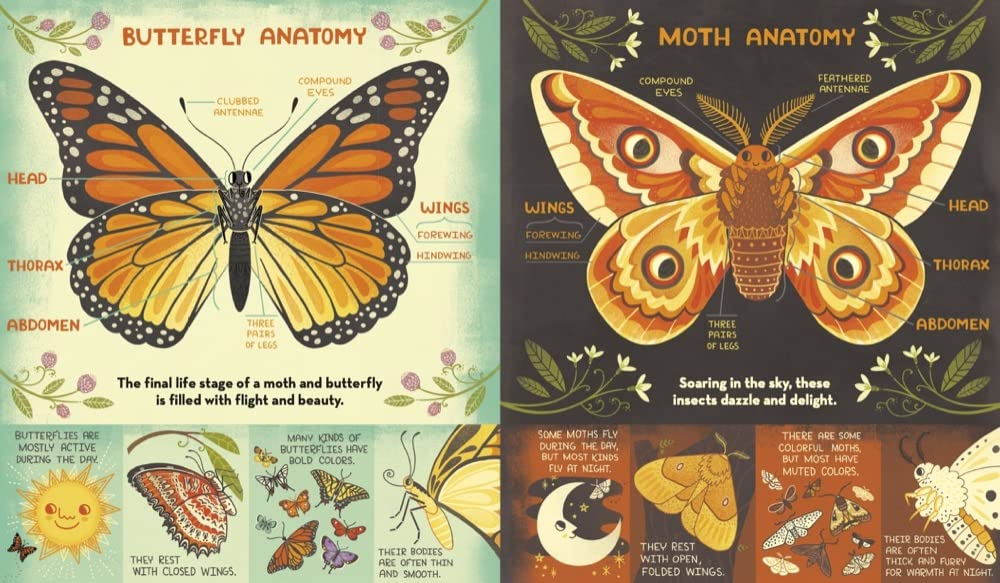
Summary:  From egg to caterpillar to pupa (called a cocoon for moths and a chrysalis for butterflies), butterflies and moths have similar life cycles.  Readers will learn the intriguing answer to the title question, as well as answers to many other questions about butterflies and moths.  Detailed illustrations portray a wide range of caterpillars, butterflies, and moths with labels to identify each one.  In addition to the life cycle, there is plenty of fascinating information about anatomy, food, defenses, and more.  Includes a page of sources and resources.  48 pages; grades K-3.

Pros:  I missed last year’s What’s Inside a Flower? and am delighted that I discovered this beautiful and informative science book.  The illustrations are unique and detailed, containing at least as much information as the text.  Just as I was wishing I knew the differences between butterflies and moths, I turned the page to discover a detailed comparison suitable for framing and hanging in the science corner.

Cons:  This book seemed a little long for the intended audience.  With so much information, you might want to break it up into several sections and read one at a time.
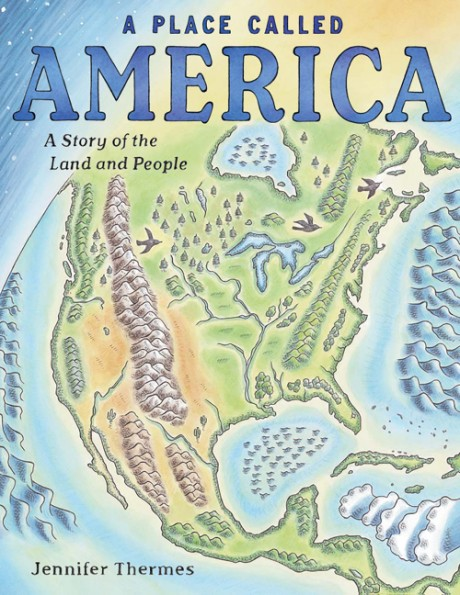
A Place Called America: A Story of the Land and People by Jennifer Thermes

Published by Harry N. Abrams

Summary:  Beginning with a global view of the Earth when “the land was owned by no one,” Jennifer Thermes dives into American history and the drive to acquire its land, shown by illustrated maps.  She focuses on marginalized people–indigenous, enslaved, immigrants–and how they helped shape history.  The two-page spreads look at a specific year or an era, portraying people and/or maps that show important events and movements of that time.  Includes an afterword about maps and history, a list of sources, and a timeline on the endpapers.  64 pages; grades 3-6.

Pros:  I am always thrilled to learn of a new Jennifer Thermes book featuring her amazing maps. You could use this one to cover a whole school year of American history, beginning with the author’s note with the assertion that “the stories we tell ourselves about what is happening make us who we are.”  Readers will spend hours poring over her beautiful maps and other complex illustrations of the people who made up the various eras that she writes about so engagingly.

Cons:  Except for a spread about 9/11, the history pretty much ends in the middle of the 20th century.

The Story of Gumluck the Wizard by Adam Rex

Published by Chronicle Books

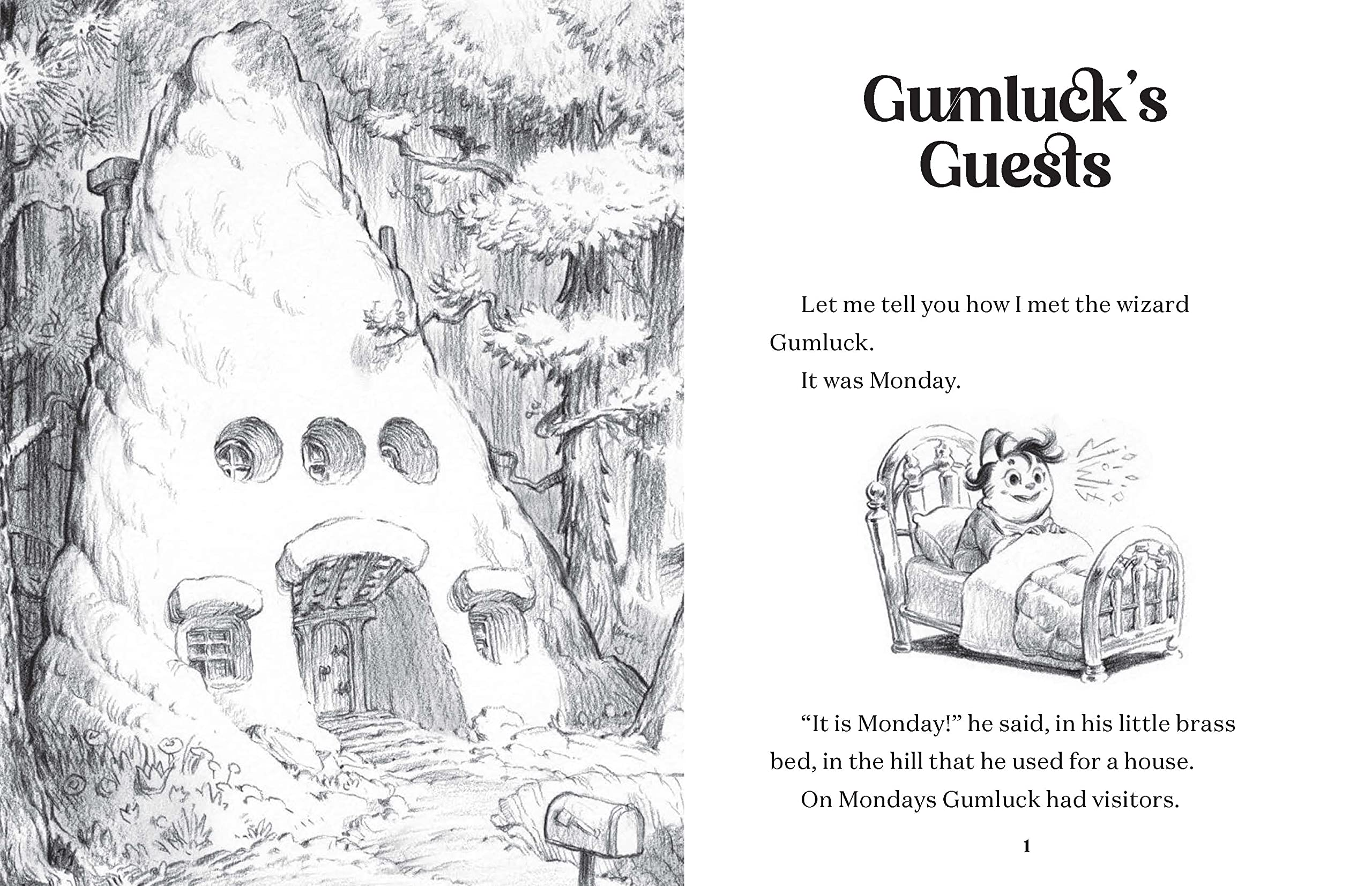
Summary:  Helvetica the raven narrates the story of his neighbor Gumluck, a little wizard who likes to help people.  Believing the best about his neighbors, Gumluck fails to notice that they are spreading unkind rumors about him behind his back.  Helvetica notices, though, and in spite of himself, he begins to befriend the wizard and try to help him out.  When the king’s greed precipitates a crisis for the town, it’s up to Gumluck and Helvetica to save everyone.  The crisis causes Gumluck to realize who his real friends are and to become a bit more discerning about how he uses his wizardly powers.  140 pages; grades 1-4.

Pros:  Adam Rex uses plenty of his trademark humor in both the story and the illustrations of what appears to be book one of a new early chapter book series.

Cons:  I think colored illustrations would have given this more kid appeal.

Bunny and Tree by Balint Zsako

Published by Enchanted Lion Books

Summary:  The prologue of this wordless book shows a seed flying through the air, landing on the earth, and sprouting to eventually become a full-grown tree.  In Act One, the tree watches as a wolf chases a pack of rabbits.  Turning itself into a monster, the tree scares away the wolf and offers refuge to one of the rabbits.  Bunny asks Tree for help finding the rest of its pack, and the two set off on a wondrous journey.  After Bunny digs up Tree and puts it in a little red wagon, Tree is able to transform into a train, a boat, and a plane to carry them into the mountains where they at last find the rest of the rabbits.  The tree is transplanted and enjoys a symbiotic relationship with the bunnies, offering them food and shelter in exchange for fertilizer and friendship.  184 pages; ages 7 and up.

Pros:  This incredible wordless story unfolds over the course of nine acts and an epilogue, celebrating a wondrous friendship as well as the magic of the changing seasons.  

Cons:  I didn’t completely understand the beginning of the story until I read some of the book reviews.

Ghost Book by Remy Lai

Published by Henry Holt

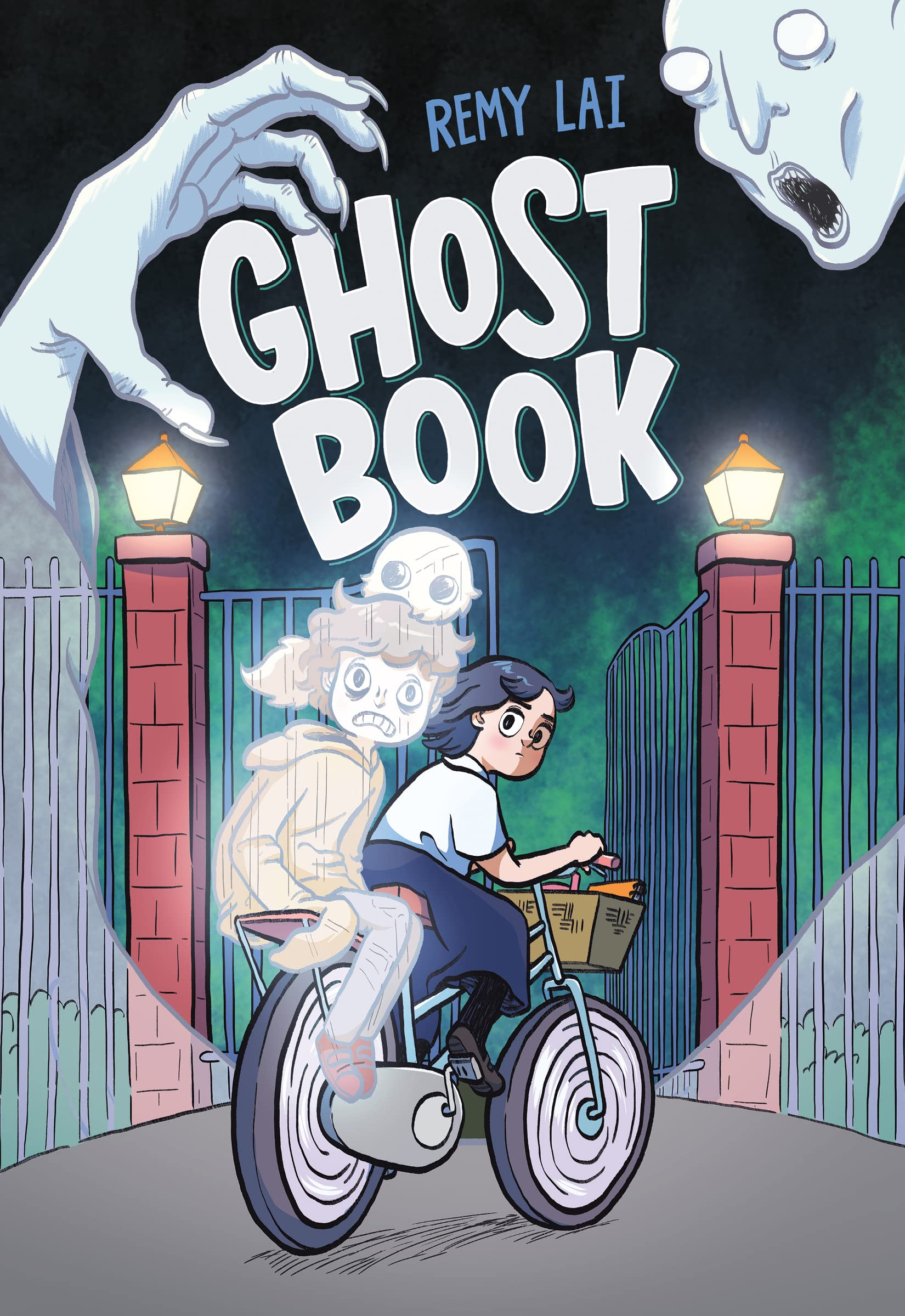
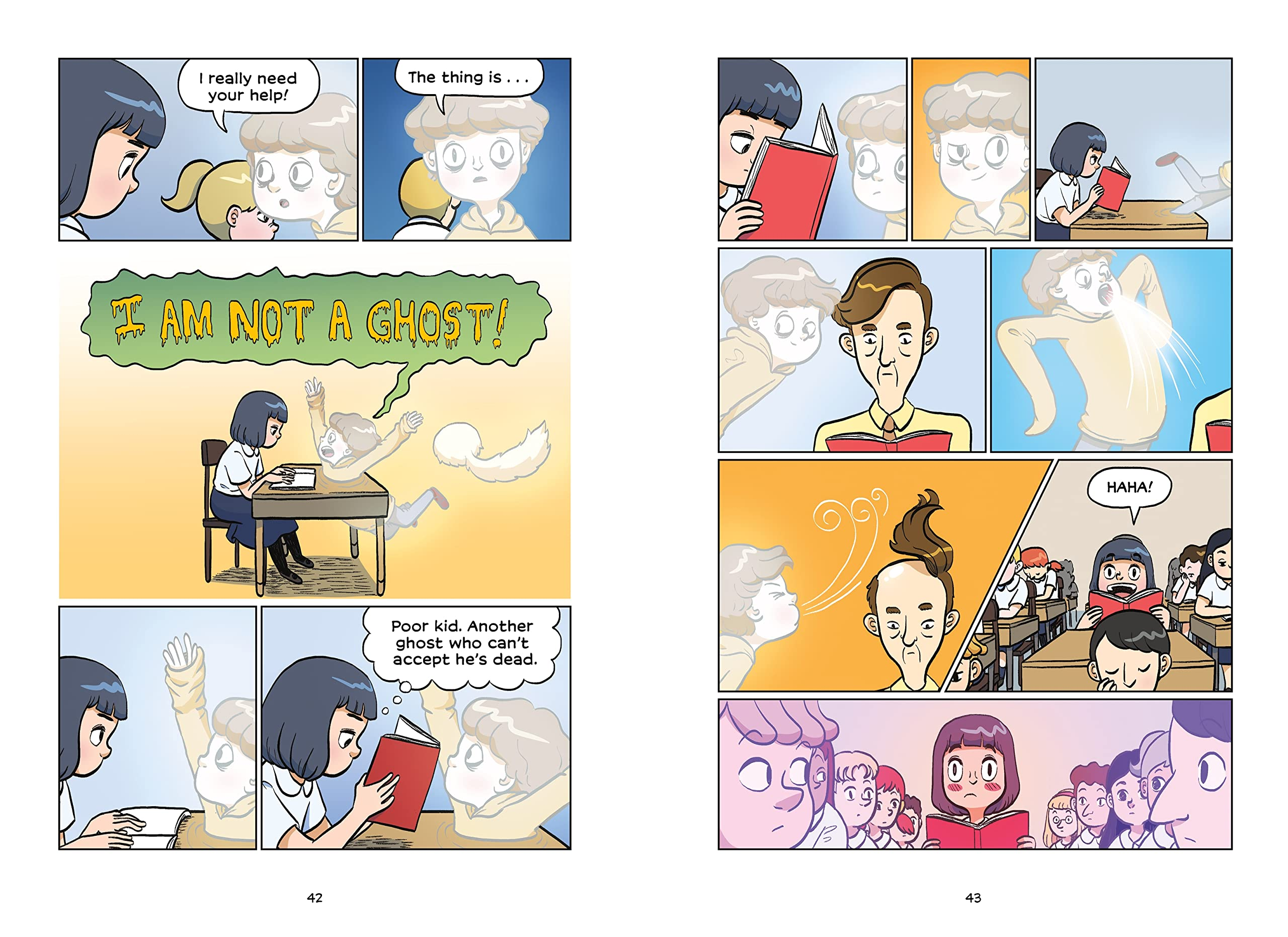
Summary: July has “yin-yang eyes”, meaning that she can see ghosts, but she feels as invisible as a ghost most days.  Her mom died when she was born, her dad is too preoccupied with work to pay much attention to her, and teachers and kids at school often overlook her.  Desperate for a friend, she tries to summon a ghost.  William shows up instead–a boy who is in a coma, and whose spirit is wandering around trying to figure out if he is dead or alive.  As the two kids do some investigating, they discover that they have a life-long connection, and that only one of them is meant to be alive.  Their explorations take them into the underworld, where they hope to change fate so that they can both live.  There, they are pursued by a variety of spirits bent on their destruction, but their friendship saves the day and helps them to figure out a way forward for both of them.  320 pages; grades 3-6.

Pros:  I’m a big fan of Remy Lai’s graphic (and semi-graphic) novels, and her latest one does not disappoint.  Part ghost story, part friendship story, part adventure, this will keep kids turning the pages until the surprising but totally satisfying conclusion.

Cons:  This is a bit darker than Lai’s previous books.

A Long Time Coming: A Lyrical Biography of Race in America from Ona Judge to Barack Obama by Ray Anthony Shepard, illustrated by R. Gregory Christie

Published by Calkins Creek

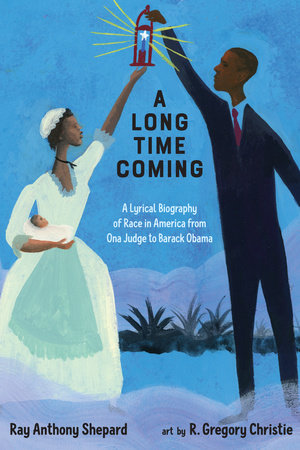
Summary:  Six Black Americans are profiled in five chapters: Ona Judge, Harriet Tubman and Frederick Douglass together, Ida B. Wells, Martin Luther King, Jr., and Barack Obama.  Their stories are told in verse, weaving together scenes from their lives to paint engaging portraits of their work, their dreams, their discouragements, and their successes and failures.  Each section begins with an illustration and a bit of personal history from the author, connecting his life to his subjects’.  Includes a timeline, additional resources, a bibliography and source notes for each section, and an index.  336 pages; ages 12 and up.

Pros:  Ray Anthony Shepard has written a masterful poetry collection, telling stories that will immediately engage readers.  He doesn’t shy away from telling both the terrible events his subjects witnessed and the less-than-great choices they sometimes made to fully portray their humanity.  Definitely deserving of some serious Coretta Scott King Award recognition.

Cons:  I wish there had been some information on the poetry and poetic forms used.

Remembering by Xelena González, illustrated by Adriana M. Garcia

Published by Simon and Schuster Books for Young Readers

Summary:  The narrator is grieving the loss of her dog.  As she and her family remember him, she gathers his favorite things to create an ofrenda, or offering, for him.  Each photo she looks at reminds her of a time she and her beloved pet shared. She makes his favorite meal and pours him a bowl of water.  When everything is ready, the family celebrates their dog together on Día de Muertos.  Includes notes from the author and illustrator about the loss of their pets and additional information about Día de Muertos and how to make an ofrenda.  40 pages; ages 4-8.

Pros:  I’m adding this beautiful book to my list about grief and loss.  The simple text and realistic illustrations capture the bittersweet experience of grieving the loss of a pet and provide an excellent introduction to Día de Muertos.

Cons:  Keep the Kleenexes handy.

Stickler Loves the World by Lane Smith

Published by Random House Studio

Summary:  Stickler, an eight-eyed creature who appeared in Lane Smith’s 2022 book A Gift for Nana, loves sticks.  And everything else he sees around him.  “Oh, to see it all anew!”  He gets that chance when he finds a space alien that’s just arrived to Earth (or so Stickler thinks; readers will realize it’s actually a bird with a can stuck on its head).  Stickler gives the creature a tour of all the things he loves: flowers, the ocean, the wind, rocks.  The can finally comes off to reveal Stickler’s friend Crow, who thanks Stickler for opening up her eyes to the wonders of the world.  40 pages; ages 4-8.

Pros:  Lane Smith’s textured illustrations gorgeously celebrate the natural world, and Stickler and Crow humorously present a message of mindfulness and appreciating the beauty all around them.

Cons:  Adults may appreciate the message more than younger readers.

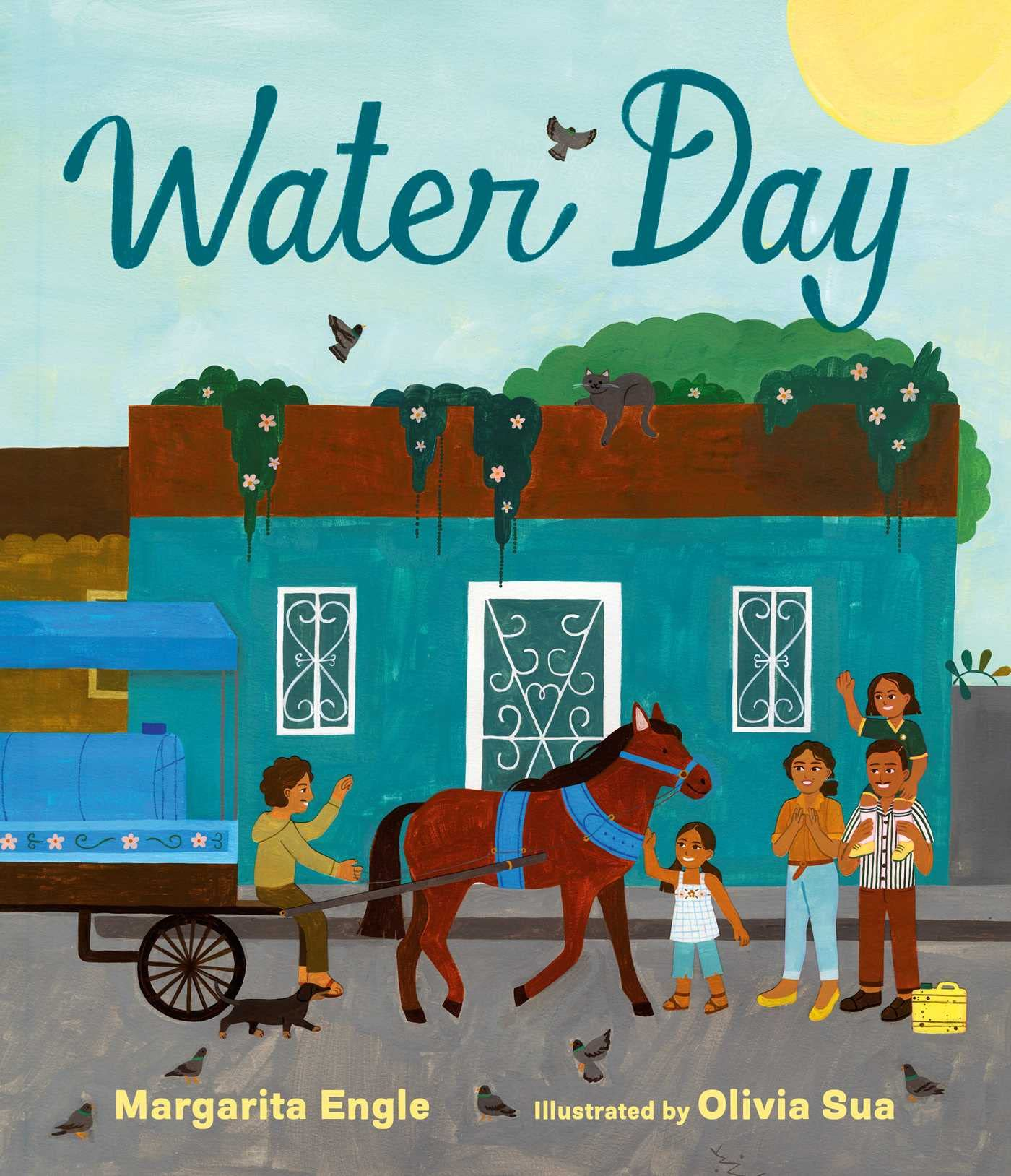
Water Day by Margarita Engle, illustrated by Olivia Sua

Published by Atheneum Books for Young Readers

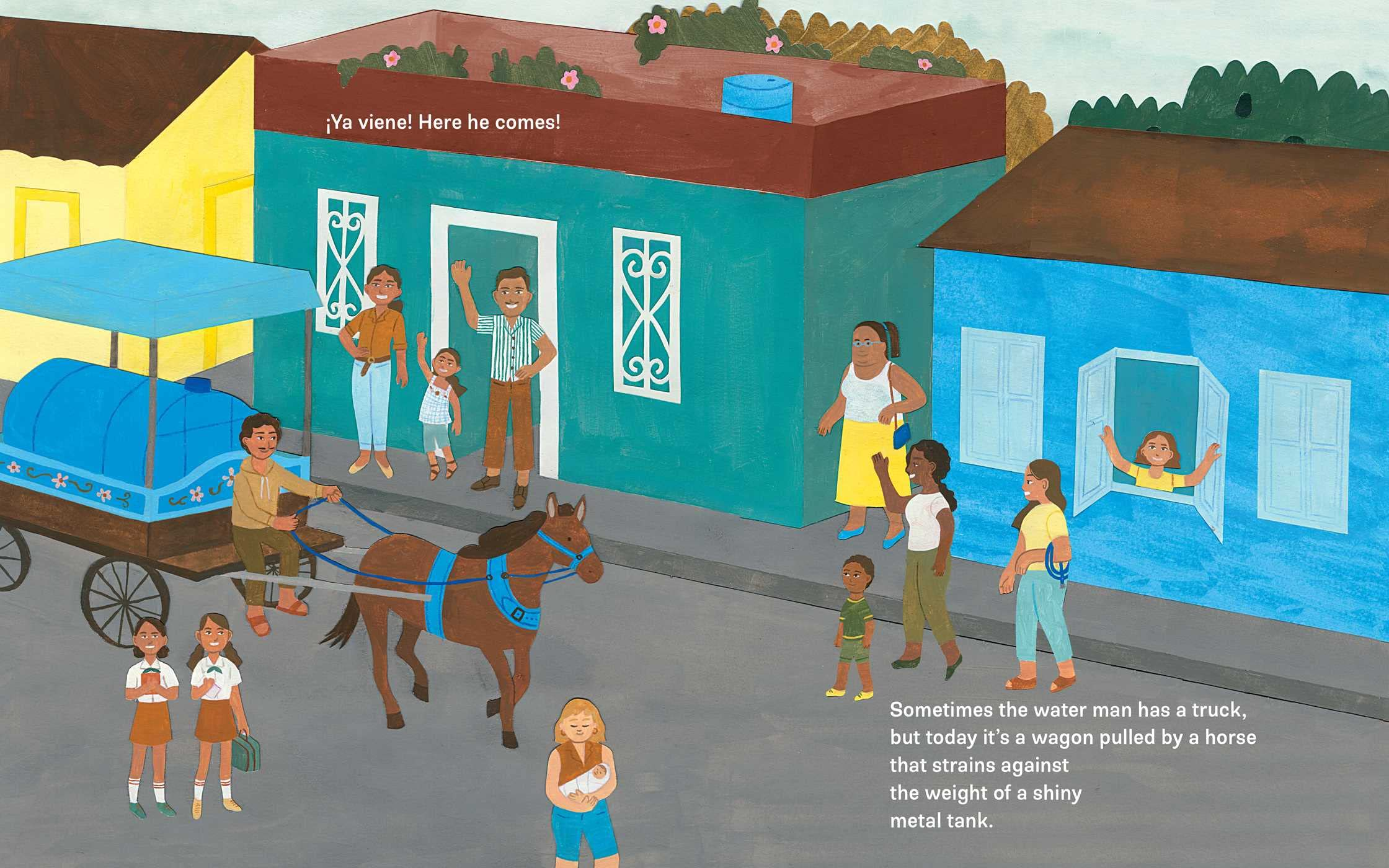
Summary:  A young girl describes the excitement of water day, when a man comes to her Cuban neighborhood to deliver water.  The family needs water to bathe, cook, drink, and flush the toilet. Bisabuelita (great-grandmother) remembers her childhood when rain fell every day, filling the water tanks. “What changed? Everything. Weather. Rivers. Groundwater. Lakes.” After the water man arrives and fills their blue tank, the fish lady shows up, selling tiny fish to eat the mosquitoes that come to the water, carrying malaria and other diseases.  The girl says good-bye, knowing she will see the water man and fish lady in another five days.  Includes an author’s note with additional information about the global water crisis and mosquitofish.  40 pages; ages 4-8.

Pros:  Cuba’s water crisis is described succinctly and quite matter-of-factly by the young narrator who sees it as part of her life.  The colorful illustrations add a cheery note to a pretty dire topic.  The additional information helps flesh out what is going on in the story.

Cons:  I was thirsting for a list of additional resources, but the well was dry.