The Boo-Boos of Bluebell Elementary by Chelsea Lin Wallace, illustrated by Alison Farrell

Published by Chronicle Books
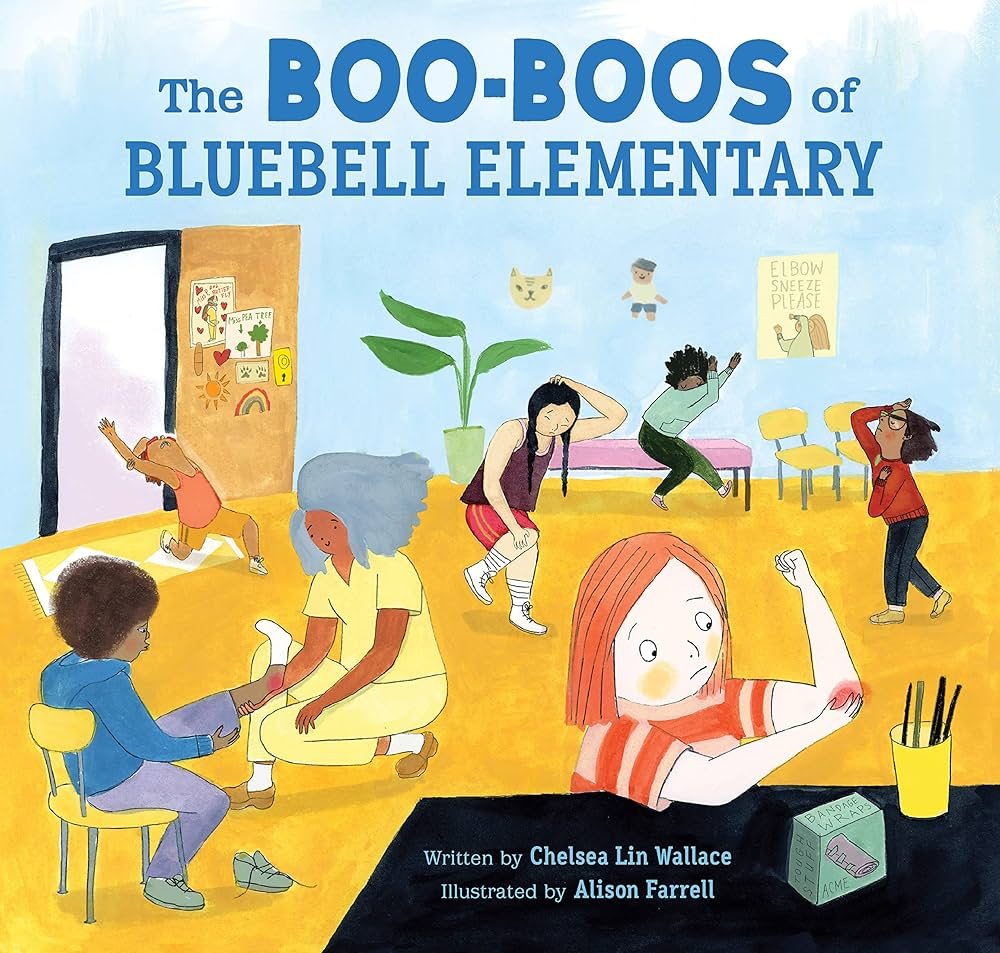
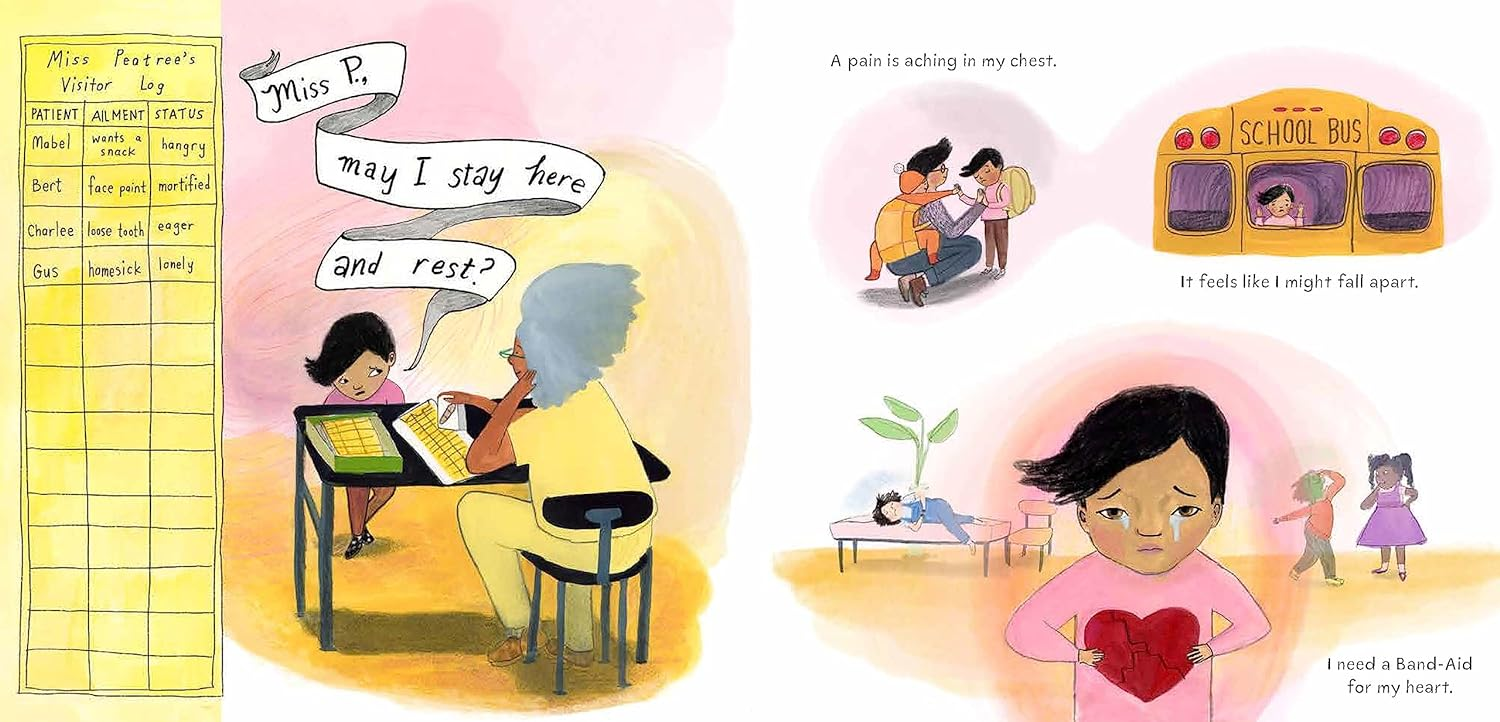
Summary:  Miss Peatree arrives at school before the kids, wiping down the office and checking supplies. She’s ready when Mabel arrives before the first bell, complaining of being hungry.  As the day goes on, Miss P. is busy with one student after another.  She keeps a log, shown on the left-hand side of each page, showing each kid’s name, ailment, and status (“hungry”, “mortified”, “eager”).  Even the principal comes to the nurse’s office with a boo-boo!  Miss P. deftly handles everyone, dispensing band-aids, snacks, advice, and comfort.  At the end of the day, she rides her bike home, where her loving dog is there to take care of her, for a change.  60 pages; grades K-3.

Pros:  It’s about time the school nurse got her own book, and this one celebrates nurses with rhyming text and lots of humor.  Anyone who’s spent time in an elementary school will recognize the list of ailments; the running log is a nice touch to keep track of everyone.

Cons:  If blood and vomit are not your things, better move on.

What Your Ribbon Skirt Means to Me: Deb Haaland’s Historic Inauguration by Alexis Bunten, illustrated by Nicole Neidhardt

Published by Christy Ottaviano Books

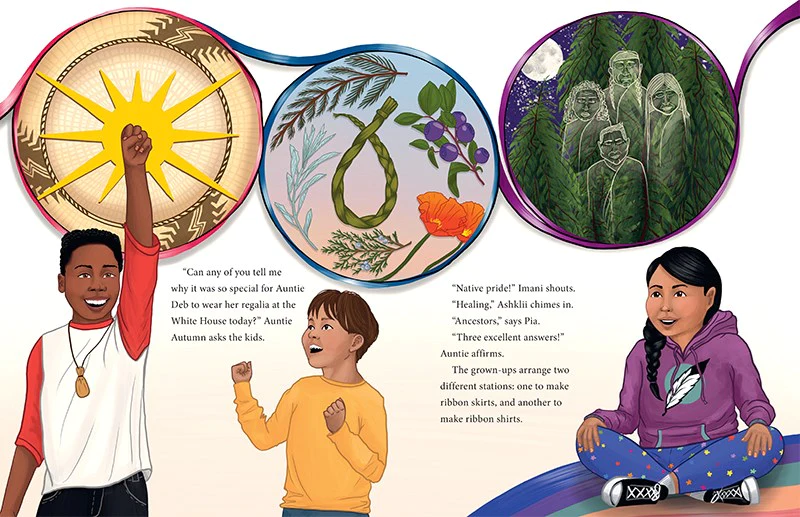
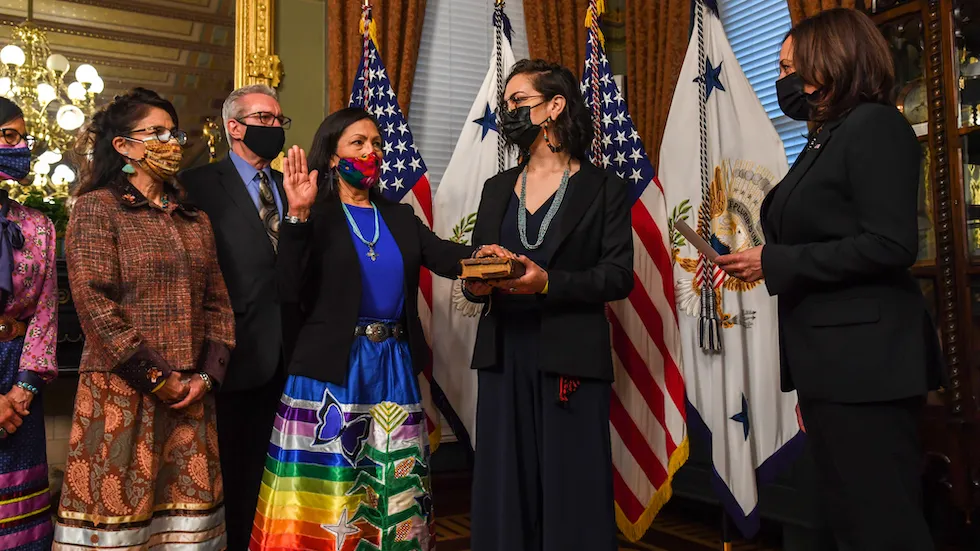
Summary:  At the end of the school day, Pia is excited to go to the Native American Center.  Everyone is gathered around the TV to watch the inauguration of Deb Haaland as Secretary of the Interior.  After the ceremony, there’s a potluck feast, then the adults help the kids make ribbon shirts or ribbon skirts, like the one Auntie Deb wore on TV.  As they work, they talk about the significance of the ribbon skirt.  When her skirt is done, Pia decides to give it to Jasmin, a new girl at the center, to help her feel welcome.  Includes additional information about Deb Haaland, with a photo of her swearing-in ceremony, as well as more about ribbon skirts and suggestions for writing a letter to the government about preserving the environment.  40 pages; ages 4-8.  

Pros:  Details about Turtle Island indigenous culture (food, prayers, clothing) are woven into this story which also does a good job of introducing Secretary of the Interior Deb Haaland.  I liked how the back matter encourages kids to take action.

Cons:  It would take me a lot longer than the time shown here to put together a ribbon skirt.


Duel by Jessixa Bagley, illustrated by Aaron Bagley

Published by Simon and Schuster Books for Young Readers

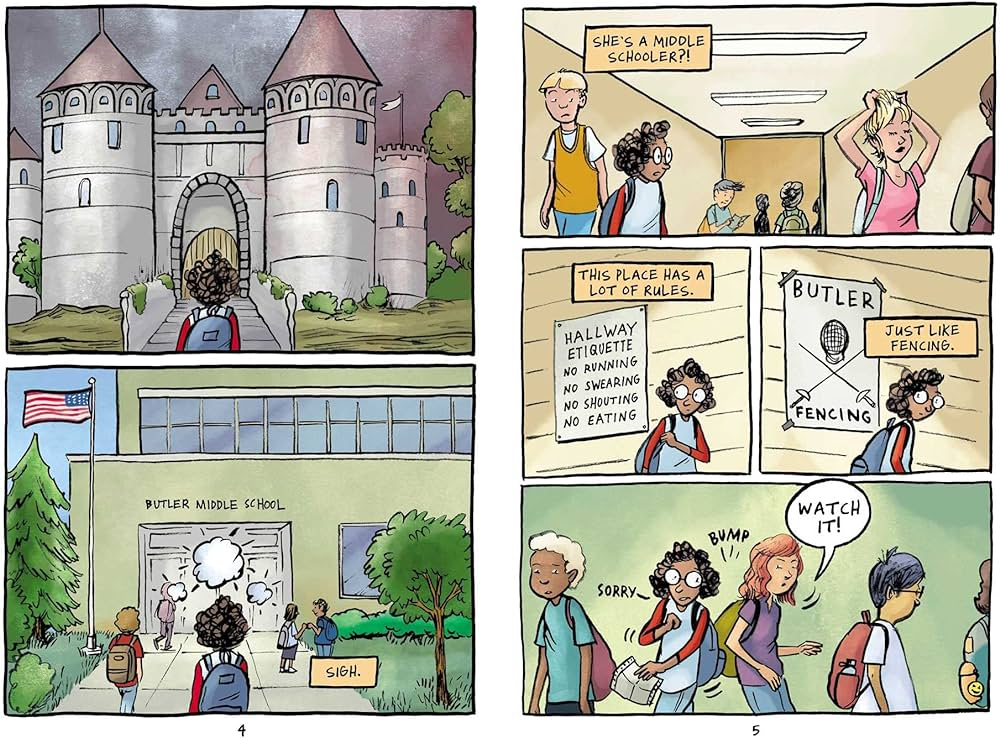
Summary:  Sixth-grader Lucy is dreading being in middle school with her older sister GiGi. When GiGi trips Lucy in the cafeteria on the first day of school, Lucy challenges GiGi to a duel.  The two girls were trained in fencing by their late father, and GiGi is the star of the middle school fencing team.  As they prepare for the bout, each girl is plagued with insecurities, both of them dealing with the grief of having recently lost their father.  Their mother, barely holding it together as she processes her own grief while trying to keep the family functioning, is not much help.  The whole school gets involved in the match, and the pressure becomes too much for both girls.  On the big day, they finally open up and confess their feelings to each other and to their mother, allowing themselves to move toward healing.  The duel still takes place, but it’s a friendly match now, resulting in a surprising and satisfying outcome.  Includes an author’s note telling of her experiences that inspired the book.  320 pages; grades 4-7.

Pros:  This middle school graphic novel by a husband-and-wife team explores grief and sibling rivalry sympathetically.  The artwork cleverly helps tell the story with color-coded boxes showing each girl’s thoughts and blue pages to indicate flashback scenes.  A page from their father’s fencing manual begins each chapter, with the fencing information reflecting what’s going on in the story.

Cons:  Although I appreciated the fencing manual chapter openings, I found myself skipping them after the first few chapters.

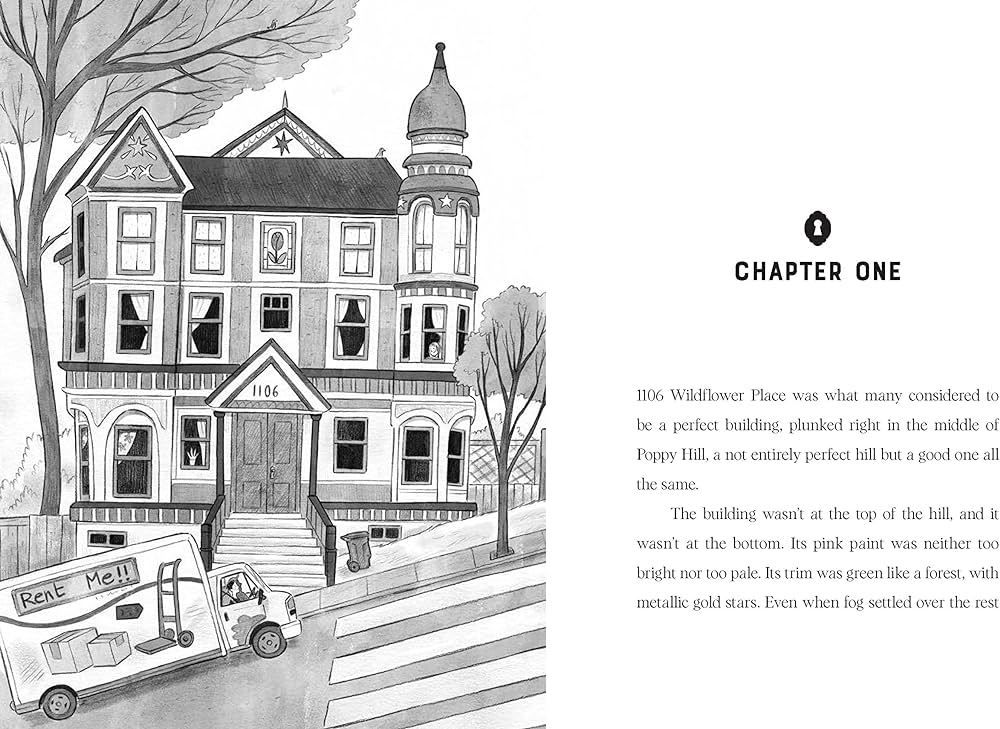
The Apartment House on Poppy Hill by Nina LaCour, illustrated by Sònia Albert

Published by Chronicle Books

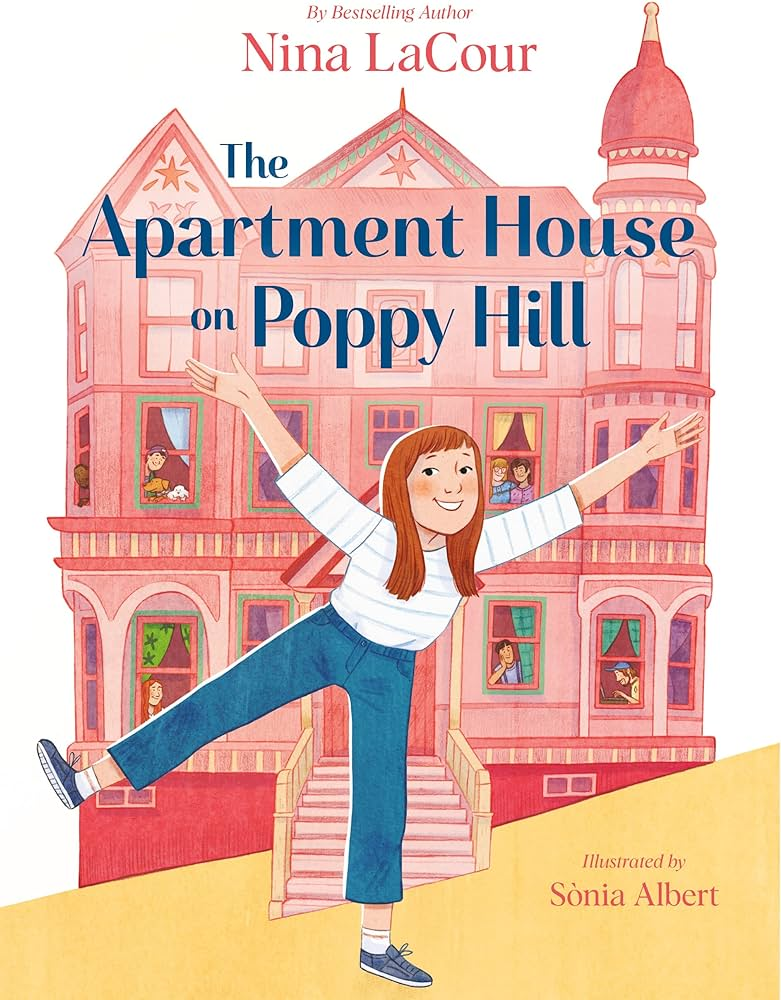
Summary:  Ella and her two moms live in an apartment at 1106 Wildflower Place, a Victorian house on Poppy Hill in San Francisco.  There are four other apartments in the house, and Ella is good friends with all the residents except the mysterious and reclusive Robinsons who live on the top floor.  The book is divided into three sections: New Neighbors, in which the newest couple is welcomed into the building; Tea at Ten O’clock, where a series of interruptions delay Ella’s tea date with her neighbor Matilda; and The Greatest Mystery of All Time, which is solved when Ella finally gets to meet the Robinsons.  There’s a feel of more adventures ahead, so be on the lookout for a sequel. 132 pages; grades 2-5.

Pros:  A warm and inviting early chapter book with plenty of illustrations.  With two gay couples, two straight, a single woman, and a pretty quirky main character, the story exudes acceptance and community.

Cons:  I found Ella kind of annoyingly precocious.

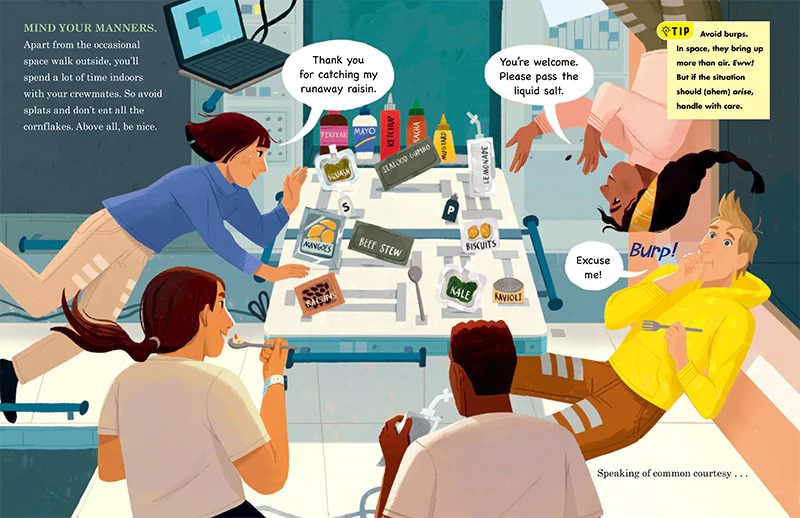
How to Eat in Space by Helen Taylor, illustrated by Stevie Lewis

Published by Little, Brown Books for Young Readers

Summary:  You can’t eat everything in space, but the options have improved considerably since the early days of space travel.  It’s a whole different experience from Earth eating, though, and this book gives lots of good tips.  Water is at a premium and can’t be poured.  Burping in space can have some pretty unpleasant consequences.  Floating crumbs can become a menace on board the spaceship. From cooking to doing dishes to growing your own food, there are plenty of details here that are sure to intrigue kids.  Includes three pages of additional information, along with additional resources and a list of sources.  40 pages; grades 1-4.

Pros:  Life in space is a fascinating topic, and this book provides a wealth of interesting information presented with a chatty tone and appealing illustrations.

Cons:  Reading this made me realize how much I take gravity for granted.

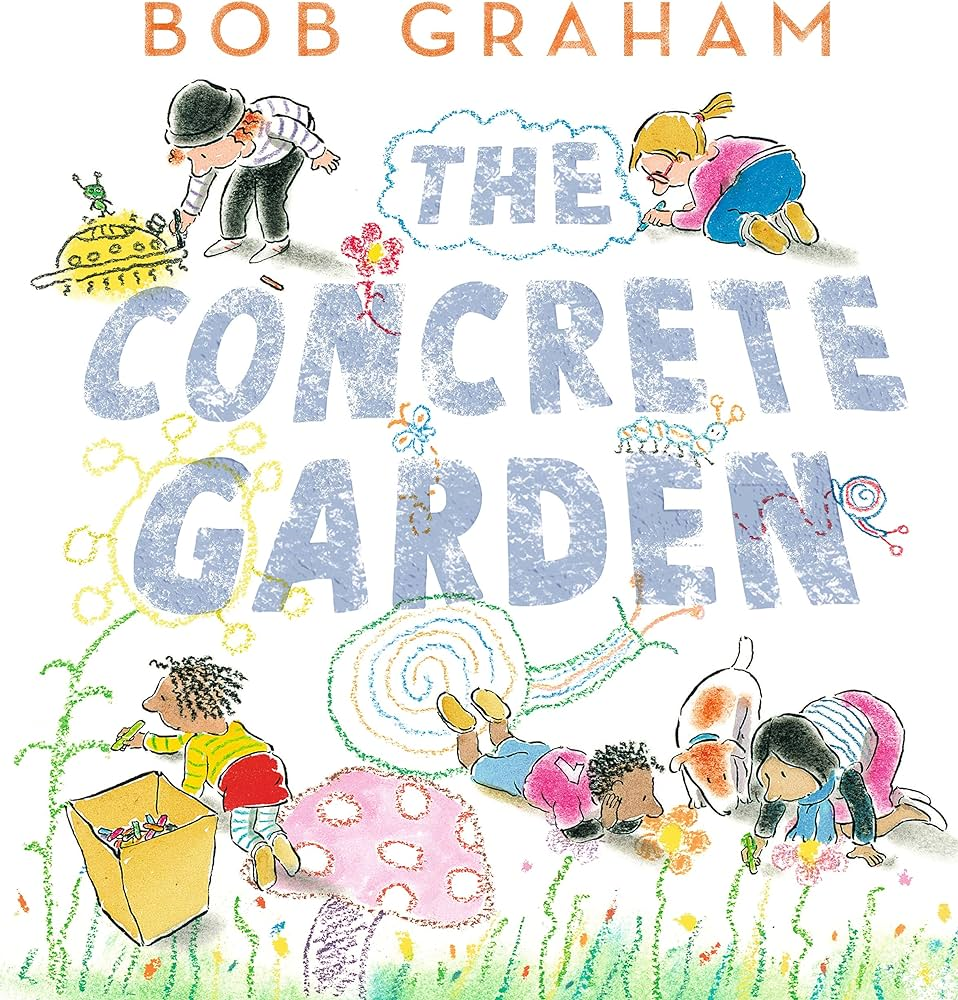
The Concrete Garden by Bob Graham

Published by Candlewick

Summary:  “After a cold, hard winter, doors opened.”  Kids spill out of a high-rise apartment building, ready for some fresh air.  Amanda’s the last one out, lugging a box of sidewalk chalk.  She draws what looks like a huge virus with green chalk.  Jackson turns it into a dandelion, while Janet makes a mushroom, and the twins add flowers.  Other kids draw their own creations until the entire courtyard is a riot of color.  Nasrin takes a picture from her balcony and sends it to her mother in Isfahan, and her mom shares it with everyone she knows, sending the concrete garden around the world.  A few days later, rain washes it away.  The chalk is gone, but the kids use the box it was in to make cardboard boats which they sail in the rainbow-colored water.  32 pages; ages 4-8.

Pros:  The masks some of the characters are wearing and the dedication page that reads “Written in the time of Covid” mark this as a post-pandemic story, the kids celebrating their freedom with an explosion of creativity.  Setbacks (like a dog peeing on some of the chalk) and creative differences are gracefully handled by the children, and the story and pictures exude a feeling of joy and celebration.

Cons:  The ending felt a little disappointing; I was hoping the kids would do something a bit more creative for their second act.

The Case of the Strange Splash (Detective Duck #1) by Henry Winkler and Lin Oliver, illustrated by Dan Santat

Published by Harry N. Abrams

Summary:  Willow is a duck who’s been raised by a beaver since her egg was washed out of the nest and got stuck in a dam.  She’s curious and dreams of being a detective, so when a large black object mysteriously lands in her pond, she and her friends get to work figuring out what it is and where it came from.  Once they’ve established that it’s a car tire, they realize it’s bad for them to have it in their pond and get to work removing it.  Their teamwork results in a successful outcome, and Willow is able to convey a “recycle” message to the truck driver who left his tire behind.  80 pages; ages 6-9.

Pros:  A good beginner mystery with a nice environmental message and fun illustrations by Dan Santat (side note: I was thrilled that Santat won the National Book Award last week for A First Time for Everything).  Happily, this is billed as book 1, so we can look forward to reading more about Willow and her friends.

Cons:  Getting the tire out of the pond, billed as a mystery, seemed more like just a problem to solve.

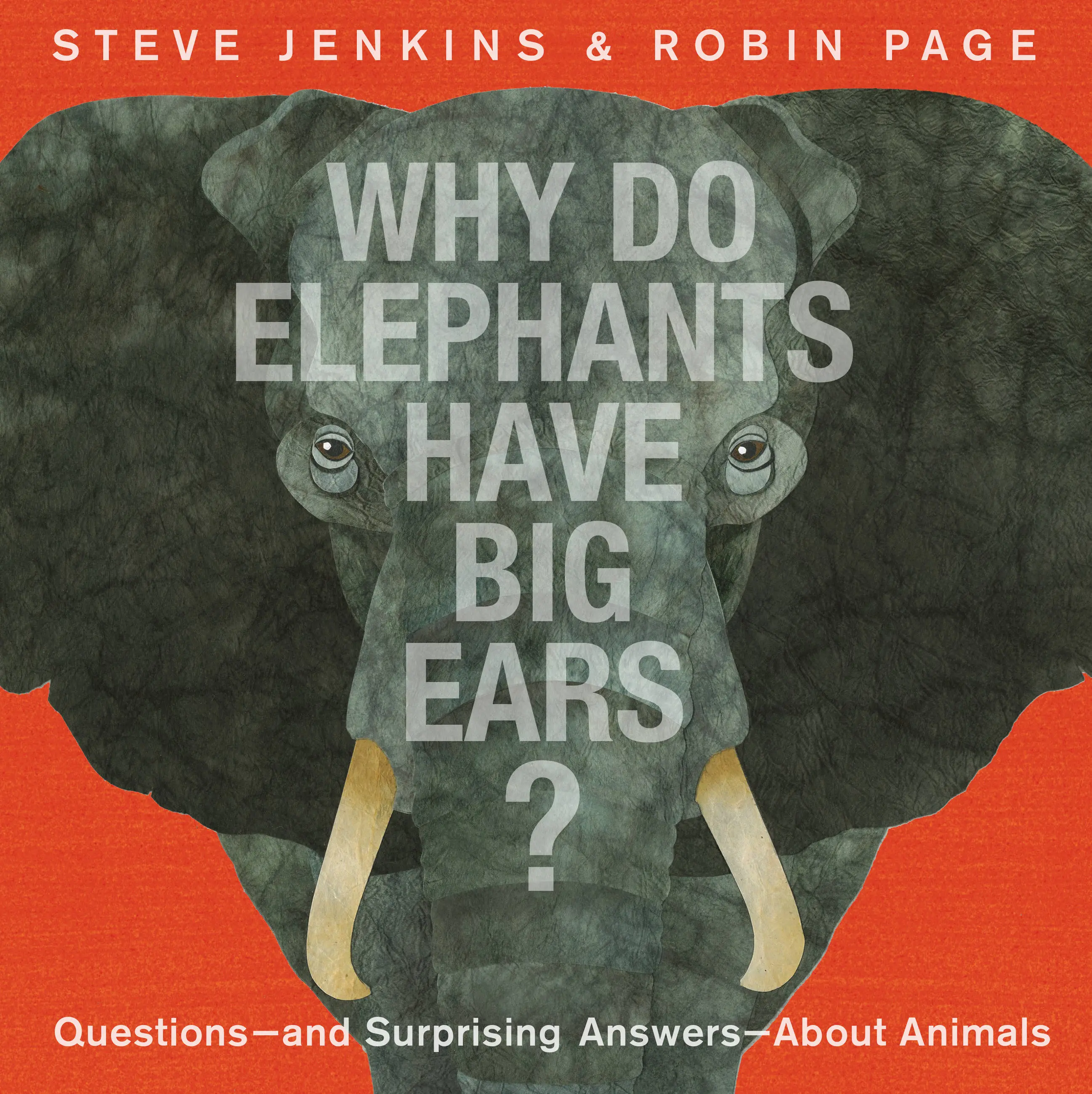
Why Do Elephants Have Big Ears? Questions–and Surprising Answers–About Animals by Steve Jenkins and Robin Page

Published by Little, Brown Books for Young Readers

Summary:  Nineteen animals are profiled with the trademark Steve Jenkins cut-paper illustrations and a question and answer about each.  Why do hippos swish their tail when they poop?  Why are naked mole rats naked?  Why do red-eyed tree frogs have big red eyes?  Each question is answered with a short paragraph.  A small silhouette at the bottom shows the animal in comparison to a human or a human hand for smaller animals.  Includes additional information about each animal and a bibliography.  40 pages; ages 4-8.

Pros:  You can’t go wrong with a Steve Jenkins-Robin Page animal book.  This one is full of striking illustrations and fascinating information that will engage even the most reluctant readers.

Cons:  I was hoping for a format that would lend itself to guessing, like Jenkins’s Biggest, Strongest, Fastest, which is one of my all-time favorite books to share with kids.

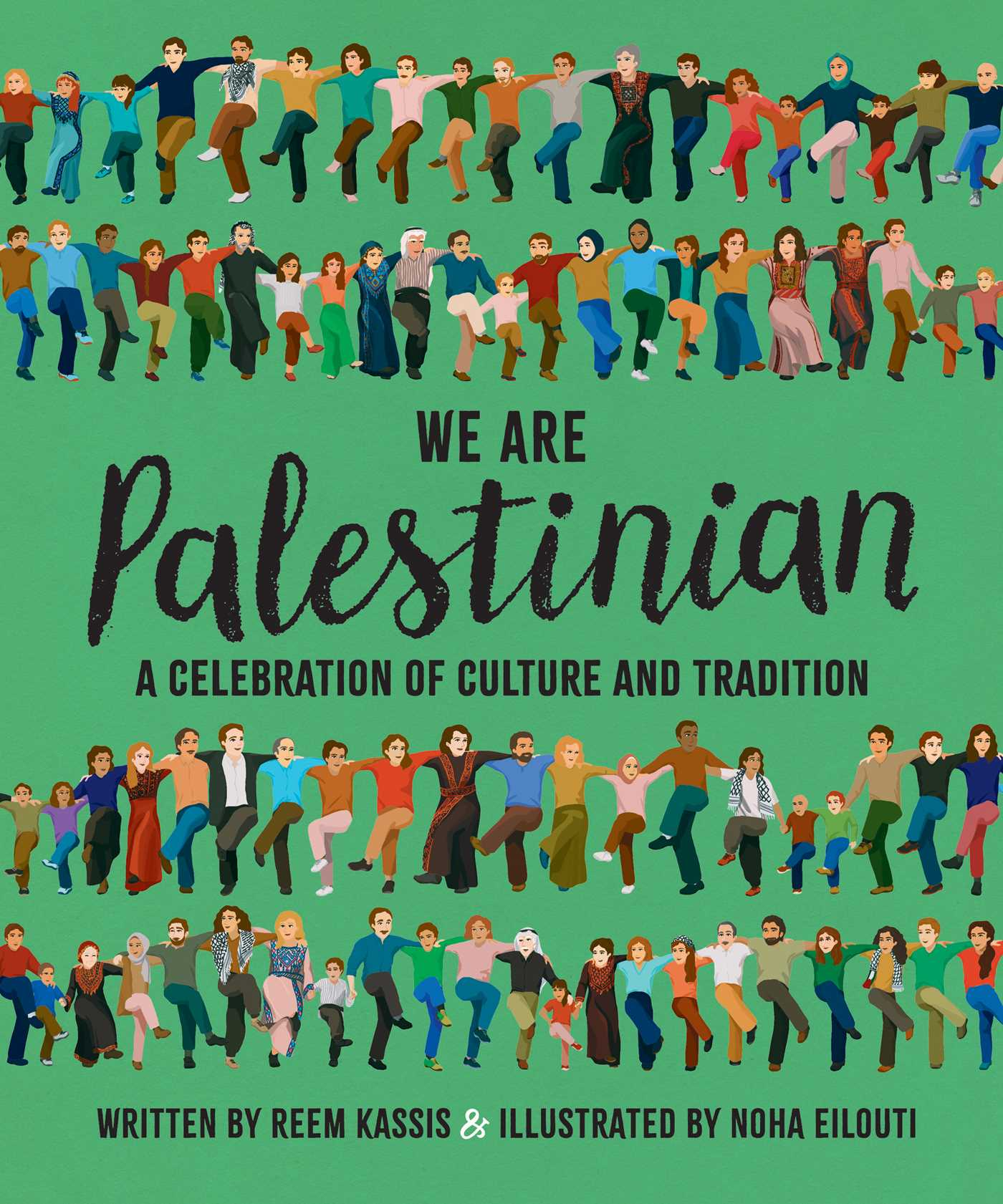
We Are Palestinian: A Celebration of Culture and Tradition by Reem Kassis, illustrated by Noha Eilouti

Published by Crocodile Books

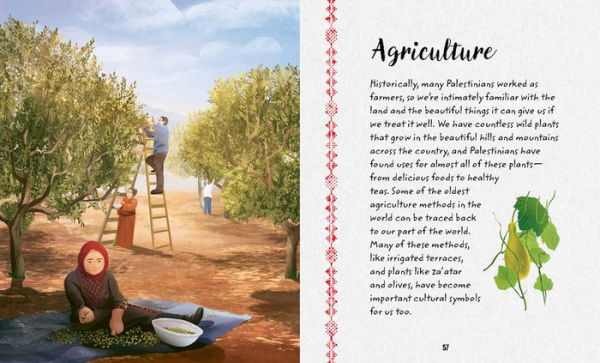
Summary:  This introduction to Palestine and Palestinian culture includes chapters on geography, cultural symbols, creative minds, agriculture, cuisine, performing arts, and history and religion.  The author has written cookbooks (the food section is particularly strong) and seeks to preserve her Palestinian culture for her daughters.  Each section contains “Did you know?” and “Fun fact” sidebars, as well as an illustration or two. The difficult history of Palestine is woven throughout the text, not only in the history section.  Includes an index.  112 pages; grades 3-7.

Pros:  I enjoyed learning more about Palestine, which, of course, is all over the news, but is probably a culture that is not well known to most Americans, including myself.

Cons:  I would have liked more back matter, especially additional resources.

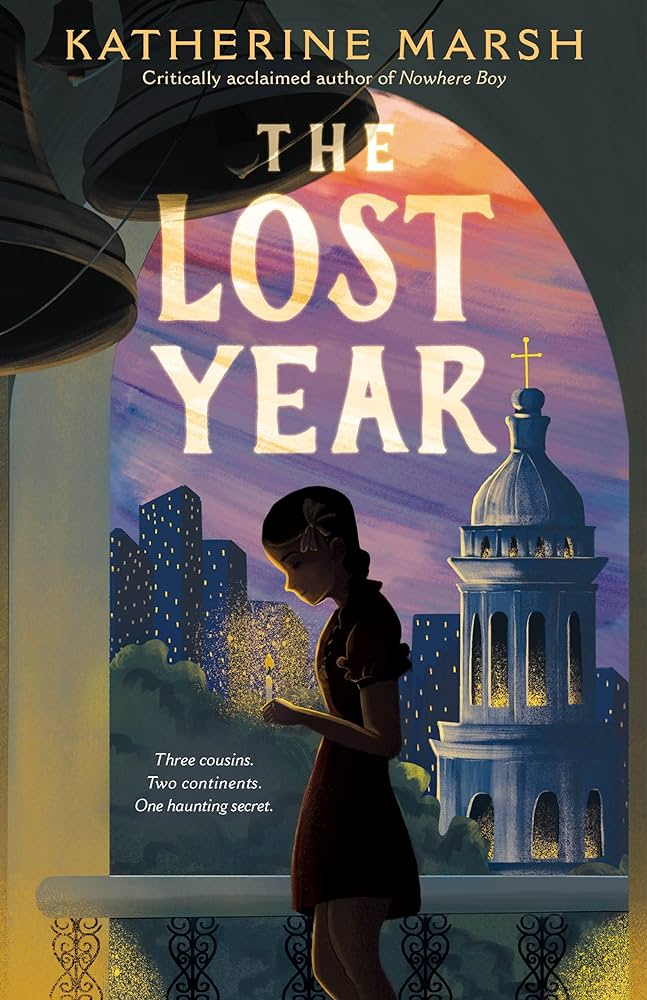
The Lost Year by Katherine Marsh

Published by Roaring Brook Press

Summary:  During the 2020 pandemic lockdown, Matthew is stuck at home with his harried mother and his 100-year-old great-grandmother, GG.  After too many hours in front of screens, Matthew loses his video game privileges and is ordered to help GG sort through her boxes of possessions.  When he discovers photos of her as a girl with another girl named Helen, Matthew begins to ask questions.  Reluctantly at first, GG begins the story of three cousins: Mila, a wealthy girl living in 1930’s Ukraine with her father, a devoted Soviet official; Helen, living in Brooklyn during the Great Depression; and Nadiyah, a peasant girl facing starvation during Holodomor, the Ukrainian famine caused by Stalin’s policies.  The narratives slowly reveal a secret GG has kept for decades, and by the end both she and Matthew are ready to share her story with the rest of the family.  Includes several pages of additional historical information.  368 pages; grades 4-8.

Pros:  I’d love to see this well-written, extensively researched book considered for a Newbery.  In addition to the main plot, which is super engaging and had a twist that completely blindsided me, there’s an interesting subplot about journalistic integrity and efforts (largely successful, unfortunately) to suppress the story of the Holodomor.

Cons:  I personally enjoyed the connection to 2020, but I saw some reviewers on Amazon who didn’t like that, and, as I’ve mentioned before, I find pandemic books to be a hard sell to the kids at my school.