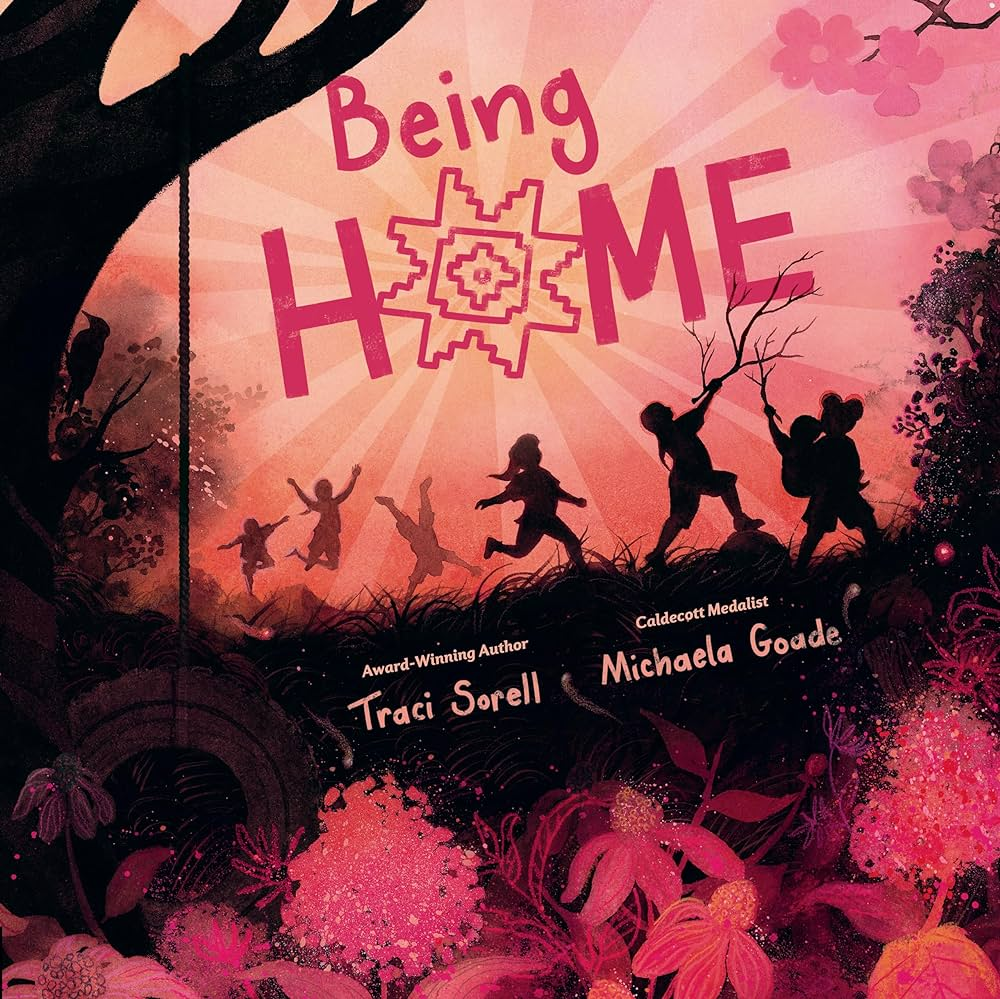
Being Home by Traci Sorell, illustrated by Michaela Goade (Kokila, 32 pages, ages 4-8). A family decides to move from the crowded city to the Cherokee reservation, where they can be close to nature, family, and community. The narrative begins on moving day in the city, continues through their journey, and finishes up in their new home, where they’re greeted with a feast and lots of children for the young narrator to play with. There are kid-drawn pictures showing a map of their trip, while other illustrations incorporate people, animals and symbols from the Cherokee Nation. Pink is the main color used to celebrate this family’s new life.
Both Traci Sorell’s (Cherokee) beautiful poetry and Michaela Goade’s (Tlingit) gorgeous illustrations celebrate indigenous communities that honor nature and help each other out through their connection. There’s always so much to see in Goade’s art, so be sure to take your time to appreciate how the colors she uses and shapes and figures she weaves into the main illustrations help tell the story.
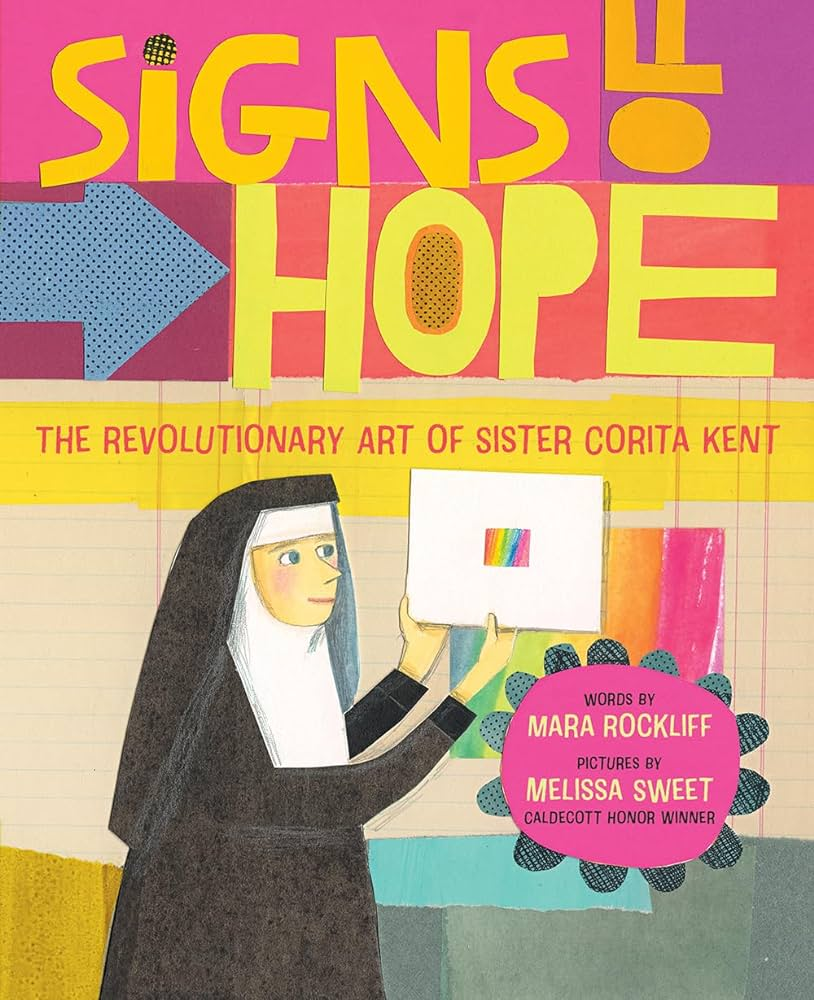
Signs of Hope: The Revolutionary Art of Sister Corita Kent by Mara Rockliff, illustrated by Melissa Sweet (Harry N. Abrams, 40 pages, grades 2-5). A student narrator describes what it was like to study art with Sister Corita Kent, learning to pay attention, breaking the rules, making prints inspired by words and pictures from magazines. Sometimes the students would take field trips to museums to learn about Pop Art, or to protests, where Sister Corita’s signs spoke out about peace and justice. After studying with Sister Corita, her students were ready to go into the world to express themselves through their own art. Includes an author’s note with biographical information about Sister Corita Kent, an illustrator’s note, a timeline, and additional resources.
Melissa Stewart’s style is a natural fit to celebrate Sister Corita’s joyful, playful art. The first-person present-tense narration brings an immediacy to the story that’s as vibrant as the illustrations. The text may be a bit confusing to a reader not familiar with Sister Corita Kent, but the author’s note adds helpful details about her life. I was disappointed that Matthew Burgess’s excellent Make Meatballs Sing: The Life and Art of Corita Kent wasn’t included on the resource list.
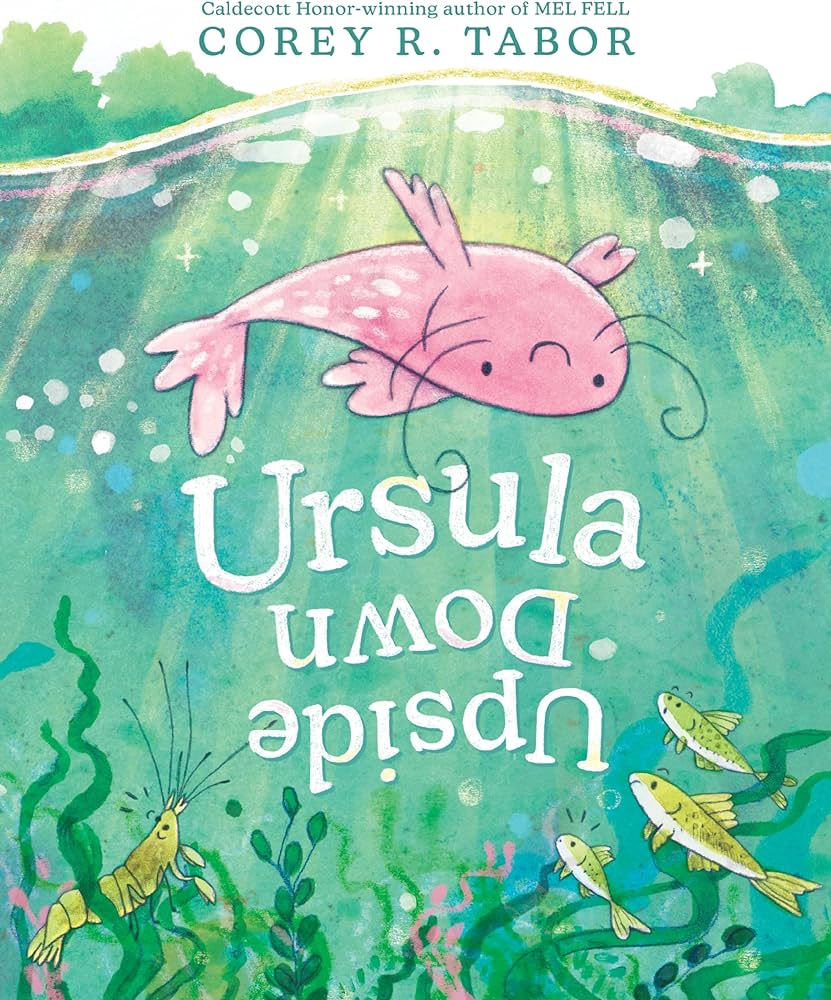
Ursula Upside Down by Corey R. Tabor (Balzer + Bray, 40 pages, ages 4-8). Ursula is a catfish who happily enjoys the beauty of her undersea world. But her view gets flipped when a fish asks her why she’s upside-down. “Just look around,” says the fish, and when she does, Ursula realizes she’s the only creature swimming her way. She tries turning over but gets so disoriented that she leaves the water altogether. A bat comes along and rescues her, and back in the water, Ursula observes the bat hanging upside down from a tree. “Upside down?” says the bat. “Says who?” This gives Ursula the confidence to go back to her old ways, and she’s happy once again, seeing things her own way. An author’s note introduces the upside-down catfish of the Congo River Basin and asks readers to consider that we might be the ones who are upside down.
Another cute picture book by Corey Tabor that involves flipping the book around a couple of times like some of his other works. My favorite is still the Caldecott honor book Mel Fell, but I’m sure kids will enjoy getting to know Ursula (and Vern the bat), and the story delivers a nice message about doing your own thing.
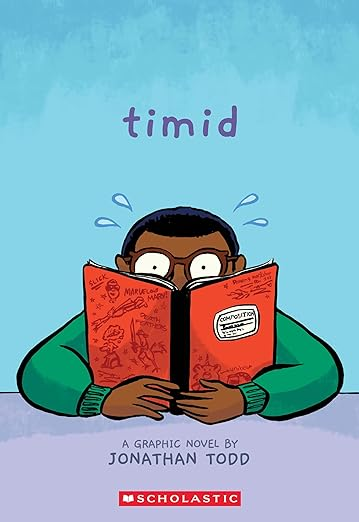
Timid: A Graphic Novel by Jonathan Todd (Graphix, 272 pages, grades 4-7). Based on the author’s adolescence, Timid traces Cecil’s journey from Florida, where he’s lived most of his life, to Massachusetts and figuring out how to fit into a new middle school. His passion is drawing, although this is actively discouraged by his father, who tries to get him to focus on architect rather than cartoonist as a career choice. But drawing proves the entry point into middle school society, as kids begin to ask Cecil to design posters and t-shirt when they discover his talents. Cecil experiences a different kind of racism than he did in Florida, with kids calling him an Oreo when he hangs out with white kids and assuming he’s a Metco student (bussed from Boston) because he’s Black. It takes some missteps, but Cecil finally finds his people and figures out where he belongs. Includes an author’s note and acknowledgements that made me realize how hard it is to create a graphic novel and get it published.
South of Somewhere by Kalena Miller (Albert Whitman and Company, 288 pages, grades 4-7). Chapter one: Mavis’s mom decided to take a taxi from the airport to their Chicago home, while Mavis rides in the family SUV with her dad, brother, and sister. They’re greeted by the FBI, looking for Mom, and the kids are shocked when they look out the rear window and see the taxi make a quick U-turn and speed away. Turns out their mother is wanted for embezzlement, which means the family is locked out of their home, bank accounts, and credit cards. Dad seeks refuge for the family with his estranged sister and her four-year-old daughter, and the four of them move into Aunt Melissa’s basement. Mavis not only has to come to terms with the loss of her home and wealthy lifestyle, but with the fact that her mother is not who she thought she was. The family pulls together to make ends meet, and even Mavis is able to earn money by starting a babysitting service with a new friend. When she and her siblings finally figure out where their mom is hiding, they are met with disappointment but also given the opportunity for a fresh start, their tragedy forging close family bonds with their dad, aunt, and cousin.
Kids will find a lot to relate to in both of these middle grade books, particularly the disillusionment of learning that parents can be far from perfect. While Cecil’s dad is well-intentioned but clueless about what’s important to his son, Mavis’s mom is a complete narcissist who seems to have no understanding of what she’s done to her family. I was hoping there would be at least a little redemption for her character, but there really wasn’t. Readers will take comfort in the fact that Mavis learns how to be resourceful and has great support from her family and new friend.
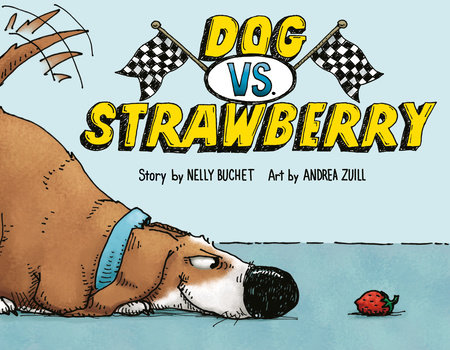
Dog vs. Strawberry by Nelly Buchet, illustrated by Andrea Zuill (Random House Studio, 40 pages, ages 4-8). When a dog’s owner gives her a strawberry, it’s time for “the greatest race of all time!” With a sportscaster narration explaining what’s going on, the dog races around the living room, taking down a lamp and a plant before exhaustion takes over and she has to take a nap break. Meanwhile, the strawberry remains cool and collected on the living room floor. It’s anybody’s race right up until the very end when the owner returns, and–unwittingly–decides the winner.
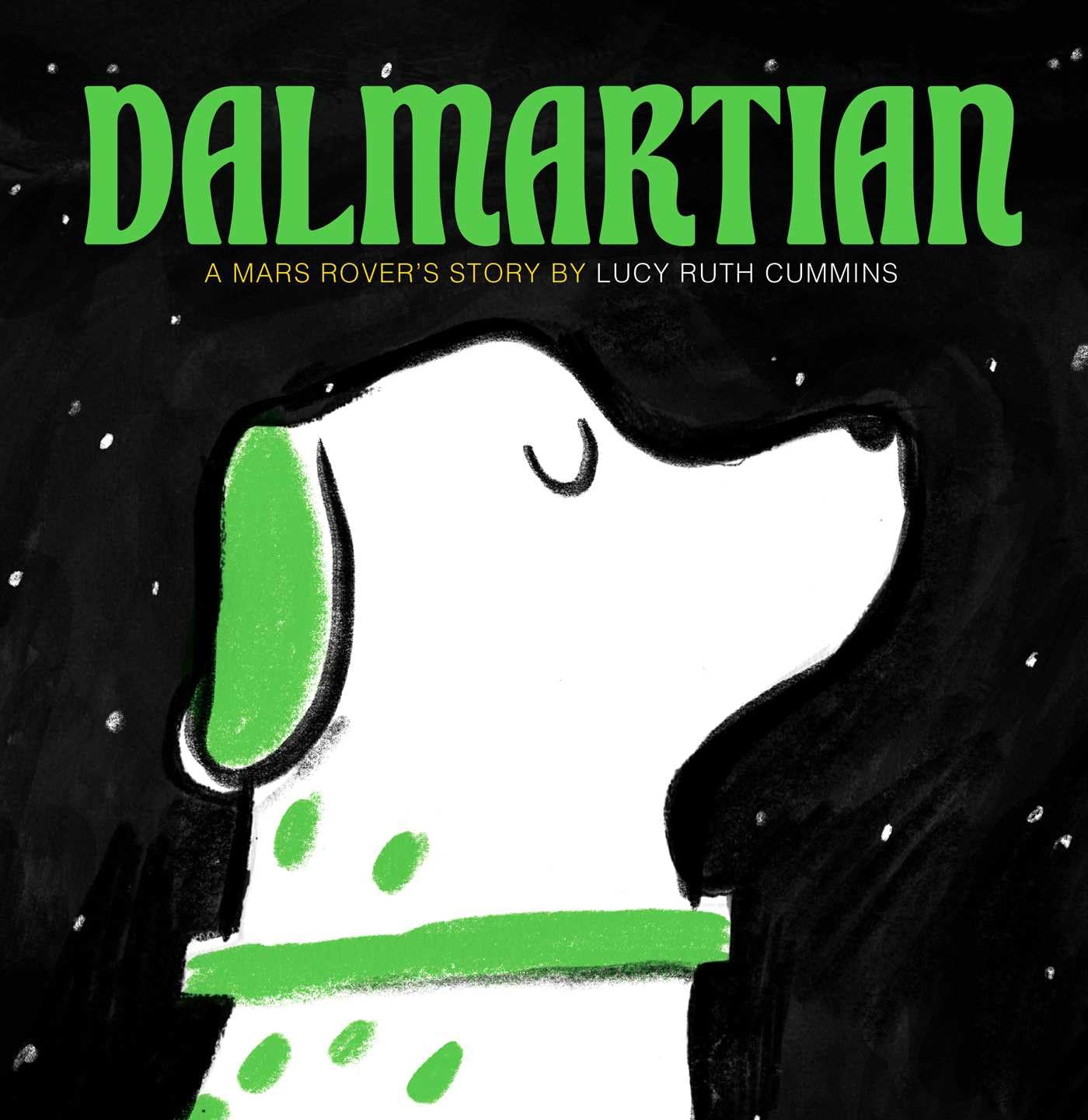
Dalmartian: A Mars Rover’s Story by Lucy Ruth Cummins (Atheneum Books for Young Readers, 48 pages, ages 4-8). When some dog-shaped aliens visit Earth to collect specimens, one of them gets left behind. Stephen, the boy living in a nearby house, discovers the alien and invites him in. Although it resembles a dog, the creature has some clear and decidedly un-doglike preferences: no dog food (bacon is good), no leashes, no fetch, and no pooping in the dog park. Once they begin to understand each other, the two bond quickly. One night, while they’re both sleeping, the spacecraft returns, and Stephen’s guest gets on board to return to the home planet. But partway through the journey, the creature realizes its mistake and turns the ship around. In the morning, the two friends are reunited, this time for good.
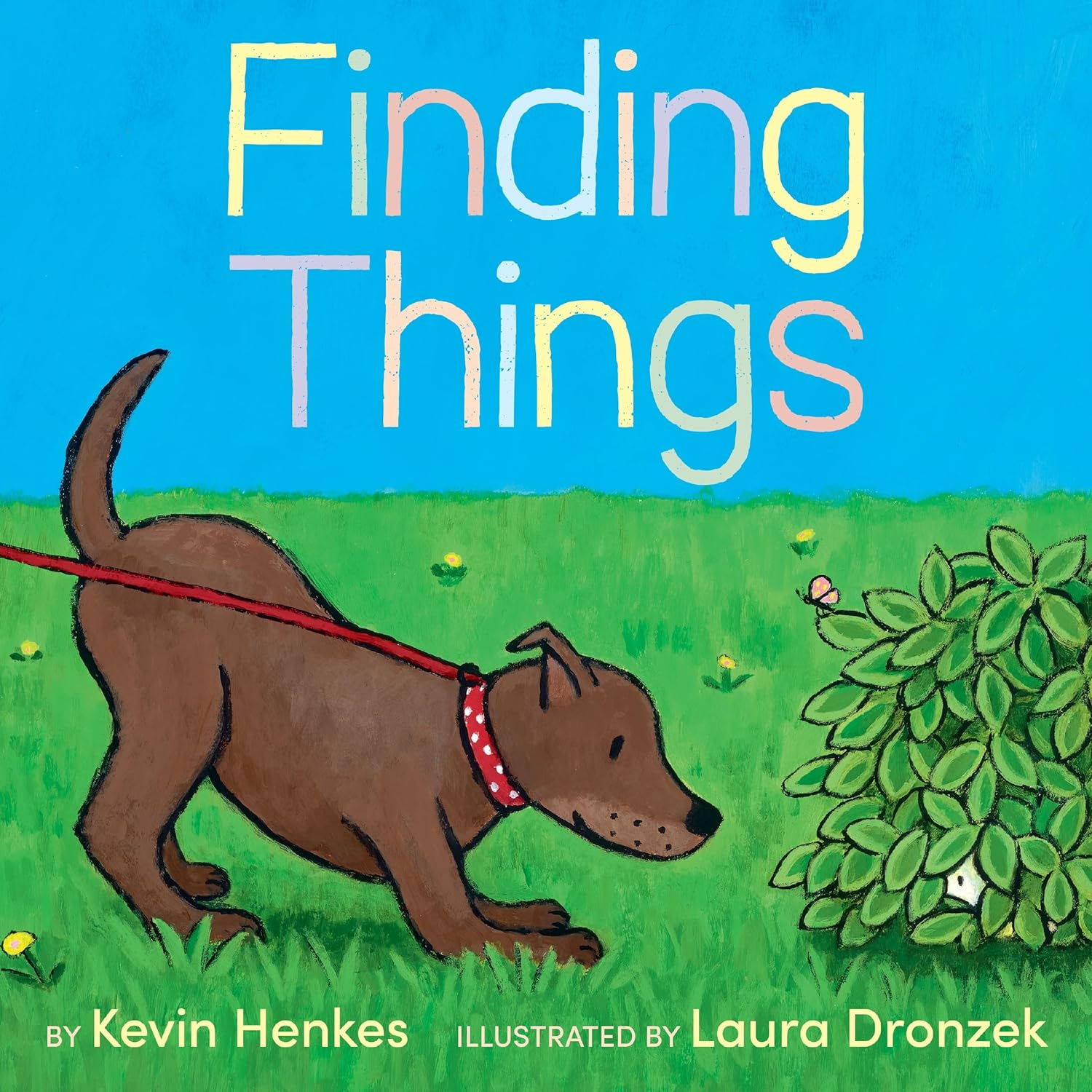
Finding Things by Kevin Henkes, illustrated by Laura Dronzek (Greenwillow Books, 32 pages, ages 3-6). “If you found a ball on the grass and it was there for days, you could take it home.” Similarly, flowers growing in a sidewalk crack and a box by the curb on garbage day are other treasures that can be rescued. A kitten? If it’s crying, doesn’t belong to anyone, and you get permission from everyone, then it’s yours. And that lucky kitten will have a pretty flower to look at, a ball to play with, and a box to sleep in.
Here are three dog books that preschool and early elementary readers will enjoy. Finding Things isn’t really about the dog on the cover, but it perfectly captures the childhood joy of discovering unexpected treasures and is short and simple enough for the youngest readers. Slightly older readers will get a big kick out of Dog vs. Strawberry, both the action-packed illustrations and the sportscaster-style storytelling. And you can move right on to Dalmartian, with its cute doglike character, alien storyline, and a few good bathroom jokes.
Made In Asian America: A History for Young People by Erika Lee and Christina Soontornvat (Quill Tree Books, 320 pages, grades 5-8. This young readers’ adaptation of Erika Lee’s The Making of Asian America (2015) begins with an introduction that details the absence of Asian American history in most schools and some of the kids who have worked to bring attention to that. The main narrative covers American history from Columbus to Covid, relating the stories of people who immigrated to the U.S. from many Asian countries, including China, Japan, Korea, Vietnam, India, the Philippines, and more. Different people had different reasons for coming, depending on their country’s history and political situation, but almost all experienced racism, discrimination, and broken promises when they arrived. Like many other immigrants, they worked hard doing backbreaking labor to survive and to try to build a better future for their children. In more recent times, Asian Americans have become known as the “model minority,” a label which carries its own baggage. The Covid era showed that racism still simmers right beneath the surface of American society, as it exploded with the news that the virus originated in China. Asian Americans have a history of fighting for civil rights, both for themselves and for other groups experiencing discrimination, and that fight continues today, as explained in the last chapter. Includes notes from both authors as well as almost 30 pages of source notes and an index.
I learned so much from this book, which really drove home the point that Asian Americans are largely missing from American history. The writing is clear and engaging, and many of the profiles describe ordinary people whose stories are often both heartbreaking and inspiring. It was fascinating to get a brief history of so many different countries and to learn why different groups immigrated to the United States.
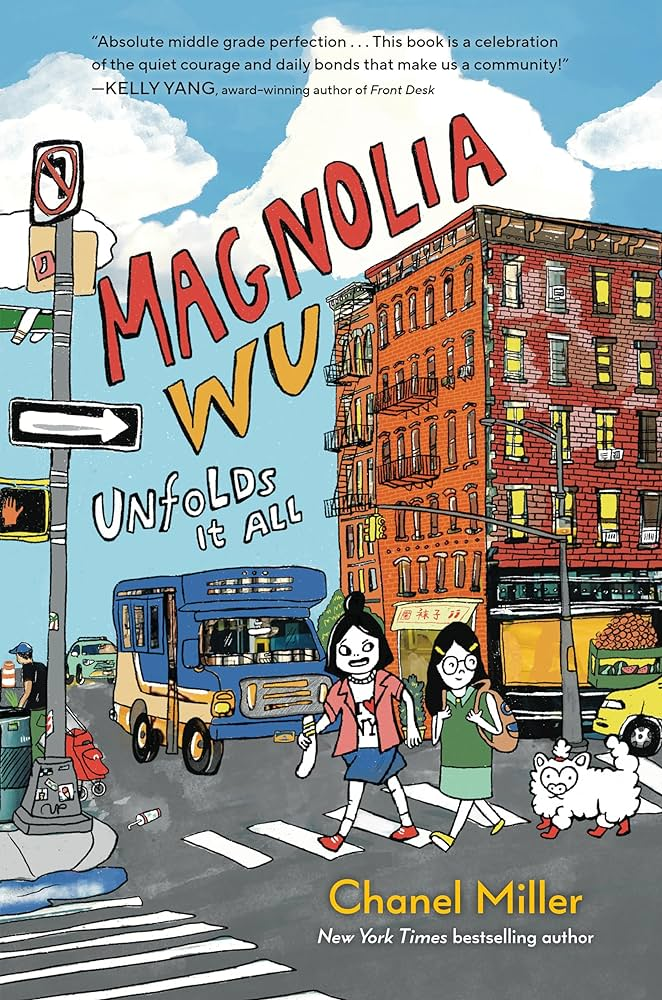
Magnolia Wu Unfolds It All by Chanel Miller (Philomel Books, 160 pages, grades 2-5). While Magnolia is looking forward to turning 10, she’s less excited about the summer ahead, which will mostly be spent at her family’s Bing Qi Ling Laundromat. When her mom’s friend moves to New York City from California, she brings along her daughter Iris, who is just Magnolia’s age. At first the girls feel strange around each other, but soon they bond over the sock board, where Magnolia has displayed all the stray socks that have been left behind at the laundromat. They decide to canvass the neighborhood to find each sock’s owners, using clues from the socks themselves to help them. As they solve each mystery, the girls learn more about their neighbors and hear some interesting stories about Magnolia’s parents, who turn out to have a fun and adventurous side that Magnolia hasn’t been aware of. A major fight threatens to destroy their new friendship, but Magnolia finds a way to repair things and, in the process, gains a deeper understanding of her new best friend.
With a 10-year-old protagonist, a larger font, and plenty of illustrations, this would make a good introductory chapter book. It was interesting to read this right after finishing Made in Asian America, as Magnolia’s and Iris’s families, from China and Vietnam respectively, are working hard to give their kids a better life in America and experience racism at various points in the story. Their resilience and close family ties make this a warm and engaging story with a fun and quirky cast of characters.
I was buried by an avalanche of graphic novels this week, which I managed to claw through, writing reviews as I dug my way out.
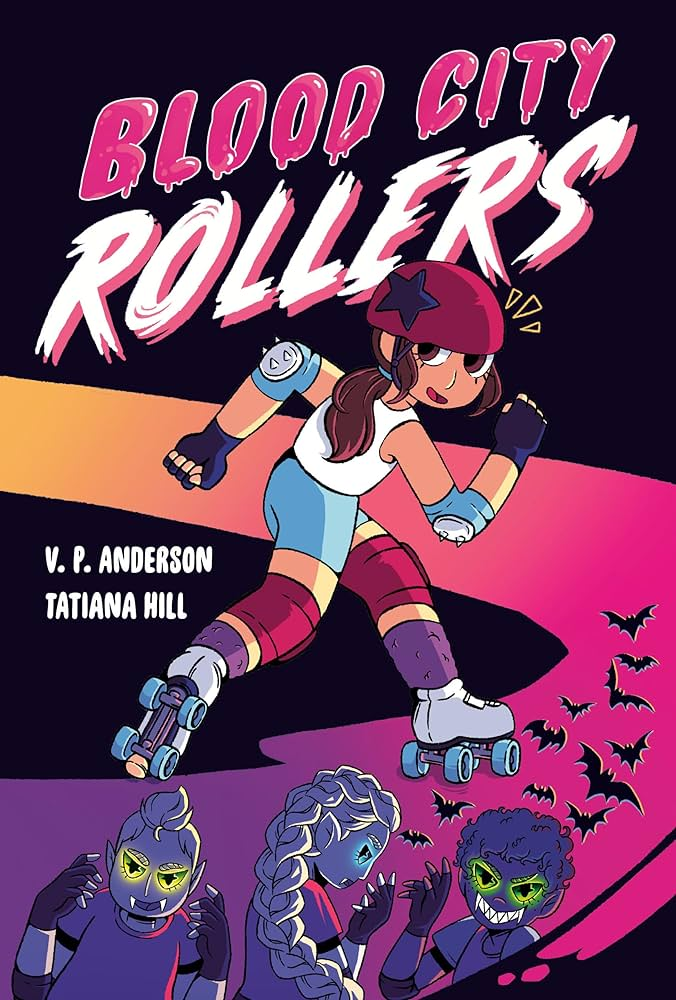
Blood City Rollers by V. P. Anderson, illustrated by Tatiana Hill (Labyrinth Road, 192 pages, grades 5-8). Mina’s a figure skater with Olympic dreams about to win a big competition when she sees some dark figures crouched in the rafters of the skating rink. Distracted, she falls and breaks her arm in what may be a career-ending injury. On her way out of the hospital, she’s abducted by a group of girl vampires and taken to an abandoned mall, where she learns their plan to make her the jammer on their roller derby team (their rules dictate that the jammer must be a human). Her arm magically healed, Mina is amazed to begin feeling more like herself as part of the vampire team than she ever has as a figure skater. A crush on the team captain adds to her emotional turmoil, and as the big match against the witches approaches, Mina wonders if she should become a vampire herself. Another injury forces her to return home, and when she finally makes her way back to the mall, she finds that it’s been abandoned by the vampires. They’ve left her a note, though, and the final page promises “to be continued…”.
Imagine Roller Girl with vampires, and you’ll get the vibe of this girl-powered story with a main character who learns to be herself and the hint of a queer romance or two thrown in. There are so many characters and subplots that I found myself confused at various points in the story, despite the excellent guide to all the team members early in the book.
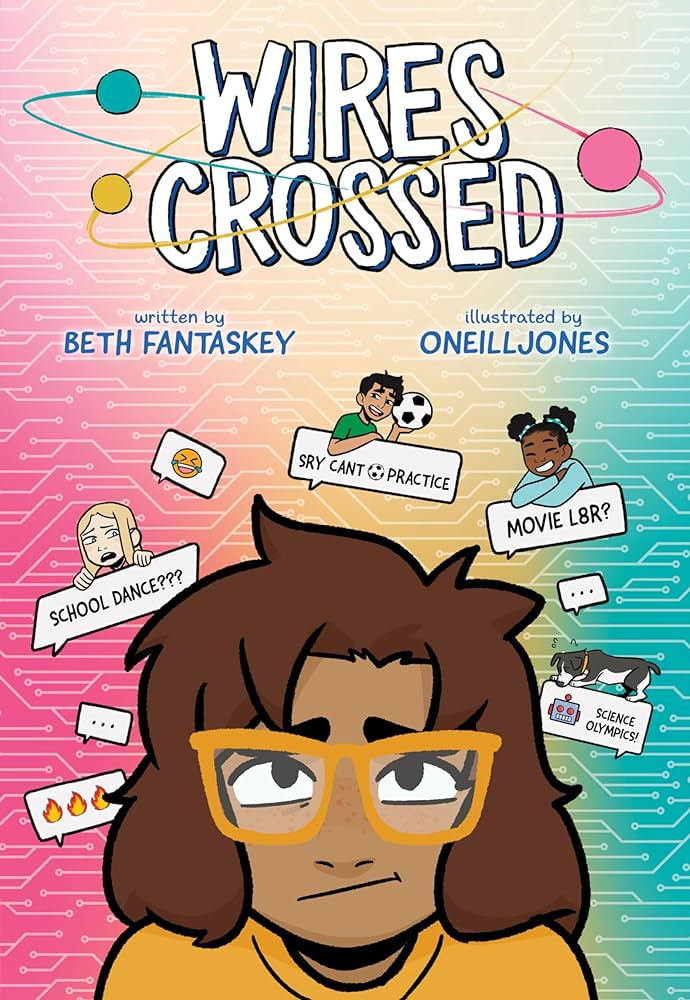
Wires Crossed by Beth Fantaskey, illustrated by ONeillJones (Clarion Books, 240 pages, grades 3-7). Mia’s going through a tough time in middle school, as her former best friend Addy is making a move to get into the popular group. So it’s good timing when she learns that her science camp best friend Tariq is moving to town. When Mia’s family picks him up from the airport, though, Mia’s shocked to see that Tariq has traded his glasses for contacts and has shot up several inches. The girls at school all love Tariq, but he’s a loyal friend, and pretty soon he and Mia have paired up for the science fair, adding quirky girl Kinsey and loveable goofball Ethan to make a team. The four become good friends, and soon Kinsey has replaced Addy as Mia’s best friend. There’s trouble brewing, though, when Mia discovers that Tariq and Kinsey are going to the big dance together, but some heart-to-heart talks get everything straightened out. After a hilariously disastrous science fair presentation, the four friends end up going to the dance together, and even Addy comes around for a reconciliation.
This is your standard middle school graphic novel fare, now familiar to fans (like me) of the Raina Telgemeier genre. I appreciated the loveable nerdiness of the characters, as well as their ultimate decision to choose friendship over romance.
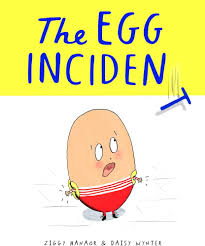
The Egg Incident by Ziggy Hanaor, illustrated by Daisy Wynter (Cicada Books, 72 pages, grades 1-4). Humpty Dumpty’s nephew Humphrey has the world’s most protective parents, who caution him to look where he’s going at all times, never run and jump, and of course, NEVER climb a wall. When Humphrey arrives at the park one day (after a s-l-o-w walk to get there), he meets an adventurous girl who tries to get him to climb a tree, play tag, or catch a ball. Humphrey will have none of it. When they finally decide to head home, they discover the gate is locked, and the only way out is–you guessed it–to climb the wall. Humphrey’s new friend coaches him up to the top, where he enjoys the beautiful view before losing his balance and falling! Surprisingly, he’s okay, and his friend, who turns out to be a princess, takes him to see the king’s men, who not only give him a clean bill of health but assure him that the Humpty story is a rumor. The last they heard, Humpty was running a rock-climbing school in Scotland. From that day on, Humphrey is a new egg, and even convinces his parents to take a few risks and have some fun.
Okay, it may not be great literature, but this book not only cracked me up (pun intended) but deftly delivered a message for overprotective parents. I thought it was a picture book, but at 72 pages, it’s a bit long for that designation, although a bit short to qualify as a graphic novel. It’s engaging enough that kids with a decent attention span could enjoy reading or listening to it in a single sitting.
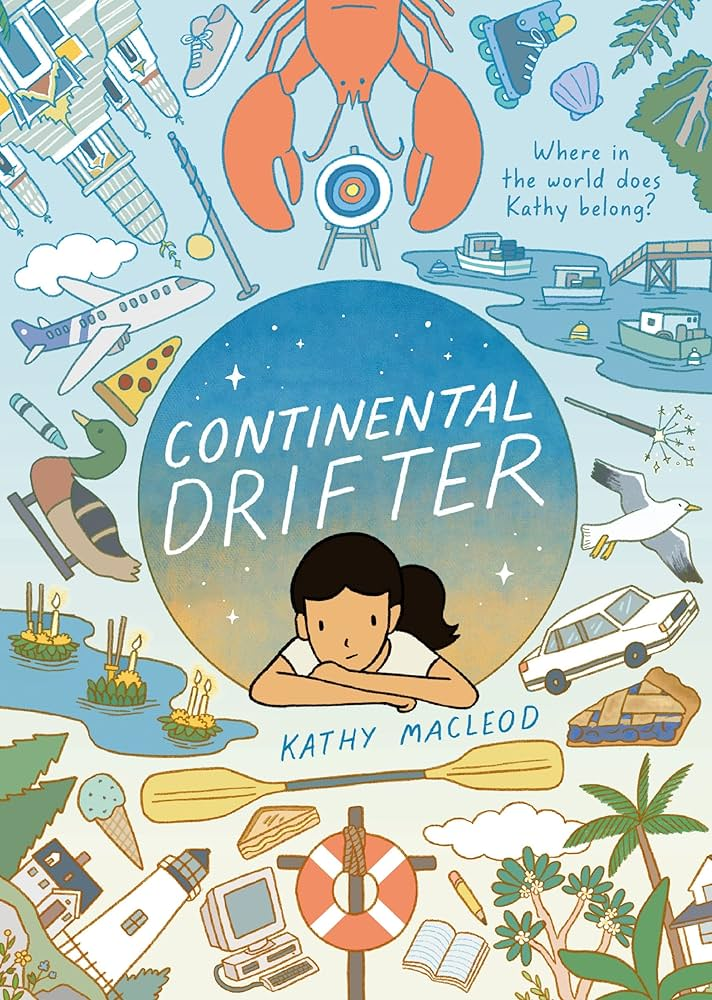
Continental Drifter by Kathy MacLeod (First Second, 224 pages, grades 4-7). Kathy lives in Thailand with her American father, Thai mother, and older sister Jennie. She attends an international English-only school in Bangkok and feels more closely identified with her American side. But when the family spends the summer in Maine visiting her dad’s relatives, Kathy feels like an outsider wherever she goes, especially during her three weeks at summer camp. In addition, her parents are older, both were married before, and Kathy feels like she knows very little about them and their pasts. In Bangkok, they don’t spend much time together, so it feels strange at first when they do so much together in Maine. By the end of the summer, Kathy is coming to appreciate the parts of herself that are unique, and feeling less of the need to blend in with everyone else, but she realizes that whether she’s in Thailand or America, she’ll always feel a longing for the other country.
Kathy MacLeod’s memoir masterfully captures what it’s like to have strong connections two different countries and cultures as she navigates both her Thai and American roots. She makes astute observations about her family dynamics, which often sadly four lonely people whose fears kept them apart from each other.
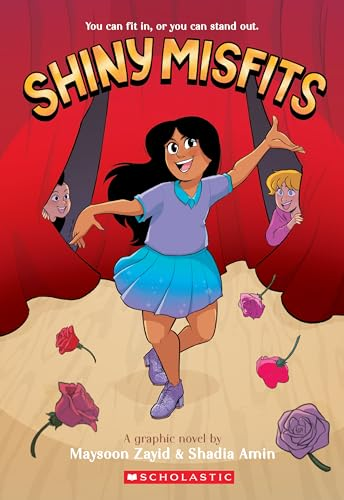
Shiny Misfits by Maysoon Zayid, illustrated by Shadia Amin (Graphix, 256 pages, grades 4-8). Bay Ann loves to dance and is excited to perform as a tap-dancing zombie bride in the Halloween talent show. Despite her cerebral palsy, her dancing is good enough to earn her the top prize. When her crush, Alyee Maq, gives her a kiss, it seems like the perfect night. But the kiss knocks Bay Ann over, and the next day it’s all over social media, showing Alyee Maq rescuing “a special girl,” whose face is blurred out. Bay Ann is determined to both get revenge on Alyee Maq and have her own posts go viral. She’s helped by her two best friends, her talking cat, her understanding father, and–occasionally–her strict, demanding mother. Not only do they support Bay Ann in her endeavors, but they try to hold her back when her revenge plans get out of control. This causes sparks to fly on occasion, but in the end, Bay Ann learns to shine and that being a loyal friend is more important than going viral.
I had high hopes for this book, and it is a fun story featuring a character with CP who is athletic and determined. Although it’s probably an accurate portrayal of a middle schooler, I found Bay Ann a bit too uncaring of the feelings of her family and friends as she doggedly pursued her revenge. And far be it from me to judge middle school crushes, but Alyee Maq really did not seem worth the effort.
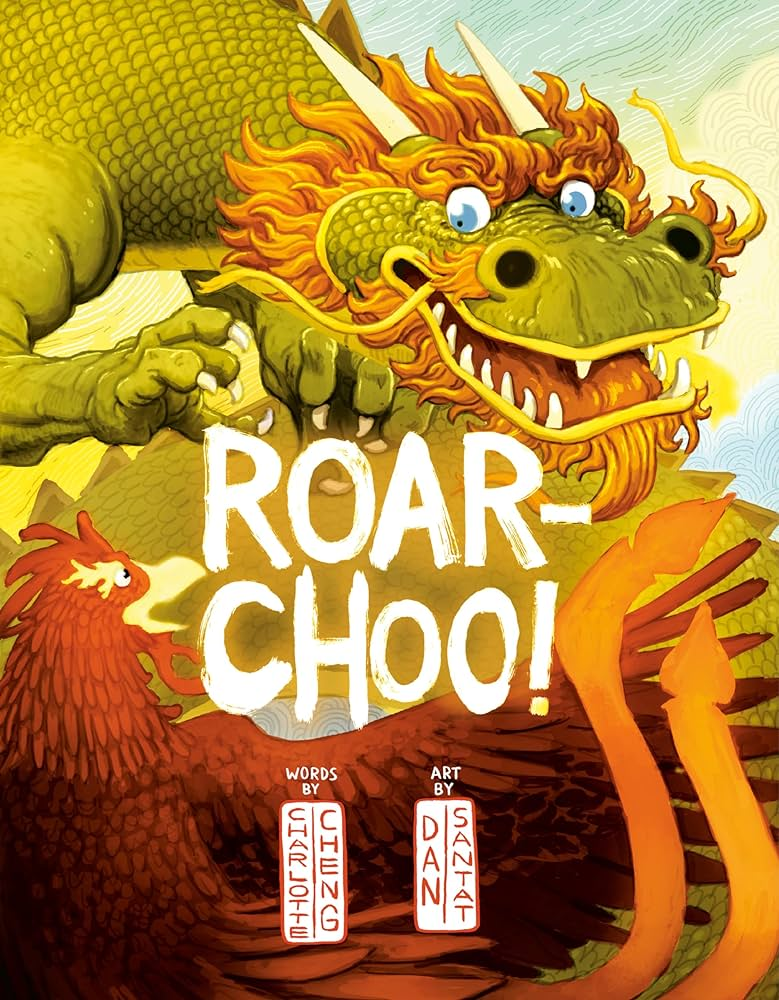
Roar-Choo! by Charlotte Cheng, illustrated by Dan Santat (Rocky Pond Books, 40 pages, ages 4-8). When a dragon catches a cold, its phoenix friend wants to help it slow down and rest. But the dragon insists that dragons are strong and never quit. By the end, not only has the dragon come to understand that rest can be a good thing, but the phoenix realizes that being patient and cheering can also be exhausting. The last page sees them napping together. Includes an author’s note explaining that in the Chinese tradition, the dragon represents male strength and bravery, and the phoenix, female grace and generosity. She chose to write the story without pronouns to make these traits more universal.
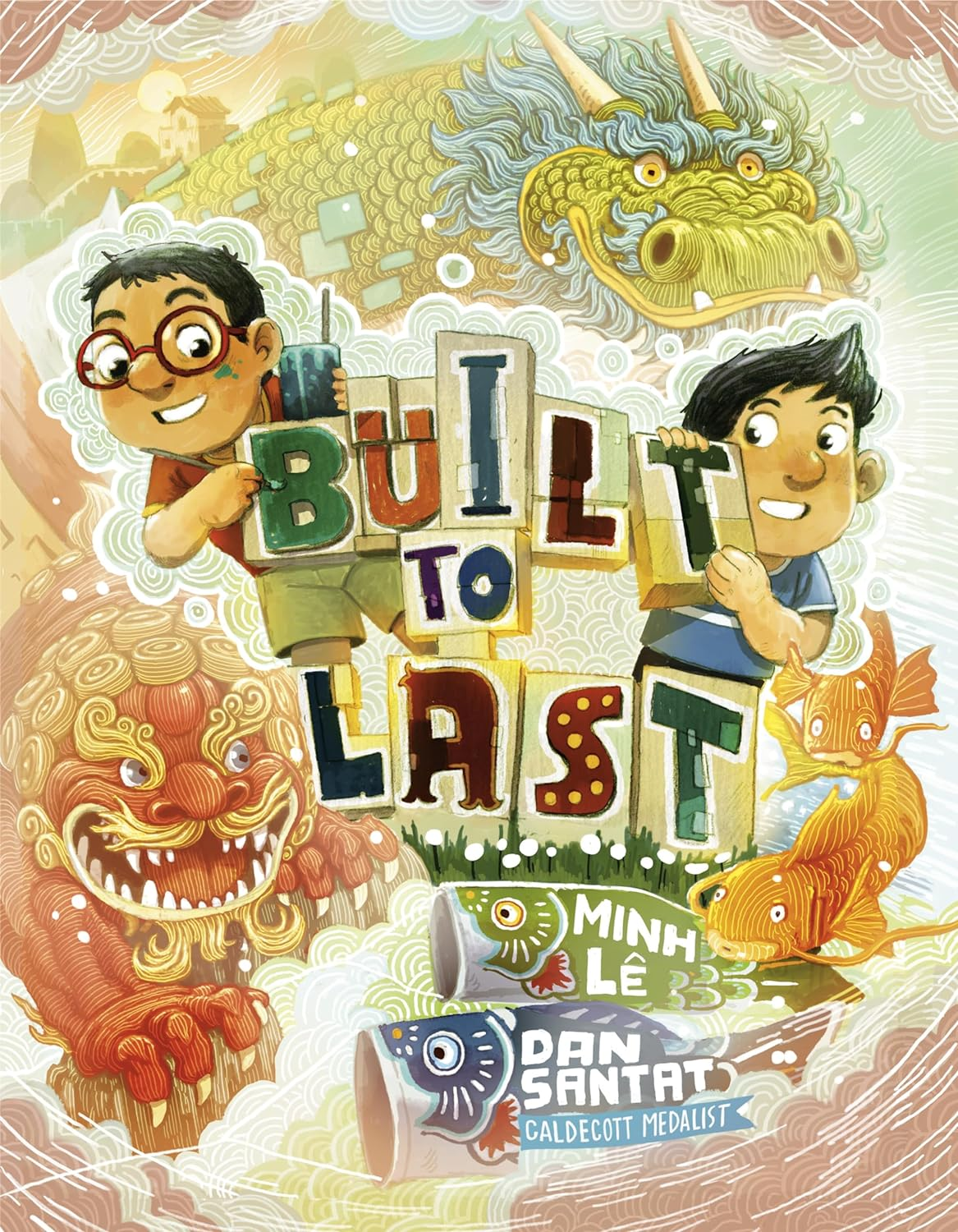
Built to Last by Minh Lê, illustrated by Dan Santat (Knopf Books for Young Readers, 40 pages, ages 4-8). Two friends who resemble a young Minh Lê and Dan Santat meet when they’re about preschool age when they discover a mutual love of building things. As they get older their creations grow in size–and so do their failures. When they’re little, they can laugh these off, but as time goes by, that gets harder to do. When their biggest project of all doesn’t work out, they’re ready to call it quits on being friends. But remembering all their good times together leads to the reconciliation of a friendship that’s been built to last.
I wasn’t overly impressed by either one of these stories, which both seemed a bit didactic. I was a bit disappointed since one of my favorite read-alouds is the Minh Lê/Dan Santat creation Lift. But Santat’s illustrations in both books are gorgeous, and any dragon fan will be drawn to them immediately.
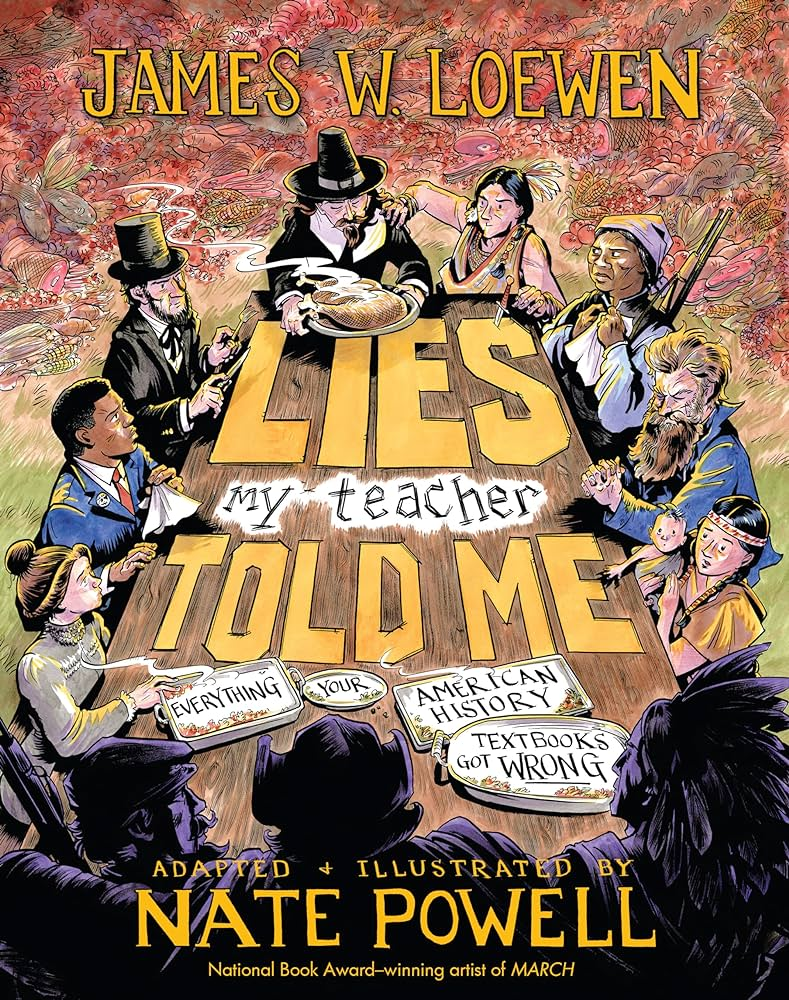
Lies My Teacher Told Me: A Graphic Adaptation by James W. Loewen, adapted and illustrated by Nate Powell (The New Press, 272 pages, grades 9-12). James W. Loewen’s 1995 book (updated in 2007 and 2018) examined twelve high school American history textbooks and how they present the history of the United States. His conclusions are fascinating, showing how the narrative presents a patriotic view of steady progress over time, with Americans defending freedom and democracy around the world. Racism, genocides, corporate greed, and government secrecy are pretty much excluded from this version of history. He also investigated how and why textbooks are written like this, which turns out to be in large part because the committees that adopt the books for their states demand it. Loewen concludes by emphasizing the importance of telling the truth to students, presenting American history in a way that makes them think critically about events from the past and how they shape the future, in order to help them become active and engaged citizens.
I’ve heard of this book but never read it, and I am grateful for Nate Powell’s amazing graphic adaptation (Powell worked with John Lewis to create his March trilogy). I found it compelling reading, with so much of the history relevant to today’s current events at home and abroad. I can usually zip through graphic novels in a few days, but this took me quite a bit longer, with text-heavy pages and lots of fascinating ideas to consider. There were times that I wish I knew more about the topics being discussed, and many readers will want to consult the original work to get a fuller picture.
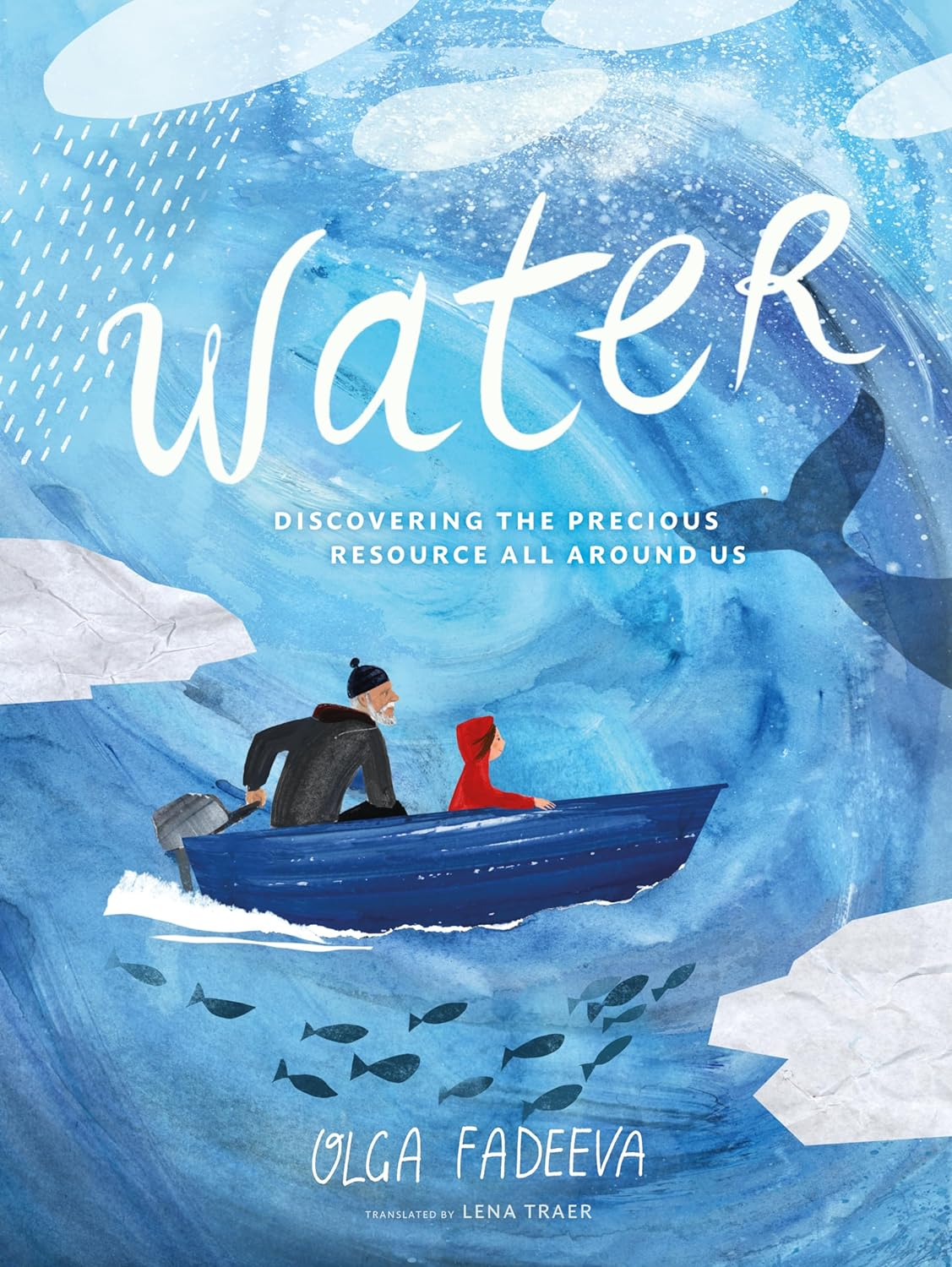
Water: Discovering the Precious Resource All Around Us by Olga Fadeeva, translated from Russian by Lena Traer (Eerdman’s Books for Young Readers, 56 pages, grades 2-5). Each spread in this book asks a question about water, covering a wide range of topics from weather to oceans to pollution. How much water is there on Earth? How do rivers form? How are seas and oceans different? How powerful is water? Each question is answered with a few straightforward, engaging paragraphs and illustrated with acrylics that emphasize the blues and browns of water. This is a fun book to browse and would make an excellent addition to any elementary unit on water, although there was a sad lack of additional resources at the end.
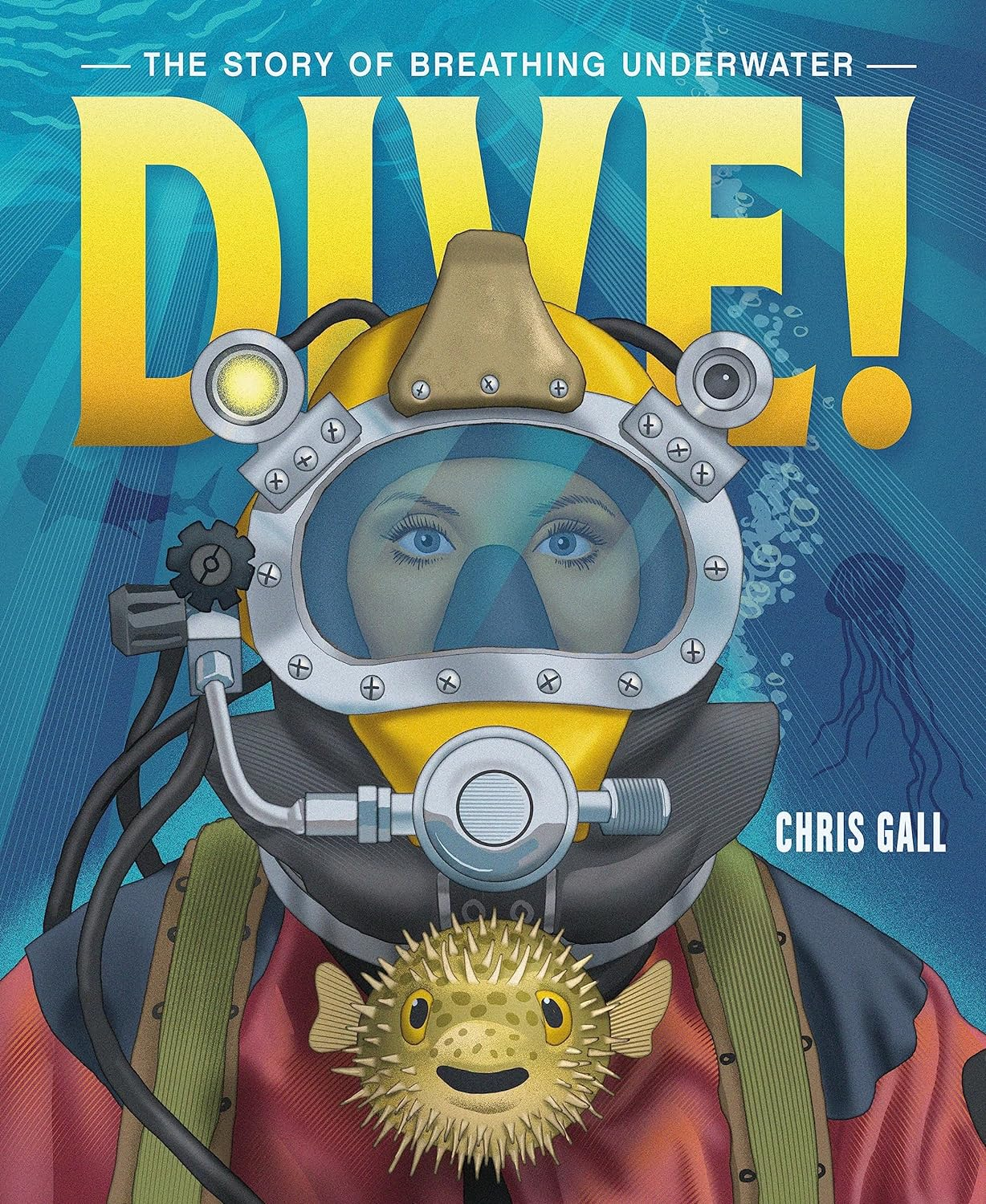
Dive! The Story of Breathing Underwater by Chris Gall (Roaring Brook Press, 48 pages, grades 1-5). As we learned in the first book, two-thirds of the Earth is covered in water, so it’s only natural that humans would seek out ways to explore the oceans. Beginning with the ancient Greeks who used hollow reeds that allowed them to breathe while harvesting undersea sponges, Chris Gall moves on to diving bells, the bathysphere, the Aqua-Lung, and robot-controlled submersibles. He also explains what happens when humans travel deep into the ocean, and the catastrophic effects returning to the surface too quickly can have. The narrative is told through a lens of problem-solving, as various inventors sought to overcome obstacles to allow divers to go deeper and explore longer. There’s more information at the end about the oceans, how to become a diver, and the author’s personal experience with diving, as well as a glossary and additional resources. Although this has the look of a picture book and is recommended by some reviewers for kids as young as 4, there’s a lot of somewhat technical information that would most likely be more interesting for older readers.
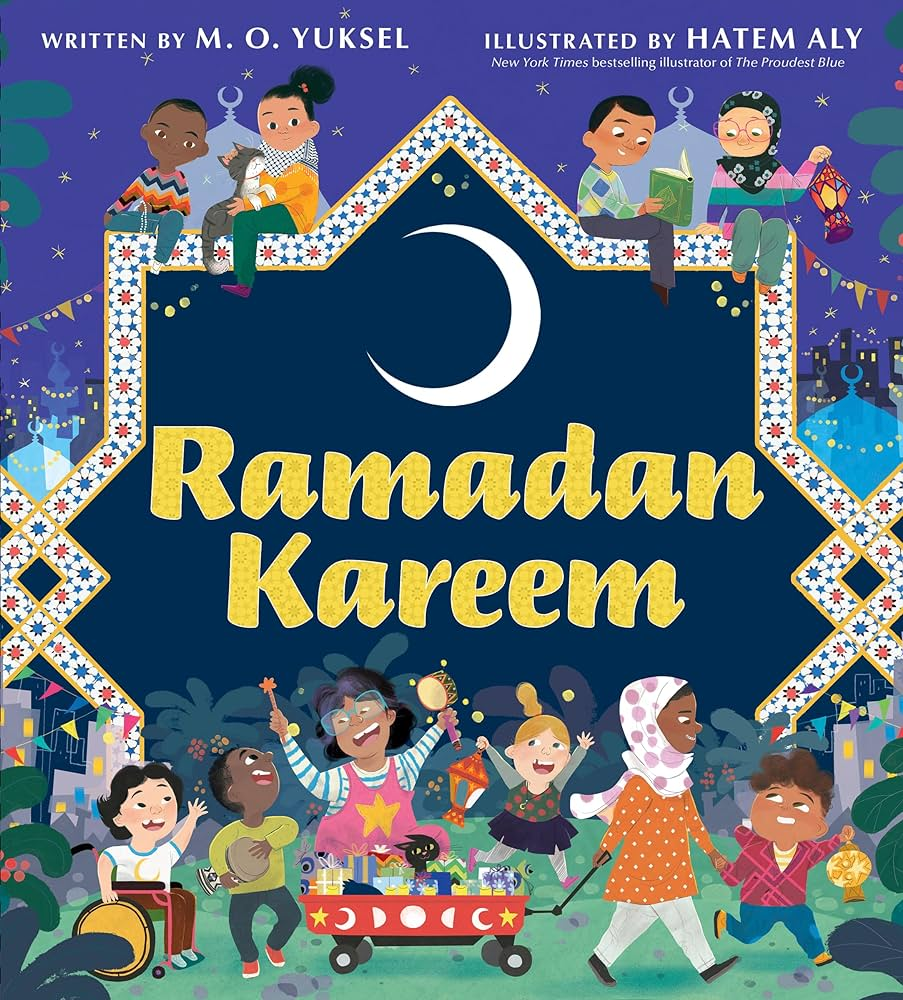
Ramadan Kareem by M. O. Yuksel, illustrated by Hatem Aly (HarperCollins, 40 pages, ages 4-8). Kids around the world celebrate Ramadan from the sighting of the crescent moon that marks the beginning to the next crescent a month later that signals that it’s time for the Eid celebration. In between, some of them fast for the first time, give money and food to neighbors, enjoy feasts before sunrise and after sunset, and attend mosque to pray and study the Qur’an. Eid means family gatherings, feasting, and gift giving, as the kids look forward to celebrating Ramadan again next year. Includes additional information, as well as a glossary and a list of three resources.
This book is packed with information, as well as colorful illustrations by Hatem Aly, for whom I’ve had a soft spot since The Inquisitor’s Tale. One fun feature is that 13 flags are hidden in the pictures, showing where in the world that celebration is taking place, although I wish this had been introduced at the beginning of the book instead of the end. I also wish I had seen this book in time for Ramadan this year, but file it away as one to purchase for 2025.
Juneteenth Is by Natasha Tripplett, illustrated by Daniel J. O’Brien (Chronicle Books, 40 pages, ages 4-8). A young girl shows readers how her family celebrates Juneteenth. The day starts with a parade, then continues to a big extended family gathering for a feast that features red food and drink. Grandparents remind everyone that red represents the color of suffering and give a quick synopsis of the history of the day, “the history lesson not taught in school.” At the end of the day, the family gathers for a photo, and the girl reminds readers, “Juneteenth is for all of us. We are America.” Includes information and resources on the significance of red in the celebration of Juneteenth.
Another beautifully illustrated book that serves as an excellent introduction to Juneteenth for younger readers. It’s a good mix of family fun and remembrance of the reasons for observing the day. Although the information about the significance of red is interesting, I would have liked more about the history of the holiday.



 A Kids Book A Day