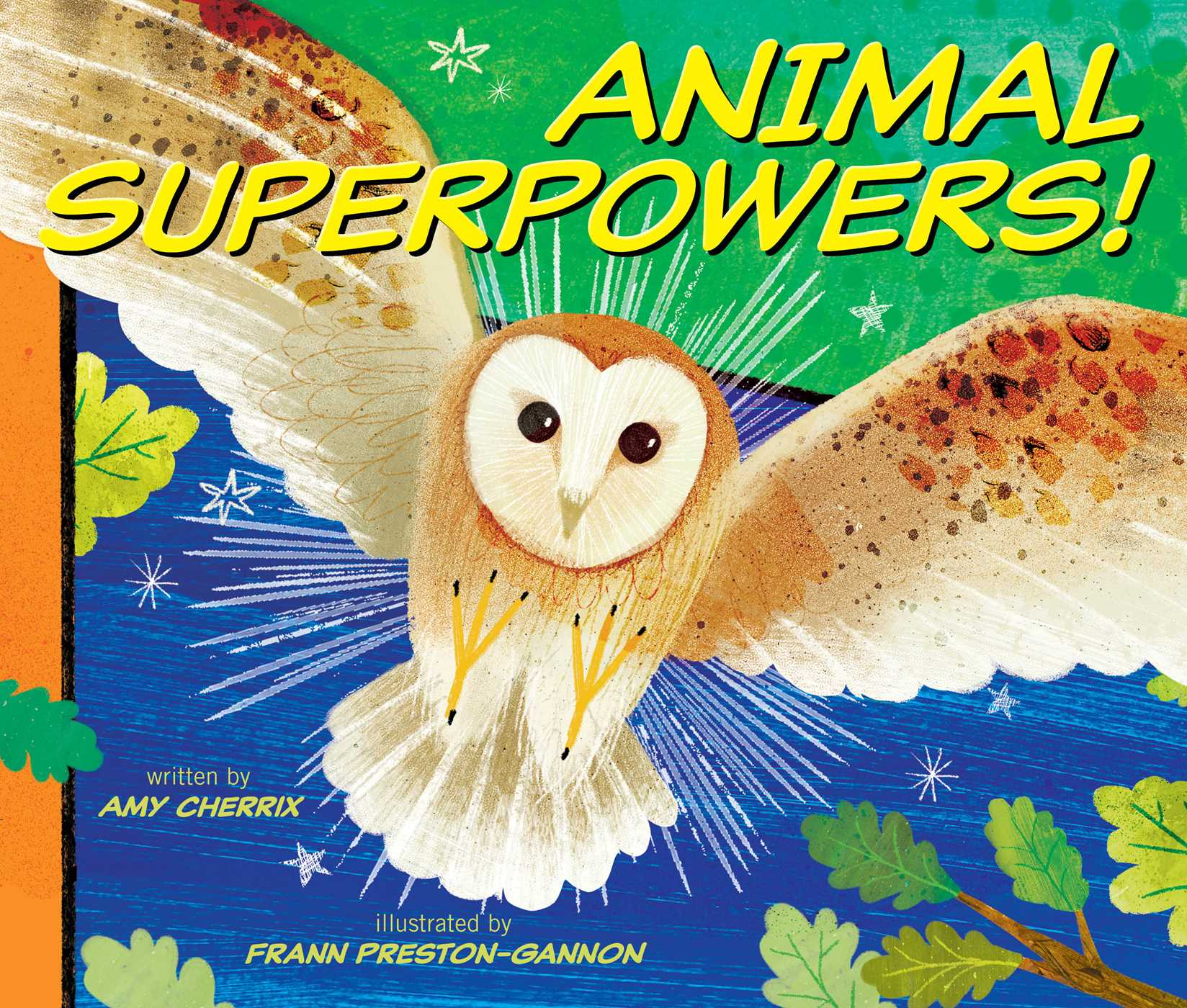
Animal Superpowers by Amy Cherrix, illustrated by Frann Preston-Gannon (Beach Lane Books, 48 pages, grades K-4). From a seemingly immortal jellyfish to a gravity-defying ibex to a snake-killing, venom-resistant opossum, these animals have superpowers that allow them to survive and thrive in their environments. Even your pet dog has a smelling superpower! Each two-page spread has a vivid illustration with boxed text. One spread gives the introduction to the power, then turn the page to reveal what it is and how the animal uses it. The last couple pages, entitled “Action is your superpower!”, tells how the different animals are threatened by pollution and climate change, encouraging kids to take action to help them. There’s also a list of sources.
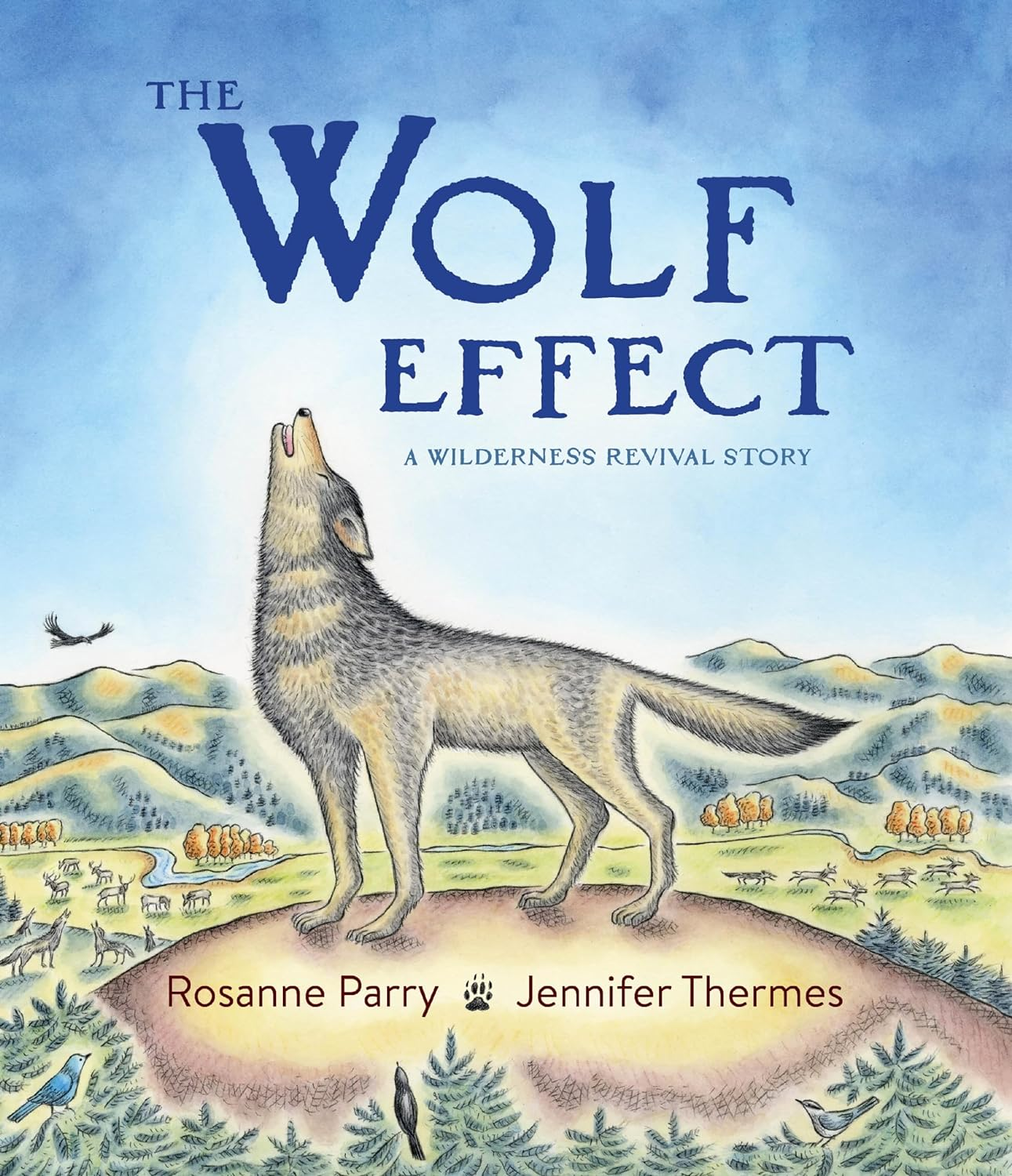
Wolf Effect: A Wilderness Revival Story by Rosanne Parry, illustrated by Jennifer Thermes (Greenwillow Books, 40 pages, grades K-4). The story of wolves in Yellowstone, from their disappearance due to hunting to their reintroduction in the 1990’s, is told with rhyming text, prose, and illustrations. The wolves’ demise is told in verses, showing farmers and rangers hunting the wolves, with newspaper headlines declaring that Yellowstone is free of them. Then the text goes into a sort of “house that Jack built” rhyme, showing the ripple effects of reintroducing the wolves on the environment, as beavers, willows, and songbirds all return to the park. Boxes of narrative text provide more details, as do the illustrations, which sometimes depict a bear and a coyote discussing the effects of the wolves’ return. Eighteen animals from the pages are shown at the end; there are also notes from the author and illustrator, as well as a glossary and a list of resources.
Animal fans will be happy to see both of these books on the library shelves, with their eye-catching covers and beautiful illustrations. Animal Superpowers will appeal to readers who like collecting interesting facts while Wolf Effect is more of a story. I found the way the latter book was written a bit confusing, and I’m not sure that rhyming verses were the best way to go, particularly from an author as knowledgeable about wolves as Rosanne Parry (A Wolf Called Wander is one of my all-time favorite animal stories). Jennifer Thermes is amazing, though, and I found the illustrations to be the main attraction of both books.
 A Kids Book A Day