Gamerville by Johnnie Christmas (HarperAlley, 256 pages, grades 3-7). Max feels like he doesn’t need friends when he immerses himself in the world of video games, and he’s excited to qualify for the big Gamerville championship. In some unfortunate timing, his mother signs Max up for Camp Reset, a monthlong summer camp designed to get kids unplugged and back to nature, which takes place the same time as Gamerville. The gaming venue is right across the lake from the camp, and Max spends his days plotting an escape. His nemesis is a girl named Zanzi, great-great-granddaughter of the camp’s founder, who eschews all technology. Surprisingly, the two eventually become friends, along with a third boy, Dylan, who has anger issues and has been shunned for being a bully. When they finally succeed in getting Max to Gamerville, he ends up using the lessons he’s learned about teamwork and friendship to make some surprising decisions at the competition.
Although this lacked the interesting historical flashbacks that made Johnnie Christmas’s Swim Team one of my favorites, it’s an engaging story with interesting characters and some good messages about friendship and finding a balance with technology. I’m sure you can introduce this as “a graphic novel about a gamer,” and kids will be clamoring for it.
Camp Prodigy by Caroline Palmer (Atheneum Books for Young Readers, 256 pages, grades 4-7). Tate is just starting viola, and they’re feeling unsure about their musical talents as well as their nonbinary identity, which is still a secret. Their original inspiration for learning viola was another nonbinary violist named Eli; when Tate went to see Eli’s debut concert, Eli got stage fright and never performed. The two meet at a summer music camp, Camp Prodigy, where they both struggle to find a balance between a love of music and a quest for perfection. Other campers help them to have fun or to perfect their playing. By the end of camp, they’ve both come a long way toward discovering what works for them, Tate has come out to friends and family, and Eli has loosened up on their perfectionism. Several pages at the end show how Caroline Palmer created the art for the book.
Kids are going to be begging their parents to go to camp after a handful of graphic novels this summer that portray it as a middle school paradise for making friends and experiencing personal growth. This one is an excellent addition, with two loveable nonbinary characters and a host of other interesting kids (I had a little trouble keeping track of them all) that make Camp Prodigy a fun and rewarding time for everyone.
Clever Crow by Chris Butterworth, illustrated by Olivia Lomenech Gill (Candlewick, 32 pages, ages 4-8). “Wherever you are right now, there’s sure to be a crow or two nearby.” Crows are easy to spot, but also easy to miss. They tend to be plain, not particularly fancy fliers, and have a hoarse caw instead of a melodious song. But they’re smart enough to use tools and store food, and sometimes you can see them acting playfully. To summarize, they are “smart, clever, crafty and playful…just like you!” Includes a list of suggestions for learning more about crows and a short index.
The illustrations in this book are stunning, beginning with the endpapers, which show various crow eggs in the front and the birds that hatch out of them in the back. The text is quirky but interesting, although it left me wanting to know a lot more…for instance, is a crow a specific bird or a family of birds? I was surprised by the inclusion of a blue jay on the back endpapers, since I don’t think of it as a crow, but a quick Google search revealed that it’s part of the crow family. This is an eye-catching introduction, but curious readers will want to dig deeper for more information.
Sleepy: Surprising Ways Animals Snooze by Jennifer Ward, illustrated by Robin Page (Beach Lane Books, 32 pages, grades K-3). Whether it’s the half-sleeping brain of the dolphin, the deep torpor of the hummingbird, or the eyes-wide-open slumber of a snake, animals get their rest in a variety of fascinating ways. Each page features a close-up illustration of the animal with four lines of rhyming text describing its sleep, with a paragraph of additional information giving more details. The last page features a human child experiencing what scientists call “monophasic sleep.” Includes a list of the types of sleep in the book, a list of sources, and pie charts showing sleeping and waking times for all 16 animals and five more showing humans at different developmental stages.
As much as I mourn the loss of Steve Jenkins, his talented wife Robin Page has found an able partner with Jennifer Ward, whose rhyming text and fascinating facts reminded me of many a Jenkins book. The pie charts were very similar to some in his Animals by the Numbers (and the fact that I know that is a testament to how many times I’ve shared that book with classes.) The rhyming text and pictures will appeal to younger readers, and older ones will enjoy the additional information about each animal.
Prunella by Beth Ferry, illustrated by Claire Keane (Simon and Schuster Books for Young Readers, 40 pages, ages 4-8). Prunella’s green-thumbed parents are surprised when their new daughter is born with a purple thumb. Turns out Prunella’s just as good at growing things as they are, but her talents lie with plants like Venus flytraps, bladderworts, and corpse flowers. Her parents are completely supportive of their daughter’s passions, but other kids are not, and Prunella’s only friends are her plants. One day a little boy appears and starts asking her about her garden. Much to Prunella’s surprise, he not only isn’t repelled by them, but tells her his aspiring-mycologist sister would be interested as well. Before long, other botanists have found them, and Prunella finds herself surrounded by a group of like-minded–and purple-thumbed–friends. The plants from Prunella’s garden (“Prunella’s Persnickety Plants”) are described on the front and back endpapers.
Millie Fleur’s Poison Garden by Christy Mandin (Orchard Books, 40 pages, ages 4-8). When Millie Fleur La Fae and her mother arrive in Garden Glen (“A Picture-Perfect Place”), they move into the one rundown house, located on the edge of town. Millie starts a garden with seeds from her old home, and before long plants like fanged fairy moss, sore toothwort, and glowing Jack-in-the-bush are flourishing there. The local garden club is not happy, and they try to root out this unconventional garden from their pristine town. Millie doesn’t understand, but her mother tells her, “Some people are scared of things that are different.” Millie decides to share her garden with the kids in her class, bringing in a plant for show and tell and inviting the whole class over to her house. The kids are amazed (if occasionally grossed out) by Millie’s wild collection, but slowly things start to change in Garden Glen. While it retains some of its original perfect charm, many people incorporate Millie’s plants into their gardens, adding a weird and wonderful dimension to the community. Includes additional information about snapdragons, spider plants, and a real-life garden like Millie’s in England.
These two books came out within a couple of weeks of each other and are remarkably similar with their stories involving girls who love unusual plants and themes of how being true to yourself can enhance a community. They would make a great story time combination, perhaps paired with a study of plants or an activity of planting something from Prunella’s or Millie’s garden.
Mystery and fantasy aren’t my favorite genres, so I usually hold off on reading them until I have a little extra mental energy to devote to reading…which, not surprisingly is during summer vacation.
Medusa (Myth of Monsters, book 1) by Katherine Marsh (Clarion Books, 288 pages, grades 4-7). Ava tries to control her anger using the techniques that her mother has taught her, but when class bully Owen goes too far, she loses her temper, and Owen mysteriously freezes. The next day, Ava and her older brother Jax are suddenly told they’ll be starting immediately at their mother’s alma mater, the Accademia del Forte in Venice. It’s a startling enough change, but things really get weird when Ava learns on the first day that the Greek myths she loves are all true, gods and goddesses still exist, and that the students are all descended from monsters, sent to the school to be taught to control their powers. With her curly hair and freezing power, Ava soon discovers, to her dismay, that her ancestor is Medusa. But a group of faithful friends help her to discover the misogyny of Greek mythology and that many monsters and other mythological beings–especially the female ones–have been misrepresented. When Ava and her friends stand up to the gods, chaos ensues, and they find themselves one step ahead of angry deities, looking to discover the truth about Medusa and Ava’s family.
Fans of Rick Riordan will love this Greek mythology-inspired fantasy, which features engaging kid characters, each with an emerging superpower, and plenty of white-knuckle adventures. I loved the feminist message and the reimagining of many of the myths, although it occasionally felt a little heavy-handed. Nevertheless, it’s a fast-paced and inspiring story, and it appears that readers can look forward to at least one sequel.
The Cookie Crumbles by Tracy Badua and Alechia Dow (Quill Tree Books, 320 pages, grades 4-7). Best friends Lucy and Laila dream of attending high school at Sunderland, a private school where Lucy hopes to hone her journalistic skills while Laila gets to explore her passion for baking. When Laila’s given the chance to compete in the Golden Cookie Competition with a grand prize of a free ride at Sunderland, Lucy goes along to write about the contest with the hope of improving her scholarship chances. Five competitors, two chefs, and the one of the chef’s assistants are the only occupants of Sunderland as the contest begins. Laila’s in the lead when Chef Remi takes a bite of her cookie and collapses. He ends up in a coma in a nearby hospital, with Laila the prime suspect in his attempted murder. As Lucy and Laila investigate, they learn that everyone had a reason for wanting to get rid of Chef Remi. When a storm strands them at the school, it soon becomes obvious that unless they can identify the would-be killer, the two of them may be in danger as well.
This is a classic mystery setup: a group of strangers is brought together in an unfamiliar location, a crime is committed, and the detective(s) must figure out who that criminal is before it’s too late. Laila and Lucy’s alternate-chapter narrations keep things moving along, and the reality show-style baking competition adds to the fun.
Quacken by Justin Colón (Simon and Schuster Books for Young Readers, 40 pages, ages 4-8). When Hector and his family arrive at Cucumonga Campground, they’re immediately warned: don’t feed the ducks. Signs are posted, and the other kids tell Hector, don’t look at the ducks, don’t think about the ducks, and above all else, DON’T FEED THE DUCKS! But the ducks are so cute and look so hungry that Hector can’t resist. When he runs out of bread, a shadow blocks out the sun, and the fearsome Quacken emerges from the lake. A chase ensues, filled with classic horror movie references, until the monster captures Hector! But it turns out…children taste terrible, and Hector is saved, as the Quacken regurgitates all the other things it’s eaten. There’s plenty of monster action in this fast-paced tale with cartoon-inspired illustrations reminiscent of Dan Santat. A perfect late summer read-aloud.
I Am La Chiva! The Colorful Bus of the Andes by Karol Hernández, illustrated by Lorena Alvarez Gómez (Dial Books, 40 pages, ages 4-8). La Chiva is a colorful bus that winds its way through the Andes Mountains, picking up farmers and their wares to take to the market. Soon it’s packed both inside and out with men, women, children, animals, and fruits and vegetables. A flat tire can’t slow La Chiva and its crew down, as they all work together to get the bus back on the road. Readers get a tour of the market and various sellers before everyone packs up and heads back home again. Includes a brief author’s note indicating that the story is based on his childhood memories and a glossary of the Spanish words used in the text. If Titlewave is to be believed, a Spanish language version of the story will be available in a few weeks. The spectacular colors of the illustrations and bouncy rhyming text will appeal to kids who love vehicles and give them a nice taste of Andean culture and food. I saw in a review that this story takes place in Colombia, but I couldn’t find that information in the book.
Sour Apple by Linda Liu (Henry Holt and Co., 40 pages, ages 4-8). A small green apple wonders why it hasn’t been picked when its rounder red neighbors are fulfilling their apple destinies. In rhyming text, the apple asks questions, “Am I not shiny enough to sell at the market? Or not tiny enough to be used as a target?” The apple suffers further indignities when it’s carried off by munching insects and buried underground: “No use in playing pretend. Looks like this is the end.” But as the seasons pass, an amazing transformation takes place, and the apple is stunned to turn into a tree! “Maybe falling behind isn’t finishing last. Maybe your season has just yet to pass.” The short rhyming text, big colorful illustrations, and a message that it can be tough but ultimately okay not be chosen first make this a winning choice to read aloud. Kids may need some explanation of references to William Tell, Isaac Newton, and expressions like “an apple a day keeps the doctor away,” but even if some go over their heads, they’ll still find a lot to enjoy.
Touch the Sky by Stephanie V. W. Lucianovic, illustrated by Chris Park (Carolrhoda Books, 40 pages, ages 4-8). Vern goes to the playground almost every day and loves to lie on his stomach on a swing, or spin around until the chains are twisted. What he really wants to do is swing as high as the other kids, feeling like his toes can touch the sky, but Vern doesn’t know how to pump. When a girl named Gretchen offers to teach him how, Vern is ready. He watches and listens as Gretchen shows him how to lift off, straighten your legs on the upswing, then tuck them in to go back. “It feels hard until you get it, and then it’s not,” Gretchen wisely tells him. Vern tries and tries, but he winds up falling on his butt or at the very least not moving. Then, just as he may be beginning to get it, Gretchen has to leave. Vern considers giving up, but he knows Gretchen would want him to keep trying. And then…Vern gets it! His toes touch the sky! A new kid sits on Gretchen’s swing, looking on admiringly. “It feels hard until you get it, and then it’s not,” Vern tells him. “Do you want to learn how?” The message of persistence will resonate with kids, both on the micro level of learning how to swing and the macro one of not giving up on your goals. What really makes this book amazing is the illustrations, a rainbow of color and movement that capture both the frustration of not getting it and the thrill of finally succeeding, with a joyous feeling of flying. It’s gotten a well-earned place on Betsy Bird’s Caldecott 2025 prediction list.
Jump for Joy by Karen Gray Ruelle, illustrated by Hadley Hooper (Astra Young Readers, 32 pages, ages 3-7). Joy, a girl, loves dogs and wants one of her own. Jump, a dog, loves kids and wants one of his own. Each believes they will know their dog/kid when they see them. Through the seasons, on facing pages, each one creates what they want: a dog named Tulip out of flowers and a kid named Fern out of ferns in the spring, a dog named Shelby out of shells and a kid named Sandy out of sand in the summer. Nothing lasts, though, through a whole year. The next spring, Joy and Jump discover new tulips and ferns respectively and call out with excitement. And those cries (or woofs) alert them to each other’s presence, and “Joy jumped for joy and Jump jumped for Joy.” I can easily imagine reading this to a pre-k or kindergarten class, going through the seasons, getting a kick out of Joy and Jump’s amazing creations, and a happy ending at last. This is another one on the aforementioned Caldecott prediction list, and the illustrations are mostly black and white line drawings with the final spread in glorious color. A note at the end says the black and white pictures are inspired by art from the 18th, 19th, and early 20th centuries, “collaged together to create something new,” and it does have a very unique and interesting look.
Home in a Lunchbox by Cherry Mo (Penguin Workshop, 40 pages, ages 4-8). Jun is a new arrival from Hong Kong, facing her first day of school knowing only a few words (hello, thank you, I don’t know) that she’s written on her hand with the Cantonese translations. She tries her best but struggles with assignments and saying the wrong thing that causes her classmates to either laugh at her or ignore her. At lunchtime, the foods in her lunchbox bring back happy memories with her family and friends in Hong Kong, and it’s ultimately food that connects her with the other kids. A girl from her class has been quietly observing Jun, and one day she says hello and tells Jun that her lunch looks good. Soon, all the kids are trading food, and Jun learns the names of several other kids. The last page shows Jun bringing home those kids, and her mom preparing a snack for them that includes some of the family’s traditional foods and the pizza Jun enjoyed in the cafeteria. Includes a table showing the words from Jun’s hand in English and Cantonese and a labeled diagram (in English and Cantonese) of the food in her lunchbox.
Ruby’s Tools for Making Friends by Apryl Stott (Simon and Schuster/Paula Wiseman Books, 40 pages, ages 4-8). Ruby’s new at school, but she’s packed a bag full of tools designed to help with her anxieties. Her tape measure reminds her to count her breaths, pliers help her stay flexible, and safety goggles show her a new way of looking at the world. Her new school is a unique blend of people and animals, and Ruby is excited to be on a team with two humans and a goose, designing a holder for an upcoming egg drop. Working with others can be a challenge, though, and Ruby uses her tools to help her stay calm, focused, and confident enough to speak up when she has an idea. Their project wins the class competition and moves on to a schoolwide egg drop. As the principal gets ready to test the various designs on the playground, Ruby realizes she’s left her tools in the classroom, but she’s able to visualize them when she starts to worry. Although their egg ends up breaking, her new friends assure Ruby that she had a good idea, helping her to feel happy and excited to work on a new project.
Sister Friend by Jamila Thompkins-Bigelow (Harry N. Abrams, 40 pages, ages 4-8). Every day is a “play-by-herself” day for Ameena, who’s the only kid in her class with brown skin and twists in her hair. One day, a new girl named Sundus comes to class, and Ameena is excited to see that she has brown skin and that she wears hijab, meaning she’s Muslim like Ameena. After a series of missteps, Ameena sees Sundus at masjid one night when she’s there with her family. Her mother greets Sundus’s mother, “Assalamu Alaikum [peace be upon you], Sister. Welcome!” The next day at recess, when Ameena sees Sundus, she finally knows what to say and gives the new girl the same greeting her mother used the night before. That’s all it takes to reach out to Sundus, and before long, the two girls are the best of friends.
Here are a few more books that may come in handy at the beginning of the school year, especially if there are new kids starting in a class that’s been together for a while. All three would make good prompts to talk about ways to welcome new students and how to bridge differences in culture and/or language (and also good reminders for teachers, who for the most part seemed completely oblivious to the struggles going on in their classrooms.) Ruby offers some suggestions about handling the anxiety that can come from being a new kid (and Abbott Elementary fans may get a chuckle from the egg drop activity). If I had to pick a favorite, it would be Home in a Lunchbox, a debut that has illustrations worthy of Caldecott consideration, and that reminded me of one of my favorite books for sharing, Gibberish, another almost wordless book that shows what it’s like to start in a school where you don’t know the language, and the importance of that one kid who reaches out.
Go Forth and Tell: The Life of Augusta Baker, Librarian and Master Storyteller by Breanna J. McDaniel, illustrated by April Harrison (Dial Books, 40 pages, grades 2-5). Augusta Baker was raised on her grandmother’s tales of Br’er Rabbit and King Arthur. A college class on folklore encouraged Augusta to become a storyteller herself, and she got a job at a branch of the New York Public Library in Harlem, where she found audiences of children eager for her stories. While most of her young patrons were African American, the books Augusta found in the library rarely had Black characters, and when they did, the portrayals were “RUDE, MEAN, and JUST PLAIN WRONG.” She searched for books (and wrote some of her own) that sought to correct that, compiling lists to share those books with others. Over the years, her work influenced Black writers and educators like James Baldwin, Audre Lorde, Carter Woodson, John Steptoe, and Virginia Hamilton. She extended her outreach through teaching at Columbia and the University of South Carolina, a radio show, and an appearance on Sesame Street and is honored by the city of Columbia, SC each year with a festival called A(ugusta) Baker’s Dozen. Includes a timeline, citations, an author’s note, and photos.
Bridges Instead of Walls: The Story of Mavis Staples by Mavis Staples and Carole Boston Weatherford, illustrated by Steffi Walthall (Rocky Pond Books, 48 pages, grades 2-5). Mavis Staples tells the story of her life (in third person), beginning with her family’s trip north during the Great Migration. Mavis was the youngest, born in Chicago, and as she grew older, she began singing with her father and siblings. They became popular as the Staples Singers, performing gospel music in churches around the Midwest, gradually expanding their repertoire to include blues and folk music. Although their lives and music were firmly grounded in their faith, eventually their fame spread to the secular entertainment world, as well as to supporting Martin Luther King, Jr. and the civil rights movement. Mavis also enjoyed a solo career, which continues to this day, as she is the last surviving member of the Staples Singers. Includes a timeline and lists of recommended listening (songs by the Staples Singers and Mavis Staples) and recommended viewing (documentaries).
These two excellent picture book biographies will introduce readers to amazing Black women who overcame discrimination and other barriers to share their gifts of storytelling and singing. Both are pretty long with lots of references to historical figures that will likely need some introductions for kids. The illustrations in both are amazing and do a great job of incorporating each woman’s art into the story.
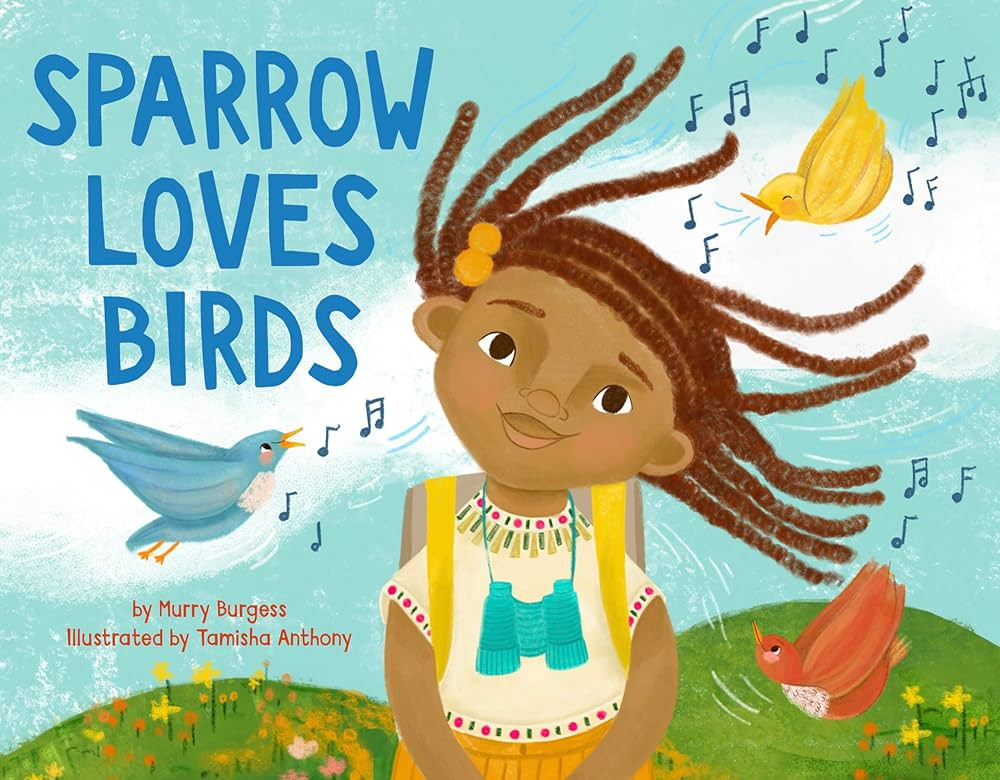
Sparrow Loves Birds by Murry Burgess, illustrated by Tamisha Anthony (Christy Ottaviano Books, 40 pages, ages 4-8). Sparrow is an observant girl, who loves noticing the people, animals, and sounds of her neighborhood. Most of all, she loves to watch birds, and she’ll often head out with her sketchbook and binoculars to look for them. She learns to identify different birds by their movements, colors, and songs, carefully drawing them and labelling them when she knows their names. The last page invites readers to explore their own neighborhoods, and there’s lots of back matter to help them, including tips for birdwatchers and a guide to eighteen birds mentioned in the text. There’s also an author’s note describing her journey from a childhood spent learning about nature to a career in wildlife biology, and encouraging kids to get outside and observe nature, whether they live in rural, suburban, or urban neighborhoods. This a great introduction to birdwatching, and just generally enjoying the outdoors, that introduces lots of different birds and birdwatching techniques through an enthusiastic young narrator. The illustrations and back matter add to the educational value.
Owls in Our Yard! The Story of Alfie by Carl Safina (Norton Young Readers, 48 pages, grades 2-5). For some real-life backyard birdwatching, here’s the story of Alfie, a baby eastern screech owl found on the ground and given to ecologist Carl Safina for rehabilitation. After nursing her back to health, he and his family gradually reintroduced her to the wild. He wasn’t sure she would ever completely lose her reliance on humans, but slowly, Alfie started leaving her nesting box for longer periods of time and learned to hunt for food on her own. Eventually, she showed up with a mate, and Carl discovered that Alfie had built a nest and laid three eggs. During the pandemic, the family had plenty of opportunities to follow the adventures of the new baby owls, including battles with blue jays and robins for backyard territory. While Alfie has stayed close to her old home, she’s completely integrated into the wild now, having raised three broods and raised a total of ten owlets. The photos and compelling nonfiction story make every step of Alfie’s journey an adventure that animal lovers are sure to enjoy. It’s a bit text heavy, so younger kids may need some help with the reading, but the narrative is engaging enough to keep them going to learn what happens to Alfie and her babies.
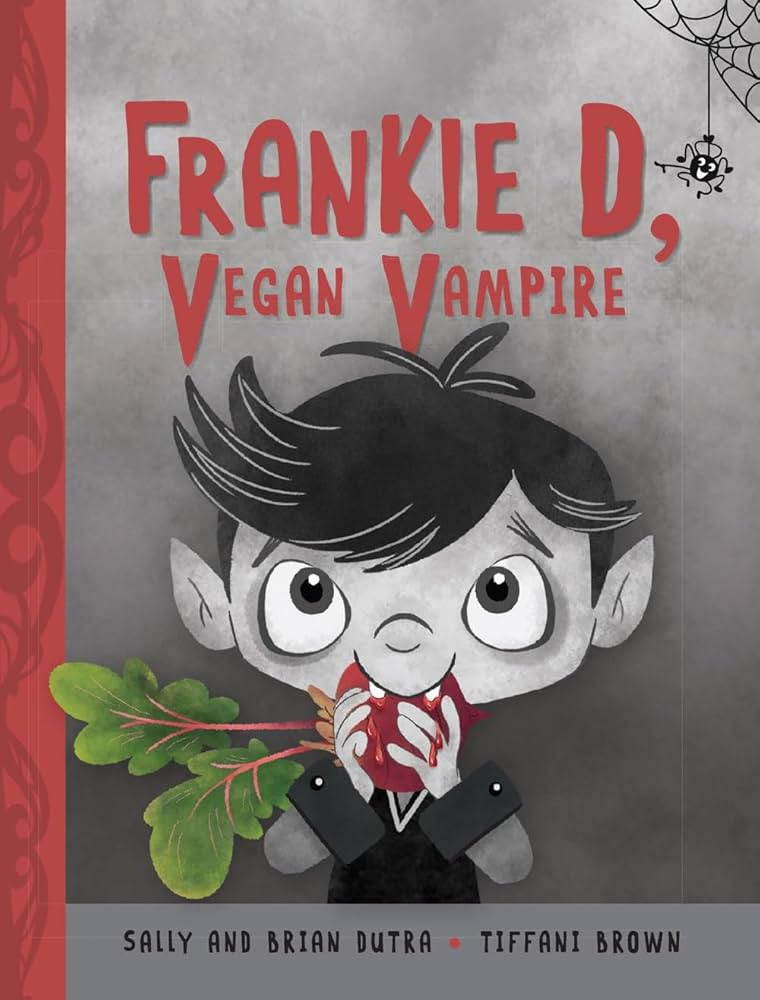
Frankie D., Vegan Vampire by Sally and Brian Dutra (Kids Can Press, 192 pages, grades 2-5). Frankie and his family have moved from Transylvania to the U.S., hoping, like so many immigrants before them, for a better life. In their case, that life is eternal, since they’re a family of vampires. Being immortal is just the beginning, as Frankie and his family struggle to hide their fangs, their ability to turn into bats, and the fact that they’re used to sleeping during the day (and in coffins). Switching to a healthy vegan diet has fortunately dampened their taste for blood, and Frankie enjoys starting fourth grade and making new friends. He suspects that one classmate, Eddie, might be a troll, but as he learns more about Eddie, he comes to realize why he’s such a bully. The family successfully negotiates having one of Frankie’s new friends and his family to dinner, and Frankie has fun at a human birthday party, but the grand finale comes with the school concert, when Frankie and Eddie save the fourth-grade performance. Pumped after this success, Frankie decides to fly home and burn off some of his excess energy, only to realize that Eddie has seen him transform into a bat.
There’s plenty of humor in this de-fanged vampire story, and the last page makes me hopeful that there will be a sequel. It’s an illustrated chapter book, but at close to 200 pages, I wouldn’t exactly call it an early chapter book. Still, I think it could find an audience with fluent readers in the earlier years of elementary school, and maybe older kids who are reading a bit below grade level.
Band Camp #1: All Together Now! by Brian “Smitty” Smith (little bee books, 80 pages, grades 1-4). This early graphic novel gives summer camp a new twist: all the campers are musical instruments. Bunk J, a.k.a. Junk Bunk, the cabin that always loses all the competitions, has four unique residents this summer: Trey the triangle, Kaylee the ukelele, Zook the kazoo, and Cordelia the accordion. Each instrument has a unique personality and well-defined likes and dislikes, but they’re united in their determination to put an end to the Bunk J legacy. In a relay race at the end of this book, they combine their talents for an unexpected victory. Camp’s not over yet, though, and book 2 is due out in September.
As a veteran of eight–yes, eight!–band camps, I love this premise and was amazed at how Smith was able to create instruments with real personalities. Early readers will get a kick out of the story and illustrations. The ending seemed abrupt, and I kind of wish the whole camp session had been included in a single volume.
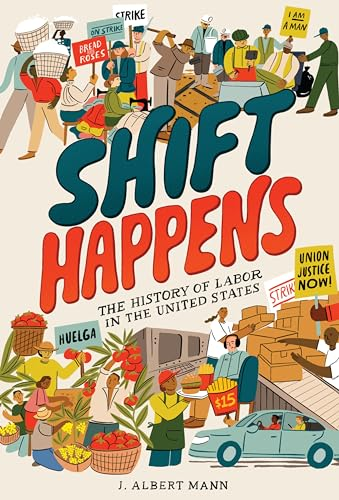
Shift Happens: The History of Labor in the United States by J. Albert Mann (HarperCollins, 416 pages, grades 8-12). Low wages, long hours, wealth inequality, immigrants accused of “stealing” jobs: issues workers face today have in fact been around since the earliest days of United States history. This breezy but thoroughly researched account tells the painful story of American labor, in which actions for improved conditions have all too often been met with resistance, violence, and even murder. There are occasional hard-won victories for workers, and the twentieth century brought substantial legislation and improvements for labor–until they were eroded during the backlash of the Reagan years and beyond. The media is also implicated here for telling stories that favor capitalists and demonize labor organizers and unions. Teens looking for the truth about labor’s history will find plenty to think about, presented with short chapters and irreverent humor that will keep them engaged.
It’s taken me weeks to work my way through this book, but it was well worth it, with fascinating and disheartening stories that make it a good companion to Lies My Teacher Told Me. I was hoping to be able to recommend this for younger kids, but there’s definitely some language that might raise a few middle school eyebrows (starting with the title), and I think that, and the complexity of the topic make it more appropriate for high school.
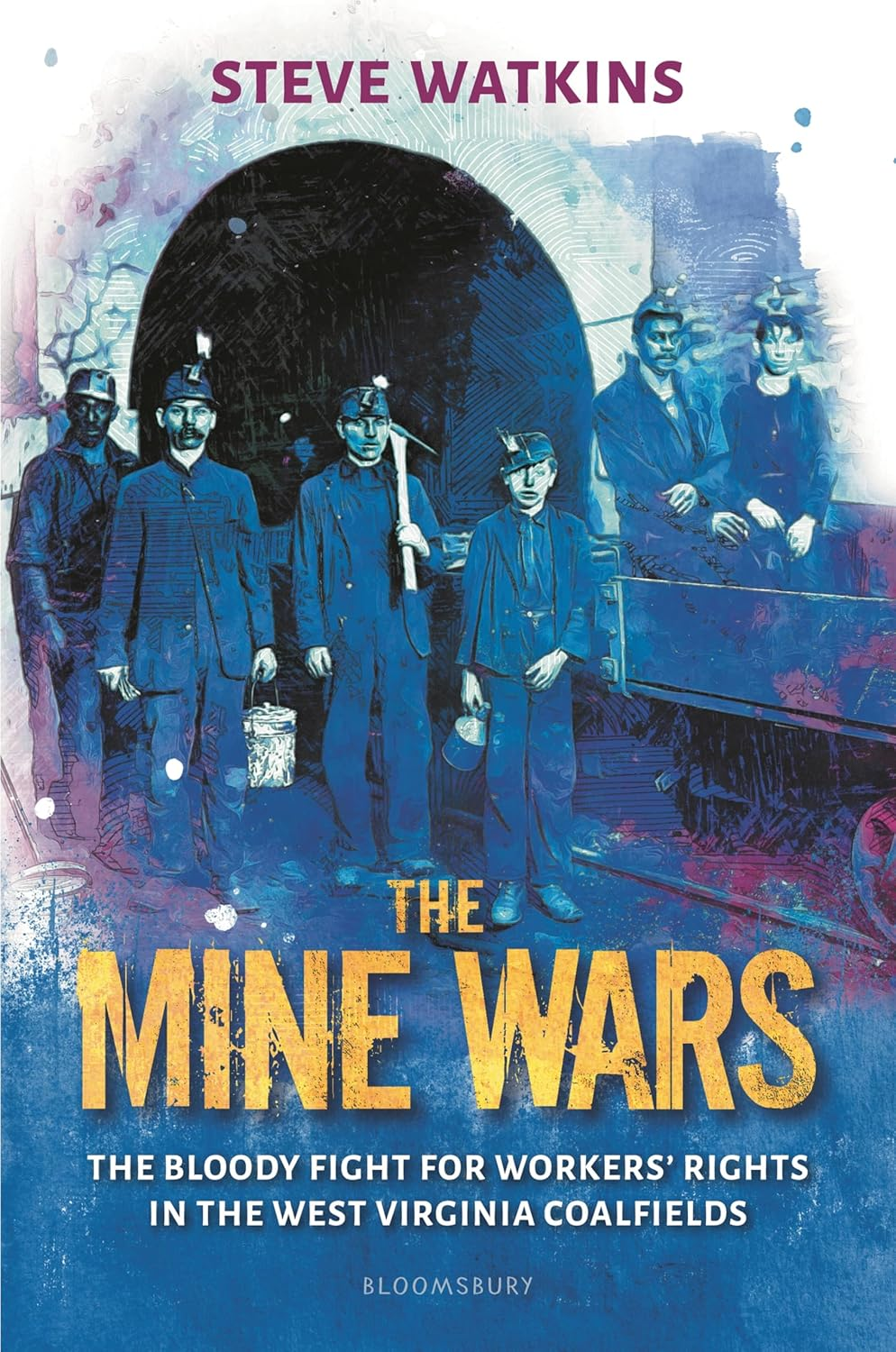
For a more in-depth look at a single incident in U.S. labor history, try The Mine Wars: The Bloody Fight for Workers’ Rights in the West Virginia Coalfields by Steve Watkins (Bloomsbury Children’s Books, 272 pages, grades 6-10). I was too saturated on labor history from Mann’s book to read this one, but it looks like it includes many of the elements I read about: workers paid paltry wages in scrip for long hours of dangerous and back-breaking labor, and a strike that ultimately resulted in several killings. This particular story takes place in West Virginia in the early 1920’s, an era when it was particularly dangerous to be part of a union. This might be a better choice for a middle school introduction to labor history and will potentially appeal to fans of Steve Sheinkin.




 A Kids Book A Day