Connecticut and Rhode Island

You may recall that last summer I went on a tour of southern states to learn more about Black history and wrote here about my experiences. I wanted to do something similar this summer–exploring a history that I didn’t know much about–but my travel funds were a bit less robust, so I decided to stay in New England and investigate the history and cultures of Native Americans here. While media portrayals frequently associate indigenous tribes and reservations with the western part of the country, I learned that there are many resources right here in New England and witnessed how the indigenous people living here today are working to preserve their cultures.

The Pequot village diorama

I began in Connecticut at the Mashuntucket Pequot Museum in Mashuntucket. If you only have time to visit one museum in southern New England to visit, I recommend this one. At over 300,000 square feet, this complex includes not only a museum, but excellent educational and research facilities, including an amazing walk-through diorama of a 16th-century Pequot village with audio accompaniment available.

The museum has been owned and operated by the Pequot tribe since it opened in 1998. I found that tribal involvement makes a real difference as compared to museums started earlier in the twentieth century by white people. The tribally operated museums tend to focus on local history, which was more what I was seeking, as opposed to those that include information about Native Americans throughout North America. They also have more exhibits and programming about contemporary indigenous people.

There’s a difference between tribes that are recognized by the federal government and those that only have state recognition, as I learned through my museum visits. Federal recognition gives tribes the right to self-govern and provides other benefits such as cash assistance through the Bureau of Indian Affairs. There are seven criteria for approval for the federal designation, and some of those, like long-standing historical community and descent from a historical tribe, can be extremely difficult to prove–precisely because so many of these groups were forced to assimilate. It seems to me like it may not be an entirely fair process, but I’m just beginning to learn about it, so I encourage anyone who’s interested to start your own research.

Only federally recognized tribes have the sovereignty to open casinos, giving those tribes access to much greater income streams. And if a state doesn’t want casinos, the government may work to deny recognition of tribes, as happened in Vermont.

Many New Englanders are familiar with the Foxwoods and Mohegan Sun casinos that the Pequot and Mohegan tribes opened in the 1990’s. Supreme Court cases from 1976 and 1986 opened the door for casinos to operate on Native lands. There have been strong feelings about this over the years, and different states have handled things in a variety of ways. The Connecticut casinos are the second and third largest in the country. I recommend the Wikipedia article on Native American gaming if you want to learn more.

Back to museums, the revenue generated for the tribe from the casinos allowed the Pequot to develop and maintain this beautiful facility. Their reservation is just down the road in North Stonington, and it’s interesting to drive over after learning in the museum exhibits how it was brought back to life from near extinction over the course of the twentieth century.

The Tantaquidgeon Museum

Travel about 20 minutes in the other direction, and you’ll get to the Tantaquidgeon Museum in Uncasville, the oldest Native American-owned and operated museum in the U.S. It’s run by the Mohegan tribe, admission is free, and they had some of the best staff of any museum I visited. I was greeted at the door, led to the first exhibit area, then guided into the main part of the museum when I was ready to move on. Outside, another guide talked about the wigwam on display and chatted about his experiences dancing at various powwows. The Mohegan reservation is about eight minutes away, right next door to Mohegan Sun.
The Tomaquag Museum
Outdoor education at the Institute for American Indian Studies

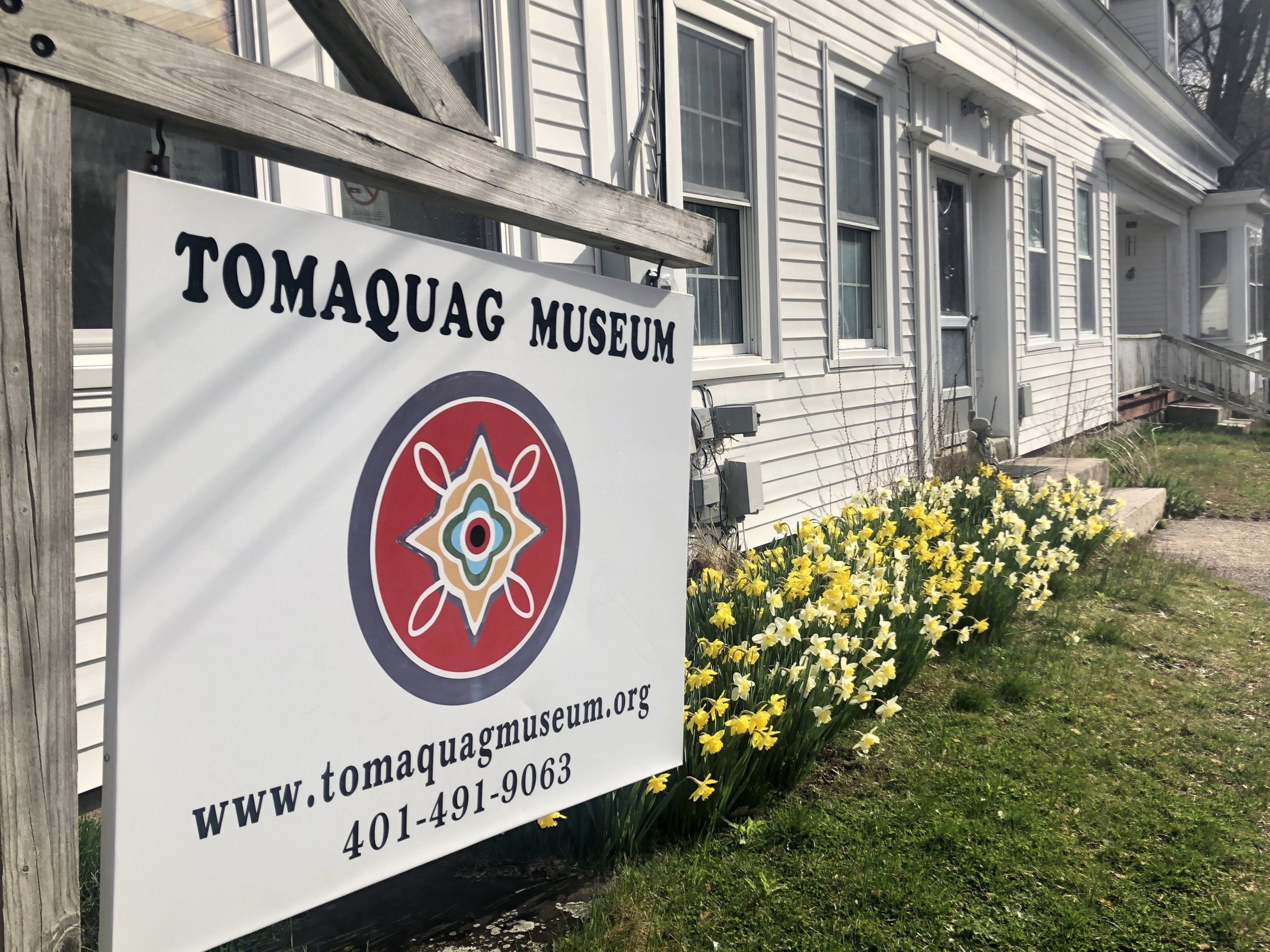
The last two museums I’ll mention are one more Connecticut one and a Rhode Island one: the Institute for American Indian Studies in Washington, CT, about two hours from the other two Connecticut museums, and the Tomaquag Museum in Exeter, RI. The Institute for American Indian Studies was founded in the 1970’s by a white archaeologist looking to preserve artifacts found in the area, while the Tomaquag was co-founded in 1958 by two women, a white anthropologist and a Narragansett/Wampanoag elder and historian. Both of these museums are small but offer a lot of educational programs and resources. One unique program at the Institute for American Studies is the Wigwam Escape, an escape room type experience designed to bring more teens to the museum, which has gotten lots of rave reviews online.

I regret that I didn’t get to any powwows in Connecticut or Rhode Island. I would have particularly liked to go to the Narragansett one in August, which, at 349 years old, is the oldest powwow in the United States and was highly recommended by my guide at the Tantaquidgeon Museum. Tune in tomorrow to read about my powwow experiences in other states.

Books to introduce the history of indigenous people in America

An Indigenous People’s History of the United States for Young People by Roxanne Dunbar-Ortiz, adapted by Jean Mendoza and Debbie Reese (Beacon Press, 2019)

Indigenous Ingenuity: A Celebration of Traditional North American Knowledge by Deidre Havrelock and Edward Kay (Christy Ottaviano Books, 2023)

Books about contemporary Native Americans

Fry Bread: A Native American Family Story by Kevin Noble Maillard, illustrated by Juana Martinez-Neal (Roaring Brook, 2019)

We Are Still Here! Native American Truths Everyone Should Know by Traci Sorell, illustrated by Frané Lissac Charlesbridge, 2021)

Tribes (Note: these lists of tribes and reservations and trust lands are from my own research and may not be complete)

Connecticut

Eastern Pequot Tribal Nation*

Golden Hill Paugussett*

Mashantucket Pequot Tribe

Mohegan Tribe

Schaghticoke Tribal Nation*

Rhode Island 

Narragansett Indian Tribe

*Not federally recognized

Reservations and Trust Lands

Connecticut

Mashantucket Pequot Reservation

Mohegan Reservation

Paucatuck Eastern Pequot Reservation

Schaghticoke Reservation

Rhode Island

Narragansett Reservation

The cat’s meow

Picture Purrfect (Bodega Cats, book 1) by Hilda Eunice Burgos (Henry Holt and Company, 144 pages, grades 2-5). Told in the alternating voices of Miguel, a human boy, and Lolo, a cat, this story unfolds in Miguel’s parents’ New York City bodega. When Miguel finds a stray cat outside, he brings it into the bodega and convinces his parents to let him keep it. Lolo’s nervous at first, but eventually he feels comfortable enough in the bodega to head upstairs to the family’s apartment. He tries to be a good friend to Miguel, who’s having issues with his parents. They want him to excel in math and science, while real passion is art. Meanwhile, Lolo has worries of his own about a yellow stray cat who starts coming around the bodega. One memorable day, Miguel lies to his parents so he can go on a field trip to the Cloisters, and Lolo rescues the yellow cat right before she’s due to have kittens. After narrowly escaping disaster, Miguel finally has an honest conversation with his parents that results in a happy ending for all.

With a relatively low page count and plenty of illustrations–including Miguel’s comic book art–this is an engaging start to a new series for kids moving up to chapter books. Miguel’s family issues are relatable, with his hardworking Dominican immigrant parents and some interesting extended family members. Some kids may struggle with the alternating points of view, but it’s fun to get things from a cat’s perspective. A bodega full of newborn kittens in the last chapter should make for an interesting segue to book 2, due out in the spring.

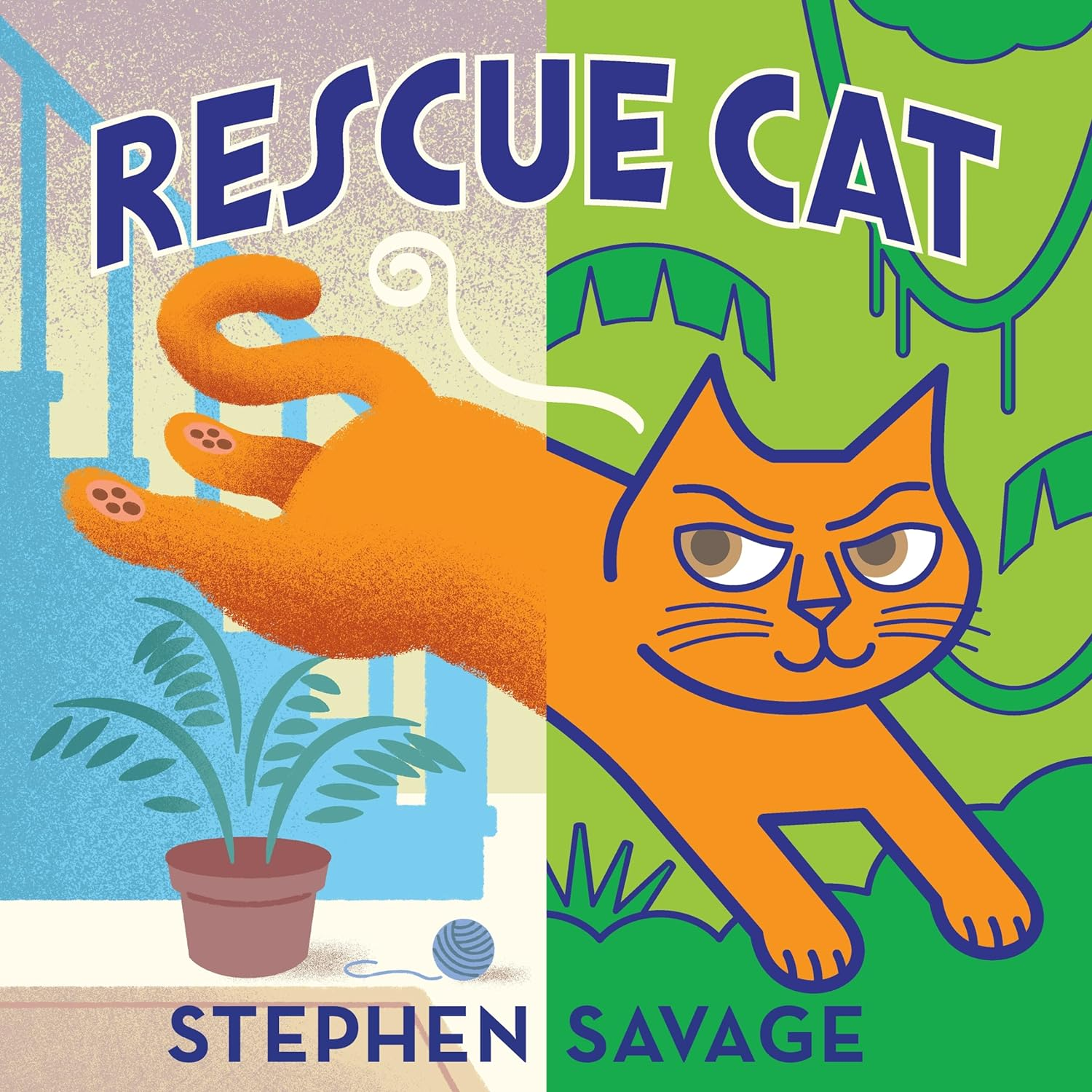
Rescue Cat by Stephen Savage (Roaring Brook Press, 32 pages, ages 3-7). Butterscotch lives a cushy life, but it wasn’t always that way. Before she became a rescue cat, she lived on the streets, alone and scared. Now she finds new meaning in the term rescue cat: when she sees a lion cub being hunted by a hungry crocodile on TV, she jumps through the screen and roars at the crocodile. He chases Butterscotch and the cub, but they leap back to the safety of the living room. The cub plays there for a few minutes before returning to his TV family. Butterscotch knows that she is a brave rescue cat as she settles down for a nap with her toy crocodile.

Young readers will enjoy this cute story and be inspired by Butterscotch’s courage, even when she’s feeling scared. The “rescue cat” double meaning makes for some fun wordplay.

Finding their voices

Ida B. Wells Marches for the Vote by Dinah Johnson, illustrated by Jerry Jordan (Christy Ottaviano Books, 48 pages, grades 1-5). Although this book tells the story of Ida B. Wells’s life, starting with her birth in Mississippi and continuing with some of her activism in Tennessee and Chicago, the main event is a march in Washington DC in 1913 for women’s right to vote. Many of the organizers felt that this march should be for white women only, or at least segregated (Alice Paul is specifically mentioned as expressing that view). Despite these protests and the suggestions that Ida march at the back of the line with her sorority, she made her way to the Illinois delegation and joined the white women in that group to march for their right to vote. Includes an author’s note, photos, a timeline of Ida B. Wells-Barnett’s life, and a list of sources.

The author does a masterful job of giving readers an overview of Ida’s life but focusing on one specific event that demonstrates the way she stood up for herself and other Black people. The back matter adds a lot and makes this a great resource for research.

Ode to Grapefruit: How James Earl Jones Found His Voice by Kari Lavelle, illustrated by Bryan Collier (Knopf Books for Young Readers, 48 pages, grades 1-5). Young James loved words, especially poetry, but when asked to read in front of the class or to say hello to a visitor at home, the words stuck in his throat. He finally stopped talking and just listened, paying close attention to his teachers, especially Professor Crouch who taught him poetry. James recited the poetry when he was alone, and sometimes he tried writing his own, but sharing it with the class was out of the question for him. One day, a shipment of grapefruit to his house inspired him to write a poem, and with Professor Crouch’s encouragement, James read “Ode to Grapefruit” to the class. This recitation opened the door for him, and he began performing on stage, as a debater and an actor, and eventually the distinctive voice of James Earl Jones became known around the world. Includes notes from the author (a speech pathologist) and the illustrator, as well as information and resources on stuttering and a list of sources.

This would make an excellent read-aloud, since the text is pretty short, and James’s issues are something most kids would relate to. I did wonder about the illustrations with all the kids having a slice of grapefruit in their mouths–did James hand them out, or was he just imagining them? But it would be fun to reveal at the end that the story is about the man who became the voice of both Darth Vader and The Lion King’s Mufasa.

Seeker of Truth: Kailash Satyarthi’s Fight to End Child Labor by Srividhya Venkat, illustrated by Danica da Silva Pereira (little bee books, 40 pages, grades 2-5). As a child in India, Kailash Satyarthi was inspired by the story of how a hummingbird stopped a forest fire by carrying drops of water in its beak. When he saw a boy working as a cobbler by the side of the road, Kailash wondered how he could help him go to school. Like the hummingbird, Kailash started with small deeds to make a difference–raising money and collecting books to help kids who couldn’t afford to go to school. As an adult, Kailash started his career as a teacher, but he wanted to do more. He quit his job and began rescue missions to free children forced to work in factories, mines, and quarries. His work gained international recognition, including the 2014 Nobel Peace Prize, which he shared with Malala Yousafzi, and resulted in worldwide changes to child labor laws. Includes an author’s note with additional information and a couple of photos, and a list for further reading.

This excellent picture book biography tells the story of Kailash Satyarthi’s life in a way that will easily be understandable to kids and will show them the power of a single individual to make a difference in the world. I liked that it tells the story of his entire life, so the reader can see how his ideas evolved, yet keeps the text brief enough for a good read-aloud.

Halloween is coming!

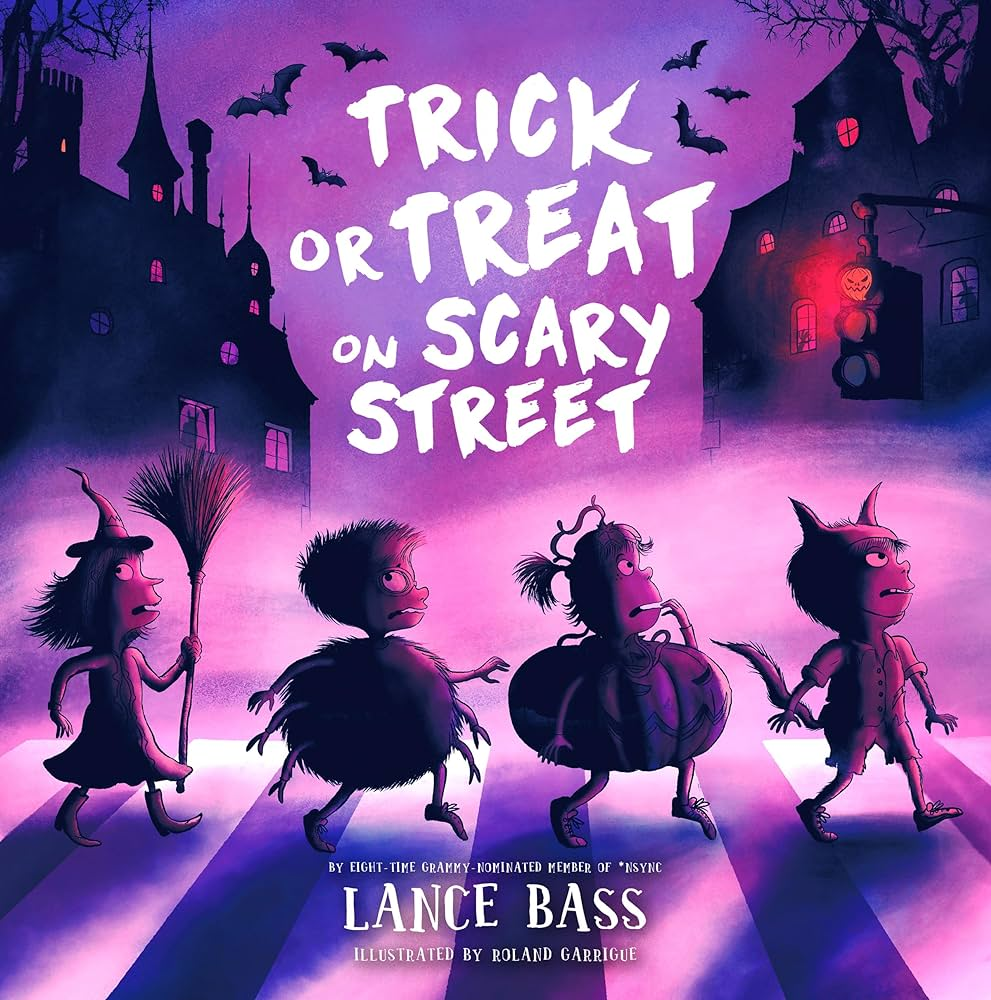
Trick or Treat on Scary Street by Lance Bass, illustrated by Roland Garrigue (Union Square Kids, 40 pages, ages 4-8). A kid dressed in a wolf costume leads a pack of trick-or-treaters down Scary Street. Although he assures them that, “You’re safe and sound on Scary Street,” the houses all seem to be occupied by monsters like a vampire, witch, and ghost. The last house is a doghouse, and the narrator appears to transform into a real wolf by the light of the full moon. Just when thinks are getting really creepy, he opens the door to reveal a rocking Halloween Disco, with monsters and kids alike enjoying the chance to dance together.

I don’t usually review celebrity authors, but due to the fact that I was particularly uncool through the 1990’s, I didn’t recognize the name of former NSYNC member Lance Bass. I give him credit, though, he’s put together a fun Halloween book with some bouncy rhymes and a creepy parade down Scary Street. The illustrations are just the right combination of scary and funny, and kids are sure to enjoy this Halloween book.

Into the Goblin Market by Vikki VanSickle, illustrated by Jensine Eckwall (Tundra Books, 48 pages grades 1-5). While Millie is happy staying home on the farm with her books, her sister Mina is bored and longs for adventure. One night, Mina sneaks out to the goblin market in town. When Millie discovers her sister is missing, she studies up on how to outwit goblins, packs a few things, and heads to the market. There, the wily goblins try to ensnare her, but Millie is prepared and manages to escape their tricks. When the sun is about to rise, she tries to leave, but the goblins tell her she has to buy something before they’ll let her go. She decides on the wolf that’s been guarding them, even though the goblins scream at her that it’s not for sale. Returning home, the wolf gradually changes shape into Mina, and the two sisters prepare to live happily ever after.

I’m excited to try this book out on my fourth and fifth graders, having already read Jon Klassen’s The Skull to most of them at Halloween last year. The rhyming text (inspired by the Christina Rossetti poem “The Goblin Market”) is catchy, and the gothic-style black and white illustrations with just a touch of red are delightfully creepy. Most reviewers are recommending this for ages 4-8, but personally I think it would be better received by a slightly older audience.

Book list updates

As usual, one of my summer projects has been updating my book lists. I’ve added books that I’ve reviewed since last year’s update, which included these lists:

Asian American and Pacific Islander Heritage

Back to school

Book clubs for early elementary

Covid pandemic (which, happily, is starting to feel dated)

Fall

Grief and loss

Hispanic Heritage

Indigenous Americans

Kindness and Community

Labor Day

People with physical disabilities

Persistence

Pride: books featuring LGBTQ+ characters

I always update my Black history list in January in preparation for my school’s Black history schoolwide read-aloud, so you can see what I added eight months ago. If you want to see all my lists, just go to A Kids Book a Day, move your cursor to Book Lists on the bar at the top (don’t click on it), and the list should appear.

And while you’re there, remember there’s a link right next to the book list link for supporting me on Patreon!

Time travelers

Countdown to Yesterday by Shirley Marr (Simon and Schuster Books for Young Readers, 272 pages, grades 4-7). James is shocked to learn that his mom is moving out into her own apartment. As he struggles to navigate his new custody arrangements, he recalls “Things That Will Never Happen Now That My Parents Are Not Together”: six happy memories of his family that he wishes he could go back to and never leave. When he meets a slightly mysterious girl named Yan who claims she has a time machine, he’s ready to travel back to the way things were. At first, it seems like she can’t make good on the claim, but one day, she and James travel into an old photo of his dad’s. From there, they make plans for James to visit all six of his happy memories and decide which one he wants to stay in. But when he arrives at each one, he discovers details he had forgotten that reveal how unhappy his parents were before their breakup. Ultimately, James decides that the present moment is the only one where he–and everyone else–truly belongs.

I’m leaving out quite a few fun details in my summary: there’s an intense cake competition/school fundraiser, a class bully whose mother is James’s mom’s best friend, some interesting controversy over the David Bowie song “Space Oddity” and the fate of Major Tom, and the touching friendship between Yan and James, which explores the Chinese immigration experience in Australia. This book is by an Australian author, so there may be a few words or situations that are unfamiliar to American readers.

The Things We Miss by Leah Stecher (Bloomsbury Children’s Books, 288 pages, grades 4-7). J.P. heads to her neighbor’s tree house after her first day of seventh grade, looking for a refuge after enduring fat-shaming from some of the other girls and her gym teacher. What she finds there is a portal that allows her to skip over three days of her life. When she walks through the door, she emerges three days later, having been present to others but with no memories of anything that happened. She confides to her best friend Kevin, a fellow sci-fi enthusiast, about her time-travel adventure. At first he’s enthusiastic and works with J.P. to test various theories about the portal, but it doesn’t work for him, and as J.P. starts using it more to get through tough times in her life, Kevin pulls away, telling her that she’s not there for him the way a friend should be. Not only that, but J.P. starts discovering there are good and important parts of her life that she is missing out on. When she misses out on a crucial interaction with her sick grandfather, J.P. realizes that each moment in life is too important to give up, even if that means having to deal with the difficult times.

This story is thought provoking and will resonate with anyone going through difficult times. It raises interesting questions about life and would make a great book discussion read. I do always find myself poking holes in time-travel theories, and I also felt like a little humor would have been nice to mix in with some of the heavier topics. Takeaway for time travelers from both of these books: there’s no time like the present.

Adorable anthropomorphism from around the world

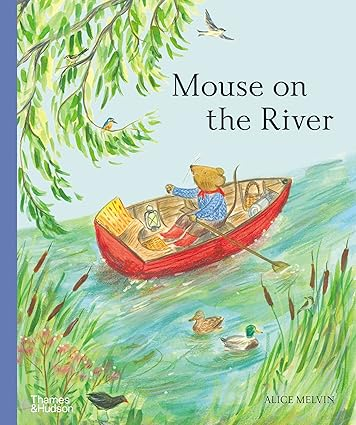
Mouse on the River by Alice Melvin (Thames and Hudson, 32 pages, ages 4-8). Mouse embarks on a two-day journey in a rowboat on the river from his house in the woods to his friend’s home by the sea. Rhyming text and busy, colorful, lift-the-flap illustrations show all the sights he sees along the way: trees that hide several different birds, a lock with a lock keeper who helps Mouse keep his boat on the river, a town with a cafe and shops. After a happy night camping on the boat, Mouse reaches his friend’s house, and the two enjoy gazing out to sea. This book, a Scottish import, could not be any cozier, although by page two I was pretty sure I would never buy it for my library due to the many flaps. One-on-one sharing would be delightful, though, and kids will want to revisit the book many times to find all the details. A map in the front, and lists in the back of some of the sights Mouse sees and what he packs complete this magical picture book. Read more about Mouse in his first book, Mouse’s Wood: A Year in Nature (2022).

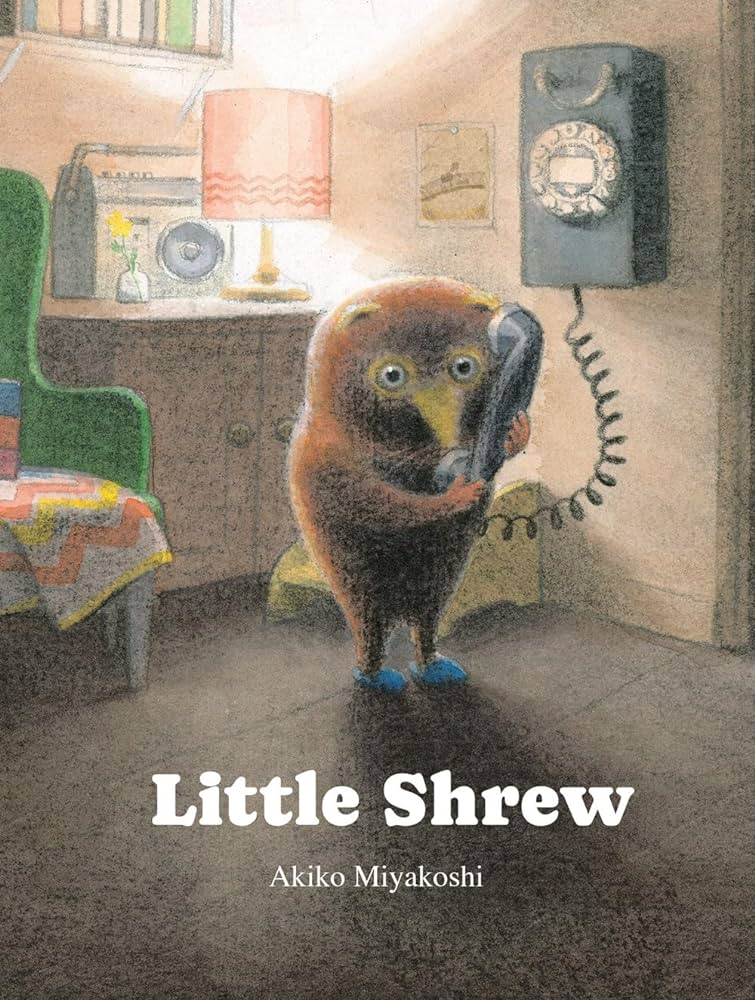
Little Shrew by Akiko Miyakoshi (Kids Can Press, 72 pages, grades K-3). In this early chapter book originally published in Japan, readers get to follow Little Shrew’s somewhat mundane life as he cooks his meals, takes the train to his job at the Exchange, and works hard all day before coming home to a variety of leisure activities like exercising or doing his Rubik’s cube. In two other chapters, he buys a TV at a yard sale and sees images that make him dream of taking a trip some day, and he gets a visit from a couple of friends who come to see him every year. Like Mouse, Little Shrew notices and enjoys small details from everyday life, and early chapter book readers may enjoy the slow, quiet pace of the writing and illustrations.