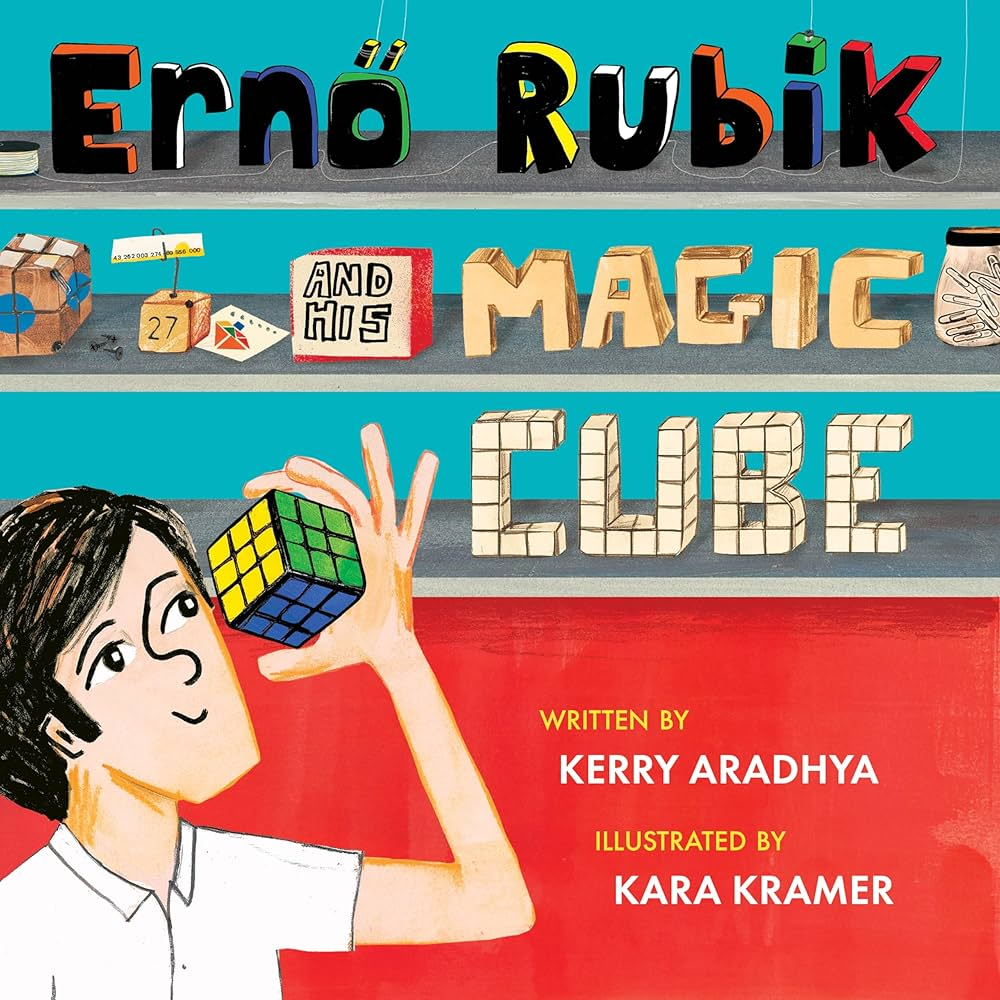
Ernö Rubik and His Magic Cube by Kerry Aradhya, illustrated by Kara Kramer (Peachtree, 32 pages, grades K-4). Ernö Rubik was a solitary kid who enjoyed reading and solving puzzles in his Budapest home. He grew up to be a teacher who would build models to teach his students about three-dimensional objects. His curiosity about cubes led him to try making a big cube out of small ones that could move around but stay connected. His first attempts failed, but he finally found the secret: 26 cubes in three rows, with a round mechanical core. And the rest is history as Ernö’s invention, the Rubik’s Cube, went on to become one of the most popular puzzles of all time. Includes additional information about Rubik and his cube, an author’s note, and a list of three books about the cube.
Although there are some details about Ernö Rubik’s life, the focus is on the Rubik’s cube and the perseverance needed to solve a difficult problem. If kids haven’t tried the cube, they will definitely get their hands on one and start searching YouTube for various solutions.
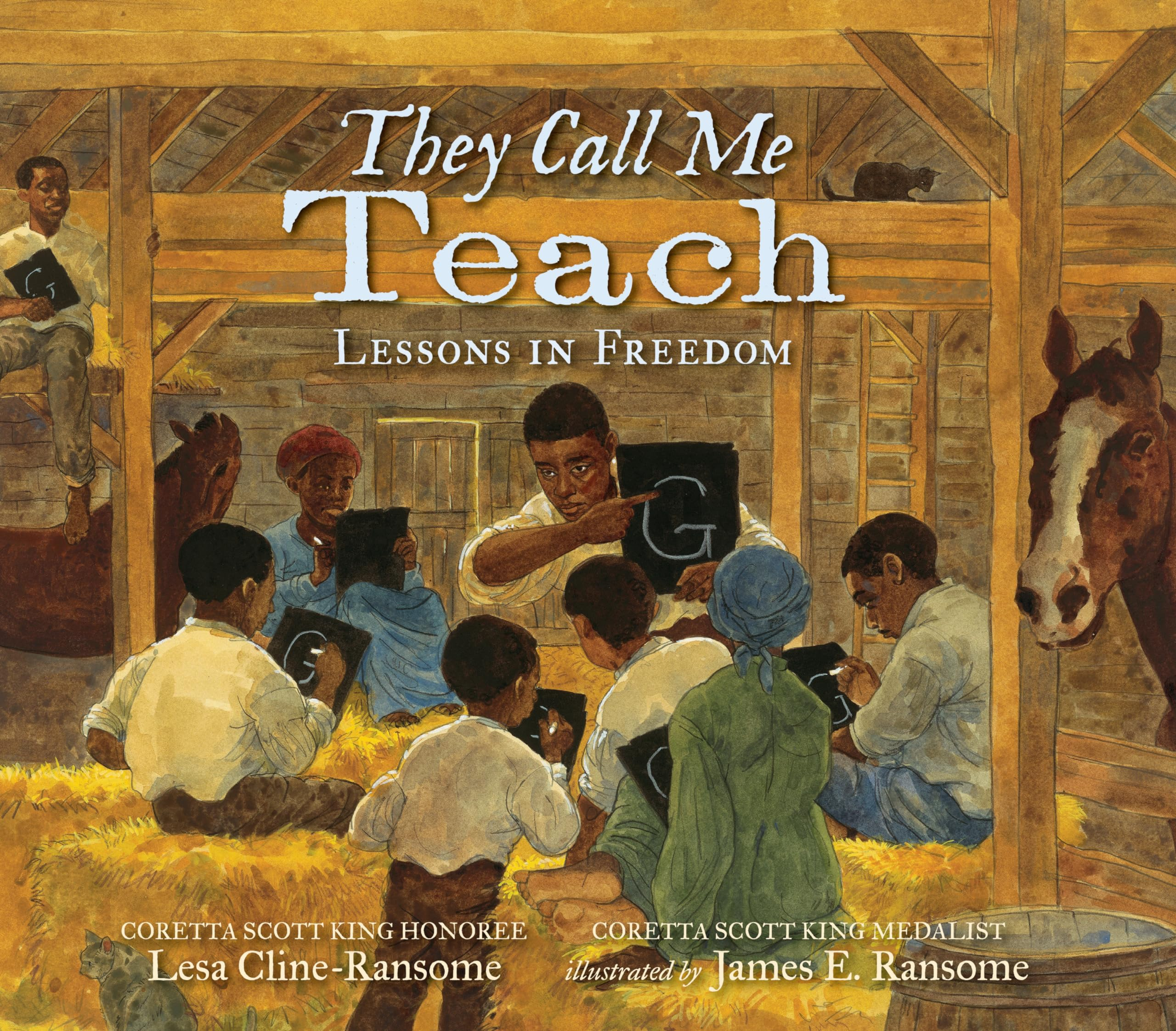
They Call Me Teach: Lessons in Freedom by Lesa Cline-Ransome, illustrated by James E. Ransome (Candlewick, 40 pages, grades 1-5). A young enslaved man is known as Teach, due to his abilities to read and write that he learned growing up with the master’s son. By day he works as a clerk in the master’s store, but at night he teaches other enslaved people to read. He secretly helps people by reading their letters and, in one case, writing a receipt to help a woman escape. Just looking at a newspaper in public results in punishment, leaving readers to infer that there could be much more serious consequences for teaching literacy to other Black people. An author’s note gives more information about Black people’s quest for education throughout history. Includes a list entitled “More Books on Resistance.”
This husband and wife team has created a fascinating story that focuses on the large majority of enslaved people for whom escape was impossible and who tried to resist and improve themselves in the ways that were available to them, despite the risk of cruel punishments. Sure to be a Coretta Scott King award contender.
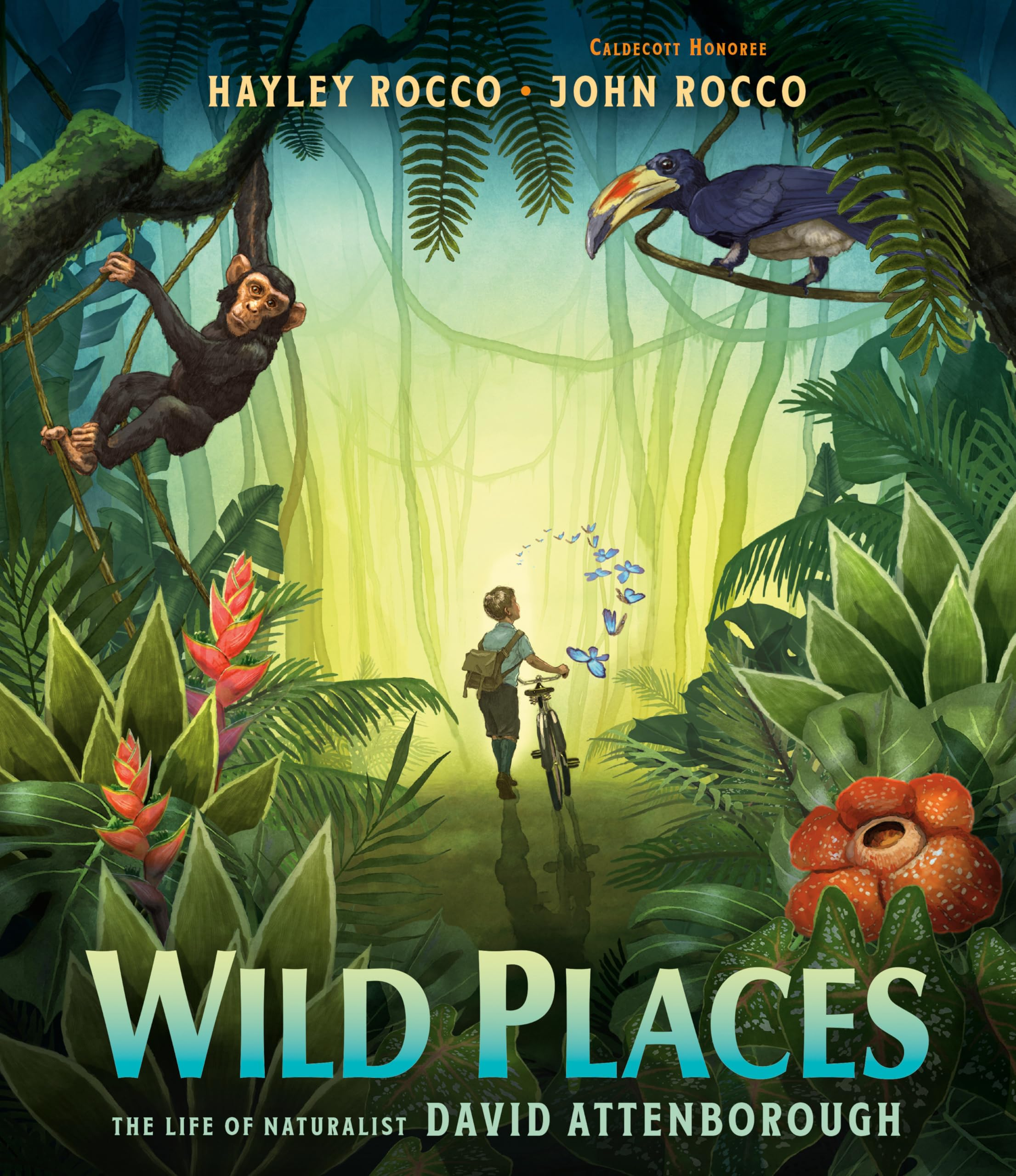
Wild Places: The Life of Naturalist David Attenborough by Hayley Rocco, illustrated by John Rocco (G. P. Putnam’s Sons Books for Young Readers, 48 pages, grades K-3). The story of David Attenborough’s life is told by another husband and wife team. Young David loved exploring the natural world around his English home, and he continued those studies as a university student. When he graduated, television was just becoming popular, and he got a job introducing viewers to the world of nature. Before long, he was traveling all over the world to show people plants and animals of different ecosystems. His travels made him more aware of the ways that wild places were shrinking and living creatures were losing their habitats. David shifted his focus to helping people understand what was happening and giving them information to help them make better choices for the planet, work that he continues today in at the age of 98. Includes an author’s note with additional information about David Attenborough and rewilding, a couple of photos, and a bibliography.
Like the Ernö Rubik biography, this is an engaging read that’s a little light on biographical information. Most pages only contain a sentence or two of text, along with award-winning illustrator’s John Rocco’s beautiful depictions of the natural world. Quotes from David Attenborough are scattered throughout the book, and the end matter fleshes out his life a bit more.
 A Kids Book A Day