Beloved authors

Go Tell It: How James Baldwin Became a Writer by Quartez Harris, illustrated by Gordon C. James (Little, Brown Books for Young Readers, 40 pages, grades 2-5). Books were a lifeline to young James Baldwin, growing up in Depression-era Harlem with a mother, stepfather, and eight siblings. Reading and writing helped him escape from his strict preacher stepfather and the racism he encountered all around him, particularly from the police. Words led Jimmy to preach his own sermons about love and acceptance, and they gained him admission to a prestigious high school, where he got to explore literature, film, and theater. The story follows Jimmy to Paris and ends with the publication of Go Tell It on the Mountain. Includes additional information about Baldwin, notes from the author and illustrator, and a list of sources.

And She Was Loved: Toni Morrison’s Life In Stories by Andrea Davis Pinkney, illustrated by Daniel Mintner (Little, Brown Books for Young Readers, 48 pages, grades 2-5). The author’s note begins, “This narrative is a love letter to an outspoken sparrow who transformed lives through her storytelling.” Her ode to Toni Morrison weaves biographical information into a celebration of the writer’s life and work. The phrase “And she was loved” appears in many illustrations, as the text describes the love given to her by her parents, her children, and her readers, in a narrative that moves from her childhood in Ohio to her college days at Howard University to her life as an editor, writer, and mother to a celebrated winner of the Pulitzer and Nobel Prizes and the Presidential Medal. In addition to the author’s note, the back matter includes an illustrator’s note, a photo of Morrison, a timeline, a list of selected works (including children’s books), and a list of sources.

Both of these biographies celebrate the lives and contributions of Black authors and offer inspiration to young writers. The illustrations in the books are striking, both by Caldecott honorees, with the potential for more awards consideration. These are books that may need a fair amount of introduction, as kids are unlikely to be familiar with either author.

Celebrating teacher-activists

Ruby Bridges: A Talk With My Teacher by Ruby Bridges, illustrated by Trudy Tran (Orchard Books, 48 pages, grades K-3). Ruby tells the story of her second-grade year, returning to the school where she and her teacher Mrs. Henry spent first grade alone in their classroom. Ruby is happy to be getting a ride with a neighbor instead of U.S. Marshals, not facing angry crowds at the front door, and seeing other kids in the school, some of whom look like her. But she’s heartbroken to learn that Mrs. Henry is no longer teaching there. The story then moves forward to 1995, when a book about Ruby has just been published. She’s excited to learn that Mrs. Henry has seen the book, which leads to a reunion. She finds out that Mrs. Henry left to have a baby, and the two of them reminisce about incidents only they remember, like when Ruby stashed her uneaten sandwiches in a supply cabinet until a mouse infestation led Mrs. Henry to discover them. The book ends with the question, “Teachers–who would we be without them?” and the author’s note celebrates teachers and encourages kids to think of special memories with their own teachers. A glossary lists 25 well-known teachers with a sentence or two about each one.

Early elementary students will relate to Ruby’s experiences and enjoy recalling their own teacher memories. Ruby’s tone is warm and relatable for kids without talking down to them. An introduction to her life would make the story more interesting, and I was surprised that the title of her 1995 book (I assume it’s The Story of Ruby Bridges) doesn’t appear anywhere in this book, including in the author information.

Make a Pretty Sound: A Story of Ella Jenkins–The First Lady of Children’s Music by Traci N. Todd, illustrated by Eleanor Davis (Chronicle Books, 60 pages, grades 1-4). Ella Jenkins grew up in a segregated Chicago neighborhood, surrounded by a loving family and all kinds of music and rhythms. As an adult she moved to San Francisco, where she became a teacher, community organizer, and civil rights activist. Ella particularly loved sharing music with children, using it to introduce them to cultures around the world. The story of her full 100-year life (she died on November 9, 2024) features cameos by a number of celebrities such as Cab Calloway, Billie Holiday, Dr. Martin Luther King, Jr., and Mister Rogers. Includes three pages of additional information, a timeline, and a bibliography.

I feel for Traci N. Todd trying to contain Ella Jenkins’s long, eventful, and fascinating life in a single picture book. She does an excellent job, using text with plenty of rhythm, reflecting the music that was always an important part of Ella’s life. The back matter paints an even more complete picture of that life, and it could be fun to supplement the book with recordings or YouTube videos of some of Ella’s performances. I wish that Bernadelle Richter, Ella’s partner and manager for more than 60 years, had made it into the story, instead of only getting a mention on the timeline.

Two books with heart(s)

Bigfoot’s Big Heart by Sarah Glenn Marsh, illustrated by Ishaa Lobo (Viking Books for Young Readers, 32 pages, ages 4-8). Bigfoot is a shy fellow who doesn’t like loud sounds, especially the noises people make when they see him. He keeps to himself, living in a cozy cave and writing to his mythical pen pals, like Nessie, Mothman, and Chupacabra. Valentine’s Day is coming, and Bigfoot decides to make valentines for all of his friends, telling him exactly why he likes them so much. On his way to the mailbox, though, he’s spotted by a group of Scouts, and the valentines get blown away in a blustery wind. A few of the quieter Scouts talk to Bigfoot instead of shouting or running away, and they come up with a plan. They connect online with Scouts around the globe who go on a worldwide monster search to deliver Bigfoot’s valentines. Nessie decides it’s time for an in-person (in-monster?) gathering, and monsters and humans gather at Bigfoot’s cave on Valentine’s Day. “Suddenly the world feels a little less lonely…thanks to friends who understand.”

Heartfelt by Elaine Vickers, illustrated by Samantha Cotterill (Simon and Schuster/Paula Wiseman Books, 56 pages, ages 4-8). The narrator likes to make hearts, especially the small ones which they like to give away. Love is felt with all the senses, and the child tells how love can look, feel, taste, smell, and sound. Each loving deed is accompanied by one of the small hearts until all of them are gone. Or are they? As the narrator looks around, it’s clear that love is being shared and spread throughout the community. Includes an author’s note about a favorite Sunday School lesson, in which each student was given a bag of hearts to distribute when they did kind deeds during the week, which they reported on the next week.

I’m thinking of reading both of these books to classes in the next few weeks as Valentine’s Day draws near. Bigfoot is a great way to introduce both the different mythical creatures in the story and where they live around the world. And the activity described at the end of Heartfelt is a fun and easy way for kids to practice kindness and community.

And two final 2024 novels in verse

Black Star by Kwame Alexander (Little, Brown Books for Young Readers, 384 pages, grades 5-8). In this sequel to The Door of No Return, Kofi is now Nana Kofi, grandfather to Charlene, a.k.a. Charley, who dreams of being the first Black female baseball player. She and her best friend Willie Green get tricked into a bet with a local bully, forcing them to quickly organize a baseball team and play a game at the church picnic. When the picnic grounds are being used for other activities, the team sneaks over the bridge to the whites-only field, where an encounter with a group of white kids ends with Willie accidentally hitting one of the boys with a baseball. Back home, Charley can’t figure out what’s going on, but the adults start talking in hushed tones and seem to be preparing for a journey. In the final pages, the family flees in Uncle Albert’s car, except for Daddy who stays behind to defend their home, while Willie Green and his brother Johnnie run from their burning home to join them after the Klan has done something unspeakable to their father. Those in the car are heading north, with Charley wracked by guilt over her actions that have led to this moment. Readers will have to wait for the third book of the trilogy to find out what happens next in the family saga.

This incredibly rich novel has so many elements woven together: Nana Kofi’s stories that fill in some of the details between books 1 and 2, appearances by real-life people like Marcus Garvey and Mary McLeod Bethune, and everyday descriptions of the life of a Black family living on the 1920’s South. I do think most readers will need some guidance with this book, particularly with the historical context, and they will understand and appreciate it much more if they have read book 1.

Unsinkable Cayenne by Jessica Vitalis (Greenwillow Books, 304 pages, grades 4-7). It’s 1985, and 12-year-old Cayenne is excited at the prospect of finally settling down. She and her free-spirited parents have always l lived in a van, but with the addition of twins to the family, they’re feeling the need for a home and some money. Cayenne loves seventh grade, making a few new friends and developing a crush on the new boy Beau, but when there are layoffs at the local sawmill, her dad loses his job, and she learns that Beau’s father was responsible. As food gets leaner and her parents start fighting more, Cayenne fears that her days in a real home may be numbered. By the end of the story, her hunch proves correct, and the family takes to the road again, although Cayenne feels a bit wiser about appreciating herself and her family and about questioning the importance of “fitting in.” An ongoing school project about the Titanic offers additional insights about class, and the author includes additional information at the end, as well as the connections to her own family, and Cayenne’s dad’s PTSD from Vietnam which he self-medicates by smoking weed.

While not exactly an upbeat story, Cayenne is an endearing protagonist who learns some important life lessons, and the focus on class and poverty is one that’s often not explored much in children’s books. I was kind of surprised when Dad was smoking a joint on page 1, but the author’s note gave his marijuana use some good context.

A couple last graphic novels from 2024

The Squad by Christina Soontornvat, illustrated by Joanna Cacao. (Graphix, 288 pages, grades 4-8). Christina continues the memoir she began in The Tryout. Now an eighth grader, she feels like her life is good, with close friends, interesting classes, and a fun group of fellow artists who are working on a group project. But she and her friends Megan and Leanne still watch the cheerleaders longingly, and when they learn that there will be spots available in the ninth grade squad, they decide to try out once again. In the midst of their preparations, Christina gets the devastating news that her parents are divorcing. She’s determined to put on a happy face and continue with her cheering, and she and Megan–but not Leanne–make the squad. Her sadness and anger catch up with her eventually, but heart-to-heart talks with her parents and her friends help her to be more honest about how she’s feeling. “I didn’t need my life to be perfect,” Christina concludes. “I just needed my squad.” Includes a three-page author’s note in which Soontornvat talks more about her eighth grade life and several photographs from her and some of the friends and family members in the book.

I’m a big fan of The Tryout, so I was excited to see this sequel, and it did not disappoint. It does feel a bit heavier than the first book, with its explorations of divorce and the emotions it brings, as well as some scenes in which Christina deals with casual racism from her classmates and the way being biracial can make her feel like she doesn’t belong anywhere. Definitely for fans of Raina Telgemeier’s memoirs who may be ready for something a little meatier, as well as, of course, fans of The Tryout.

Warriors Graphic Novel: The Prophecies Begin by Erin Hunter, adapted and illustrated by Natalie Riess and Sara Goetter (HarperAlley, 272 pages, grades 3-7). Anyone who works in a school or children’s library knows that this series about warring cat clans has a devoted fan base, and no doubt the graphic adaptation will add to that. Book 1 tells the story of a young cat who starts life as a domesticated “kittypet” named Rusty but becomes a promising young warrior called Firestar. I only read the first 40 pages, but it’s well done, capturing the spirit of the chapter books with both the storytelling and the art. Book 2 is due out in April.

New year, old books

I’m trying out a few tweaks to my schedule in the new year, and this has led to more reading! So instead of my usual practice of taking a few weeks off at the beginning of January, waiting for new books to pile up, I have a few more 2024 posts to share. To start, here are three books that would be perfect for middle school or early high school readers, a demographic that often gets neglected, as they’re often feeling too old for middle grade but not quite ready for many young adult books.

Boy 2.0 by Tracy Baptiste (Little, Brown Books for Young Readers, 304 pages, grades 5-9). The story opens with Coal going to live with a new foster family after his long-term foster father had a mental breakdown. When Coal sneaks off to do a chalk drawing commemorating a woman shot by the police, he’s confronted by a man with a rifle. He runs off, trying to evade the police, and is amazed when they surround him but don’t seem to see him. Looking down at his body, he realizes he has become invisible, a condition that gradually reverses itself when the crisis is over. The rest of the story details his search for answers about this new power he had, leading him to new realizations about his birth mother as well as a deep conspiracy that includes both of his foster families. Although there’s a certain necessity to suspend disbelief, readers will love this page-turning science fiction adventure.

Bye Forever, I Guess by Jodi Meadows (Holiday House, 288 pages, grades 5-9). Awkward, shy Ingrid has a secret–she’s Anony Mouse on Scrollr, where she has a popular scroll called Bye Forever, I Guess, posting wrong-number texts that she’s received. The only people who know about her scroll are her online gaming friend Lorren, her grandmother who’s raised her since her parents died, and her best friend Rachel. When Rachel betrays her, Ingrid is afraid her secret will get out, but she’s soon distracted by a mysterious boy who sent her a wrong-number text. They start texting and gaming, and before long she finds herself with a huge crush–even though she only knows him by his gaming name, Traveler. As things unravel in Ingrid’s real life, she starts to wish she could meet Traveler in person, a wish that’s granted when they agree to meet at a bookstore where their favorite author is signing a long-awaited book. Their meeting provides a shocking surprise to Ingrid–and an extremely surprising and romantic ending to their story. While Traveler’s identity seemed glaringly obvious to me by about halfway through the book, Ingrid remains clueless. Just as I was getting completely frustrated by this, the bookstore meeting proved so sweet that I forgave Ingrid and the author everything. Fans of the genre will undoubtedly enjoy this nerdy tech-infused romance.

Keeping Pace by Laurie Morrison (Harry N. Abrams, 304 pages, grades 5-9). Grace’s focus throughout middle school has been on academic achievement, specifically to win the top student award at eighth grade graduation and to beat her rival and former best friend Jonah. When Jonah bests her by half a point, Grace is devastated and faces a depressing summer. Her more laid-back sister and cousin help her come up with a list of goals for the summer that include making a new friend, taking a baby-sitting job to help her dad’s new girlfriend, taking a class just for fun, and running a half marathon. Grace secretly plots to beat Jonah, who is also running the half marathon, but as the summer unfolds, an injury derails her plans. Meanwhile, shifting relationships cause Grace to begin to question her single-minded ambitions: a new friend that she meets who’s recently given up competitive gymnastics to pursue other interests; her dad’s career ambitions that get in the way of his relationships, and most of all, her former friendship with Jonah that’s rekindled as they train for the race. As with Bye Forever, I Guess, I got kind of frustrated by the drawn-out will-they-or-won’t-they romance between Grace and Jonah, but it would undoubtedly speak to a younger teen reader, and I really liked the message about the importance of living a balanced life.

Five favorite nonfiction books

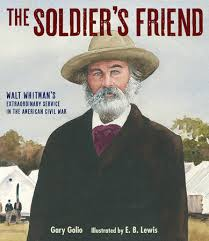
The Soldier’s Friend: Walt Whitman’s Extraordinary Service in the American Civil War by Gary Golio, illustrated by E. B. Lewis. I surprised myself by choosing this book as one of my favorites for the year, but as I looked over the nonfiction books I read in 2024, I realized the story of Walt Whitman’s services during the dark years of the Civil War had really stuck with me. His simple acts of kindness to all, never taking sides even when the nation was deeply divided, is an inspiration.

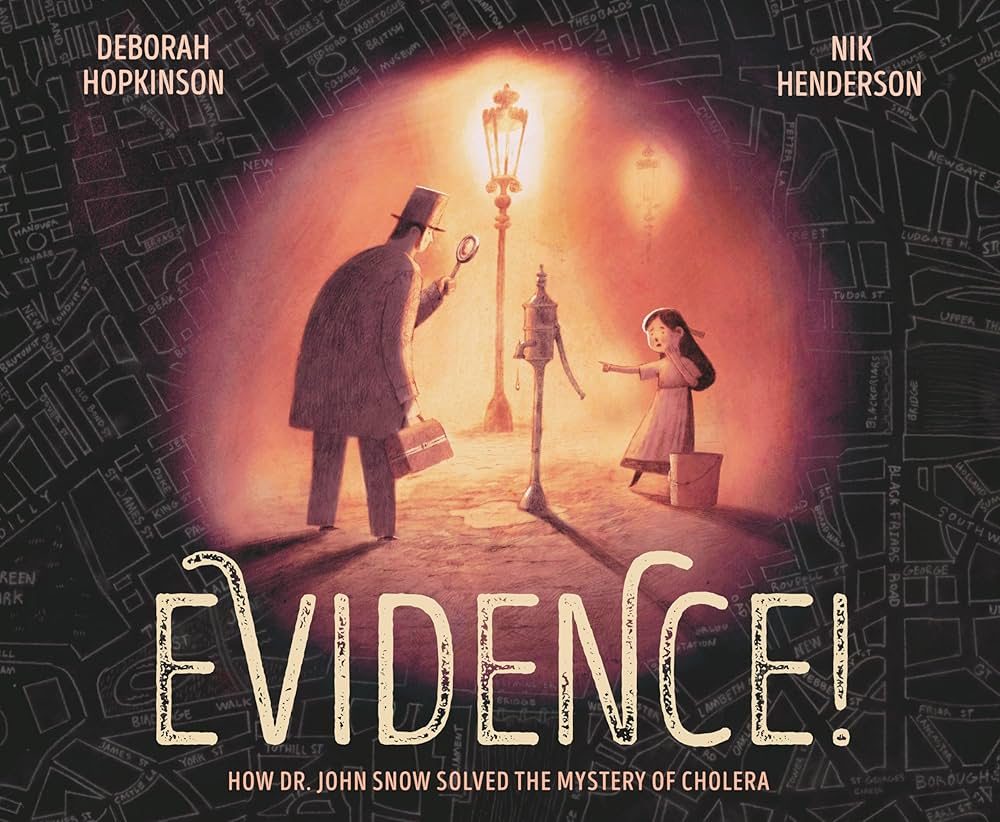
Evidence! How Dr. John Snow Solved the Mystery of Cholera by Deborah Hopkinson, illustrated by Nik Henderson. This exciting medical mystery expertly incorporates details about cholera and nineteenth-century London as it relates, step by step, the story of Dr. John Snow’s careful research and perseverance that put a stop to a cholera outbreak in 1854. I’m hoping this will be considered for a Sibert award.

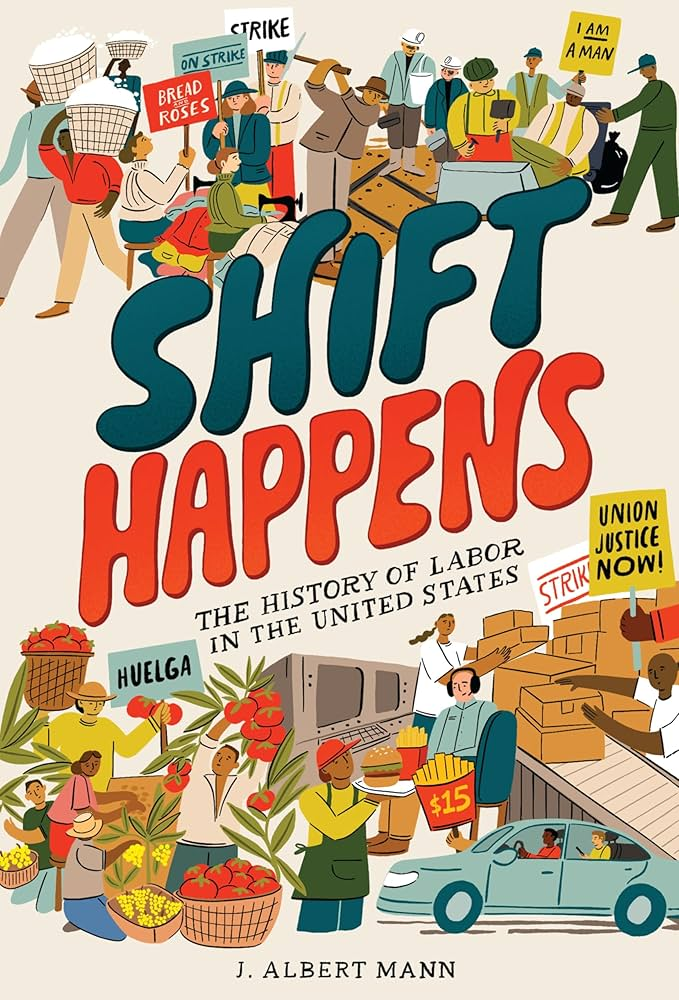
Shift Happens: The History of Labor in the United States by J. Albert Mann. I learned so much from reading this book about labor struggles from the earliest days of American history. It’s easy to get discouraged by the patterns of wealthy corporations oppressing poor working people that have occurred over and over to the present day, but there are plenty of inspiring stories as well, and it’s all told with an irreverent humor that teen readers will appreciate.

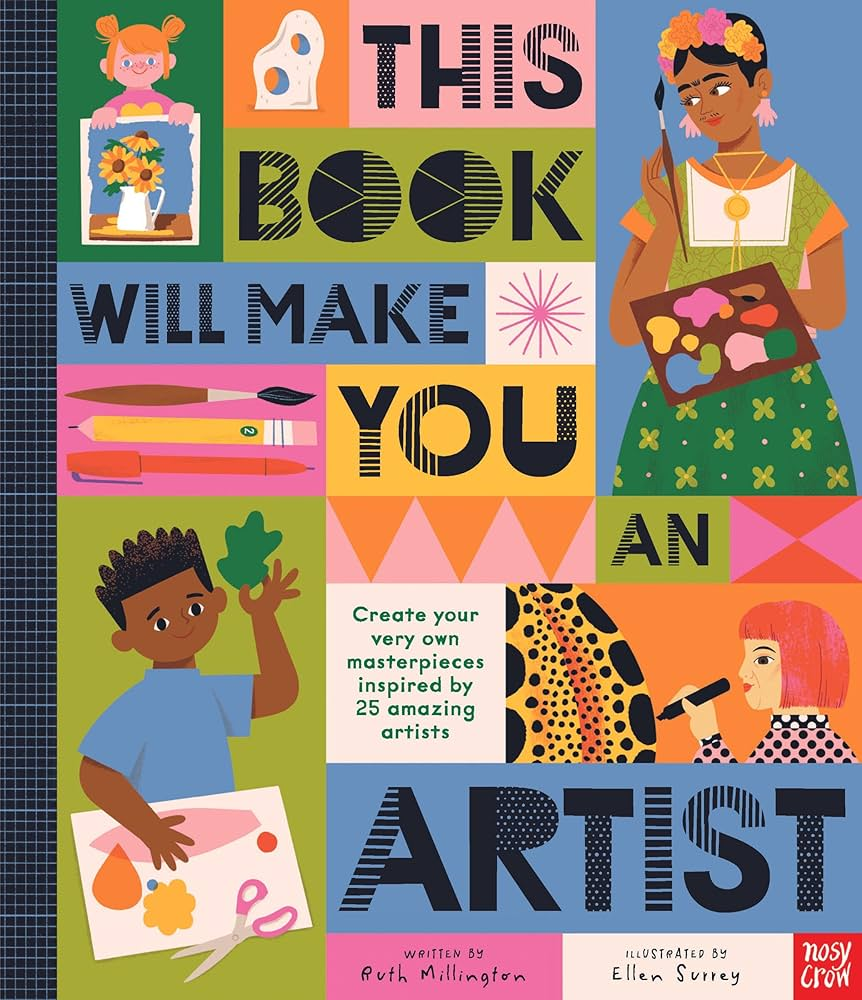
This Book Will Make You an Artist by Ruth Millington, illustrated by Ellen Surrey. As a kid, I would have loved to have taken a class based on this book (actually, I still would enjoy such a class) which combines profiles of 25 different artists with step-by-step instructions to create projects based on their art.

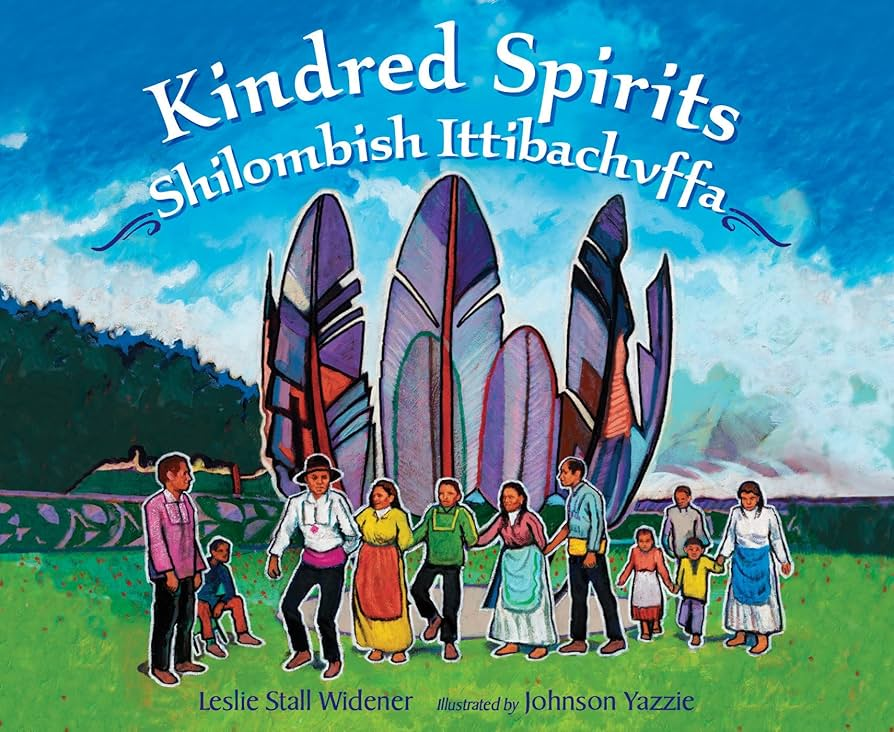
Kindred Spirits: Shilombish Ittibachvffa by Leslie Stall Widener, illustrated by Johnson Yazzie. The story of the connection between the Choctaw and Irish people, forged during the potato famine in the 1800’s and strengthened during the Covid pandemic, is very moving and was the perfect coda to my exploration of indigenous communities in New England this summer.