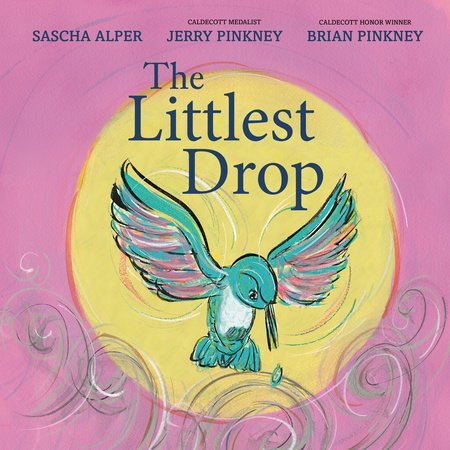
The Littlest Drop by Sascha Alper, illustrated by Jerry Pinkney and Brian Pinkney (Anne Schwartz Books, 40 pages, ages 4-9). Based on a story told by environmental activist and Nobel Peace Prize winner Wangari Maathai, this folktale features a hummingbird whose new nest is threatened by a wildfire. The other animals run to the river, too terrified to move, but the hummingbird takes action to put out the fire, even though she can only carry a single drop of water in her beak. As the others watch her tirelessly carrying drop after drop to the fire, they ask her what she’s doing. “I am doing what I can.” Inspired, the animals start to think of what they can do, and before long, elephants, monkeys, leopards, giraffes, and even tiny ants are working to fight the fire. When the sun rises, they are all exhausted, but the hummingbird lets one more drop of water fall…and the fire is gone. Includes an author’s note tracing the origins of this folktale, and an illustrator’s note in which Brian Pinkney describes how he used sketches left by his late father Jerry to create the finished illustrations.
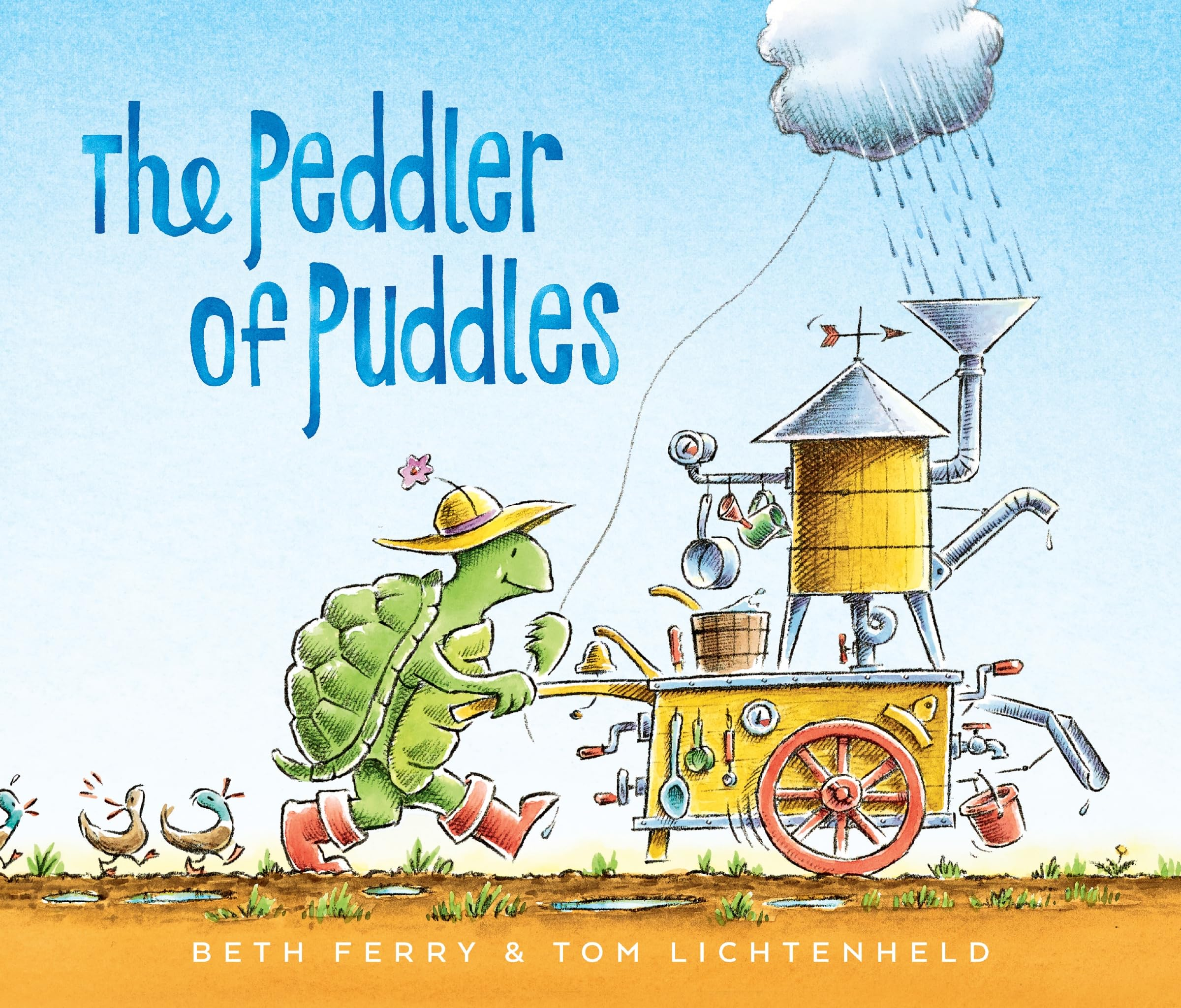
The Peddler of Puddles by Beth Ferry, illustrated by Tom Lichtenheld (Clarion Books, 48 pages, ages 4-8). The peddler is a turtle whose puddle-making machine (complete with a cloud on a string like a balloon) allows him to make custom puddles for his customers, from a tiny one for a hummingbird to ones large enough for hundreds of frogs or for a child to sail a boat across. Everyone loves the peddler, but he’s constantly on the move, never staying in one place for long. One day, he goes to the seashore where he sees the biggest puddle ever and befriends a girl who shows him how to play in the ocean. When she tells him she has to go home, the peddler feels sad because he realizes he doesn’t have a home. Over the horizon appear his friends, looking for him. They help him dig his cart out of the sand and lead him back to their forest. There, they’ve dug a huge hole, which the peddler fills with water, and they all work together to turn his cart into a new house. His house and the pond become a home for the turtle and all of his friends.
Both books will appeal to kids with their lively and colorful (although very different) illustrations of animal communities, and each one carries a simple but effective message for our time: friendship, community, and how even small actions can make a big difference to people and issues that you care about.
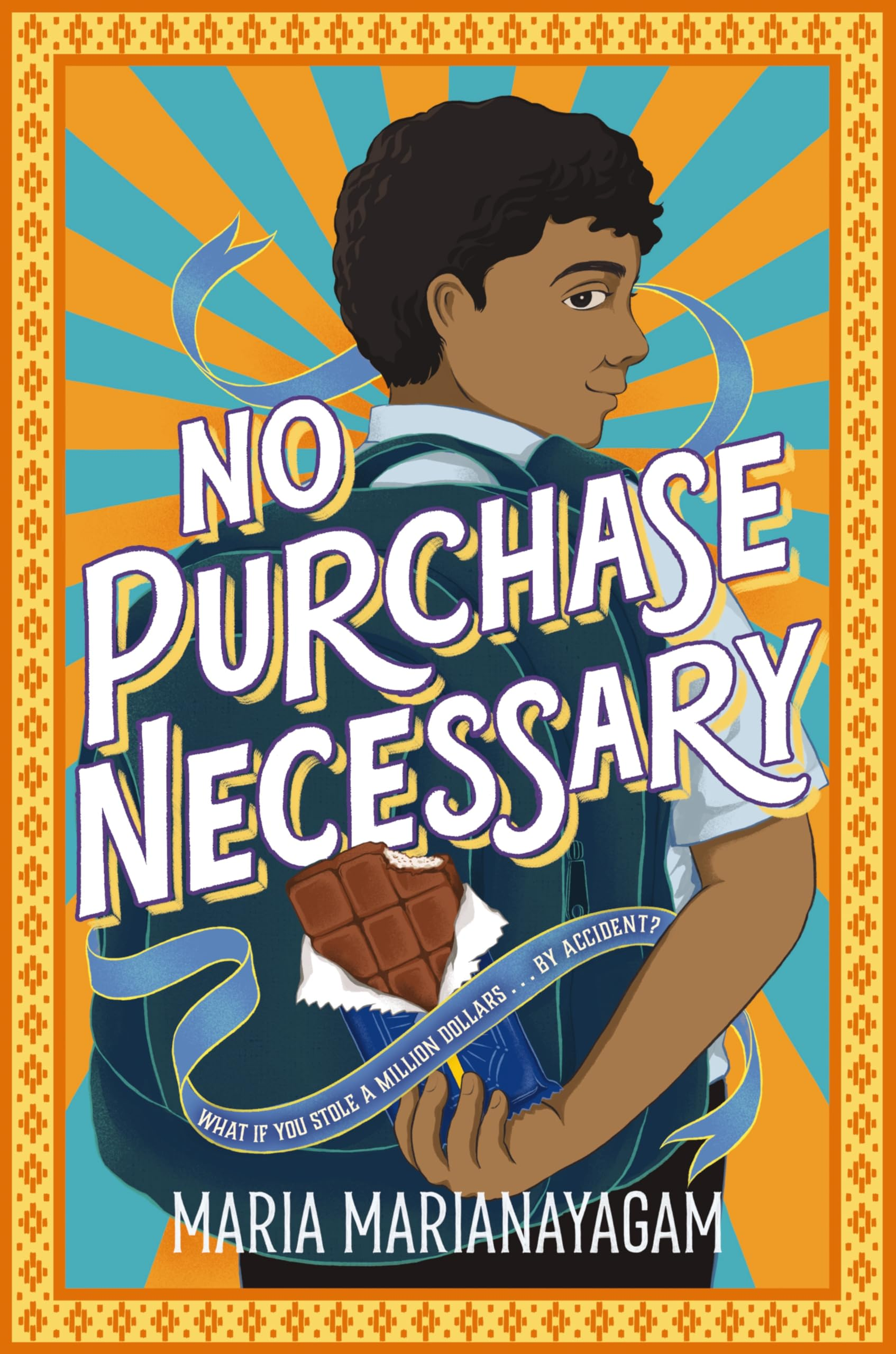
No Purchase Necessary by Maria Marianayagam (HarperCollins, 256 pages, grades 5-8). Ajay’s problems start when he gets a 79 on an English assignment. Since his parents expect nothing less than straight A’s, he’s afraid to tell them about his grade. Desperate to make friends at his new school, Ajay accepts a dare from cool kid Jacob to steal a candy bar, only to discover there’s a million dollar prize inside the wrapper. As Ajay’s lies snowball, he’s consumed with guilt but unsure how to make things right. His parents, Sri Lankan immigrants who are struggling to make ends meet while his dad finishes school, put unrelenting pressure on Ajay and his younger sister, compounding his guilt, fear, and frustration. Ajay volunteers to help out at the store where he stole the candy, hoping to erase the security footage that may have recorded his deed, but to his surprise finds that he likes helping the store owner, who is gruff but also kind and supportive. A new friend, Mindy, also eases some of Ajay’s stress. When Ajay’s emotions boil over into a fight with Jacob, he finds himself in a lot of trouble, but some surprising consequences offer him away to start communicating what he needs and to make some changes that help make things easier for him.
I’ve just finished a week of school vacation, which seems like the perfect time for a little light reading, but instead I found myself deep into books about kids with tough home lives and complicated ethical dilemmas. My heart went out to Ajay, and it was easy to blame his parents for the pressure he put on himself, but as the story unfolded, it also became clear how much they were struggling and how fervently they wanted the best for their children. This would make a great middle school book club book that could open up all kinds of discussions about what to do when you make a mistake and how to communicate with friends and family.
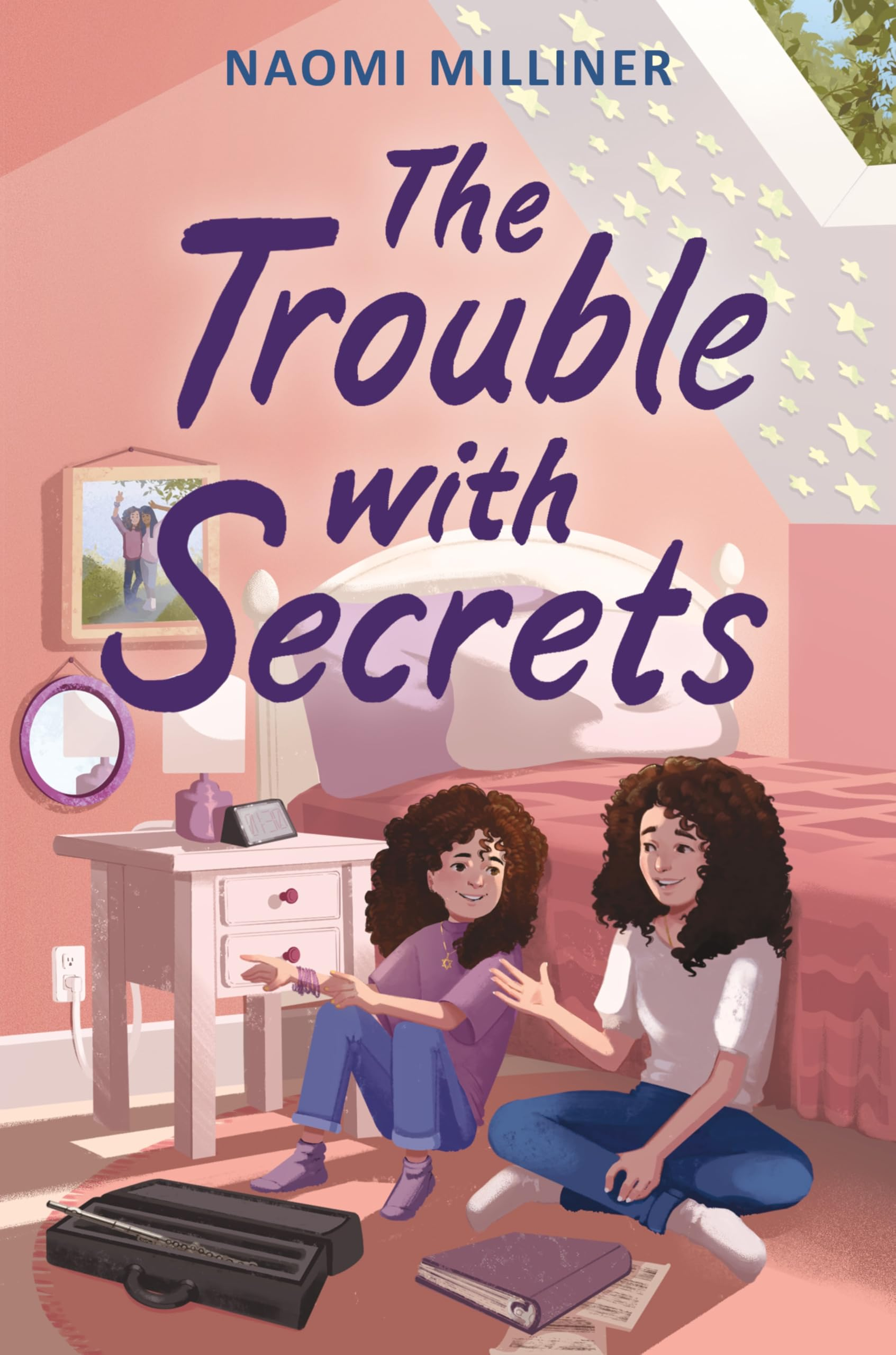
The Trouble with Secrets by Naomi Milliner (Quill Tree Books, 336 pages, grades 5-8). Becky is thrilled when her music teacher recommends her to audition on her flute for the all-county band, but her rabbi father tells her she needs to wait until next year so she can prepare for her upcoming bat mitzvah. Disappointed and angry, Becky forges her mother’s signature and goes ahead with the audition. Her older sister Sara is in on the secret, and Becky soon learns Sara’s secret: she’s in love with the new boy at school, the son of a local Protestant minister. Their father has made it clear that he expects all four of his children to only date people who share their Jewish faith. Sara is afraid to tell their parents, especially when their cousin secretly marries outside the faith, causing a huge rift in her family. The story begins with a chapter called “Now,” in which Becky is getting ready for a funeral, then goes back to tell the events leading up to that day. Part two of the book is back to “Now,” which is a time filled with shock and grief, but also slow healing as Becky and her family come to terms with what has happened and learn to move forward into a new normal.
This beautifully written book had me in tears for pretty much the last third or so. Like No Purchase Necessary, it shows readers the destructive power of keeping secrets, even though doing so may feel like the easiest way in the moment. Becky is part of a wonderfully loving family, who lives their Jewish faith every day, although her older siblings Jon and Sara felt a little too good to be true. I also felt like the authors of both of these books kind of went to extremes to communicate their message about secrets, as most secrets don’t involve winning a million dollars or result in the kind of tragedy in this book.
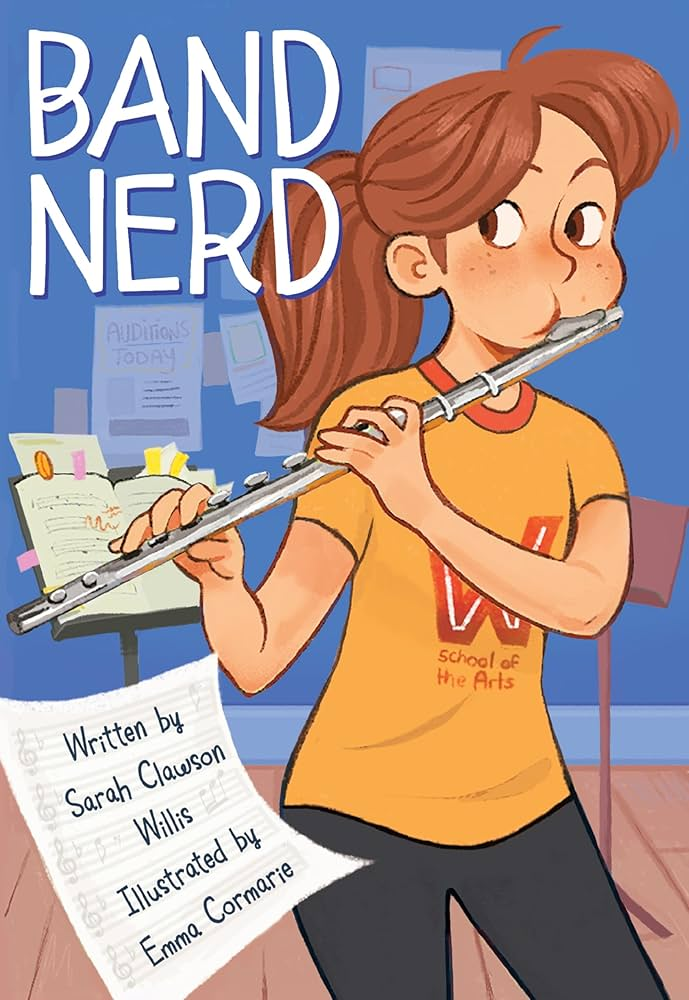
Band Nerd by Sarah Clawson Willis (HarperAlley, 272 pages, grades 5-8). Lucy’s excited to be starting seventh grade at Windley School of the Arts, where she can pursue her love of flute in the school band. It’s clear from the first page that there are some tensions at home, and as time goes on, her dad’s drinking problem creates an increasing amount of chaos. Lucy escapes through her music, putting enormous pressure on herself to beat her rival Tolli for the first chair position in band. As she becomes more obsessed with this goal, her schoolwork suffers, and her parents threaten to send her back to her old middle school. A bungled attempt to sabotage Tolli results in Lucy getting into trouble, which ultimately leads to a conference with school administrators and her parents. As the truth about their family situation emerges, Lucy is able to communicate to her parents how their home life is affecting her and to get help from sympathetic teachers and a counselor at school. Although things don’t turn out exactly as she had hoped, Lucy is back on track for success at school and her family is working to give her the support she needs.
Middle school readers will love this graphic novel, although some of the scenes with Lucy’s dad are difficult to get through. Many of Lucy’s new friends are also dealing with challenging family issues, and this book does a great job of showing kids how to cope and reach out for help.
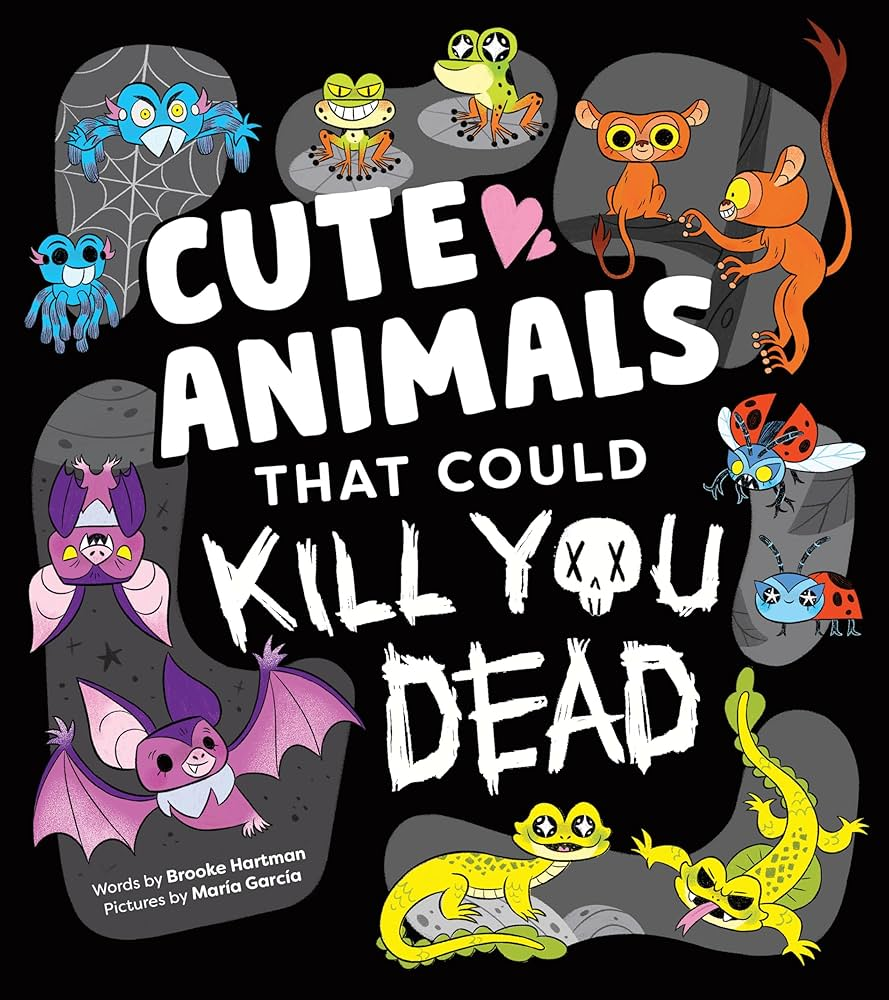
Cute Animals That Could Kill You Dead by Brooke Hartman, illustrated by María García (Sourcebooks Explore, 48 pages, grades 2-5). Seventeen deceptively cute animals are introduced, each one starting with an illustration, a description that emphasizes its cuteness, and a fact box that includes size, favorite food, habitat, and conservation status. Turn the page, and you’ll learn about that adorable creature’s fearsome hunting prowess and/or dangerous defenses. Each animal gets a 1-10 rating for its aww-dorable and aaaah!-some levels. A two-page spread of photos at the end confirms the cuteness of each of the animals.
Kids love books about cute animals and they also go for books about deadly animals, so here we have a winning combination. The lighthearted, funny text and illustrations make this an appealing read. The title is a bit deceptive for human readers since, for instance, a ladybug will only kill you dead if you happen to be an aphid, and you’ll only need to watch out for a flying gecko if you’re a salamander or snake. A table of contents and some back matter like a reading list would have made this a more useful resource.
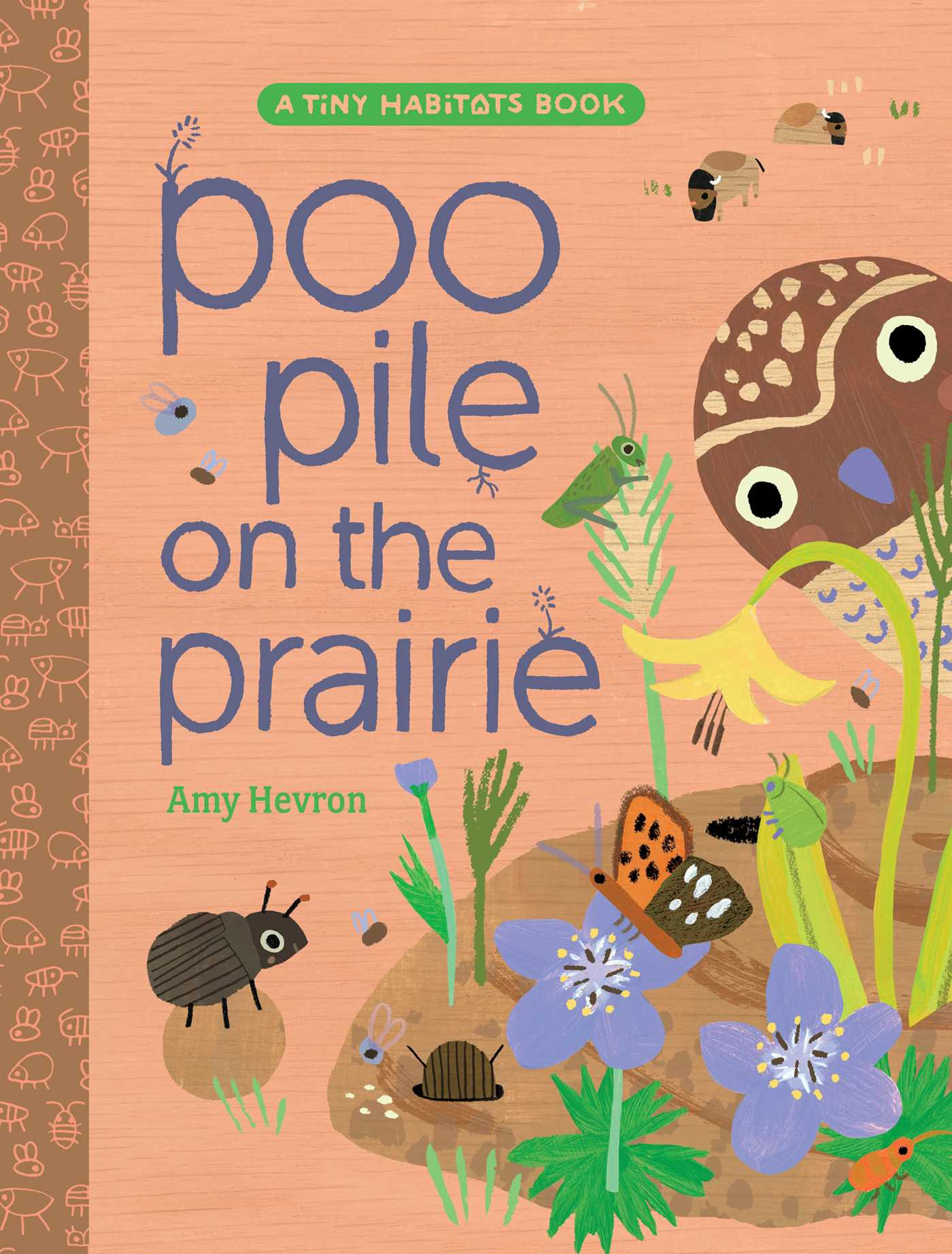
Poo Pile on the Prairie by Amy Hevron (Beach Lane Books, 48 pages, ages 4-9). Majestic bison thunder across the plains, mowing down miles of meadows, and producing…a pile of poo. Over the next year, this “bison pie” proves a life-giving bonanza for all sorts of creatures. Insects like dung beetles make their home there, which attracts the birds who eat them. Prairie violets and other flowers blossom, feeding butterflies. Prairie dogs and earthworms enjoy burrowing into the rich soil that the poo has created. The last remnants fertilize the new grass in the early springtime, which in turn feeds the bison and starts the cycle once again. Includes “The Scoop on Bison Poop” with additional information, a book list, and a list of sources.
The title of this book is sure to attract readers like flies to…well, you get the idea. It’s full of interesting facts that are presented with plenty of humor, and the illustrations with bug-eyed creatures and lots of cartoon bubbles add to the fun. This is part of a series called Tiny Habitats that so far includes books about life on a log and a sunken ship, with a new one out in September on a rainforest pool.
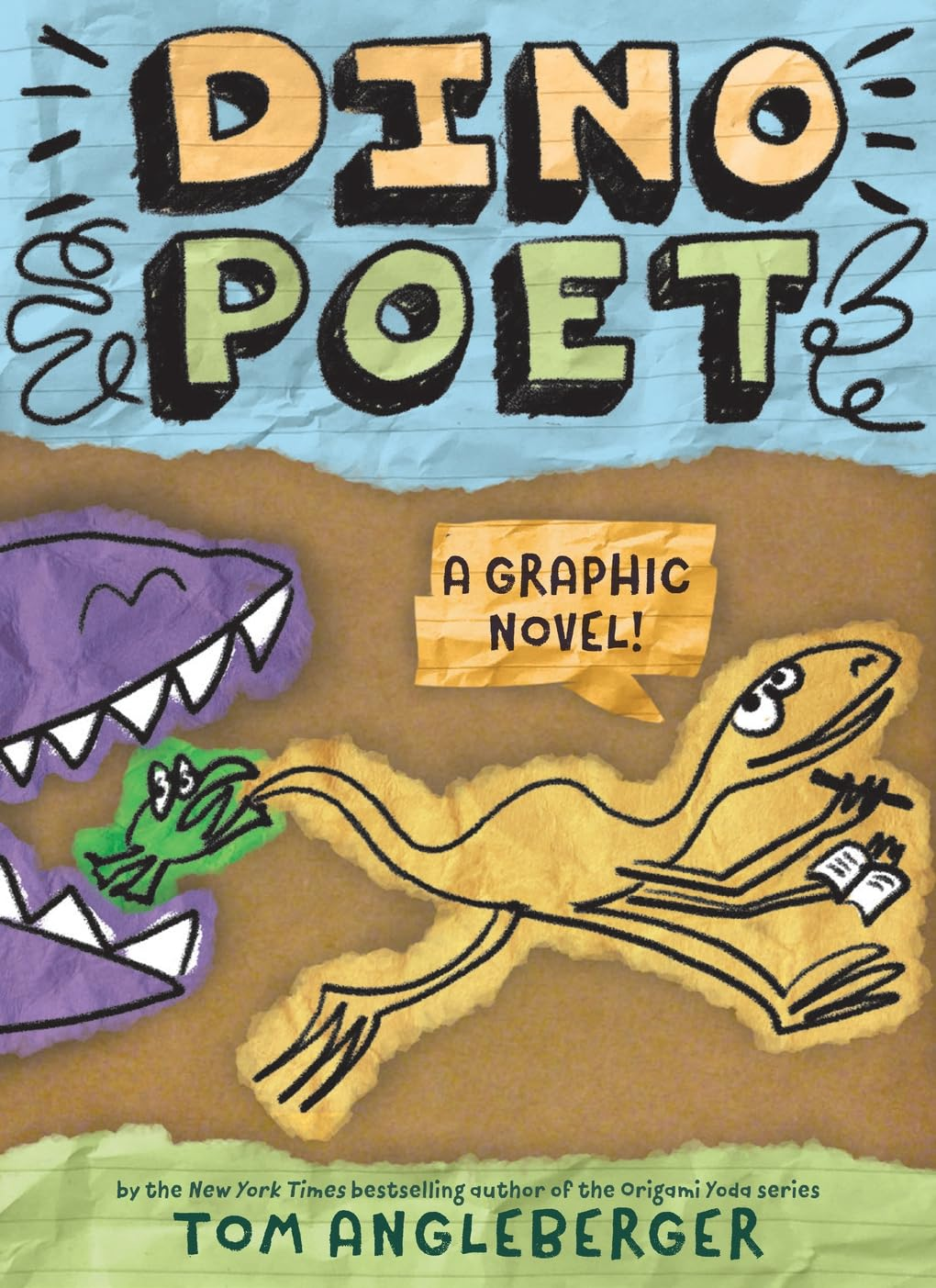
Dino Poet: a graphic novel by Tom Angleberger (Harry N. Abrams, 96 pages, grades 1-4). When a Coelophysis takes a break from writing poetry to have a froggy snack, the frog in question tells him that he hates his poem. The frog then proceeds to give the dinosaur poetry pointers, like how to express his emotions and use his senses to perceive the world. Desperate not to be eaten, the frog introduces different forms of poetry like limericks and speed haiku, while both creatures keep a sharp lookout for larger dinosaurs who may want to consume them both. The frog is so successful that by the end, the Coelophysis calls him a friend, refuses to eat him, and gets him his own notebook and pen so that they can write together.
Always expect the unexpected with Tom Angleberger, as evidenced by this book which is short for a graphic novel, long for a picture book, and has the unlikely premise of two animals from different eras becoming friends and writing poetry together. I love the way it introduces poetry and gently (and humorously) encourages kids to try their own. The simple collage art and the photo of art supplies at the beginning may also inspire readers in their artistic endeavors.
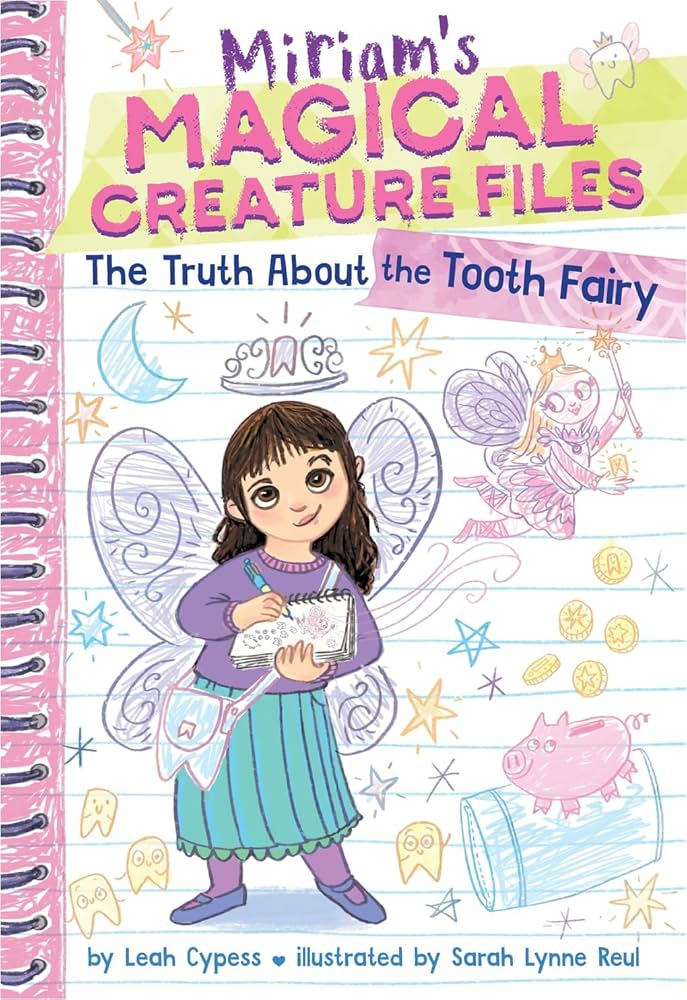
The Truth About the Tooth Fairy (Miriam’s Magical Creature Files book 1) by Leah Cypess, illustrated by Sarah Lynne Reul (Harry N. Abrams, 112 pages, grades 1-3). 6-year-old Miriam is the youngest of three siblings, slightly jaded about things her family tells her, and a firm believer in testing them out to find out if they’re true or not. For instance, after being told, “Sugar makes you hyper,” she eats a lot of it at a birthday party and feels fine. So when she realizes she has her first loose tooth, Miriam is ready to find out if the tooth fairy is real. Her methodology involves staying up and catching her parents in the act. Does she succeed? Readers will have to draw their own conclusions, but whatever they decide, they can look forward to book 2, The Discovery of Dragons, coming in August.
Miriam is a spunky and smart protagonist, part of an Orthodox Jewish family whose traditions are woven into the story and illustrations. The book resembles a scrapbook, with Miriam’s lists, charts, notes, and drawings on what looks like paper torn from a notebook. Fans of Junie B. Jones and other feisty early elementary narrators will enjoy this beginning chapter book.
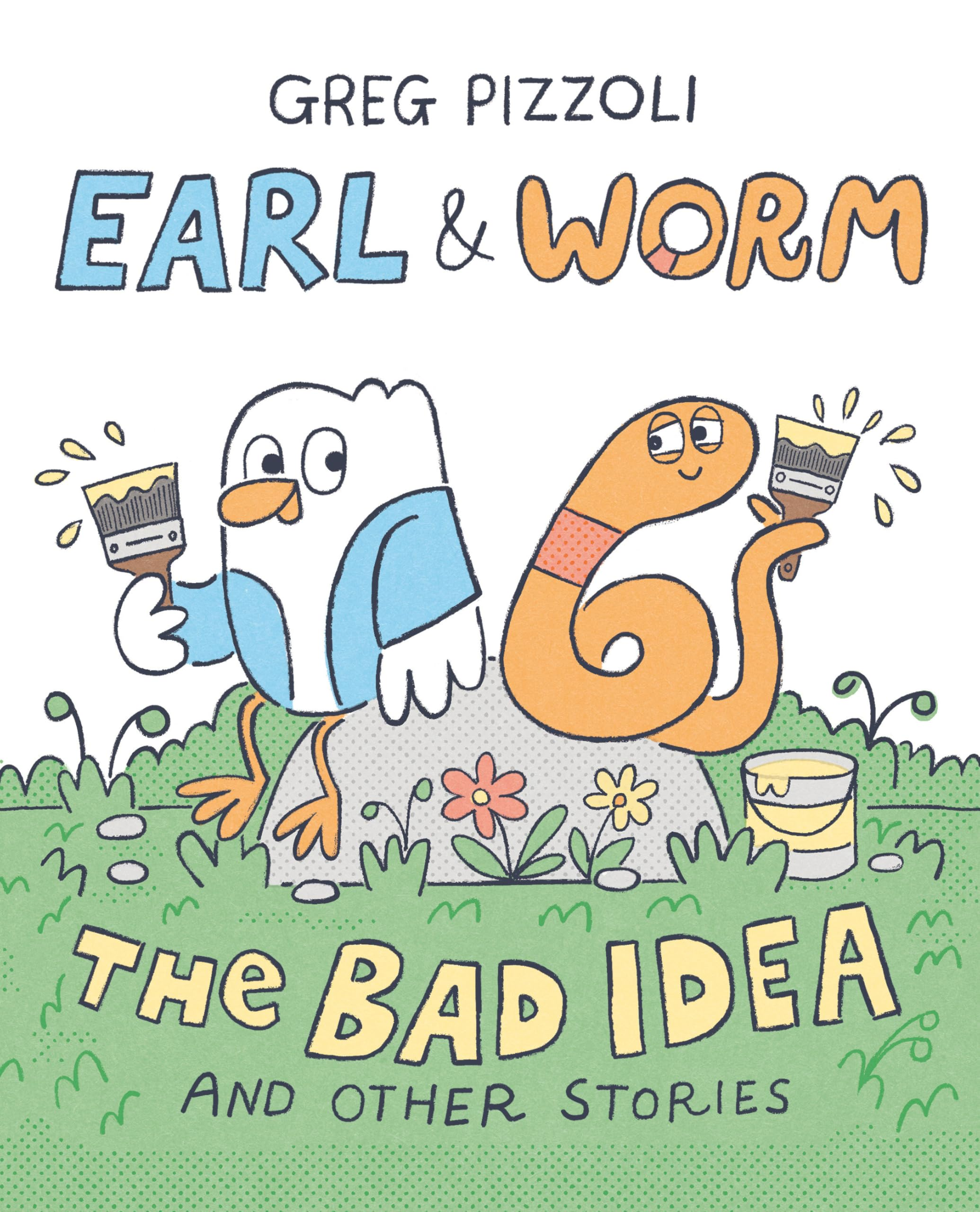
The Bad Idea and Other Stories (Earl and Worm book 1) by Greg Pizzoli (Knopf Books for Young Readers, 72 pages, ages 4-8). In the classic style of such literary friendships as Elephant and Piggie, Frog and Toad, Frank and Bean, Beak and Ally, etc., Worm is a grumpy introvert who initially is annoyed by early bird Earl who gives friendly greetings and plays music for his plants first thing in the morning. The second chapter sees Worm getting increasingly annoyed by what she perceives as Earl’s copying her good ideas about home decor. When she tries to trick Earl by telling him about an outlandish plan to paint the outside of her house, Earl surprises her by painting it for her, leaving her with a house she doesn’t like and the realization that the whole thing was a bad idea. Earl’s persistent cheerfulness slowly wins over Worm, and by the third chapter, Worm is committed enough to their friendship to write a poem that celebrates it.
I’m a pretty big Greg Pizzoli fan, and, while I personally feel this whole introvert/extrovert friendship theme in early readers is a little tired, Pizzoli does an excellent job of creating two fun characters and three funny stories, particularly the one about the bad idea. I love the illustrations, especially the way Worm is portrayed doing all sorts of tasks without any limbs. Try this out on fans of some of the series mentioned above.
Whales in the City by Nancy F. Castaldo, illustrated by Chuck Groenink (Farrar, Straus and Giroux, 40 pages, grades K-4). “Before there were ships and streets and buildings and a city called New York, we were here.” Whales narrate the first half of this book, explaining how they were slowly driven out of the Hudson River by pollution. The few that survived headed for the cleaner waters of the North Atlantic. Humans take on the story from there, telling how they had finally had enough and started demanding clean water around the city. Starting with the first Earth Day, their activism eventually helped lead to the passage of the Clean Water Act. As time passed, the river grew cleaner, fish returned, and people could enjoy it once again. And finally, after a century, the whales came home to the waters around the city. Includes an author’s note, additional information about whales, a timeline of Hudson River history, profiles of a few of the people who led protests, a list of ways kids can help clean up rivers, and a list of sources.
I think we all could use a book right now that shows the positive effects of citizen action, and here is one that can be enjoyed by kids (and adults) of all ages. I liked how the narration was shared by the whales and the humans, and the back matter makes this an excellent resource that could lead to further research. The illustrations are amazing, as you can see from the cover.
Kaho’olawe: The True Story of an Island and Her People by Kamalani Hurley and Harinani Orme (Millbrook Press, 40 pages, grades 2-5). This history of Kaho’olawe, the smallest of the Hawaiian islands, begins with her birth from a volcano and continues with the arrival of the the first humans, Polynesian voyagers who settled there more than 1,000 years ago. Environmental devastation began when Europeans brought goats to the island and later used it for cattle ranching, but the total destruction began during World War II. The day after the attack on Pearl Harbor, the U.S. military took over Kaho’olawe and used it for bombing practices for the next 30 years. In 1976, activists began a campaign to stop the bombing, and finally, in 1992, the U.S. Congress officially ended the bombing and budgeted $400 million for clean-up efforts. Kaho’olawe is still suffering from the effects of all the damage, but today native Hawaiian groups, grassroots organizations, and scientists are working to restore the island and learn about its archaeological history. Includes notes from the author and illustrator (both Native Hawaiians), a timeline of Kaho’olawe’s history, a glossary, a paragraph about how to help, and additional resources and sources.
And here’s another tribute to activism in a fascinating history of a place I’m sure many of us (myself included) have never heard of. The history is sad, but the hard work of so many people in the face of seemingly insurmountable obstacles is inspiring. I loved the colorful illustrations which I’m guessing were inspired by Native Hawaiian art. Each page has a few sentences telling the story, with a paragraph giving additional information, making this a good resource for a wide range of ages.
A Day at the Beach by Gary Schmidt and Ron Koertge (Clarion Books, 224 pages, grades 3-7). These 28 stories take place over the course of a single summer day at Rockcastle Beach on the Jersey Shore. They’re divided into four sections by time of day, bookended by a brother and sister going for early morning and evening runs on the beach. Dealing with a wide variety of issues including a father’s cancer, bullying, a stray dog, and a lost phone, the stories are studies of the kids’ emotions as well as the human interactions and compassion that help them through. As anyone who has spent a day on a crowded beach knows, meetings can be fleeting, and lives can intersect, then diverge again forever.
I’m not much of a short story fan, since the hardest part of a book for me is starting it and getting to know the characters. But the writing in this book is so amazing, the stories so compelling, and the feeling of being on a crowded New Jersey beach on a hot summer day so perfectly captured, that I could not put this book down. Anyone who aspires to write fiction would do well to study this collection of stories to see how engaging characters and situations can be created in just a few pages.
Blood in the Water by Tiffany D. Jackson (Scholastic Press, 272 pages, grades 5-8, publication date July 1). Kaylani’s nervous about spending the summer with the Watsons, family friends who live on Martha’s Vineyard, but after dealing with her dad’s arrest and imprisonment, her parents both feel she could benefit from time away from Brooklyn. While Mr. and Mrs. Watson are welcoming, their granddaughters Cassie and London are not, and Kaylani questions whether she belongs in their affluent Black community that has long history on the island. When one of Cassie’s friends, popular and friendly Chadwick, dies mysteriously one night, the whole community is shocked, and Kaylani decides to use her keen powers of observation to try to figure out what happened. Her investigations lead her to a tangled web of family allegiances and deceit, putting her own life in jeopardy, but ultimately she is able to find out what happened, getting justice not only for Chadwick but for her father as well.
This mystery features a spirited and determined protagonist, with an interesting setting on Martha’s Vineyard that made me want to learn more about the island’s Black history. The mystery is compelling and will have readers guessing right up to the last few pages. I can’t think of too many middle grade mysteries that feature a murder, leading me to recommend this more as a middle school book. Thanks to Scholastic for providing me with a free advance copy of this book.
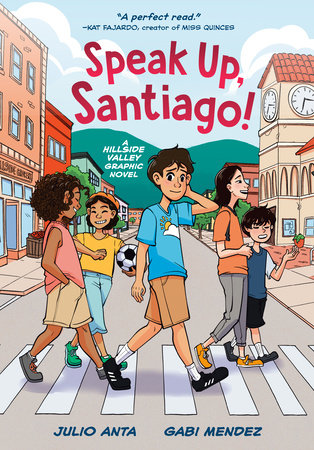
Speak up, Santiago! (Hillside Valley Graphic Novel, book 1) by Julio Anta, illustrated by Gabi Mendez (Random House Graphic, 224 pages, grades 3-7). Santi is spending a month with his Colombian American abuela Emma to try to improve his Spanish. His parents hoped to raise him to be bilingual, but because he struggled with speech as a baby, they focused on getting him to speak English. Now he’s studying Spanish but is extremely self-conscious about his level of fluency and his accent. At first things go well as Santi meets a group of kids who love soccer as much as he does and seems to be communicating well with his abuela. But when he overhears some of her friends making disparaging comments about his accent, his confidence plummets, and he shuts himself off from both his grandmother and his friends. Abuela Emma has a fall that’s partially Santi’s fault, and the guilt he feels about that leads him to have a heart-to-heart conversation with her and with his friends that gets him back on the right track. When Santi sees his parents at the big soccer tournament at the end of the month, they’re amazed at how much his Spanish has improved, and he realizes that progress is better than perfection. Includes notes from the author and illustrator telling how their own heritages influenced them in creating this book.
I loved this series opener, which not only addresses the difficulties of balancing dual heritages but shows readers not to put too much pressure on themselves when learning new things. Santi makes a lot of mistakes, but he’s able to learn from them and emerges as an extremely likable protagonist. I can’t find a publication date for book 2, but a preview at the end of this book shows that it will feature Sol, one of Santi’s new soccer friends.
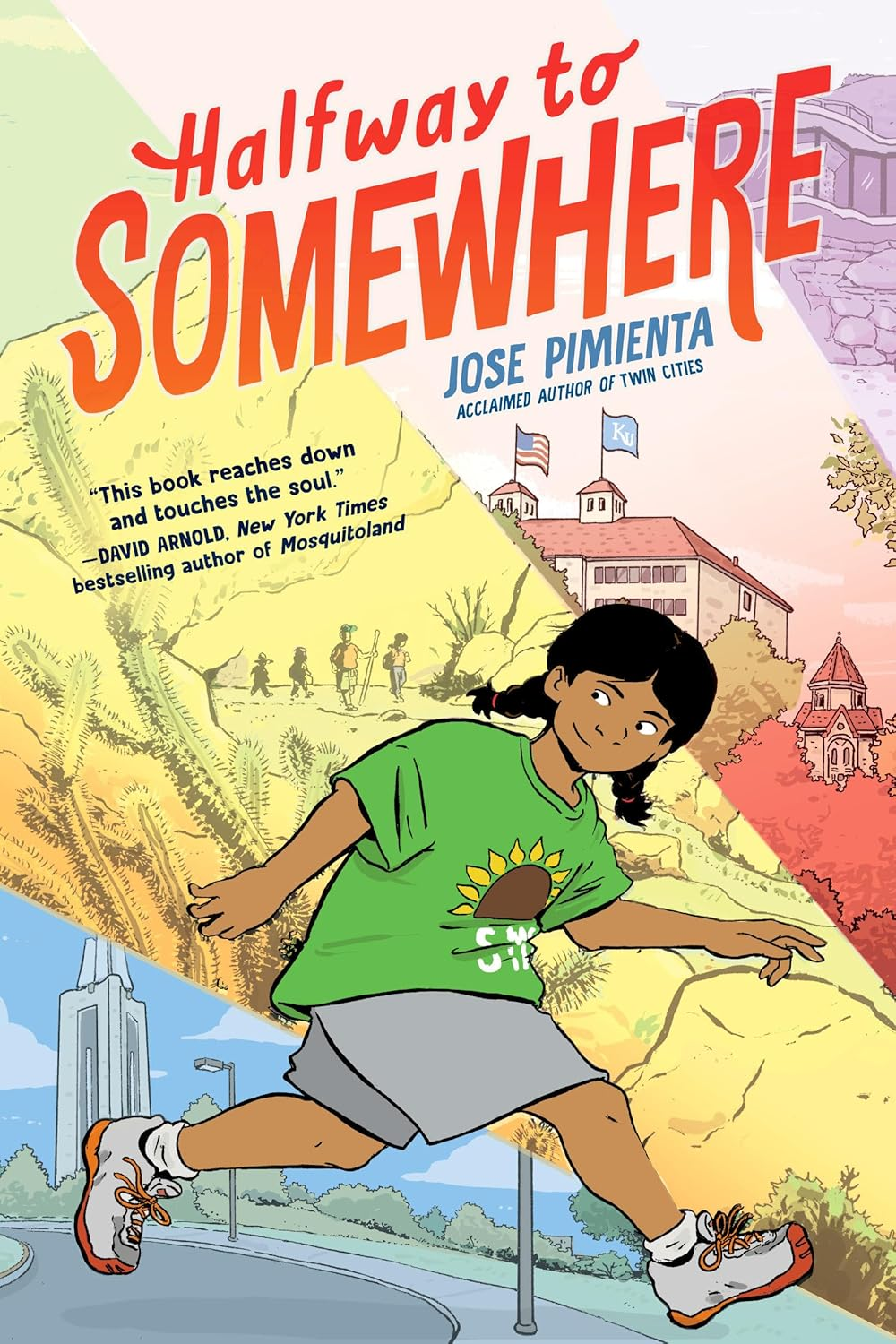
Halfway to Somewhere by Jose Pimienta (Random House Graphic, 256 pages, grade 4-8). Nonbinary tween Ave feels torn in two when they move with their mother and younger brother Ramón to Kansas while their father and older sister Cruz stay in Mexicali. Cruz encourages Ave not to assimilate and to keep speaking Spanish, while Ramón embraces English and renames himself Ray. At school, Ave meets some other kids who have connections to Mexico and other countries and learns to value her heritage while enjoying some American activities like running track and hanging out at the comics store. Through flashbacks and conversations with different family members, Ave remembers their past and learns that the split in the family may be permanent. The last few pages show them enjoying life in both places, leaving some ambiguity about which place they call home. Includes a lengthy author’s note about the evolution and creation of this book.
Jose Pimienta explores timely questions of heritage, language, and belonging in this beautifully illustrated graphic novel about a 12-year-old dealing with a lot of big questions about themself and their family. This is the final installment in his Mexicali trio that includes Suncatcher and Twin Cities.
Crack the Cascarón: An Eggcellent Not-Just-for-Easter Shellebration by Sara Andrea Fajardo, illustrated by Rocío Arreola Mendoza (Knopf Books for Young Readers, 40 pages, ages 4-8). Toti has declared himself the King of Cascarones and has big plans for the upcoming weekend celebration (presumably Easter). Not content with the traditional confetti cascarones, Toti makes tiny stealth ones as well as some that are filled with slime. The night before the big day, while Toti is sleeping, the rest of his family raids some of his hiding places. When Toti wakes up the next morning, no one’s in the house, and when he goes to look for them in the yard, it’s an ambush! His parents, sister, and abuela inform him that not only is his plan not all it was cracked up to be, but the yolk’s on him as they bombard him with his own creations. He finally hands over his crown to Abuela, who declares herself the Queen of Cascarones. Just wait ’til next year.
I loved meeting Tito and his family, who clearly enjoy each other and aren’t afraid to pull some good-natured pranks. Although Easter is never mentioned, this would make a great read-aloud for the holiday or any time in the spring. Spanish words are mixed in with the English text, celebrating Tito’s family’s heritage. I wish there had been some back matter telling more about the cascarón tradition and maybe giving instructions on how to make them.
A Purr-fect Passover by Jenna Waldman, illustrated by Erica J. Chen (Apples & Honey Press, 32 pages, ages 3-7). An adorable group of kitties gets ready for Passover, preparing special foods like matzah bread, gelfite fish, and matzah balls. When the seder begins, the kittens enjoy dinner as well as traditions like the Four Questions and a retelling of the story of Moses and Pharaoh. Then there’s dancing, sweets, and the search for the afikoman. When the guests leave, it’s time for clean-up, and then bedtime with sweet dreams of the holiday. Includes instructions for making a matzah cover like the one pictured in the story.
This cute rhyming story makes a good introduction to Passover for the youngest kids, covering many aspects of the holiday with fun and engaging text and illustrations. Again, a little more back matter would have been a nice addition, especially for those who don’t celebrate Passover.
As You Wish by Nashae Jones (Aladdin, 272 pages, grades 5-8). Birdie and Deve have been best friends since the first day of kindergarten, but when Birdie tells Deve of her plans to be more “normal” in eighth grade by getting a boyfriend, Deve reacts coldly and before long they’re in a fight. A mysterious new girl named Nancy turns out to be the mythological spider Anansi, who grants Birdie three wishes. Each wish plunges Birdie into a new reality where she gets to see what life would be like as a popular girl, free of her overprotective mother, and worst of all, if she and Deve had never met. By the time she realizes her mistakes, she’s out of wishes, but Anansi has one more surprise in store for her.
This romance is perfect for those just getting into the genre, providing a fun introduction to the Ghanaian Anansi. The romance element is pretty clear from the start, with the plot twists coming from revelations about other characters as well as Birdie’s discoveries about herself as she fumbles her way through alternative realities.
To Catch a Ghost by Rachel Michelle Wilson (Orchard Books, 40 pages, ages 4-8, publication date July 1, 2025). “Bringing nothing to show-and-tell is like wearing shoes without socks. It stinks.” To avoid this situation, the narrator decides to catch a ghost to share with the class. Part one is the search, followed by part two: observe, in which he tries to determine what kind of ghost he’s found. Likes hide-and-seek? Mischievous. Enjoys gardening? An old soul. And almost any kind will appreciate pizza. The third and final part involves catching a ghost, but after building a cage, the narrator can’t stand the sad look on the ghost’s face and lets it go. The friendly ghost leaves behind a picture of the two of them eating pizza, though, and that is good enough for show-and-tell. Thanks to Orchard Books for an advanced copy of this book, which will be available July 1.
Fans of Wilson’s How to Pee Your Pants will enjoy this follow-up about finding a ghost. It would make a great mentor text for procedural writing, a good Halloween read-aloud that includes those who don’t celebrate the holiday, and a nice story for starting a conversation about friendship.
Sharks Unhooked: The Adventures of Cristina Zenato, Underwater Ranger by Patricia Newman, illustrated by Becca Hall (Millbrook Press, 40 pages, grades 1-5). Although Cristina Zenato grew up in Zaire (now the Democratic Republic of Congo), she and her family were Italian and returned to Italy every summer. There, Cristina grew to love swimming in the sea and was especially fascinated by sharks. She longed to learn how to scuba dive, and she finally got her chance after college on a trip to the Bahamas. Cristina decided to move there and spent hours in the water, getting to know the world underwater. Clad in a chain suit, with mackerel treats, she soon earned the trust of many of the sharks. She learned that sharks often get fishing hooks stuck in their bodies, and soon she was removing them from sharks’ gills, fins, tails, and even their throats. At first, she threw the hooks away, but eventually she collected them to use as an educational tool for humans to learn about their dangers to sharks. Includes additional information about sharks and Cristina Zenato, including a note from Cristina with a photo, and a list of books about sharks.
A Line Can Go Anywhere: The Brilliant, Resilient Life of Artist Ruth Asawa by Caroline McAlister, illustrated by Jamie Green (Roaring Brook Press, 40 pages, grades 2-5). Ruth Asawa first became aware of lines when she drew them in the dirt on her family’s farm in California. The middle of seven children, she had plenty of chores to do on the farm, but she still found time to create art, whether it was practicing calligraphy at Japanese school on Saturdays, making bracelets from discarded wire, or painting a prize-winning poster of the Statue of Liberty. When World War II broke out, an invisible line divided the Japanese and American parts of Ruth’s life. Her father was taken away, and the rest of the family was sent to a camp. Ruth practiced her art there, getting lessons from professional artists who had worked for Disney, and eventually was able to leave camp to go to college. Even after she got married and had six children of her own, she continued to create art, first making wire sculptures with thousands of intersecting lines and later getting commissions to sculpt fountains and a memorial for families imprisoned during World War II. Includes a lengthy author’s note with additional information, a couple of photos of Ruth with her art, and a bibliography.
Both Cristina and Ruth followed their unique dreams, despite the obstacles, and although both have had success in their chosen fields, it’s obvious that their joy in life came from following their passions rather than the external rewards. I was happy to read about a Ruth Asawa retrospective opening at the San Francisco Museum of Modern Art on the very same day that I read this book.




 A Kids Book A Day