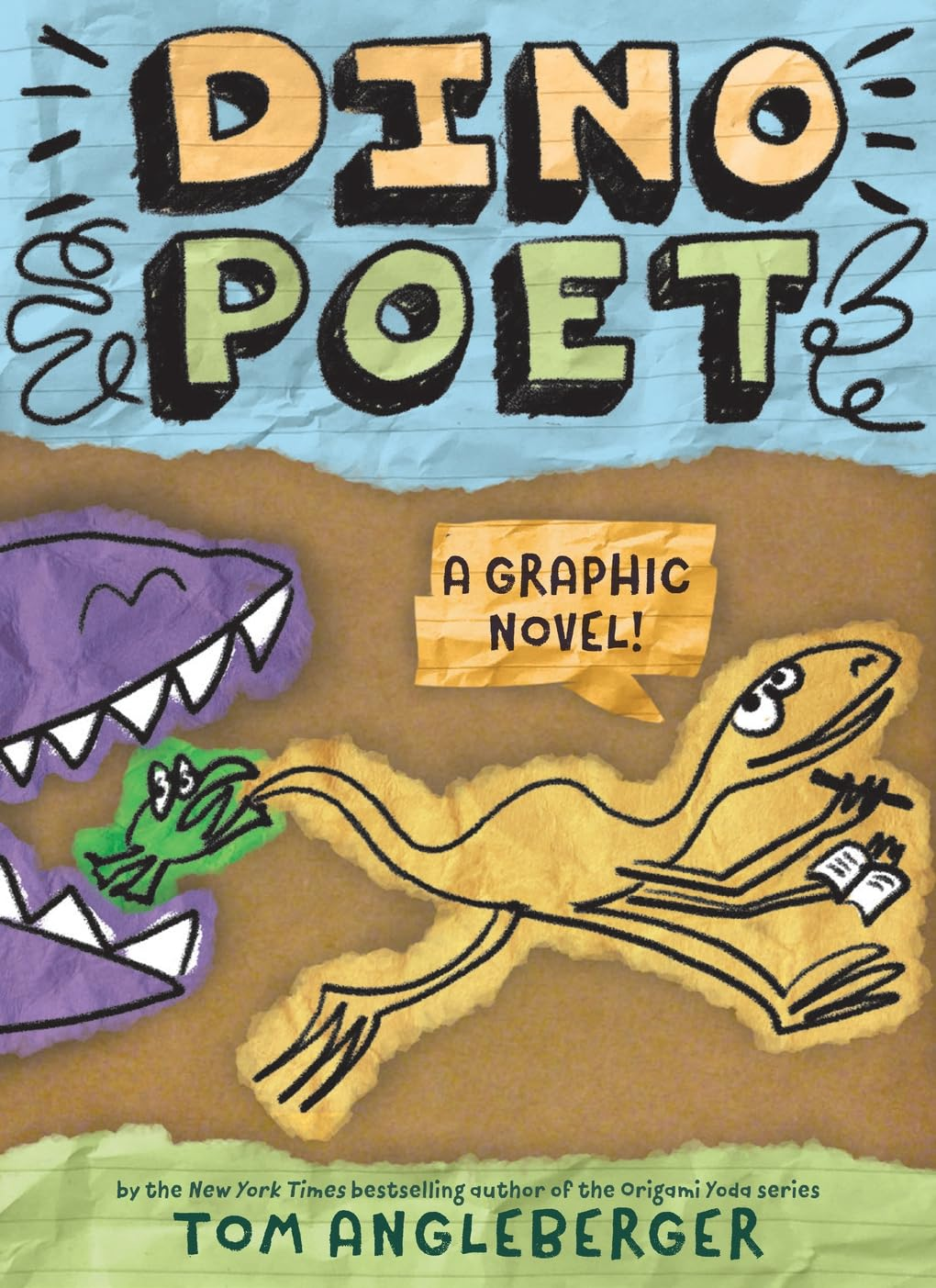
Dino Poet: a graphic novel by Tom Angleberger (Harry N. Abrams, 96 pages, grades 1-4). When a Coelophysis takes a break from writing poetry to have a froggy snack, the frog in question tells him that he hates his poem. The frog then proceeds to give the dinosaur poetry pointers, like how to express his emotions and use his senses to perceive the world. Desperate not to be eaten, the frog introduces different forms of poetry like limericks and speed haiku, while both creatures keep a sharp lookout for larger dinosaurs who may want to consume them both. The frog is so successful that by the end, the Coelophysis calls him a friend, refuses to eat him, and gets him his own notebook and pen so that they can write together.
Always expect the unexpected with Tom Angleberger, as evidenced by this book which is short for a graphic novel, long for a picture book, and has the unlikely premise of two animals from different eras becoming friends and writing poetry together. I love the way it introduces poetry and gently (and humorously) encourages kids to try their own. The simple collage art and the photo of art supplies at the beginning may also inspire readers in their artistic endeavors.
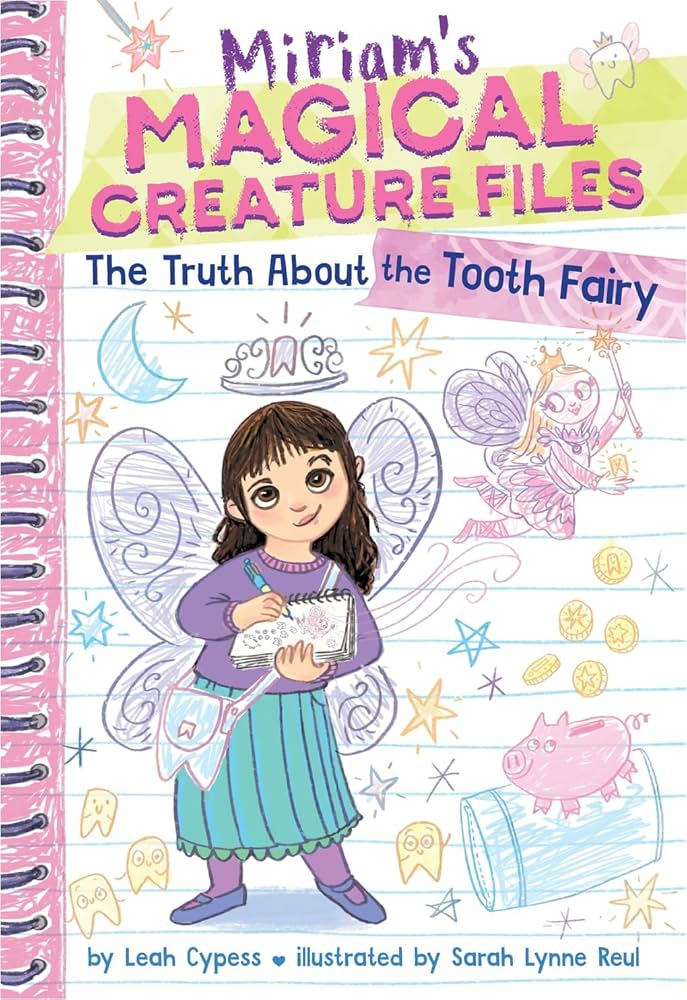
The Truth About the Tooth Fairy (Miriam’s Magical Creature Files book 1) by Leah Cypess, illustrated by Sarah Lynne Reul (Harry N. Abrams, 112 pages, grades 1-3). 6-year-old Miriam is the youngest of three siblings, slightly jaded about things her family tells her, and a firm believer in testing them out to find out if they’re true or not. For instance, after being told, “Sugar makes you hyper,” she eats a lot of it at a birthday party and feels fine. So when she realizes she has her first loose tooth, Miriam is ready to find out if the tooth fairy is real. Her methodology involves staying up and catching her parents in the act. Does she succeed? Readers will have to draw their own conclusions, but whatever they decide, they can look forward to book 2, The Discovery of Dragons, coming in August.
Miriam is a spunky and smart protagonist, part of an Orthodox Jewish family whose traditions are woven into the story and illustrations. The book resembles a scrapbook, with Miriam’s lists, charts, notes, and drawings on what looks like paper torn from a notebook. Fans of Junie B. Jones and other feisty early elementary narrators will enjoy this beginning chapter book.
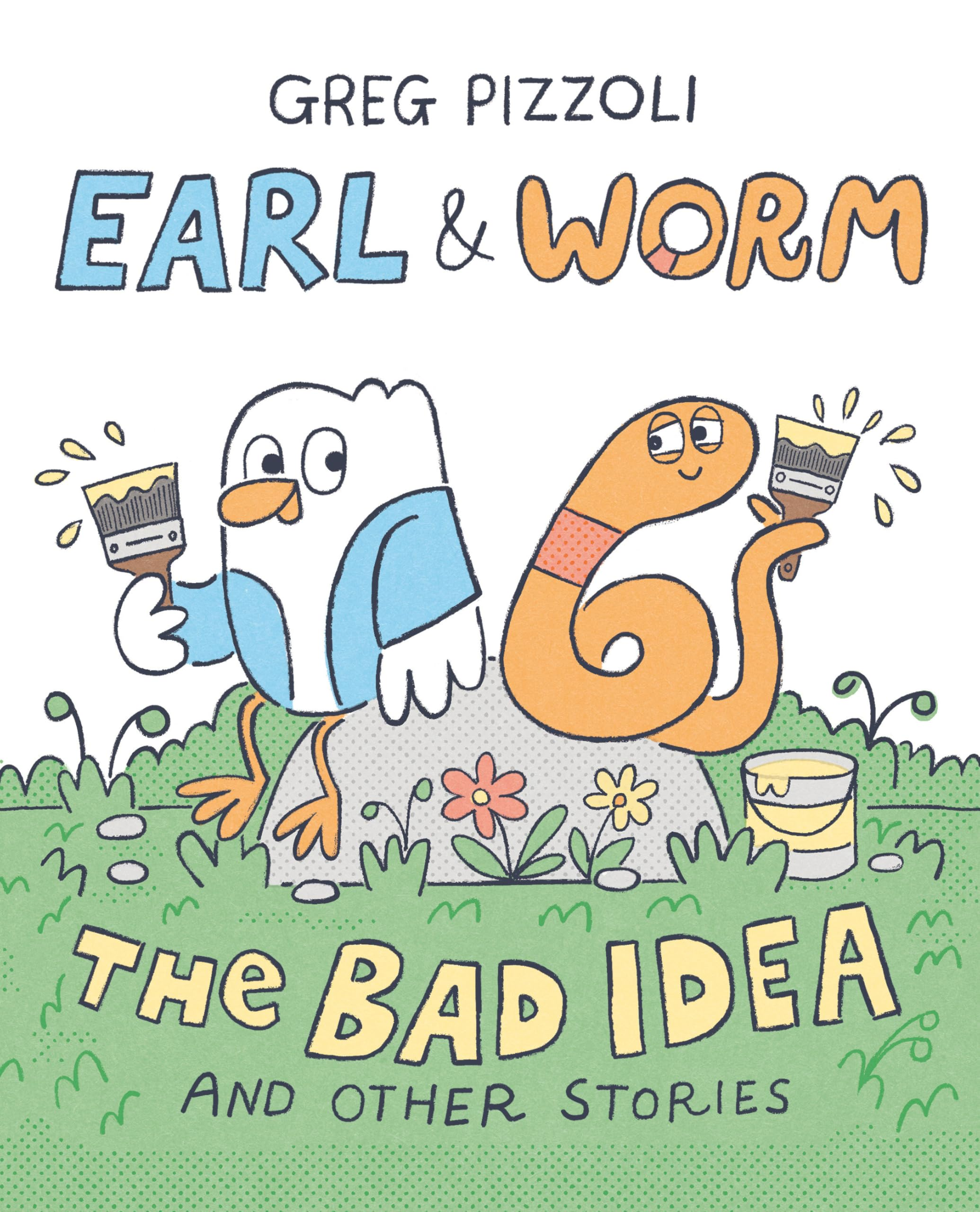
The Bad Idea and Other Stories (Earl and Worm book 1) by Greg Pizzoli (Knopf Books for Young Readers, 72 pages, ages 4-8). In the classic style of such literary friendships as Elephant and Piggie, Frog and Toad, Frank and Bean, Beak and Ally, etc., Worm is a grumpy introvert who initially is annoyed by early bird Earl who gives friendly greetings and plays music for his plants first thing in the morning. The second chapter sees Worm getting increasingly annoyed by what she perceives as Earl’s copying her good ideas about home decor. When she tries to trick Earl by telling him about an outlandish plan to paint the outside of her house, Earl surprises her by painting it for her, leaving her with a house she doesn’t like and the realization that the whole thing was a bad idea. Earl’s persistent cheerfulness slowly wins over Worm, and by the third chapter, Worm is committed enough to their friendship to write a poem that celebrates it.
I’m a pretty big Greg Pizzoli fan, and, while I personally feel this whole introvert/extrovert friendship theme in early readers is a little tired, Pizzoli does an excellent job of creating two fun characters and three funny stories, particularly the one about the bad idea. I love the illustrations, especially the way Worm is portrayed doing all sorts of tasks without any limbs. Try this out on fans of some of the series mentioned above.
 A Kids Book A Day