Teamwork makes the dream work

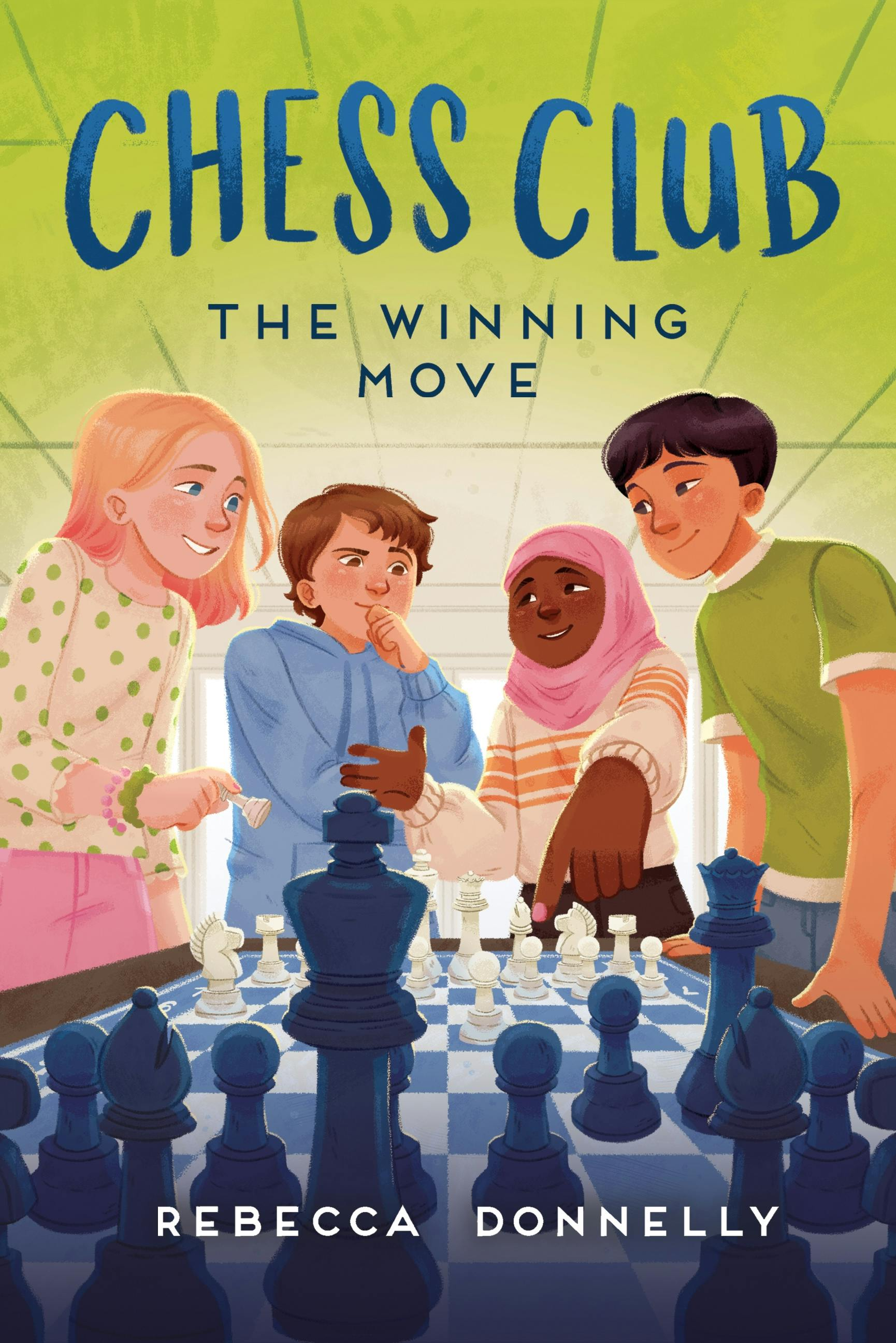
Chess Club: The Winning Move by Rebecca Donnelly, illustrated by Isabelle Duffy (Farrar, Straus, and Giroux, 208 pages, grades 3-6). Halima loves playing chess online with her Somalian cousin, but she wishes she had the opportunity to play with kids in real life. When her best friend Jem suggests that she start a chess club at school, Halima is hesitant, but Jem offers to join and provide refreshments, even though her baking skills are much stronger than her chess ones. They manage to recruit two boys to join them: Parker, who’s never enjoyed sports the way his athletic older siblings do, and Daniel, who loves art but is struggling to fit in at middle school. Although they have a slightly bumpy start, Halima rises to the role of leader, and the others start to learn more about chess, enjoying both the game and their new friendships. When they have the opportunity to play in a tournament, they find themselves in a difficult situation involving cheating and have to work together to do what’s right. The promise of a rematch paves the way for a sequel.

A sweet series opener told from the alternating perspectives of four slightly quirky kids who find each other through chess. The appeal of friendship is at least as great as the appeal of the game, but each one grows as both a person and a chess player. A series of mysterious notes helps bring them together and advance their friendship, and the final chapter reveals the slightly supernatural events behind those notes. The illustrations add a nice touch, especially those showing the chess board in various games.
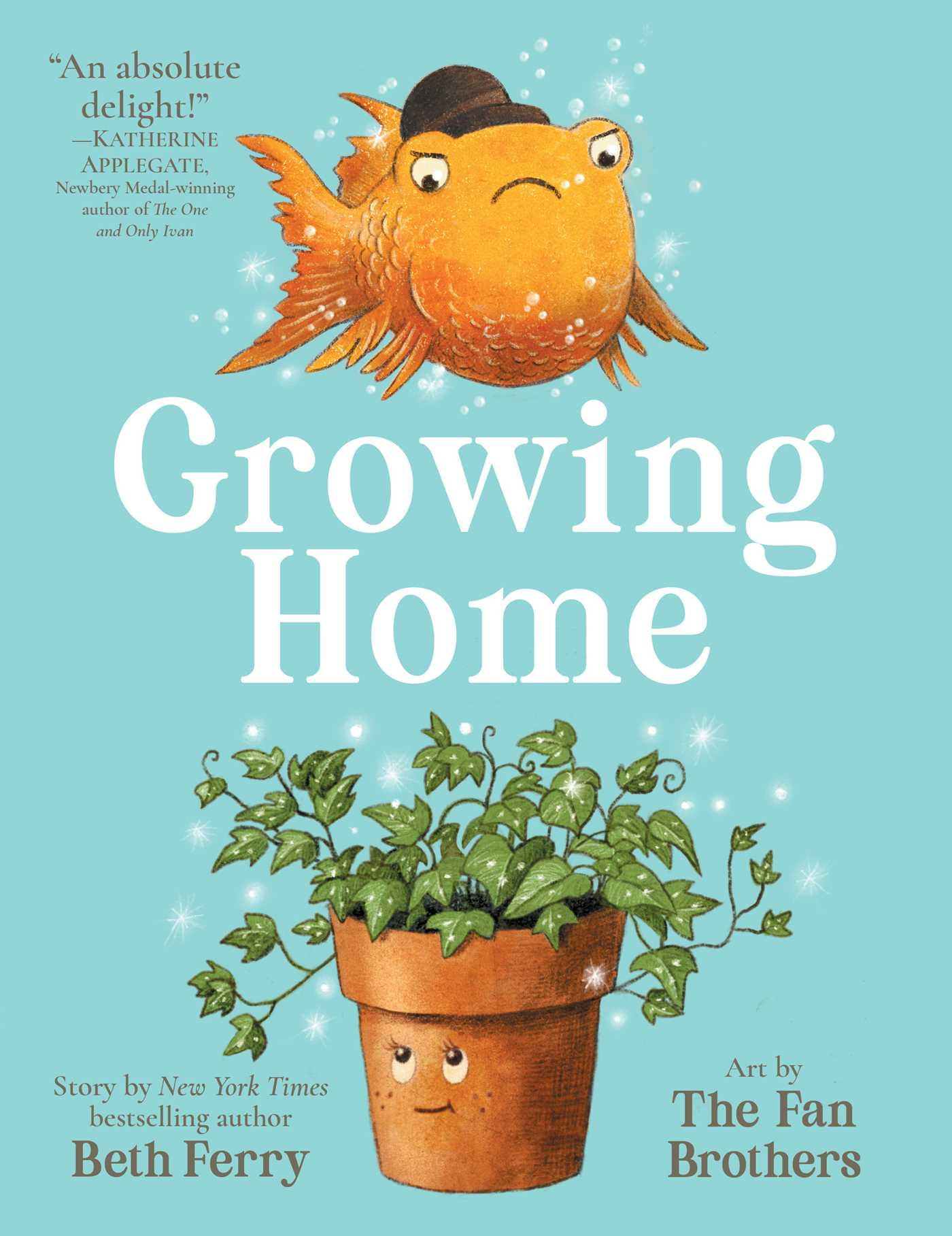
Growing Home by Beth Ferry, illustrated by Terry and Eric Fan (Simon and Schuster Books for Young Readers, 272 pages, grades 2-5. Meet the team: Ivy the ivy plant, Toasty the goldfish, Ollie the violet plant, and Arthur the spider, with occasional appearances by Louise the bee and Sunny the canary. The four main characters live at Number 3 Ramshorn Drive with Mr. and Mrs. Tupper and their young daughter Jillian. The humans are, for the most part, unaware of the activity going on in their home, although all of them get occasional glimpses, especially Jillian. The four start out as rivals, but events dictate that they work together, and in the end, they are able to save the Tuppers from becoming victims of a crime that would most likely ruin their antiques business. By the final pages, all six plant and animal characters–even grumpy Toasty–have come to appreciate their friendship and the special skills each one brings to the team.

This is a charming story by one of my favorite picture book authors, filled with black and white drawings by two of my favorite illustrators. It would be a good chapter book for precocious primary grade readers, and I could also see it being enjoyed as a class read-aloud. Having said all that, it didn’t quite meet my high expectations. It felt like things got off to a meandering start, although the action picked up in the second half. I wasn’t a huge fan of the gentle educational asides addressed to the reader, and it made me appreciate how Beth Ferry is able to impart messages in her picture books with more subtlety. I did love the illustrations, although I missed the colors and sweeping vistas that often characterize the Fan Brothers’ work.

Making a difference

The Music Inside Us: Yo-Yo Ma and His Gifts to the World by James Howe, illustrated by Jack Wong (Harry N. Abrams, 48 pages, grades 1-5). Growing up in Paris and New York City, Yo-Yo Ma showed his musical gifts early, playing cello from the age of 4, performing for President John Kennedy at 7, and debuting at Carnegie Hall at 15. But Yo-Yo wanted more than just the life of a musical prodigy. As a teen, he started questioning who he was, aside from being an obedient son and a cellist. He studied anthropology at Harvard and learned about music as a universal language. As an adult, Yo-Yo has used his music to bridge the gaps of culture, language, and generations. He continues to develop his musical gifts and to share them with people of all ages from all over the world. Includes a timeline, notes from the author and illustrator, and lists of additional resources.

I love how this book shows how Yo-Yo Ma, an incredibly talented and hard-working musician from an early age, has never rested on his laurels, but has used music in innovative ways to have positive impacts on the world. Through his appearances on Mr. Rogers, Arthur, and Sesame Street, his creation of Silkroad Project to bring together musicians from around the world, and his performances of “Songs of Comfort and Hope” during the pandemic, Yo-Yo shows us all how to use our unique talents in creative and powerful ways.

The Friendship Train: A Story of Helping and Healing After World War II by Debbie Levy, illustrated by Boris Kulikov (Bloomsbury Children’s Books, 48 pages, grades 2-5). In the fall of 1947, Europeans were facing a winter of hunger due to postwar devastation. Journalist Drew Pearson had the idea of creating a Friendship Train that would start in California and travel to the east coast, stopping along the way to pick up donations of food from across the U.S. While Mr. Pearson initially worried that there wouldn’t be enough donations to fill a boxcar, the final collection was enough for 500 boxcars. The food was transferred onto ships which sailed for Europe in December of 1947 and brought welcome relief to Europeans. The French people reciprocated with a Merci Train, collecting and shipping gifts in 1949 that were distributed all around the US. Includes a two-page author’s note with additional information about the Friendship Train and ways readers can address the problem of hunger today, as well as a list of sources and a bibliography.

This well-researched book tells a heartwarming story of Americans rising to the occasion to help Europeans get through the winter before the Marshall Plan was implemented. It would make a great read-aloud for Thanksgiving or the December holidays. My curiosity led me to read more about Drew Pearson, who sounds like a remarkable person deserving of his own biography. I also learned that his wife Luvie was equally involved in the project, although she’s not mentioned in this story. And if you want to find out about what happened to the Merci Train donations to your state, you can learn about it here.

Beach reading

Meet Me at Sunset by Lee Heart (Simon Spotlight, 145 pages, grades 3-7). Julie’s told all her friends at school about James, the cute boy she knows from her summer vacations. Although she’s only talked to him once, she may have led the other kids believe he’s her boyfriend, which is why it’s incredibly awkward when her mom invites Sophia to join them for this year’s vacation. Sophia proves understanding, though, and is on board to help Julie with her Love Plan. Sophia confides in Julie about the boy from her old school in California whom she’s been texting, and before long the two girls are on their way to becoming BFF’s. But when Sophia starts to gently point out that James is kind of a jerk, and that his friend Liam is a lot nicer, Julie is sure there’s something going on between Sophia and James. A little communication goes a long way, though, and by the last page, both Sophia and Julie have dumped James and each has found the beginnings of a kinder, gentler summer romance.

This is a perfect beach read for tweens who are starting to be curious about romances but who may not be quite ready for YA. The steamiest action is exchanging phone numbers and making plans to get together during the school year, and the insane sixth-grade insecurity-fueled drama that it takes to get there is spot on. I love the short length, which should really be more common with books for this demographic. Enthusiastic readers can look for other titles in this new Spotlight Sprinkles series.

The Best Worst Summer of Esme Sun by Wendy Wan-Long Shang (Scholastic Press, 224 pages, grades 3-7). Esme’s ready to chill out at the local pool after another disappointing year of unsuccessfully competing with her three accomplished older sisters for their mother’s attention. Swim team has been a fun part of Esme’s summer for years, but this year she discovers that her growth spurt has made her a real contender, particularly in freestyle. She still enjoys the social aspect of the team, though, particularly a new friendship with Kaya, a girl whom Esme enjoys helping with her flip turns. When Esme’s mom gets wind of Esme’s successes at the pool, she starts showing up for meets. At first, Esme is thrilled, but when Mom starts making derogatory–and in the case of Kaya, racist–comments about her teammates, Esme’s not sure what to think. She enjoys winning and would love to set a pool record, but she also likes being part of a team and helping her friends succeed. Slowly, Esme starts to realize that being the best doesn’t always bring happiness and begins to seek out her own way of competing.

This book drew me in right away, and anyone who has spent time at the pool in the summer will find a sense of familiarity in the descriptions. Esme’s struggles with finding a balance between personal success and cheering on teammates are also very relatable, and I liked how the ending was ambiguous, leaving those questions still somewhat open. Although there were some hints to explain her mom’s behavior (her Chinese culture, her husband deserting her), she was a bit too much of a tiger mom stereotype and just came off as mean. I wish that portrayal had been softened a bit, but it’s also perhaps somewhat accurate coming from a 12-year-old narrator.

Exploring loss and grief

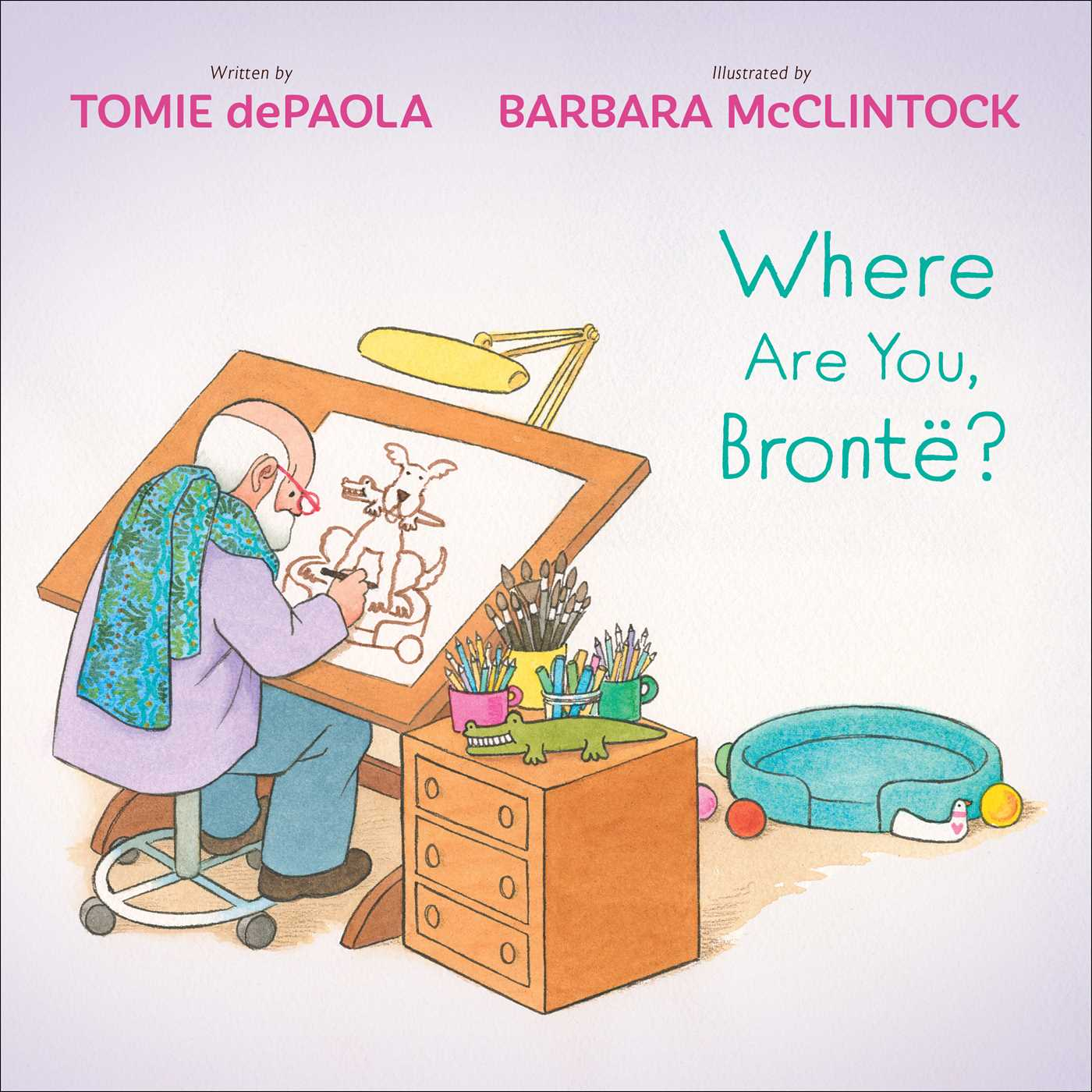
Where Are You, Brontë? by Tomie dePaola, illustrated by Barbara McClintock (Simon and Schuster Books for Young Readers, 48 pages, ages 4-8). The opening spread shows Tomie dePaola looking at a picture of a dog in a heart frame. Turn the page, and Tomie uses a second-person narration that addresses his dog Brontë to show readers how he met his puppy, and how that puppy grew into an adorable dog who loved his toys, his pink collar, and most of all, Tomie. Even after Brontë goes blind, he learns how to find his way and enjoy life. When he dies, Tomie grieves, holding an empty pink collar, drawing a broken heart, and gazing at a vacant dog bed. Seeing a rainbow, the artist is inspired to go home and draw a picture of Brontë, which he puts into the heart-shaped frame, knowing that his beloved dog will always live in his heart. Includes an illustrator’s note about how she created the art for this story that Tomie dePaola left when he passed away in 2020.

Is someone chopping onions in here? Not only is this about the death of a beloved dog, but it’s a reminder of the loss of the beloved Tomie dePaola. The story is simple, but beautiful, with different chapters of Brontë’s life shown, each beginning with the question, “Where are you, Brontë?” Barbara McClintock’s art is a lovely homage that feels very much inspired by dePaola’s work. The ending felt a bit too easy to me but probably just right for the intended young audience.

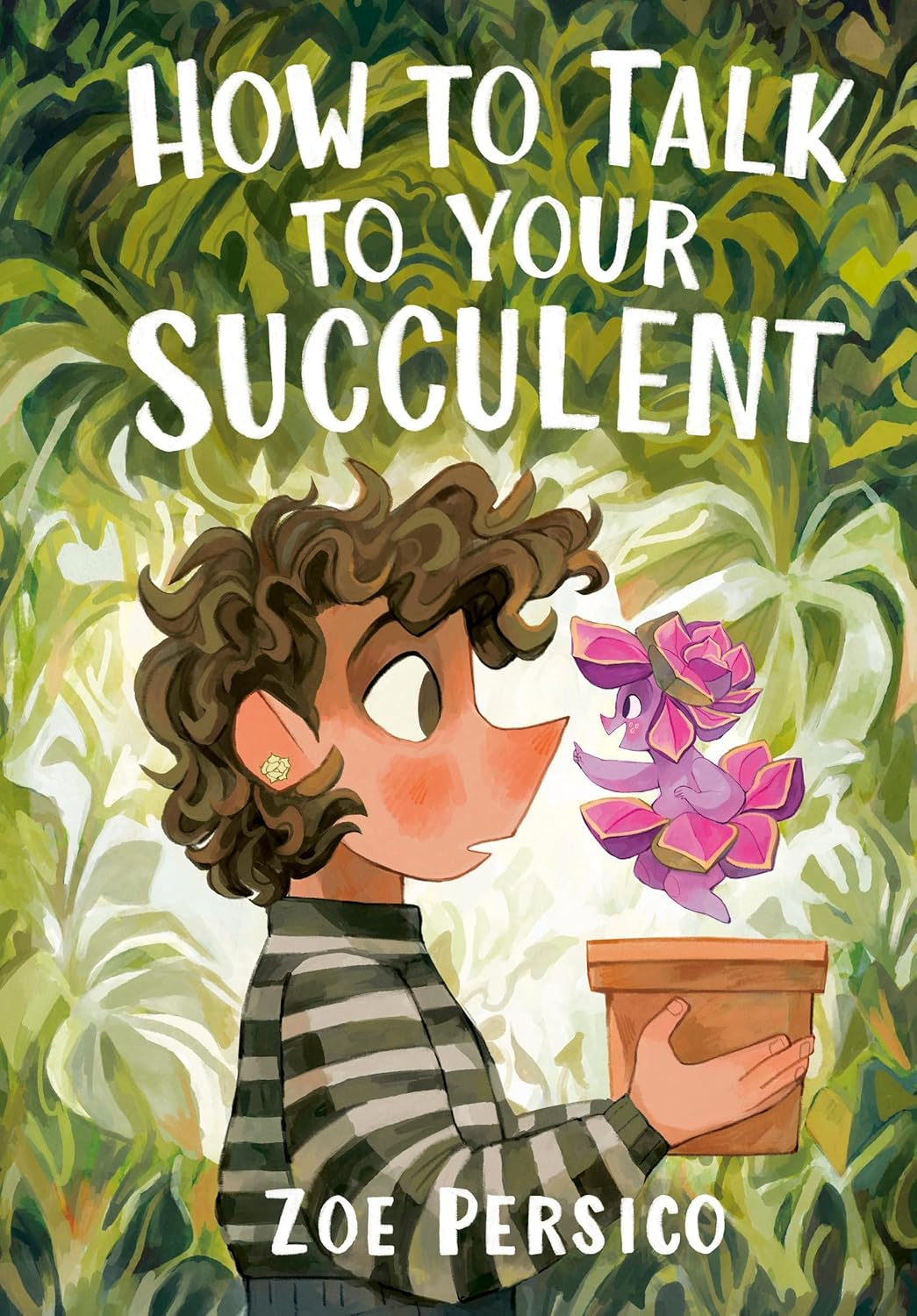
How to Talk to Your Succulent by Zoe Persico (Tundra Books, 224 pages, grades 4-7). Adara and her father are almost overwhelmed by the death of Adara’s mother. Her dad decides to move them from California to Michigan where they move in with her grandmother. There, much to her amazement, Adara learns that she has inherited her mother’s ability to talk to plants, starting with a small succulent named Perle that her grandmother buys for her. Talking to plants makes Adara feel closer to her mom, but the rest of life still feels overwhelming, and sometimes her own needs mean that she neglects those of others, including Perle and a new friend named Winnie. Meanwhile, Dad is having a hard time seeing what Adara needs, and everyone–Adara, Perle, and Winnie–learn some lessons about advocating for themselves. By the end, Adara and her father are slowly embracing a new normal, which is shown in the photo of them together on the last page with the caption “Light after the dark.” Includes an author’s note, photos of some of the inspirations for the artwork, information on how the book was created, and instructions for propagating succulents.

This is a moving and endearing exploration of grief, with the interesting twist of Adara’s ability to talk to plants. I liked how the author showed how grief can close you off to those around you, and how it’s okay to ask for what you need. The artwork is truly amazing, particularly the depictions of the plants coming to life.

Independence Day reading

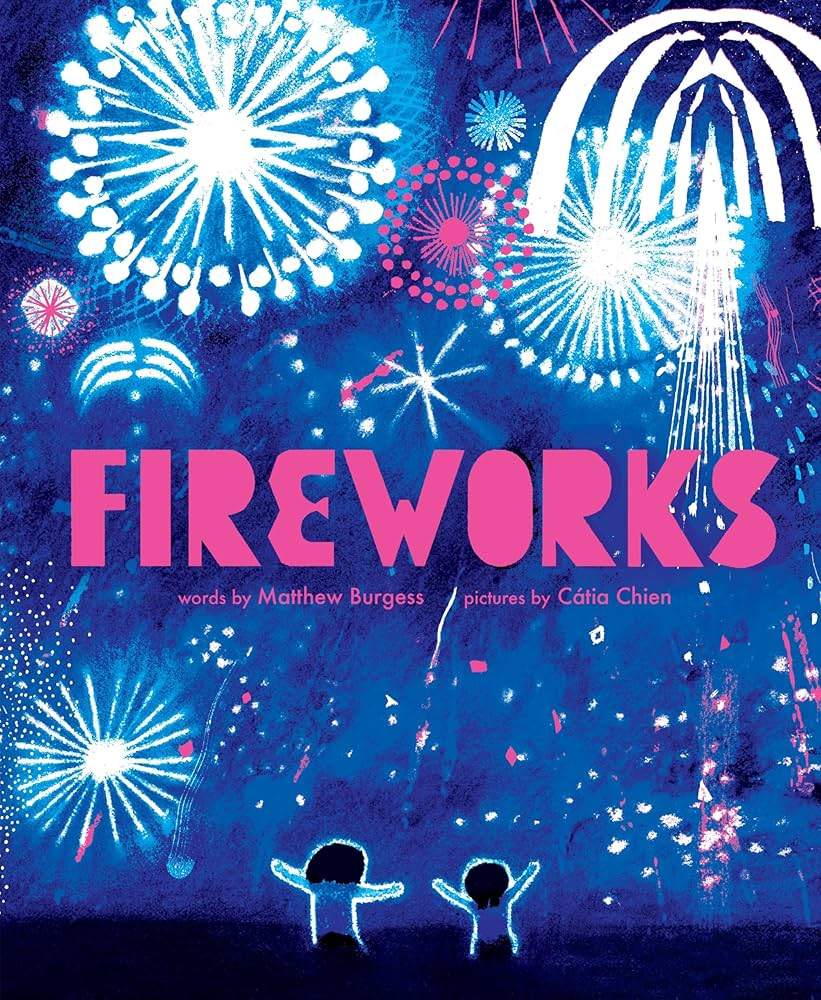
Fireworks by Matthew Burgess, illustrated by Cátia Chien (Clarion Books, 44 pages, ages 4-8). Two children describe a summer day in the city, from the sun rising between the buildings on their block, to an open fire hydrant that helps them beat the heat, to the sweet juiciness of a slice of watermelon. This summer day is special, though, and after dinner, they climb to the roof and wait for darkness to fall. An explosion of color and sound lights up the night sky as the fireworks begin. And just when you think the show is over–ka-boom!–a foldout page shows the brilliant grand finale. A few sparks and a sharp burning smell linger in the night air as the kids return home and get ready for bed.

The poetic text and brilliant illustrations, highlighted with fluorescent pink, engage all the senses to bring an urban summer day to life. I’m sure that grand finale page won’t last long in a public library, but it is truly spectacular. A perfect read-aloud for a July 4th celebration.

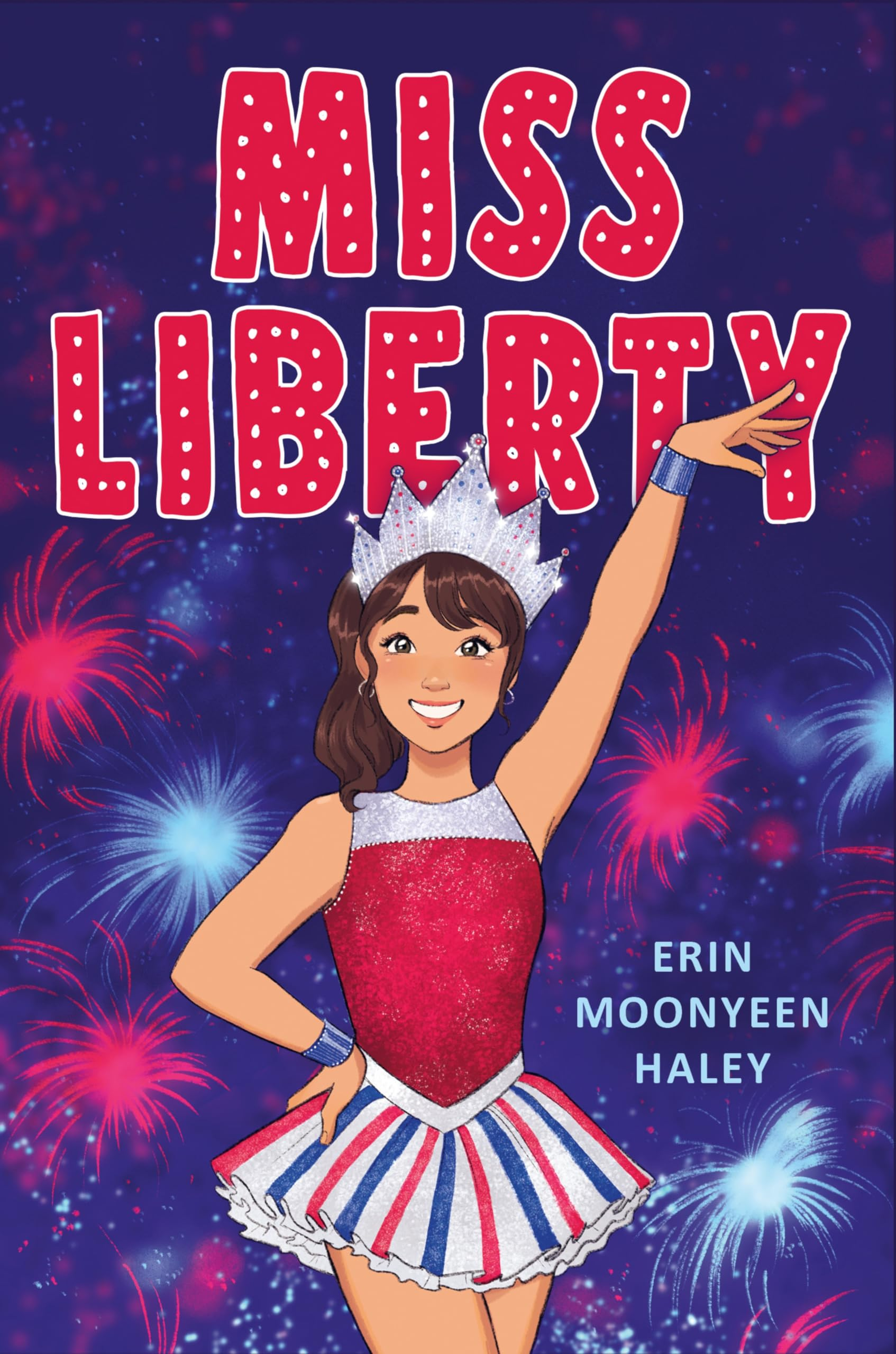
Miss Liberty by Erin Moonyeen Haley (Storytide, 224 pages, grades 4-7). Savvy’s greatest wish is to someday be Miss Liberty in her town’s Fourth of July celebration. This year for the first time, she’s one of the Liberty Line dancers backing up her sister Levi, who’s been Miss Liberty for three years in a row. But this year, things are happening that make Savvy’s anxiety kick into high gear. For starters, people around town are starting to say the Fourth of July celebration isn’t what it used to be, and that maybe it’s time to call it quits. Then Levi starts using her platform to speak out for voting rights…when everyone knows Miss Liberty is supposed to be silent and just look beautiful! Savvy and her aunt, another diehard Miss Liberty fan, take it upon themselves to save the big event, but as the summer goes on, Savvy starts to see that there is more than one side to a story and that sometimes it’s okay to live with uncertainty about what’s going to happen next.

This debut novel is filled with memorable characters: not only Savvy, but Levi, Aunt Bobbi, and her good friends Seymour, the only boy dancer in the Liberty Line and a budding fashion designer, and Dulce, an aspiring journalist and historian who has her own blog. I liked the way Savvy comes to terms with her anxiety and learns to express herself in ways that work for her, and how she learns to let go of the need for a definite outcome.

Rocks of ages

A Gift of Dust: How Saharan Plumes Feed the Planet by Martha Breckenbrough, illustrated by Juana Martinez-Neal (Knopf Books for Young Readers, 40 pages, grades 1-5). A sunbeam shining through a window illuminates the dust in the air. Where does this dust come from? The author traces it back to a fish in an African lake that dies, eventually becoming a fossil, which the wind then breaks down into dust. This dust travels around the earth, providing nutrients to plankton, plants, and other living creatures in the water and on land. Dust can change the color of sunsets, dampen the speed of hurricanes, and be seen from outer space. Includes additional information and resources about dust.

I Rock: A Geology Tale by Kate Slivensky, illustrated by Steph Stilwell (Beach Lane Books, 40 pages, grades 1-5). Luis is presenting his senior citizen interview to the class when a rock stuck to the bottom of his shoe interrupts to ask the kids if they want to hear about someone who is REALLY old. The rock takes them on a journey going back four billion years where it started life deep inside the Earth. It has traveled all over the planet and experienced life in igneous, metamorphic, and sedimentary states. Concepts and vocabulary like plate tectonics, tsunamis, and erosion are introduced, as a small version of the rock narrates a timeline along the bottom of each page. The story concludes with Luis stepping on the rock, and the narrator declaring, “after four billion years, I’m proud to say that I’m here and I rock!” Includes more geology facts, a geology pop quiz, and a list of sources.

Although their styles are very different, both of these books do an outstanding job of instilling wonder by placing ordinary objects–dust and rocks–in the context of the vast expanses of time it has taken to create them. I Rock is filled with fun, humorous cartoons, while A Gift of Dust has sparkly dust-infused illustrations that could be worth of Caldecott consideration.

Creature features

Creaky Acres by Calista Brill, illustrated by Nilah Magruder (Kokila, 272 pages, grades 3-7). Nora is happiest winning ribbons at shows with her horse Hay Fever, but when her mom gets a new job, the family moves to a small rural town where the only barn around is Creaky Acres. Filled with quirky humans and animals, including a bunch of opossums and an instructor who doesn’t believe in competing, Creaky Acres feels like a huge disappointment to Nora. On top of that, she’s the only Black kid at her school and finds herself dealing with microaggressions from both students and teachers. But Nora’s love for riding remains strong, and before long, she’s made some tentative connections with the other kids at Creaky Acres. When she hears about an upcoming riding event, she’s determined to compete. Her fellow riders, having heard about Nora’s experiences and seen her ribbons, beg to let them join her, and before she knows it, Nora is coaching a Creaky Acres team. On the day of the event, the results are mixed and sometimes hilarious, but when Nora reunites with friends from her old riding school, she realizes she has found her new place at Creaky Acres.

Give this to fans of Ride On by Faith Erin Hicks, who will enjoy another graphic novel about a group of underdogs who find their own ways in the elite world of horseback riding. It’s a cheery story with endearingly quirky characters, but it also deals with the more serious topics of dealing with racism and learning to be yourself in a new place.

Creature Clinic by Gavin Aung Than (First Second, 224 pages, grades 3-7). Creature Clinic, run by the imperious Dr. Orc, treats all kinds of creatures: trolls, unicorns, griffins, and more. But when an injured human boy is discovered on the bottom of an unconscious giant’s shoe, Dr. Orc refuses treatment, stating that humans are nothing but trouble. Her long-suffering daughter, Dr. Kara Orc, takes pity on the human and secretly helps him on the condition that he leaves the next day. But Mitch, the boy, is fascinated by the clinic, and a sympathetic custodian hides him in a trash bin and wheels him around for a tour. Mitch is able to show Kara and some of the others how his empathetic listening skills can help the patients, but when the senior Dr. Orc discovers Mitch and learns that Kara has been harboring a fugitive, she is furious. Some of the other creatures intercede, reminding the doctor how she defied her father to do what she thought was right, even though it damaged their relationship. Eventually, Dr. Orc sees the error of her ways, lets Mitch stay, and mends things with her daughter. And they all live happily ever after, unless, of course, there’s a sequel in the works. Includes an author’s note and seven illustrated steps that explain how the book was created.

I would love to see that sequel to this imaginative, funny, and original graphic novel that I know kids will love. The world building of the clinic is so clever and detailed, and the issues the various creatures deal with make them seem, well, human. The author’s note relating how the time his daughter spent in the NICU inspired the story adds an extra dimension.

Girl detectives

Gus and Glory by Sarah Guillory (Roaring Brook Press, 240 pages, grades 4-7). Glory’s mother disappears the summer she’s 12 years old, and since her dad spends most of his time on the road as a truck driver, Glory is sent to live with her grandparents in Louisiana. Glory aspires to be a detective, and she’s determined to solve the mystery of what has happened to her mother. When a bloodhound named Gus finds Glory and leads her to his owner who has broken his leg, she gets an assistant with a big personality and a keen nose. While Gus’s owner recuperates, the dog comes to live with Glory and her grandparents, causing some unexpected changes in their lives. When Glory tries to train Gus in tracking, her grandfather, who’s been depressed since suffering a stroke, takes an interest and begins to rejoin the family. Gus also leads Glory to a new best friend, whose big, warm family welcomes her to the community. As the summer winds down, Glory uncovers some difficult truths about her mother and starts to come to terms with the fact that her life has changed forever. When Gus’s owner admits that Gus is too much for him and offers to let Glory keep him, she sees that sometimes love means letting someone move on to a life that is better suited for them. Gus’s big voice helps Glory to speak up and advocate for herself, and those honest conversations with her dad and grandparents lead to a rich new life for Gus, Glory, and the rest of their family.

I got the impression from reviews that this was going to be more of a mystery, but while Glory aspires to be a detective and does some investigating into her mother’s disappearance, the focus is more on her difficult family situation and the way a beloved new dog helps her come to terms with what’s going on in her life. While I would probably not shelve it in the mystery section, it’s a heartwarming story that will be enjoyed by dog lovers everywhere.

Opal Watson: Private Eye by Brittany J. Thurman (Storytide, 224 pages, grades 4-7). Based on a podcast, this mystery features feisty Opal Watson, a seventh grader who doesn’t let her retinitis pigmentosa slow her down, although she does sometimes use a white cane named Pinkerton to help her find her way. Returning home to Chicago from a visit with her grandmother Meme in Louisiana, Opal discovers that her usually calm father is stressed by the slow renovations being done on the Crescent, the apartment building he manages and that Opal’s family lives in. Some of the other residents report hearing strange sounds and feeling mysterious drafts, and Opal is determined to figure out what’s going on, with the help of her best friend Madison and cousin Frank. A class project with a new girl named Ivy sparks Opal’s interest in the Great Migration that Meme was a part of and turns out to have a surprising connection to the Crescent. Opal and her friends solve the mystery and save the Crescent, but another mystery connected to her school project offers the promise of a sequel.

Opal is an inspiring character as well as a persistent detective, and the story offers not just a mystery but a compelling family story with some interesting Chicago history woven in. I wish there had been some back matter about the historical stuff, as well as a reference to the podcast, which I only learned about from reading the reviews. I look forward to listening to some episodes!

One-of-a-kind birds

Frank’s Red Hat by Sean E. Avery (Walker Books Australia, 32 pages, ages 4-8). Frank has more ideas than your average penguin, and although they don’t always work out as planned, he keeps trying. When he shows up wearing a red hat before, the other penguins are skeptical, having never seen the color red before. He hands it to Neville for a closer look, and by an unfortunate coincidence, Neville gets swallowed by a killer whale at that very moment. The other penguins back away immediately, and a disappointed Frank drops that hat on the snow. Thinking the color may have been the problem, Frank creates a variety of other hats, but the penguins reject them all. Finally, he gives up, only to unexpectedly discover that the seals have been picking up his discarded hats, and they love them! This encourages Frank to keep creating, and on the last page, he’s shown unveiling his latest invention…the scarf.

Seven: A Most Remarkable Pigeon by Sandra Nickel, illustrated by Aimée Sicuro (Candlewick, 40 pages, ages 4-8). When a baby pigeon arrives alone–usually there are two pigeon eggs–his parents try to make up for it by giving him the name Seven, considered lucky in the pigeon community, since the farthest a pigeon has flown home is 7,000 miles. Seven has an excellent sense of smell and gets great joy from collecting flowers and eating rice. His parents, who collect straw and twigs and eat bread crumbs like the rest of the pigeons, frown on these activities and try to get Seven to conform. And the rest of the flock is horrified when Seven doesn’t learn to home right away, instead following the yummy smells all around him. Seven tries to be like the other pigeons, but it makes him sad. When the flock gets fogged in by clouds after a long journey, Seven’s keen sense of smell brings them home again, and the other pigeons begin to see the value of Seven’s uniqueness. Includes additional information about pigeons.

Both of these books use humorous storytelling to teach important lessons about being true to yourself and honoring your own unique gifts. Although they’re quite different from each other, I loved the illustrations in both books portraying Frank’s and Seven’s urban and Arctic environments.

Animal humor

The Bear Out There by Jess Hannigan (Quill Tree Books, 48 pages, ages 4-8). A jumpy girl narrator tells readers why she was scared by their knock: there is a bear out there! She shares the three signs of how to tell when a bear is nearby: raised arm hair, a feeling of being watched, and super itchy feet. Readers see the bear from the window, but the girl doesn’t see it until it’s at the door! She runs away screaming , while the bear explains, “This is literally my house.” While making a cup of tea, the bear relates that break-ins happen all the time, showing a book lying on the table called “Goldilocks, Friend of Foe?” It’s ridiculous, the bear complains, because guests are always welcome as long as they ask first. “I would be pleased to offer you a warm bed to stay the night, should you need it.”

Kids will get a big kick out of the over-the-top reactions from the girl narrator, as well as her less than accurate know-it-all attitude. The illustrations of the girl’s freak-outs, as well as those showing the bear that she doesn’t see, are sure to bring some laughs. This would make a great addition to a fractured fairy tale unit.

We Are the Wibbly! A Tadpole’s Tale by Sarah Tagholm, illustrated byJane McGuinness (Published by Bloomsbury Children’s Books, 32 pages, ages 3-7). A frog narrates its life cycle, from egg to full-grown frog, using its own unique terms like “Wibbly” (the tadpole still inside the egg), “water-flying” (swimming), and “air-flying” (jumping). Just as it gets used to one stage, it notices its friends are onto the next one. Life inside the egg is comfortable, but suddenly the others are hatching and water-flying. By the time water-flying has become second nature, the other tadpoles are growing legs. And so it goes, until finally, the wibbly have all become full-grown frogs and gaze fondly at some eggs in the pond, asking each other, “Do you remember when we were the Wibbly? Includes additional information about the life cycle of a frog.

This is a fun introduction to a frog’s life cycle, told in way that kind of reminded me of Elmo with slightly quirky sentence structure, made-up words, and the repeated refrain of “OH MY CRIKEYS!” which kids will enjoy saying. Kids may relate to the narrator noticing when others seem to be growing and changing faster than it does and reassured by the fact that eventually everyone gets to the same place.