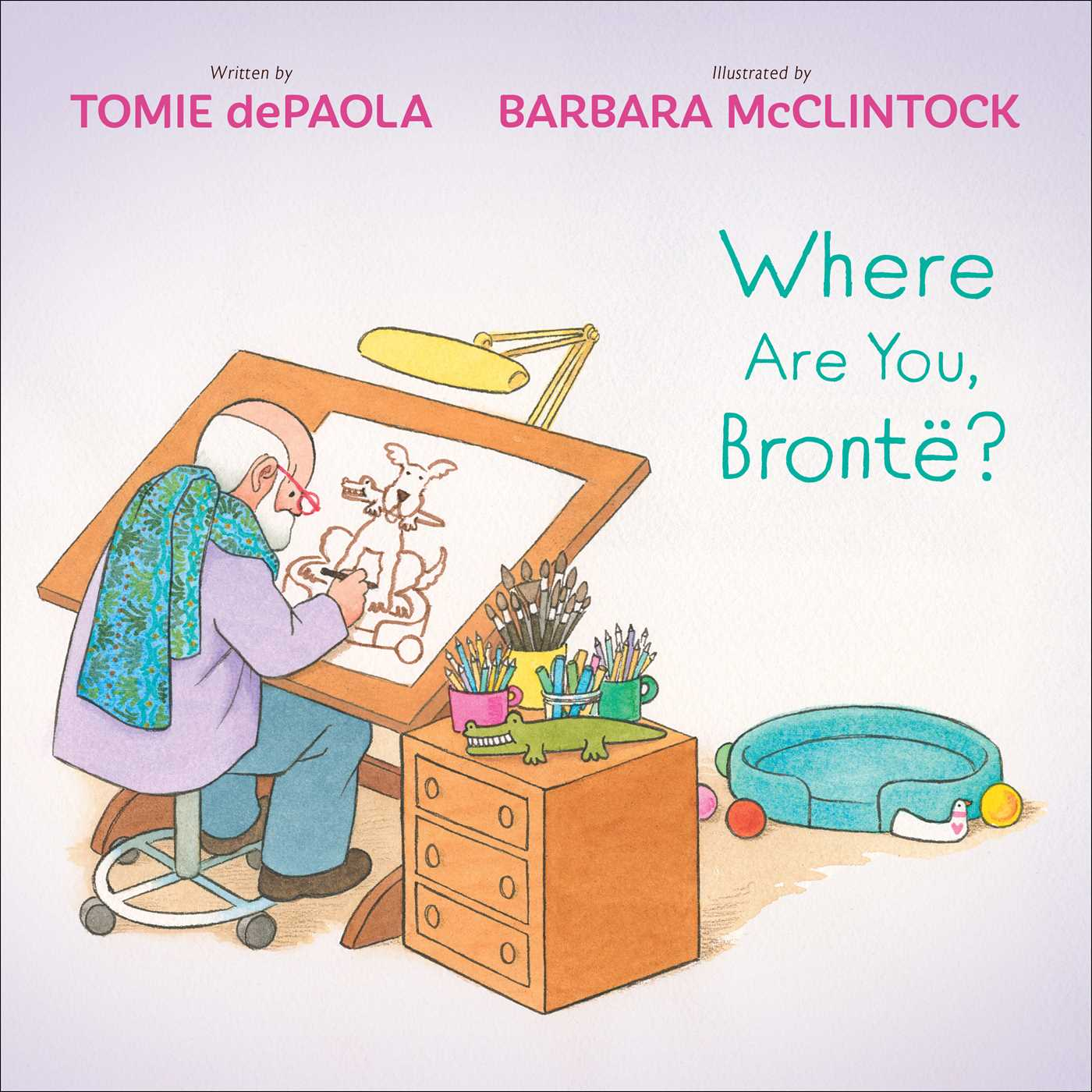
Where Are You, Brontë? by Tomie dePaola, illustrated by Barbara McClintock (Simon and Schuster Books for Young Readers, 48 pages, ages 4-8). The opening spread shows Tomie dePaola looking at a picture of a dog in a heart frame. Turn the page, and Tomie uses a second-person narration that addresses his dog Brontë to show readers how he met his puppy, and how that puppy grew into an adorable dog who loved his toys, his pink collar, and most of all, Tomie. Even after Brontë goes blind, he learns how to find his way and enjoy life. When he dies, Tomie grieves, holding an empty pink collar, drawing a broken heart, and gazing at a vacant dog bed. Seeing a rainbow, the artist is inspired to go home and draw a picture of Brontë, which he puts into the heart-shaped frame, knowing that his beloved dog will always live in his heart. Includes an illustrator’s note about how she created the art for this story that Tomie dePaola left when he passed away in 2020.
Is someone chopping onions in here? Not only is this about the death of a beloved dog, but it’s a reminder of the loss of the beloved Tomie dePaola. The story is simple, but beautiful, with different chapters of Brontë’s life shown, each beginning with the question, “Where are you, Brontë?” Barbara McClintock’s art is a lovely homage that feels very much inspired by dePaola’s work. The ending felt a bit too easy to me but probably just right for the intended young audience.
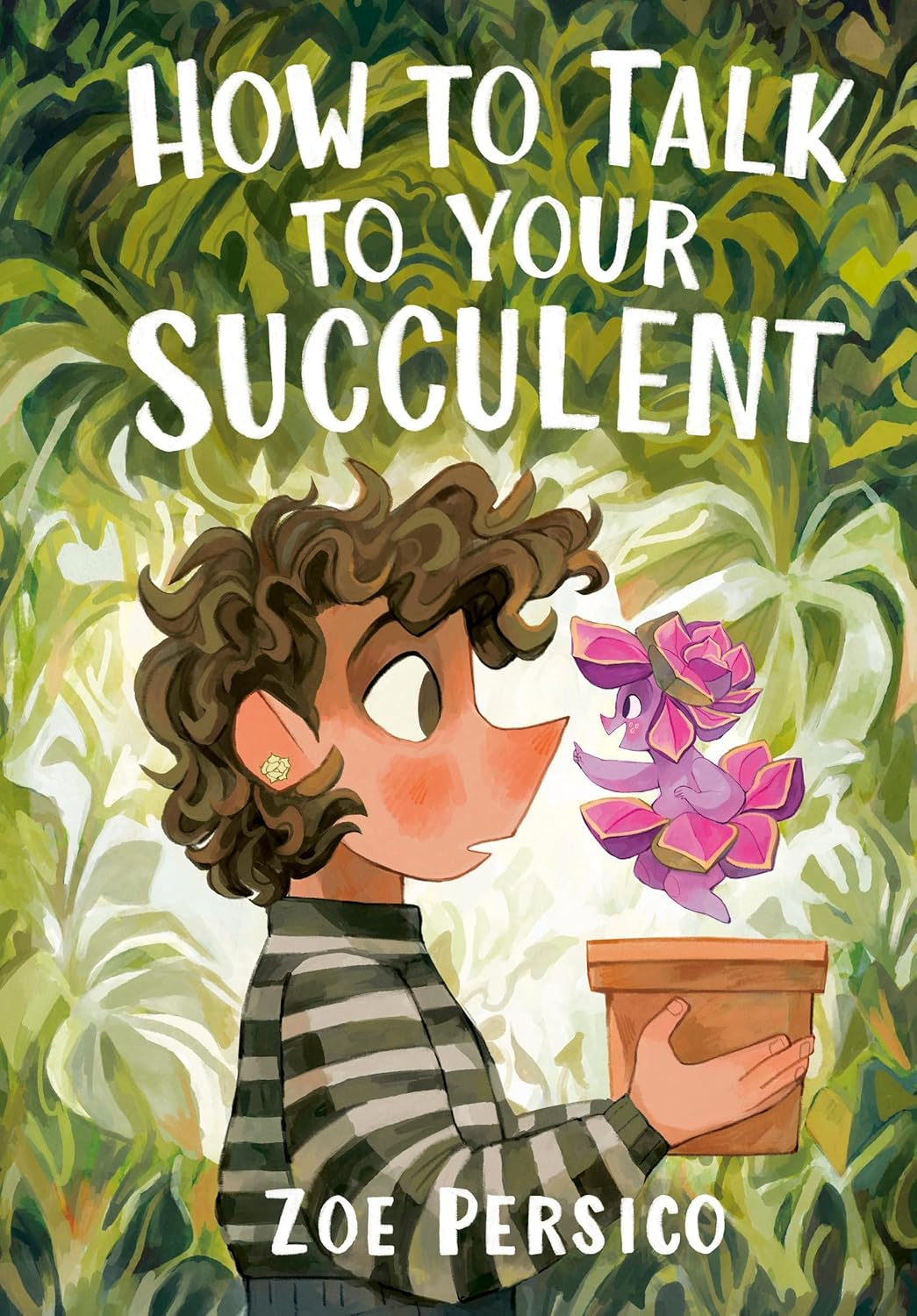
How to Talk to Your Succulent by Zoe Persico (Tundra Books, 224 pages, grades 4-7). Adara and her father are almost overwhelmed by the death of Adara’s mother. Her dad decides to move them from California to Michigan where they move in with her grandmother. There, much to her amazement, Adara learns that she has inherited her mother’s ability to talk to plants, starting with a small succulent named Perle that her grandmother buys for her. Talking to plants makes Adara feel closer to her mom, but the rest of life still feels overwhelming, and sometimes her own needs mean that she neglects those of others, including Perle and a new friend named Winnie. Meanwhile, Dad is having a hard time seeing what Adara needs, and everyone–Adara, Perle, and Winnie–learn some lessons about advocating for themselves. By the end, Adara and her father are slowly embracing a new normal, which is shown in the photo of them together on the last page with the caption “Light after the dark.” Includes an author’s note, photos of some of the inspirations for the artwork, information on how the book was created, and instructions for propagating succulents.
This is a moving and endearing exploration of grief, with the interesting twist of Adara’s ability to talk to plants. I liked how the author showed how grief can close you off to those around you, and how it’s okay to ask for what you need. The artwork is truly amazing, particularly the depictions of the plants coming to life.
 A Kids Book A Day