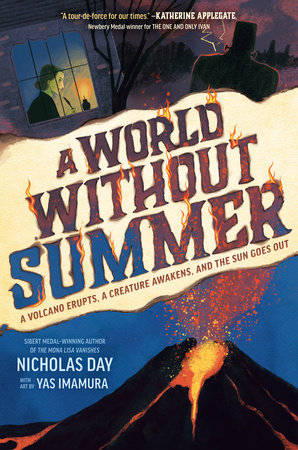
A World Without Summer: A Volcano Erupts, a Creature Awakens, and the Sun Goes Out by Nicholas Day, illustrated by Yas Imamura (Random House, 304 pages, grades 5-8). As he did in The Mona Lisa Vanishes, Nicholas Day connects a work of art with the historical events around it. Here, the story starts in 1815 with the catastrophic eruption of the Indonesian volcano Tambora. The enormous amount of ash and smoke caused changes in the global climate that resulted in droughts, floods, crop failures, and famine in the United States and Europe. The work of art in question is Mary Shelley’s novel Frankenstein, which was published in 1818, and which Day makes a compelling case for having been created from this dark time. Another byproduct of the time was a more scientific study of weather and climate, which is how we know that the climate is changing today. Throughout the narrative, Day pointedly addresses readers, making sure they are paying attention to the parallels of this tragic story with what is going on in our world right now. Includes extensive bibliography, notes, and index.
Since The Mona Lisa Vanishes was one of my favorite nonfiction books ever, I was thrilled to see that Nicholas Day has a new book out, and I was not disappointed. Okay, I was a little disappointed, not because it wasn’t engaging, well-researched, and fascinating, but because any story that draws my attention to climate change fills me with existential dread in a way that a fun story about the Renaissance, Leonardo da Vinci, and the Louvre could never do. I would love to see this get some Sibert recognition.
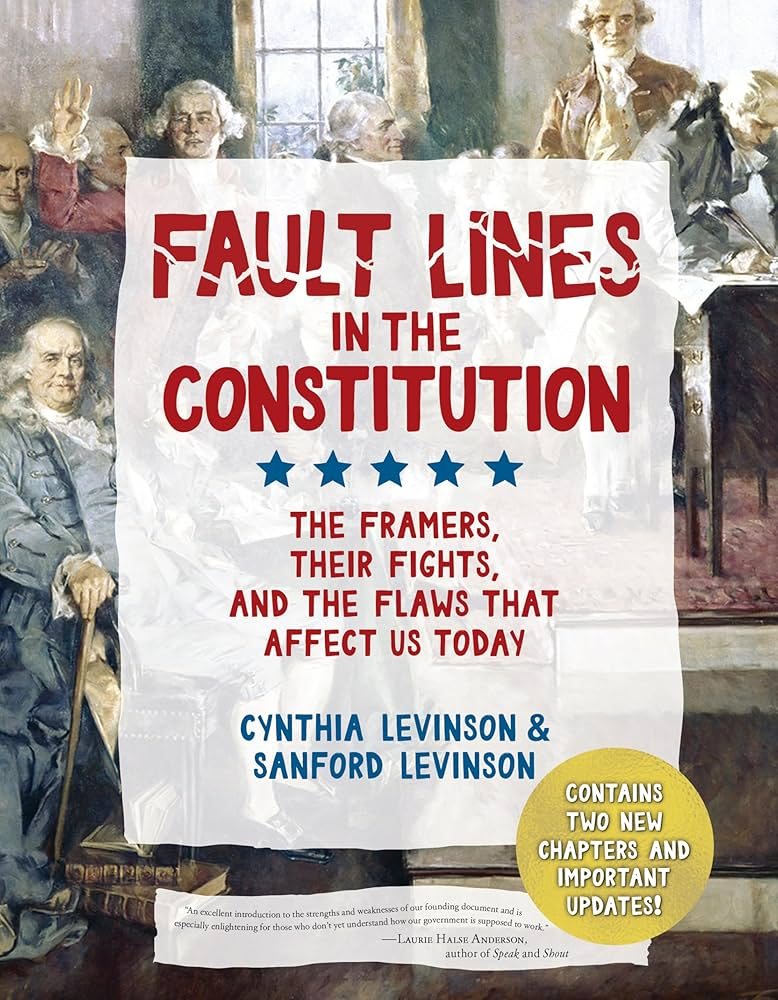
Fault Lines in the Constitution: The Framers, Their Fights, and the Flaws That Affect Us Today by Cynthia Levinson and Sanford Levinson (Peachtree, 2025, grades 6 and up). The Electoral College, lame duck presidents, gerrymandering, unequal representation: despite the best intentions of the Founding Fathers, the U.S. Constitution contains some serious flaws that affect the country today. The authors look at eight different issues, beginning each chapter with an episode from history that reveals the fault line, then going back to the origin of that section of the Constitution, and concluding with a look at how other states and countries deal with those issues differently. In the last part, they grade different parts of the Constitution (spoiler alert: overall, it’s a C-), then debate whether it would be better to call another Constitutional Convention to revisit the entire document or to work on amending it. Includes a timeline, bibliography, notes, and an index.
This is the third edition of the book originally published in 2017, with two new chapters and recent updates (there’s also a graphic novel version). I’m honestly shocked that this didn’t win any awards when it was first published, especially Sibert. The format makes the material engaging and relevant, and it really opened up my eyes to how flaws in the Constitution are causing so many of the problems we see today with voting and Congressional gridlock, among other things. It also made me think about how this makes sense, given how much the country and the world have changed in the last 250 years. This would make a great textbook for middle school and high school civics classes, as well as important reading for any U.S. citizen.
 A Kids Book A Day
One thought on “Learning from the past”