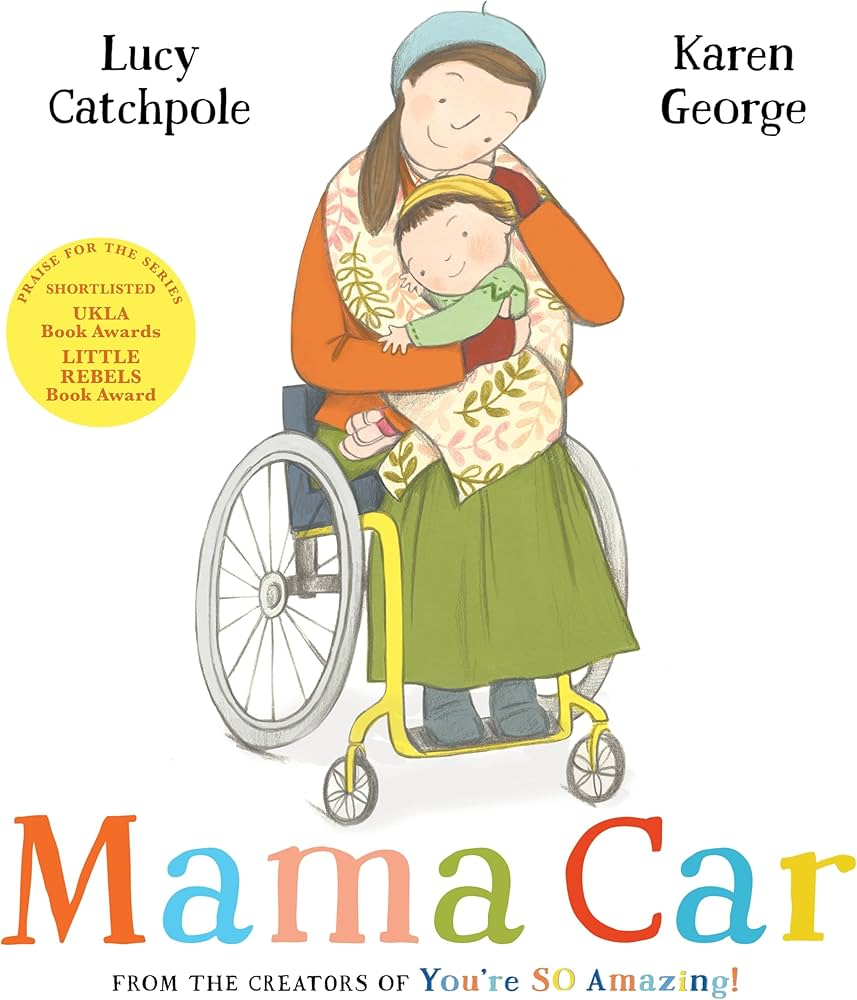
Mama Car by Lucy Catchpole, illustrated by Karen George (Little, Brown Books for Young Readers, 40 pages, ages 3-8). A young girl shows the reader her mother’s “Mama Car,” the wheelchair that helps her get around. The two of them like having expeditions, and they prepare for them together, moving around the kitchen to pack a lunch, then snuggling together in bed to eat it. Although the illustrations show that her father has only one leg, no mention is made of that, as he drives the family on a bigger expedition. When the girl falls off her tricycle, her mother is quick to reach her and take her on to her lap to comfort her. “The Mama Car has so many things, but the best thing is it has Mama.” Includes a note from the author about her own wheelchair and how it affects the way she parents her two daughters.
A great choice for starting a conversation about disabilities with the youngest readers, or helping kids with a parent in a wheelchair see themselves in a book. Reading this led me to learn more about Lucy Catchpole and her husband James, the dad in the book with one leg, who have written other books together about living with disabilities.
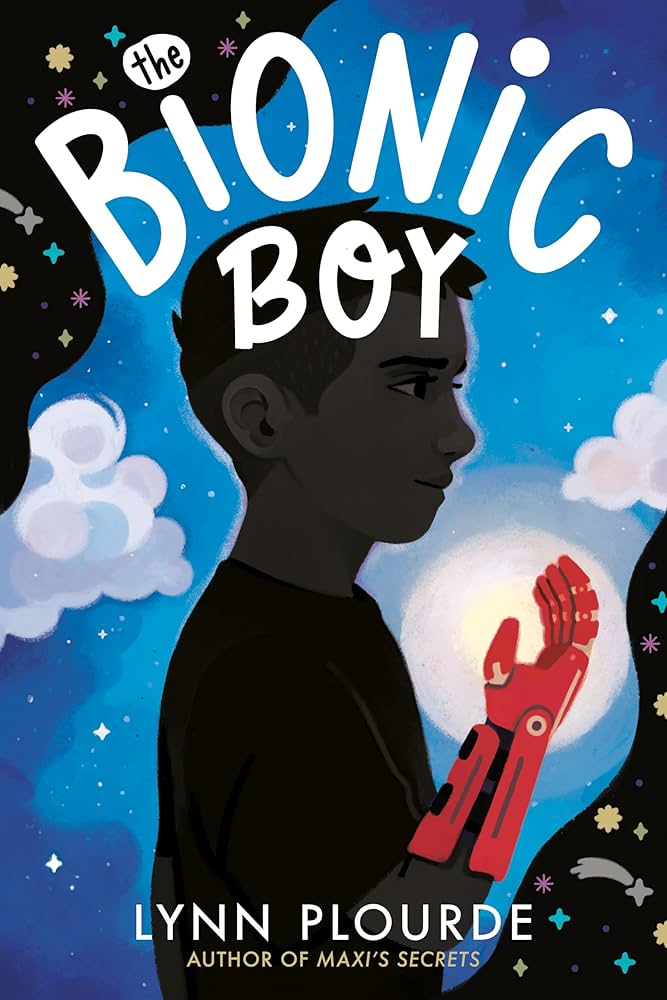
The Bionic Boy by Lynn Plourde (Nancy Paulsen Books, 208 pages, grades 3-7). Benji was born without hands and spent the first few years of his life in an orphanage before being adopted by his two fathers; a few years later, they adopted his younger sister Becka who has Down Syndrome. Benji used prosthetic hands when he was first adopted, but he struggled with them and has been afraid to try again. Inspired by both a veteran who lost parts of all four limbs in combat and Becka’s victory at the Special Olympics, Benji makes the decision to visit a prosthetist. Things go much better this time, and even a temporary hand made with a 3D printer gives Benji exciting new skills. He momentarily questions his decision when the misuse of his new hand results in an injury and the escape of the family cat, but Benji has learned to be resilient and is able to overcome these setbacks. The story ends with Hands Day, when Benji gets his permanent prostheses, making him feel like the superhero he’s always dreamed of being.
Benji’s story will be interesting to a wide range of readers, especially the parts where he works through his doubts about prosthetic hands and then goes through the process of getting them, all the while supported by his unique but loving family of two dads and a younger sister with Down Syndrome. I did feel like a lot of the dialog didn’t ring true, particularly between fifth graders Benji and his best friend Sam, to the point of being a bit cringey to read. And Becka’s constant cheerfulness and the way her speech was written (e.g., replacing all her r’s with w’s) made her character’s portrayal feel a bit stereotypical. Still, this is an upbeat story about kids with disabilities and will encourage readers to be resilient about facing their own struggles.
 A Kids Book A Day