
How Sweet the Sound: A Soundtrack for America by Kwame Alexander, illustrated by Charly Palmer (Little, Brown Books for Young Readers, 48 pages, ages 7 and up). Kwame Alexander’s poetry and Charly Palmer’s bright, bold paintings trace the history of Black music, beginning with drumming, dancing, and chanting in Africa, then moving to the gospel music and blues that grew out of slavery in America. Next comes jazz, which, along with the blues, leads to rock and roll, and finally, hip hop and rap. “Listen to the soundtrack of America/a symphony/of refuge and redemption/the sweet sound of a people/surviving and thriving/all the while learning/to love themselves/ by singing it LOUD and PROUD.” Includes six pages of “musical notes” that offer additional information about each musician along with a thumbnail portrait from the illustrations.
Music fans of all ages will appreciate this celebration of Black musicians who have made incredible contributions to American music. Every illustration feels like a party, and readers will have fun figuring out who’s who in them. Put this on the watch list for Caldecott and Coretta Scott King awards.
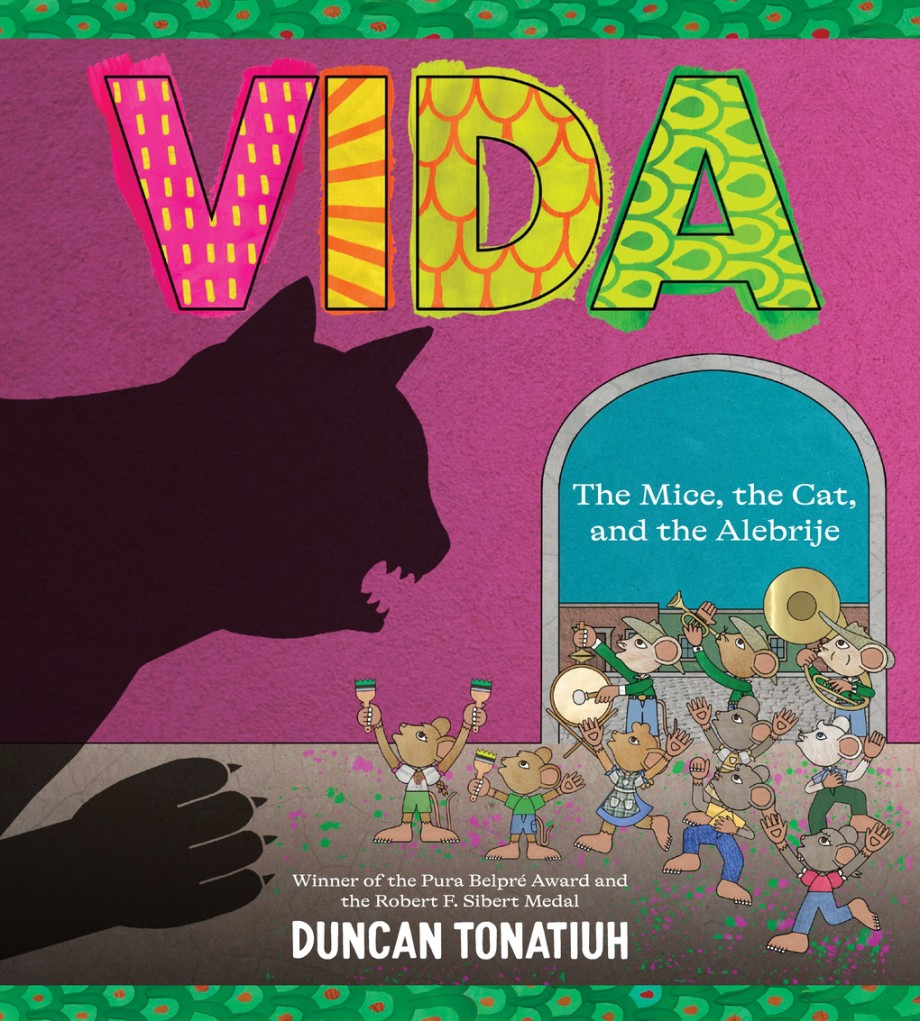
Vida: The Mice, the Cat, and the Alebrije by Duncan Tonatiuh (Harry N. Abrams, 48 pages, ages 5 and up). Mousetepec is a thriving mouse community with a vibrant culture, filled with art, music, good food, and fiestas. But one day a cat appears, and gradually the mice go into hiding, no longer able to engage in their enjoyable pursuits. Vida and her brother miss their old life and try to re-create it by making brightly-colored animals in their house. One night Vida has a dream about a fantastic creature called an alebrije, and when she wakes up, she knows how to scare the cat away. She gathers all the mice to make a huge creature like the one in her dream, covering it with brilliantly painted designs. When it’s completed, the mice lure the cat with a fiesta and loud music. The alebrije and all the noise terrify the cat, and Mousetepec is able to thrive once again. Includes an author’s note with information on alebrijes and Pedro Linares, the artist who created them. There’s also a note on the inspiration for Vida, which is a response to Aesop’s fable about belling the cat, and champions art and solidarity for overcoming evil forces in the world; also a glossary and pronunciation guide and a bibliography.
I read this book just hours after learning about the Fall of Freedom movement taking place this weekend, with artists all over the country creating works to protest what is happening in the U.S (you can read about it on my other blog). It’s a perfect complement to that, with the themes of art, community, and resistance, plus it’s an engaging story with plenty of cute mice and colorful creatures, plus it features Duncan Tonatiuh’s unique illustrations that manage to work in a few lessons about Mexican art. So win-win-win, and maybe a contender for an award or two.
 A Kids Book A Day