An email alerting me to the upcoming Boston Globe-Horn Book Awards ceremony coming up this Thursday, November 6, sent me on a search for some of the books that I hadn’t read yet. You can see a complete list of winners and honor books here.
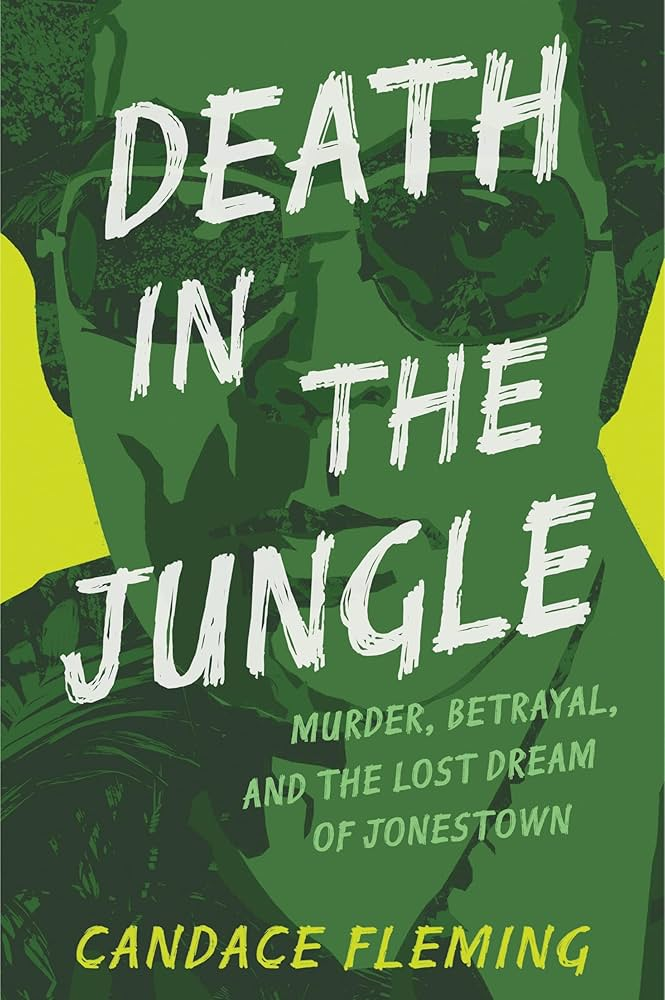
Death in the Jungle: Murder, Betrayal, and the Lost Dream of Jonestown by Candace Fleming (Anne Schwartz Books, 368 pages, grades 7 and up). Most of us know about Jonestown and the tragic end that befell more than 900 residents in the Guyana jungle. This book takes readers back to founder Jim Jones’s earliest days and shows how a bizarre mix of idealism and quest for power led him to start the People’s Temple which moved from Indiana to California, and finally to Guyana where Jones basically kept his followers imprisoned: cut off from the world and subject to his paranoid drug-fueled ravings. Individual members of the group are profiled, based on Fleming’s interviews with survivors, and their memories of enjoying being part of a warm community mixed with traumatic punishments, sleep deprivation, and overwork serve as a warning to anyone drawn to a charismatic leader like Jim Jones. Includes source notes, a bibliography, and an index.
I remember reading about this incident in the news during my own teenage years and trying to make sense of what could have possibly gone so horribly wrong. This book answers some of those question–although many are unanswerable–and is told in such a compelling style that I could not put this book down and read it in about 36 hours. It’s an especially important book for teens, as many of those interviewed were their age during the events of the story (including Jones’s son Stephan), and in many cases, a questioning attitude toward authority saved them.
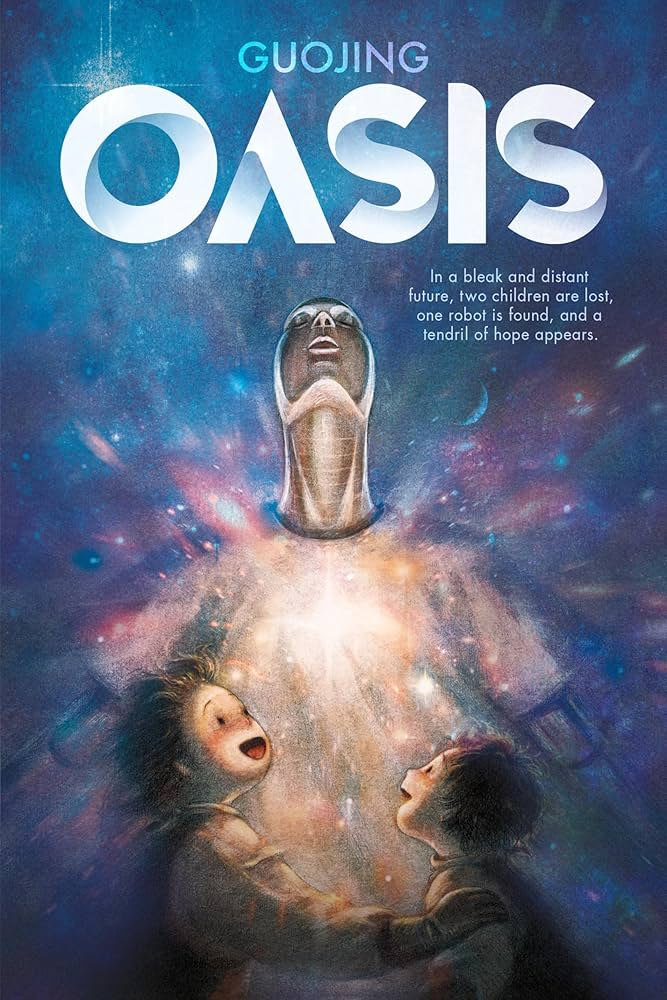
Oasis by Guojing (Godwin Books, 160 pages, grades 4-7). Two children live in the desert, fending for themselves with only occasional phone calls from their mother who works in Oasis City, trying to get permission to bring her children to live with her. When the kids find a broken robot, they’re able to repair it and activate its “mother” mode, giving them an AI mom. When their human mother comes home for a few days, she discovers the AI mother, and destroys it in a fit of fear and rage. Her daughter runs off, and the mother is able to repair the robot and bring the daughter back home. The two mothers share their hopes and dreams for the children, and the AI one shows how she has been able to reproduce conditions in Oasis City to start growing plants, giving them hope that one day they can all live in the desert together. The author information relates that Guojing was inspired by “left-behind children” in China, who stay in rural areas when their parents go to find work in the city.
I had gotten this book out of the library several months ago, after seeing its five starred reviews, but I was a little put off by the dark artwork and never got around to reading it. I’m so glad I gave it another try. It’s a quick read–it only took me about 15 minutes–but it packs a powerful punch and celebrates all sorts of family connections and love. The cover says, “In a bleak and distant future, two children are lost, one robot is found, and a tendril of hope appears,” but it didn’t seem like such a distant future to me.
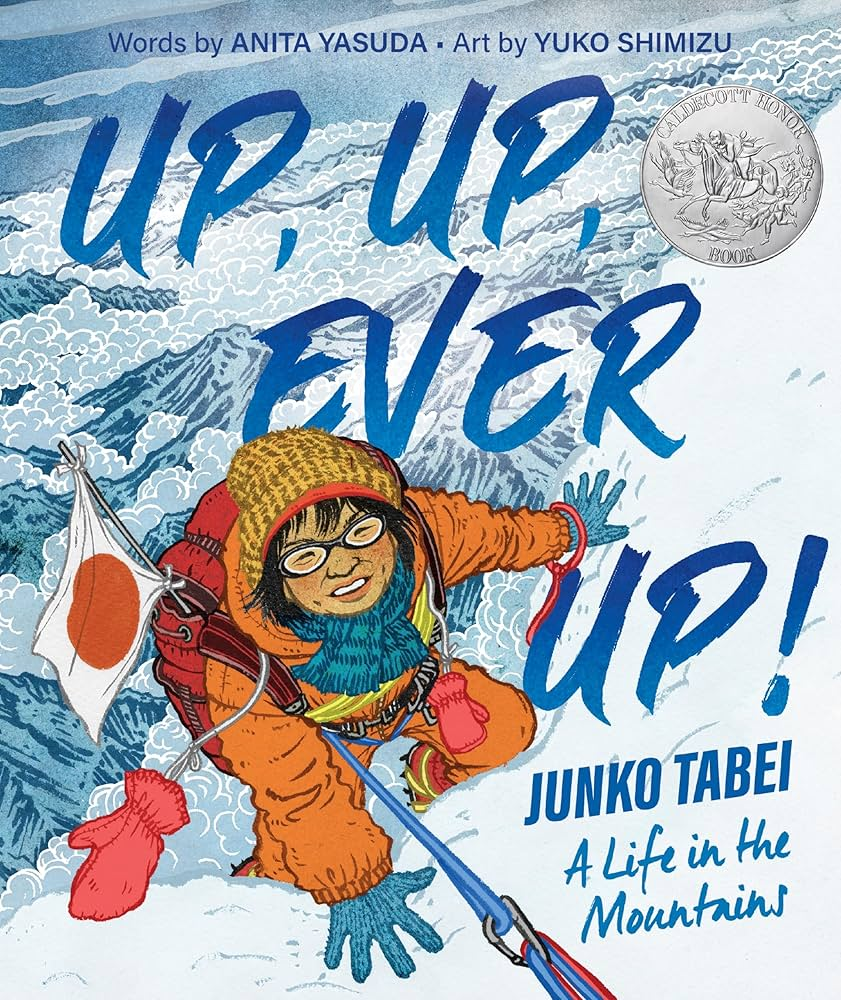
Up, Up, Ever Up! Junko Tabei: A Life in the Mountains by Anita Yasuda, illustrated by Yuko Shimizu (Clarion Books, 48 pages, grades 2-5). As a child, Junko Tabei dreamed of climbing mountains, and she pursued that dream when she moved to Tokyo as a young woman. Most mountaineering clubs didn’t take women, but Junko persevered until she found one that did. Even after marrying and having a daughter, Junko continued to climb and to encourage other women to join her. Eventually they planned an expedition to become the first all-female team to climb Mount Everest. Even an avalanche couldn’t stop her, and Junko realized her dream of being the first woman to reach Everest’s summit. In her later years, she became an activist for sustainable mountain climbing, researching the impact of trash and human waste on Everest and helping to mitigate some of those effects. Includes an author’s note, timeline, glossary, and bibliography.
I’m a little late to this 2024 book, but I’m breaking my rule of only reviewing books published in the current year. The Boston Globe-Horn Book Award follows the school year calendar, so it was eligible for this year’s award and was an honor book, in addition to winning a 2025 Caldecott Honor. Both are well-deserved for the beautiful ink and color illustrations that not only portray breathtaking mountain landscapes but celebrate Junko’s Japanese culture.
 A Kids Book A Day