How to survive middle school

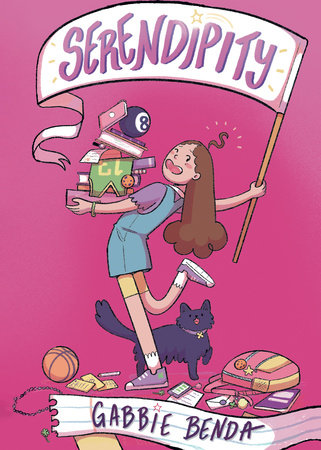
Serendipity by Gabbie Benda (Holiday House, 224 pages, grades 4-7). Serendipity leads a charmed life, excelling in her classes, at basketball, onstage, and in student council, where she’s president. After winning free tickets to the carnival, she and her friend Basil encounter a fortune-telling rabbit robot, which Serendipity accidentally destroys. Certain that her luck has changed, she starts seeing signs that she’s cursed, getting a B instead of all A’s, missing baskets, and forgetting her lines in the play. Serendipity returns to the repaired robot, who prints out a fortune telling her “The future is in your hands.” She finally gets the message, realizing that she can make her own luck by sharing the spotlight and handing off some of her responsibilities to others. By the end, Serendipity is ready to try some new activities, but with the realization that it’s more important to enjoy herself than to try to please everyone.

This fast-paced story will appeal to fans of other middle school graphic novels, with its appealing artwork and a reassuring message about setting boundaries and appreciating friends.
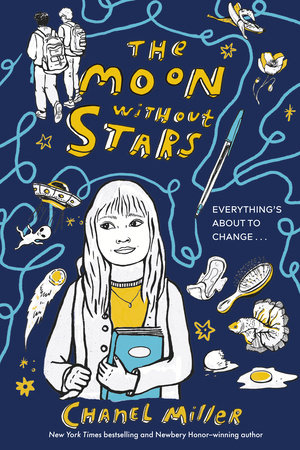
The Moon Without Stars by Chanel Miller (Philomel Books, 256 pages, grades 5-8). Luna starts seventh grade with a single friend, Scott, who has been by her side all her life and understands her completely. When they start creating zines for other kids dealing with middle school issues like eczema, periods, and difficult parents, Luna’s writing grabs the attention of the popular group. At first she’s able to balance her social life between Scott and her new friends, but soon the new friends take over–and Luna finds herself compromising her values in the process, taking part in the mean girls’ bullying and shoplifting. Things come to a head when Luna’s mom discovers the shoplifting, and Luna is expelled from the popular crowd. A quirky but kind school counselor helps Luna to see that it’s okay to make mistakes and encourages her to try to forgive herself and see what she can do to fix things. The final pages contains a sweet surprise, not resolving everything but offering hope of a better eighth grade year.

The author of Magnolia Wu Unfolds It All clearly has a Judy Blume-like memory for her early adolescence, and Luna’s story will have you cringing (perhaps with recognition) at all her terrible choices. While there are no doubt fifth graders who would enjoy this book, it is truly the perfect middle school story. The author’s doodles on many of the pages feel very middle schoolish as well. I loved the ending, particularly this teacher’s wise advice: “The life you make will be part effort, part chance; the combination is what makes it stunning.”
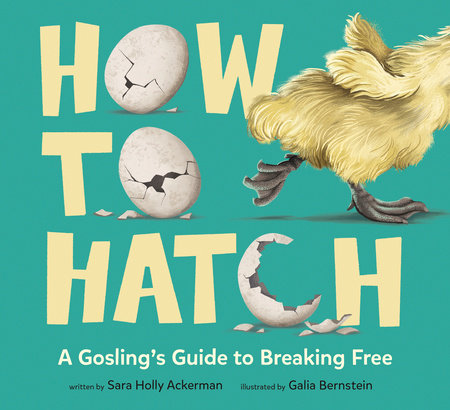
A couple of hatchlings have the best day ever

How to Hatch: A Gosling’s Guide to Breaking Free by Sara Holly Ackerman, illustrated by Galia Bernstein (Knopf Books for Young Readers, 32 pages, ages 4-8). Written as a how-to manual for a gosling about to hatch out of its egg, the main part of the text gives six steps from Breathe! to Flop! as the baby makes its exhausting sojourn into the world. Cutaway illustrations give detailed views of what’s going on inside the egg, while sidebars give additional information about each step in the process. The final illustration shows the newly-hatched gosling joining its siblings in a line behind a parent. Includes a glossary, a list of selected sources, and an author’s note about the wonder children experience when watching eggs hatch.

Spring will be here before you know it, and egg incubators will be making appearances in preschool and primary grades classrooms. This is an excellent introduction to the process, with the step-by-step instructions and illustrations explaining the process for the youngest readers and the sidebars adding more scientific information for older ones.

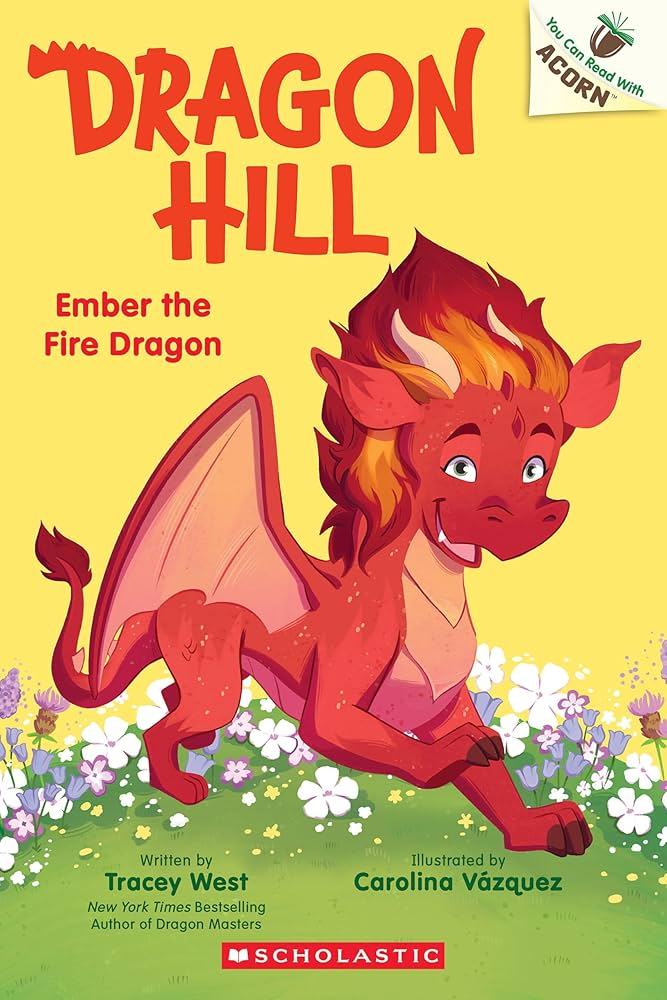
Ember the Fire Dragon (Dragon Hill book 1) by Tracey West, illustrated by Carolina Vázquez (Scholastic, 64 pages, ages 5-7). When Alden the Hill Dragon tells young Ember (Fire Dragon) and Gus (Mushroom Dragon) that his magic Jewel of the Hill is missing, the two friends get on the case. Although they don’t have their full dragon powers, they use some sharp detective skills to track it down. Instead of breathing fire, Ember can only sneeze sparks, so when they find the jewel hidden in a dark hole, Gus remembers the flowers that make her sneeze, and the two work together to recover the treasure. Alden hangs it up over his cave, and the forest is protected by its magic once again.

This cute series opener from Dragon Masters author Tracey West is sure to find an audience with those not quite ready for the longer chapter books. With five chapters, there’s a decent plot, and readers will undoubtedly find the illustrations enchanting. Gus gets his own book when the second installment comes out in early March.

Five favorite graphic novels

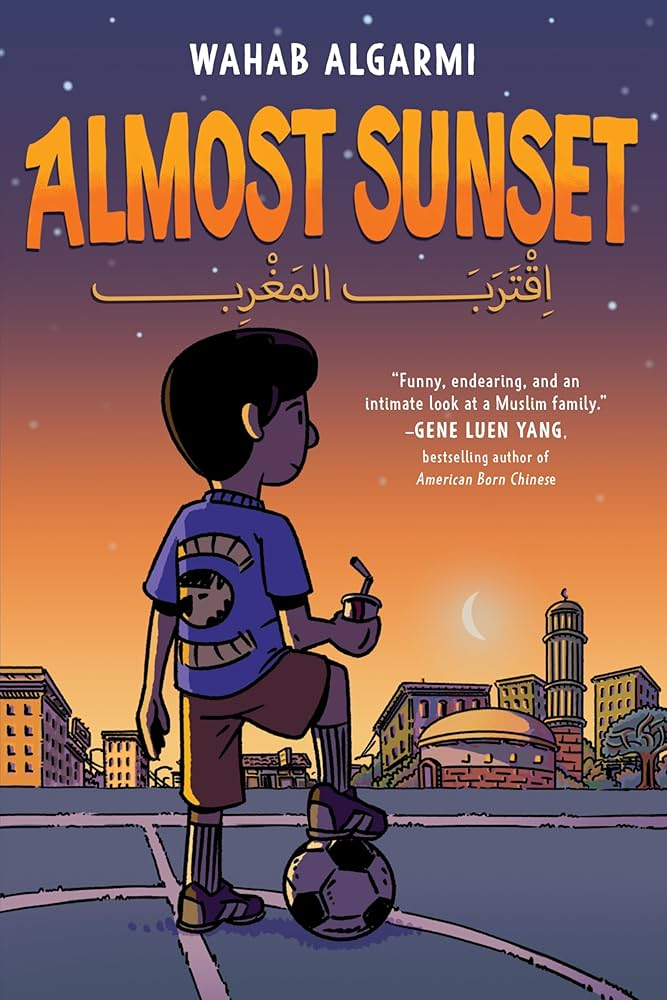
Almost Sunset by Wahab Algarmi (HarperAlley, 224 pages, grades 4-7).  Hassan, a middle-school boy observing Ramadan in America for the first time after moving from Yemen, experiences the challenges of fasting while trying to maintain a busy schedule of school and soccer. Finding a community helps him overcome those challenges and celebrate a joyous Eid with his family and friends.

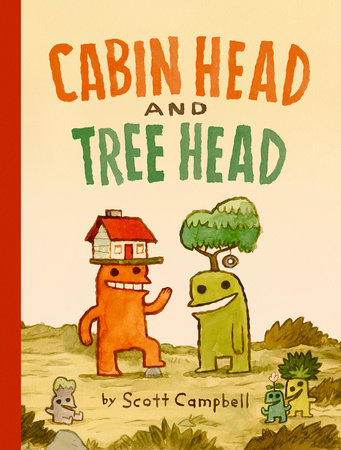
Cabin Head and Tree Head by Scott Campbell (Tundra Books, 88 pages, grades K-4). Hailed by some (me) as “quite possibly the weirdest book ever,” this series opener is sure to attract a devoted following who will love the quirky premise and laugh-out-loud humor.

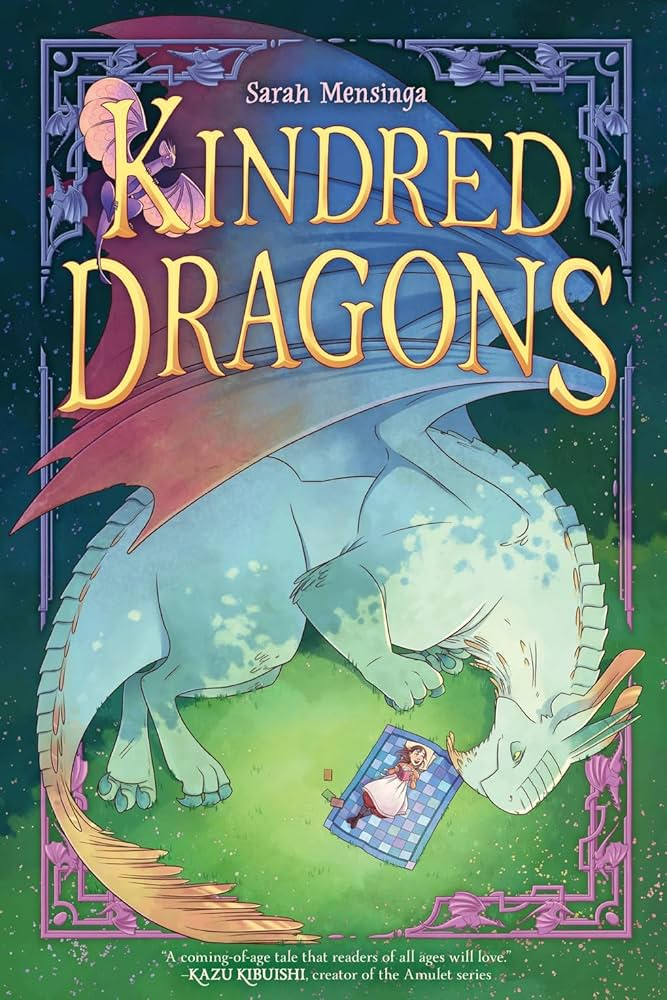
Kindred Dragons by Sarah Mesinga (Harry N. Abrams, 208 pages, grades 4-8). This fantasy take-off of Anne of Green Gables features a girl named Alice, who longs to be a kindred like other women in her community who have a special bond with a dragon. Beautiful artwork and a compelling story make this a winner.

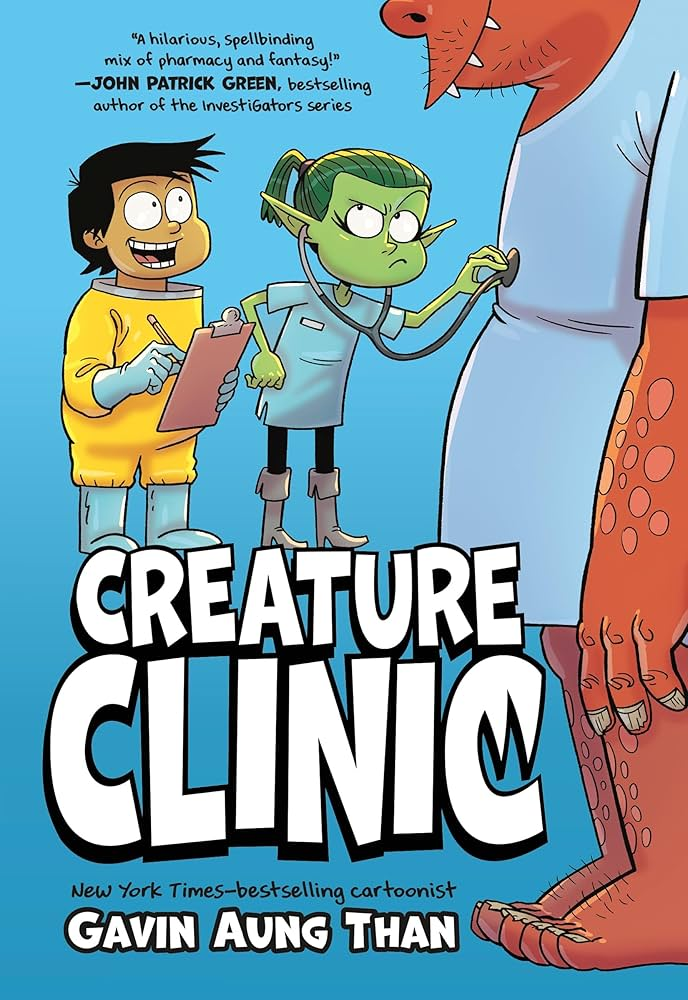
Creature Clinic by Gavin Aung Than (First Second, 224 pages, grades 3-7). The creature clinic is run by the imperious Dr. Orc and her long-suffering daughter, Kara, who tries to help a human boy despite her mother’s belief that humans are nothing but trouble. Clever world building, lots of humor, and a heartwarming plot make me hope there will be a sequel

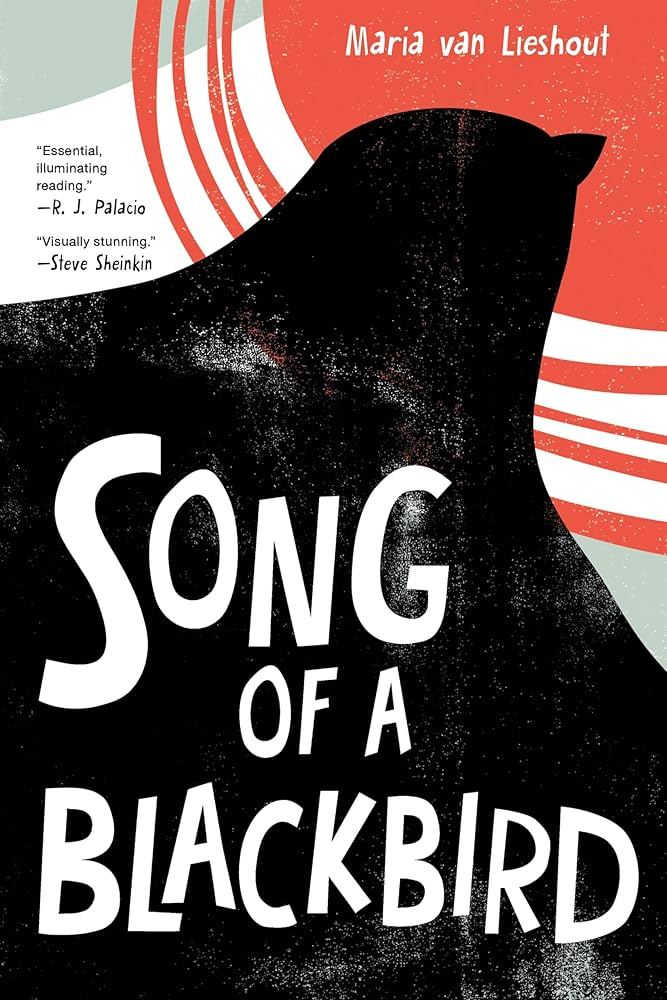
Song of a Blackbird by Maria van Lieshout (First Second, 256 pages, grades 8 and up). I was blown away by this National Book Award Longlist graphic novel that tells two intersecting stories about young women in Amsterdam in 1943 and 2011, narrated by a blackbird who represents the creativity that gives them both hope in dark times.