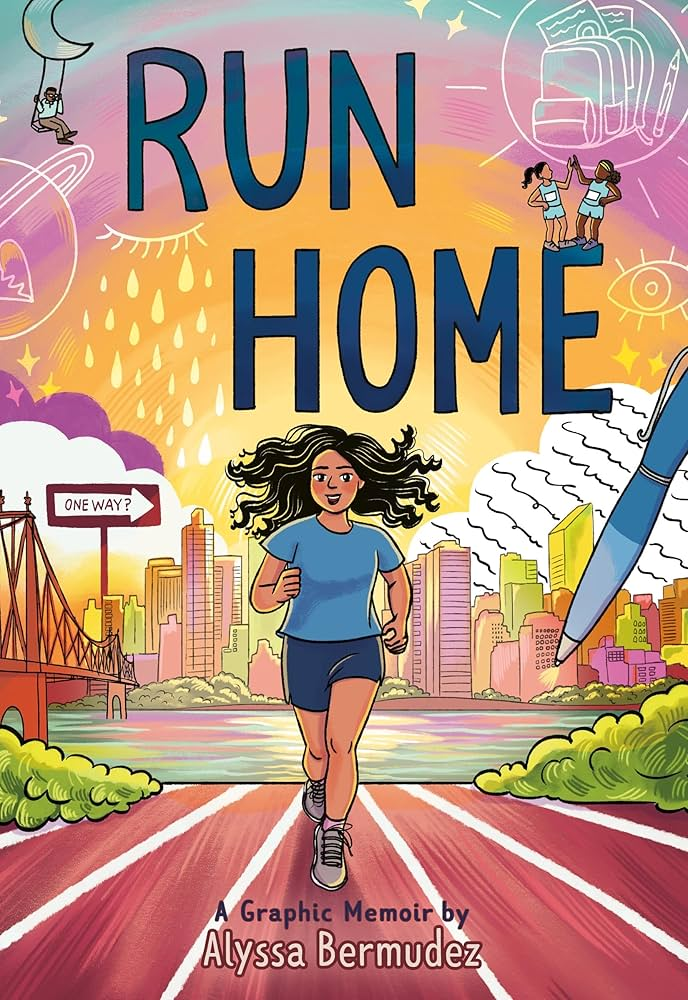
Run Home: A Graphic Memoir by Alyssa Bermudez (Roaring Book Press, 304 pages, grades 5-8). In this follow-up to Big Apple Diaries, Alyssa Bermudez records her first couple years of high school in diary format: her first uncertain days, her joy at making new friends and discovering a love of running on the cross-country team, adjusting to a new step-family, and her worries about her dad’s health issues. When she experiences an overwhelming tragedy during the summer between her freshman and sophomore years, Alyssa must work her way through grief. She’s helped by family and friends, but ultimately she has to learn how to find her own way to a new normal. Includes an author’s note about this time of her life with four pages of photos of many of the people from the story.
This heartfelt graphic novel makes for compelling reading, and readers will recognize many of Alyssa’s problems, emotions, and triumphs as she navigates a new school, new friends, and family issues. Although this will likely appeal to fans of authors like Raina Telgemeier, Kayla Miller, and Lucy Knisley, the high school setting (the title of this post notwithstanding) and deep dive into grief make it a story that may be more appreciated by middle school kids.
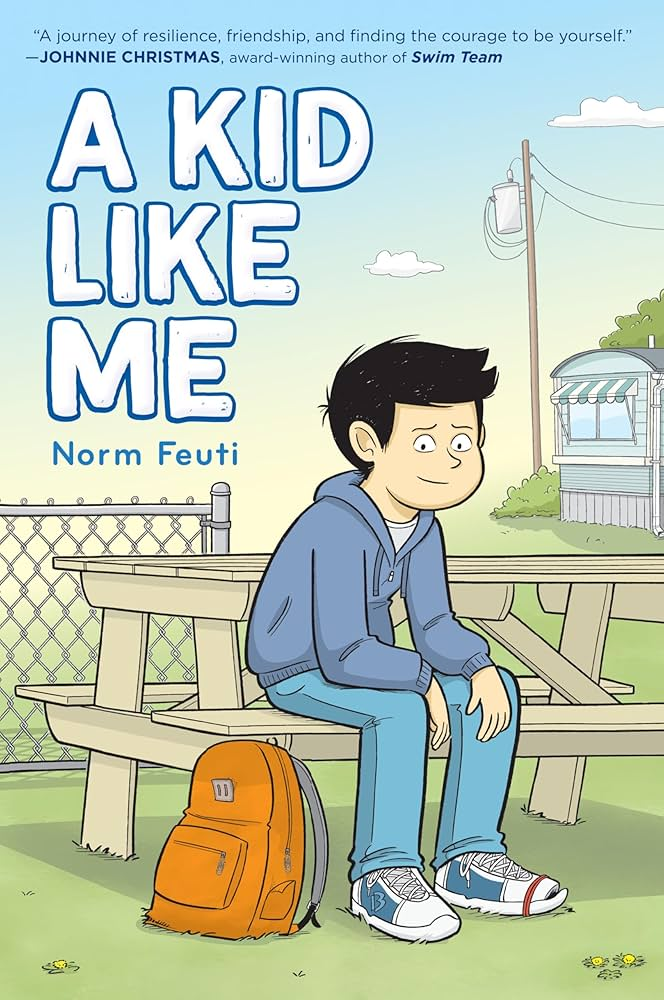
A Kid Like Me by Norm Feuti (HarperAlley, 272 pages, grades 4-7). Ethan and his best friend Ricky navigate the early days of middle school with more than the usual number of bumps in the road, thanks to the fact that they live in poverty with their single moms in a trailer park. They worry that other kids look down on them for their old phones and off-brand clothing, and they’re not always wrong. Ricky makes friends with a couple of boys whose snarky comments and pranks get under Ethan’s skin. Ethan finds more compatible friends in the after-school Bio Battle game club, but his new friend Aiden seems to be avoiding coming over to his house. Eventually, both boys learn a few lessons about what true friendship looks like, and the story ends with Ethan, Ricky, and Aiden trying out a new game at Ethan’s house. Includes an author’s note with photos of him as a kid, telling about the prejudices and microaggressions he experienced as a poor kid growing up in a middle-class community.
I’ve said it before, but there are not enough middle grade books that explore what it’s like to grow up in poverty, especially considering what a common experience that is in America. Norm Feuti does a great job of showing the impacts of this experience on everyday middle school life: adults looking with suspicion at kids from “the wrong side of town,” having to navigate the pressure to have the right phone or sneakers, and insecurities about having friends over to your house. I liked how Ethan learned to speak up for himself and figure out who his true friends were.
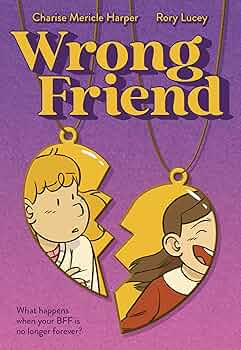
Wrong Friend by Charise Mericle Harper, illustrated by Rory Lucey (First Second, 256 pages, grades 3-7). Charise and Casey have had a great friendship for many years. It’s easy to get together since they’re neighbors, and they both enjoy art and adventures. But Casey is two years older than Charise, and when she starts high school, she suddenly starts ignoring Charise, acting like Charise is invisible when they see each other in the neighborhood. Charise is devastated, but eventually realizes that she needs a new best friend and begins reaching out to girls in her grade. Each one has some of the qualities she wants in a best friend (chapter titles list those qualities: “A Best Friend Likes Made-Up Games,” “A Best Friend Keeps Trying,” etc.), but no one has them all. Eventually, Charise realizes that she’s happiest with a bunch of friends, with each one bringing her own special personality traits to the group.
Charise’s graphic memoir will appeal to fans of Raina Telgemeier’s and Shannon Hale’s books about the ups and downs of middle school friendships. Readers will relate to Charise’s gradual realization that no friend is perfect, but that many friendships are still worth pursuing. Pair this with Charise’s first memoir, Bad Sister, also illustrated by Rory Lucey.
 A Kids Book A Day
2 thoughts on “Middle school: the endless inspiration for graphic memoirs”