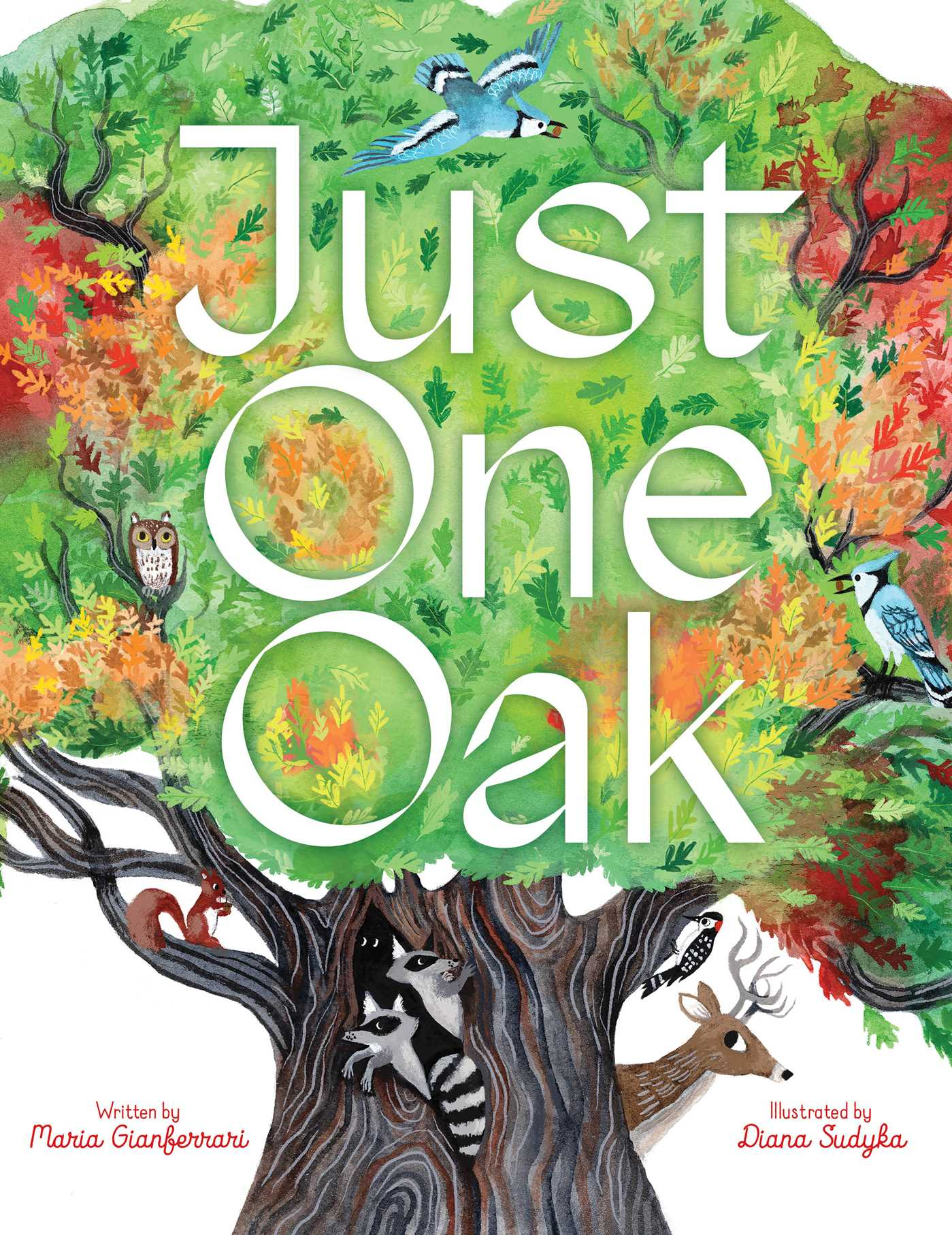
Just One Oak: What a Single Tree Can Be by Maria Gianferrari, illustrated by Diane Sudyka (Beach Lane Books, 48 pages, ages 4-9). What can one oak be? A home for all kinds of animals in all seasons, from its roots to its leaves. A provider of nutritious food, with the millions of acorns it produces over its life time. A climate regulator, slowing winds in the winter and giving shade in the summer. A single oak tree “is beautiful and bountiful to all.” Includes additional information and resources, ways to help oak trees, and an illustration of the oak’s life cycle.
The main narrative of this beautifully illustrated book tells the many amazing things an oak tree provides, while the smaller blocks of text give additional details. The information is fascinating, and this would make a great book for Earth Day as well as for any environmental educational program wanting to highlight the impact of a single tree on many areas of the ecosystem.
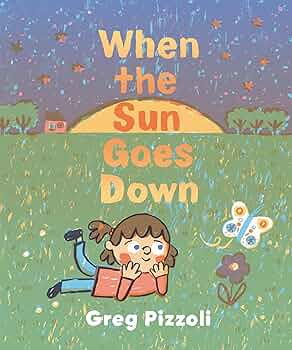
When the Sun Goes Down by Greg Pizzoli (Knopf Books for Young Readers, 40 pages, ages 2-5). “Where do you go when the sun goes down?” This question is posed to creatures who live outside (a butterfly, an ant, and a bird), to a couple of indoor pets (fish and cat), and finally, to a child getting ready for bed. Does she go under a leaf like a butterfly? In the dirt like an ant? Curled up in a chair like a cat? No! She goes to bed, to sleep safe and sound. Good night.
Greg Pizzoli keeps cranking out fun and entertaining books for the youngest readers that they’ll be able to read along with sooner rather than later–a deceptively simple art form! This time he’s created a lovely bedtime story that slowly moves from the outside world to the inside, and finally into bed. You can pair it up with another Greg Pizzoli bedtime story, Good Night Owl. Both have nice touches of humor to make an easy transition to sleep.
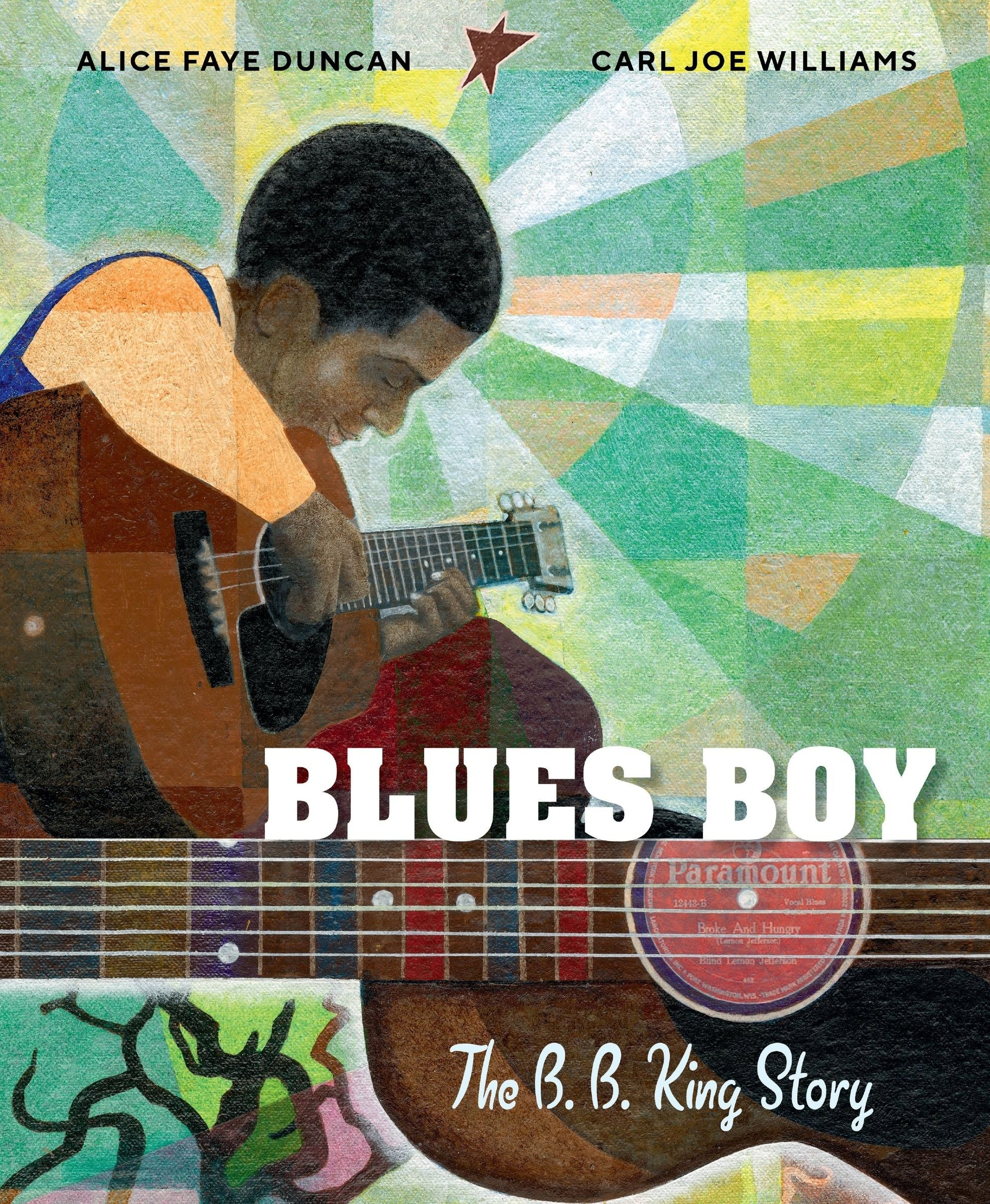
Blues Boy: The B.B. King Story by Alice Faye Duncan, illustrated by Carl Joe Williams (Greenwillow Books, 40 pages, grades 2-5). Young Riley King’s life in Mississippi during the Great Depression gave him plenty of material for singing the blues. His mother died when he was 9; he lived with his grandmother until she passed away when he was 15. He was bullied for his stutter and had to go to work in the cotton fields at a young age. But hearing blues records as a young teen inspired him to learn guitar and eventually choose a music career over the steady paycheck of a farm worker. Making his way to Memphis, he acquired a new name of Blues Boy, eventually shortened to B.B., and had his first hit in 1951 with “Three O’Clock Blues.” Following his mother’s advice to “do good and treat folks right,” B.B. soared to success, playing his blues music across the country 300 days a year. Includes a timeline, additional information, places to visit, and lists of books and music.
This biography of B.B. King shows the influences of his early life on his music, not only his tough personal life as a kid, but the effects of growing up in the Jim Crow South. Readers will be inspired to seek out “Three O’Clock Blues” as well as the other songs suggested in the playlist.
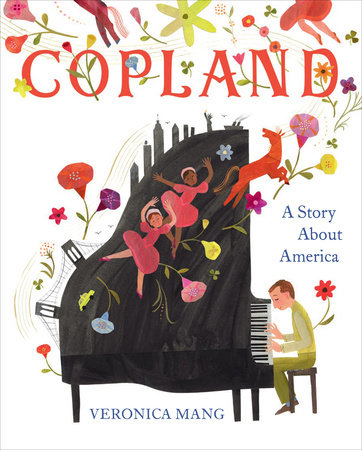
Copland: A Story About America by Veronica Mang (Viking Books for Young Readers, 40 pages, grades 2-5). The youngest of five children born to Russian immigrants in Brooklyn, Aaron Copland grew up with the music of New York City, jazz records, the klezmer sounds of the synagogue, and his sister’s piano. He particularly loved the piano and started his studies in Manhattan, moving to Paris at the age of 21, where he learned new ways of making music and looking at the world. Returning to New York, Aaron focused on making music that sounded like America. He was inspired by jazz and folk music, as well as by the protests and social movements of the 1930’s. He believed that his compositions for movies were just as important as those performed in Carnegie Hall. Aaron’s music still invites listeners to think about their dreams for America and a better future. Includes additional information and photos, an author’s note, suggested listening for kids, and a bibliography.
This biography does a nice job of celebrating Aaron Copland’s life and his vision for creating a uniquely American music. The illustrations capture scenes from Copland’s personal life as well as the America he lived in. Both books would make great introductions before sharing King’s or Copland’s music with kids.
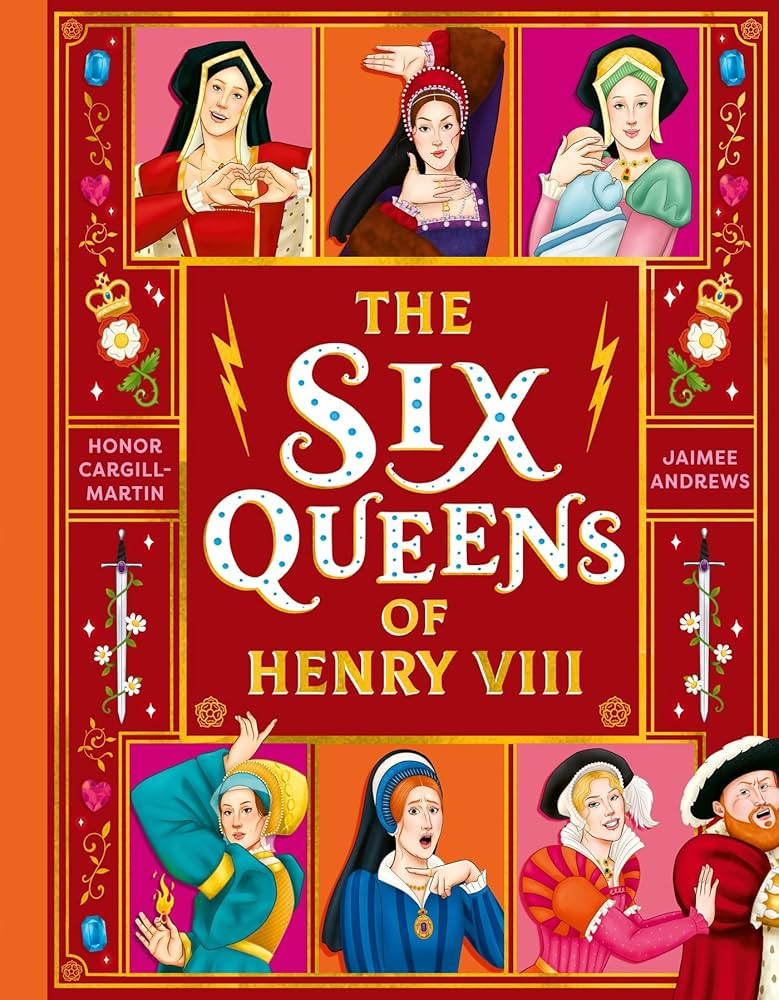
The Six Queens of Henry VIII by Honor Cargill-Martin, illustrated by Jaimee Andrews (Sourcebooks Explore, 48 pages, grades 3-8). “A Word from the Author” kicks things off by giving a brief history of the dazzling, exciting, and dangerous Tudor royal court of King Henry VIII, where six women caught the king’s eye, and, for better or worse, became queens of England. Each one is profiled with illustrations that resemble a graphic novel but contain a little more text. The emphasis is on the women, who are described as smart, educated, ambitious, and as powerful as they were allowed to be. As the author states in her introduction, “one led an army, one helped create a whole new church, and one was the first woman to publish a book under her own name in English.” After the facts of each queen’s life and marriage are given, there’s a two-page flashback scene that tells a story from the woman’s life showing her intelligence and/or courage. The book ends with a Tudor family tree, a timeline, and additional information about each of Henry’s three children, Mary, Elizabeth, and Edward.
Originally published in the UK, this book shines a spotlight on six brave, interesting, intelligent, and occasionally reckless women, relegating their husband to the background. The bold, brightly colored illustrations are lots of fun and help bring the story to life. Although there may not be a lot of interest in this topic in the US, hopefully the eye-catching cover will draw in readers who will not be disappointed.
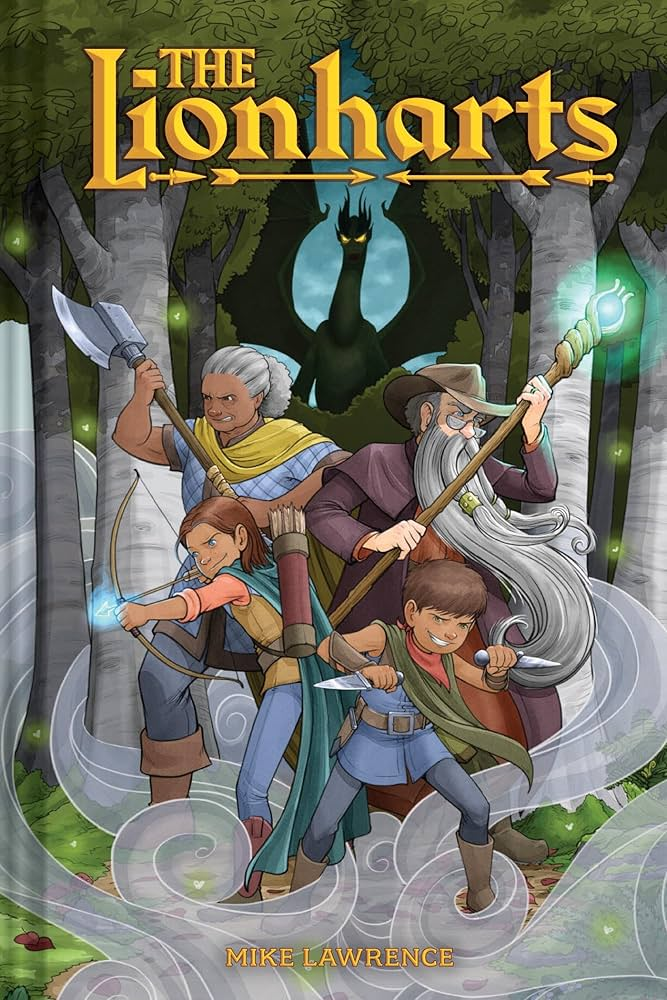
The Lionhearts by Mike Lawrence (Harry N. Abrams, 240 pages, grades 4-8). Flynt and Alder are the two sons of the renowned Lionheart family, known for fighting dragons and other troublesome creatures. While their grandparents are retired from active duty, they help out at home and with the business side of things so that the kids’ parents can go off on adventures. When the parents disappear after a mysterious woman shows up on their doorstep, the grandparents decide to come out of retirement to track them down. They insist that Flynt and Alder stay in the background, but the boys are having none of that, and when everyone realizes the enemy that they’re up against, it takes the courage, strength, and unique talents of all the Lionheart family members to defeat it. While there’s a satisfying ending for the good guys, there are also hints that their work isn’t done yet.
Although this isn’t about a royal family per se, it’s clear that the Lionhearts are treated with respect by the good people of their community and feared by the bad guys. The artwork and world building (which is based on Dungeons and Dragons) blew me away, and older elementary and middle school fantasy fans will love this graphic novel and be eagerly awaiting book 2.
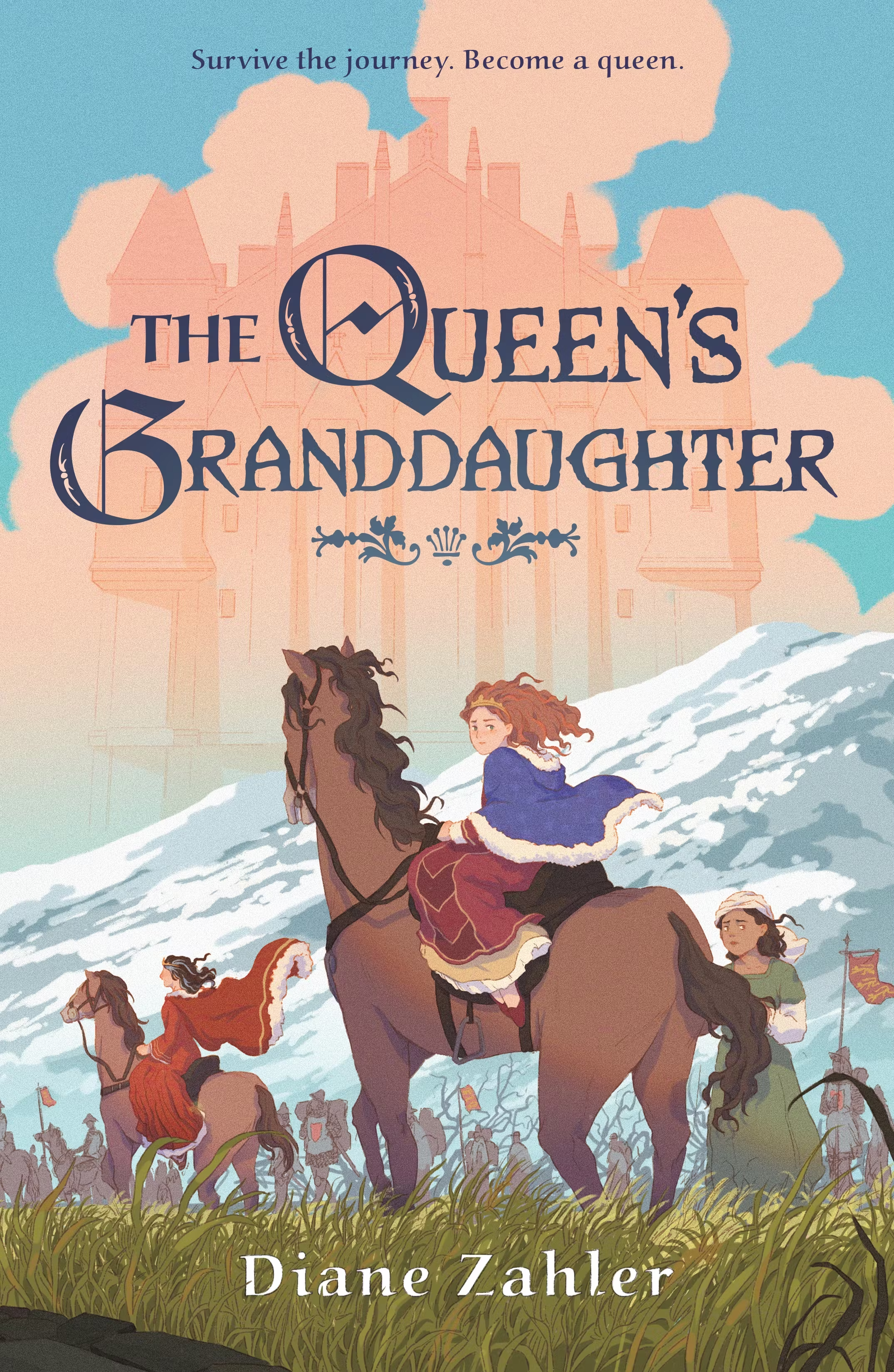
The Queen’s Granddaughter by Diane Zahler (Roaring Brook Press, 304 pages, grades 5-8). 12-year-old Blanca is excited to learn that her grandmother Eleanor (of Aquitaine) is coming to visit her family in Castille, allegedly to choose a wife for her son Prince Louis of France. Everyone is certain that Blanca’s older sister Urraca will be chosen, but at a great banquet, Eleanor makes the shocking announcement that it’s to be Blanca. Blanca is horrified to contemplate marriage, sad to leave her family, scared to move to France, but also intrigued and excited to be traveling to new places with her grandmother who is as bold and stubborn as she is. The only one from Castille who is to go with Blanca is her best friend Suna, a Muslim girl who has lived at the castle since her father died in service to the king. The travelers set off on their journey, where they face a series of dangers including a deadly blizzard and vengeful kidnappers. As she meets these challenges head on, Blanca begins to think she may have what it takes to be a queen. By the time they reach the last leg of the journey, it’s apparent that Blanca must travel to Paris alone. While she is sad to leave Eleanor and Suna, she now knows that she is ready to meet her fate. Includes additional information about Eleanor of Aquitaine, Blanca (or Blanche, as she became known), and Europe in the late twelfth century, including facts about Muslims like Suna.
It may be a challenge to convince middle schoolers to try an historical fiction novel set in the Middle Ages, but once they get to know Blanca, Eleanor, and the many other interesting characters, they’ll be hooked. The plot moves along briskly, particularly once the big journey begins, and there is plenty of page-turning adventure. I knew just about nothing about this time period, but there’s plenty of history seamlessly woven into the narrative that had me researching and learning more about the time and the people in the story.
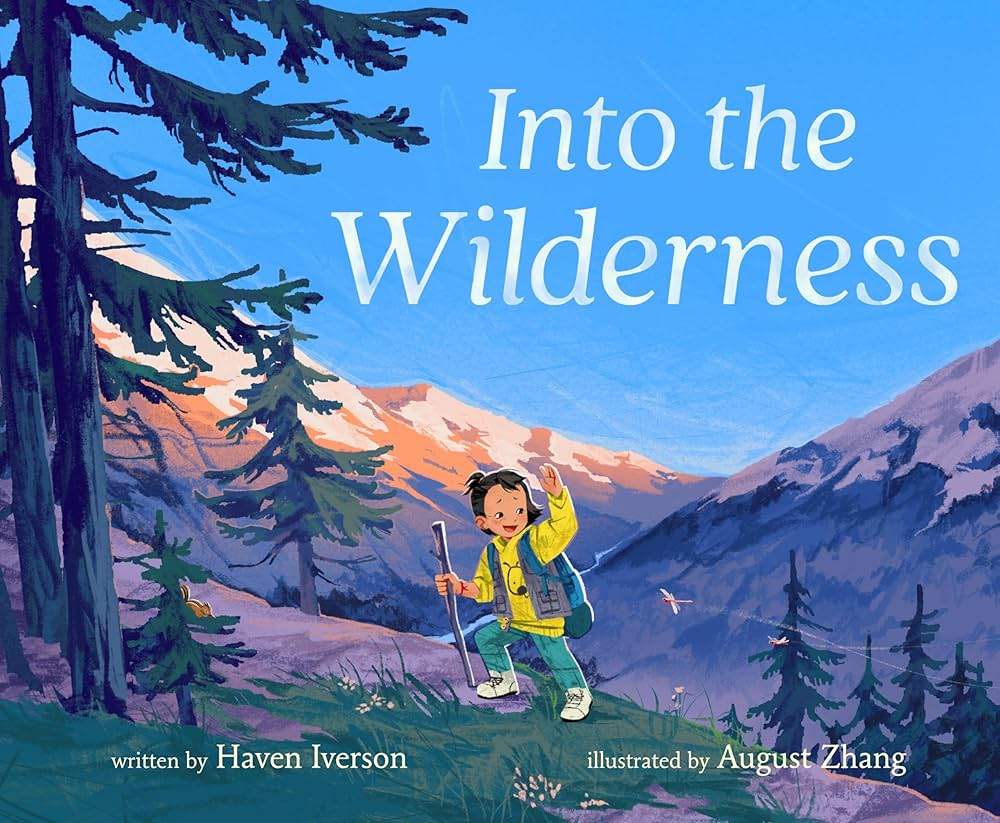
Into the Wilderness by Haven Iverson, illustrated by August Zhang (Roaring Brook Press, 32 pages, ages 4-8). The narrator describes family backpacking trips into the wilderness that started when the child was a baby, carried in a backpack up the mountains. Later on, they are able to carry progressively bigger backpacks and heavier loads, learning to read a map and enjoy moments of solitude. The natural world makes the difficulties of school and navigating friendships seem far away, but eventually the family drives home and school begins again. The narrator hangs up their backpack, but sometimes pulls invisible gifts from it that were acquired in nature: strength, wonder, bravery, and quiet. Includes a two-page note from the author about her own experiences in the Colorado wilderness, as well as information about the 1964 Wilderness Act, original people of the American wilderness, and tips for being a good steward of the wilderness.
Kids will be empowered by the narrator’s story to go on their own nature explorations. This would be a great book to share at the beginning of camp or a family hiking, camping, or backpacking trip. I love how it shows the power of wilderness and the natural world that can be carried into the rest of life.
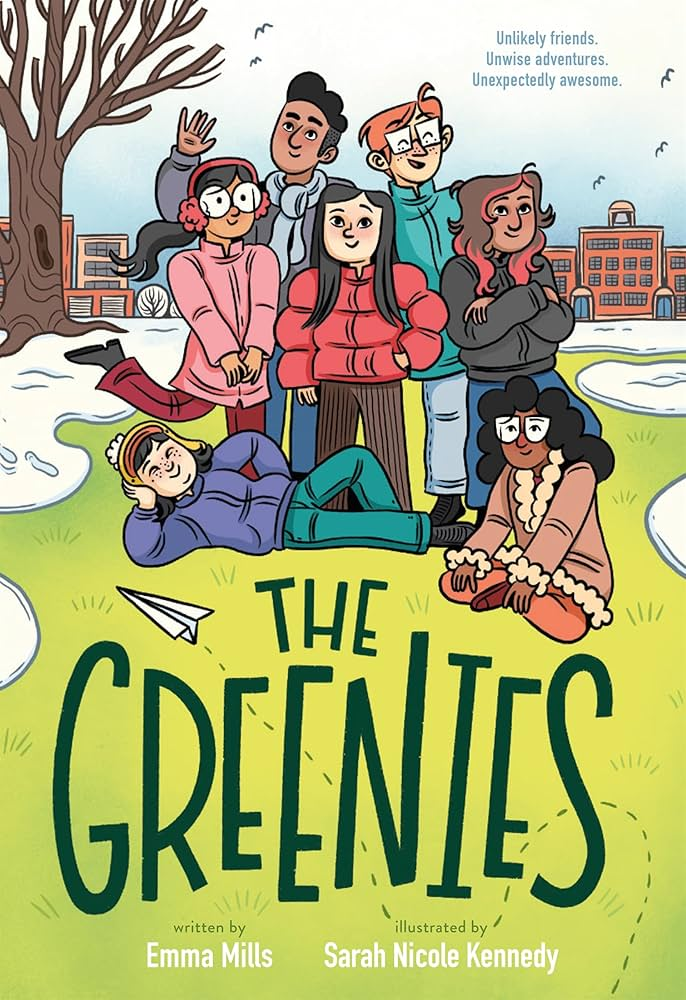
The Greenies by Emma Mills, illustrated by Sara Nicole Kennedy (Henry Holt and Co., 256 pages, grades 3-7). After her parents divorce and her mom gets a new job, Violet has to move and start a new school mid-year. The only kid she knows is her cousin Kris, whom she considers a bit of an oddball. Happy to meet some kids she likes, Violet goes to a secret under-the-bleachers gathering during lunch–and promptly gets caught and given detention along with the rest of the group. They’re assigned to help high-achiever Isabel who’s trying to start an environmental club. The other kids aren’t so enthusiastic and find a variety of ways to get out of doing too much work. But when their fooling around results in still more trouble, Violet and the others feel bad. She finally breaks down and admits to her mom what’s going on at school, as well as how much she misses her dad and her old friends. Together they come up with a plan that gets Violet on the right track and ultimately results in the formation of a real environmental club: The Greenies.
Another fun middle school graphic novel that’s sure to find readers from the Raina Telgemeier crowd. Mills and Kennedy do a great job creating the memorable characters that constitute Violet’s new friend group, and kids will be happy to learn that this is billed as book 1. It’s a bit of a stretch to connect it to Earth Day, but perhaps we’ll see more environmental club action in book 2.
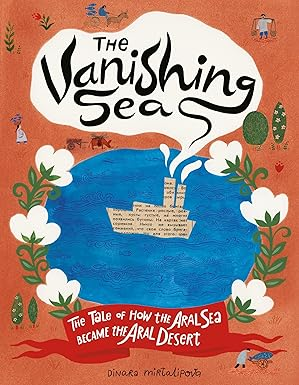
The Vanishing Sea: The Tale of How the Aral Sea Became the Aral Desert by Dinara Mirtalipova (Chronicle Books, 40 pages, grades 1-5). In a prologue before the title page, Dinara Mirtalipova shares information about the Aral Sea and how it disappeared in just a few decades due to mismanaged irrigation projects, including two pages of maps that show this progression from 1960 until 2021. Then the brief story begins, “A long, long time ago, there was a lake so vast that the people called her Mother Sea.” At first, people are content with the fish and drinking water the lake provides, but over time they grow greedier. “Like a selfless mother, the Sea gave them ALL of her resources.” The tale ends with a question: “Can the people save Mother Sea?” An author’s note tells of her journey to the desert in a remote part of Uzbekistan, along with photos of her mother in 1963, picking the cotton that led to the sea’s destruction. There’s a brief history of the Aral Sea with a timeline from 305 CE to the present, as well as information on local and global ecological impact.
This sobering story is a good reminder of what prioritizing human greed over the environment can do. The main story, illustrated in Dinara Mirtalipova’s unique style, could be shared with primary grade students, while the additional material at the front and back of the book makes it a great resources for older kids.
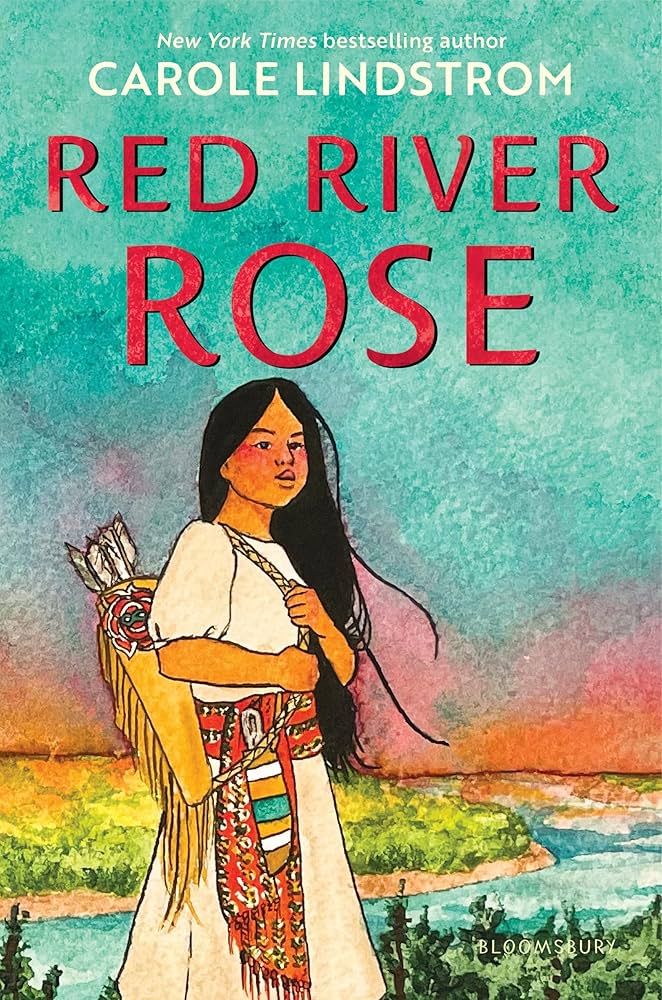
Red River Rose by Carole Lindstrom (Bloomsbury Children’s Books, 224 pages, grades 4-7). Rose loves her Métis community that she, her parents, and her younger sister are part of. When she hears rumors about the Canadian government’s plan to remove them from their land, Rose wants to help with the resistance in any way she can. She’s often frustrated that she’s not allowed to do as much as her friend Ambroise and the other boys, but she finds ways to help, like collecting scrap metal for ammunition and coming up with a plan to sabotage a Canadian steamship. The Métis are eventually forced to hide in caves, and most of their homes are destroyed by the end of the story, but it’s clear that this strong community will find ways to survive together. Includes an author’s note about the Métis tribe that she is a part of and their history along the Saskatchewan River.
Based on Carole Lindstrom’s 2025 picture book The Gift of the Great Buffalo, this story takes place around the same time as Laura Ingalls Wilder’s Little House book and offers a much-needed Native American perspective. Rose is a strong and courageous character, although some of her actions seemed to me somewhat unrealistically adult for a 12-year-old. The portrayal of the Métis and the ways they mixed their traditional ways with European influences and the Catholic church makes for a fascinating read.
The Lions’ Run by Sara Pennypacker, illustrated by Jon Klassen (Balzer + Bray, 288 pages, grades 4-8). Lucas is a 13-year-old orphan living in an abbey in occupied France during World War II. In the opening pages, he rescues a litter of kittens from two classmates who are trying to drown them. Seeking a place to hide the kittens, he stumbles upon a barn occupied by Alice, a girl who is attempting to hide her racehorse from the Nazis and smuggle her to America. Alice isn’t happy that Lucas has discovered the barn, but slowly the two become friends as Lucas begins to find the courage to participate in acts of resistance against the Germans. His job as a delivery boy takes him to a Lebensborn, where French girls, pregnant by Nazi soldiers, live and deliver their babies, who are taken from their mothers and sent to live with German families. Lucas gets to know one of the girls and learns of her plan to try to keep her baby. The plot threads about the horse and the baby come together in a heart-pounding last few chapters that demonstrate just how far Lucas has come in being brave and open up the possibilities for a better future than he could ever have imagined. Includes an author’s note about what is fact and what is fiction in the story.
At the risk of sounding like an old crank, I sometimes feel like I can’t read one more book about World War II. That was my initial reaction upon learning about this book, but the multiple starred reviews and early Newbery consideration wore me down. Thank goodness. I was drawn in right from the beginning, and by the end I was torn between not wanting to stop reading and feeling like I couldn’t stand the almost unbearable suspense. Fans of Number the Stars and The War That Saved My Life will not want to pass this one by, and I feel pretty confident in saying it will join them on the list of Newbery honorees.
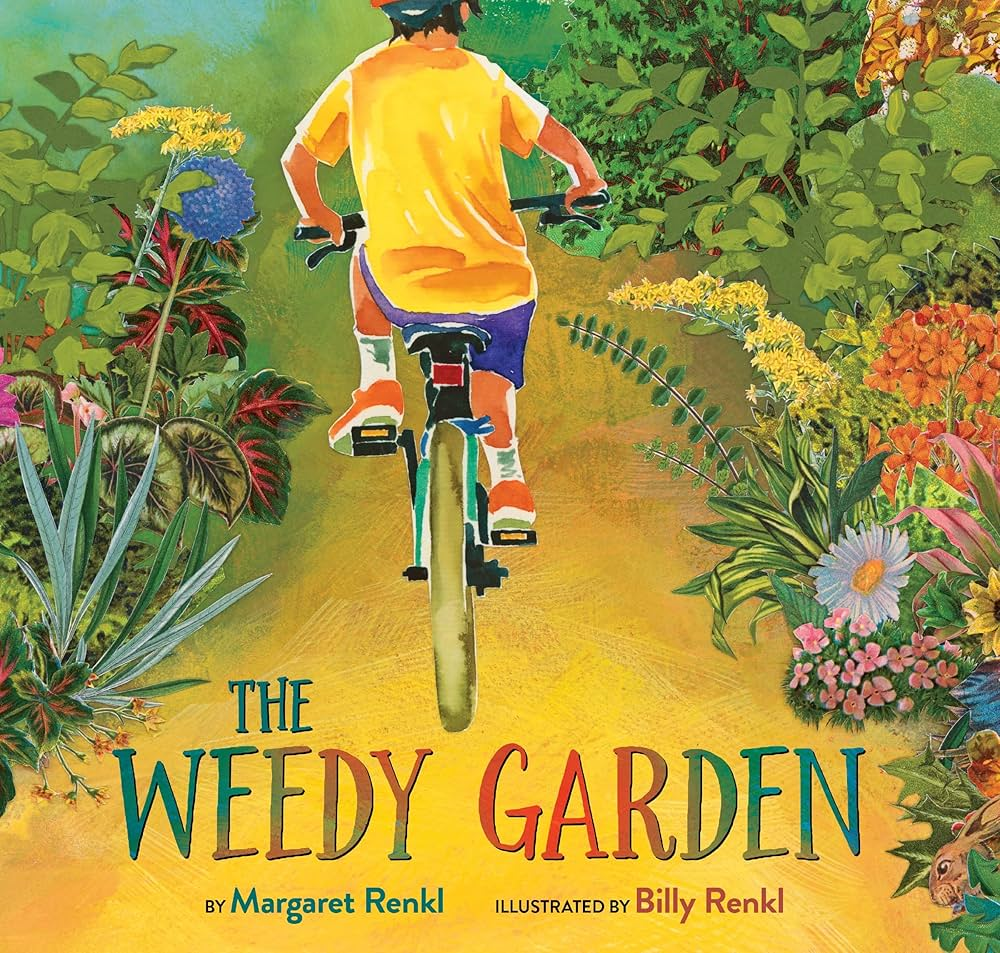
The Weedy Garden: A Happy Habitat for Wild Friends by Margaret Renkl, illustrated by Billy Renkl (Greenwillow Books, 40 pages, ages 4-8). Fifteen animals plus one child enjoy a wildflower garden in all different ways: “If you’re a bumble-bee in the weedy garden, you carry grains of pollen from blossom to bloom. You’re a seed-maker dusted with magic. You’re a flower farmer dressed in gold.” Each spread contains a detailed illustration of the garden from that particular animal’s viewpoint. The child on the last page sits still in the garden, surrounded by all the creatures and observing the natural world. Includes additional information about the animals, information about planting a garden or a container garden that will attract wildlife, and a note from the illustrator about creating collage illustrations.
This is a great introduction to creating a wildlife garden that will get kids excited about seeing what kinds of animals might visit. The illustrations are rich and textured, and readers will have fun finding the animals in each one and seeing what they do in the garden. I loved the illustrator’s note, which presents the idea of creating mythical animals with collage, which would make a nice extension art project. Fifteen animals felt like a lot, and younger kids may need a few sittings to get through the whole book.
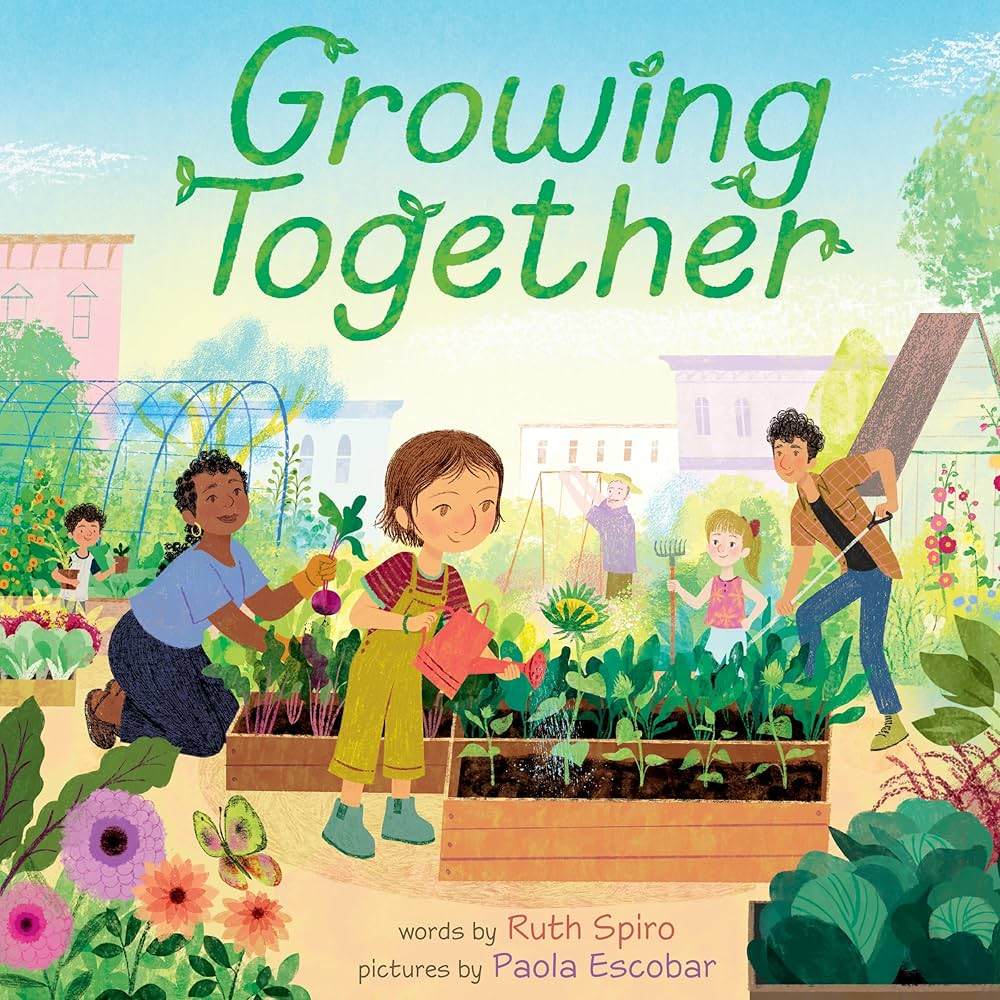
Growing Together by Ruth Spiro, illustrated by Paola Escobar (HarperCollins, 32 pages, ages 4-8). A girl tells her small sunflower plant that its “new home is waiting,” and off they go to a busy community garden. They see friends and neighbors digging, weeding, composting, and watering to create colorful, tasty gardens. A variety of vegetables is introduced, along with herbs, and flowers, which not only add beauty but bring pollinators to the garden. At the end of the book, a table is set and spread with the bounty from the garden for everyone to feast on together in a joyful celebration. Includes a page showing what was grown in the garden with illustrations and a sentence or two of information.
The bouncing, rhyming text and busy, colorful illustrations introduce a wide variety of garden terms and products that will have kids begging to go outside and dig in the dirt.
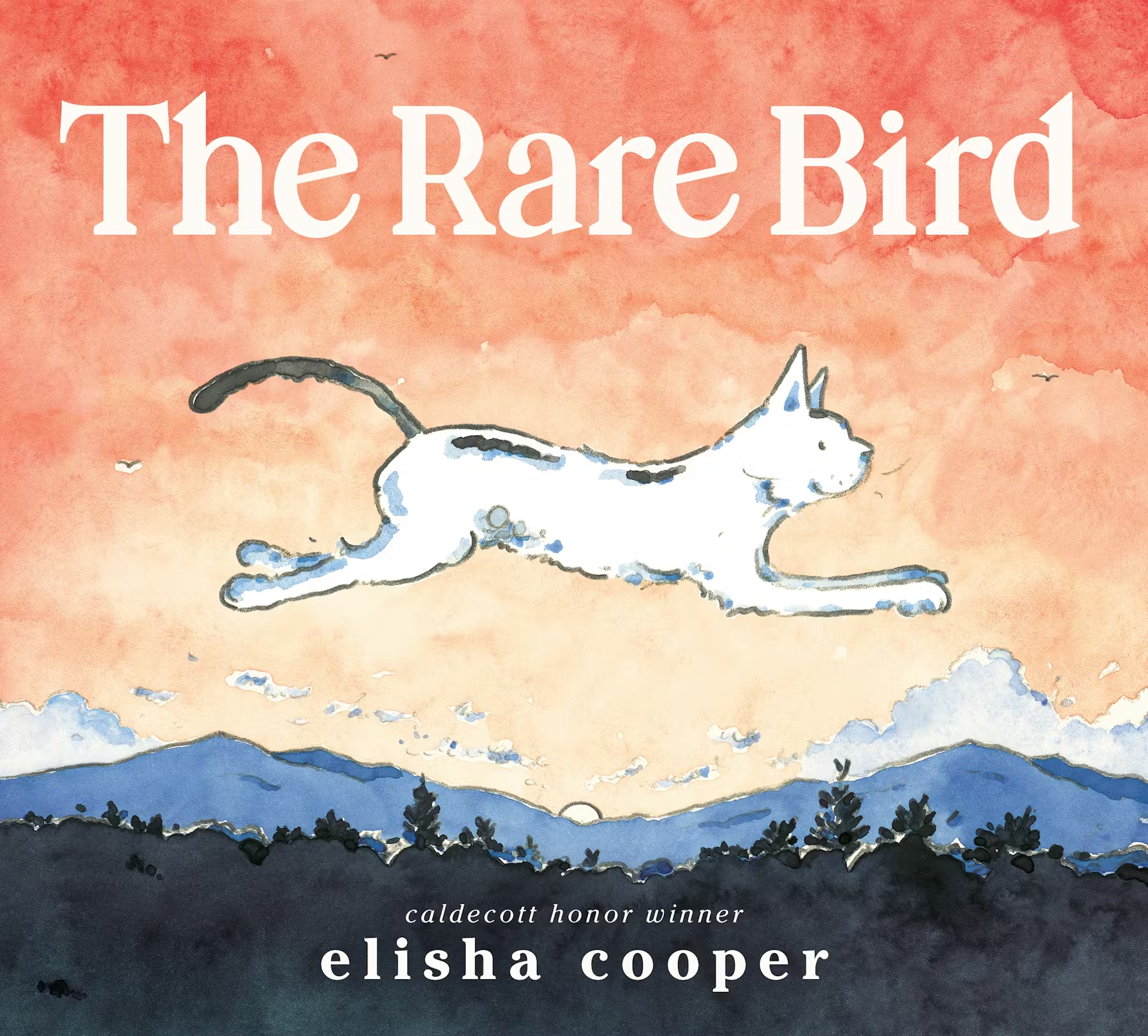
The Rare Bird by Elisha Cooper (Roaring Brook Press, 40 pages, ages 4-8). After studying the pages of several different books, a cat decides he will spend the day as a rare bird. The Rare Bird flies through the forest, lands in the flowers, then splashes through a waterfall and a gurgling pond. The illustrations show a cat running through the living room, landing on the carpet, and splashing through the shower and into the toilet. The whole day is like that, with the Rare Bird imagining all sorts of adventures from the ordinary objects of everyday life. At the end, the cat’s little girl shows him a book about an elephant, and the cat falls asleep dreaming about the next day when he will be an Extraordinary Elephant.
Readers will love poring over Cooper’s illustrations, making connections between what the cat is doing and what he is imagining. The endpapers, depicting dolphins in the front and elephants at the end, give hints as to how the cat has spent and will spend the days on either side of this day. A cute cat story as well as an enchanting ode to the power of imagination.
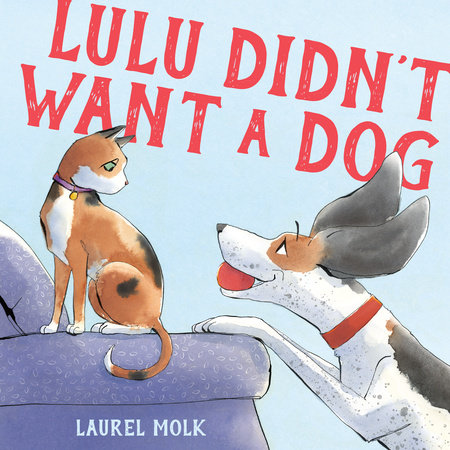
Lulu Didn’t Want a Dog by Laurel Molk (Random House Studio, 40 pages, ages 3-8). Lulu the cat is dismayed when she hears a rescue dog is joining the family. Gus turns out to be everything she feared; dirty, loud, and constantly getting into trouble. Her human keeps encouraging her to give Gus another chance, but time after time, Gus lets Lulu down. One day, Lulu leaps into a tree while chasing a bird, and enjoys a rare moment to herself…until the branch she’s sitting on gives way and plunges her into the frigid pond below. Gus jumps in after her, grabs the branch Lulu is still clinging to, and swims to shore. As the two of them curl up in Gus’s dog bed that night, Lulu decides that maybe Gus is “pretty okay” after all.
The cute and funny illustrations tell much of the story as they show Gus getting into the cupcakes, having fun with a roll of toilet paper, and getting sprayed by a skunk, all while Lulu watches disdainfully from a distance. This would make a good sibling gift, as it shows the ups and downs of having a new family member while avoiding any sort of preachiness or obvious lessons.
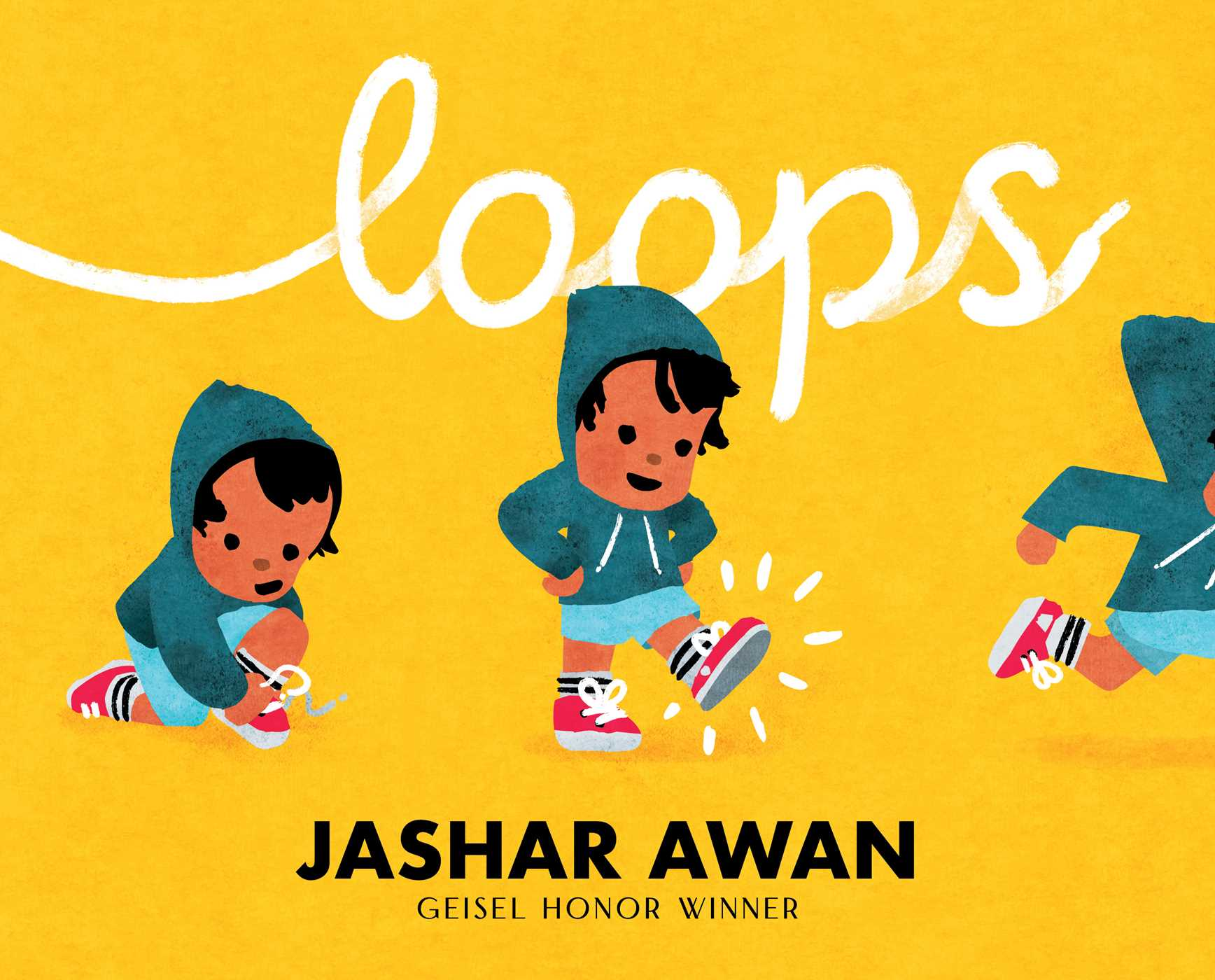
Loops by Jashar Awan (Simon and Schuster Books for Young Readers, 48 pages, ages 3-8). The young narrator addresses the reader, expressing frustration at too-big sneakers. They then take readers through the shoe-tying process step-by-step, which sometimes–but not always–results in success. That’s okay, because “learning to be a big kid! It doesn’t happen all at once.” On the playground, this big kid demonstrates skills on the swings (“I used to need a push. Not anymore.”) and the slide (“after some practice, things that were once scary aren’t anymore”). A whirl on the merry-go-round results in a lost shoe, with an ending that brings the story full circle.
This is a great book to share with young kids, offering messages that celebrate independence and “being a big kid” as well as offering empowering self-talk when things are hard and require practice and persistence.
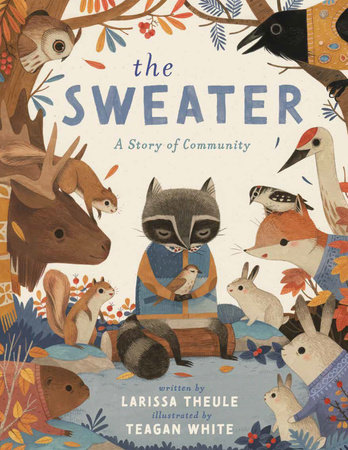
The Sweater: A Story of Community by Larissa Theule, illustrated by Teagan White (Viking Books for Young Readers, 32 pages, ages 3-8). When Holly the raccoon sees a bird that looks like “he’d been through some things,” she changes her plans for a fall hike and visits her neighbors instead, asking each one to give something to help the bird. Back home, she knits everything into a warm sweater that she presents to the bird. When she notices gaps in the old woodpecker hole he’s moved into, she gives him advice on how to shore things up, and before long the other animals have gathered around to help. Winter comes, and the animals are forced to stay in their homes, where they read, play games, and try new recipes. The little bird is grateful for his sweater and warm home and wishes for a way to say thanks. And one morning, when the wind “overslept,” he steps out at sunrise to share his beautiful song. The others hear the song, which “like a thread of sunshine, it looped around their hearts and knit them together.”
I really can’t overstate how adorable the illustrations in this story are, and the message of how small acts of kindness can make a difference and build a community had me choking up the first time I read this to a class.
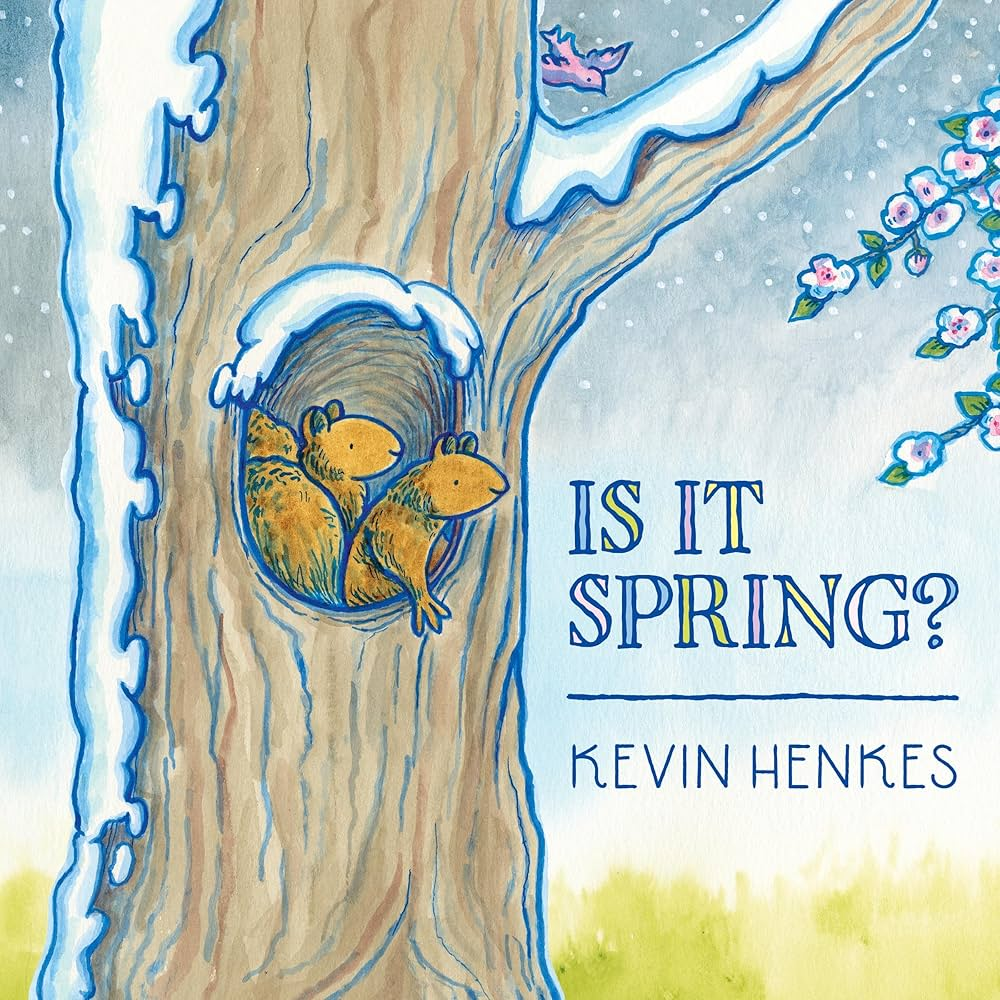
Is It Spring? by Kevin Henkes (Greenwillow Books, 32 pages, ages 3-6). The titular question is answered in the affirmative by the flowers, buds, and birds. The wind, sleepy animals, and gray clouds have a more ambiguous “not yet” reply, while the response is a definite no from the late snow. “Will it ever be spring?” we wonder after such a storm, and the sun says, “Yes, yes, yes!” as animals awaken, snow melts, and flowers bloom.
This is a great book for preschoolers curious about the changing seasons and does a good job of capturing the feelings we in the north feel as a 75-degree sunny day gives way to a 32-degree one with snow squalls (to give an example from a recent week in New England). This did kind of make me question if we need another Kevin Henkes book about spring and hope that he is putting his considerable talents into some different projects.
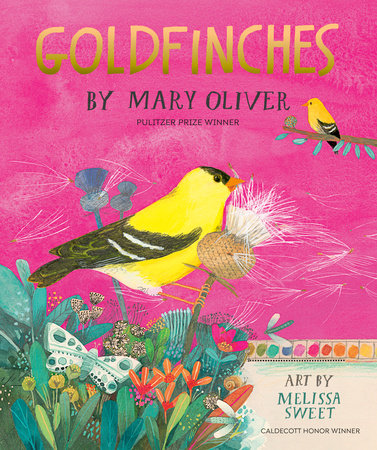
Goldfinches by Mary Oliver, illustrated by Melissa Sweet (Viking Books for Young Readers, 40 pages, grades K-5). This Mary Oliver poem celebrates goldfinches and thistle, and how the birds use the thistle down every year to line their nests before laying their eggs. The book itself is also an ode to being in nature and careful observations, with the collage illustrations portraying a woman–maybe Mary Oliver or Melissa Sweet–hiking through meadows and woods with a notebook and pencil in her hand. The birds are also shown, flying and nesting, and facts about the finches and the thistle are worked into the illustrations. Includes a one-page version of the poem, a list of birds handwritten by Mary Oliver, and a lengthy note from Melissa Sweet with additional information about Oliver and how this poem inspired Sweet to create this book.
I’m a little burned out on Mary Oliver quotes, so I almost gave this book a pass, but then I saw it was illustrated by Melissa Sweet. I’m glad I reconsidered, because it’s a real work of art and would make an excellent introduction to poetry (National Poetry Month will be here before you know it!). Take your time with it to savor both the words and the pictures. It might get you or other readers outside to be inspired by nature.
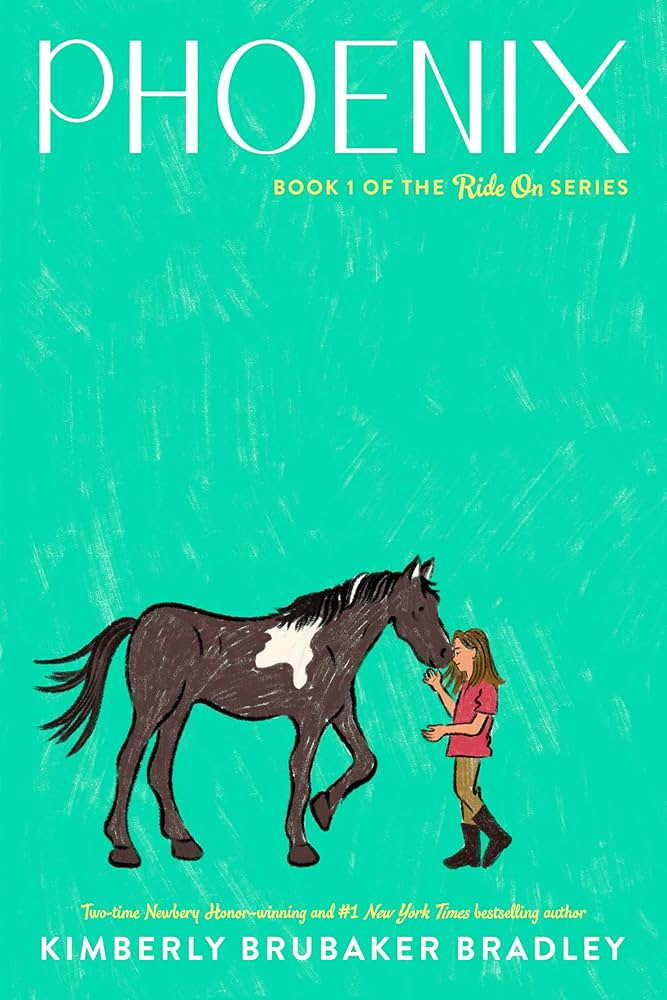
Phoenix (Ride On, book 1) by Kimberly Brubaker Bradley (Dial Books, 176 pages, grades 5-8). 11-year-old Harper refers to the event that blew her life up as the Bomb–her mother discovered that her dad was having an affair with the mom of Harper’s best friend Cat. Now Harper and her mom have moved to a small, dilapidated house a couple hours away from their Knoxville home and are trying to start over. The house overlooks a barn, and Harper soon finds herself curiously watching the kids who take riding lessons and beginning some tentative friendships with a few of them. When a “kill truck” transporting horses to be slaughtered dumps one of them off at the farm, Harper is immediately drawn to him, naming him Phoenix, and overseeing his near-constant care and feeding. Neither of her parents is thrilled with the idea of taking on the expense and responsibility of horse ownership, but they put off a final decision while Harper takes riding lessons and watches Phoenix slowly getting better. By the end of this series opener, Harper has discovered a love of riding and horses, has begun to reconcile with Cat, and is feeling more at home with the other kids at the barn. Includes an author’s note describing her own love of horses and how it evolved over many years.
This is a fun and fast read, introducing a lot of interesting characters and situations, and will appeal to anyone with even the slightest interest in horses. There are lots of storylines left open to lay the groundwork for book 2. It’s a little tough to say what age it’s best for–the whole dad cheating on mom situation feels like more of a middle school topic, while Harper and her friends are on the younger side for those readers.
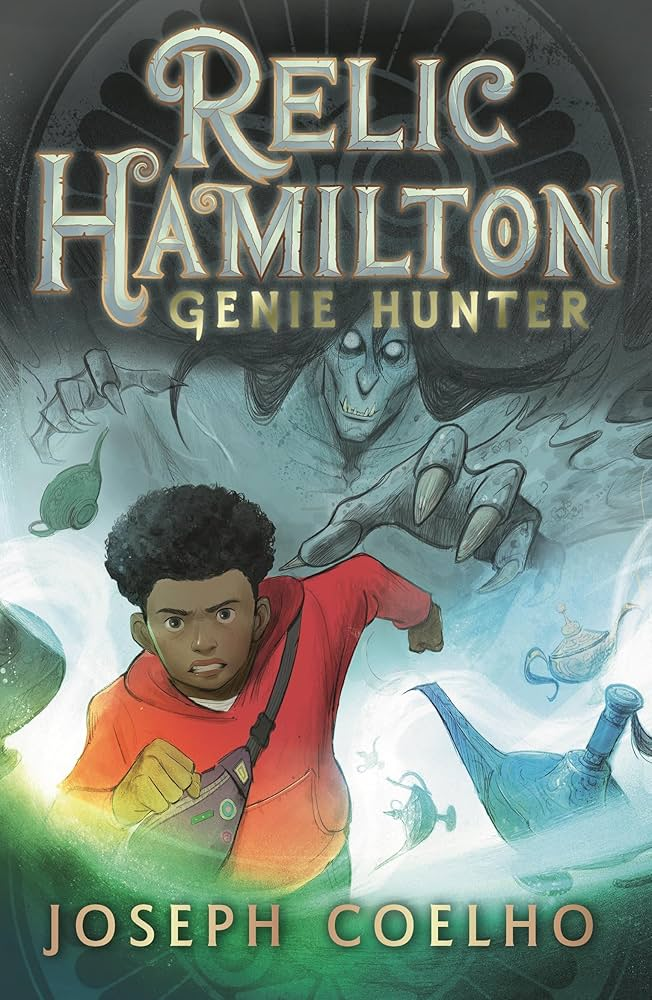
Relic Hamilton, Genie Hunter by Joseph Coelho, illustrated by Hyun Song We (Candlewick, 288 pages, grades 4-7). 12-year-old Relic Hamilton lives with his grandfather in an apartment over the antiques store they run in London. One day while helping out in the store, Relic polishes an old lamp he finds, releasing an evil genie that sends his grandfather into a coma. This leads Relic to the discovery that Grandfather is a member of a genie-hunting society, a group that soon recruits Relic to try to help heal his grandfather. Relic is sent on an undercover mission to a school where he meets Taya, a girl who’s been taken over by the powers of the evil genie. The two of them inadvertently travel back through time where they meet up with a crew of genie-hunting pirates. Along the way, Relic uncovers his own powers and discovers courage that he didn’t know he had. In the end, the evil genie is contained, Grandfather is restored, and Relic stands at the beginning of his genie-hunting career. Stay tuned for book 2.
Readers are immediately swept into this fast-paced fantasy adventure, which will undoubtedly appeal to Rick Riordan fans. The action, short chapters, and illustrations make it a good choice for reluctant readers. Fantasy’s not my favorite genre, but I definitely got caught up in this story.

 A Kids Book A Day