All kinds of art

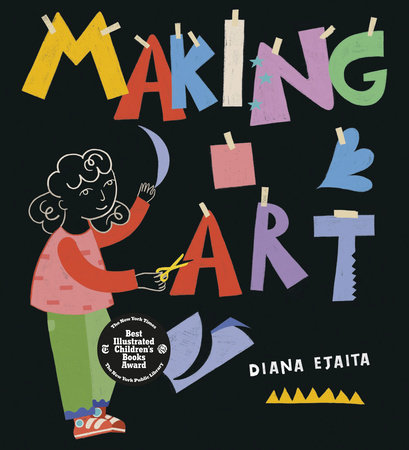
Making Art by Diana Ejaita (Rise x Penguin Workshop, 32 pages, ages 4-8). “Let’s look around and make some art,” begins this introduction to all different aspects of art. You can make new things or create from old things. It’s important to listen to your feelings, and those feelings can be communicated through your art. It can be difficult (and frustrating) to come up with ideas for your art, but then sometimes inspiration will strike like magic! Works of art can be given away or kept as a gift to yourself. No matter what, art adds beauty to the world, so thank you for your art!

This introduction to art could be used for anyone from a preschool class exploring art for the first time to a group of retirees rediscovering their creativity. The message is simple, yet wise and universal, and invites anyone to use art to express themselves. The illustrations portray a wide range of visual arts, as well as music, dance, and writing.

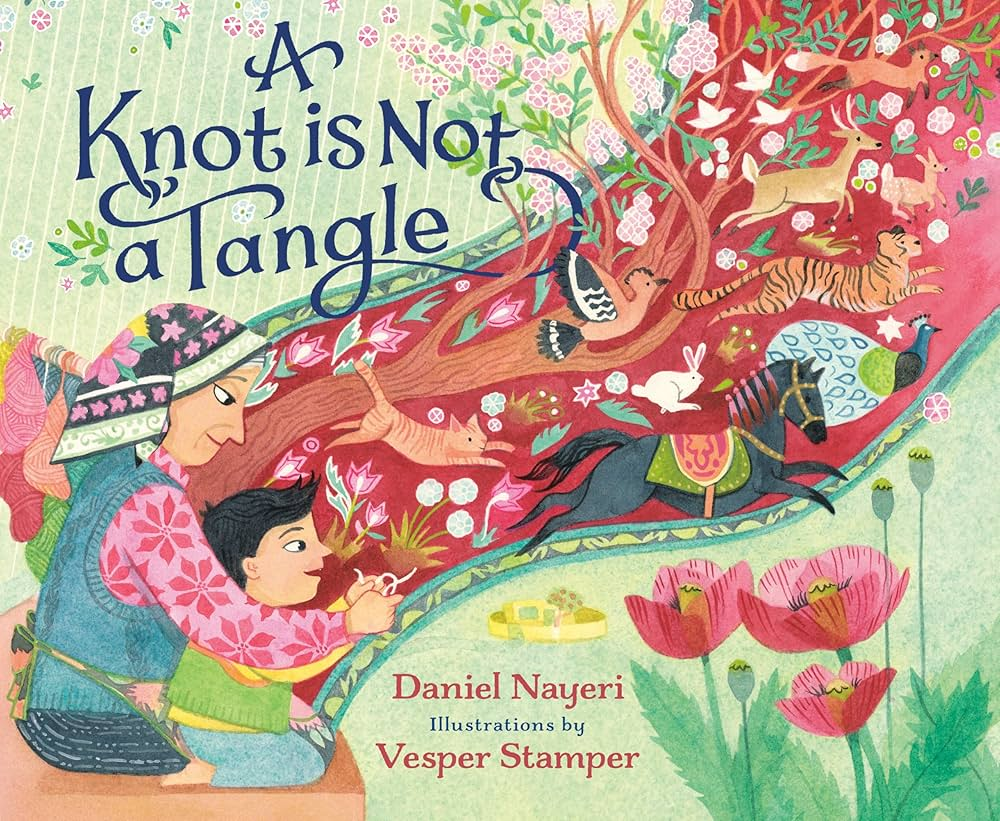
A Knot Is Not a Tangle by Daniel Nayeri, illustrated by Vesper Stamper (Knopf Books for Young Readers, 48 pages, grades 1 and up). A boy narrates the process of creating a Persian rug with his grandmother in Iran. “All of this takes weeks, but in my memory, it’s one long wonderful day.” In that day from his memory, he and his grandmother wash, card, and spin wool that his grandfather has sheared from their sheep. They dye it and plan the pattern and colors for the new rug on graph paper, then finally start knotting on the loom. The boy keeps wanting perfection, but his grandmother reminds him that the most important part of their rug is that it will become a place for the family to gather, just like the old one that they’re replacing has been. She even pulls one knot out, the “Persian flaw,” symbolizing that that there is no such thing as perfection. Finally, the new rug is done, and the old one gets moved underneath the loom, and “It feels just right to have it there.” Includes an author’s note with additional information on Persian rugs.

Award-winning author Daniel Nayeri has crafted a beautiful picture book celebrating an art form that will be new to many readers. The illustrations do a great job of showing the process of knotting–although, I’ll be honest, I still don’t really get it, but this may whet readers’ appetites to dig deeper. The message about tempering perfectionist tendencies is delivered gently by a wise grandmother who clearly values her heritage and enjoys passing it on to her grandson.

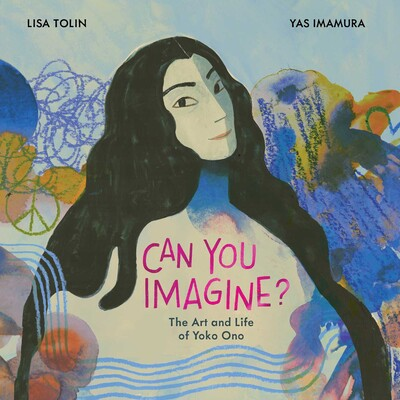
Can You Imagine? The Art and Life of Yoko Ono by Lisa Tolin, illustrated by Yas Imamura (Atheneum Books for Young Readers, 48 pages, grades 2-5). Yoko Ono spent her childhood moving between Japan and the U.S. during a time when she felt unwelcome in both places. After enduring wartime hardships in Japan, she moved permanently to the United States, where she studied art and music. Refusing to embrace norms in either field, she explored her own ways of creating art, which often involved audience participation designed to provoke thoughts and ideas. Her greatest fame came after she met and married John Lennon, when racism, misogyny, and the idea that she broke up the Beatles unleashed waves of public hatred toward her. After Lennon’s murder, Ono has continued to create art while working to preserve her husband’s legacy. Includes quite a bit of additional information about Yoko Ono and her art, as well as a bibliography.

I confess I grew up with a pretty negative impression of Yoko Ono, having absorbed the “she broke up the Beatles” message, but my daughter, an episode of the You’re Wrong About podcast, and now this beautiful book have helped me to see her in a completely different light. She had a pretty horrific childhood but instead of being broken by it, she emerged resilient and with a desire to work for peace through her art. It’s pretty clear that the Beatles broke themselves up, and this book focuses on the positive aspects of the Lennon-Oko collaboration. I’m grateful that this talented author-illustrator team continues the revisionist history, although it may be more appreciated by adults than children.

Pioneering women scientists

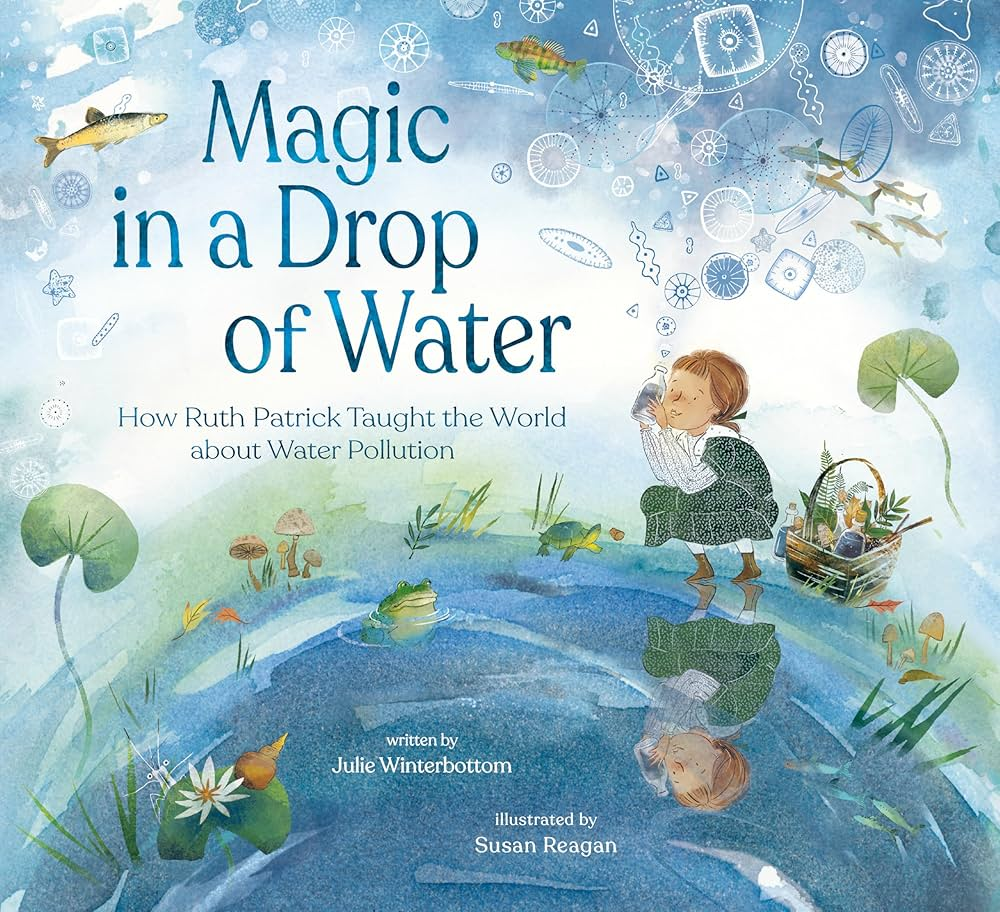
Magic in a Drop of Water: How Ruth Patrick Taught the World about Water Pollution by Julie Winterbottom, illustrated by Susan Reagan (Rocky Pond Books, 48 pages, grades 1-5). Encouraged by her father, Ruth Patrick grew up exploring woods and streams, fascinated by what she saw when she looked at her collections under a microscope. She went on to study biology, specializing in diatoms, the microscopic algae found in all bodies of water. Her questions about the effects of pollution on water led her to study both healthy and polluted streams, documenting all the life forms found in each, and discovering that pollution destroyed the balance of life that healthy water had. She became a lifelong advocate for clean water, including helping to write the Clean Water Act of 1972, and continuing to wade into streams and rivers just a few years before her death at age 105. Includes additional information, a timeline, and a bibliography.

Ruth Patrick lived up to her father’s advice to leave the world a better place than she found it, following her passion at a time when women weren’t particularly welcome in the scientific world and making many contributions to our understanding of water pollution and biodiversity. Her story is told in an engaging fashion, and the illustrations do a magnificent job of capturing Ruth’s work and her underwater observations, although I wouldn’t have said no to a slightly larger font for the text.

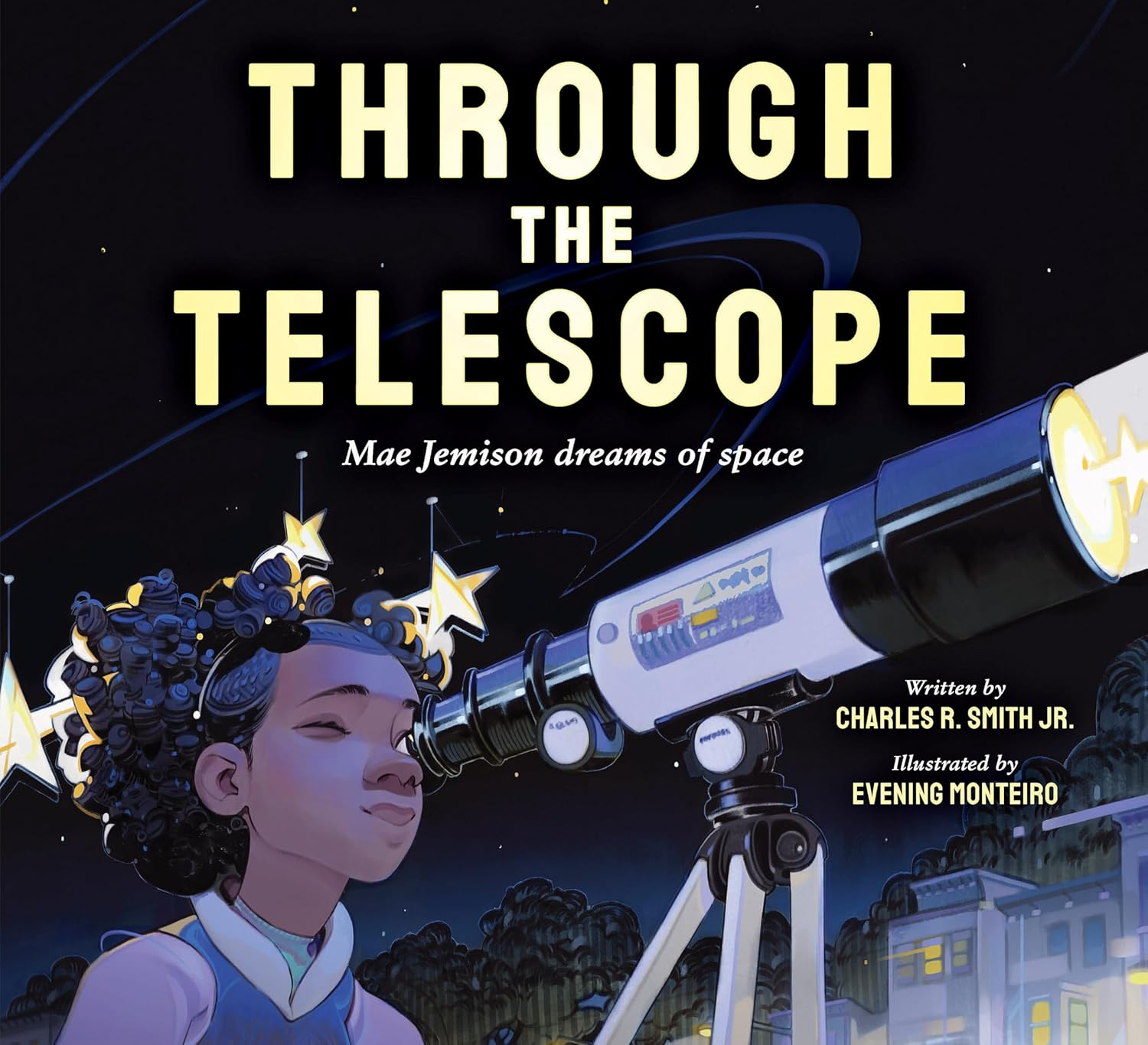
Through the Telescope: Mae Jemison Dreams of Space by Charles R. Smith, Jr., illustrated by Evening Monteiro (Orchard Books, 40 pages, ages 4-8). A young Mae Jemison peers through the telescope, dreaming of traveling into space. Rhyming text and illustrations explain what she sees: the moon, planets, constellations, and galaxies. As she looks, she imagines floating through space, and the final illustration shows an adult Mae in her astronaut suit standing behind the child. Includes ten facts about Mae Jemison.

This would make a good introduction to Mae Jemison for younger readers, and it includes quite a few astronomy terms and facts which they will find interesting as well. Like Mae Among the Stars, there’s very little biographical information. It would be great to get a longer picture book biography that gives a fuller picture of Jemison’s life.

Fireflies and dragonflies

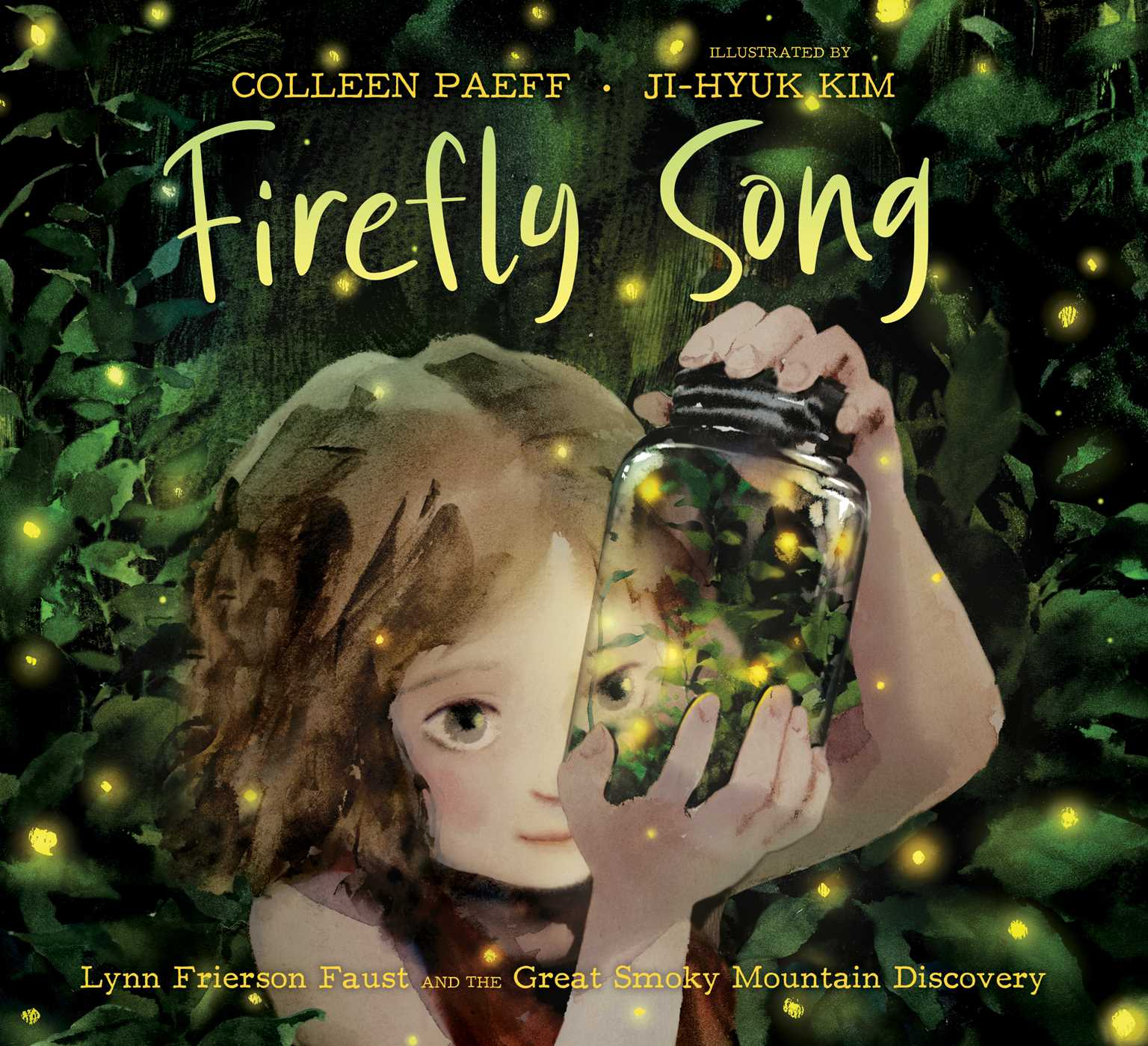
Firefly Song: Lynn Frierson Faust and the Great Smoky Mountain Discovery by Colleen Paeff, illustrated by Ji-Hyuk Kim (Margaret K. McElderry Books, 40 pages, grades 1-5). As a child spending summers in the Great Smoky Mountains, Lynn Frierson Faust was fascinated by fireflies who would flash their lights and go dark in unison. Years later, her family’s summer cabin and the land it was on became part of the national park, but Lynn never forgot those fireflies. When she read that synchronous fireflies didn’t exist in North America, she was determined to prove that they did. Working with other scientists, Lynn’s perseverance over many years finally paid off when she helped a biologist and his team observe the synchronous phenomenon. Although her scientific training is self-taught, Lynn is known globally for her firefly expertise. Includes tips for observing fireflies, firefly facts, a bibliography, and an author’s note.

Lynn’s story is a fascinating one and may inspire readers to become citizen scientists, or at least to be persistent in pursuing their passions. The illustrations are gorgeous, with backgrounds that look like slightly blurry photos, making the fireflies’ lights even more striking. I think the illustrator lives in South Korea, so unfortunately not eligible for a Caldecott, but this would be a good choice for another Sibert award for Colleen Paeff.

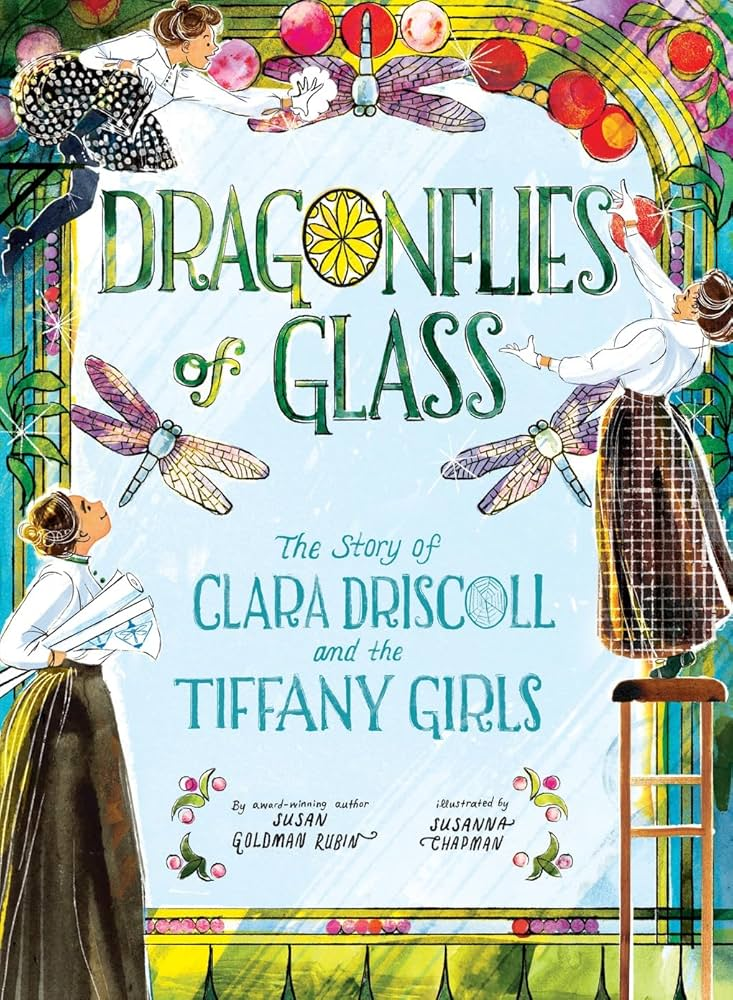
Dragonflies of Glass: the Story of Clara Driscoll and the Tiffany Girls by Susan Goldman Rubin, illustrated by Susanna Chapman (Harry N. Abrams, 40 pages, grades 1-5). Clara Driscoll grew up on a farm in Ohio, where she loved drawing the flowers and animals she observed around her. Her father died when she was 12, but her mother encouraged Clara and her sisters to become self-sufficient. In 1888, Clara and her sister Josephine moved to New York City to study at the Metropolitan Museum of Art School. Clara was hired by Louis Comfort Tiffany, son of the famous jeweler, to work in his studio making stained glass. She was part of the women’s division there, where she learned to cut glass and turn it into designs. Drawing on her memories of the Ohio farm, she was soon creating her own designs incorporating dragonflies, butterflies, and flowers, including the wisteria that was part of Tiffany’s most famous lamp. Includes notes from the author and artist, a list of places to see Clara’s work, and a bibliography.

Another story of an amazing woman who built a full artistic life at a time when sexism was a big obstacle. While Louis Comfort Tiffany sounds pretty progressive (he defended the women’s division when the men threatened to strike if he didn’t get rid of it), the author’s note reveals that Clara was forced to quit working there after she got married. The illustrations are gorgeous, especially the depictions of the Tiffany lamps. Clara’s story came to light thanks to round robin letters that she, her mother, and sisters wrote, and the story of those letters arriving at the farm is shown in small illustrations running along the bottom of each page.

Survival stories for those who like the edge of their seats

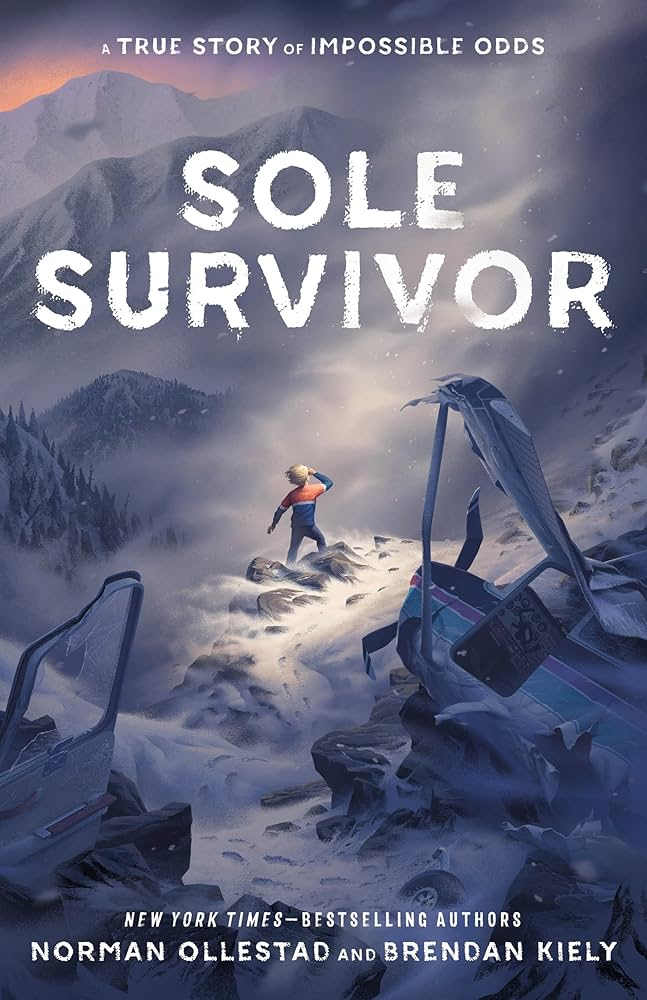
Sole Survivor by Norman Ollestad and Brendan Kiely (Farrar, Straus and Giroux, 272 pages, grades 5-8). Norman Ollestad recounts his experience of surviving a plane crash as an 11-year-old in 1979. His father and the pilot were killed instantly, and his father’s girlfriend Sandra, seriously injured, fell to her death when Norm was trying to help her. His dad had always pushed Norm to try the exhilarating but sometimes terrifying skiing and surfing adventures he enjoyed, and Norm found himself using the lessons from those experiences in his struggle to survive. Living with his mom and abusive stepfather had also taught him a thing or two about survival, and he miraculously was able to climb down the the icy California mountain in blizzard conditions to find help. The last part of the book tells of the aftermath of the event, in which Norm had to navigate his trauma while living full time with his mother and stepdad. After a rocky few years, he found release and healing through surfing. Based on the 2009 book Crazy for the Storm.

Okay, first off, if you’re looking for less stress in your life, do not read this book and Murder in the Jungle back-to-back, as I did. Norm’s story is harrowing, to say the least, made more so by the flashbacks to his abusive stepfather and risk-addicted father who put his son in some pretty questionable situations. It is definitely a page-turning survival story that will appeal to fans of Hatchet and other Gary Paulsen books.

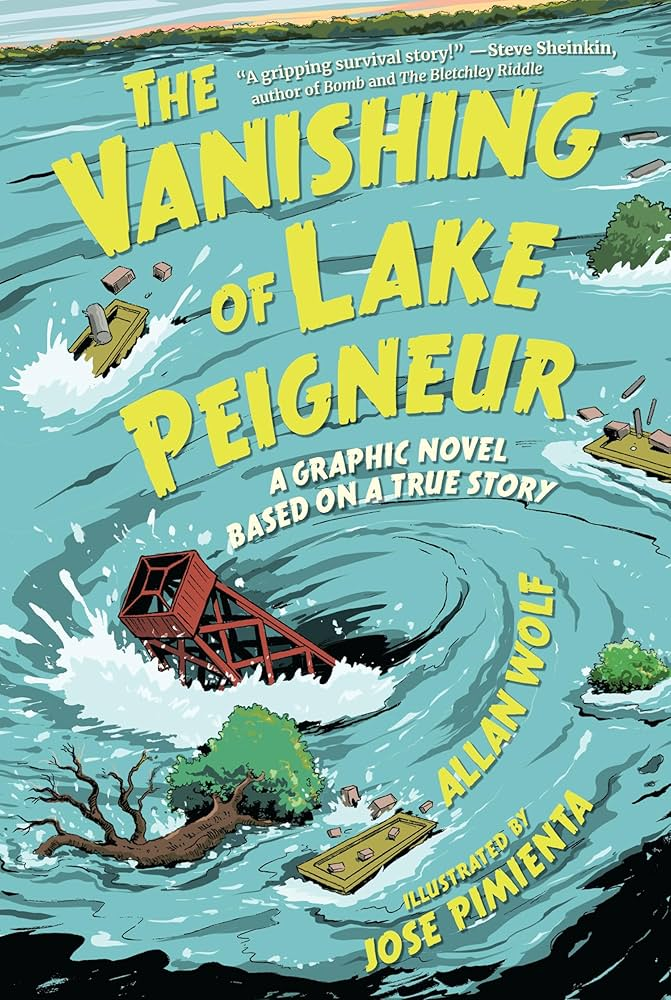
The Vanishing of Lake Peigneur: A Graphic Novel Based on a True Story by Allan Wolf, illustrated by Jose Pimenta (Candlewick, 176 pages, grades 4-8). November 20, 1980 starts as an ordinary day for Lake Peigneur (who narrates the story), the miners who work in the salt mine there, the oil rig workers, the wealthy owner of a house on the lake’s shore and his gardener, and various boaters on the lake. But it quickly becomes anything but ordinary when a combination of oil drill accident and precarious mine construction causes a huge vortex in the lake that threatens to destroy everything around it. Those in and around the lake are in a race against time to get off the rig, off the water, and out of the mine. Close calls and heroism are plentiful as the story shifts quickly from one site to another. The lake claims on page 1 that it “vanished,” and in a way that’s true, at least temporarily, as it’s transformed in size and composition from a freshwater lake to the saltwater lake that exists today. Includes an author’s note with extensive additional information, how he did his research, and clarification of what is fact and fiction.

This book took me a couple of tries to get into–the beginning feels a little stilted with many characters introduced. But once things start to happen, it’s hard to put down in a way reminiscent of the best “I Survived” books. I’m hesitant to reveal the spoiler that everyone survives, but amazingly that is the case, thanks to the good judgement and courage of many involved in rescue efforts. As Allan Wolf notes in the author’s note, this good fortune is one of the reasons it didn’t become more of a news story, and kudos to him for tracking down the story and interviewing many of the eyewitnesses to create this excellent graphic novel, greatly enhanced by Jose Pimenta’s art.

Boston Globe-Horn Book Awards

An email alerting me to the upcoming Boston Globe-Horn Book Awards ceremony coming up this Thursday, November 6, sent me on a search for some of the books that I hadn’t read yet. You can see a complete list of winners and honor books here.

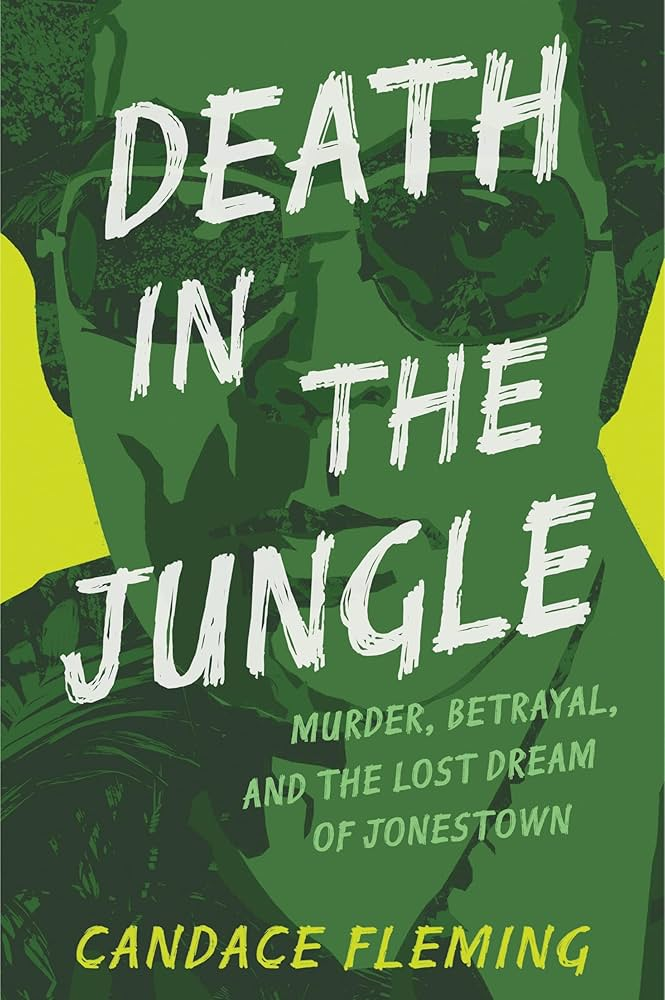
Death in the Jungle: Murder, Betrayal, and the Lost Dream of Jonestown by Candace Fleming (Anne Schwartz Books, 368 pages, grades 7 and up). Most of us know about Jonestown and the tragic end that befell more than 900 residents in the Guyana jungle. This book takes readers back to founder Jim Jones’s earliest days and shows how a bizarre mix of idealism and quest for power led him to start the People’s Temple which moved from Indiana to California, and finally to Guyana where Jones basically kept his followers imprisoned: cut off from the world and subject to his paranoid drug-fueled ravings. Individual members of the group are profiled, based on Fleming’s interviews with survivors, and their memories of enjoying being part of a warm community mixed with traumatic punishments, sleep deprivation, and overwork serve as a warning to anyone drawn to a charismatic leader like Jim Jones. Includes source notes, a bibliography, and an index.

I remember reading about this incident in the news during my own teenage years and trying to make sense of what could have possibly gone so horribly wrong. This book answers some of those question–although many are unanswerable–and is told in such a compelling style that I could not put this book down and read it in about 36 hours. It’s an especially important book for teens, as many of those interviewed were their age during the events of the story (including Jones’s son Stephan), and in many cases, a questioning attitude toward authority saved them.

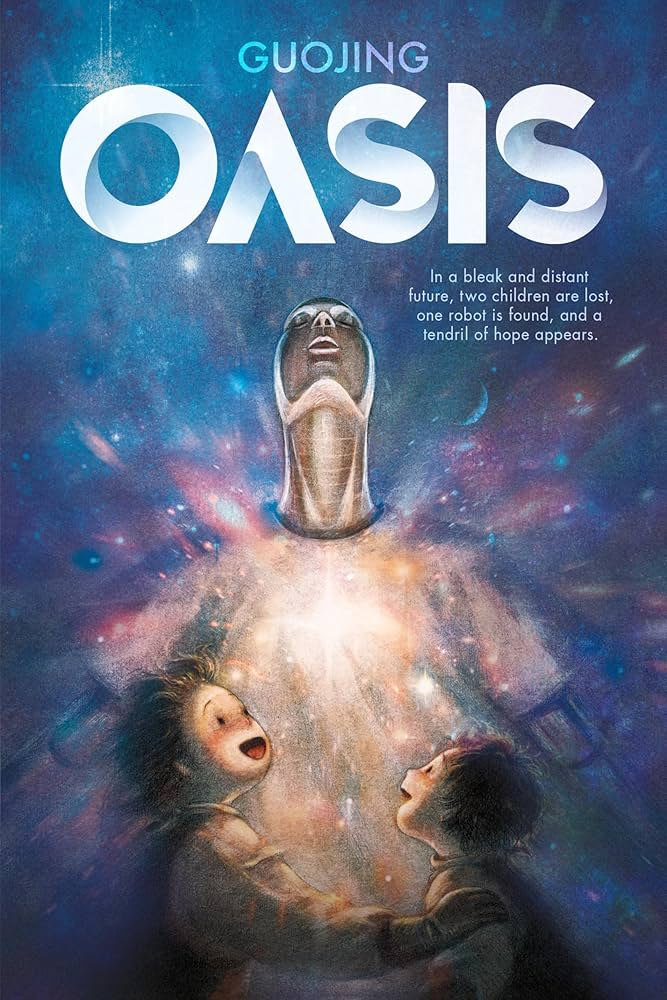
Oasis by Guojing (Godwin Books, 160 pages, grades 4-7). Two children live in the desert, fending for themselves with only occasional phone calls from their mother who works in Oasis City, trying to get permission to bring her children to live with her. When the kids find a broken robot, they’re able to repair it and activate its “mother” mode, giving them an AI mom. When their human mother comes home for a few days, she discovers the AI mother, and destroys it in a fit of fear and rage. Her daughter runs off, and the mother is able to repair the robot and bring the daughter back home. The two mothers share their hopes and dreams for the children, and the AI one shows how she has been able to reproduce conditions in Oasis City to start growing plants, giving them hope that one day they can all live in the desert together. The author information relates that Guojing was inspired by “left-behind children” in China, who stay in rural areas when their parents go to find work in the city.

I had gotten this book out of the library several months ago, after seeing its five starred reviews, but I was a little put off by the dark artwork and never got around to reading it. I’m so glad I gave it another try. It’s a quick read–it only took me about 15 minutes–but it packs a powerful punch and celebrates all sorts of family connections and love. The cover says, “In a bleak and distant future, two children are lost, one robot is found, and a tendril of hope appears,” but it didn’t seem like such a distant future to me.

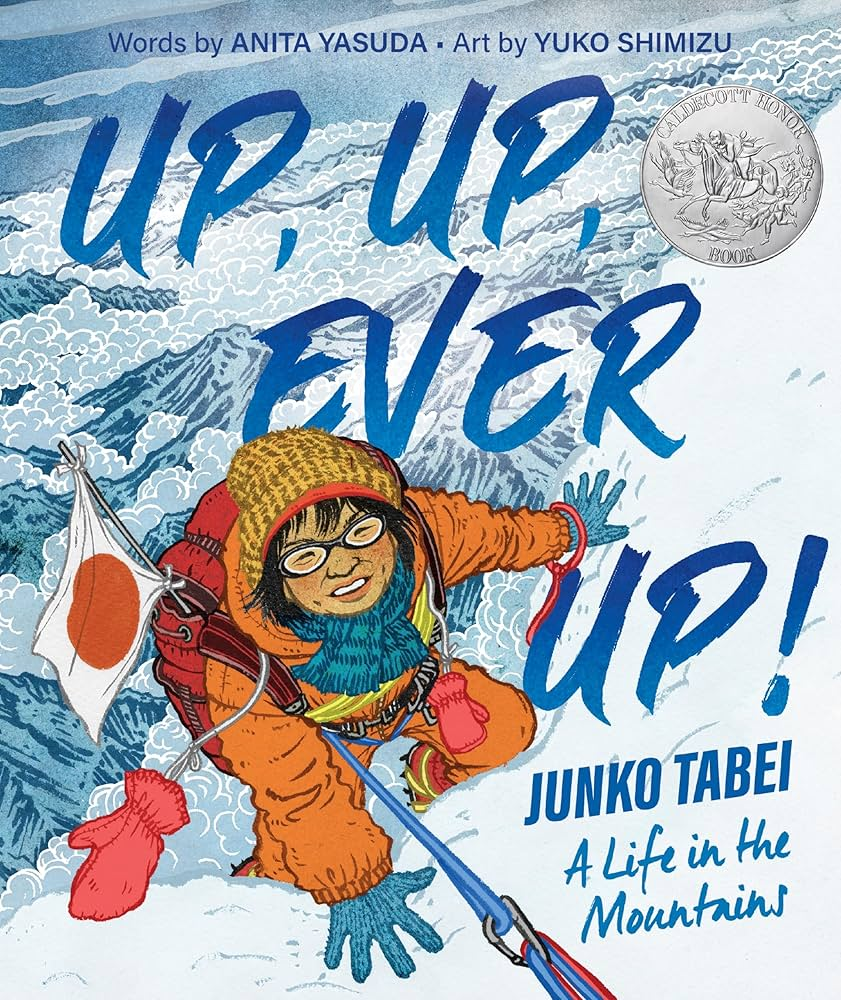
Up, Up, Ever Up! Junko Tabei: A Life in the Mountains by Anita Yasuda, illustrated by Yuko Shimizu (Clarion Books, 48 pages, grades 2-5). As a child, Junko Tabei dreamed of climbing mountains, and she pursued that dream when she moved to Tokyo as a young woman. Most mountaineering clubs didn’t take women, but Junko persevered until she found one that did. Even after marrying and having a daughter, Junko continued to climb and to encourage other women to join her. Eventually they planned an expedition to become the first all-female team to climb Mount Everest. Even an avalanche couldn’t stop her, and Junko realized her dream of being the first woman to reach Everest’s summit. In her later years, she became an activist for sustainable mountain climbing, researching the impact of trash and human waste on Everest and helping to mitigate some of those effects. Includes an author’s note, timeline, glossary, and bibliography.

I’m a little late to this 2024 book, but I’m breaking my rule of only reviewing books published in the current year. The Boston Globe-Horn Book Award follows the school year calendar, so it was eligible for this year’s award and was an honor book, in addition to winning a 2025 Caldecott Honor. Both are well-deserved for the beautiful ink and color illustrations that not only portray breathtaking mountain landscapes but celebrate Junko’s Japanese culture.

Courageous women of World War II

The Spy in the Museum: How Rose Valland Saved Art from the Nazis by Erin McGuire (Beach Lane Books, 40 pages, grades 2-5). Rose Valland loved art. As curator of Paris’s Jeu de Paume Museum, she appreciated all kinds of art: ancient, classical, or modern. Adolf Hitler hated modern art. When Nazis took over Rose’s museum, they fired all the staff except Rose, who was kept on as manager. As they started to steal the art, selling it to fund the war, Rose secretly listened to their conversations and made notes about where the art was going. The soldiers didn’t know she spoke German, but they still became suspicious of her, which put her in grave danger. Towards the end of the war, as the Nazis fled Paris, Rose worked with the French Resistance to stop their final train, loaded with valuable artworks, from leaving the country. For much of the rest of her life, she used her notes to help restore the stolen artworks from around the world. Includes additional information about Rose Valland and the art she worked to save, as well as a list of sources.

This inspiring story is supplemented with interesting and timely questions in the author’s note: why does protecting art matter, and why did the Nazis want to destroy it? The illustrations, many including famous artworks, add to the story and the conversation.

Song of a Blackbird by Maria van Lieshout (First Second, 256 pages, grades 8 and up). The narrative of this graphic novel alternates between 2011 and 1943 Amsterdam. In 2011, Annick is trying to find help for her Oma’s leukemia. When bone marrow tests reveal she was adopted, the two turn to a set of prints from her childhood, each signed by “Emma B.” to try to learn more about her past. Emma is the 1943 protagonist, an artist and student whose education is interrupted by the Nazi invasion of the Netherlands. She uses her talents to aid the Resistance, helping to create false documents and working to rescue children whose parents are being sent to concentration camps. A blackbird that represents art and creativity narrates, showing how his gifts help those in the darkest of circumstances. The two stories eventually meet, and the reader learns the fate of all the characters in a moving epilogue. Includes extensive back matter about the buildings pictured in Oma’s prints and the real-life people on whom Maria van Lieshout based her story.

I learned about this book when the National Book Award Longlist was announced a couple of weeks ago, and it absolutely blew me away. I truly can’t imagine creating this impeccably researched historical fiction, with its two riveting narratives, each one portrayed in its own color palette. Usually I’m rooting for a middle grade win over YA, but this is a compelling choice for sure. Although both books take place over 80 years ago, their stories speak to the timeless power of art and will surely inspire those fighting to create a brighter world.

Science acclaim, a mouse’s name, and the G.O.A.T. of the game

Jellyfish Scientist: Maude Delap and Her Mesmerizing Medusas by Michelle Cusolito, illustrated by Ellen Rooney (Charlesbridge, 32 pages, grades 1-5). Maude Delap never left home or went to school, but she became a scientist by studying the ocean life around her home on Valencia Island, Ireland. This story takes place from June, 1899 until September, 1900, a time when Maude made important discoveries about the compass jellyfish’s life cycle through careful observations in the Department, her name for her home lab. After unlocking the mysteries of this jellyfish, she’s shown on the last page scooping up a blue jellyfish, beginning the process all over again. Includes additional information about Maude, jellyfish (including an illustrated guide to their life cycle on the endpapers), notes from the author and illustrator, and some additional resources.

Told in the present tense, with dates shown on each page, this story conveys an air of you-are-there excitement about the scientific process. Maude had to overcome some very unfair obstacles to have a scientific career, but the main theme in the book is perseverance and the joy of new discoveries. The back matter reveals that she made significant contributions to marine science. The illustrations do a great job of capturing that joy, showing Maude with a young niece assisting her, her lab, and the jellyfish.

The Woman Behind the Magic: How Lillian B. Disney Shaped the Disney Legacy by Brittany Richman, illustrated by Joanie Stone (Beach Lane Books, 40 pages, grades 1-5). As the youngest of ten children, Lilly Bounds never had much, but she always enjoyed the magical moments that she shared with her warm, loving family. After her older siblings left home and her dad passed away, Lilly moved out to California to be near one of her sisters. She got a job at the fledgling Disney Brothers Cartoon Studio, where she inked and colored cartoons, eventually impressing her boss Walt enough that she became his secretary and then his wife. The studio almost went out of business a few times, but Lilly helped behind the scenes, most notably naming Mickey Mouse after Walt proposed the name Mortimer. From Snow White to the opening of Disneyland, Lilly gave her opinions and feedback that shaped the Disney empire. When Walt died shortly before the opening of Walt Disney World, Lilly pushed herself to step into the spotlight for the grand opening. Includes a three-page author’s note with additional information and a timeline of Lillian’s life.

It was fascinating to learn more about the early days of the Disney empire, particularly this quiet unassuming woman who liked to work behind the scenes, but who had a big impact on the Disney we know today and who saved us from Mortimer Mouse. This illustrations are charming, calling to mind some of the older animated Disney movies.

Messi’s Magic: How Lionel Messi Became the G.O.A.T. by Caroline L. Perry, illustrated by Luciano Lozano (Scholastic, 48 pages, grades 1-5). Lionel “Leo” Messi grew up in a loving, soccer-obsessed family in Argentina. From an early age, his talent was obvious, and his Grandma Celia was his biggest fan. As he got older, though, Leo faced obstacles to his soccer career. His grandma passed away, and he was diagnosed with a growth disorder. Without daily injections, he wouldn’t grow big enough to play professional soccer, but his family couldn’t afford the medicine. At the age of 13, he was signed to FC Barcelona, who also agreed to pay for his medical treatment. Leo struggled to fit in at Barcelona’s youth academy, but his soccer skills helped him find his place. He’s gone on to become one of the greatest soccer players of all times, and if you see him pointing to the sky when he makes a spectacular goal, you’ll know that he’s dedicating it to Grandma Celia. Includes a timeline, additional information about Messi, and notes from the author and illustrator.

Thanks to Scholastic for providing me with a copy of this book, which will be released September 2. I know it will be a huge hit in my library, where I have many football/soccer fans. Leo’s story is inspiring, as he never gave up his dreams despite some pretty difficult setbacks, and went on to succeed beyond the wildest of those dreams. The additional information about Messi’s family life and charity work portray him an excellent role model.

Two books for LGBTQ+ collections

Trans History: A Graphic Novel: From Ancient Times to the Present Day by Alex L. Combs and Andrew Eakett (Candlewick, 384 pages, grades 8 and up). The title gives a pretty good idea of what this book is: a graphic novel of trans history, starting in ancient times and going to the present, with an emphasis on western cultures. Much of the history is told through the stories of individuals, from ancient Egyptian pharaoh Maatkare Hatshepsut, “a person who was raised to be a queen but instead became a king” to Adelaide/Alexina/Camille/Herculine Barbin, a French intersex woman from the 19th century to trans activists of the twentieth century like Marsha P. Johnson and Sylvia Rivera. Their stories give some idea about beliefs and treatments of trans people were like at that time. The final chapter profiles present-day activists, each of which is written in their own voice. Includes many pages of source notes and a lengthy index.

I often reflect on how much I’ve learned from the thousands of books I’ve read for this blog, and nowhere is this more apparent than in my greater understanding of trans people. Authors like Alex Gino and Kyle Lukoff have helped me understand what it’s like to be a trans kid, and now Alex Combs and Andrew Eakett have added a whole new level of understanding with this outstanding graphic history. Focusing on individuals makes for a fascinating read, and the interviews with contemporary activists are compelling. It’s a huge amount of information, occasionally a bit overwhelming, but definitely an important book to educate readers in such an engaging format.

Athlete Is Agender: True Stories of LGBTQ+ People in Sports edited by Katherine Locke and Nicole Melleby (Christy Ottaviano Books, 224 pages, grades 5-8). In 22 essays, LGBTQ+ people tell the stories of their athletic experiences. Most of the narratives lift up supportive teammates, but there are also examples of bullying and prejudice encountered in sports. Interspersed with personal essays are brief biographies of successful LGBTQ+ athletes like tennis player Billie Jean King, WNBA players (and married couple) Courtney Vandersloot and Allie Quigley, and Olympic gold medalist rugby player and trans activist Ellia Green. The sports are varied: sled dog racing, water fitness, longboarding, and sailing, among others, and each athlete’s experience is equally unique. Introductory material includes a note on pronouns and the history of Title IX, and in the back you’ll find profiles and photos of all the contributors, information on how to be a good teammate and ally, steps to take to form a Queer Athletics Alliance or Gender and Sexuality Alliance at your school, and source notes.

I loved this positive presentation of sports, an area that has been particularly fraught for LGBTQ+ participants, especially trans athletes. The writers are honest about their experiences, and the way gender divisions in sports often made them feel uncomfortable. Each essay could stand on its own as a powerful argument for inclusion in sports, but taken all together that argument becomes all the more compelling.

Making a difference

The Music Inside Us: Yo-Yo Ma and His Gifts to the World by James Howe, illustrated by Jack Wong (Harry N. Abrams, 48 pages, grades 1-5). Growing up in Paris and New York City, Yo-Yo Ma showed his musical gifts early, playing cello from the age of 4, performing for President John Kennedy at 7, and debuting at Carnegie Hall at 15. But Yo-Yo wanted more than just the life of a musical prodigy. As a teen, he started questioning who he was, aside from being an obedient son and a cellist. He studied anthropology at Harvard and learned about music as a universal language. As an adult, Yo-Yo has used his music to bridge the gaps of culture, language, and generations. He continues to develop his musical gifts and to share them with people of all ages from all over the world. Includes a timeline, notes from the author and illustrator, and lists of additional resources.

I love how this book shows how Yo-Yo Ma, an incredibly talented and hard-working musician from an early age, has never rested on his laurels, but has used music in innovative ways to have positive impacts on the world. Through his appearances on Mr. Rogers, Arthur, and Sesame Street, his creation of Silkroad Project to bring together musicians from around the world, and his performances of “Songs of Comfort and Hope” during the pandemic, Yo-Yo shows us all how to use our unique talents in creative and powerful ways.

The Friendship Train: A Story of Helping and Healing After World War II by Debbie Levy, illustrated by Boris Kulikov (Bloomsbury Children’s Books, 48 pages, grades 2-5). In the fall of 1947, Europeans were facing a winter of hunger due to postwar devastation. Journalist Drew Pearson had the idea of creating a Friendship Train that would start in California and travel to the east coast, stopping along the way to pick up donations of food from across the U.S. While Mr. Pearson initially worried that there wouldn’t be enough donations to fill a boxcar, the final collection was enough for 500 boxcars. The food was transferred onto ships which sailed for Europe in December of 1947 and brought welcome relief to Europeans. The French people reciprocated with a Merci Train, collecting and shipping gifts in 1949 that were distributed all around the US. Includes a two-page author’s note with additional information about the Friendship Train and ways readers can address the problem of hunger today, as well as a list of sources and a bibliography.

This well-researched book tells a heartwarming story of Americans rising to the occasion to help Europeans get through the winter before the Marshall Plan was implemented. It would make a great read-aloud for Thanksgiving or the December holidays. My curiosity led me to read more about Drew Pearson, who sounds like a remarkable person deserving of his own biography. I also learned that his wife Luvie was equally involved in the project, although she’s not mentioned in this story. And if you want to find out about what happened to the Merci Train donations to your state, you can learn about it here.

Women environmentalists

The Black Mambas: The World’s First All-Women Anti-Poaching Unit by Kelly Crull (Millbrook Press, 40 pages, grades 2-5). The Black Mambas are the first women park rangers in South Africa and the first women-led anti poaching unit in the world. They tell their story, explaining how they first got interested in protecting animals and describing some of the resistance they experienced from friends and family members who weren’t sure women could do this job traditionally held by men. They named themselves after the most feared snake in South Africa. Now they work out, train to survive in the wilderness, and patrol the reserve day and night, looking for signs of poachers and making arrests if they catch them. Their reserve, the Olifants West Nature Reserve, has become one of the most difficult reserves to poach animals, and the Black Mambas’ work has been recognized around the world. Includes more information about some of the animals on the reserve, the NATO Phonetic Alphabet that the rangers use, an author’s note, and a list of additional resources.

I loved this book, and I think a lot of kids will, too. Not only does it feature a lot of animals, but the Black Mambas are inspiring in their dedication, hard work, and success. The photos really capture the reserve the the women at work. I enjoyed the activities in a couple sidebars, like matching animal tracks and reading a map, which will keep kids engaged.

Marjory’s River of Grass: Marjory Stoneman Douglas, Fierce Protector of the Everglades by Josie James (Christy Ottaviano Books, 40 pages, grades 2-5). Marjory Stoneman Douglas moved to Florida soon after her graduation from Wellesley College, moving in with her journalist father whom she hadn’t seen since she was six. She joined him on the Miami Herald, starting as a society editor, but soon writing pieces about the Florida Everglades, a mysterious but beautiful ecosystem that her father had introduced her to. As real estate developers rushed to drain and reclaim the land, Marjory and other activists lobbied to make the Everglades a national park, protecting this wild area that provides the majority of southern Florida’s water. The publication of her book The Everglades: A River of Grass helped spread the word about this cause, and in 1947, Everglades National Park was officially dedicated. Despite this conservation effort, developers still sought to build in the Everglades, and Marjory was involved in a successful campaign to stop airport construction there in the 1970’s. Her activism and love for the Everglades continued until her death in 1998 at the age of 108. Includes an author’s note and photo of Marjory, additional information about the importance of clean water, a bibliography, and source notes.

This inspiring biography is an excellent starting point for learning about the life of this dedicated journalist and environmental activist. I appreciate the limitations of a picture book in telling the story of a woman who lived for more than a century, but I was sorry there wasn’t any information about Marjory’s childhood or marriage (both of which sounded pretty traumatic when I looked her up on Wikipedia). The bibliography will help those who want to more about Marjory’s life.

Lady of the Lines: How Maria Reiche Saved the Nazca Lines by Sweeping the Desert by Michaela MacColl, illustrated by Elisa Chavarri (Astra Young Readers, 48 pages, grades 2-5). Born in 1903 in Germany, Maria Reiche moved to Peru to be a nanny, but quickly became fascinated by the ancient Incan culture. When American anthropologist Paul Kosok showed her aerial photos of mysterious lines in the Nazca Desert, Maria was hired to investigate them. The Lines became her obsession, and Maria spent the rest of her life exploring and preserving them. She began by buying as many brooms as she could find to sweep away the dust that obscured them. Eventually, she realized that the Lines made shapes of enormous animals: a spider, a monkey, birds, and more. As she learned more about these ancient designs, Maria became an activist for their preservation, fighting off attempts to irrigate the the desert, then dealing with the tourists who came as a result of her publicity campaign. One thing Maria did not succeed at was figuring out the meaning of the designs in the desert, but she claimed to enjoy the mystery. “If everything were clear,” she said, “I would lose interest.” Includes additional information about the Nazca people, the Lines, and Maria, as well as a timeline and lists of additional resources.

Kids are sure to be fascinated by the Nazca Lines, which are now visible to everyone through Google Earth. Maria Reiche is almost as much of a mystery as the Lines are, completely dedicating her life to their study and preservation, to the exclusion, it would seem, of pretty much all else. She definitely is someone who lived life on her own terms and clearly did exactly what she wanted to do.