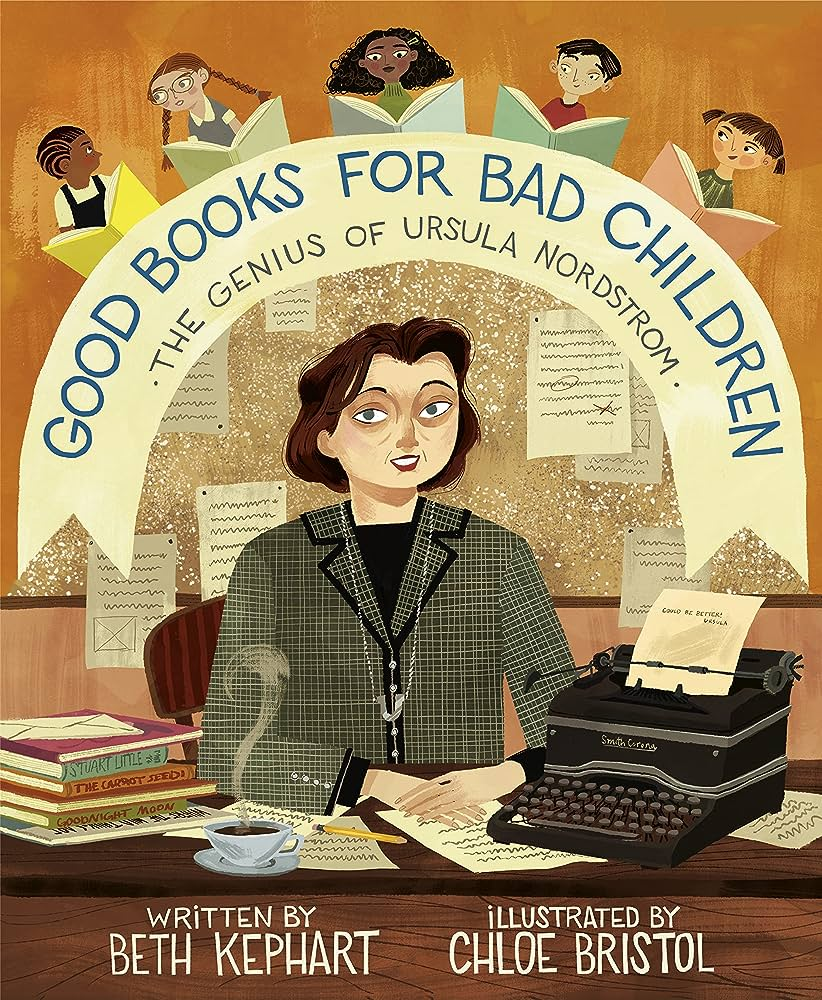
Good Books for Bad Children: The Genius of Ursula Nordstrom by Beth Klephart, illustrated by Chloe Bristol

Published by Anne Schwartz Books

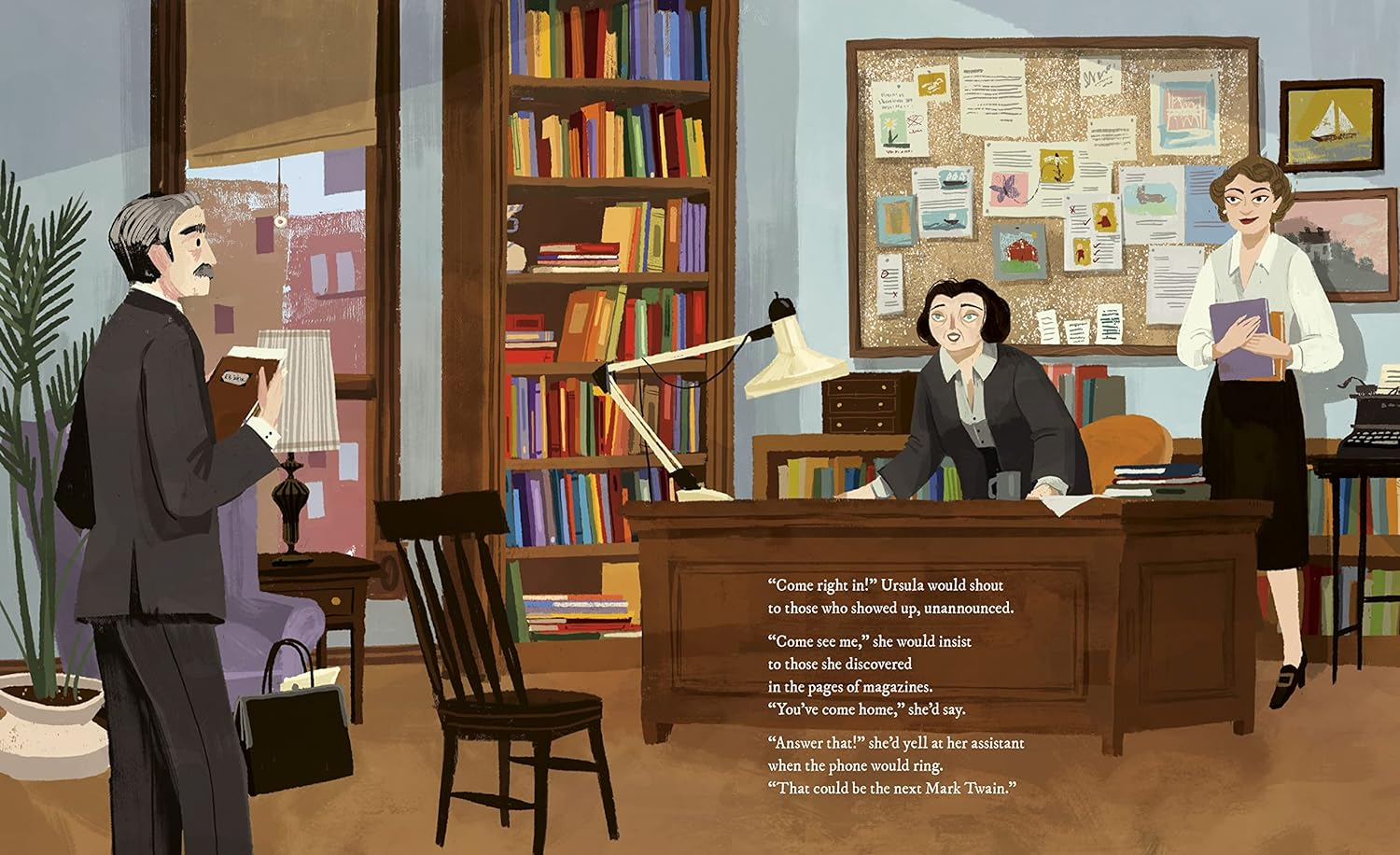
Summary:  Legendary children’s book editor Ursula Nordstrom began life as an only child whose parents divorced when she was seven years old and sent her to boarding school shortly thereafter.  Unable to attend college, she began working as a clerk in the college textbook division of Harper & Brothers, eventually becoming assistant to Louise Raymond, editor in the Department of Books for Boys and Girls.  When Louise left, Ursula was promoted to head the department, and spent the rest of her career nurturing authors like E.B. White, Maurice Sendak, Margaret Wise Brown, and Laura Ingalls Wilder (who is surprisingly never mentioned in this book).  Drawing on her own lonely childhood, Ursula understood that kids have different needs, whether they feel sad, mad, or left out, and that having all sorts of books can be helpful.  Includes an author’s note with additional information about Ursula Nordstrom and a list of sources.  48 pages; grades 1-5.

Pros:  I’ve long been fascinated by Ursula Nordstrom and enjoyed this engaging introduction to her life. The endearing illustrations contain lots of references to the many of the classic books and authors that were part of Ursula’s long career.

Cons:  I’m not sure how many children will be interested in the topic.

Loud and Proud: The Life of Congresswoman Shirley Chisholm by Lesa Cline-Ransome, illustrated by Kaylani Juanita

Published by Simon and Schuster/Paula Wiseman Books

Summary:  Shirley Chisholm learned about the fight for justice by listening through her apartment walls to the union meetings her father was part of.  In college, she took the advice of a professor who told her she should go into politics and joined a variety of movements.  After graduating, marrying, and starting a teaching career, Shirley decided to run for the New York State Assembly in 1964.  A landslide victory led to four years in the Assembly before running for U.S. Representative.  She became the first Black Congresswoman and a force to be reckoned with, fighting for issues that impacted women, children, and the poor.  In 1972, she ran an impressive campaign for President, then returned to Congress for another decade before retiring in 1983.  Her tenure in politics paved the way for other women of color, many of whom are shown on the last page.  Includes an author’s note with additional information and a timeline.  48 pages; grades 2-5.

Pros:  This book is the latest in a recent group of biographies about Shirley Chisholm and provides a comprehensive look at her life, with illustrations that capture her energy and fighting spirit.  

Cons:  It’s long for a picture book and may work better for kids doing research than as a read-aloud.

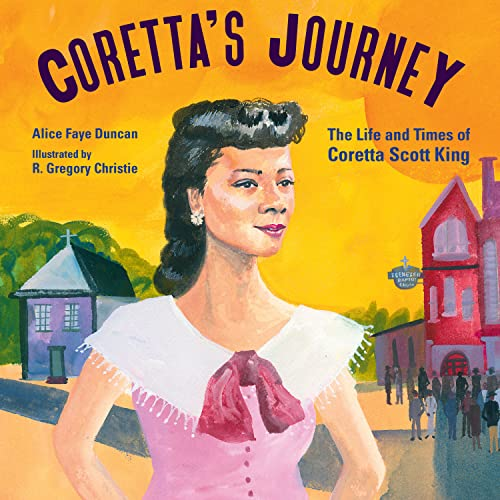
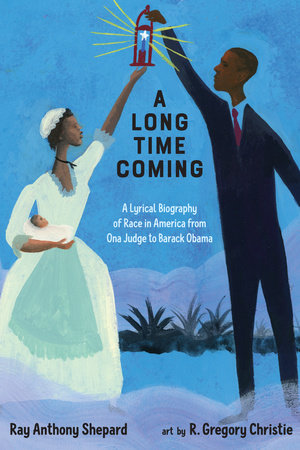
A Long Time Coming: A Lyrical Biography of Race in America from Ona Judge to Barack Obama by Ray Anthony Shepard, illustrated by R. Gregory Christie

Published by Calkins Creek

Summary:  Six Black Americans are profiled in five chapters: Ona Judge, Harriet Tubman and Frederick Douglass together, Ida B. Wells, Martin Luther King, Jr., and Barack Obama.  Their stories are told in verse, weaving together scenes from their lives to paint engaging portraits of their work, their dreams, their discouragements, and their successes and failures.  Each section begins with an illustration and a bit of personal history from the author, connecting his life to his subjects’.  Includes a timeline, additional resources, a bibliography and source notes for each section, and an index.  336 pages; ages 12 and up.

Pros:  Ray Anthony Shepard has written a masterful poetry collection, telling stories that will immediately engage readers.  He doesn’t shy away from telling both the terrible events his subjects witnessed and the less-than-great choices they sometimes made to fully portray their humanity.  Definitely deserving of some serious Coretta Scott King Award recognition.

Cons:  I wish there had been some information on the poetry and poetic forms used.

Two books about Sister Rosetta Tharpe

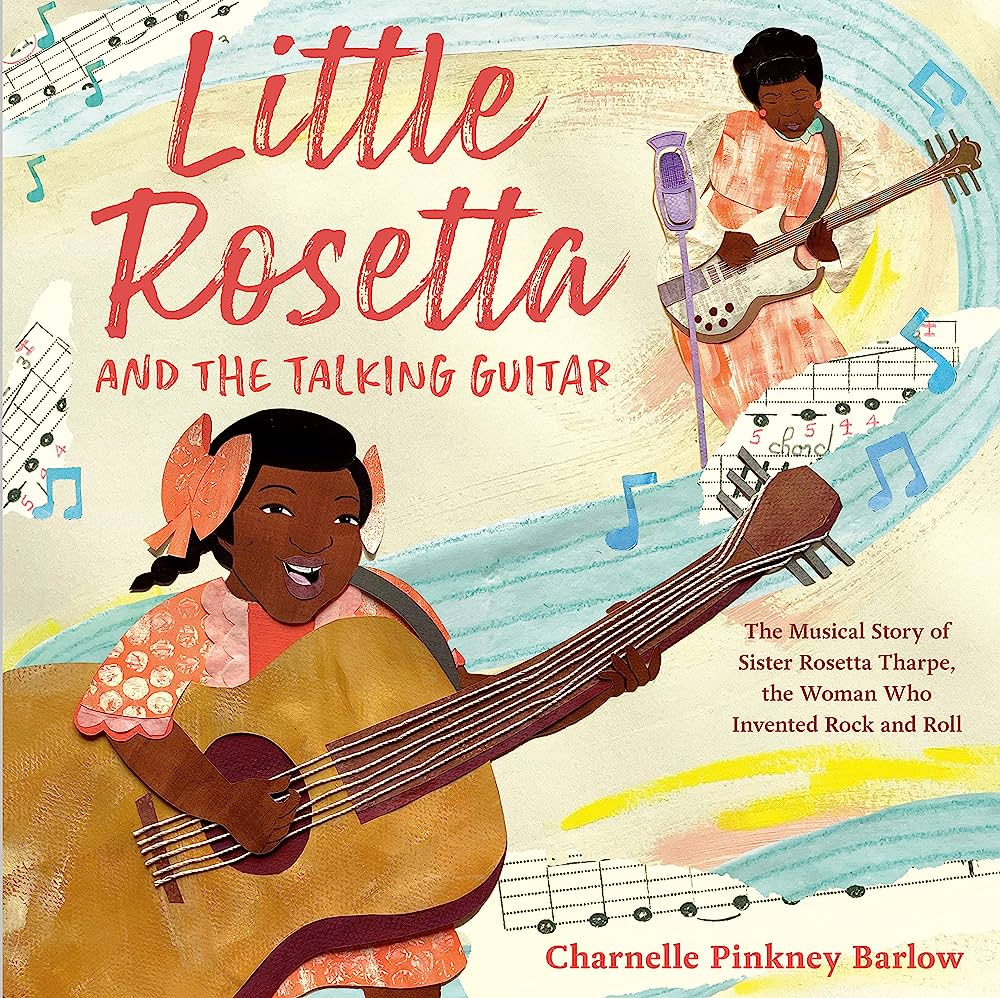
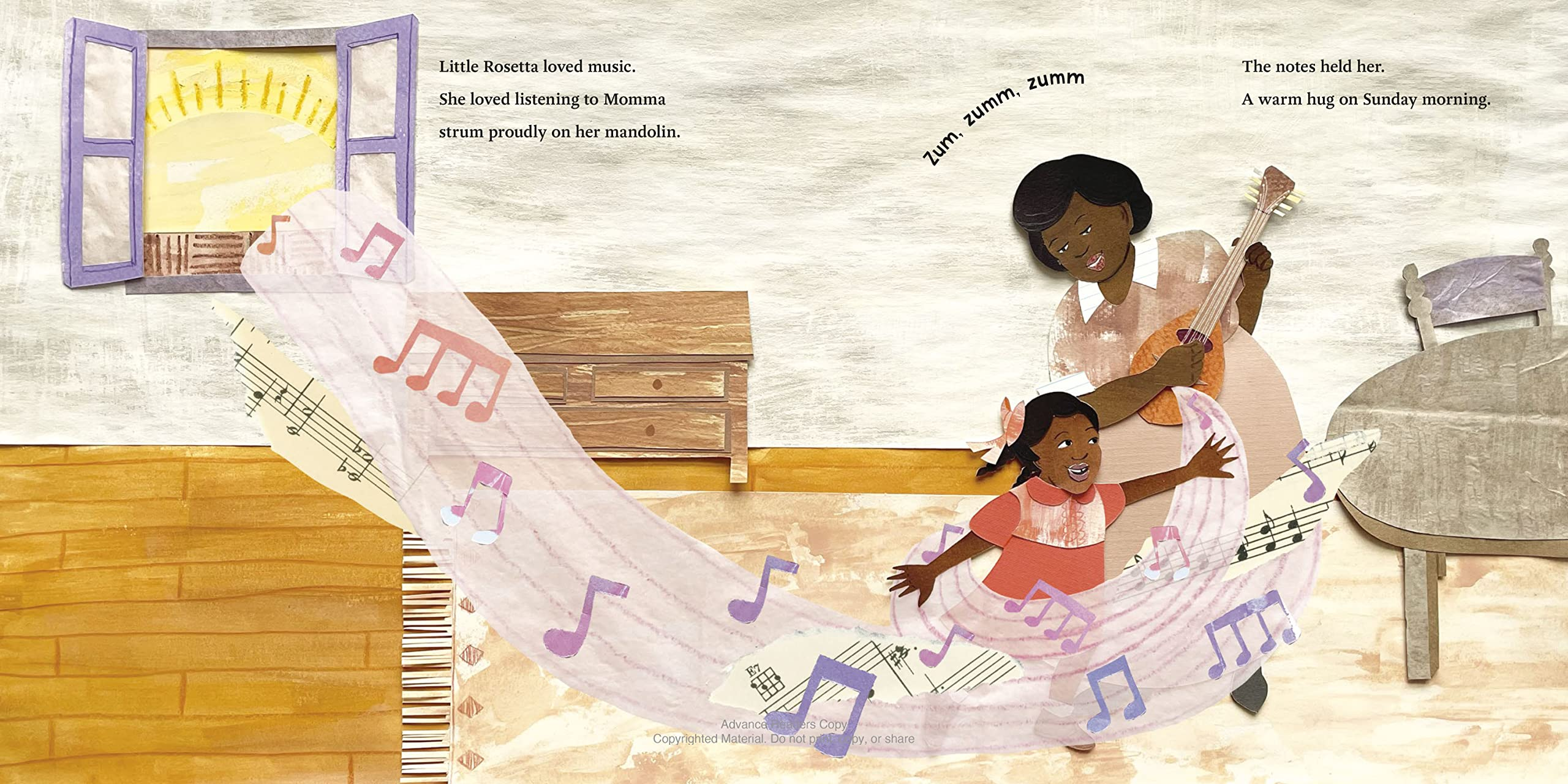
Little Rosetta and the Talking Guitar: The Musical Story of Sister Rosetta Tharpe, the Woman Who Invented Rock and Roll by Charnelle Pinkney Barlow

Published by Doubleday Books for Young Readers

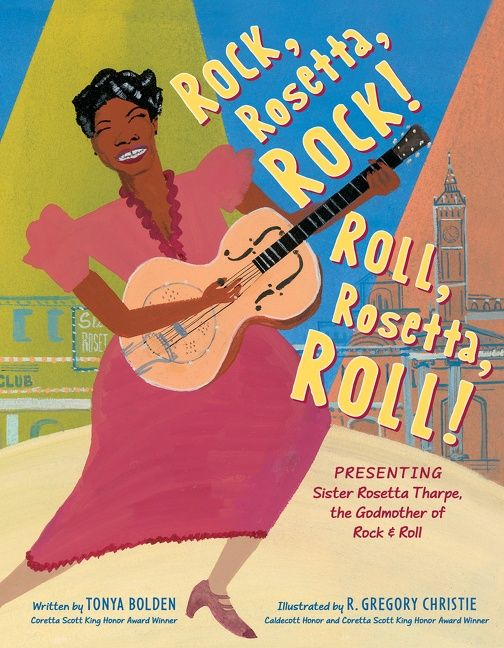
Rock, Rosetta, Rock! Roll, Rosetta, Roll! Presenting Sister Rosetta Tharpe, the Godmother of Rock and Roll by Tonya Bolden, illustrated by R. Gregory Christie

Published by HarperCollins

Summary: Two picture books celebrate the life of Sister Rosetta Tharpe, an early pioneer of the music that would become known as rock and roll. Little Rosetta and the Talking Guitar focuses on Rosetta’s childhood in Cotton Plant, Arkansas. When her musical mother gives her a guitar, Rosetta plays it night and day, incorporating the sounds she hears in her community to create a song that she performs at her church’s anniversary. The last few pages tell about Sister Rosetta’s career as an adult, and there’s an author’s note with a photo and additional information.

Rock, Rosetta, Rock! Roll, Rosetta, Roll! is a celebration of Sister Rosetta’s entire life, told in a rhythmic second-person narrative (“With music in your air, in your hair, in your bones, wiggling your toes–that travelin’ bag sure stayed packed.”). The celebration is all about her music, which was some of the earliest rock and roll. The book ends with a two-page timeline and an author’s note, citing her influence on such musicians as Elvis Presley, Chuck Berry, Little Richard, Johnny Cash, and Aretha Franklin. Both books are 40 pages; ages 4-8.

Pros: I knew nothing about Sister Rosetta Tharpe, so I very much enjoyed these high-energy celebrations of her life, each with their own distinctive illustrations. Take a look at this YouTube video to hear how ahead of its time her music was. These books will bring her some much-deserved recognition.

Cons: There’s not a lot of biographical information in the stories and no additional resources listed, although Rock, Rosetta, Rock! does have a list of sources.

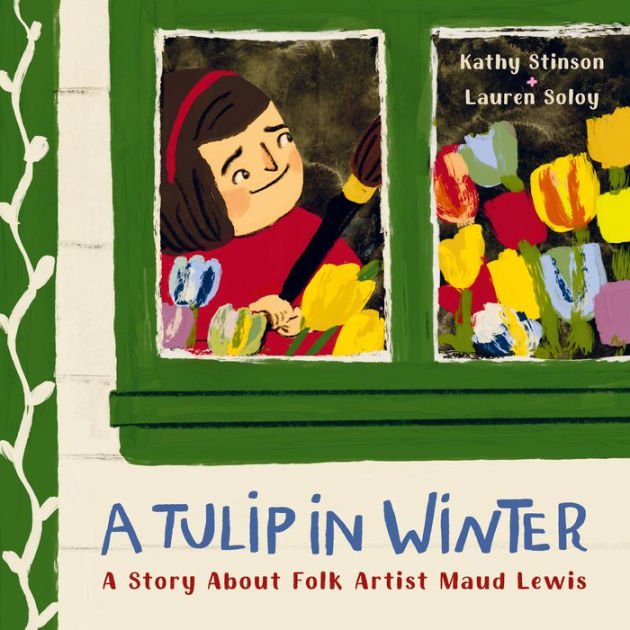
A Tulip in Winter: A Story About Folk Artist Maud Lewis by Kathy Stinson, illustrated by Lauren Soloy

Published by Greystone

Summary:  Maud Dowley was small and bent from a young age, a condition that her doctor could not explain.  Still, she had a happy childhood in Nova Scotia, exploring the world of color through her painting.  As an adult, though, life became tougher.  Her parents died, her brother moved away, and no one would hire Maud because of her physical condition.  Eventually she became the housekeeper, and later the wife, of local fish peddler Everett Lewis.  Although they were poor, they found ways to get Maud paint and she continued with her art, and the two drove around the countryside selling fish and Maud’s paintings.  Eventually, she became too disabled to paint, and Everett pushed her around in a wheelbarrow.  After her death, the little house they had lived in, and that Maud had decorated with paintings, was restored and placed in the Art Gallery of Nova Scotia. Includes additional information and notes from the author and illustrator. 44 pages; grades K-3.

Pros:  A fascinating story of a little-known artist who overcame physical disabilities and poverty to create beautiful works of art full of color and joy.  

Cons:  I wish there had been reproductions of some of Maud’s paintings included.

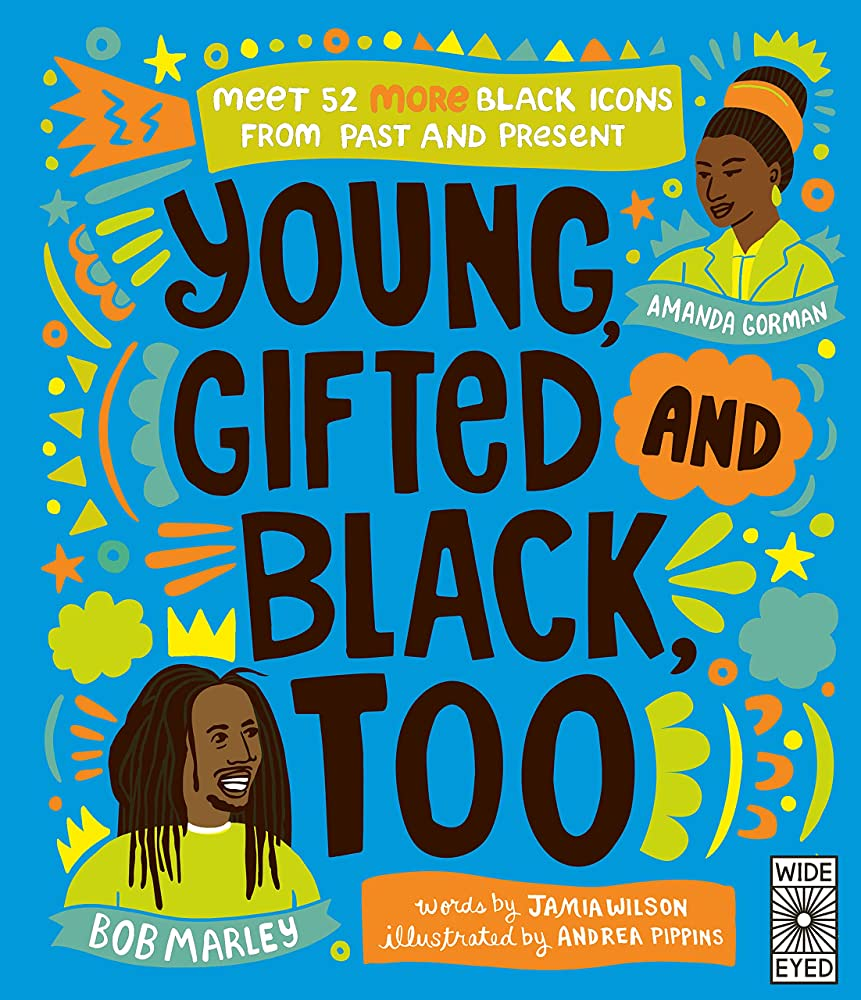
Young, Gifted, and Black, Too: Meet 52 More Black Icons from Past and Present by Jamia Wilson, illustrated by Andrea Pippins

Published by Wide Eyed Editions

Summary:  In this second volume of the series, profiles of 52 Black people from all over the world are arranged chronologically, beginning with Spanish poet Juan Latino (c. 1518-c. 1594) and concluding with Flint, Michigan activist Mari Copeny (2007-present).  Each subject gets several paragraphs of text and a folk art-style illustration that includes objects that show the subject’s area of expertise.  The introduction encourages readers to think about what contributions they want to make to the world.  Includes a glossary.  64 pages; grades 2-6.

Pros:  An excellent addition to Black history collections, with plenty of recognizable names like Thurgood Marshall and Coretta Scott King but lots of lesser-known ones that deserve to have some light shone on them.  There’s lots of international representation and the illustrations do a nice job celebrating the subjects’ achievements.

Cons:  The information is necessarily short, so additional resources will be needed for more in-depth research.

Love Is Loud: How Diane Nash Led the Civil Rights Movement by Sandra Neil Wallace, illustrated by Bryan Collier

Published by Simon and Schuster/Paula Wiseman Books

Summary:  Growing up in Chicago, Diane Nash went to integrated schools and didn’t experience much discrimination.  When she went to Fisk University, though, she was appalled by the Jim Crow laws she encountered in Nashville.  Unwilling to accept the status quo, she overcame her fears to protest segregated lunch counters, eventually leading a movement that led to the mayor desegregating all of Nashville’s counters.  She went on to work with Martin Luther King, Jr. and the Freedom Riders to end segregation of interstate buses.  When she was sent to jail while expecting her first child, her refusal to be released on bail drew national attention.  Diane later returned to Chicago and continued her activism, losing her passport when she traveled to North Vietnam in 1966.  She’s traveled across the U.S. for decades, continuing to deliver her message that love creates change.  Includes an author’s note, an illustrator’s note, a timeline, and additional resources.  48 pages; grades 2-6.

Pros:  An inspiring story of a woman whose incredible courage led to real changes during the civil rights movement, and who has kept that work going to this day (she was awarded the Presidential Medal of Freedom in 2022).  As usual, Bryan Collier’s beautiful watercolor and collage illustrations should be considered for Caldecott or King award.

Cons:  I found the second-person narrative (“You arrive in the spring of 1938…”) confusing when it came to describing some of the events Diane Nash was involved in.

How Do You Spell Unfair? MacNolia Cox and the National Spelling Bee by Carole Boston Weatherford, illustrated by Frank Morrison

Published by Candlewick

Summary:  MacNolia Cox loved reading, studying, and spelling, which paid off when she won her eighth-grade spelling bee in 1936.  This victory qualified her for the Akron, Ohio all-city bee, where her correct spelling of “voluble” made her the first African American winner of that contest and sent her to the National Spelling Bee in Washington, D.C.  After weeks of preparation, fundraising, and a bit of celebrity, MacNolia and her mother were on their way to Washington.  As they headed south, they had to move to the Blacks-only car, and in D.C., they stayed with a local doctor, since they were barred from the all-white hotel.  She and another Black girl had to enter the spelling bee stage from the back door and sit at a separate table from the other contestants.  Despite the discrimination, MacNolia succeeded, advancing to the final five before getting out on the word “nemesis” (which was questioned, since it hadn’t been on the official list).  She didn’t win, but MacNolia helped level the playing field for spellers of the future, including Zaila Avant-garde, who in 2021 became the first African American to win the Scripps National Spelling Bee.  Includes an epilogue with additional information about the fight to end racism and discrimination in spelling bees.  40 pages; grades 2-5.

Pros:  A fascinating story about a courageous girl who persevered to follow her dreams.  The text cleverly asks readers to spell words appropriate to the story, and Frank Morrison’s distinctive illustrations portray MacNolia and her family with dignity and grace.

Cons:  I was sorry to read in the epilogue that MacNolia couldn’t afford college and worked as a maid for a doctor.

Jackie Ormes Draws the Future: The Remarkable Life of a Pioneering Cartoonist by Liz Montague

Published by Random House Studio

Summary:  Jackie Ormes loved drawing from an early age and captured her dreams of adventure through her art.  After high school, she took a job as a freelance reporter for the Pittsburgh Courier, a Black newspaper, and eventually created the cartoon character Torchy Brown, a fashionable nightclub star who moved from the South to Harlem.  Torchy made people laugh but also addressed issues like racism and segregation.  When Jackie and her husband moved to Chicago, Torchy’s run ended, and Jackie had the opportunity to formally study art for the first time in her life.  Several years later, she returned to the world of comics with Patty-Jo, a six-year-old girl who spoke out about current events, and who would become Jackie’s most famous creation.  Includes additional information about Jackie Ormes and Patty-Jo, including a photo of the Patty-Jo doll, described as “America’s first upscale Black play doll,” an author’s note, and a list of selected sources.  40 pages; grades 2-5.

Pros:  A fun and insightful look at cartoonist Jackie Ormes’s life, with illustrations inspired by Jackie’s work, and an emphasis on the theme of the perseverance that led to her success.  Kids will relate to Jackie’s love of art and her determination to be successful and make a difference.

Cons:  The story ends shortly after World War II, and Jackie died in 1985; like another recent biography of Ormes, this doesn’t tell much about the second half of her life.

Contenders: Two Native Baseball Players, One World Series by Traci Sorell, illustrated by Arigon Starr

Published by Kokila

Summary:  The story opens with a key moment of the 1911 World Series: Charles Bender of the Philadelphia Athletics pitching to John Meyers of the New York Giants, who hits a double, then goes on to score the winning run of Game One.  Both Charles and John were from Native Nations, and the book goes back to trace the stories of how each one got to play in the World Series.  Charles grew up on the White Earth Reservation in Minnesota before being sent to an Indian boarding school in Philadelphia.  John’s childhood was spent on the Cahuila reservation in California.  Each endured poverty and racism as they pursued their love of baseball and eventually wound up in the major leagues.  Together, they played in nine World Series; Charles was elected to the Baseball Hall of Fame in 1953, and both were inducted into the American Indian Hall of Fame when it opened in 1972.  The book ends with a list of Native MLB players today, and the racism that’s still present with racist team mascots.  Includes an author’s note, timeline, and list of sources.  48 pages; grades 1-5.

Pros:  A fascinating look at two men who faced hardship and racism throughout their lives but rose above it to become excellent athletes who exemplified sportsmanship and teamwork.

Cons:  Kids I work with seem to have no interest in professional baseball these days.