Rabbit & Robot and Ribbit by Cece Bell

Published by Candlewick Press 
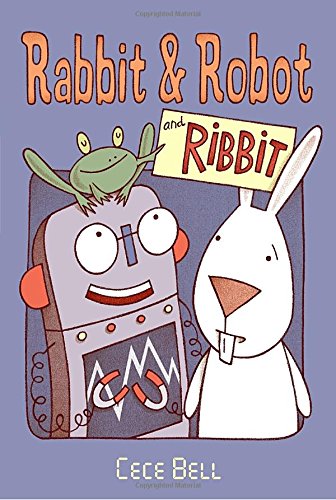
Summary:  When Rabbit goes to visit Robot, he’s dismayed to find that Robot has another friend over, a frog named Ribbit.  Ribbit’s vocabulary is limited to a single word, “Ribbit”, which Robot is able to understand using his frog translation software.  Rabbit starts feeling jealous, and pretty soon Rabbit’s and Ribbit’s emotions are running so high that Robot overheats himself trying to interpret them all.  When Robot collapses, Rabbit and Ribbit have to work together to learn how to revive him.  In the end, the three friends discover that three isn’t really a crowd and learn to play together.  48 pages; grades K-3.

Pros:  The sequel to Rabbit and Robot: The Sleepover, this long easy reader/short chapter book with cartoon illustrations and silly dialogue is just right for emerging independent readers.

Cons:  Let’s hope Cece Bell doesn’t wait another 2 ½ years before writing another Rabbit and Robot book.

Living in…Brazil by Chloe Perkins, illustrated by Tom Woolley

Published by Simon and Schuster 

Summary:  Kids will find out what it’s like to live in Brazil, courtesy of an enthusiastic narrator whose home is in Recife, on the coast.  He takes readers on a tour of Brazil, describing its geography, natural features, and some of the cities.  Then he focuses on his own home, giving kids a look at what his typical day is like.  Additional information about Brazil is conveyed through what the narrator learns about in school.  The last page has a picture of the Brazilian flag and some fast facts.  32 pages; grades K-3.

Pros:  Part of a new Living in… series, this book would be enjoyed by kids who like learning about other cultures.  The series would also work well for a classroom research project on different countries.

Cons:  A detailed map of Brazil and some photos would have been nice additions.

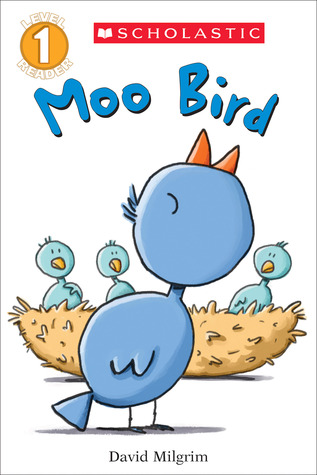
Moo Bird by David Milgrim

Published by Scholastic 

Summary: Four birds wake up in their nest; there are three “tweets”…and a “moo”! The moo bird is pushed out of the nest with the suggestion that he go find some cows. Off he goes, crossing paths with a pig, a horse, and a sheep, all of whom send him on his way. Even finding a cow proves disappointing, as she just thinks he’s confused. He starts to head back to the nest, wings drooping and black cloud over his head, when he finds another moo-er. It looks like the beginning of a beautiful friendship. 32 pages; ages 4-6.

Pros: With comic style illustrations and just a few words per page, this is a sure winner for those at the earliest stages of reading.

Cons: I am so busy painting my new house that Moo Bird is about the longest book I have time to read.

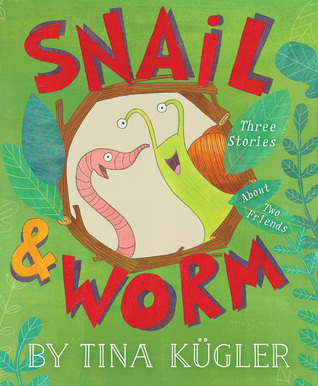
Snail & Worm: Three Stories About Two Friends by Tina Kugler

Published by Houghton Mifflin Harcourt

Summary:  As the title suggests, this book contains three brief stories about Snail and Worm, who find each other and become friends in the first tale.  The vocabulary and humor are perfect for beginning readers.  Each friend gets his/her own colored font to make it easy to keep track of the dialog.  The back cover says to look for more Snail & Worm adventures coming soon.  32 pages; grades PreK-1.

Pros:  An excellent choice for either a read-aloud or a first independent reader.  Kids will get a chuckle from both the cute, cartoon-style illustrations and the text.

Cons:  While five-year-olds will find the humor just right, it’s not quite up to Elephant & Piggie standards.

Duck, Duck, Porcupine! by Salina Yoon

Published by Bloomsbury 

Summary:  Big Duck has all the answers…or at least she thinks she does, and isn’t afraid to let her friends Porcupine and Little Duck know about them.  It’s Little Duck, though, who’s really paying attention.  Even though he doesn’t say a word, he manages to fix things when Big Duck’s ways don’t quite work out.  Duck, Duck, and Porcupine have three adventures in this book: going on a picnic, celebrating Porcupine’s birthday, and planning a camping trip.  Each story is told entirely through dialog (in speech bubbles) and simple illustrations.  64 pages; grades K-2.

Pros:  These funny stories and colorful illustrations will find a ready audience with Elephant and Piggie fans.  Each character has a distinctive personality, even Little Duck, who never says a word.  I love how he gazes at the reader at the end of each story, as if he can’t really believe Big Duck is for real.  Perfect as either a read-aloud or for beginning readers.

Cons:  Porcupine’s character isn’t quite as well-developed as the two ducks; hopefully we’ll get to know him a bit better in future installments.

Noodlehead Nightmares by Tedd Arnold, Martha Hamilton, and Mitch Weiss

Published by Holiday House 

Summary: Mac and Mac are twin noodleheads, meaning their heads are hollow tubes…with predictable results. In each of the three stories in this book, they experience some kind of nightmare. In the first, they decide to sleep outside to avoid having to make their beds the next morning, but scary sounds drive them back indoors. In the next episode, they have to decide how to divide Mom’s homemade apple pie. A non-noodlehead friend comes along and suggests they take a nap. The one who has the best dream will win. Of course, the two of them wake up to an empty pie plate and a full friend. The final installments involves a lost pillow and a series of nightmares that results in the two boys sleeping under their beds…a solution that gets them out of making their beds the next morning. 48 pages; ages 4-8.

Pros: The goofy story lines and Arnold’s pop-eyed comic book illustrations will have beginner readers clamoring for more noodleheads.

Cons: Not the most cerebral read I’ve experienced this year.

Andy & Sandy books by Tomie dePaola, co-written with Jim Lewis

Published by Simon and Schuster


Summary:  Andy is a short, quiet, dark-haired boy; Sandy is a tall, louder, red-haired girl.  In their first adventure, they both play alone at the playground until they realize they can only enjoy the seesaw if they get together.  In the second installment, a playdate turns into a series of masquerades when they discover an old trunk filled with dress-up clothes.  Book #3 is due out in October.  32 pages; ages 3-7.

Pros:  Told in about two dozen short, simple sentences, these would be excellent first books for beginning readers.  As always, Tomie dePaola’s illustrations are charming.

Cons:  The stories lack the originality and humor of another set of easy reader friends, Elephant and Piggie.

In! Over! And On! (The Farm) by Ethan Long

Published by G. P. Putnam’s Sons Books for Young Readers

Summary:  A pig, chicken, goat, and cow explore the concepts of in, out, over, under, around, on, and off in three very short cartoon-style stories.  Each story includes one lift-the-flap.  40 pages; ages 3-6.

Pros:  This would be a fun read-aloud to young children as well as a good first book for emergent readers to try on their own.  The cartoon illustrations are sure to be enjoyed, and lifting the flaps is always fun.  Also a good introduction to the concepts listed above.

Cons:  Those flaps may not survive long if this is a library purchase.

Pete Makes a Mistake by Emily Arnold McCully; Crow Makes a Friend by Margaret Peot; Pie for Chuck by Pat Schories

Published by Holiday House


Summary:  In Pete Makes a Mistake, Pete forgets to deliver one of his sister’s birthday party invitations, resulting in some misunderstandings and hurt feelings before all is put right.  Crow makes a friend from sticks, then snow in Crow Makes a Friend, but finally realizes a flesh and blood friend is the most lasting kind.  Chuck the woodchuck can see and smell the pie in Pie for Chuck, but can’t reach it until he gets some help from his friends.  24 pages each; ages 4-7.

Pros:  These new entries into Holiday House’s I Like to Read series are all colorful, appealing offerings for emergent readers.  Fountas and Pinnell types: the website says that all the books are levels A through G.  A bit larger than the typical easy reader, these have more of a picture book feel, yet are accessible to even the newest readers.

Cons: It’s hard to make a page-turning plot with fewer than 30 words.

We Dig Worms! By Kevin McCloskey

Published by TOON Books

 Summary:  Did you know that the longest worm (the Australian Gippsland Worm) grows to be ten feet long?  That there can be millions of earthworms living in a small park?  The lowly worm gets some respect in this early reader.  Billed as a cartoon by the publisher, the pages are all done on brown paper bags; regular text is supplemented with frequent cartoon bubbles.  Readers will gain a new respect for worms and the important role they play in keeping soil rich and fertile.  Ages 4-8.

Pros:  This book, which resembles a brown paper lunch bag in size, shape, and color, is a fun and light introduction to an often overlooked animal that can be found in your own backyard.

Cons:  The intended audience of beginning readers may be challenged by such words as setae and clitellum.