Music and art

How Sweet the Sound: A Soundtrack for America by Kwame Alexander, illustrated by Charly Palmer (Little, Brown Books for Young Readers, 48 pages, ages 7 and up). Kwame Alexander’s poetry and Charly Palmer’s bright, bold paintings trace the history of Black music, beginning with drumming, dancing, and chanting in Africa, then moving to the gospel music and blues that grew out of slavery in America. Next comes jazz, which, along with the blues, leads to rock and roll, and finally, hip hop and rap. “Listen to the soundtrack of America/a symphony/of refuge and redemption/the sweet sound of a people/surviving and thriving/all the while learning/to love themselves/ by singing it LOUD and PROUD.” Includes six pages of “musical notes” that offer additional information about each musician along with a thumbnail portrait from the illustrations.

Music fans of all ages will appreciate this celebration of Black musicians who have made incredible contributions to American music. Every illustration feels like a party, and readers will have fun figuring out who’s who in them. Put this on the watch list for Caldecott and Coretta Scott King awards.

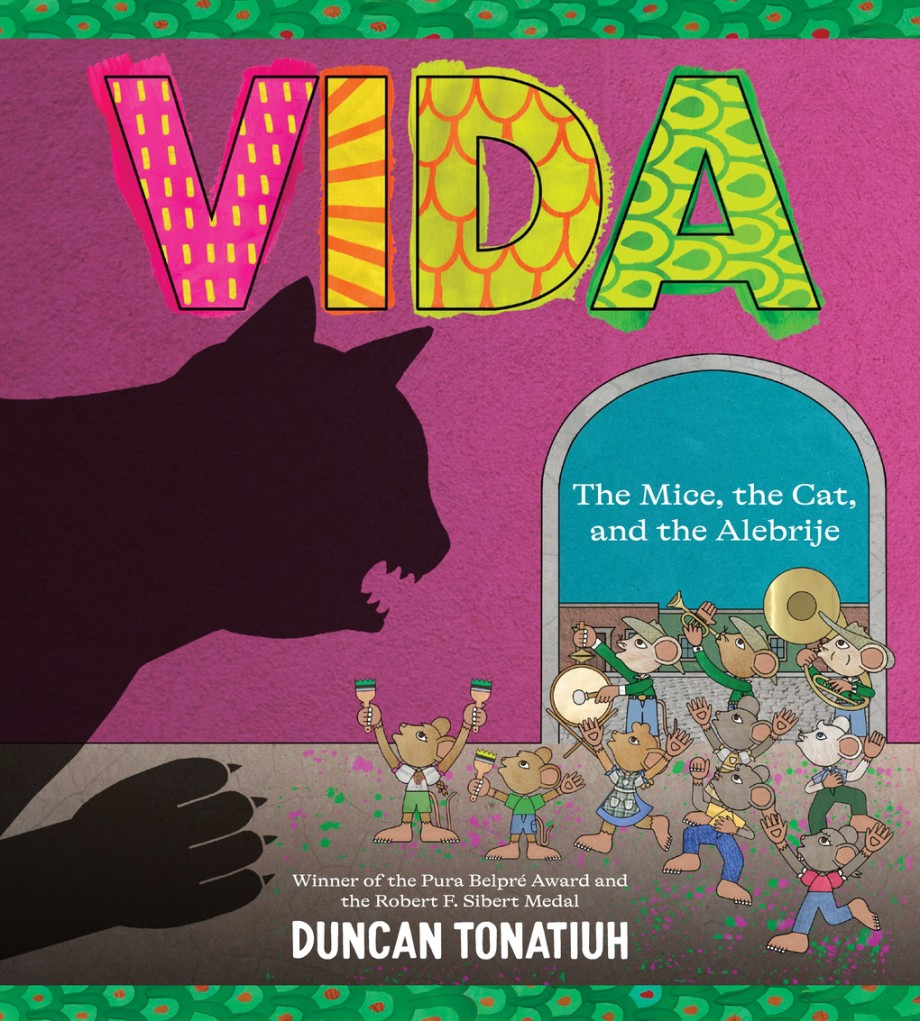
Vida: The Mice, the Cat, and the Alebrije by Duncan Tonatiuh (Harry N. Abrams, 48 pages, ages 5 and up). Mousetepec is a thriving mouse community with a vibrant culture, filled with art, music, good food, and fiestas. But one day a cat appears, and gradually the mice go into hiding, no longer able to engage in their enjoyable pursuits. Vida and her brother miss their old life and try to re-create it by making brightly-colored animals in their house. One night Vida has a dream about a fantastic creature called an alebrije, and when she wakes up, she knows how to scare the cat away. She gathers all the mice to make a huge creature like the one in her dream, covering it with brilliantly painted designs. When it’s completed, the mice lure the cat with a fiesta and loud music. The alebrije and all the noise terrify the cat, and Mousetepec is able to thrive once again. Includes an author’s note with information on alebrijes and Pedro Linares, the artist who created them. There’s also a note on the inspiration for Vida, which is a response to Aesop’s fable about belling the cat, and champions art and solidarity for overcoming evil forces in the world; also a glossary and pronunciation guide and a bibliography.

I read this book just hours after learning about the Fall of Freedom movement taking place this weekend, with artists all over the country creating works to protest what is happening in the U.S (you can read about it on my other blog). It’s a perfect complement to that, with the themes of art, community, and resistance, plus it’s an engaging story with plenty of cute mice and colorful creatures, plus it features Duncan Tonatiuh’s unique illustrations that manage to work in a few lessons about Mexican art. So win-win-win, and maybe a contender for an award or two.

Fairy tales

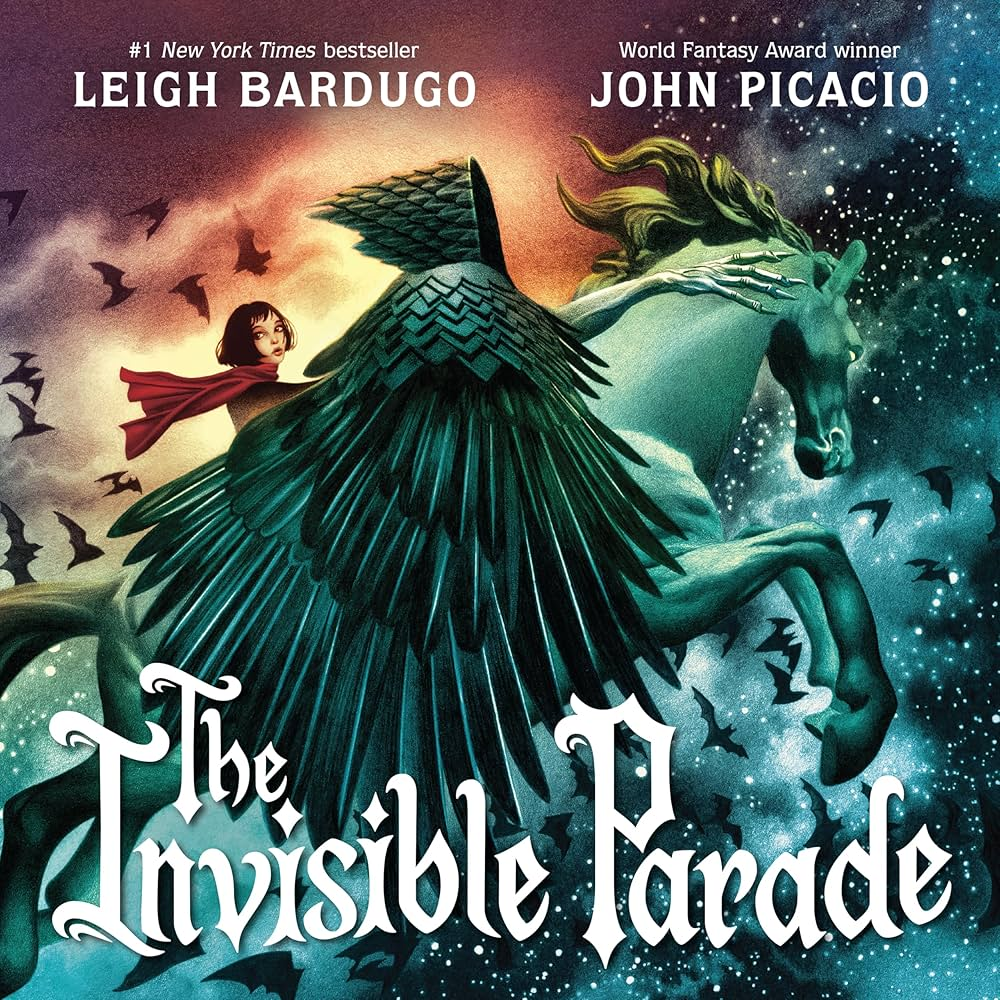
The Invisible Parade by Leigh Bardugo, illustrated by John Picacio (Little, Brown Books for Young Readers, 60 pages, grades 3-6). There’s a party planned for the evening, but Cala doesn’t want to go, since she is still grieving about her grandfather’s recent death. As the family does errands around town, illustrations show her mom giving money to a man sitting and begging, Cala bumping into a sneezing woman, and her siblings arguing. She ignores them all, feeling too sad. That night at the cemetery, Cala sees the ghosts of people who have parallels to those from earlier in the day. A skeleton on a horse is sick, another one is hungry, and a third likes to argue. They explain to her that helping sick people can lead to a caring heart, witnessing hunger can make you grateful, and fighting can provide a chance to forgive. A fourth rider, Death, shows Cala the ancestors, including her grandfather, who are still with her. By the end, Cala is no longer afraid of hunger, sickness, anger, or death, and is ready to join the party. Includes notes from the author and the illustrator.

This collaboration between a best-selling YA author and a Hugo Award winning illustrator offers a dark fairy tale perfect for Día de Muertos. The story will get readers thinking about their fears and the good that can happen when they face them, as well as how to handle grief. The illustrations will be loved by anyone who appreciates all things spooky. I saw this recommended for ages 4-8, but I think older kids would get more out of the tale and be less likely to be frightened by the pictures.

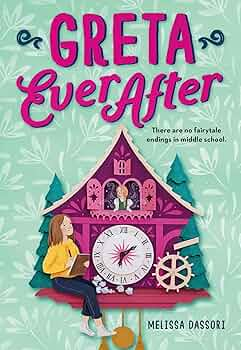
Greta Ever After by Melissa Dassori (Christy Ottaviano Books, 304 pages, grades 4-7). Greta has high hopes as well as high anxiety as seventh grade begins. Her best friends are excelling at sports, student government, and acting, and she wants to show everyone she can be a star journalist. A magical cuckoo clock she receives for her twelfth birthday has a wooden dancer girl who comes to life for Greta, introducing herself as Lulu and offering Greta the chance to escape life by entering the clock with her. Greta is tempted, especially when she finds herself struggling to come up with good news stories to write about. In desperation, she starts to secretly create situations around school that she can report on. Before long, she’s getting the praise she was seeking for her writing, but knows that she’s compromised her journalistic integrity. As the deadline to join Lulu closes in, Greta must decide whether she wants to escape from life or stick with getting through the tough times.

This was a fun mix of realistic middle school story and fairy tale magic, with a performance of Into the Woods allowing Greta and her friends to enter into a different sort of fairy world. I guess maybe I’m not up on my journalistic ethics, but I thought some of Greta’s ideas for creating news were pretty cool, and that the reactions when her family, teachers, and friends found about them were a bit overblown. Greta is a relatable character, flaws and all, and readers will connect with her dilemmas.

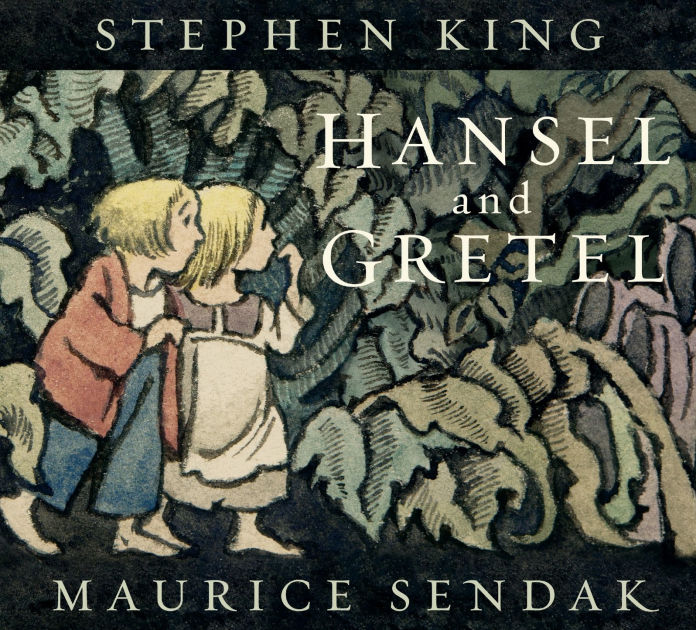
Hansel and Gretel by Stephen King, illustrated by Maurice Sendak (HarperCollins, 48 pages, all ages). The classic fairy tale is retold by horror legend Stephen King and illustrated using set and costume designed by the equally legendary Maurice Sendak for a 1997 production of the opera Hansel and Gretel.  Side note: the opera was composed by Engelbert Humperdinck, whom I remember as a singer from the 60’s and 70’s. I learned that the pop singer took his stage name from the German composer who created the opera Hansel and Gretel in 1893. The name dropping is fierce, and surely HarperCollins is counting on this to generate sales heading into the holiday season.

It’s a pretty long but engaging retelling, and the illustrations are all that you could want in a story whose candy-studded gingerbread house conceals a child-eating witch. In his introduction, King describes much of Sendak’s work as “sunny exterior, dark in the center…or sometimes vice versa,” and his story pays homage to this sensibility. I usually steer clear of books with celebrity authors, but in this case, I think it’s worth a look and most likely, a purchase.

Cinderella stories

CeeCee: Underground Railroad by Shana Keller, illustrated by Laura Freeman (Charlesbridge, 32 pages, grades 1-5). Cecelia, or CeeCee for short, knows that her real name is different, a name that she keeps on a piece of paper hidden away from the people she works for on a Maryland plantation. The mother and two daughters there are always finding ways to scold and punish her, no matter how hard she works, but CeeCee has dreams of one day finding a better life. Binty the cook, in the role of the fairy godmother, sneaks CeeCee food and assures her that she can do anything. She also tells the girl about a prince named Moses who can give her a better life. After months of planning and secretly making herself new clothes to wear, CeeCee is runs away one night to find the mysterious prince. She’s surprised to learn that Moses is a woman named Harriet Tubman, who inspires CeeCee enough to finally share that she is named Edea, after her mama. Includes additional information about Harriet Tubman, names during slavery, Cinderella, and fairy tales.

This is a really interesting combination of Cinderella story and information about Harriet Tubman and the Underground Railroad that would make an excellent compare and contrast exercise with some of the many other versions of Cinderella. The theme of the power of names and the dehumanizing impact of taking away someone’s name could start some good discussions.

The Fairy Tale Fixers: Cinderella by Deborah Underwood, illustrated by Jorge Lacera (Clarion Books, 128 pages, grades 1-5). The Fairy Tale Fixer is just getting ready to go home to a Friday evening pancake supper, when the phone rings. It’s another mouse, and she has an emergency: the house where she lives is filled with screaming and she needs the Fixer to make things right. When the Fixer reluctantly takes the case, he discovers a girl named Cinderella being yelled at by her stepmother and stepsisters. His solution? Send Cinderella to the ball and marry her off to the prince. After all, doesn’t every girl want to marry a prince? But things go off the fairy-tale tracks at that point, and the Fixer learns that it’s a good idea to ask someone what she wants before assuming anything. Cinderella eventually gets her unconventional happily-ever-after, and the Fixer gets a new assistant and a call about a new case: an evil fairy is about to put a princess to sleep for 100 years.

The familiar story gets a fun twist in this new series opener featuring a couple of mice who fracture fairy tales. Kids just starting to read longer books will enjoy the humor and comparing the traditional story to the new version, with the end giving a preview of book 2.

Animal humor

The Bear Out There by Jess Hannigan (Quill Tree Books, 48 pages, ages 4-8). A jumpy girl narrator tells readers why she was scared by their knock: there is a bear out there! She shares the three signs of how to tell when a bear is nearby: raised arm hair, a feeling of being watched, and super itchy feet. Readers see the bear from the window, but the girl doesn’t see it until it’s at the door! She runs away screaming , while the bear explains, “This is literally my house.” While making a cup of tea, the bear relates that break-ins happen all the time, showing a book lying on the table called “Goldilocks, Friend of Foe?” It’s ridiculous, the bear complains, because guests are always welcome as long as they ask first. “I would be pleased to offer you a warm bed to stay the night, should you need it.”

Kids will get a big kick out of the over-the-top reactions from the girl narrator, as well as her less than accurate know-it-all attitude. The illustrations of the girl’s freak-outs, as well as those showing the bear that she doesn’t see, are sure to bring some laughs. This would make a great addition to a fractured fairy tale unit.

We Are the Wibbly! A Tadpole’s Tale by Sarah Tagholm, illustrated byJane McGuinness (Published by Bloomsbury Children’s Books, 32 pages, ages 3-7). A frog narrates its life cycle, from egg to full-grown frog, using its own unique terms like “Wibbly” (the tadpole still inside the egg), “water-flying” (swimming), and “air-flying” (jumping). Just as it gets used to one stage, it notices its friends are onto the next one. Life inside the egg is comfortable, but suddenly the others are hatching and water-flying. By the time water-flying has become second nature, the other tadpoles are growing legs. And so it goes, until finally, the wibbly have all become full-grown frogs and gaze fondly at some eggs in the pond, asking each other, “Do you remember when we were the Wibbly? Includes additional information about the life cycle of a frog.

This is a fun introduction to a frog’s life cycle, told in way that kind of reminded me of Elmo with slightly quirky sentence structure, made-up words, and the repeated refrain of “OH MY CRIKEYS!” which kids will enjoy saying. Kids may relate to the narrator noticing when others seem to be growing and changing faster than it does and reassured by the fact that eventually everyone gets to the same place.

Inspiring stories for tough times

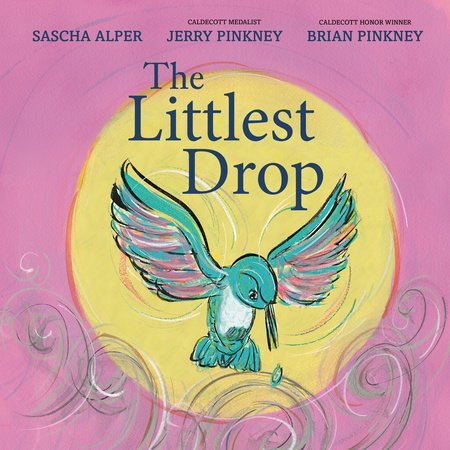
The Littlest Drop by Sascha Alper, illustrated by Jerry Pinkney and Brian Pinkney (Anne Schwartz Books, 40 pages, ages 4-9). Based on a story told by environmental activist and Nobel Peace Prize winner Wangari Maathai, this folktale features a hummingbird whose new nest is threatened by a wildfire. The other animals run to the river, too terrified to move, but the hummingbird takes action to put out the fire, even though she can only carry a single drop of water in her beak. As the others watch her tirelessly carrying drop after drop to the fire, they ask her what she’s doing. “I am doing what I can.” Inspired, the animals start to think of what they can do, and before long, elephants, monkeys, leopards, giraffes, and even tiny ants are working to fight the fire. When the sun rises, they are all exhausted, but the hummingbird lets one more drop of water fall…and the fire is gone. Includes an author’s note tracing the origins of this folktale, and an illustrator’s note in which Brian Pinkney describes how he used sketches left by his late father Jerry to create the finished illustrations.

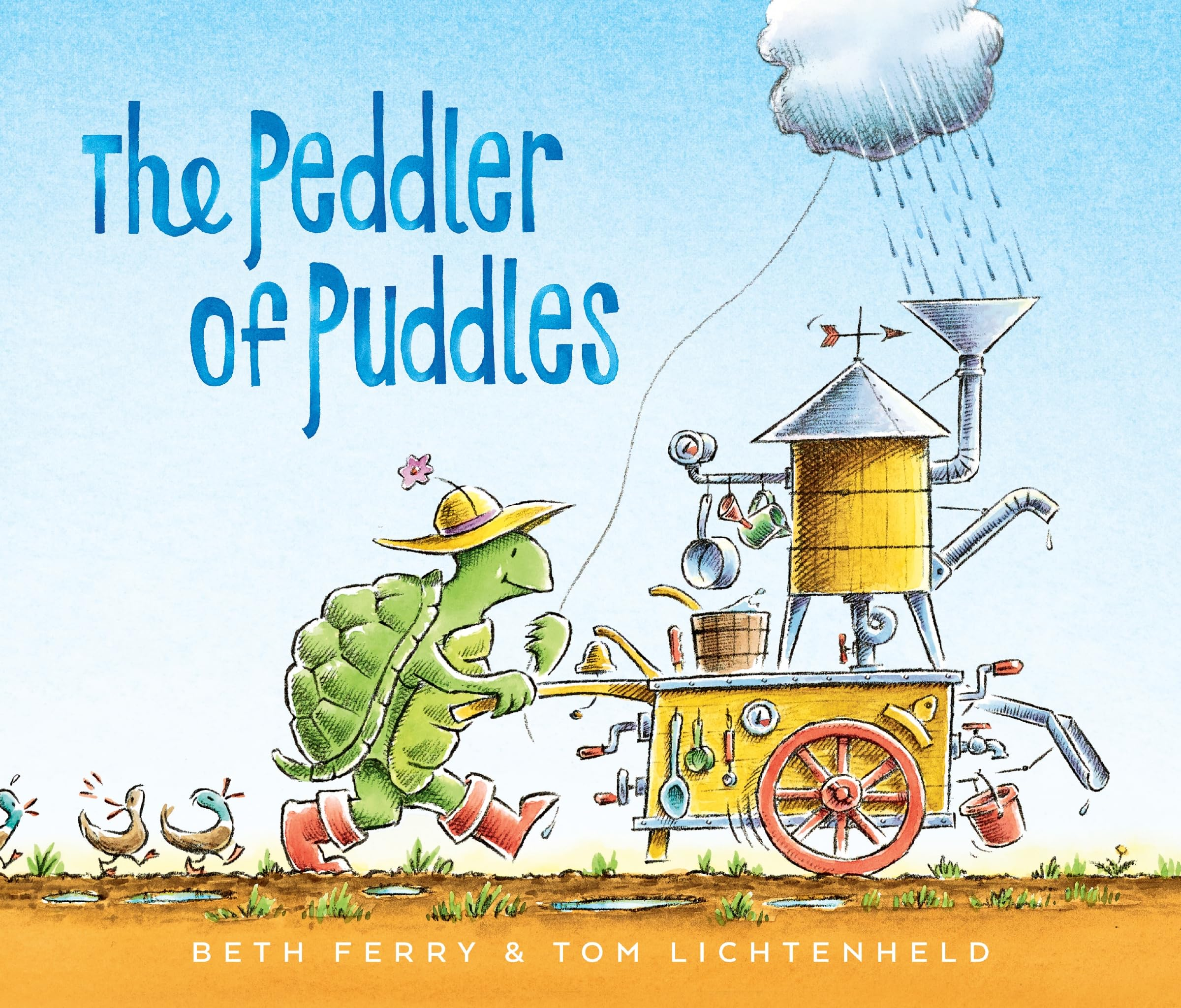
The Peddler of Puddles by Beth Ferry, illustrated by Tom Lichtenheld (Clarion Books, 48 pages, ages 4-8). The peddler is a turtle whose puddle-making machine (complete with a cloud on a string like a balloon) allows him to make custom puddles for his customers, from a tiny one for a hummingbird to ones large enough for hundreds of frogs or for a child to sail a boat across. Everyone loves the peddler, but he’s constantly on the move, never staying in one place for long. One day, he goes to the seashore where he sees the biggest puddle ever and befriends a girl who shows him how to play in the ocean. When she tells him she has to go home, the peddler feels sad because he realizes he doesn’t have a home. Over the horizon appear his friends, looking for him. They help him dig his cart out of the sand and lead him back to their forest. There, they’ve dug a huge hole, which the peddler fills with water, and they all work together to turn his cart into a new house. His house and the pond become a home for the turtle and all of his friends.

Both books will appeal to kids with their lively and colorful (although very different) illustrations of animal communities, and each one carries a simple but effective message for our time: friendship, community, and how even small actions can make a big difference to people and issues that you care about.

Mythology

The Monster and the Maze (Monkey King and the World of Myths) by Maple Lam (G. P. Putnam’s Sons Books for Young Readers, 240 pages, grades 3-7). Sun Wukong, or the Monkey King, comes to life in a graphic tale combining Chinese and Greek mythologies. Bold, confident and fearless, the Monkey King sneaks into heaven where he confronts the gods with his request to become one of them. Although he’s a lowly beast, he’s told his wish will be considered if he can go on a quest to slay a monster. Sun Wukong ends up in Crete, on a quest to destroy the legendary Minotaur. When he finds the monster, tough, he learns that he’s not evil and is suffering at the hands of his father, King Aegeus. The Monkey King discovers the problem–an evil spirit has possessed Aegeus–and is able to convince the king to release the spirit and return to his kindly ways, making an impassioned case for beasts and monsters in the process. Sun Wukong’s work may be done in Crete, but it looks like there will be more adventures for him ahead. The two mythologies are woven together seamlessly, making a fun and extremely engaging story. Includes additional information about the mythical characters and an author’s note.

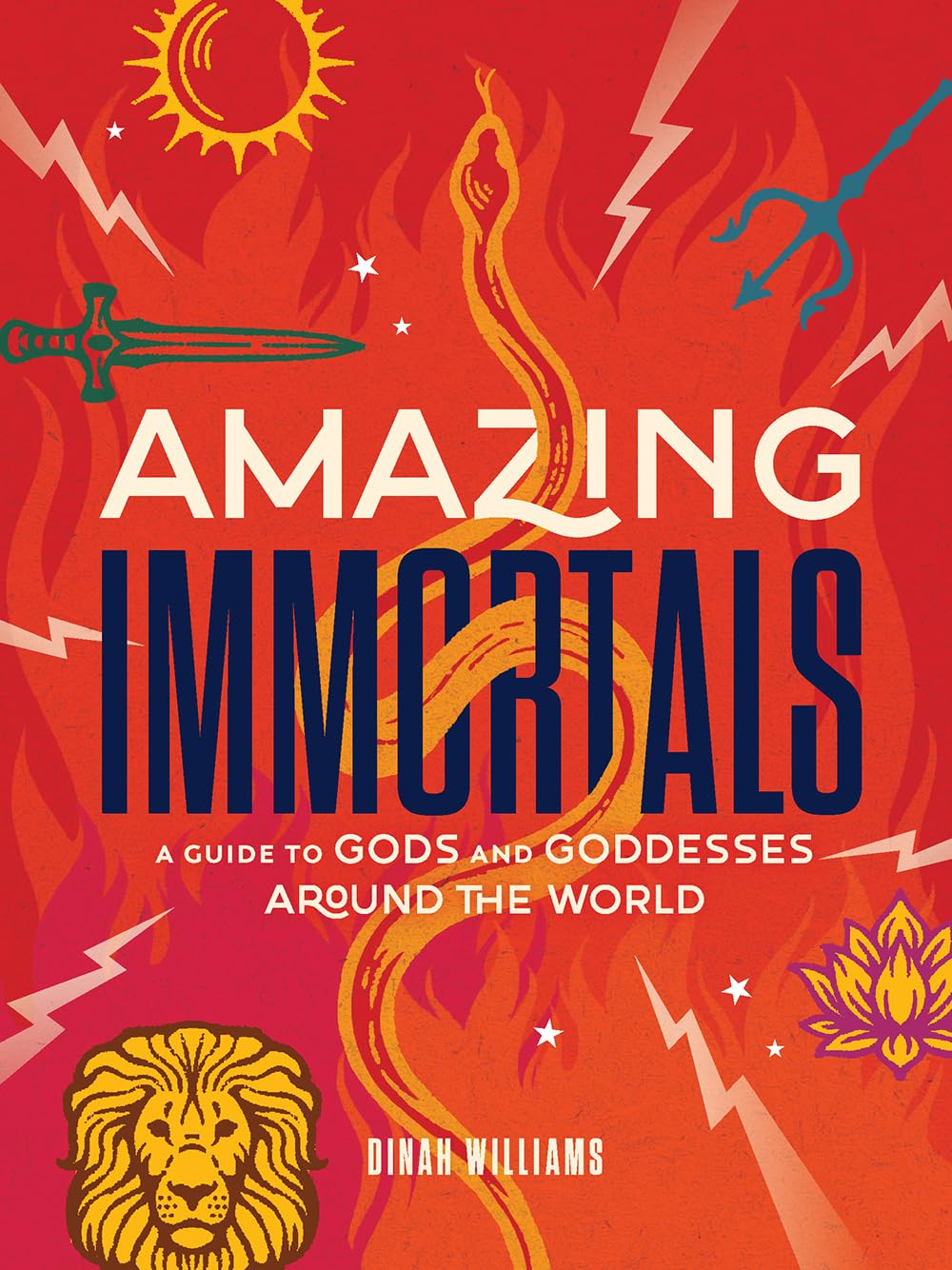
Amazing Immortals: A Guide to Gods and Goddesses Around the World by Dinah Williams (Harry N. Abrams, 208 pages, grades 4-8). Arranged by categories of power (creation, weather, tricksters, etc.), this collection of myths focuses on cultures other than the familiar Greek and Roman ones. Each two-page spread contains a brief retelling of the myth, along with gorgeous color art, created by 17 different artists. The left-hand margin contains information about the country (or region), culture, and era of each myth, which is unfortunately small enough that it took some diligent searching for me to discover. Each myth includes a fun fact or a tie-in to modern times, like Marvel movies or Rick Riordan books. The back matter includes information about the author and artists, as well as an index, a list for further reading, and an extensive bibliography, making this a great starting place for more research. It’s an amazing and visually appealing resource for upper elementary and middle school mythology fans.

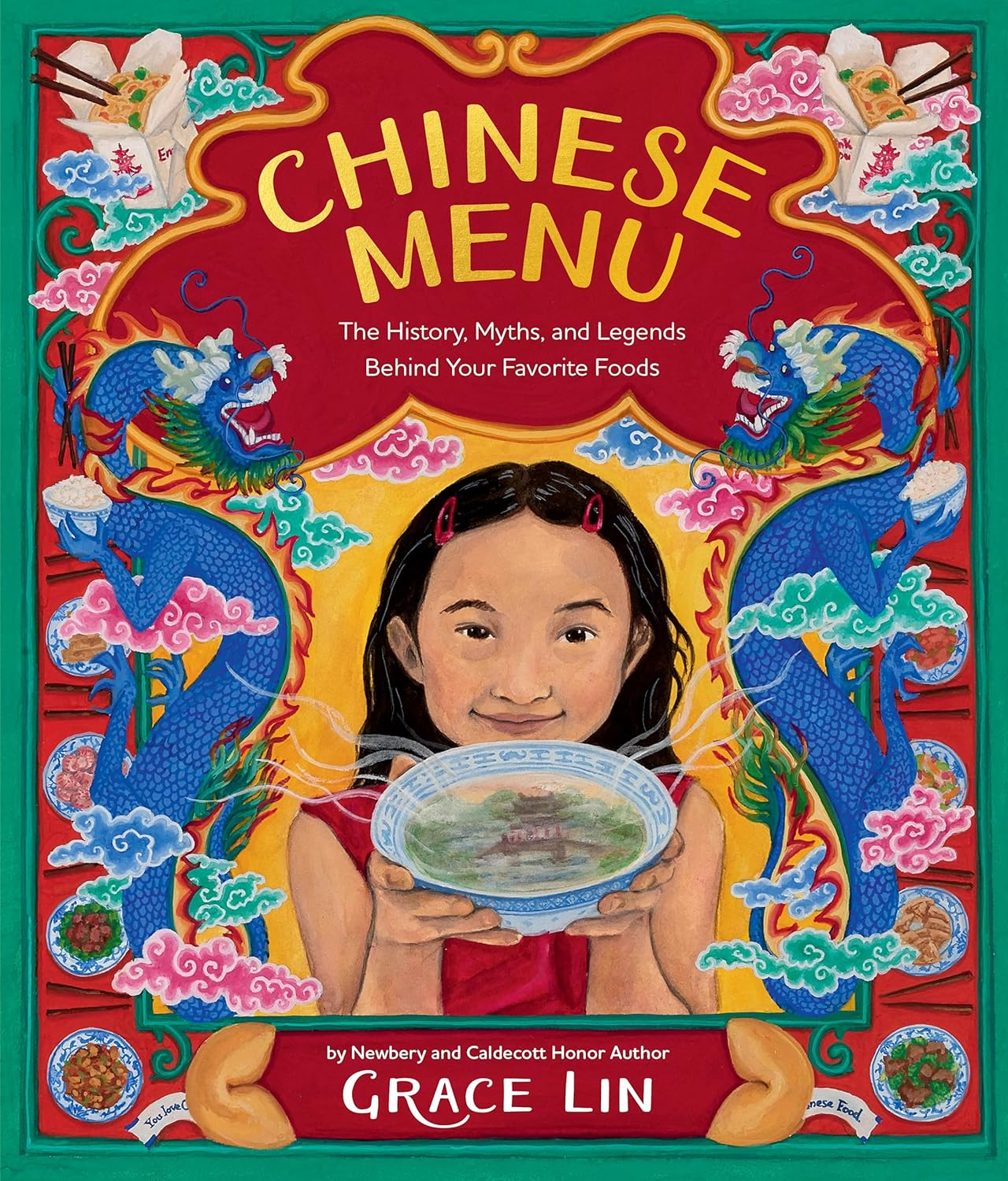
Chinese Menu: The History, Myths, and Legends Behind Your Favorite Foods by Grace Lin

Published by Little, Brown Books for Young Readers

Summary:  Grace Lin traces the history of many foods from a Chinese menu with facts, personal anecdotes, and folklore.  Beginning with a map of China and a timeline that shows where each food fits into Chinese history, the narrative then dives into the food, which is arranged the way it might be on a menu.  From chopsticks to tea to soup, main dishes, and desserts, each section begins with an introduction, followed by different foods within the category, with an illustrated story or two about each one.  Includes an author’s note about the difficult history of Chinese immigrants in the U.S. and how their cuisine has sustained them and been adapted to American tastes; a recipe for Lin’s mother’s scallion pancakes; endnotes with additional information about each food; and a bibliography.  288 pages; grades 3-7.

Pros:  A fascinating, meticulously researched, beautifully illustrated collection of folklore that’s connected to cuisine familiar to many readers.  If you ever wondered who General Tso was or how egg rolls came to be, you will find all the answers here.

Cons:  This feels like it will appeal more to adults than to kids.

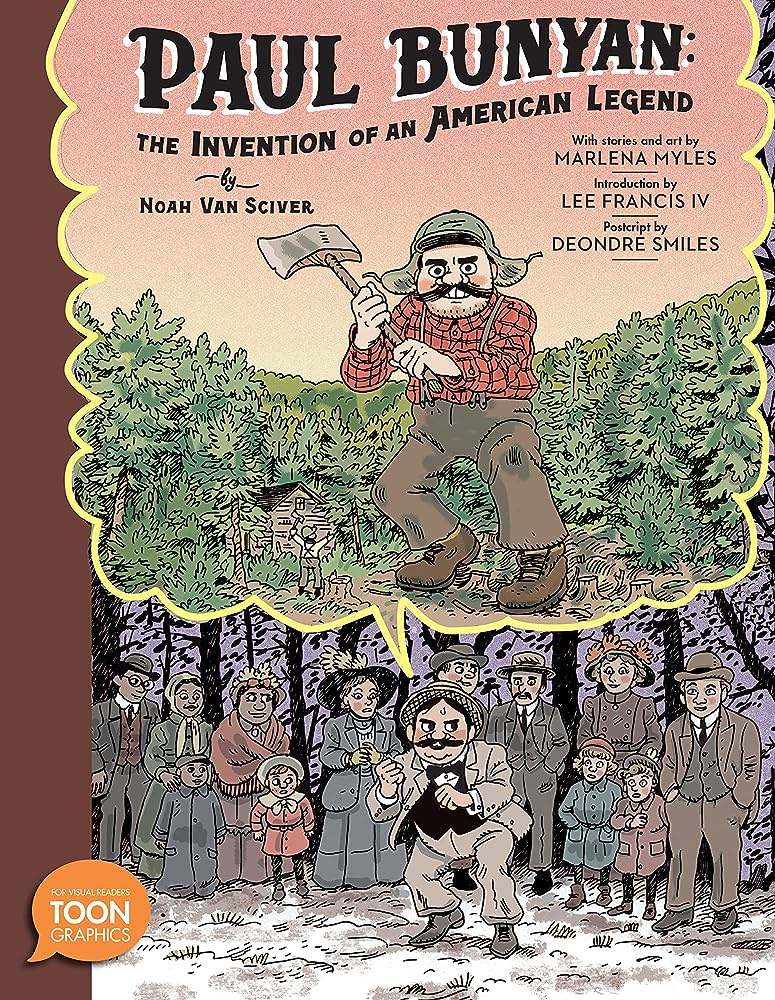
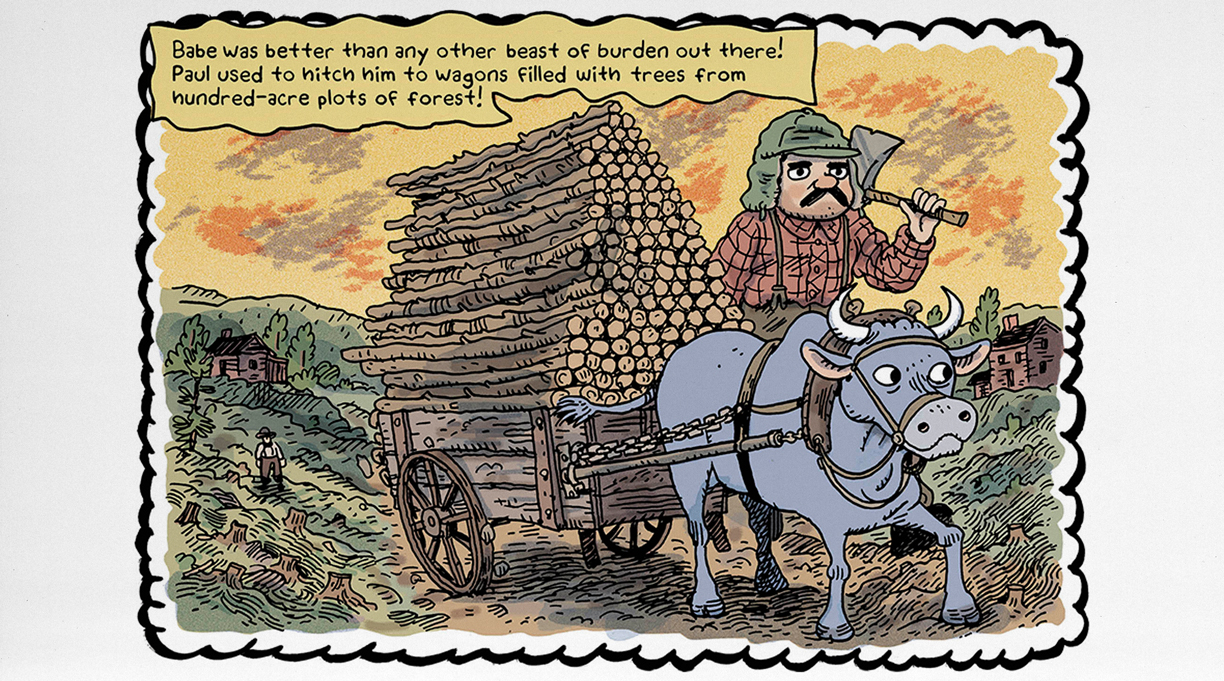
Paul Bunyan: The Invention of an American Legend by Noah Van Sciver and Marlena Myles

Published by TOON Books

Summary:  A logging executive is traveling west when his train breaks down, stranding him and the other passengers in the middle of a snowy forest.  Someone manages to build a fire, and everyone gathers around to hear stories of famous lumberjacks.  The logging man tops them all with his tales of Paul Bunyan and his blue ox Babe.  Most of the audience loves the stories, but another man who’s spent his career working in the lumber industry tells of the devastation of clear-cutting forests, then moving west.  He describes how the land was taken from the Native Nations, whose people honored the spirits of each tree.  Includes a foreword and two afterwords by indigenous scholars about their experiences with Paul Bunyan stories and Native stories about trees.  48 pages; grades 3-6.

Pros:  Some interesting context is given to the Paul Bunyan tall tales so many of us grew up with, offering insights into the logging industry he was created to promote and its impact on indigenous lands.  

Cons:  I’m guessing that many in the intended audience will skip the foreword and afterwords, which is too bad, because they contain a lot of interesting information. I wish that the graphic novel part had been expanded on to include more of that information.  The tall tales were well done, but the ending felt rushed.

The Skull: A Tyrolean Folktale by Jon Klassen

Published by Candlewick

Summary:  Otilla is running away and lost in the forest.  She stumbles upon an old house that looks abandoned but turns out to be inhabited by a skull.  The skull shows her around: there are creepy masks, a dangerously high tower, and a bottomless pit.  He invites her to stay for the night but warns her of a headless skeleton that chases him every night, and “I am not as fast as I used to be.”  Sure enough, the skeleton shows up in the middle of the night, but Otilla is ready.  By the time the story ends, that skeleton will not be bothering anyone ever again, and the skull and Otilla have decided that she will stay in the house.  Includes an author’s note about how he came to write this folktale retelling which gives a pretty interesting spin on the oral tradition.  112 pages; grades 1-4.

Pros:  As usual with Jon Klassen, expect the unexpected.  This book, which looks more like a chapter book than a picture book, is told in five parts, but can probably be read in one longish sitting.  It’s creepy and funny and just dark enough to give kids the shivers.  Perfect for the Halloween season, with the distinctive Klassen illustrations that I’m sure will be considered for a Caldecott. The author’s note, featuring a wise Alaskan librarian, would make a good addition to folktale units.

Cons:  I’m always worried that Jon Klassen books are too dark and/or too weird for early elementary. Yet they never are.

Simon and the Better Bone by Corey R. Tabor

Published by Balzer + Bray

Summary:  Based on Aesop’s fable about the dog and its reflection, this story shows Simon, a dog who has found what he considers to be the best bone ever.  When he looks into the water, though, he discovers another dog with what looks to be an even better bone.  After a staring contest, some growling, and a few other tactics to get the dog to give up its bone, Simon dives in after it, losing his own bone in the process.  Back out of the water, he discovers a new bone and generously drops it into the water for the other dog.  Simon heads for home, feeling happy that he’s made a new friend.  40 pages; ages 3-8.

Pros:  This book is read from top to bottom in the style of Tabor’s Caldecott honor book Mel Fell.  The illustrations are charming, kids will get some laughs from Simon’s antics, and it could make a good intro to Aesop’s fables.

Cons:  One of my favorite parts of Mel Fell is all the funny animals Mel passes on her way down the tree and back up again. There wasn’t as much of that visual humor in this book.