Classic novels to graphic novels

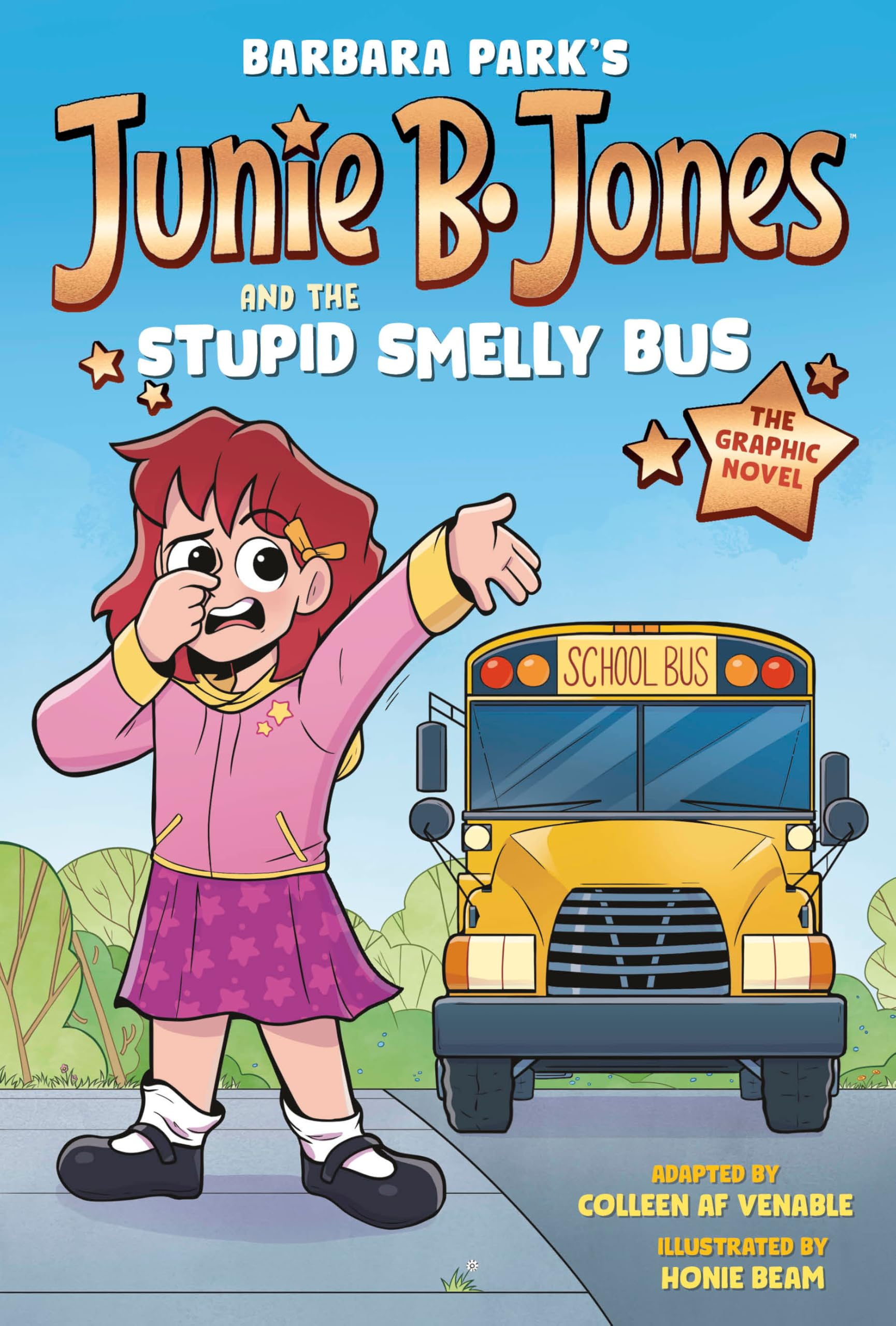
Barbara Park’s Junie B. Jones and the Stupid Smelly Bus: the graphic novel by Colleen AF Venable, illustrated by Honie Beam (Random House Books for Young Readers, 160 pages, grades 1-3). Junie B. is excited about going to kindergarten after acing her orientation, but she’s less thrilled about riding on the stupid, smelly bus. The reality turns out to be even worse than she had imagined, and as she end of the day approaches, she decides she can’t face a return trip. She hides during dismissal, then roams the school after hours, exploring the library, gym, nurse’s office, and more, all with her own unique take on things. Her frantic parents and teacher finally track her down, and the introduction of a new friend helps Junie B. feel like she can face the bus ride in the morning.

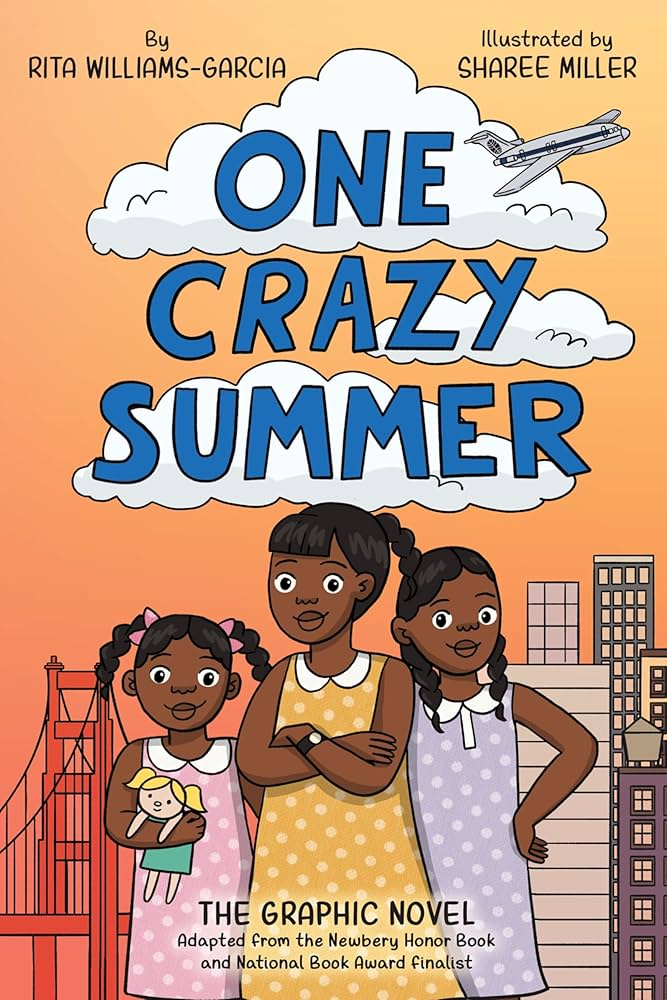
One Crazy Summer: the graphic novel by Rita Williams-Garcia, illustrated by Sharee Miller (Quill Tree Books, 304 pages, grades 4-7). 11-year-old Delphine tells the story of spending the summer of 1968 with their mother, Cecile, when she and her two younger sisters, Vonetta and Fern, are sent to Oakland to get to know the mother who abandoned them when Fern was a baby. The trip was decided on by their father and grandmother back in New York, and Cecile wants no part of the visit. Busy with her mysterious work, she sends the three girls to the kids’ program at the Black Panthers’ People’s Center. There, they get free meals along with lessons in Black Power and resisting the police. After Delphine leads them on an excursion to San Francisco, the girls return to see their mother being arrested along with a few others from the Black Panthers. After cleaning up Cecile’s destroyed workspace and discovering some of her poems, they move in with friends. A performance of one of her poems at a Black Panther rally concludes with a reunion with Cecile, whose time in jail seems to have changed her enough to have an honest conversation with Delphine about why she left. The girls return home with some new ideas and insights about their family and what it means to be Black in America.

Is it okay to have mixed feelings that it feels like every classic book is being turned into a graphic novel? Both of these are extremely well done, both the art and the storytelling, and I’m delighted that new audiences will be introduced to these characters. Junie B. will find a ready audience with fans of Baby-Sitters Little Sisters and the Magic Tree House (both now graphic novels that are way more popular than the originals). And reading One Crazy Summer reminded me of how that trilogy introduced me to so much from that era, completely changing my childhood perceptions of the Black Panthers. I missed the nuances of the original, though, for instance, the way Cecile’s complex character is slowly (and only partially) revealed throughout the story. In this version, the changes she makes toward the end of the story feel somewhat abrupt. So it does make me both a little sad to see Newbery books like A Wrinkle in Time, Turtle in Paradise, and now, One Crazy Summer turned into graphic novels, yet glad that these stories will now reach a wider audience.

Immigrant kids

Don’t Cause Trouble by Arree Chung (Henry Holt and Co., 256 pages, grades 4-7). Things don’t look good for Ming on his first day of middle school: his mom has given him his usual bowl haircut, and he’s dressed in the thrift store clothes she insists on buying. Ming’s accidentally placed in an ESL class, even though he only speaks English, but with his parents’ injunction, “Don’t make trouble” ringing in his ears, he goes along with it. Eventually, the teacher figures things out, and he’s moved to honors English, where he finds a couple of new friends,. When Ming’s desire to fit in lands the three of them in some serious trouble, he’s forced to reconsider what’s really important to him and try to make amends with his parents and his friends. Sixth grade ends on a high note, with the possibility of summer basketball, a new family business making egg rolls, and a new girl in the picture who may or may not a crush on him. Includes an author’s note and family photo telling how his own childhood inspired this story and several pages of instructions on making a graphic novel.

The story and art in this graphic novel are fairly simple and straightforward but really capture the feeling of being torn between two worlds: the Chinese one at home and the American one at school, as well as the pressure Ming feels as his parents, whose own dreams have been deferred, pin all their hopes on his success.

Outsider Kids by Betty C. Tang (Graphix, 288 pages, grades 5-8). In this sequel to Parachute Kids, the three Li kids are still living on their own in California while their parents try to supervise them from Taiwan. The burden falls on oldest daughter Jessie, who is trying to get into Harvard while working at a job where her boss knows he can cheat her because she’s in the country illegally. Meanwhile, middle brother Jason falls in love and must deal with his sisters finding out that he is gay. When cousin Josephine comes to stay, 10-year-old Ann’s excitement turns to dismay as Josephine is constantly mean to Ann and tries to steal her new friends at school. When Ann’s attempt at revenge on her cousin results in Josephine calling the police on them, the three siblings have a panicky scramble trying to figure out what to do next. They wind up at a new home in San Francisco, which I hope sets things up for a possible third installment. Includes an author’s note about her own life as a Parachute Kid from Taiwan.

I was excited to discover a sequel to Parachute Kids, and it didn’t disappoint. The Li kids are incredibly resourceful and supportive of each other despite their constant squabbling. The tension of their undocumented status is particularly relatable today. The book tackles subjects like Jason’s coming out and Josephine’s father’s adultery that made this feel like it was geared for a slightly older audience than the first one.

Some of Us: A Story of Citizenship and the United States by Rajani LaRocca, illustrated byHuy Voun Lee (Christy Ottaviano Books, 32 pages, grades K-4). “Some of us are born American. Some choose.” With just a sentence or two of text to accompany the vibrant illustrations on each page, the book shows people from all over the world, of all ages, in all sorts of circumstances, who choose to leave their homes, families, and native countries to come to America. They may come seeking jobs or education, or to escape poverty, war, or oppression, and they bring music, languages, food, and stories that enrich their new country. There’s a description of the process involved in becoming a naturalized citizen, including the rights and responsibilities that come with citizenship. An author’s note traces the history of US immigration and citizenship and tells her own story of becoming a naturalized citizen at age 15. Includes the United Nations’ Universal Declaration of Human Rights and a bibliography.

This book celebrating immigration and U.S. citizenship could hardly be more timely and important to share with kids right now. LaRocca does a masterful job of conveying lots of information and emotion in spare, simple language that’s easy to understand. Her text is illuminated by the beautiful illustrations that celebrate the many different cultures of people immigrating to the U.S. and that capture the pride of becoming a citizen.

It’s on!

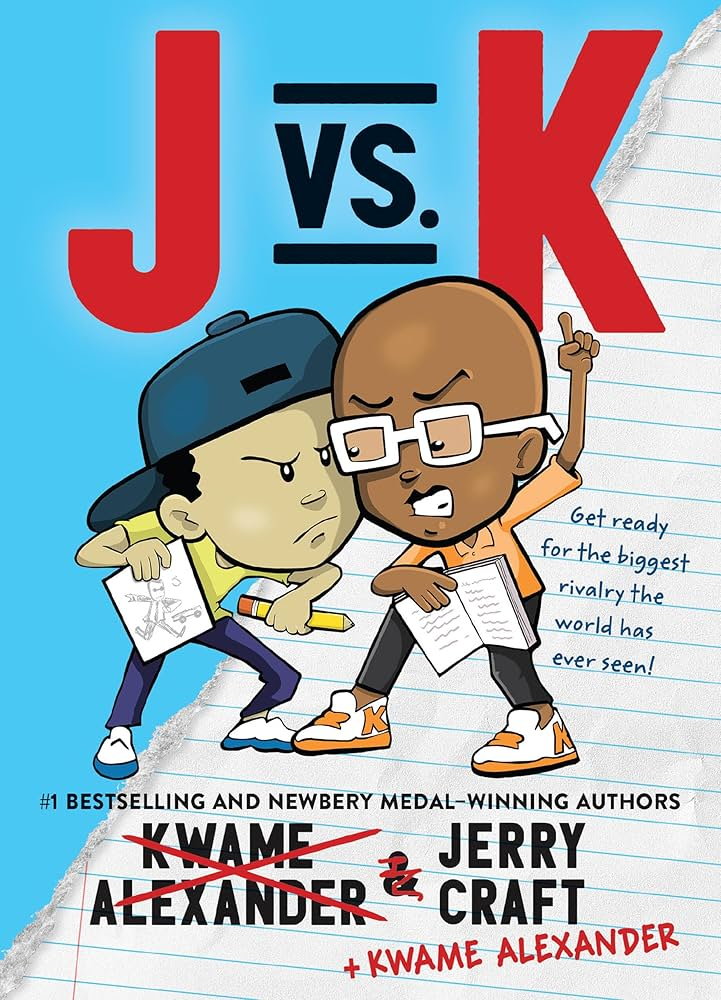
J vs. K by Kwame Alexander & Jerry Craft (Little, Brown Books for Young Readers, 240 pages, grades 3-6). K is new at the Dean Ashley Public School (DAPS), but he’s already making a name for himself with his writing. J is the best artist at DAPS, hoping to win the school’s annual story contest with one of his wordless comics, but worried that K will be stiff competition. Before long, K and J are out to sabotage each other, with K giving J bogus writing tips, and J purposely leaving a notebook full of bad drawing advice for K to find. When they team up on the basketball court, though, they turn out to be unstoppable, leading them to a decision to put their differences aside and work together on creating a graphic story. Although a dark horse wins it all, the two still place in the contest, and it looks like it will be the beginning of a beautiful friendship.

This is a cute illustrated chapter book which will undoubtedly appeal to Diary of a Wimpy Kid fans, but somehow I expected more from the Newbery Award winning team of Kwame Alexander and Jerry Craft. The plot was predictable from the beginning, and the authors seemed more concerned with inserting jokes and jabs at each other and making references to their other books than developing interesting characters. I’m sure the names on the cover will sell lots of copies, though, and I would not be surprised to see a sequel.

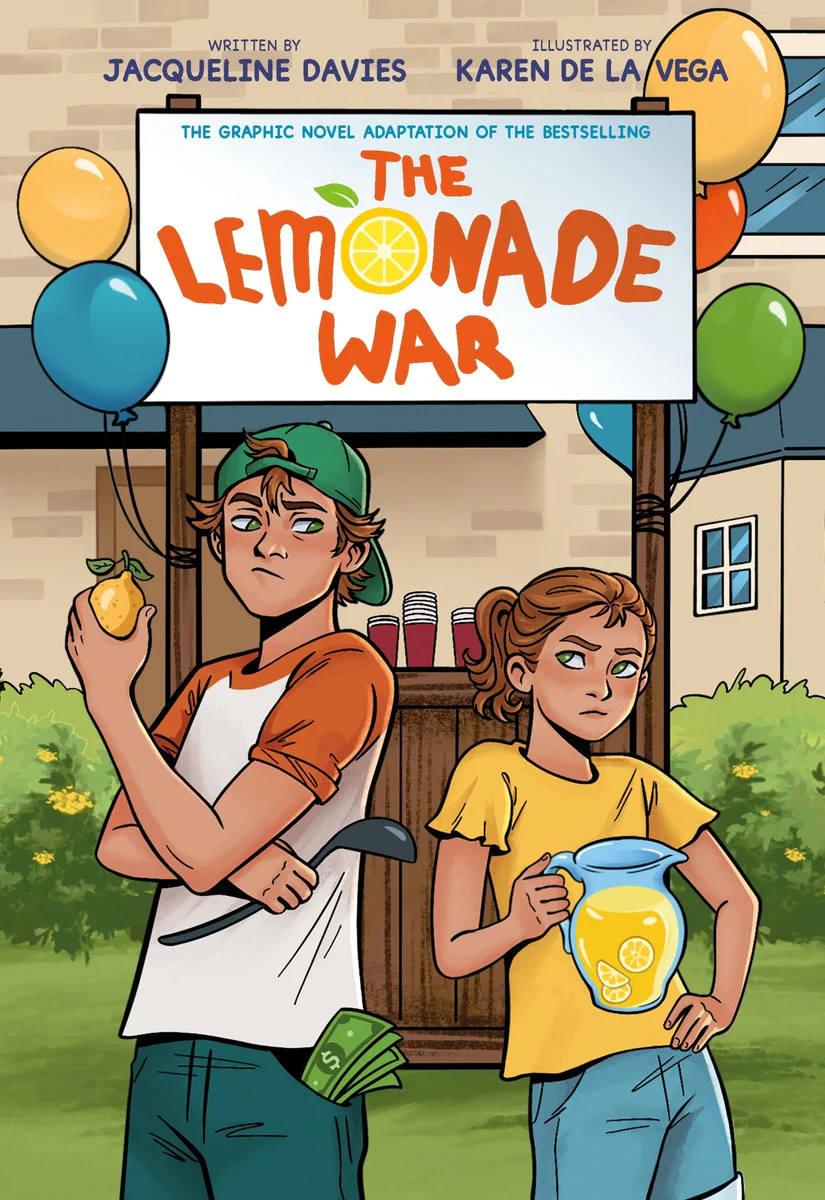
The Lemonade War: the graphic novel by Jacqueline Davies, illustrated by Karen De la Vega (Clarion Books, 207 pages, grades 3-7). Evan is feeling angry that his younger sister Jessie is skipping a grade and will be in his class at school. He lashes out at her, hurting her feelings. So when he and Scott (who turns out to be the neighborhood bully) team up to sell lemonade, Jessie asks another girl to partner with her for a rival stand. The siblings end up making a winner-take-all bet about which enterprise will make more money. Jessie has business and math smarts, while Evan is more gregarious and makes friends easily. The rivalry grows until things get completely out of hand and the two wind up sabotaging each other…and themselves. Admitting how things went wrong leads them to realize all the business lessons they learned, and they’re able to create a prize-winning project at the Rotary Club’s Labor Day contest.

It’s been years since I read the original version of this book, and it was fun to revisit it, with its innocent introduction to the world of capitalism. Each chapter begins with a definition of a business term that is relevant to the story, and all of that new vocabulary is incorporated into their final project. Many readers will relate to both siblings: Jessie shows signs of neurodivergence with her struggles to read people’s expressions and make friends, and Evan’s academic issues make him worry about getting upstaged by his younger sister. The ending is somewhat lame, and the bully appears to get away with stealing most of their money, but don’t worry, The Lemonade Crime gives him his comeuppance. Thanks to Clarion Books for providing me with a review copy.

Graphic novels for budding scientists

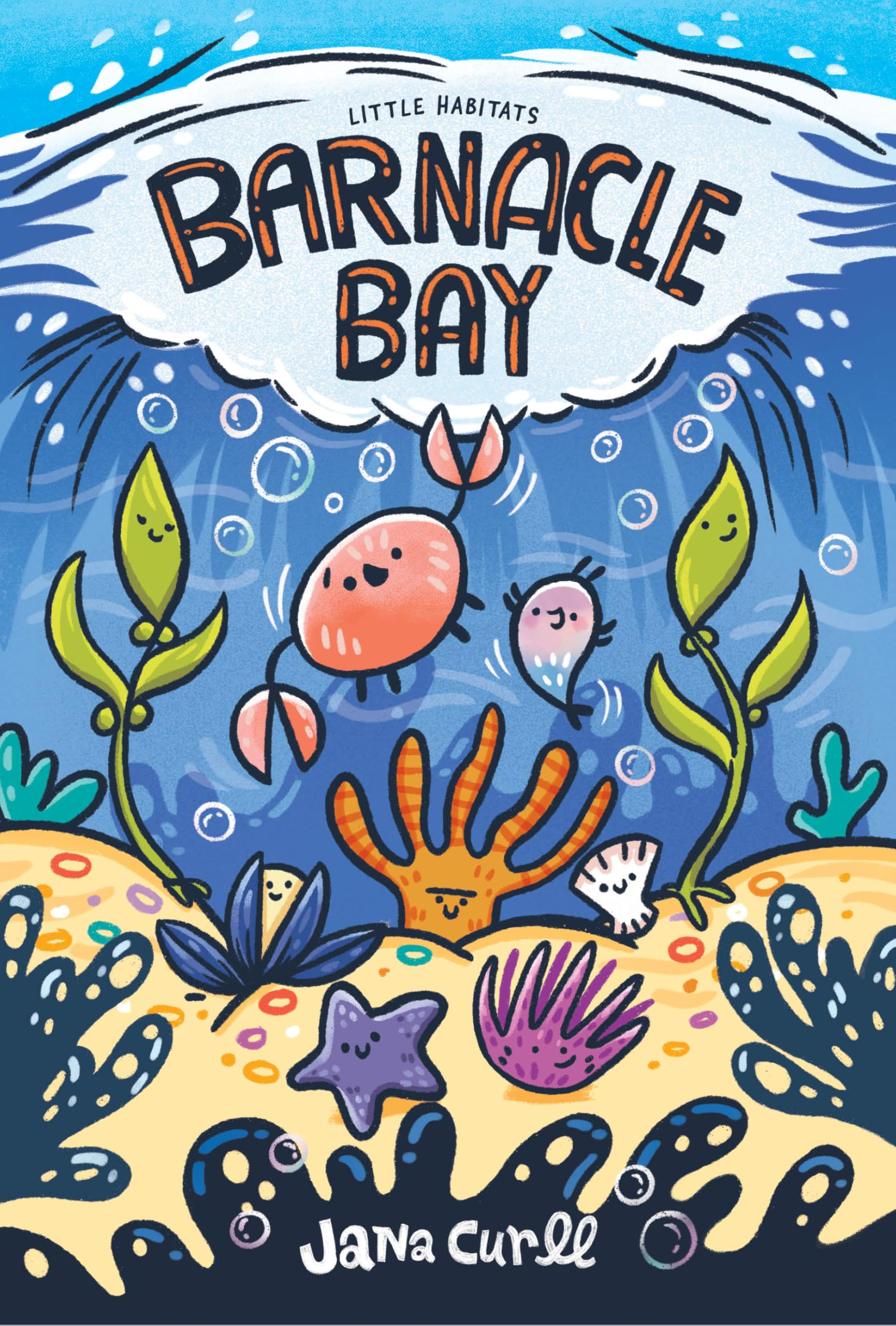
Barnacle Bay by Jana Curll (Greystone Kids, 76 pages, grades 1-4). When a slightly crabby crab meets a slightly lost larva, Crab reluctantly becomes Larva’s tour guide around the bay. As they travel and meet all kinds of different sea creatures, readers will effortlessly learn plenty of interesting facts about marine life. Packed with both information and clever marine-related wordplay that was appreciated and enjoyed by this reviewer, the story winds up with Larva transforming overnight. I won’t spoil the surprise, but the two creatures decide that life in the bay is a good fit for both of them, and it appears to be the beginning of a beautiful friendship.

Although I would love to see another adventure with these two, I’m equally delighted that the next book in this series is about a fern forest. Like Remy Lai’s Surviving the Wild series, this graphic novel seamlessly weaves together a story of cute animals and a lot of factual information.

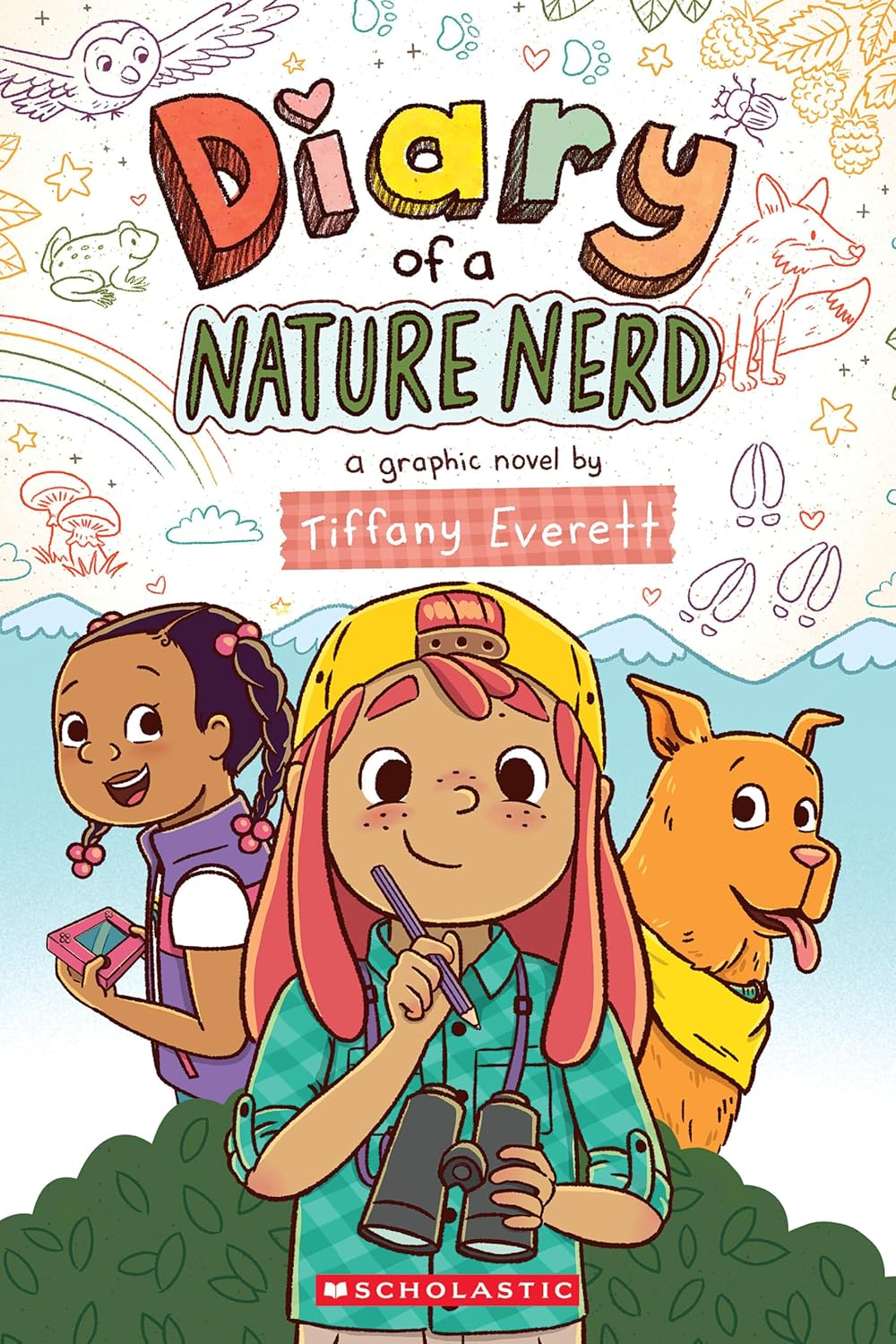
Diary of a Nature Nerd by Tiffany Everett (Graphix, release date August 19, 128 pages, grades 2-5). Brooke and her scientist mother live in an RV, traveling for her mom’s research. Brooke loves nature and keeps a detailed notebook with all of her observations. She’s seen many, many animals, but she’s still missing one: a moose. Her mom recently remarried; Brooke loves her new stepsister Jayla and shows her how to safely explore the woods. The two of them enjoy many adventures until one day when Jayla and her dad head off to explore a river. Brooke opts to stay home and update her notebook, and wouldn’t you know it, Jayla sees a moose. Brooke is jealous and becomes obsessed with finding a moose herself, leaving Jayla behind and forgetting many safety rules as she explores every inch of the woods. When her negligence puts both girls in danger, Brooke realizes that her relationship with Jayla is more important than any moose. The two talk things out, and just as Brooke has accepted that Jayla was fortunate enough to have an experience she hasn’t had, she turns around and sees…a moose!

This cute graphic novel about two animal-loving girls will appeal to fans of the PAWS and Animal Rescue Friends series. Brooke occasionally comes off as an annoying know-it-all, but her enthusiasm is contagious, and Jayla seems like a good friend for her. I hope this will be book one of a new series. Thanks to Scholastic for providing me with a free advance copy.

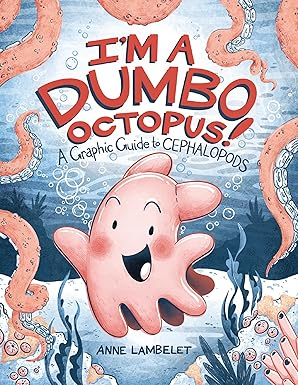
I’m a Dumbo Octopus! A Graphic Guide to Cephalopods by Anne Lambelet (Graphic Universe, 72 pages, grades 2-5). Grimpy–short for Grimpoteuthis–is a dumbo octopus who lives deep in the ocean. He gives readers an introduction to other cephalopods, a class of animals that includes octopuses, nautiluses, squids, and cuttlefish. Although they look quite different, they share common traits like blue blood, no backbone, and tentacles or arms. Many species have unique abilities, such as squirting ink amazing hiding skills, which make Grimpy a bit envious. Just as he’s starting to feel bad about himself, some of the others come along to tell him what his talents are, many of which are related to living in the deepest water of any octopus (over four miles deep). Feeling better, Grimpy says goodbye to his new friends and heads for his home in the depths. Includes an illustrated glossary, a photo and facts about the real-life Grimpy, a bibliography, and a list of books for further reading.

Grimpy is an endearing narrator in a relatively short graphic nonfiction book that’s packed with information about cephalopods. There are all kinds of the sorts of fun facts that kids love learning and sharing, and the illustrations really bring those facts to life. This is Anne Lambelet’s first books, but I hope it won’t be her last…readers will definitely be looking for more after meeting Grimpy.

Family Secrets

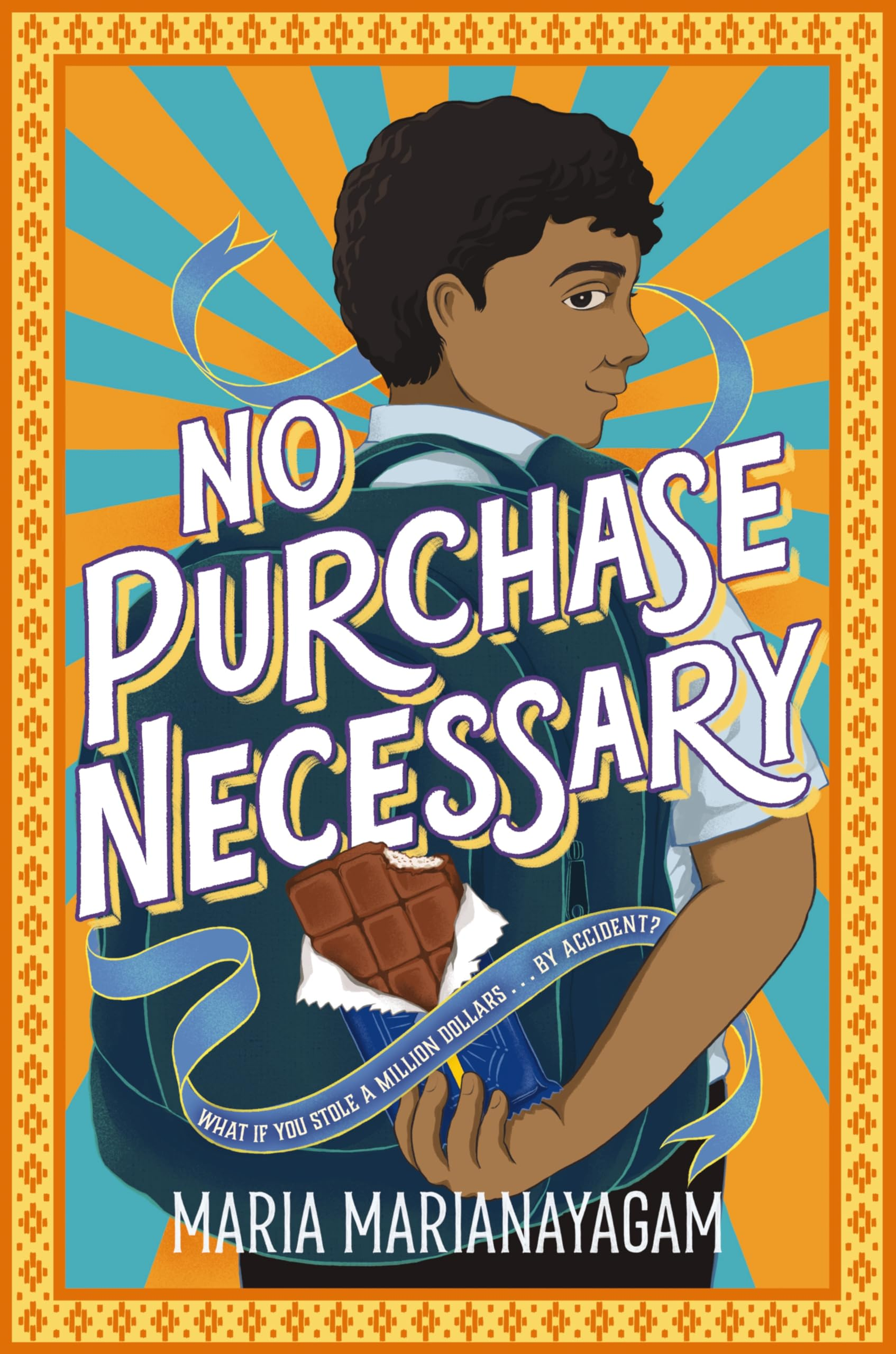
No Purchase Necessary by Maria Marianayagam (HarperCollins, 256 pages, grades 5-8). Ajay’s problems start when he gets a 79 on an English assignment. Since his parents expect nothing less than straight A’s, he’s afraid to tell them about his grade. Desperate to make friends at his new school, Ajay accepts a dare from cool kid Jacob to steal a candy bar, only to discover there’s a million dollar prize inside the wrapper. As Ajay’s lies snowball, he’s consumed with guilt but unsure how to make things right. His parents, Sri Lankan immigrants who are struggling to make ends meet while his dad finishes school, put unrelenting pressure on Ajay and his younger sister, compounding his guilt, fear, and frustration. Ajay volunteers to help out at the store where he stole the candy, hoping to erase the security footage that may have recorded his deed, but to his surprise finds that he likes helping the store owner, who is gruff but also kind and supportive. A new friend, Mindy, also eases some of Ajay’s stress. When Ajay’s emotions boil over into a fight with Jacob, he finds himself in a lot of trouble, but some surprising consequences offer him away to start communicating what he needs and to make some changes that help make things easier for him.

I’ve just finished a week of school vacation, which seems like the perfect time for a little light reading, but instead I found myself deep into books about kids with tough home lives and complicated ethical dilemmas. My heart went out to Ajay, and it was easy to blame his parents for the pressure he put on himself, but as the story unfolded, it also became clear how much they were struggling and how fervently they wanted the best for their children. This would make a great middle school book club book that could open up all kinds of discussions about what to do when you make a mistake and how to communicate with friends and family.

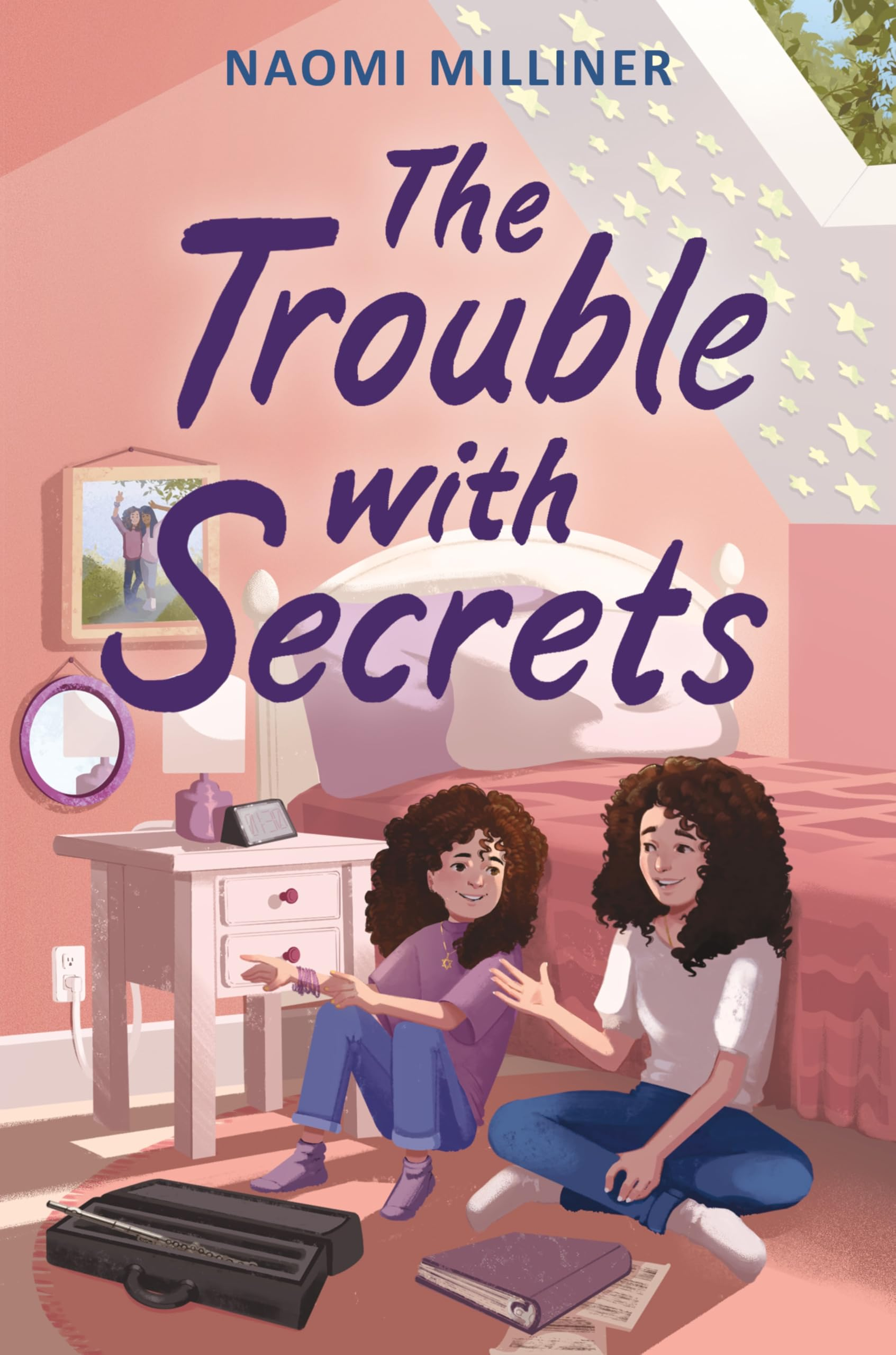
The Trouble with Secrets by Naomi Milliner (Quill Tree Books, 336 pages, grades 5-8). Becky is thrilled when her music teacher recommends her to audition on her flute for the all-county band, but her rabbi father tells her she needs to wait until next year so she can prepare for her upcoming bat mitzvah. Disappointed and angry, Becky forges her mother’s signature and goes ahead with the audition. Her older sister Sara is in on the secret, and Becky soon learns Sara’s secret: she’s in love with the new boy at school, the son of a local Protestant minister. Their father has made it clear that he expects all four of his children to only date people who share their Jewish faith. Sara is afraid to tell their parents, especially when their cousin secretly marries outside the faith, causing a huge rift in her family. The story begins with a chapter called “Now,” in which Becky is getting ready for a funeral, then goes back to tell the events leading up to that day. Part two of the book is back to “Now,” which is a time filled with shock and grief, but also slow healing as Becky and her family come to terms with what has happened and learn to move forward into a new normal.

This beautifully written book had me in tears for pretty much the last third or so. Like No Purchase Necessary, it shows readers the destructive power of keeping secrets, even though doing so may feel like the easiest way in the moment. Becky is part of a wonderfully loving family, who lives their Jewish faith every day, although her older siblings Jon and Sara felt a little too good to be true. I also felt like the authors of both of these books kind of went to extremes to communicate their message about secrets, as most secrets don’t involve winning a million dollars or result in the kind of tragedy in this book.

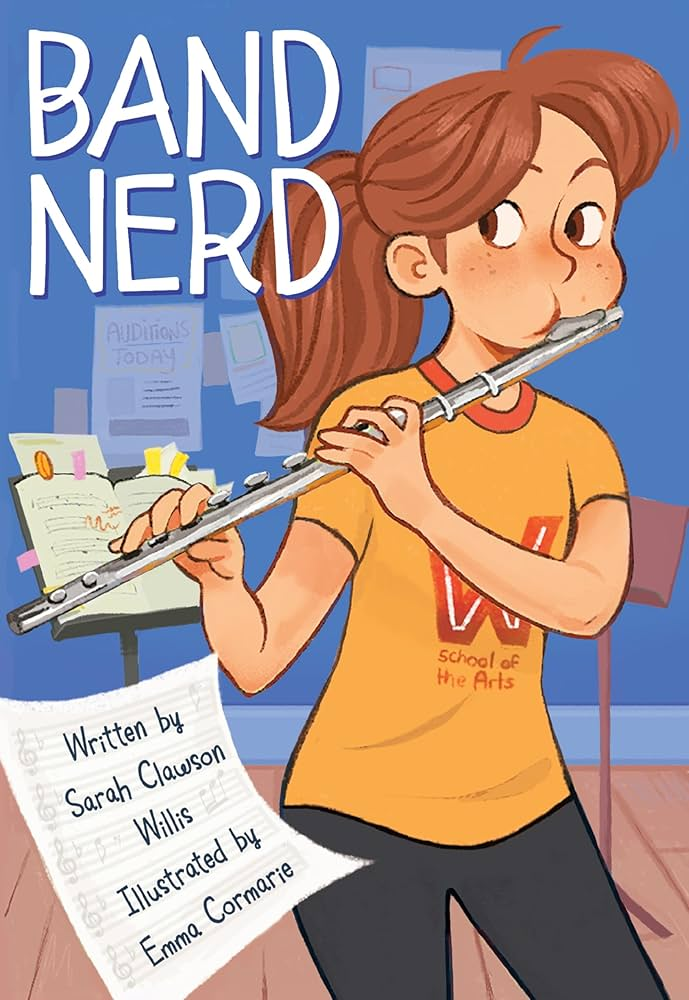
Band Nerd by Sarah Clawson Willis (HarperAlley, 272 pages, grades 5-8). Lucy’s excited to be starting seventh grade at Windley School of the Arts, where she can pursue her love of flute in the school band. It’s clear from the first page that there are some tensions at home, and as time goes on, her dad’s drinking problem creates an increasing amount of chaos. Lucy escapes through her music, putting enormous pressure on herself to beat her rival Tolli for the first chair position in band. As she becomes more obsessed with this goal, her schoolwork suffers, and her parents threaten to send her back to her old middle school. A bungled attempt to sabotage Tolli results in Lucy getting into trouble, which ultimately leads to a conference with school administrators and her parents. As the truth about their family situation emerges, Lucy is able to communicate to her parents how their home life is affecting her and to get help from sympathetic teachers and a counselor at school. Although things don’t turn out exactly as she had hoped, Lucy is back on track for success at school and her family is working to give her the support she needs.

Middle school readers will love this graphic novel, although some of the scenes with Lucy’s dad are difficult to get through. Many of Lucy’s new friends are also dealing with challenging family issues, and this book does a great job of showing kids how to cope and reach out for help.

A beginning reader bonanza

Dino Poet: a graphic novel by Tom Angleberger (Harry N. Abrams, 96 pages, grades 1-4). When a Coelophysis takes a break from writing poetry to have a froggy snack, the frog in question tells him that he hates his poem. The frog then proceeds to give the dinosaur poetry pointers, like how to express his emotions and use his senses to perceive the world. Desperate not to be eaten, the frog introduces different forms of poetry like limericks and speed haiku, while both creatures keep a sharp lookout for larger dinosaurs who may want to consume them both. The frog is so successful that by the end, the Coelophysis calls him a friend, refuses to eat him, and gets him his own notebook and pen so that they can write together.

Always expect the unexpected with Tom Angleberger, as evidenced by this book which is short for a graphic novel, long for a picture book, and has the unlikely premise of two animals from different eras becoming friends and writing poetry together. I love the way it introduces poetry and gently (and humorously) encourages kids to try their own. The simple collage art and the photo of art supplies at the beginning may also inspire readers in their artistic endeavors.

The Truth About the Tooth Fairy (Miriam’s Magical Creature Files book 1) by Leah Cypess, illustrated by Sarah Lynne Reul (Harry N. Abrams, 112 pages, grades 1-3). 6-year-old Miriam is the youngest of three siblings, slightly jaded about things her family tells her, and a firm believer in testing them out to find out if they’re true or not. For instance, after being told, “Sugar makes you hyper,” she eats a lot of it at a birthday party and feels fine. So when she realizes she has her first loose tooth, Miriam is ready to find out if the tooth fairy is real. Her methodology involves staying up and catching her parents in the act. Does she succeed? Readers will have to draw their own conclusions, but whatever they decide, they can look forward to book 2, The Discovery of Dragons, coming in August.

Miriam is a spunky and smart protagonist, part of an Orthodox Jewish family whose traditions are woven into the story and illustrations. The book resembles a scrapbook, with Miriam’s lists, charts, notes, and drawings on what looks like paper torn from a notebook. Fans of Junie B. Jones and other feisty early elementary narrators will enjoy this beginning chapter book.

The Bad Idea and Other Stories (Earl and Worm book 1) by Greg Pizzoli (Knopf Books for Young Readers, 72 pages, ages 4-8). In the classic style of such literary friendships as Elephant and Piggie, Frog and Toad, Frank and Bean, Beak and Ally, etc., Worm is a grumpy introvert who initially is annoyed by early bird Earl who gives friendly greetings and plays music for his plants first thing in the morning. The second chapter sees Worm getting increasingly annoyed by what she perceives as Earl’s copying her good ideas about home decor. When she tries to trick Earl by telling him about an outlandish plan to paint the outside of her house, Earl surprises her by painting it for her, leaving her with a house she doesn’t like and the realization that the whole thing was a bad idea. Earl’s persistent cheerfulness slowly wins over Worm, and by the third chapter, Worm is committed enough to their friendship to write a poem that celebrates it.

I’m a pretty big Greg Pizzoli fan, and, while I personally feel this whole introvert/extrovert friendship theme in early readers is a little tired, Pizzoli does an excellent job of creating two fun characters and three funny stories, particularly the one about the bad idea. I love the illustrations, especially the way Worm is portrayed doing all sorts of tasks without any limbs. Try this out on fans of some of the series mentioned above.

Culture shock

Speak up, Santiago! (Hillside Valley Graphic Novel, book 1) by Julio Anta, illustrated by Gabi Mendez (Random House Graphic, 224 pages, grades 3-7). Santi is spending a month with his Colombian American abuela Emma to try to improve his Spanish. His parents hoped to raise him to be bilingual, but because he struggled with speech as a baby, they focused on getting him to speak English. Now he’s studying Spanish but is extremely self-conscious about his level of fluency and his accent. At first things go well as Santi meets a group of kids who love soccer as much as he does and seems to be communicating well with his abuela. But when he overhears some of her friends making disparaging comments about his accent, his confidence plummets, and he shuts himself off from both his grandmother and his friends. Abuela Emma has a fall that’s partially Santi’s fault, and the guilt he feels about that leads him to have a heart-to-heart conversation with her and with his friends that gets him back on the right track. When Santi sees his parents at the big soccer tournament at the end of the month, they’re amazed at how much his Spanish has improved, and he realizes that progress is better than perfection. Includes notes from the author and illustrator telling how their own heritages influenced them in creating this book.

I loved this series opener, which not only addresses the difficulties of balancing dual heritages but shows readers not to put too much pressure on themselves when learning new things. Santi makes a lot of mistakes, but he’s able to learn from them and emerges as an extremely likable protagonist. I can’t find a publication date for book 2, but a preview at the end of this book shows that it will feature Sol, one of Santi’s new soccer friends.

Halfway to Somewhere by Jose Pimienta (Random House Graphic, 256 pages, grade 4-8). Nonbinary tween Ave feels torn in two when they move with their mother and younger brother Ramón to Kansas while their father and older sister Cruz stay in Mexicali. Cruz encourages Ave not to assimilate and to keep speaking Spanish, while Ramón embraces English and renames himself Ray. At school, Ave meets some other kids who have connections to Mexico and other countries and learns to value her heritage while enjoying some American activities like running track and hanging out at the comics store. Through flashbacks and conversations with different family members, Ave remembers their past and learns that the split in the family may be permanent. The last few pages show them enjoying life in both places, leaving some ambiguity about which place they call home. Includes a lengthy author’s note about the evolution and creation of this book.

Jose Pimienta explores timely questions of heritage, language, and belonging in this beautifully illustrated graphic novel about a 12-year-old dealing with a lot of big questions about themself and their family. This is the final installment in his Mexicali trio that includes Suncatcher and Twin Cities.

Let’s hear it for the boys

Old School by Gordon Korman (HarperCollins, 288 pages, grades 3-7). Dexter is a 12-year-old who has spent the last six years living with his grandmother in a retirement community while his diplomat parents travel the world. He’s always been homeschooled, receiving an excellent education from a variety of experienced educators in the community. Unfortunately, his grandma never officially registered him as a homeschooler, and in seventh grade, truancy officers catch up with them and force Dexter off to middle school. At first, he’s a complete fish out of water who talks and dresses like an old man, not a middle schooler. But slowly his kindness and handyman skills start to win over some of the other kids. When Dexter fixes a vending machine with his Swiss army knife and gets expelled for having a weapon, the other kids rally to his defense and start visiting him at his home, where they soon befriend many of the older residents. Young and old alike show up for Dexter’s hearing before the school committee, where a few surprise twists result in an unexpected outcome for both Dexter and his school.

Although Gordon Korman is less than two weeks older than I am, he has written over 100 books more than I have. His books, while somewhat formulaic (this one is told in chapters that alternate among several narrators in classic Korman style), are always engaging and funny, perfect for reluctant readers. The homeschooled hero winning over middle school students reminded me a lot of another Korman book, Schooled (2008) I’ve read quite a few middle grade books with girl main characters this year, so I’m glad to have a couple that feature boys.

Extra Large by Tyler Page (First Second, 208 pages, grades 4-8). The summer before seventh grade, Tyler starts to be more aware of his body size. When he wins an extra-large T-shirt, he’s told he’ll grow into it. Shopping for back-to-school clothes, he has to get “husky” jeans to be able to fit into them. His dad decides to give up sugar in an attempt to get back to his high school weight and encourages the rest of the family to join him, not always in the kindest way. Tyler notices kids get bullied for their size and for other body issues, and he’s always relieved when it’s not him, taking pains to be the last to change for gym with the hope that no one will see him with his shirt off. When a new girl gets teased about her ears, Tyler joins in, even though he doesn’t see what the big deal is. As the year goes on, Tyler notices more and more that some of his closest friends can be bullies, and he starts to hang out with other kids who are kinder and make him feel good about himself. He saves money for a new bike, enjoying the way he feels when he’s active, and even gets to enjoy some of his family’s menu changes. By the end of the story, Tyler has learned a lot about accepting himself as he is.

Tyler Page’s memoir is funny and realistic, and plenty of upper elementary and middle school readers will see themselves in the pages. It’s nice to see a graphic novel addressing bullying and body image issues with a boy main character.

Home is where the heart is

Sea Legs by Jules Bakes, illustrated by Niki Smith (Graphix, 256 pages, grades 3-7). Janey’s lived on board her parents’ sailboat before, but it’s harder going back to that life this time, after going to public school for third grade and making a good friend named Rae. But she doesn’t have much say in the matter, as her family sets sail for the Caribbean. Life onboard is much different, with unique adventures and natural wonders every day, but also sometimes with boredom and loneliness. When they anchor at one of the islands so her parents can make some money, Janey’s excited to see another girl who looks just a little older than she is. Soon, she’s hanging out with Astrid, who seems cool and courageous, but who is sometimes mean to Janey and takes her on adventures that occasionally turn dangerous. Janey slowly realizes that Astrid is living with an abusive father, forced to take care of her younger half siblings and not allowed to go to school, and that the older girl envies Janey’s secure family and opportunity to get an education. When hurricane season hits hard, Janey is sent to live with her grandmother for several months. On her return, the ship is damaged, Astrid is gone without a trace, and Janey has to learn from her parents how to be resilient and get back out to sea once again. Includes notes from the author and illustrator, friends since the age of 12, about how Jules’s childhood at sea and their friendship inspired this book.

Who can resist the lure of a life at sea? I was curious to read this fictionalized graphic memoir about Jules Bakes’s unique childhood. It ended up surprising me, showing both the good and more difficult sides of this life, with Astrid’s story offering a particularly dark version of it. I was hoping for a little more resolution of Astrid’s story and her friendship with Janey, but the ambiguity felt very realistic.

Home by Matt de la Peña, illustrated by Loren Long (G. P. Putnam’s Sons Books for Young Readers, 48 pages, ages 4+). As they did with their picture book Love, Matt de la Peña and Loren Long offer meditations about home. Whether it’s an apartment next to the highway, a house near the airport, Grandpa’s houseboat, or the back of Dad’s big rig, home has a feeling of familiarity, comfort, and security. But what if you lose your home? “Hurricane rains flood your streets. Or a thick black smoke blankets the sky. Or Papa’s garment factory closes down.” You may have to leave the only home you’ve ever known, but slowly you will find your way back with the help of a father or a grandma or a teacher, because it’s those people who really are your home. And when you look up into the sky at a hawk or a mountain or the stars, you’ll remember the home we all share, “promising that all life is one life and when the winds do come they will carry you home.”

I was blown away by how much is contained in this seemingly simple picture book that could be enjoyed by a preschooler or used in a college class to reflect on all the meanings of the word “home.” The text is lyrical and thought-provoking, and as for the illustrations…well, let’s get on with it already and finally give Loren Long the Caldecott recognition he deserves.

Graphic novels that deal with tough issues

Crumble by Meredith McClaren, illustrated by Andrea Bell (Little, Brown Ink, 208 pages, grades 3-7). Emily’s mother is often traveling to promote the family bakery, so Aunt Gina and Emily run the shop and keep things going back home. The two of them know how to infuse their baked goods with feelings, helping people to feel happier or more relaxed when they eat them. When Aunt Gina suddenly dies in a car accident, Emily and her mom are overwhelmed by grief. The only way Emily knows how to process her feelings is to bake, but baking while sad results in terrible-tasting pastries that somehow no one can stop eating. When Emily ends up making all of her classmates sick, she has to slow down and find new ways to deal with her feelings. She and her mom slowly create a new normal, and the last chapter shows them running a new baking school, while Emily has developed more empathy for people around her who are suffering.

This cheery graphic novel takes an unexpected twist when a panel showing Aunt Gina’s wrecked car changed everything for Emily. From there, the story does an excellent job showing how she processes her grief, feeling overwhelmed by it at first, then slowly finding a way to acknowledge her feelings and move on, even though things will never be the same. The reactions from the other kids–trying to cheer Emily up, asking too many questions about her aunt’s funeral–are helpful in showing readers what may or may not be helpful to those who are grieving.

Cassi and the House of Memories by Dean Stuart (Viking Books for Young Readers, 272 pages, grades 4-7). Cassi loves spending time with her grandparents, but sometimes Grandpa’s mind wanders. When he forgets who she is, Grandma reassures her that he is still there and that he loves her. One day, Cassi goes into the backyard with him, and he disappears into the woods. When she goes in search of him, she discovers a giant structure that looks like Grandpa’s head. Inside, she discovers all kinds of memories from Grandpa’s early life. Cassi is able to put herself into those memories, and in an exciting climax, to help change one of them from a traumatizing event to one that makes Grandpa into a hero. Eventually, she meets up with her present-day grandpa, and he leads her back home, where Grandma is waiting with dinner, not worried at all, just sure that the two of them have been having fun together. An author’s note tells of his experiences with his own father’s dementia and how he created this book for kids who may be dealing with someone in a similar situation.

I saw this book described as “melancholy” in a review, and that’s a perfect word for both the story and the artwork that creates an alternate world inside Grandpa’s head, where memories come and go. Cassi’s ability to change some of the memories demonstrate how selective and imperfect all of our memories are. A thought-provoking book that will help kids see those with dementia in a new way.