December holiday stories

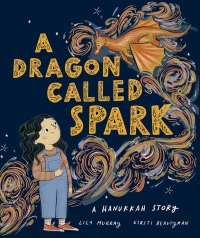
A Dragon Called Spark: A Hanukkah Story by Lily Murray, illustrated by Kirsti Beautyman (Kalaniot Books, 32 pages, ages 4-8). Eva’s adjusting to a new home as Hanukkah is approaching. She sees children playing outside her window and feels lonely, comforting herself that she still has her little dragon named Spark. The first Hanukkah candle is lit and placed in the window, and the next day a neighbor named Charlie comments on it, promising to look for more. The next night, the family takes some latkes and jelly donuts to Charlie’s house, and the kids get to know each other better. Eva tells Charlie about Spark, and Charlie finds that he can see Spark, too! At the park the next day, Eva overhears Charlie telling other kids about Spark and worries they are laughing at her, but Charlie assures her they all want to see the dragon. Eva uses her storytelling talents to help them all find their own dragons, and much to her surprise, by the final night of Hanukkah, she and Spark are surrounded by a new group of friends–both human and dragon. Includes additional information about Hanukkah.

Hanukkah traditions are skillfully woven into this story about making friends in a new place and the power of imagination, play, and stories. Kids can decide if they think the dragons are real or imaginary and look for evidence for either argument in the text and the illustrations. This would make a great companion to A Dragon for Hanukkah by Sarah Mlynowski.

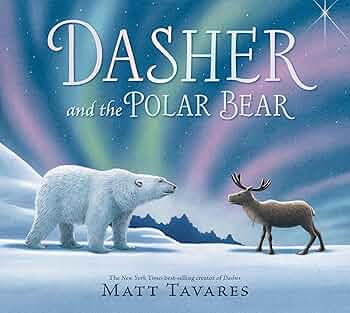
Dasher and the Polar Bear by Matt Tavares (Candlewick, 40 pages, ages 4-8). In her spare time before Christmas Eve, Dasher loves going on adventures. One night she sees the Northern Lights and flies toward them for a better view. When she lands, she encounters a large polar bear named George who scares her at first, but who turns out to be a kind friend who’s intrigued by her flying. When he tries it out, though, he lands with a huge splash in the icy sea. When Dasher gets home, she tells her mother about George, wondering why Christmas magic doesn’t work for everyone. Her mother assures her that it does, just in different ways, and Dasher gets to see what she means on Christmas Eve. After emptying his bag, Santa heads for George’s home, where he offers the polar bear a ride in the sleigh, which George describes as “exhilarating!” and “positively unforgettable!” Back home, Dasher tells her mother that seeing George so happy was her favorite part of Christmas Eve.

This sequel to Dasher and Dasher Can’t Wait for Christmas provides another satisfying holiday tale with amazing illustrations of reindeer, Santa, the Northern Lights, and George, a new character with a hilariously rich vocabulary. Fans of the other Dasher books will not be disappointed.

Winter is here!

The Snowball Fight by Beth Ferry, illustrated by Tom Lichtenheld (Clarion Books, 48 pages, ages 3-8). Neighborhood friends enjoy a snow day that starts with the creation of two forts armed with plenty of snowballs. After lobbing these at each other for a while, one of the forts gets buried in snow that falls off a nearby roof, creating the perfect conditions for sledding. From there, it’s time to go inside for a cookie and hot chocolate break, but three marshmallows floating side by side in the cocoa remind the friends that they never built a snowman. Back outside they go to enjoy the final hours of their snow day.

This author-illustrator team never disappoints, and their latest creation comes at a perfect time, with 3-6 inches in the forecast here for tomorrow. The rhyming text is simple but catchy, and would be equally fun to listen to or to use for some reading practice, while the simple illustrations perfectly captures the chilly fun of playing in the snow, and the cozy warmth of heading inside.

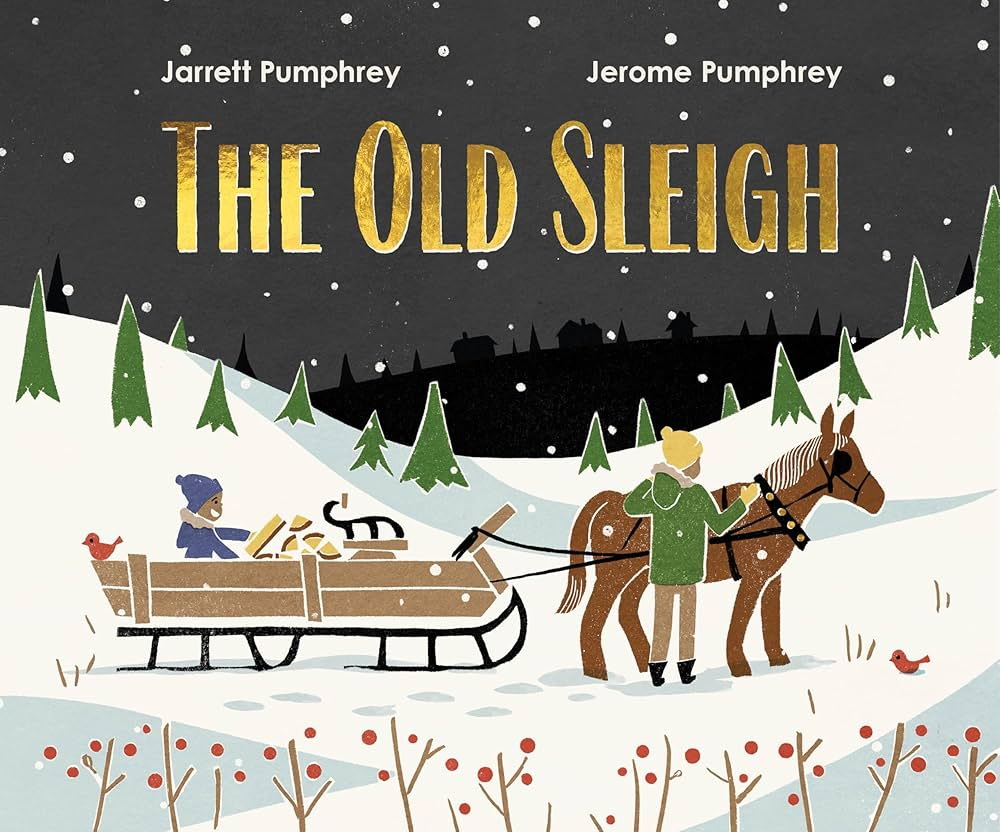
The Old Sleigh by Jarrett Pumphrey and Jerome Pumphrey (Norton Young Readers, 48 pages, ages 4-8). The Pumphrey brothers are back again with a holiday follow-up to The Old Truck and The Old Boat. The sleigh in this story is used to transport firewood in a small town, a boy and his dad working together to chop it, load the sleigh, and deliver it to the delighted townspeople who use it for warmth and light. But when the town grows, so do the loads of wood until one day, the old sleigh breaks in half. While Dad repairs it, the boy makes his own small sled so that he can continue to bring wood to his favorite customers. Finally, the old sleigh is repaired, and the work continues. The last page shows the old sleigh, now painted the same red as the boy’s sled, with a driver who looks like a grown-up version of the boy, delivering wood in the “small city.”

This deceptively simple story celebrates community, winter, and the circle of life as the town grows, but the boy and his father continue to serve their community, bringing both actual and metaphorical warmth and light with their firewood deliveries. While not specifically a holiday book, this has a definite December vibe, and would make a great gift or read-aloud in the last few weeks of school before vacation.

A double dose of family feasts and Frank Morrison

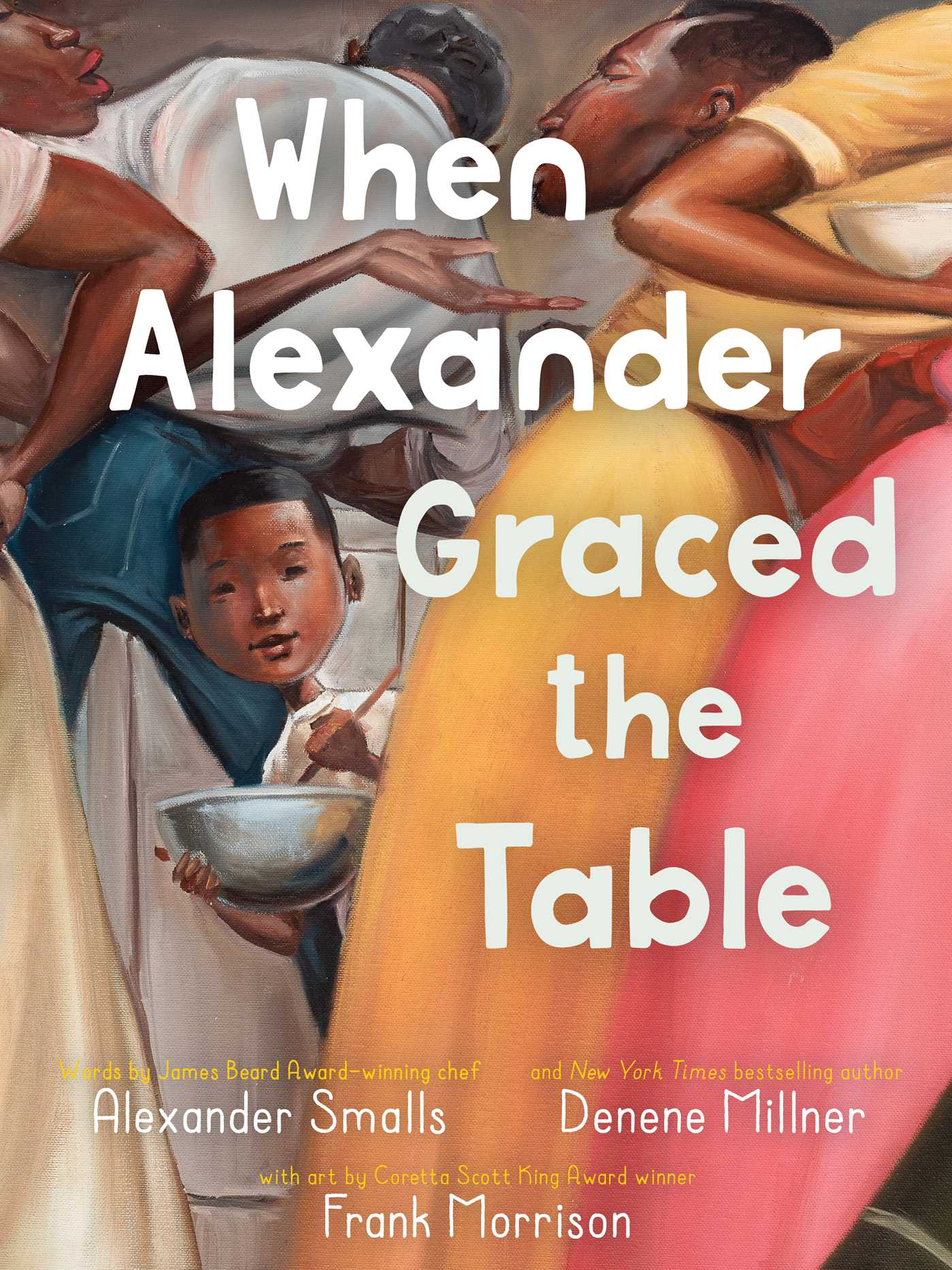
When Alexander Graced the Table by Alexander Smalls and Denene Millner, illustrated by Frank Morrison (Denene Millner Books/Simon and Schuster Books for Young Readers). Alexander loves Sunday dinners, which start on Saturday night with the whole extended family cooking and prepping for the big feast. His mom is at the center of it all, Alexander working at her side, but his quiet dad always seems too busy to notice. When Alexander makes franks and beans all by himself one Saturday night, he’s crushed that Dad doesn’t want a sample. His mom knows what to do, though: she puts Alexander to work baking Dad’s favorite dessert, and the next day reveals his creation to the whole family. Alexander holds his breath as his father takes the first bite of his lemon icebox pie, and the whole world seems to stand still as Dad chews it slowly. Finally, he speaks, “That’s some good pie,” he says, creating a memory that Alexander will cherish forever. Includes a recipe for the pie.

I wasn’t familiar with Alexander Smalls, but apparently he’s a famous chef, and his fans will undoubtedly enjoy this story about his first forays into cooking. The illustrations colorfully capture the happy chaos of a family dinner and the mouth-watering food created by so many cooks. I wish there had been a little back matter to allow Smalls to tell more of his story.

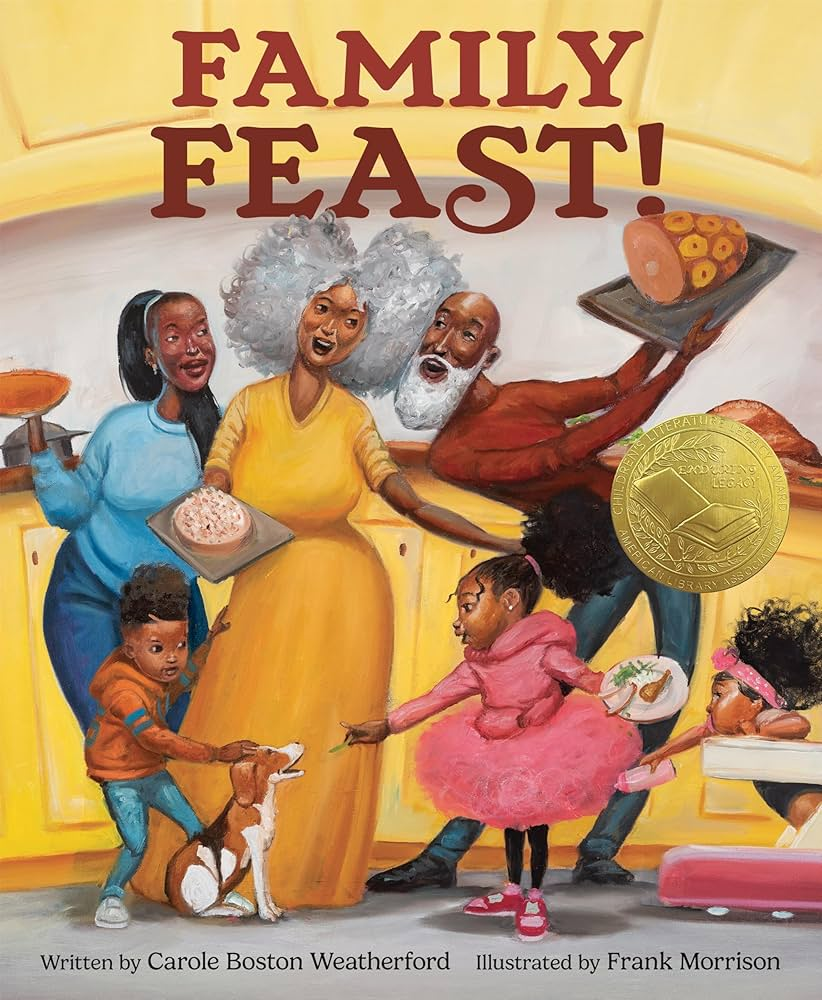
Family Feast! by Carole Boston Weatherford, illustrated by Frank Morrison (Crown Books for Young Readers, 32 pages, ages 4-8). Pops and Big Ma are up at 5 to start making dinner while family members make the drive to get there in time to help. The rollicking rhyming text and busy illustrations show a growing crowd, young and old, and the delicious abundance of food making its way to the table. Finally, grace is said, and the feast begins. Afterwards, children race through the house, Uncle snores, and Big Ma smiles benevolently on the whole scene until the family heads out to their cars to drive back home again, wrapping up with the repeating refrain, “Tastes like home when family meet/A bond so warm, so strong, so sweet.”

Another book full of delicious food and family fun brought to you by an award-winning author-illustrator team. Although no holiday is cited, this would be a great choice for reading at Thanksgiving or any time in December. It could also serve as a writing prompt for describing a family tradition, using the strong verbs and adjectives throughout the story as examples.

Christmas fact and Christmas fiction

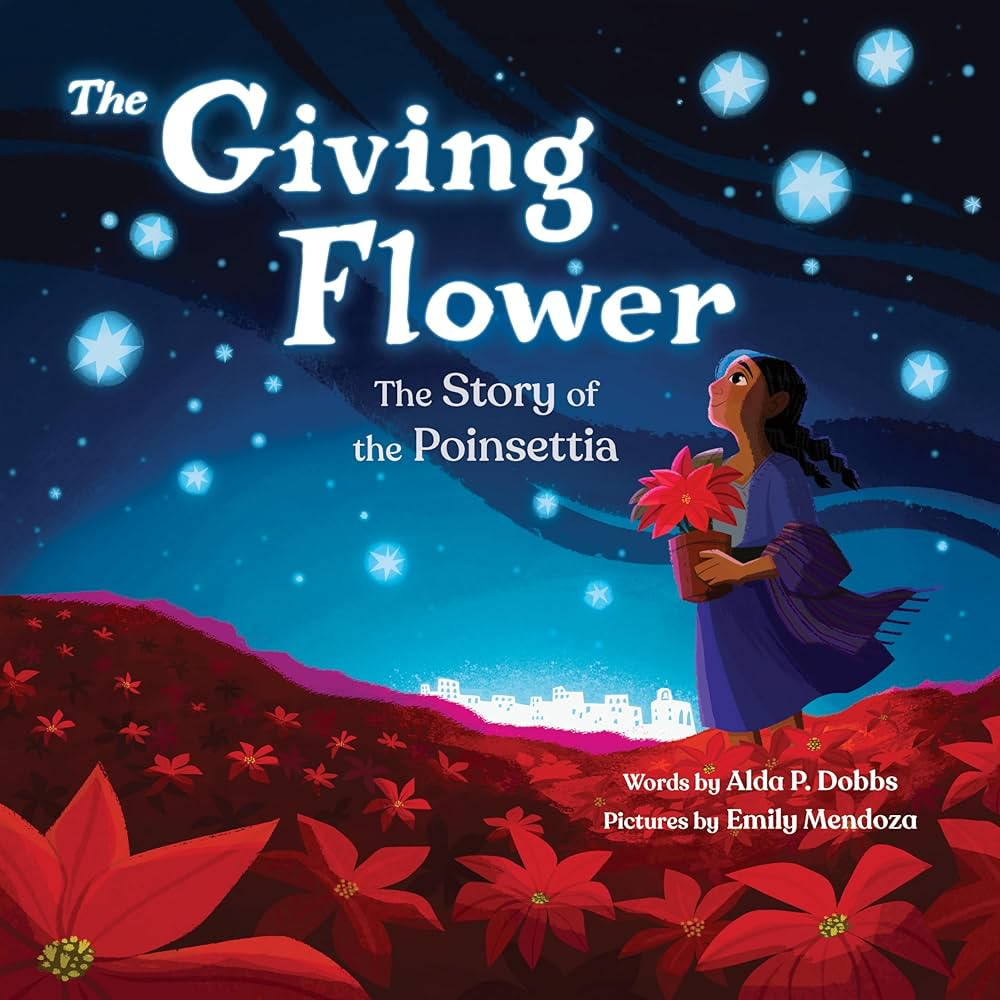
The Giving Flower: The Story of the Poinsettia by Alda P. Dobbs, illustrated by Emily Mendoza (Sourcebooks Jabberwocky, 40 pages, grades K-3, published simultaneously in Spanish as La flor generosa: la historia de la flor de nochebuena). Did you know that the red parts of the poinsettia plant are actually leaves, with the tiny yellow flowers nestled in the center? Read on to learn other interesting facts about this plant that we often associate with the Christmas season. Indigenous Mexican people used it for medicines and dyes. Spanish friars made up a story about a poor girl named Pepita bringing the flower known in Mexico as la flor de nochebuena as a gift to baby Jesus. In the 19th century, amateur botanist and ambassador to the newly independent Mexico Joel Roberts Poinsett brought the flower to the U.S. where it got a new name inspired by Poinsett. 100 years later, a man named Paul Ecke figured out how to make the plants hardier and smaller. Ecke’s son started a marketing campaign to get pots of poinsettias on TV shows and into the White House, and by the mid 20th century, they started to be known as the Christmas flower, a tradition that continues today. Includes a history and timeline of the poinsettia.

This is a fascinating history of the poinsettia plant, which weaves in a lot of the history of Mexico as well.  I had no idea that those big red flowers aren’t flowers at all, and I also didn’t realize that the connection with Christmas was so recent, nor did I know that it was the result of a well-orchestrated marketing campaign! This would make a great read-aloud and a nice way to fit a little nonfiction into the holiday book offerings.

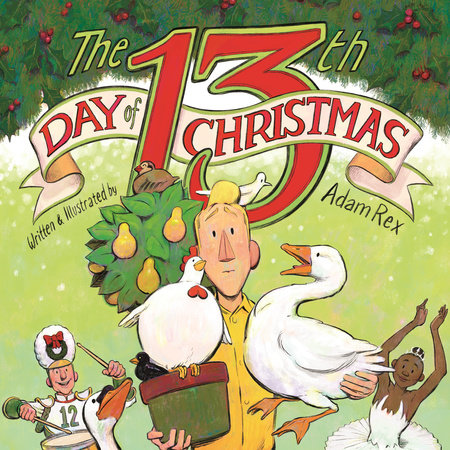
The 13th Day of Christmas by Adam Rex (Neal Porter Books, 48 pages, grades K-4).  The narrator’s feeling lonely at Christmas because his true love is visiting her parents. So he’s happy when she sends him a pear tree. He’s not as thrilled with the partridge that comes with it, though, and when another pear tree with three more birds appears the next day, he’s even less excited. Before long his house is crammed with drummers, pipers, maids, cows, and lots of birds. He visits his mom to see if she has any advice (she doesn’t), and on the way home an impromptu parade forms with all his new friends. When a kid watching the parade mentions that his school could use some new books, everyone springs into action the next day and puts together a bake sale (there’s no shortage of milk and eggs).  The man enjoys helping the school so much, he begins to suspect his true love, Trudy, wanted him to learn the joy of giving to others. When she finally gets home, it turns out that the whole thing was an Internet glitch in Trudy’s pear tree order. Trudy proposes marriage, and the new friends go home, leaving the couple as happy as two turtledoves.

It’s hard to really do justice to this hilarious book in a review, but trust me when I say that anyone familiar with The Twelve Days Of Christmas will find this a riot, both the story and the illustrations. To be honest, I think anyone would enjoy it, but knowing the song makes it that much better, not only seeing all the verses come to life, but also appreciating a few countdowns in the story that are riffs on the original.

This magic moment

Dawn by Marc Martin (Candlewick, 48 pages, ages 4-8). Each page has just one word, starting with “Dawn” and ending with “Sun”. In between, all sorts of animals and plants can be seen in gorgeous watercolor illustrations moving, eating, waking, or making noise, all illuminated by the changing light as the sun rises. Some of the words are alliterative (“sound, spring, still” to describe a series of pictures of a deer), others list the animals on the page (“dragonfly, cicada, bee, beetle”), while still others are a series of action words describing the movements in the panels (“jump, catch, dive, swallow” shows a fish leaping out of the water to catch an insect then diving back in). The final page, with the sun rising over the lake, looks peaceful and still, but readers will know all the activity the water and woods are hiding.

This book is visually stunning, and the different words would make a unique mentor text to show ways to succinctly describe what you see or hear. At 48 pages, it might not be engaging to read the way you would a story, so give the kids things to look for as you savor each of the stunning illustrations.

This Moment Is Special: A Día de Muertos Story by John Parra (Simon and Schuster/Paula Wiseman Books, 40 pages, ages 4-8). A boy narrates the moments of the day as he and his family celebrate Día de Muertos. Starting with breakfast with the family, he travels to school in a bus reading “Oaxaca”, spends a day at school, then comes home to play with his friends and eat dinner with his family. Each page of text has a few sentences in English and one summarizing sentence in Spanish. It’s an ordinary day in some ways, but also a special one marked with the white paint and decorations on people’s faces and hands, a performance at school, and a visit from abuela. The whole neighborhood is shown celebrating at the end, some wearing make-up and others not, carrying flowers and pictures of the dead. An author’s note asks a series of questions inviting readers to think about and celebrate special moments in their own lives.

There really aren’t enough Día de Muertos/Day of the Dead books for kids, and this one makes a nice addition, with John Parra’s distinctive artwork and the bilingual text that not only show readers different aspects of the holiday, but encourage discussion about appreciating people and events in the moment. I would have loved additional information about the holiday at either the beginning or the end of the book, as I know very little about it.

Which witch?

This Year, a Witch! by Zoey Abbott (Atheneum/Caitlyn Dlouhy Books, 40 pages, ages 4-8). The narrator has had enough of her cute costumes of years past. No more bunny or mouse…this year, she is going to be a witch! She’s been planning this for quite a while, growing her hair, practicing spells, and enlisting her dad to make her a witch costume. On Halloween night, she dresses up, only to scare herself when she looks in the mirror. Dad helps her to take a break, and before long they’re out trick-or-treating, the girl in her witch costume, and her dad dressed up like a cat.

Jazzy the Witch in Broom Doom by Jessixa Bagley (Simon and Schuster Books for Young Readers, 232 pages, grades 3-7). Although Jazzy’s moms and grandmother run a successful broom business, Jazzy’s never had any interest in flying. She’s not too surprised when she’s the only kid at school not to get off the ground during her first flying lessons, trying not to feel jealous when her best friend Aggie is a soaring success. When Jazzy sees a cycling race on TV, she’s sure that she’s found her passion, and using parts from the junkyard and a little magic, she and Aggie create a bike for her. Jazzy discovers she loves biking, but she’s afraid to tell her family. With a supermoon in the forecast, the witches all get ready for a flying parade, and Jazzy is finally forced to confess her shortcomings. She learns that her moms both had their share of youthful struggles, and that everyone is proud of her just the way she is, leading her to come up with an innovative broom design with a comfortable bike saddle that not only allows her to finally learn to fly, but helps other witches as well. Includes an author’s note and a preview of Jazzy’s next adventure.

Evelyn Witch Gets a Pet by Beth Ferry, illustrated by Charles Santoso (Roaring Brook Press, 32 pages, ages 4-8). When Evelyn Witch wakes up with a feeling that something is missing from her life, she can’t quite put her finger on it until she spies the pet shop. Bats, rats, and cats are all beyond her budget, and the only thing she can afford is a box marked “Mystery Pet.” Inside is an egg, which Evelyn is most impatient to have hatch. After a series of outlandish plans to make this happen, she finally realizes that all she can do is be patient, take good care of the egg, and focus on other areas of her life. Her patience is finally rewarded with an appropriate pet for a witch.

Kids will love these three witchy heroines who learn lessons in courage, patience, and being true to themselves in two picture books and a graphic novel. Each one has distinctive artwork that creates a magical world of witches and other fantastic creatures. Halloween may still be three months away, but there’s no reason to wait to read and share these magical books.

Christmas (and Halloween) in July

Scary Shark: A Jaw-Some Halloween by Mike Lowery (Orchard Books, 32 pages, ages 4-8). Edgar the shark is too scared of everything having to do with Halloween to want to go trick-or-treating, so his friend Lotta the crab eases him into it. They start by carving pumpkins (Lotta uses claws, Edgar uses teeth), then move on to decorating, and finally costumes. After deciding to be Count Sharkula, Edgar freaks out a little when he sees monsters outside his window, but Lotta shows him they’re just friends in costumes. Finally, Edgar’s ready to join the fun, and the two swim out the door and into a spooky underwater town just right for trick-or-treating.

I’m familiar with Mike Lowery’s Gingerbread Man books, but I didn’t know about his shark series, which includes Pizza Shark and Santa Shark. They’re sure to be popular with their comic-style artwork, lots of cartoon bubbles, and puns galore. One can never have too many Halloween books, and this one will be a big hit.

The Gift of Words by Peter H. Reynolds (Orchard Books, available October 7, 40 pages, ages 4-8). In this follow-up to Reynolds’s The Word Collector, Jerome is looking for some good holiday words to add to his collection and to give as gifts to his family and friends. In town, he sees words like, “Sale!”, “Cheap stuff!”, and “Violators will be towed”, none of which seem right for the holidays. The newsstand is even worse, with its headlines about war, poverty, and climate change. Jerome tries listening to the words around him, but they turn out to be complaints or angry commands (“Hurry up!”). He goes back home, where he pulls a selection of the right words from his collection, then heads to the park to decorate a tree. He invites others to add their own words, and before long, the tree is covered with words such as listen, hope, and epiphany, as well as phrases like peace on earth and savor each moment.

Like many Peter H. Reynolds books, the message isn’t exactly subtle (in case you missed it, the last page says “‘Share your positive words. May they inspire peace on Earth.’ – Peter H. Reynolds”), but this is a lovely book for the winter season that spreads a positive message without specifying a particular holiday. The ending practically begs for a bulletin board featuring a tree that kids can decorate with their own words.

Thanks to Scholastic for providing me with review copies of both of these books!

Spring holiday fun

Crack the Cascarón: An Eggcellent Not-Just-for-Easter Shellebration by Sara Andrea Fajardo, illustrated by Rocío Arreola Mendoza (Knopf Books for Young Readers, 40 pages, ages 4-8). Toti has declared himself the King of Cascarones and has big plans for the upcoming weekend celebration (presumably Easter). Not content with the traditional confetti cascarones, Toti makes tiny stealth ones as well as some that are filled with slime. The night before the big day, while Toti is sleeping, the rest of his family raids some of his hiding places. When Toti wakes up the next morning, no one’s in the house, and when he goes to look for them in the yard, it’s an ambush! His parents, sister, and abuela inform him that not only is his plan not all it was cracked up to be, but the yolk’s on him as they bombard him with his own creations. He finally hands over his crown to Abuela, who declares herself the Queen of Cascarones. Just wait ’til next year.

I loved meeting Tito and his family, who clearly enjoy each other and aren’t afraid to pull some good-natured pranks. Although Easter is never mentioned, this would make a great read-aloud for the holiday or any time in the spring. Spanish words are mixed in with the English text, celebrating Tito’s family’s heritage. I wish there had been some back matter telling more about the cascarón tradition and maybe giving instructions on how to make them.

A Purr-fect Passover by Jenna Waldman, illustrated by Erica J. Chen (Apples & Honey Press, 32 pages, ages 3-7). An adorable group of kitties gets ready for Passover, preparing special foods like matzah bread, gelfite fish, and matzah balls. When the seder begins, the kittens enjoy dinner as well as traditions like the Four Questions and a retelling of the story of Moses and Pharaoh. Then there’s dancing, sweets, and the search for the afikoman. When the guests leave, it’s time for clean-up, and then bedtime with sweet dreams of the holiday. Includes instructions for making a matzah cover like the one pictured in the story.

This cute rhyming story makes a good introduction to Passover for the youngest kids, covering many aspects of the holiday with fun and engaging text and illustrations. Again, a little more back matter would have been a nice addition, especially for those who don’t celebrate Passover.

Two books for Ramadan

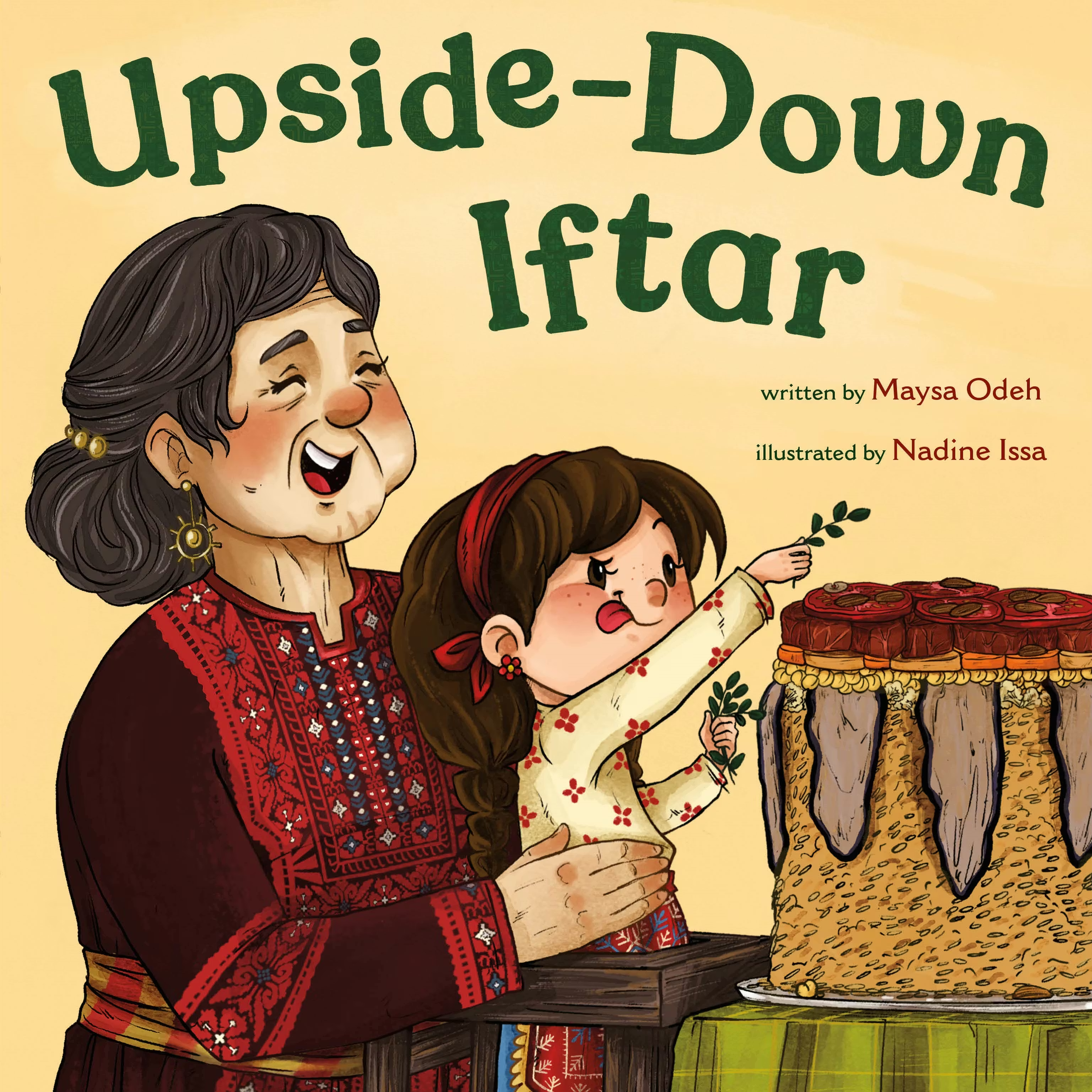
Almost Sunset by Wahab Algarmi (HarperAlley, 224 pages, grades 4-7). Hassan is fasting for Ramadan in this graphic novel, and, although it’s his third year doing so, this year seems harder than before. He’s going to the mosque for nightly prayers with his father for the first time, and there’s not as much community support as there was when his family was back in Yemen. Not only is Hassan falling asleep in math class, but he’s not performing up to par on the soccer field, getting shown up by teammate and frenemy Rosie. Everywhere he goes, Hassan sees delicious food, and when some cousins talk him into sneaking off for snacks, he’s wracked with guilt. When Hassan finally tells his soccer coach why his performance is off and he’s leaving practices early, he’s happily surprised to learn that Coach is also observing Ramadan with his own fast. Finally, Eid arrives, and Hassan is rewarded for his determination with a joyous celebration that include friends and family who help him to acknowledge his perseverance and to forgive himself for mistakes.

Muslim kids observing Ramadan will relate to Hassan’s struggles and hopefully learn to open up to those around them about what is going on with them for the month; non-Muslims will learn more about Ramadan and how to support their friends. The artwork is excellent, with lots of wordless pages that move the story along at a good clip, and some funny pictures of Hassan imagining food in all kinds of contexts.

The Gift of Eid by Shifa Saltagi Safadi, illustrated by Aaliya Jaleel (Holiday House, 40 pages, ages 4-8). Yasmine and Mama are shopping in Damascus’s Souq Al-Hamidiyeh. They’re both grieving the recent death of Yasmine’s dad, and Yasmine wishes she could find the perfect Eid gift to bring a smile to Mama’s face. When she sees a sign offering money for jewelry, she sells the chain she’s wearing around her neck. At the Masjid Al-Umawi mosque, Mama and Yasmine meet up again for prayers. At the end, they agree to exchange early Eid gifts, but when Yasmine gives Mama the beautiful box she’s bought for Mama to keep her bracelet in, Mama starts to laugh. She sold the bracelet to buy Yasmine a charm to put on her gold chain. They realize that their love for each other is the greatest gift they can give, and head for home with a charm but no chain, a box but no bracelet, and “all the love we need.” Includes an author’s note about how her childhood in Syria inspired this story.

Based on the O. Henry story The Gift of the Magi, this sweet story introduces readers to daily life in Syria, beautifully portrayed in the illustrations. It’s also a tale of grief and healing, as Yasmine and Mama look for ways to help each other through a difficult time.

Two books with heart(s)

Bigfoot’s Big Heart by Sarah Glenn Marsh, illustrated by Ishaa Lobo (Viking Books for Young Readers, 32 pages, ages 4-8). Bigfoot is a shy fellow who doesn’t like loud sounds, especially the noises people make when they see him. He keeps to himself, living in a cozy cave and writing to his mythical pen pals, like Nessie, Mothman, and Chupacabra. Valentine’s Day is coming, and Bigfoot decides to make valentines for all of his friends, telling him exactly why he likes them so much. On his way to the mailbox, though, he’s spotted by a group of Scouts, and the valentines get blown away in a blustery wind. A few of the quieter Scouts talk to Bigfoot instead of shouting or running away, and they come up with a plan. They connect online with Scouts around the globe who go on a worldwide monster search to deliver Bigfoot’s valentines. Nessie decides it’s time for an in-person (in-monster?) gathering, and monsters and humans gather at Bigfoot’s cave on Valentine’s Day. “Suddenly the world feels a little less lonely…thanks to friends who understand.”

Heartfelt by Elaine Vickers, illustrated by Samantha Cotterill (Simon and Schuster/Paula Wiseman Books, 56 pages, ages 4-8). The narrator likes to make hearts, especially the small ones which they like to give away. Love is felt with all the senses, and the child tells how love can look, feel, taste, smell, and sound. Each loving deed is accompanied by one of the small hearts until all of them are gone. Or are they? As the narrator looks around, it’s clear that love is being shared and spread throughout the community. Includes an author’s note about a favorite Sunday School lesson, in which each student was given a bag of hearts to distribute when they did kind deeds during the week, which they reported on the next week.

I’m thinking of reading both of these books to classes in the next few weeks as Valentine’s Day draws near. Bigfoot is a great way to introduce both the different mythical creatures in the story and where they live around the world. And the activity described at the end of Heartfelt is a fun and easy way for kids to practice kindness and community.