Control Freaks by J. E. Thomas

Published by Levine Querido
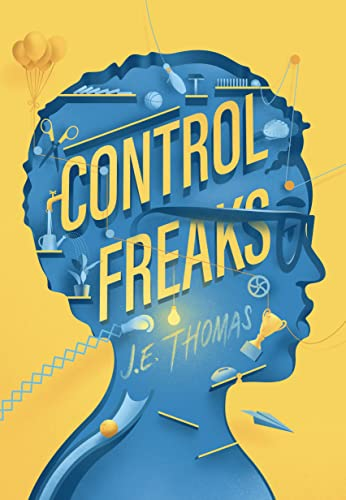
Summary:  Frederick Douglass “Doug” Zezzmer is a 12-year-old genius inventor who goes to a middle school for gifted kids in Denver.  When the principal, Dr. Yee, announces a team STEAM competition, most of the kids are less than thrilled.  Doug is determined to win so he can show his dad (who’s just moved back after being absent for most of Doug’s life) that inventing, not sports, is his thing.  His best friend Huey, who suffers from stage fright, proves to be a liability in creating a five-person team, and they end up with a bunch of misfits.  As the competition goes on, though, the group goes from five quirky kids who don’t relate to each other to being a team who supports and cheers for each other.  The final results prove that winning doesn’t always mean finishing first and help Doug to stand up to his dad and show him who he really is.  320 pages; grades 4-7.

Pros:  The humor, middle school setting, and chapters told in different characters’ points of view reminded me of Gordon Korman’s books and should make this book an easy sell to upper elementary and middle school readers.

Cons:  I didn’t entirely understand why the title of this book is Control Freaks.

Picture Day by Sarah Sax (Brinkley Yearbooks)

Published by Knopf Books for Young Readers

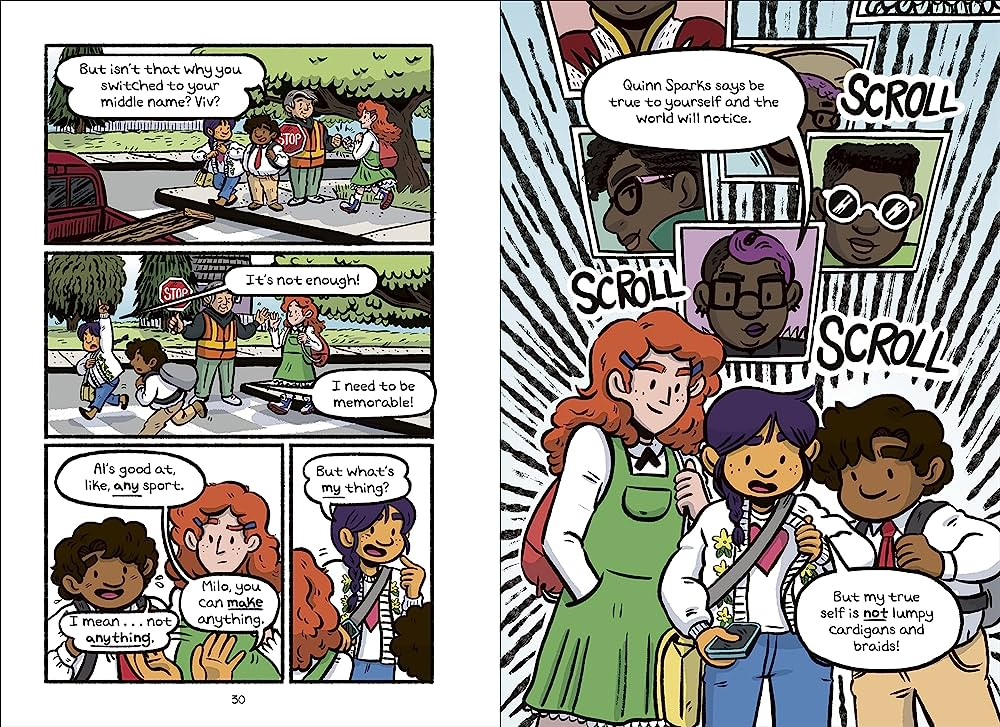
Summary:  Although her mom urges her to keep a low profile in middle school, Olivia wants to be seen.  Renaming herself Viv to differentiate herself from all the other Olivias, she takes to heart the words of a social media follower to be true to herself.  She chops off her hair right before school pictures are taken, causing a buzz around school.  Encouraged, Viv begins staging spectacles that get her noticed by the cool kids.  But her old friends Milo and Al feel left behind, and when Viv tries to include them in one of her spectacles, it’s a disaster.  Viv is forced to do some soul searching to decide where her loyalties lie, and ultimately she’s able to find a way to keep her old friends while being true to herself.  Includes an author’s note about an interesting way she generated story ideas that led to this graphic novel.  288 pages; grades 3-7.

Pros:  Another fun middle school graphic novel with a positive message about being yourself but not at the expense of others’ feelings and with some good observations about social media.  The author’s website says this book one of a planned series of four.

Cons:  Creating spectacles in middle school = extremely cringy.

Lasagna Means I Love You by Kate O’Shaunghnessy

Published by Knopf Books for Young Readers

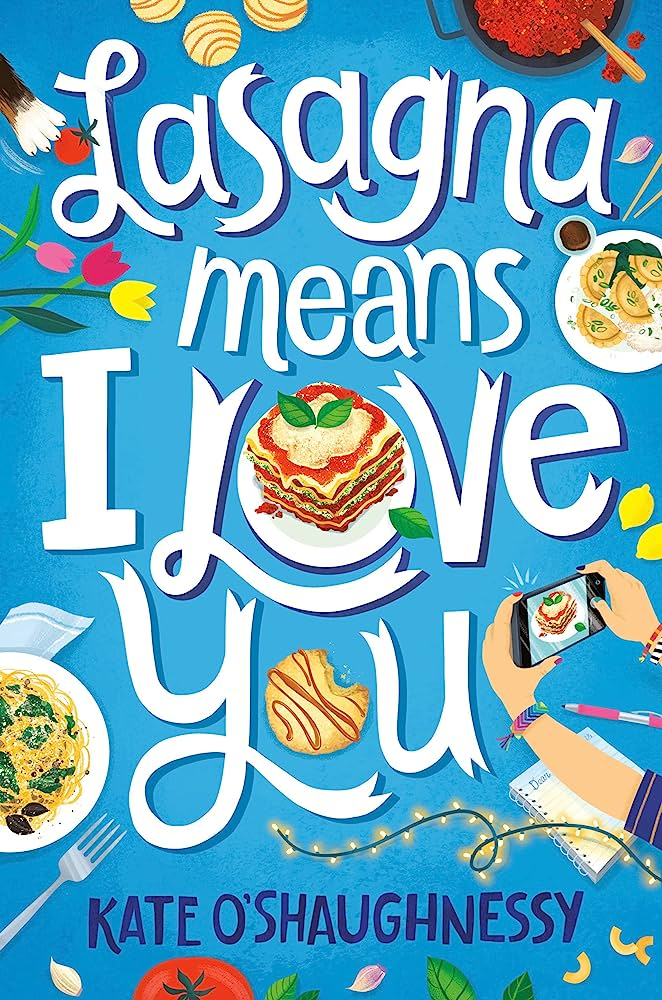
Summary:  Mo is reeling following the death of Nan, the grandmother who has raised her, and the refusal of her uncle to adopt her.  She’s placed in the foster care system, which she describes to Nan in a series of letters.  Several mishaps get her removed from her first placement, and she moves in with a wealthy couple who plan to adopt her.  Although the situation seems ideal in many ways, it gradually becomes evident that the couple isn’t ready for such a big move.  Mo feels rejected again and seeks solace with Joe, the doorman in her building that she’s befriended, and his wife.  Throughout the story, Mo learns to cook and, with her best friend, launches a website to collect family recipes with the hope of finding a recipe that will connect her with Nan.  The final resolution of Mo’s story doesn’t come as a particular surprise but is nonetheless extremely satisfying.  224 pages; grades 4-7.

Pros:  Kids in foster care don’t often appear in middle grade fiction, and Mo is a likable narrator whose story shows the heartache of trying to find a family.  The letter-writing format of the story gives it an immediacy and keeps the action moving along.

Cons:  Mo’s experience with the New York City foster care system seemed a lot rosier than I’m guessing most kids have, and there were only occasional mentions of the privilege of being a white girl offering hints of this.

Talia’s Codebook for Mathletes by Marissa Moss

Published by Walker Books

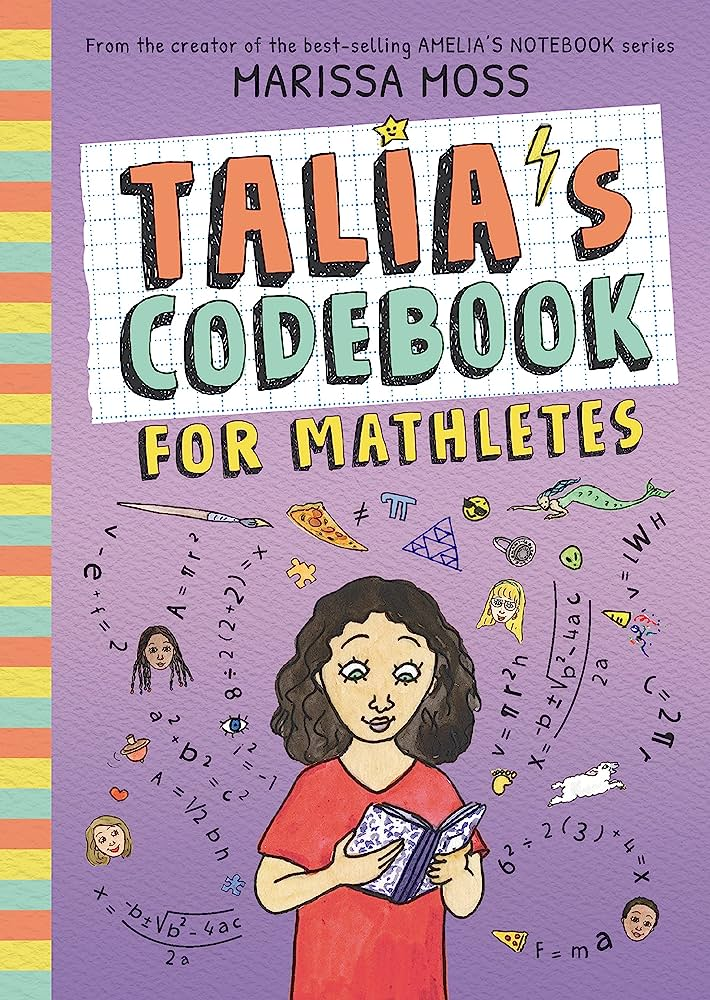
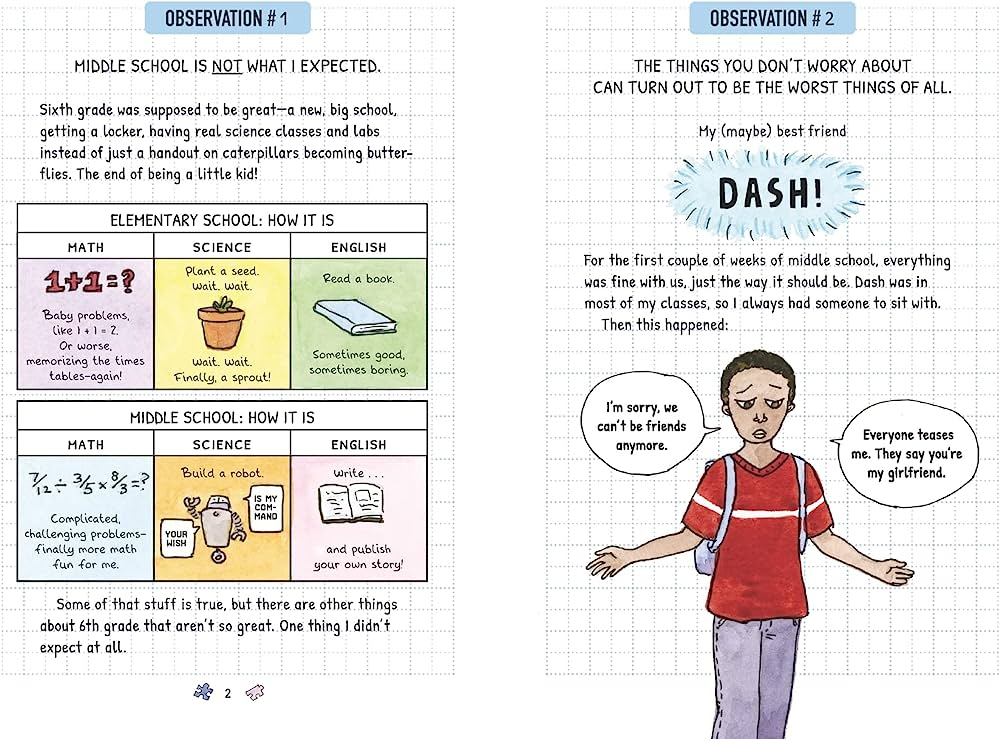
Summary:  Talia’s dealing with lots of ups and downs at the beginning of middle school, but the worst is that her neighbor and best friend Dash doesn’t want to be seen with a girl at school.  When Talia joins the mathletes, she learns that she’s the only girl, and the coach and some of the other boys treat her disrespectfully.  Fed up, she decides to form her own girls’ mathletes team.  Her two best friends aren’t interested in being on the team, but they’re supportive and help her get things going.  Much to her surprise, sixteen girls show up to the first meeting, and before long, the Mathlete Mermaids are ready for competition.  At the big meet, Talia messes up, but she learns from her mistake, and the rest of the team does well enough to win.  The boys are shocked but see that their sexism has lost them some valuable teammates, and the two teams decide to merge.  Talia has mixed feelings about this but is proud that she stepped up and created a way for girls to shine in math. Includes additional information about codes and an author’s note about her own experience with mathletes.  240 pages; grades 3-6.

Pros:  Middle school graphic novel fans will enjoy this story of STEM girl power that includes a number of fun codes, and that does an excellent job of chronicling middle school friendship and family issues without neatly resolving them all.  

Cons:  I was hoping that Talia’s parents, who focused on her mistake at the competition instead of her team’s win, would learn a lesson or two, but no such luck.

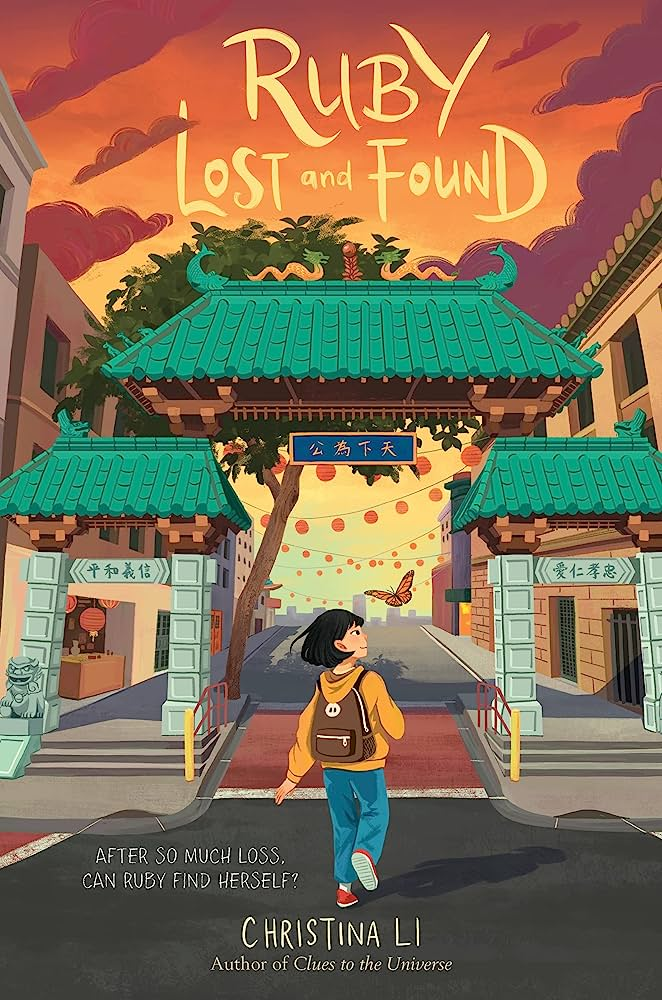
Ruby Lost and Found by Christina Li

Published by Quill Tree Books

Summary:  Ruby’s had a tough year in seventh grade: one friend moved away, another drifted away, and her beloved grandfather died.  When Ruby’s caught sneaking out of school at lunchtime, she’s sent to her grandmother’s house every weekday during the summer.  Nai-Nai spends her days at the senior center, where Ruby is forced to tag along.  To her surprise, she finds a community there with the other old ladies and Liam, a classmate who also comes with his grandmother.  As the summer goes on, Ruby slowly comes to terms with her grief over her grandfather, her changing friendships, and, most heartbreakingly, her grandmother’s signs of early dementia.  As Ruby and Liam try, and fail, to save a beloved neighborhood bakery, Ruby learns that changes are inevitable, but that having a community of family and friends can help to navigate them.  304 pages; grades 4-7.

Pros:  A beautifully written story of grief, loss, and community.  Ruby struggles realistically with her emotions and with making choices that aren’t always great, but she also learns to make amends without compromising who she is.  I’d love to see this book win some awards.

Cons:  Until the very end, Ruby’s parents come across as pretty selfish and constantly exasperated with a daughter who is truly struggling.

Will on the Inside by Andrew Eliopulos

Published by Quill Tree Books

Summary:  Will is passionate about his soccer team and enjoys an easy camaraderie with his teammates, despite his somewhat introverted nature.  Stomach issues and fatigue lead to a diagnosis of Crohn’s disease and being sidelined from soccer.  With more free time, Will starts hanging out with Griffin, a boy who’s been picked on by Will’s other friends for asking one of the boys, Will’s best friend Henry, to the school dance.  As he comes to terms with his chronic disease, the ways it impacts his life, and questions about his own sexuality, Will learns to ask for help when he needs it and to speak up when he sees injustice or bullying.  304 pages; grades 4-7.

Pros:  This is one of the best middle grade books I’ve read this year.  It’s based on the author’s own experiences with Crohn’s and questioning his sexuality, and Will’s voice is pitch perfect.  I’m happy to see so many boy protagonists in the middle-grade world this year.

Cons:  Getting Crohn’s disease in middle school seems like the worst.

Half Moon Summer by Elaine Vickers

Published by Peachtree

Summary:  Drew and Mia were born on the same day at the same hospital in Half Moon Bay, California.  When Drew wouldn’t stop crying, the two babies were put in the same bassinet, which calmed Drew down.  Mia and her family moved to Sacramento, but the summer after sixth grade, her family is back for a few months, and she and Drew, initially not knowing their history, become friends.  Their story is told in chapters that alternate between Drew’s prose journal entries and Mia’s verse ones as each one faces family difficulties: Drew’s father’s mysterious illness seems to be worsening, while Mia is dealing with the heartbreaking loss of a home that the family has dreamed of for years.  When they decide to train together for a half marathon, each one has individual reasons for running, but they support each other to keep going, both during their early morning runs and on the day of the race itself.  The end of the summer means Mia is moving back home, but the friendship promises to keep going through potentially difficult days ahead.  288 pages; grades 4-7.

Pros:  A compelling story of two kids dealing with some pretty serious family difficulties who show readers how to cope with courage and grace.  Their two distinctive voices, with the alternating prose and poetry narratives, keep the story moving along at a good pace.

Cons:  The story about the two kids meeting as babies was cute but felt like a bit of an unlikely coincidence.

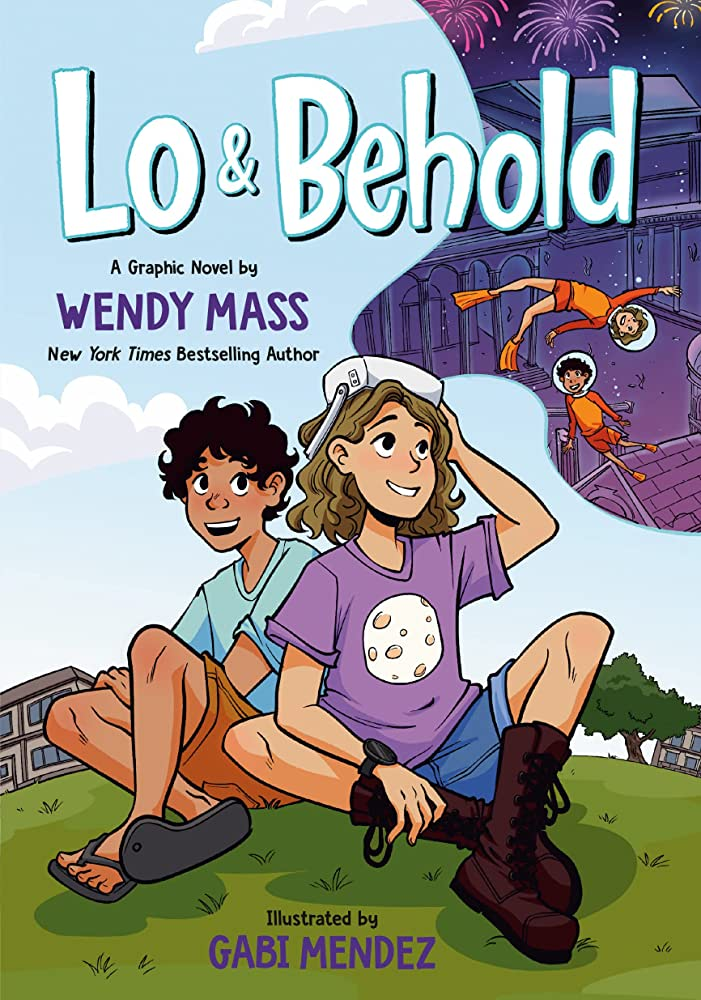
Lo & Behold by Wendy Mass, illustrated by Gabi Mendez

Published by Random House Graphic

Summary:  Addie remembers a happy childhood with two parents who loved her and encouraged her interests, but after her mom’s bike accident, she changed and no longer lives with the family.  When Addie’s dad gets a chance to work on a virtual reality project at a university, he takes Addie with him to live on campus for the summer.  There Addie discovers VR and the immersive worlds it can create, while tentatively making steps toward Mateo, her across-the-hall neighbor.  Addie’s virtual discoveries help her uncover some truths about her real life, and by the end of the summer, she’s willing to confide in Mateo and to learn about a tragedy that occurred in his family.  As Addie begins to accept the reality of what’s happened to her mom, her whole family finds a way to heal and move forward together.  224 pages; grades 4-7.

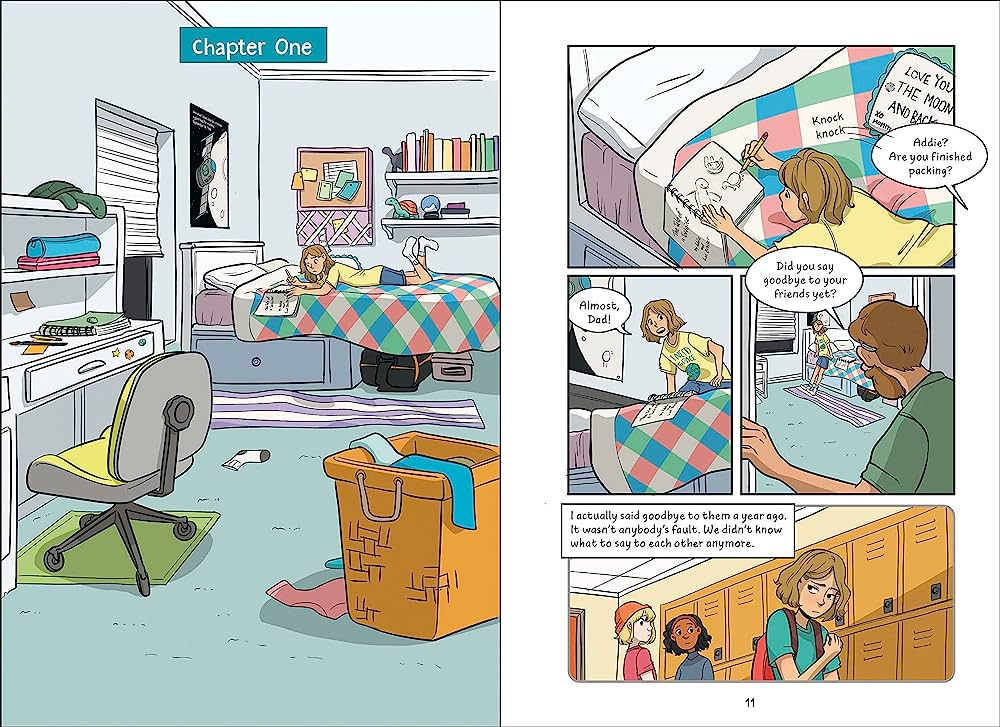
Pros:  There’s a lot going on in this appealing graphic novel, and fans of the middle school realistic fiction graphic novel genre will be only too happy to discover Wendy Mass (and maybe try some of her excellent non-graphic novels).  The artwork is inspired, particularly the way Gabi Mendez differentiates the virtual reality sequences.

Cons:  This seems like a book that would appeal to elementary kids, but reviews seem to recommend it more for middle school, maybe due to the addiction storyline.

Select by Christie Matheson

Published by Random House Books for Young Readers

Summary:  Alex has loved soccer since she was five, improving her game with her rec league teammates and their coach Jayda, who has always supported and inspired her.  When Alex gets recruited by the elite Select team, she’s excited about the possibility of winning a national title and getting on a path to playing college soccer.  But things are different on the Select team. Not only does Alex have to figure out a way to get to games in far-away towns, not easy with a somewhat irresponsible mother who works two jobs, but the coach turns out to be a bully.  He favors the girls whose parents contribute financially to the team and unfairly punishes Alex, who’s on a scholarship.  Alex isn’t afraid to stand up for herself, though, and as she slowly befriends some of her teammates, they begin to help each other in the face of Coach’s abuses.  As the team piles up wins, their coach becomes more and more demanding, and a showdown between him and the team feels inevitable.  Includes an author’s note about abusive coaches in youth sports a list of resources. 224 pages; grades 4-7.

Pros:  This fast-paced sports story brings the issue of abusive coaches to light, with a courageous protagonist who must deal with difficult issues both at home and on the field.  Her coach Jayda provides an example of good coaching while also serving as something of a stand-in parent.  

Cons:  There wasn’t a lot of subtlety in portraying who was good and who was bad.  It would have made a more interesting story to give the coach a charming side rather than making him an abusive bully right off the bat.

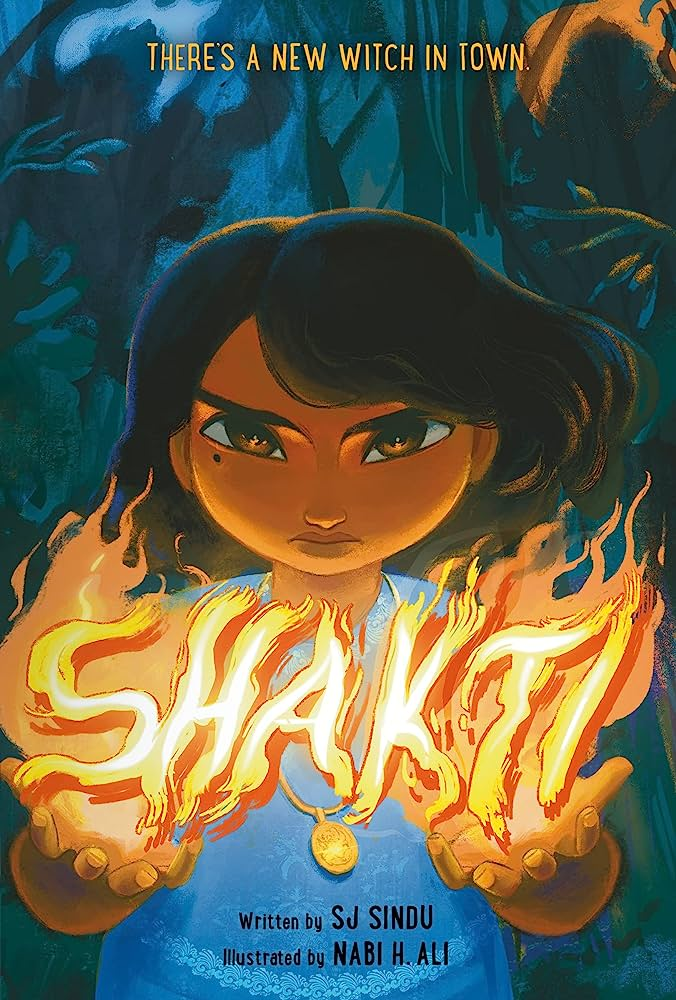
Shakti by SJ Sindu, illustrated by Nabi H. Ali

Published by HarperAlley

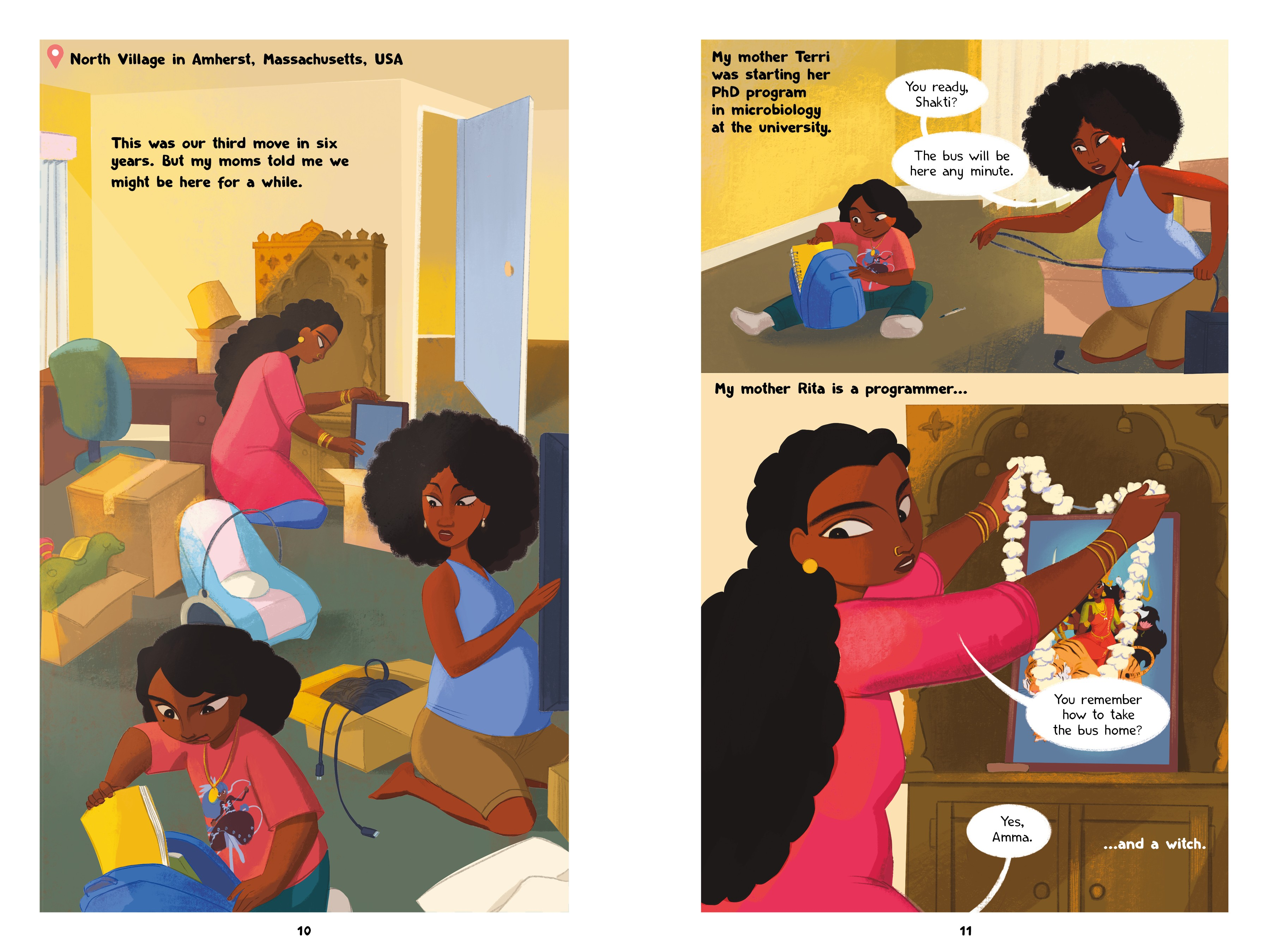
Summary:  Shakti’s family has moved a lot, but her moms promise that the move to Amherst, MA will be the last one for a while.  Her mother Terri is pregnant and working on a PhD at the university, while her other mother Rita is a programmer with a pretty good knowledge of magic.  Shakti has shown an inclination toward magic, but after accidentally burning down the house as a baby, she’s been forbidden from using her powers until she’s older.  Shakti makes some good friends at her new school but discovers that three of the mean girls are practicing witchcraft to bind the school to them, making all the teachers love them while neglecting the rest of the student body.  Determined to break the spell, which threatens to hurt Shakti’s new baby sibling, Shakti and her friends call on the Hindu goddesses Rita has taught her about, unleashing power that they then struggle to contain.  Shakti learns that she has to let go of her anger and focus her powers to save her family, her friends, and her town.  256 pages; grades 4-7.

Pros:  Witchcraft in western Massachusetts?  I knew I had to read this graphic novel as soon as I heard about it, and I thoroughly enjoyed it, from the middle school drama to the concise but detailed introductions to Hindu mythology.  Recommend this to readers looking for something a little more fantasy-oriented than the usual middle school graphic novel.

Cons:  The b-word (represented as b–) is used a few times.