Shakti by SJ Sindu, illustrated by Nabi H. Ali

Published by HarperAlley
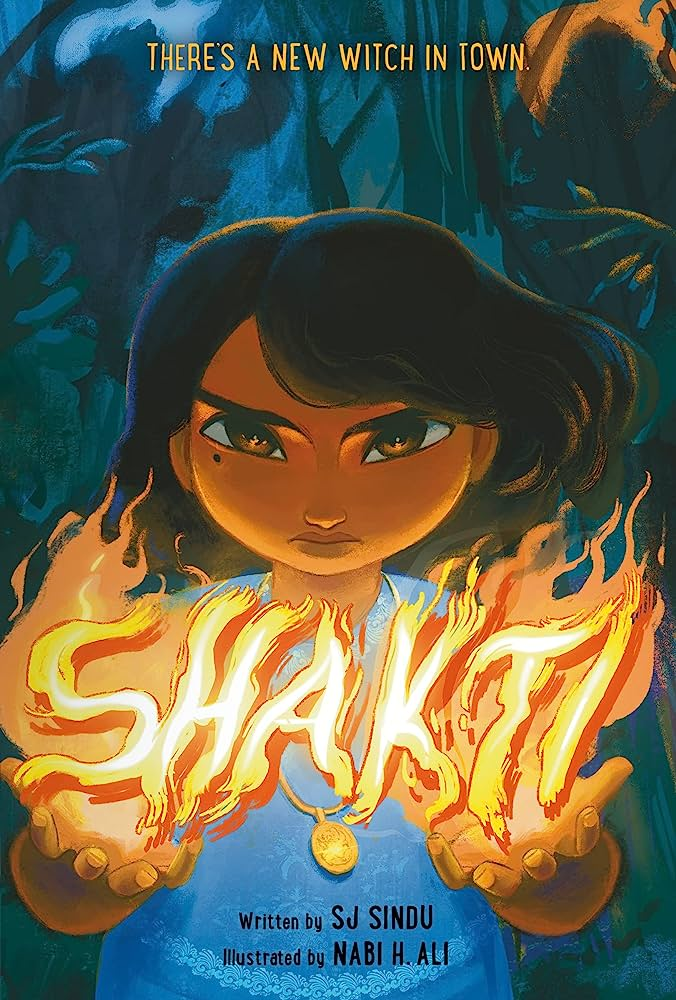
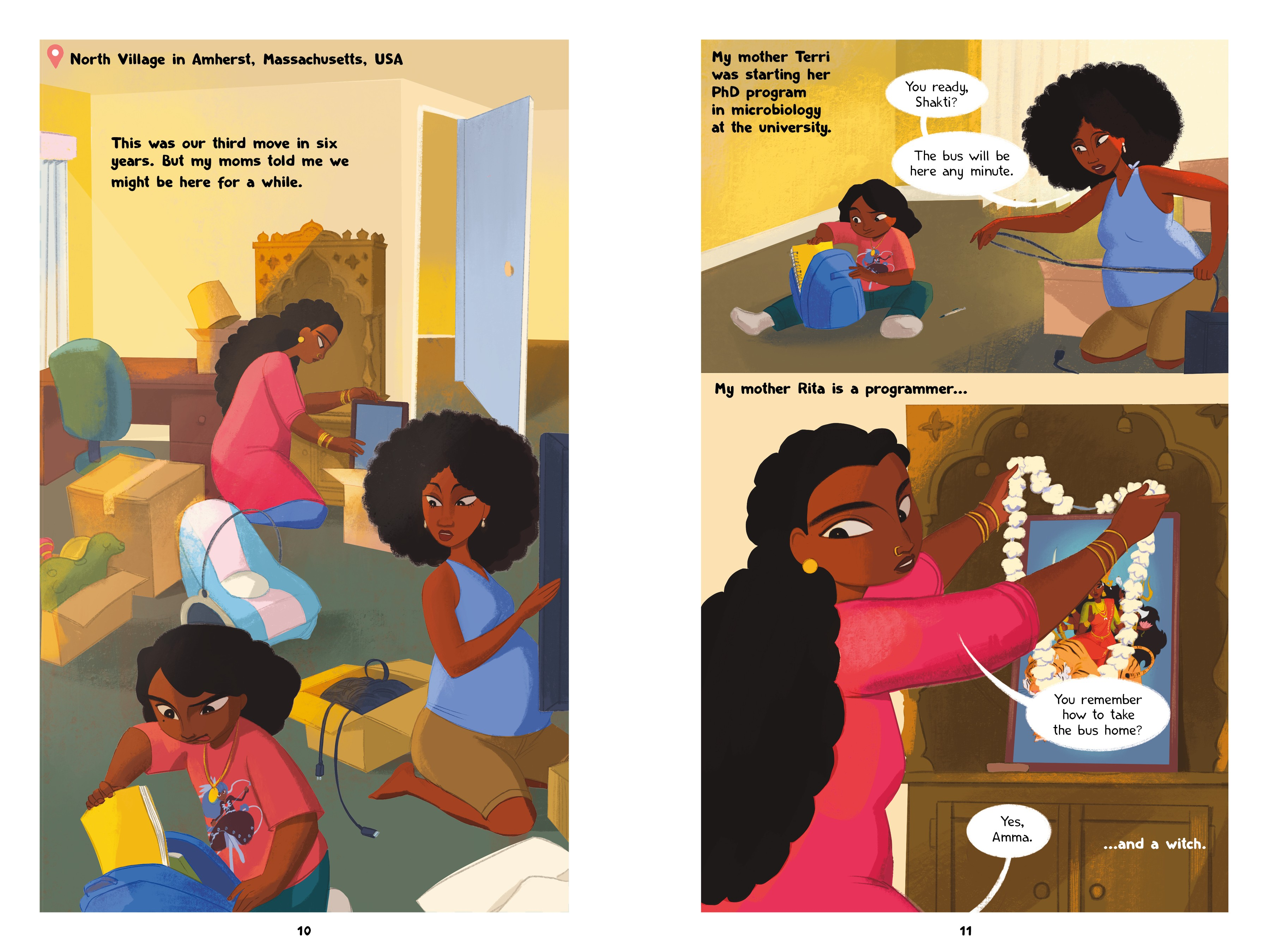
Summary:  Shakti’s family has moved a lot, but her moms promise that the move to Amherst, MA will be the last one for a while.  Her mother Terri is pregnant and working on a PhD at the university, while her other mother Rita is a programmer with a pretty good knowledge of magic.  Shakti has shown an inclination toward magic, but after accidentally burning down the house as a baby, she’s been forbidden from using her powers until she’s older.  Shakti makes some good friends at her new school but discovers that three of the mean girls are practicing witchcraft to bind the school to them, making all the teachers love them while neglecting the rest of the student body.  Determined to break the spell, which threatens to hurt Shakti’s new baby sibling, Shakti and her friends call on the Hindu goddesses Rita has taught her about, unleashing power that they then struggle to contain.  Shakti learns that she has to let go of her anger and focus her powers to save her family, her friends, and her town.  256 pages; grades 4-7.

Pros:  Witchcraft in western Massachusetts?  I knew I had to read this graphic novel as soon as I heard about it, and I thoroughly enjoyed it, from the middle school drama to the concise but detailed introductions to Hindu mythology.  Recommend this to readers looking for something a little more fantasy-oriented than the usual middle school graphic novel.

Cons:  The b-word (represented as b–) is used a few times.
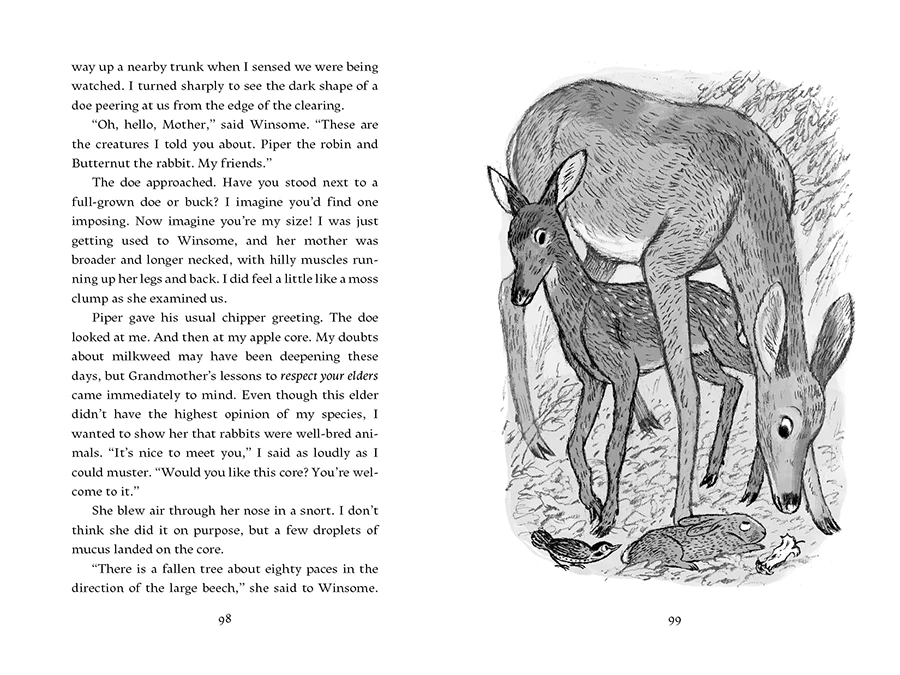
The Remarkable Rescue at Milkweed Meadow by Elaine Dimopoulos, illustrated by Doug Salati

Published by Charlesbridge

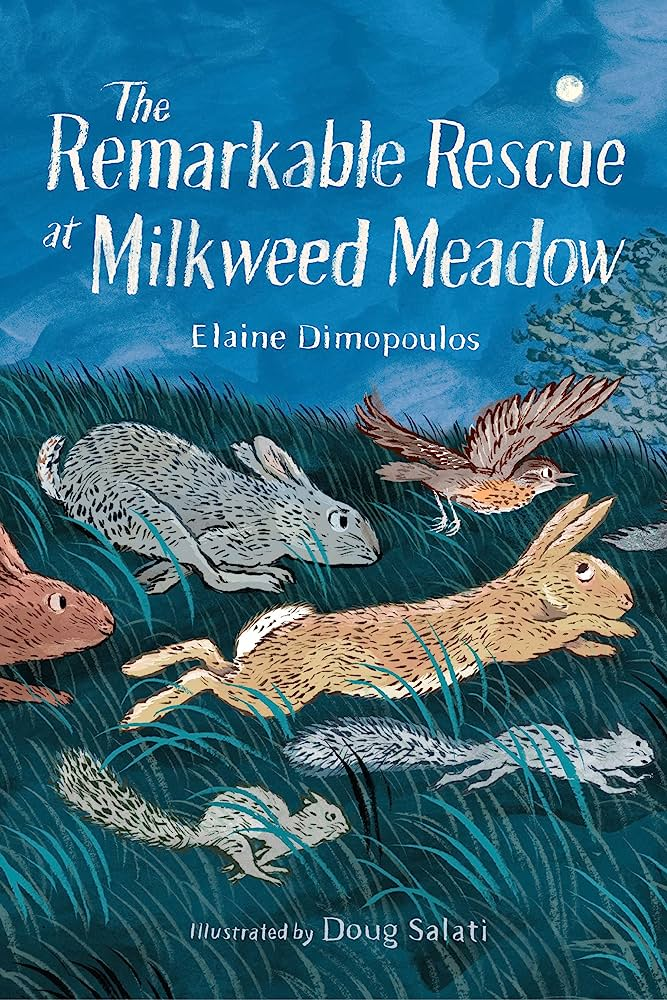
Summary:  Butternut is part of a large rabbit family that lives in a burrow in Milkweed Meadow.  The rabbits keep pretty much to themselves, learning storytelling and safety skills from their mother and grandmother.  A chance encounter with a young robin named Piper, however, expands Butternut’s horizons, and she finds herself overcoming her many anxieties to go on adventures with Piper and a young deer named Winsome that they befriend when Winsome breaks her leg in the rabbits’ burrow.  The title’s remarkable rescue involves some orphaned coyote pups, an operation that Butternut advocates for even though they will grow up to become predators, and one that ultimately involves all the animals of the meadow.  Butternut’s newfound courage and sense of connection to other species inspire her mother and grandmother to put aside some of their own fears and to open themselves up to the meadow community.  192 pages; grades 3-6.

Pros:  This beautifully written and illustrated animal story shows the power of storytelling, community, and courage with enough humor to keep the messages light.  It would make an excellent elementary read-aloud or book club selection.

Cons:  I wish there had been more illustrations by Caldecott medalist Doug Salati.

The Labors of Hercules Beal by Gary D. Schmidt

Published by Clarion Books

Summary:  Hercules Beal is trying to rebuild his life after his parents were killed in a car crash and his older brother has somewhat reluctantly come home to take care of Hercules and run the family nursery.  The last thing he needs is to start seventh grade at a new school and discover that his language arts and social studies teacher is a tough ex-marine who insists that his students call him Lieutenant Colonel Hupfer.  For their mythology unit, Hupfer assigns Hercules the task of reenacting all the labors of the original Hercules, with a 150-word reflection on each.  As Hercules goes through his year, he finds himself in a series of unique and occasionally dangerous situations that bring him closer to his neighbors, classmates, and family.  Slowly, the details of his parents’ accident emerge, and Hercules discovers that, despite his intense grief, he is surrounded by people he can depend upon to help him take on difficult tasks and move forward with his life.  352 pages; grades 4-7.

Pros:  As ever, Gary D. Schmidt has created a memorable cast of characters and a story with equal parts humor and pathos.  The structure of the twelve labors is fun, and it’s delightful to see how Hercules connects events in his life with the myths.  Each chapter concludes with his reflection and Lt. Col. Hupfer’s comment and grades, showing the growing bond between the two.

Cons:  Although this seems to be a contemporary story, there is no mention of a phone (except for occasional calls), video games, or social media in Hercules’ life, making me wonder how much time Gary Schmidt has spent with middle schoolers recently.

Garvey’s Choice: The Graphic Novel by Nikki Grimes, illustrated by Theodore Taylor III

Published by Wordsong

Summary:  Nikki Grimes’s 2016 novel in verse has been turned into a graphic novel that is quite faithful to the original.  Garvey’s interested in chess and astronomy, while his dad wishes he would play sports, leading to ongoing conflict between the two.  When Garvey joins the school chorus, he discovers a talent for singing that eventually leads to a reconciliation with his dad (you can read a more detailed summary in my original review).  Includes additional information about tanka, the poetic form used by Nikki Grimes to write the book.  144 pages; grades 4-7.

Pros:  Turning this into a graphic novel is a stroke of genius, since it will bring a lot more readers to this excellent book.  The original was short enough that it is mostly preserved intact (I’m taking reviewers’ words for this, as I didn’t do a comparison myself), creating a story that many kids will relate to.

Cons:  Although Garvey lost a little bit of weight (one size), he wisely focused on developing healthier habits; however, the illustrations made him look like almost a different person in the last few pages.

The Firefly Summer by Morgan Matson

Published by Simon and Schuster Books for Young Readers

Summary:  When Ryanna gets an invitation from her estranged maternal grandparents to spend the summer at their house on a lake in the Poconos, she’s not sure if she wants to go.  But questions about her late mother motivate her to accept, and what she had imagined as a few quiet months with grandparents turns out to be a fun, busy summer surrounded by aunts, uncles, and cousins.  Partway through her time there, she learns that her grandparents have been forced to sell the camp, and that everything will be bulldozed and developed into condos in the fall.  Ryanna and her cousins discover a treasure hunt her mother created when she was 12 that could lead to the piece of paper her grandparents need to stop the sale of their property.  It’s a race against time as the kids slowly figure out the mystery and Ryanna unravels her own mystery about her mother and the early days of her own childhood.  385 pages; grades 4-7.

Pros:  A perfect summer read with an idyllic setting, lots of interesting characters, some family secrets to discover, and a mystery or two to solve.  Morgan Matson perfectly captures the feel of a tech-free summer spent outdoors with friends, and the pacing will keep readers turning the pages all the way to the end.

Cons:  I know from sad experience that a lot of readers in the intended demographic will be turned off by the page count.     

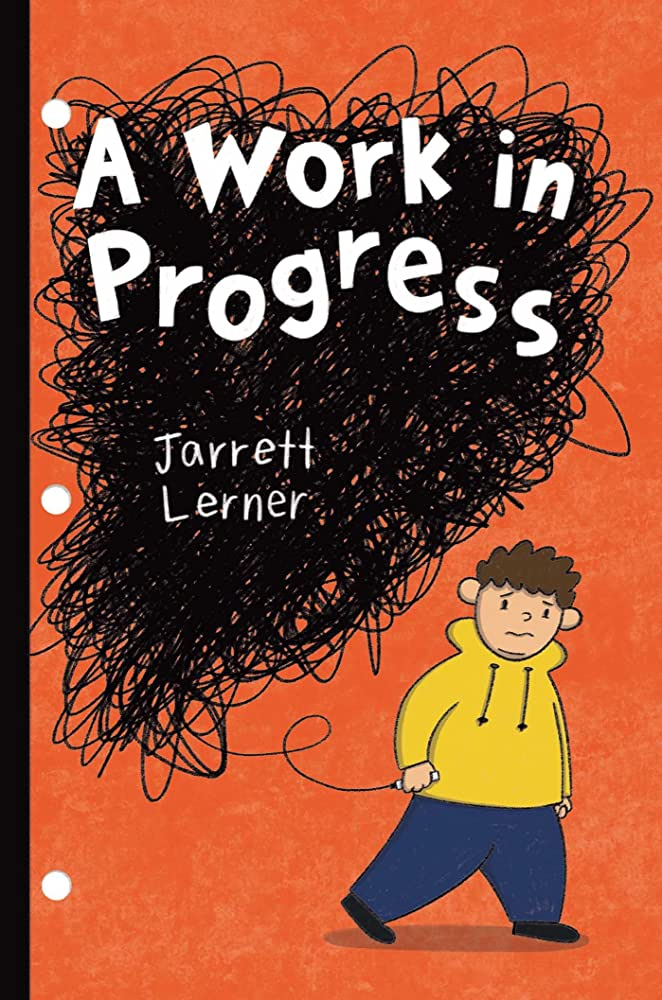
A Work in Progress by Jarrett Lerner

Published by Aladdin

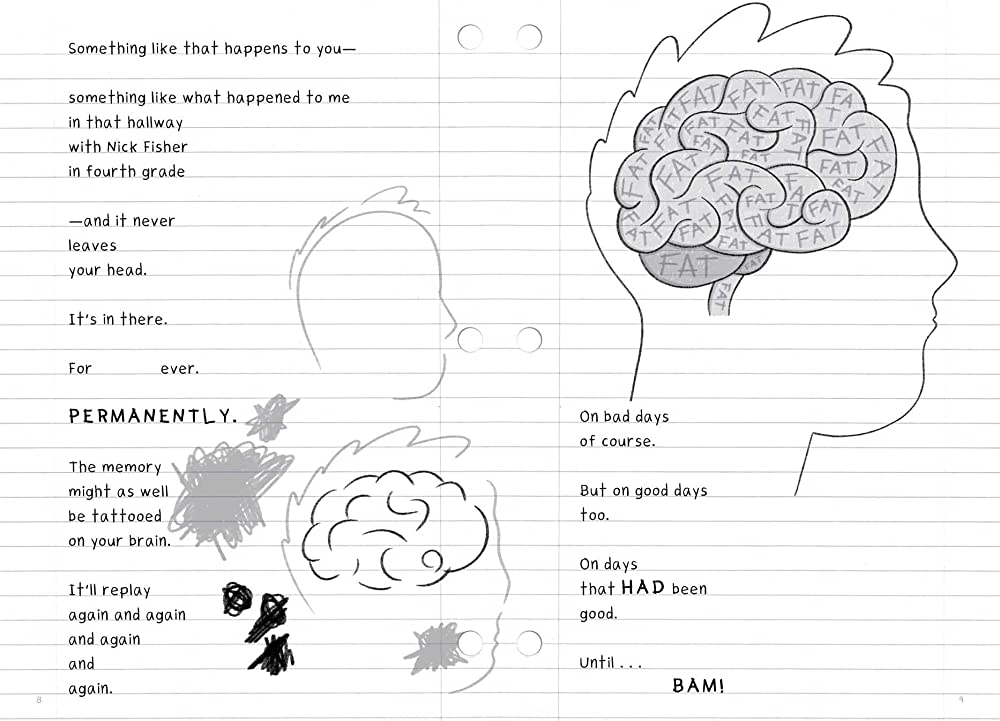
Summary:  Ever since a bully called him fat in fourth grade, Will has been extremely self-conscious about his body.  He dresses in baggy clothes and often eats when he is depressed.  When he meets new kid and cool skateboarder Markus, he hopes to make a new friend.  In a desperate attempt to slim down, Will cuts way back on his eating, eventually fainting at school due to lack of food.  This crisis leads to some honest conversations with his parents and with Markus, and Will begins to get the help that he needs.  Although not every day is a good way, talking to a therapist and getting support from Markus and his parents helps Will to begin to accept himself and focus on good health rather than his weight.  368 pages; grades 4-7.

Pros:  This novel-in-verse is formatted to look like Will’s journal and sketchbook (he’s a talented artist) and makes for a quick read despite the 300+ page length.  It’s great to see a middle grade novel tackling issues of eating disorders and body dysmorphia in boys, and Will’s honest voice and expressive drawings will quickly draw readers in.

Cons:  I was bummed that Markus moved away at the end.

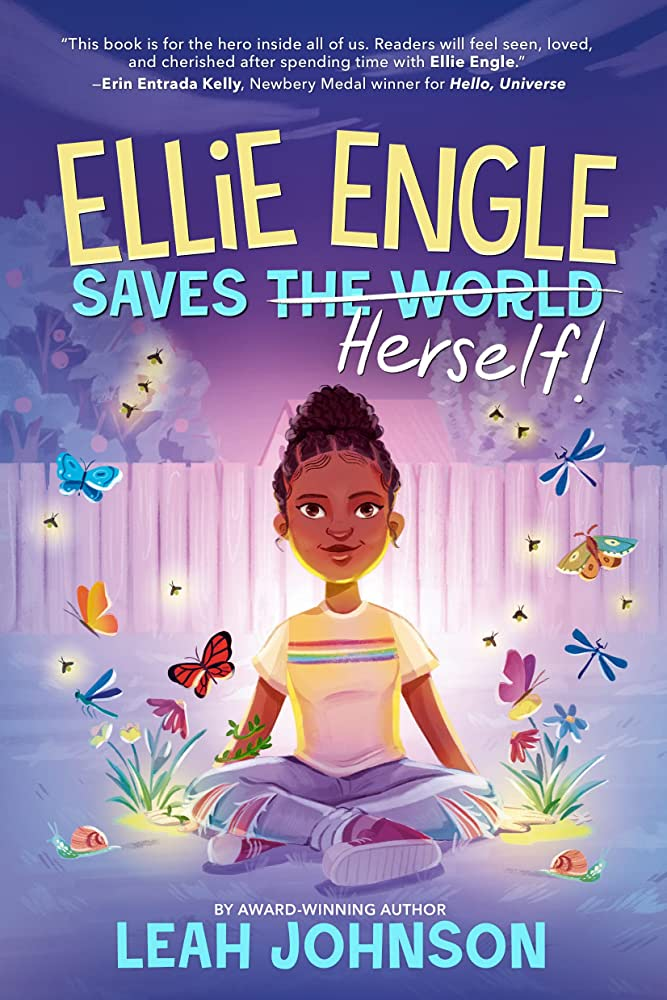
Ellie Engle saves Herself! by Leah Johnson

Published by Disney Hyperion

Summary:  Ellie Engle has always been content to be in the background, enjoying her comic books and supporting her best friend (and secret crush) Abby, who prefers being in the spotlight.  When a freak earthquake gives Ellie necromancy superpowers, she desperately wants to hide them.  But after accidentally bringing the frog she’s supposed to dissect in science class back to life, her secret is out, and she becomes an unwilling celebrity.  Her fame leads her to discover who her true friends are, a list that, unfortunately, doesn’t seem to include Abby.  When Ellie discovers that an old family friend has a similar superpower, she starts to learn how to control that power and use it for good.  She may not want to be in the spotlight, but Ellie begins to find a way to negotiate her new life as a superhero.  288 pages; grades 4-7.

Pros:  Ellie’s voice has plenty of humor, and readers will relate to her journey of self-discovery, not only as a reluctant superhero, but as a queer Black girl just beginning to figure out who she is.  

Cons:  Necromancy seems like a creepy superpower.

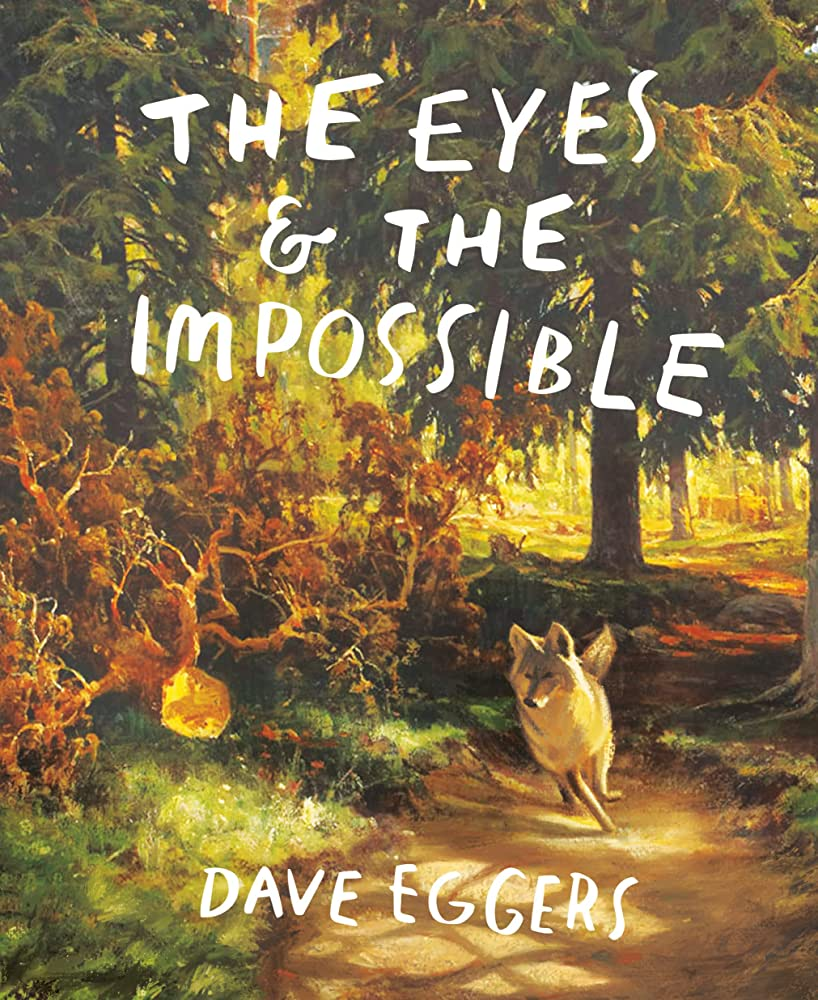
The Eyes and the Impossible by Dave Eggers, illustrated by Shawn Harris

Published by Knopf Books for Young Readers

Summary:  Johannes is a wild dog who lives in a park populated by other animal friends: a brave and loyal seagull, a group of bright raccoons who are proud of their opposable thumbs, a squirrel who sees more with one eye than most animals do with two, and three wise bison.  Johannes can run fast–he estimates that he sometimes surpasses the speed of sound, maybe the speed of light–and he becomes the Eyes of the park, keeping the bison informed about what is going on.  A couple of misadventures including a dognapping and the rescue of a human child bring Johannes to the attention of the park staff, and he begins to fear for his freedom.  To take his mind off of that worry, he begins to formulate a seemingly impossible plan: to free the bison, assisted by a herd of goats that has recently been transported to the island.  All the animals get in on the escape, and all goes off with a minimum of hitches until the crucial moment of boarding the escape boat, when the bison decide they don’t want to be free.  Johannes is invited to escape instead, forcing him to decide between his island family and the chance to start a new life of guaranteed freedom.  256 pages; grades 3-7.

Pros:  I’m not a big animal fantasy reader, but this book has gotten three starred reviews, so I couldn’t ignore it. I forced myself to start reading and was immediately charmed and engaged by Johannes’s voice, which is simultaneously innocent, wise, and funny.  It would be a great choice for an elementary read-aloud or book club, and I certainly hope it will receive some Newbery consideration.  The writing is so, so good, and Shawn Harris’s paintings of Johannes perfectly capture his spirit and island home.

Cons:  I had my fingers crossed that the constantly maligned ducks would have a moment of redemption during the escape, but they remained the butt of all the other animals’ jokes.

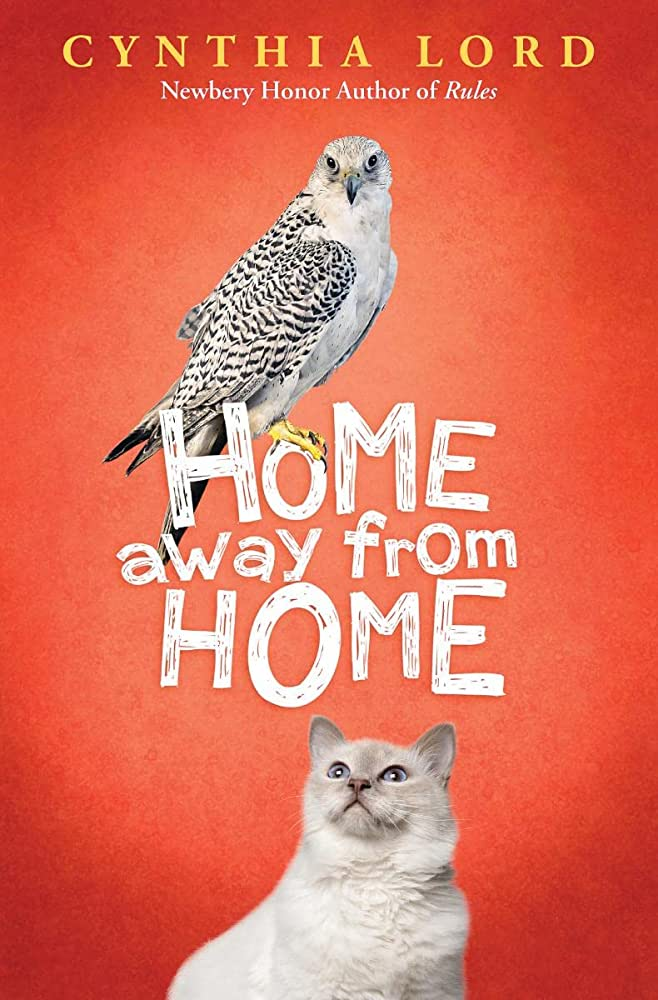
Home Away from Home by Cynthia Lord

Published by Scholastic

Summary:  Mia’s excited about her visit to Stone Harbor, Maine, not only because she loves spending time with Grandma, but because it will get her away from the stress of moving to a new house with her mother and new stepfather.  But things are different in Maine than in years past, the most notable change being a new boy named Cayman who hangs around Grandma’s house a lot.  Cayman can be bossy, but Mia finds herself enjoying having another kid around.  When Mia and Cayman discover a mysterious white bird at the Point, Mia’s sure it’s a sign of better things to come.  But the bird ultimately leads to some big mistakes on Mia’s part and a fight that threatens to end her new friendship with Cayman.  As Mia tries to repair the damage, she learns that it’s important to trust the people who care about her and that maybe she is braver than she believes.  224 pages; grades 3-7.

Pros:  A delightful summer read with relatable kid protagonists, compelling animal stories (there’s a subplot about a stray cat as well as the bird story), and a setting that will make you want to seek out a quaint Maine town for a long July weekend.

Cons:  I struggled with the pronunciation of “gyrfalcon”.

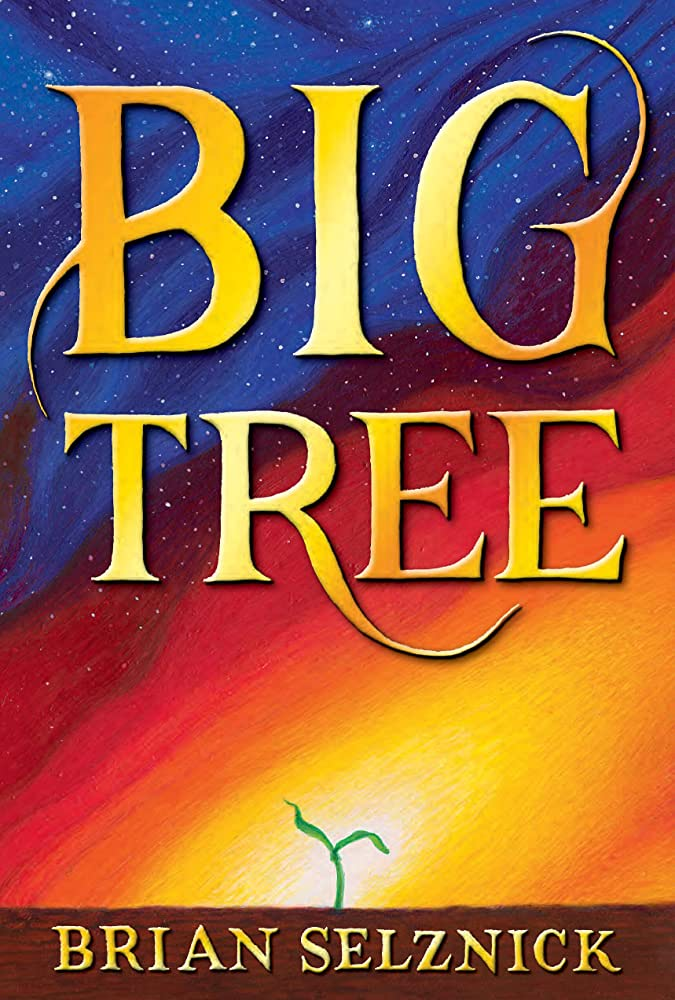
Big Tree by Brian Selznick

Published by Scholastic

Summary:  Melvin and Louise are two seeds nestled cozily in a seedpod, secure in the love and wisdom provided by their mother, a giant sycamore tree.  A natural disaster flings them into the world, where they travel over land and sea, meeting all kinds of wise and wonderful creatures.  While their mother sought to give them both roots and wings, imaginative Louise is filled with wonder and hope, while Melvin is bound by his worries and fears.  When the two are separated, Melvin finds himself trapped for many, many years, never forgetting his sister.  Eventually he learns the lessons of the universe that Louise already instinctively knew, and the two meet again in a wondrous reunion.  Includes an afterword that explains some of the scientific references, a bibliography, and an author’s note that tells how the story came to be.  528 pages; grades 3-7.

Pros:  Brian Selznick has created a masterpiece of prose and art in the style of his previous books.  This book was inspired by a movie idea that Steven Spielberg had, looking at the history of the Earth from the perspective of nature itself.  It is a wildly creative and ambitious story that includes dinosaurs, volcanoes, meteors, dinosaurs, mushroom ambassadors, and so much more.  

Cons:  Readers might need some guidance to understand all that is going on during this long period of Earth’s history.  The back matter is a useful guide for this.