Lotus Bloom and the Afro Revolution by Sherri Winston

Published by Bloomsbury Children’s Books
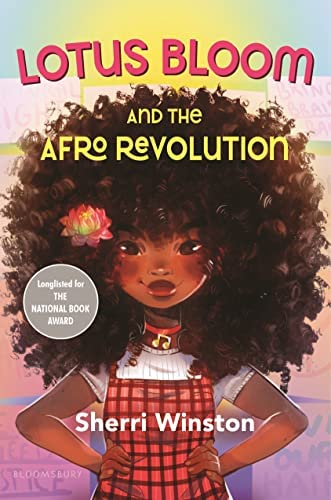
Summary:  Lotus is a gifted violinist just starting at a new arts school.  Her best friend Rebel is still at their old, underfunded middle school, leading protests against the discrepancy between the two schools.  Lotus would rather keep the peace and focus on her music, but when the older boy she displaces as concertmaster starts bullying her, she finds it harder and harder to keep her temper.  Then the boy’s mother gets into the act by pressuring the school to threaten Lotus with expulsion if she doesn’t get rid of her Afro.  Torn between her politically active friend and her peace-loving mother, Lotus must learn to find her own way to express her views and navigate the path that is best for her.  304 pages; grades 4-7.

Pros:  Middle school kids will appreciate Lotus’s dilemma of wanting to speak up but being afraid to make waves.  I liked that ultimately she figured out what was right for her even though it was different from what Rebel was advocating.  This made the National Book Award longlist; the finalists were recently announced and can be found here.

Cons:  Lotus seemed stuck in inaction for a long time.
Always, Clementine by Carlie Sorosiak

Published by Walker Books US

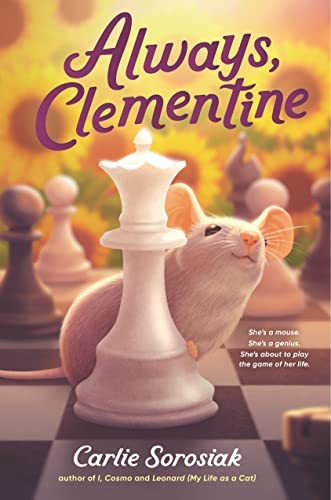
Summary:  Clementine is a super intelligent mouse who has spent her whole life in the lab that bred her and several other mice.  Her closest friend is a chimpanzee named Rosie who also lives in the lab, and whom Clementine sneaks out to visit at night.  Told in a series of letters to Rosie, the story opens with a researcher named Felix stealing/rescuing Clementine and another identical mouse (he just wants Clementine but can’t tell the two apart) and leaving them in a mailbox.  This turns out to belong to a boy named Gus and his grandfather, Pop, who soon discover the mice.  As they get to know Clementine, they realize she is no ordinary mouse, and the APB alert from the lab that they see on TV helps them to understand more about her.  They also learn from the TV that the scientists plan to kill Clementine so that they can study her brain, and they begin to hatch a plan to rescue her, a plan that involves Pop’s background as a chess champion.  Freed from the lab, Clementine learns more about who she really is and how she can use her gifts to help herself and other animals.  Includes an author’s note with additional information about lab animals.  304 pages; grades 3-7.

Pros:  Starting with the adorable cover, this is a book that is sure to appeal to animal lovers and may turn some of them into activists.

Cons:  I felt like I never really got to know Rosie.

Ride On by Faith Erin Hicks

Published by First Second

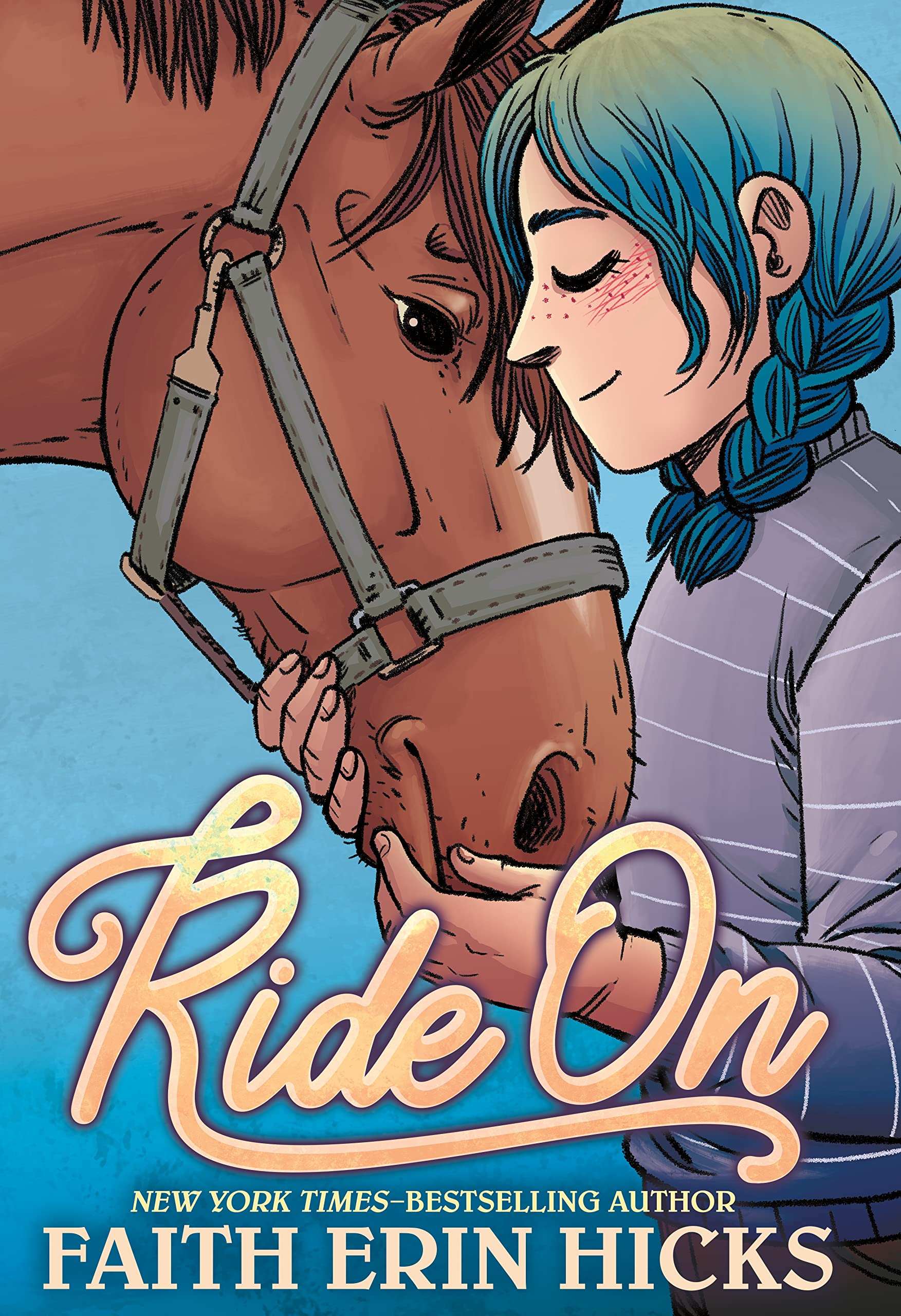
Summary:  Best friends Norrie, Hazel, and Sam are mystified by the new rider at Edgewood Stables.  Hazel recognizes her as Victoria, a girl she saw compete in a show at the more elite Waverly Stables.  Impetuous Norrie is certain that she’s a spy, sent over to check out the competition, but as the three get to know her, they learn the truth.  Victoria loves to ride but is not as a hardcore a competitor as her former best friend Taylor.  When Taylor refused to let Victoria ride her new horse, they had a falling out, and Victoria left Waverly.  The new group at Edgewood bonds over horses, of course, but also their favorite cheesy sci-fi TV show Beyond the Galaxy.  Between preparing for an upcoming competition and planning a stunt to celebrate the revival of BTG after a 20-year hiatus, the four friends have a busy time of it and come to appreciate the power of their friendship.  Includes an author’s note about her experiences growing up around horses.  224 pages; grades 3-7.

Pros:  Graphic novel fans are going to love this story of Victoria and her new friends at Edgewood.  The story line is engaging and moves easily between the past and present to slowly reveal what brought Victoria to the new stable, and the artwork is gorgeous, especially the portrayals of horses.

Cons:  I hope the author won’t wait as long as the Beyond the Galaxy producers to create a sequel.

Invisible by Christina Diaz Gonzalez, illustrated by Gabriela Epstein

Published by Graphix

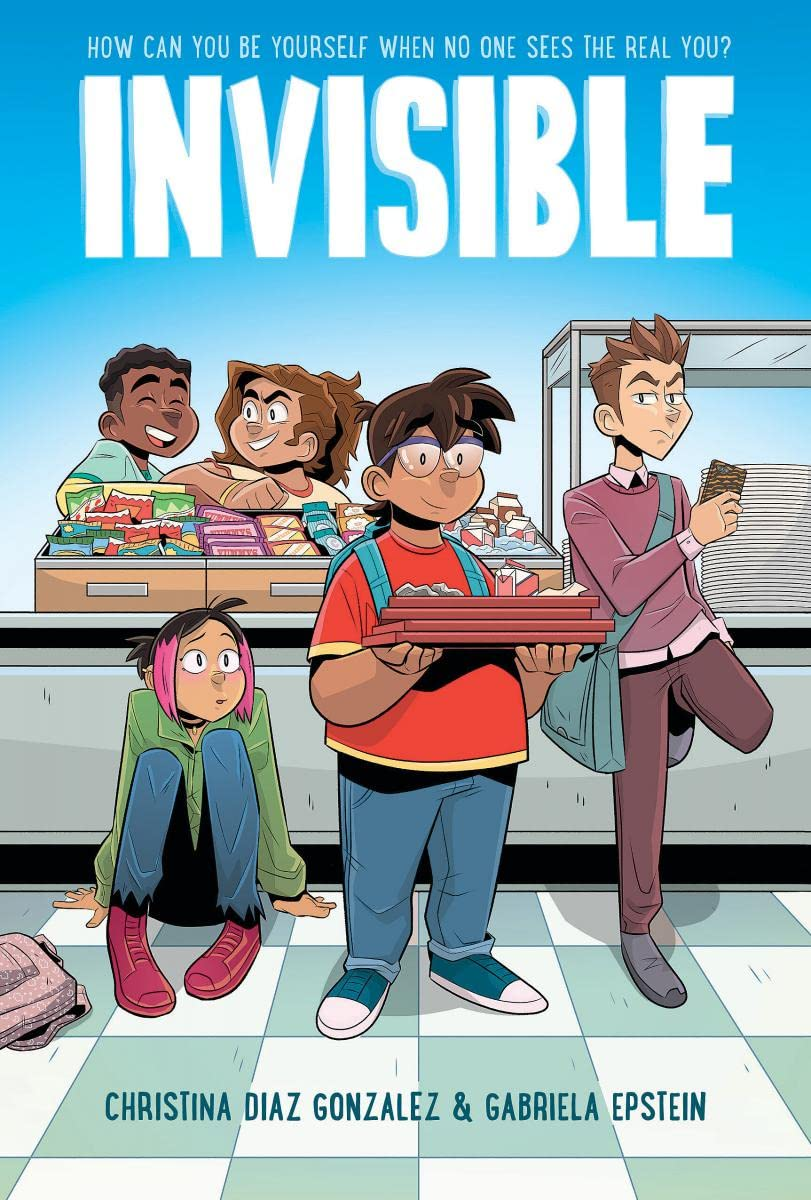
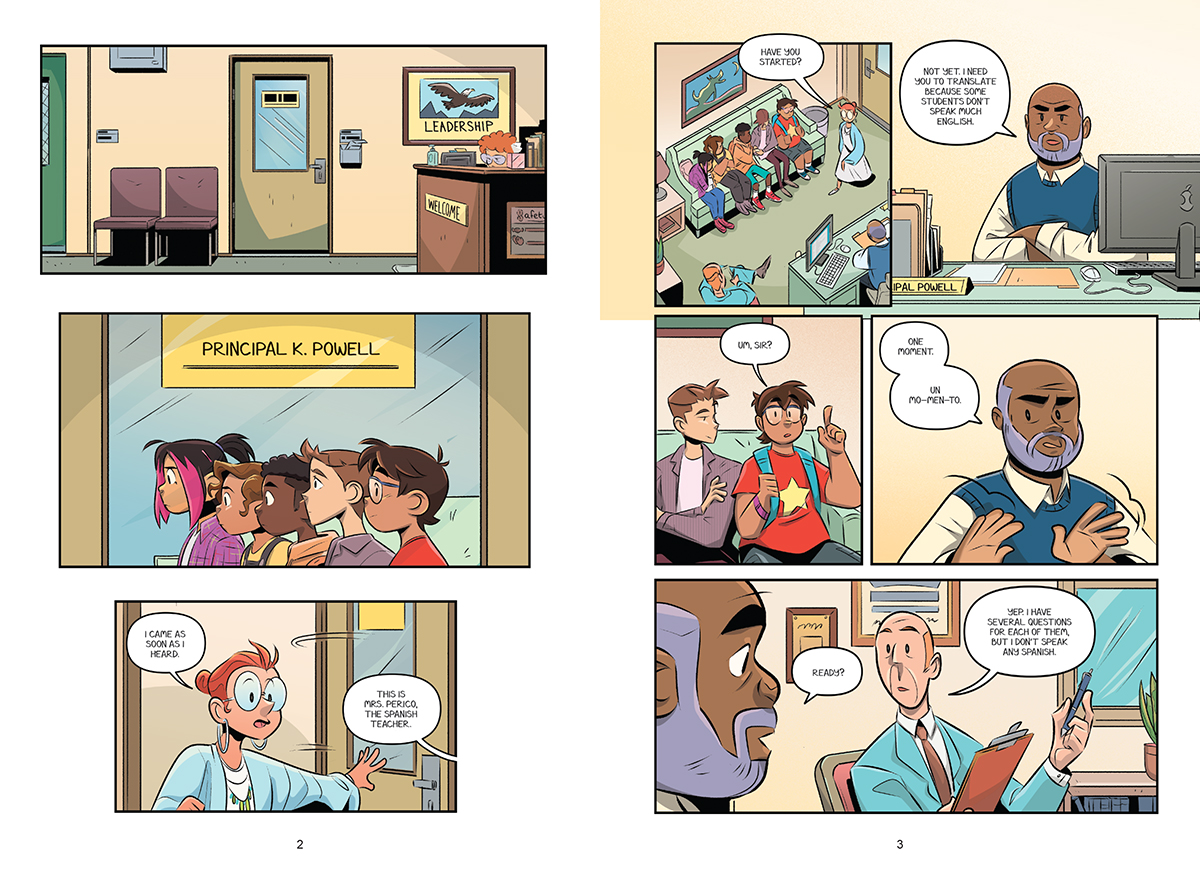
Summary:  The story opens with five middle school students gathered in the principal’s office, clearly in some kind of trouble and being asked to tell what happened.  Jorge, or George, begins.  When he’s assigned a community service stint in the cafeteria, he’s told he’ll be with “kids like him”.  He assumes that means other gifted students, but it turns out it’s a group of Latinx kids, many of whom, unlike George, speak Spanish as their first language.  While they’re often lumped together, each student is from a different country and has a distinctive personality: George is Puerto Rican, Dayara is from Cuba; Miguel is Dominican; Nico, Venezuelan, and Sara, Mexican.  Although each one has a typical middle school label (smart, tough, jock, snob, loner), as they take turns recounting their story, a very different picture emerges that shows each of them struggling with both family and school issues.  By the end, the principal has heard a story of compassion, helping a little girl and her mother who have been living in a van near the school.  The mean cafeteria lady is reprimanded and sent on her way, while the five kids celebrate their accomplishment and the beginning of a new friendship.  Includes notes from the author and illustrator.  208 pages; grades 4-7.

Pros:  There’s a lot packed into this graphic novel, with five unique and well-drawn (in both senses of the term) characters who help dispel the notion that Latinx kids all have similar backgrounds.  Most of the students speak Spanish throughout the story, with the English translation added with a dashed-line cartoon bubble.  Sure to be a big hit with all the fans of graphic novels set in middle school.

Cons:  I was hoping for a little redemption for the mean cafeteria lady.

The Civil War of Amos Abernathy by Michael Leali

Published by HarperCollins

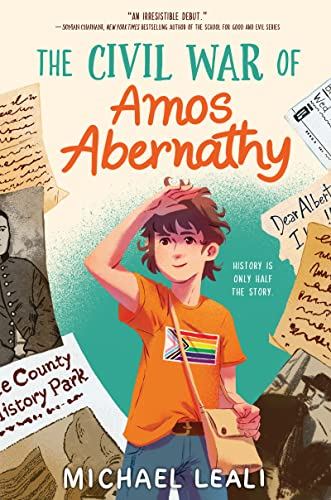
Summary:  Amos Abernathy loves history, and it’s a good thing because his mother runs the Chickaree County (Illinois) Living History Project.  Amos enjoys his work there as an interpreter, working with his best friend Chloe.  When a boy named Ben starts volunteering, Amos develops a crush, but Ben is ambivalent about whether or not he’s gay.  The three kids discover an interest in people written out of history, like those who were LGBTQ+, or Black like Chloe.  The narrative goes back and forth between Amos’s first-person narration of the present and letters he wrote the previous year to a (deceased) Civil War trans man named Albert D. J. Cashier.  In the letters, Amos describes his relationship with Ben, how it ends, and how Ben refuses to speak to him.  He also reveals a secret project that has to do with the kids presenting untold history to the public.  This presentation is the culmination of the story, where the past catches up with the present, and Amos, Ben, and Chloe get to express who they really are through their passion for history.  304 pages; grades 4-7.

Pros:  There’s lots going on in this story which would make an interesting book club choice with plenty to discuss about who has been written out of history.  The alternating chapters of letters describing the past and Amos narrating the present make for an engaging structure.

Cons:  Michael Leali makes a few rookie mistakes in this debut novel, like occasionally crossing the line between good story with a message and a story with an agenda. There also aren’t a lot of shades of gray in portraying characters who are either a little too good to be true or completely misguided/evil.

Out of Range by Heidi Lang

Published by Margaret K. McElderry Books

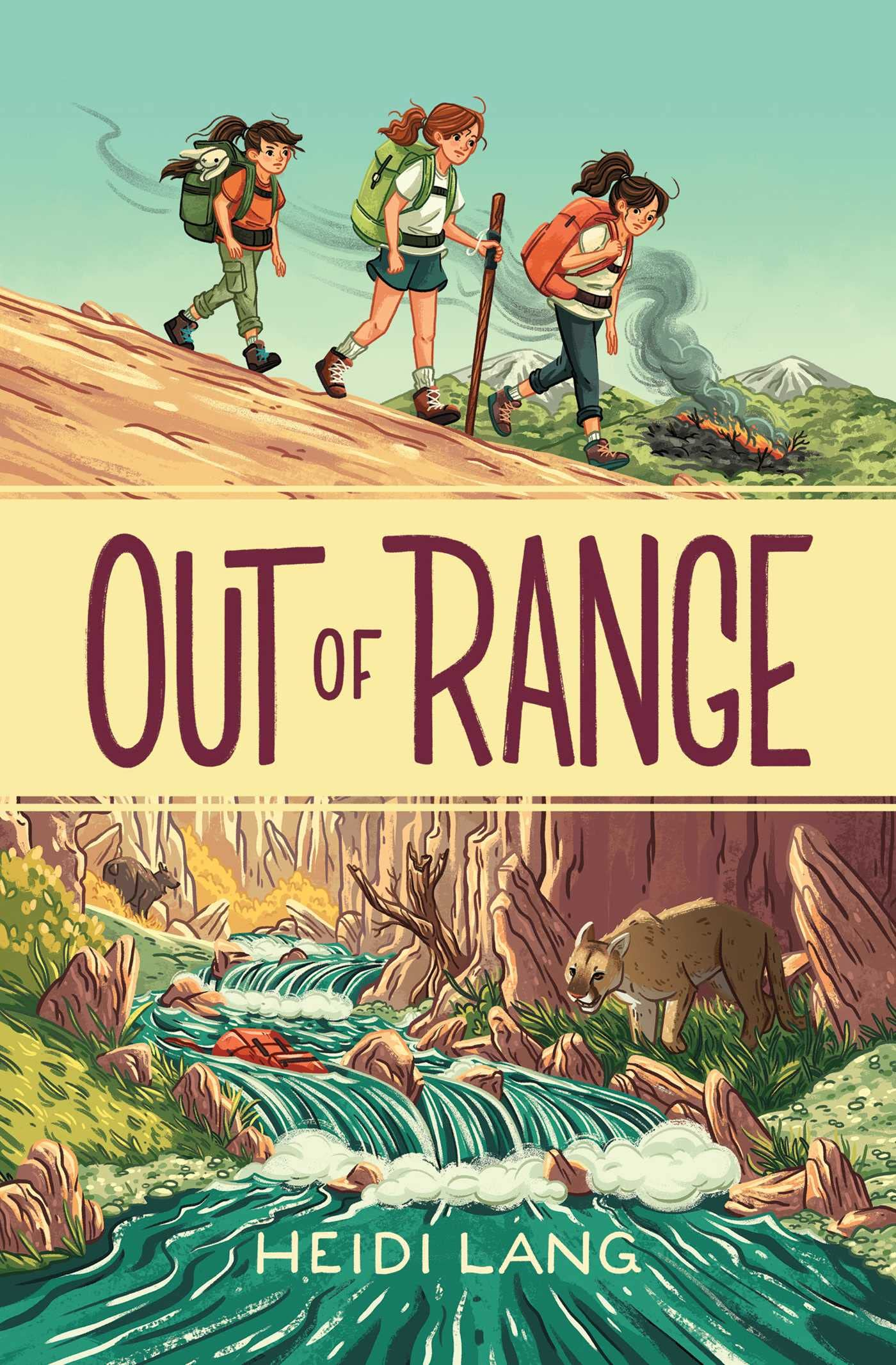
Summary:  Sisters Abby (14), Emma (12), and Ollie (9) have been sent to Camp Unplugged for two weeks by parents who are frustrated by the girls’ constant fighting.  The story opens with the three on a disciplinary hike with camp counselor Dana.  When Dana leaves them briefly to scout the area, Abby decides to turn around and head back to camp.  Soon the girls are lost and have to survive a series of life-threatening events, including Emma’s near-drowning, Abby’s bear attack, and Ollie’s ankle injury that makes walking nearly impossible.  The story alternates among the three girls’ perspectives and switches between the past and present to gradually show the reader the difficulties a move to a new home has caused them and the ensuing cruel prank war that has driven them apart.  Forced to work together to survive, the girls begin to realize that their differences are petty compared to the love they have for each other.  Includes an author’s note about her own wilderness survival story that inspired this book.  320 pages; grades 4-7.

Pros:  Part survival adventure, part family story, this is a book that’s sure to appeal to a wide audience.  Heidi Lang does a masterful job of weaving together the different points of view and slowly revealing how events and insecurities in the past have led the girls to their current dire situation.

Cons:  I had to occasionally suspend my disbelief a bit, particularly in the miraculous rescue of Mr. Snuffles.

Twin Cities by Jose Pimienta

Published by Random House Graphic

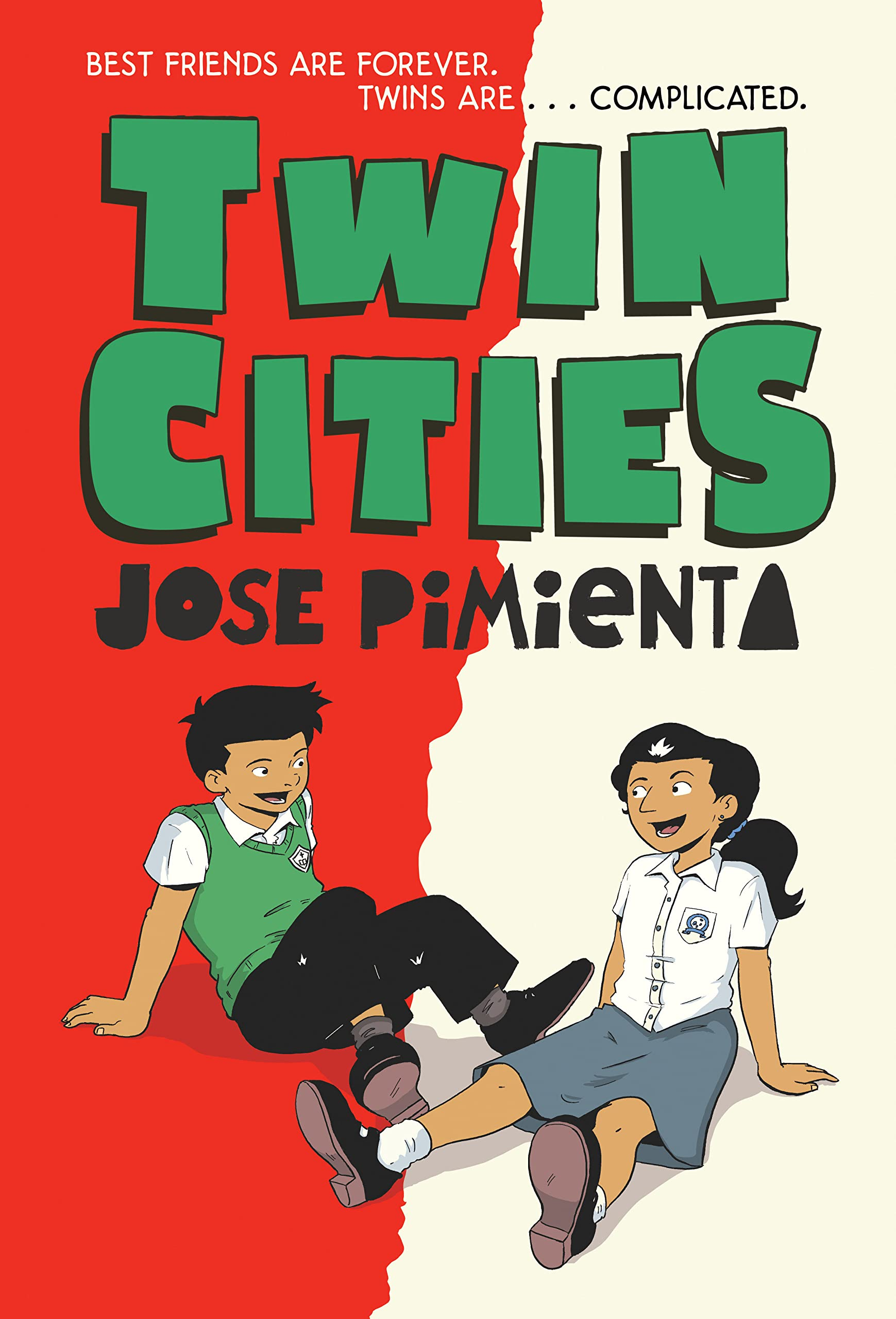
Summary:  Luisa Teresa and Luis Fernando are twins collectively known as the Lu-Lu’s.  When they get to sixth grade, though, they are eager to seek their own identities.  They start going by Teresa and Fernando, but more importantly, Teresa heads to school across the border in Calexico, California, while Fernando continues on in Mexicali, Mexico, where the family lives.  Each finds sixth grade to have its struggles.  Teresa’s workload is tough, and she has to get up early to make it to her carpool in time.  Fernando’s friends are at Teresa’s school, and he feels lonely until he befriends eighth-grader Alex who tries to recruit him to sell weed.  This activity leads to a showdown between the twins, but it also finally gets them talking about what they’ve been going through.  By the last few pages, Teresa finally has gotten her own room to work in, and Fernando is starting to make some friends his own age.  256 pages; grade 4-7.

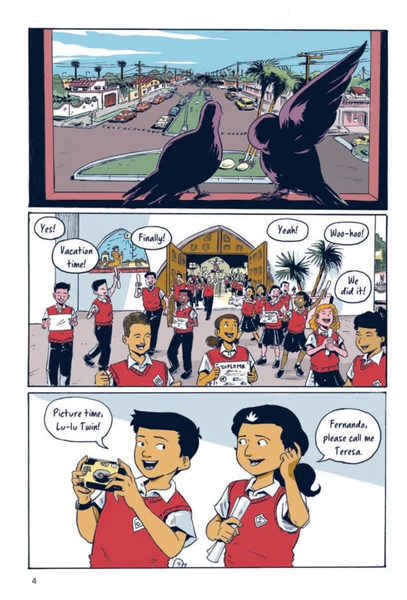
Pros:  This fascinating look about life at the border is richly illustrated with many pictures that show what is going on in each twin’s life simultaneously.  Kids will relate to Teresa and Fernando’s struggles and learn about life in an area that may be unfamiliar to them.

Cons:  The sixth-grade protagonists make this a great elementary read, but the weed storyline may raise a few eyebrows.

Tales to Keep You Up at Night by Dan Poblocki, illustrated by Marie Bergeron

Published by Penguin Workshop

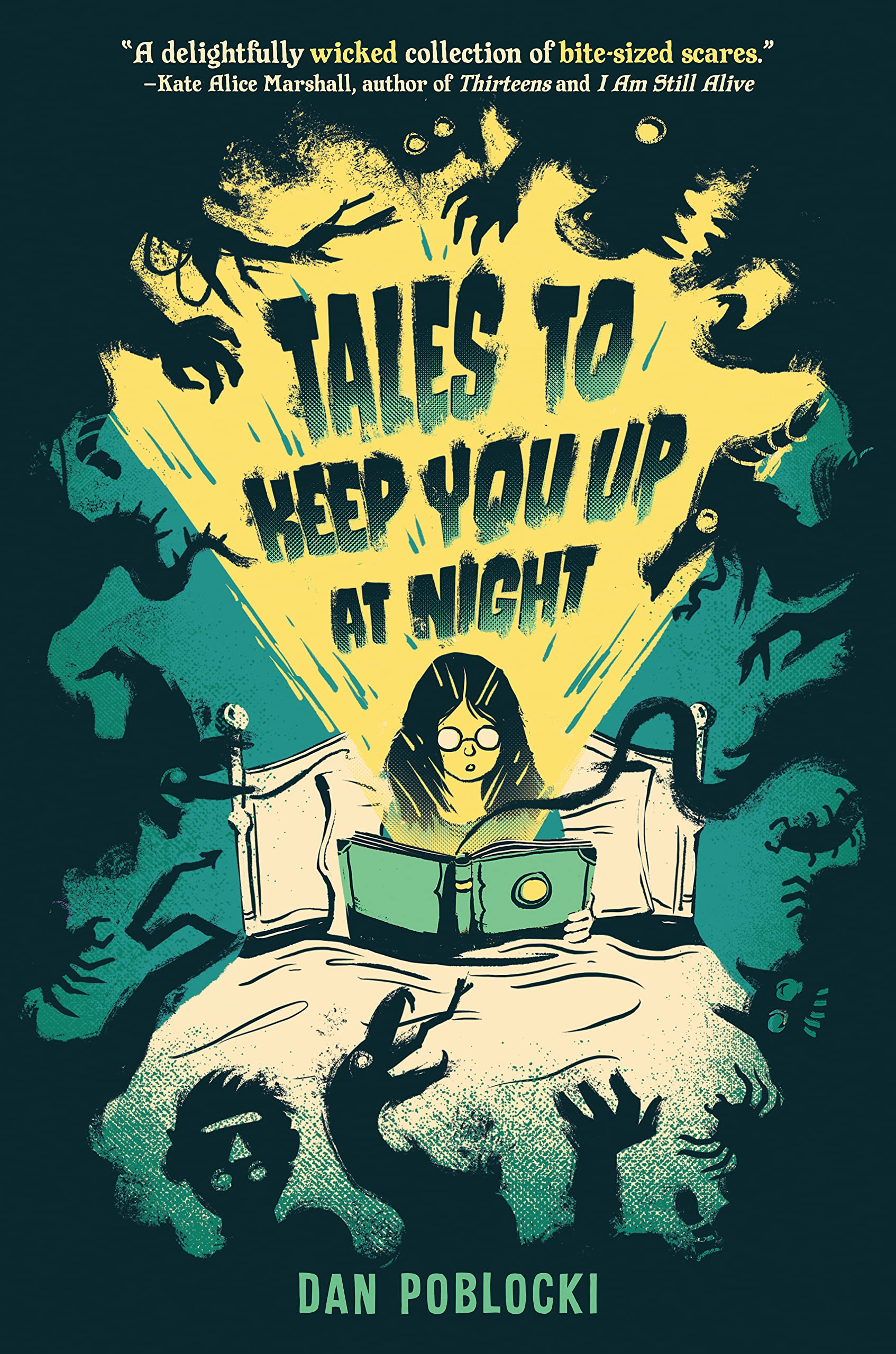
Summary:  Amelia and her family are cleaning out her grandmother’s house after Grandma mysteriously disappeared more than a year ago (as Grandpa did a few years before).  She finds a book in the attic entitled Tales to Keep You Up at Night, which looks vaguely familiar to her.  After realizing that she had a dream about her grandmother warning her not to read the book, she goes ahead and reads it anyway.  The reader experiences the stories with her, gradually realizing that they are all connected, and, in between, sharing Amelia’s slowly dawning horror as she starts to notice different elements of the story coming to life around her.  By the time she’s finished the book she knows what’s happened to her grandparents, regrets reading it, and has a pretty terrible decision to make about what to do next.  272 pages; grades 5-8.

Pros:  Having worked in 11 schools, I feel I can pretty definitively say that kids love horror.  I wish I loved it too, so that it was not such torture for me to read a book like this, but I read it (you’re welcome), and it is very scary.  And very well done.  Poblocki cleverly weaves a wide variety of stories into the main narrative and ties them all together in a satisfying way.  It definitely lives up to its title, and those horror-loving kids will not be disappointed.

Cons:  I’ve always associated Dan Poblocki with more YA literature, but I saw this recommended for elementary so decided to give it a try.  I was on the fence until I got to the last story (“Nite Crawlers”), which led to my grades 5-8 recommendation. Yikes.

The Ogress and the Orphans by Kelly Barnhill

Published by Algonquin Young Readers

Summary:  Stone-in-the-Glen used to be a happy town where people helped each other and loved to read and discuss books.  But when a new Mayor takes over and the library burns down, the town falls on hard times and neighbors begin to distrust one another.  An ogress moves to the edge of town and begins observing the residents.  She grows to love them all, particularly the group of kids living in an orphanage, and begins to make secret nightly deliveries of food and cards to their homes .  After she rescues one of the children one night, the town turns on her, accusing her of kidnapping.  The children get to know and love the ogress and come up with a plan that not only redeems her reputation but unites the town back into a loving community and reveals the Mayor for who he truly is.  400 pages; grades 4-7.

Pros:  Another complex and interesting fantasy from Newbery Award winner Kelly Barnhill.  The Mayor bears a resemblance to Trump, and the reaction of the townspeople provides a timely message. With four starred reviews and a current number 3 spot on the Goodreads Mock Newbery list, this is sure to get plenty of consideration at awards time.

Cons:  On both Amazon and Goodreads, there’s a small number of reviewers who felt that the message of this book overwhelmed the story.  Unfortunately, that was my takeaway as well.

Too Pig to Fail: A Batpig Book by Rob Harrell

Published by Dial Books

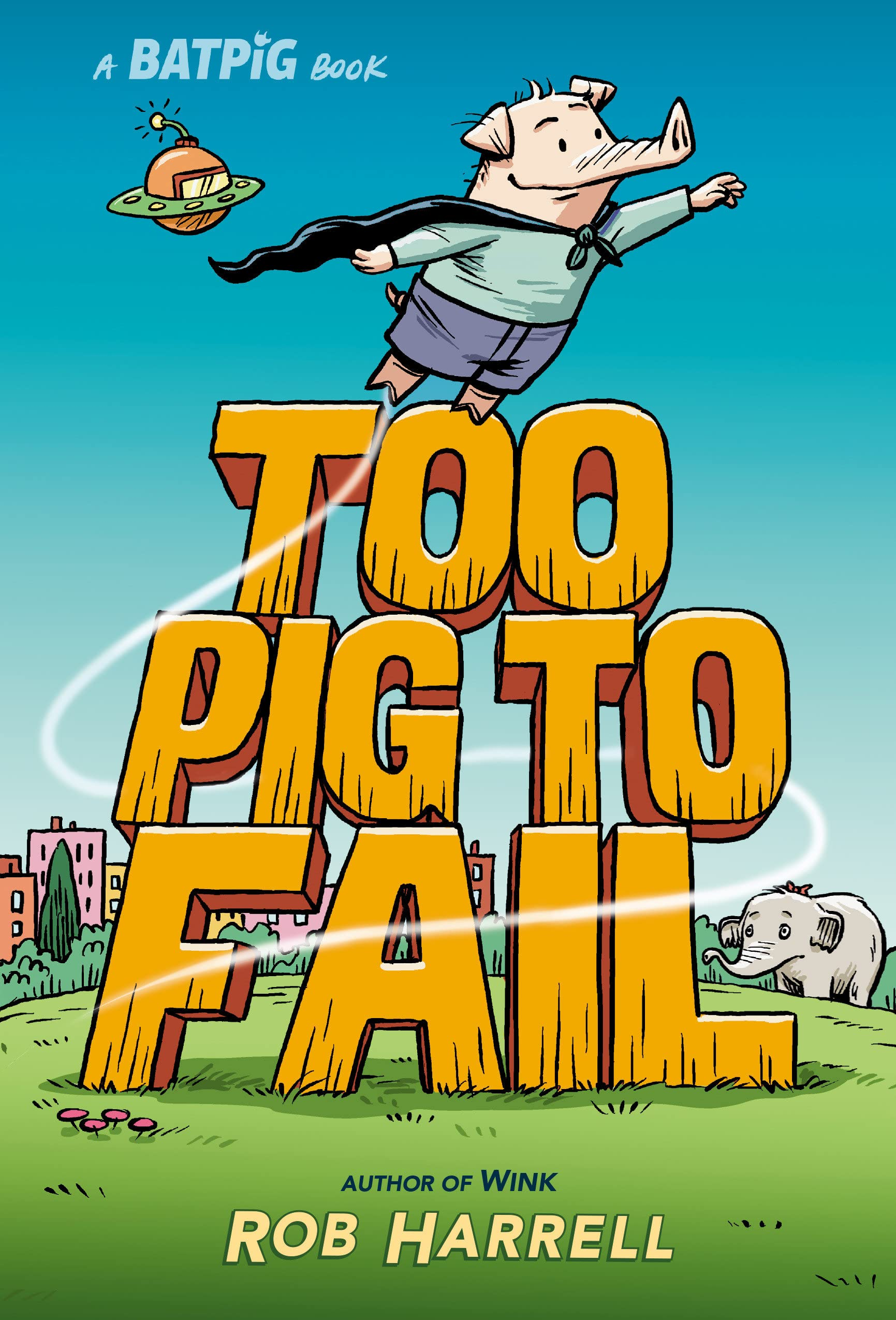
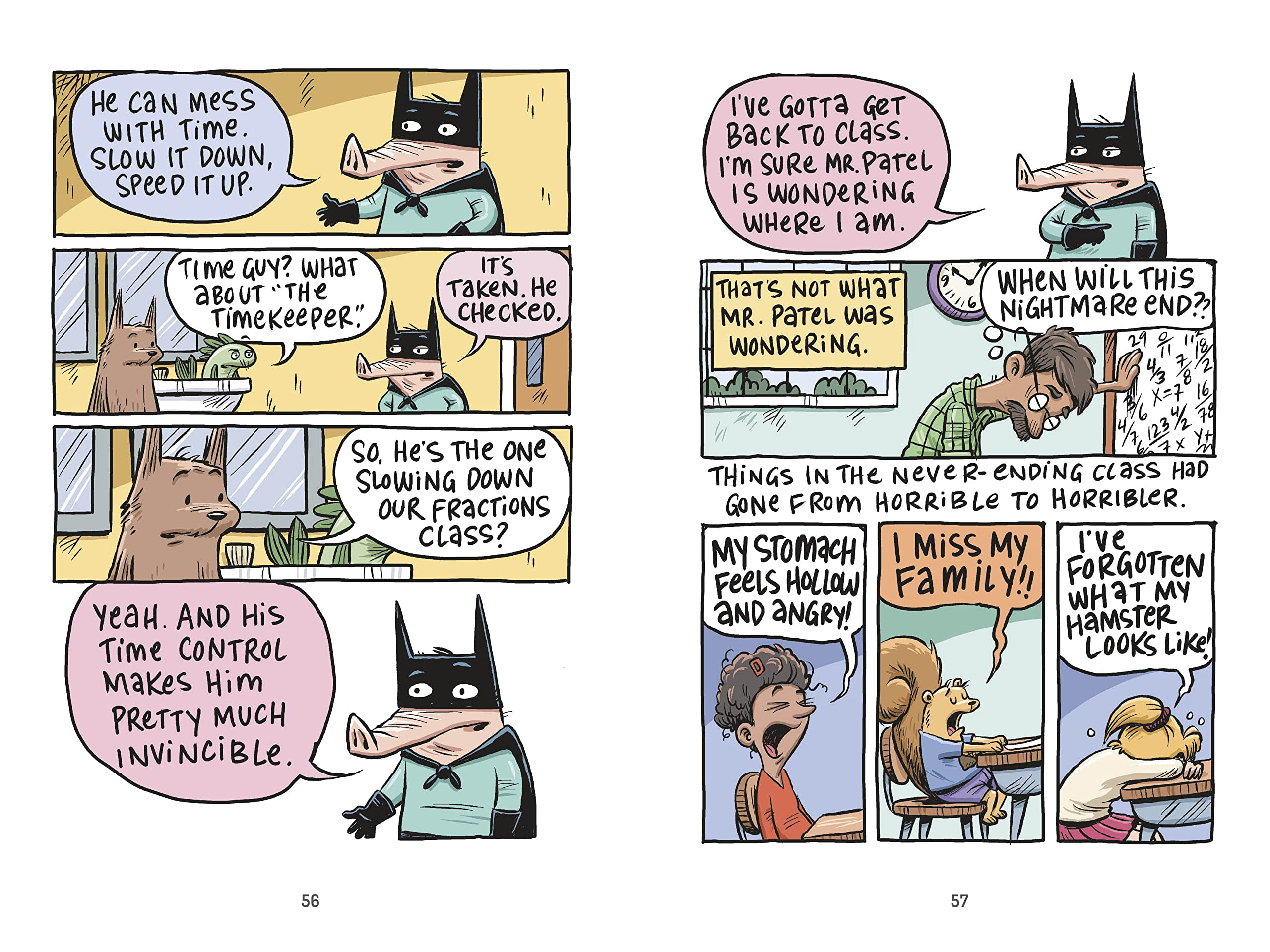
Summary:  In this second installment of the Batpig series, Gary uses his superpowers in two stories.  First, math class seems interminable for him and his friends, and eventually they discover it’s not just their imaginations.  Kindly janitor Mr. Guffen has turned into evil villain Time Guy and has complete control of the passage of time.  Batpig finds a way to rescue the hapless math students and turn Time Guy back to his old self based on the idea that time flies when you’re having fun.  The second story sees Gary/Batpig foiling an attack by evil aliens who unleash a shower of smelly gym socks and a half-bumblebee-half-kitten monster on the town.  248 pages; grades 2-5.

Pros:  Another entry in the “for fans of Dog Man” genre that will have kids laughing and quickly turning the pages to see how Gary and his friends defeat the bad guys.  You might want to direct them to When Pigs Fly (book 1) before reading this one.

Cons:  It’s embarrassing how frequently I laughed out loud at the humor meant for 8-year-olds.