Teamwork makes the dream work

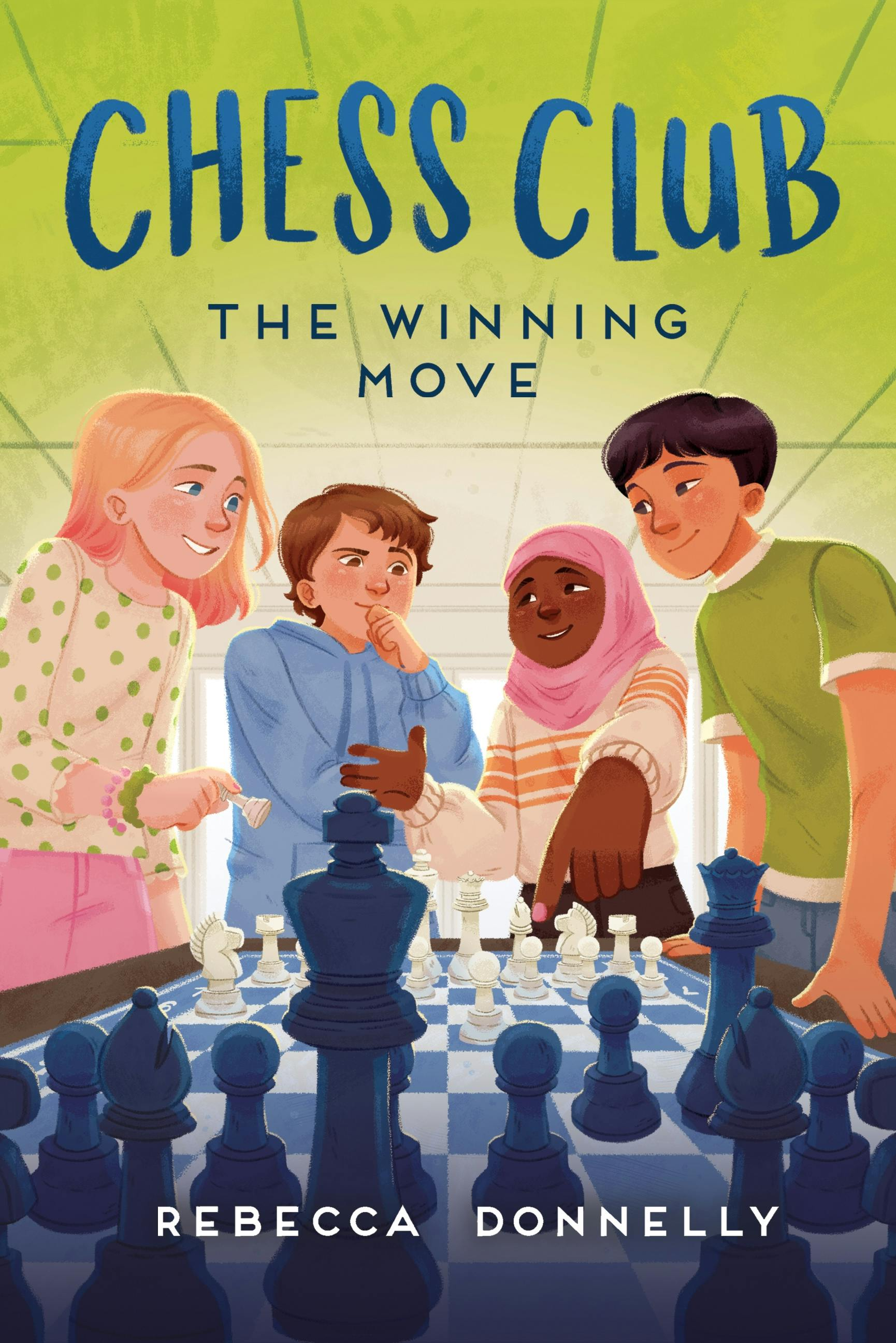
Chess Club: The Winning Move by Rebecca Donnelly, illustrated by Isabelle Duffy (Farrar, Straus, and Giroux, 208 pages, grades 3-6). Halima loves playing chess online with her Somalian cousin, but she wishes she had the opportunity to play with kids in real life. When her best friend Jem suggests that she start a chess club at school, Halima is hesitant, but Jem offers to join and provide refreshments, even though her baking skills are much stronger than her chess ones. They manage to recruit two boys to join them: Parker, who’s never enjoyed sports the way his athletic older siblings do, and Daniel, who loves art but is struggling to fit in at middle school. Although they have a slightly bumpy start, Halima rises to the role of leader, and the others start to learn more about chess, enjoying both the game and their new friendships. When they have the opportunity to play in a tournament, they find themselves in a difficult situation involving cheating and have to work together to do what’s right. The promise of a rematch paves the way for a sequel.

A sweet series opener told from the alternating perspectives of four slightly quirky kids who find each other through chess. The appeal of friendship is at least as great as the appeal of the game, but each one grows as both a person and a chess player. A series of mysterious notes helps bring them together and advance their friendship, and the final chapter reveals the slightly supernatural events behind those notes. The illustrations add a nice touch, especially those showing the chess board in various games.

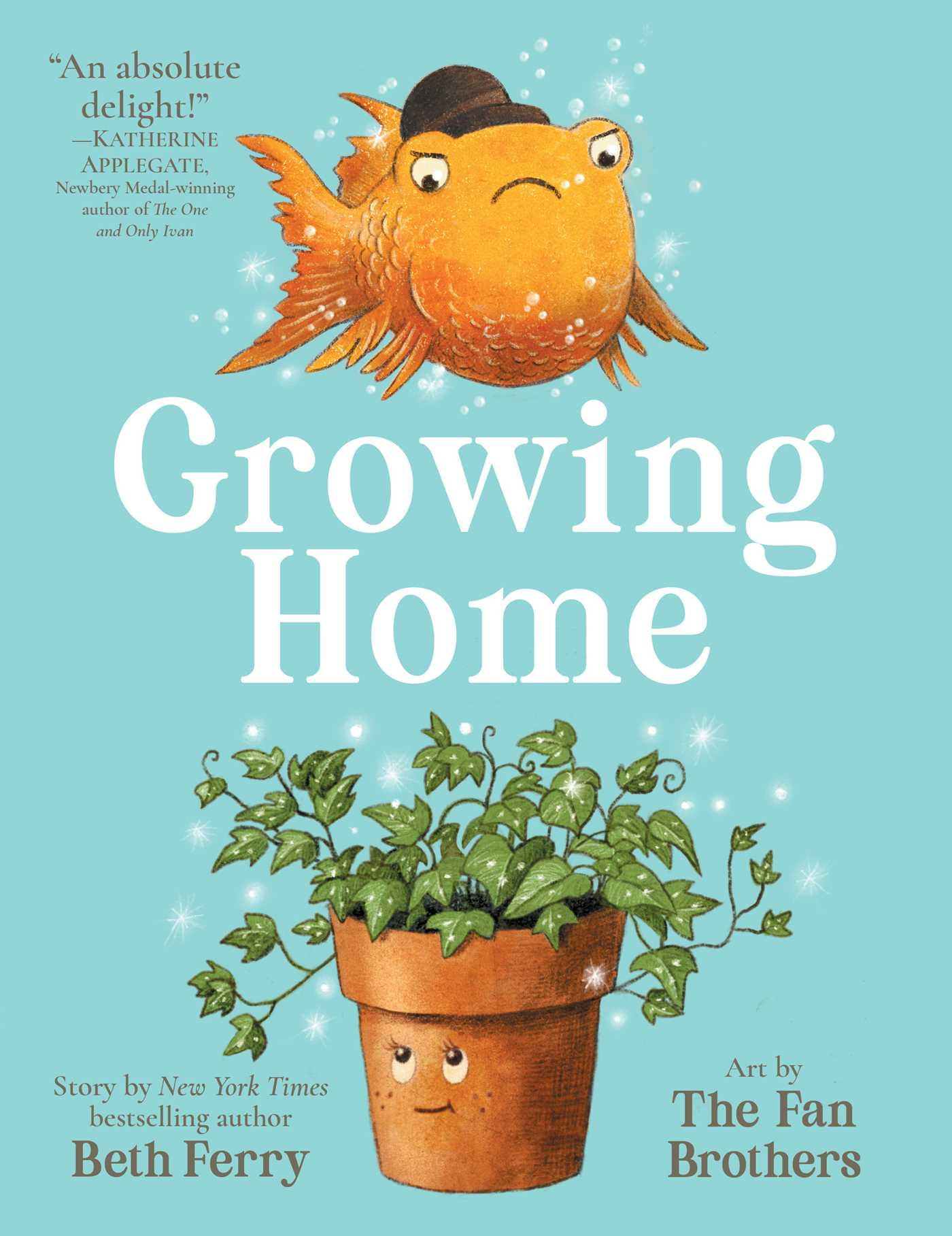
Growing Home by Beth Ferry, illustrated by Terry and Eric Fan (Simon and Schuster Books for Young Readers, 272 pages, grades 2-5. Meet the team: Ivy the ivy plant, Toasty the goldfish, Ollie the violet plant, and Arthur the spider, with occasional appearances by Louise the bee and Sunny the canary. The four main characters live at Number 3 Ramshorn Drive with Mr. and Mrs. Tupper and their young daughter Jillian. The humans are, for the most part, unaware of the activity going on in their home, although all of them get occasional glimpses, especially Jillian. The four start out as rivals, but events dictate that they work together, and in the end, they are able to save the Tuppers from becoming victims of a crime that would most likely ruin their antiques business. By the final pages, all six plant and animal characters–even grumpy Toasty–have come to appreciate their friendship and the special skills each one brings to the team.

This is a charming story by one of my favorite picture book authors, filled with black and white drawings by two of my favorite illustrators. It would be a good chapter book for precocious primary grade readers, and I could also see it being enjoyed as a class read-aloud. Having said all that, it didn’t quite meet my high expectations. It felt like things got off to a meandering start, although the action picked up in the second half. I wasn’t a huge fan of the gentle educational asides addressed to the reader, and it made me appreciate how Beth Ferry is able to impart messages in her picture books with more subtlety. I did love the illustrations, although I missed the colors and sweeping vistas that often characterize the Fan Brothers’ work.

Beach reading

Meet Me at Sunset by Lee Heart (Simon Spotlight, 145 pages, grades 3-7). Julie’s told all her friends at school about James, the cute boy she knows from her summer vacations. Although she’s only talked to him once, she may have led the other kids believe he’s her boyfriend, which is why it’s incredibly awkward when her mom invites Sophia to join them for this year’s vacation. Sophia proves understanding, though, and is on board to help Julie with her Love Plan. Sophia confides in Julie about the boy from her old school in California whom she’s been texting, and before long the two girls are on their way to becoming BFF’s. But when Sophia starts to gently point out that James is kind of a jerk, and that his friend Liam is a lot nicer, Julie is sure there’s something going on between Sophia and James. A little communication goes a long way, though, and by the last page, both Sophia and Julie have dumped James and each has found the beginnings of a kinder, gentler summer romance.

This is a perfect beach read for tweens who are starting to be curious about romances but who may not be quite ready for YA. The steamiest action is exchanging phone numbers and making plans to get together during the school year, and the insane sixth-grade insecurity-fueled drama that it takes to get there is spot on. I love the short length, which should really be more common with books for this demographic. Enthusiastic readers can look for other titles in this new Spotlight Sprinkles series.

The Best Worst Summer of Esme Sun by Wendy Wan-Long Shang (Scholastic Press, 224 pages, grades 3-7). Esme’s ready to chill out at the local pool after another disappointing year of unsuccessfully competing with her three accomplished older sisters for their mother’s attention. Swim team has been a fun part of Esme’s summer for years, but this year she discovers that her growth spurt has made her a real contender, particularly in freestyle. She still enjoys the social aspect of the team, though, particularly a new friendship with Kaya, a girl whom Esme enjoys helping with her flip turns. When Esme’s mom gets wind of Esme’s successes at the pool, she starts showing up for meets. At first, Esme is thrilled, but when Mom starts making derogatory–and in the case of Kaya, racist–comments about her teammates, Esme’s not sure what to think. She enjoys winning and would love to set a pool record, but she also likes being part of a team and helping her friends succeed. Slowly, Esme starts to realize that being the best doesn’t always bring happiness and begins to seek out her own way of competing.

This book drew me in right away, and anyone who has spent time at the pool in the summer will find a sense of familiarity in the descriptions. Esme’s struggles with finding a balance between personal success and cheering on teammates are also very relatable, and I liked how the ending was ambiguous, leaving those questions still somewhat open. Although there were some hints to explain her mom’s behavior (her Chinese culture, her husband deserting her), she was a bit too much of a tiger mom stereotype and just came off as mean. I wish that portrayal had been softened a bit, but it’s also perhaps somewhat accurate coming from a 12-year-old narrator.

Exploring loss and grief

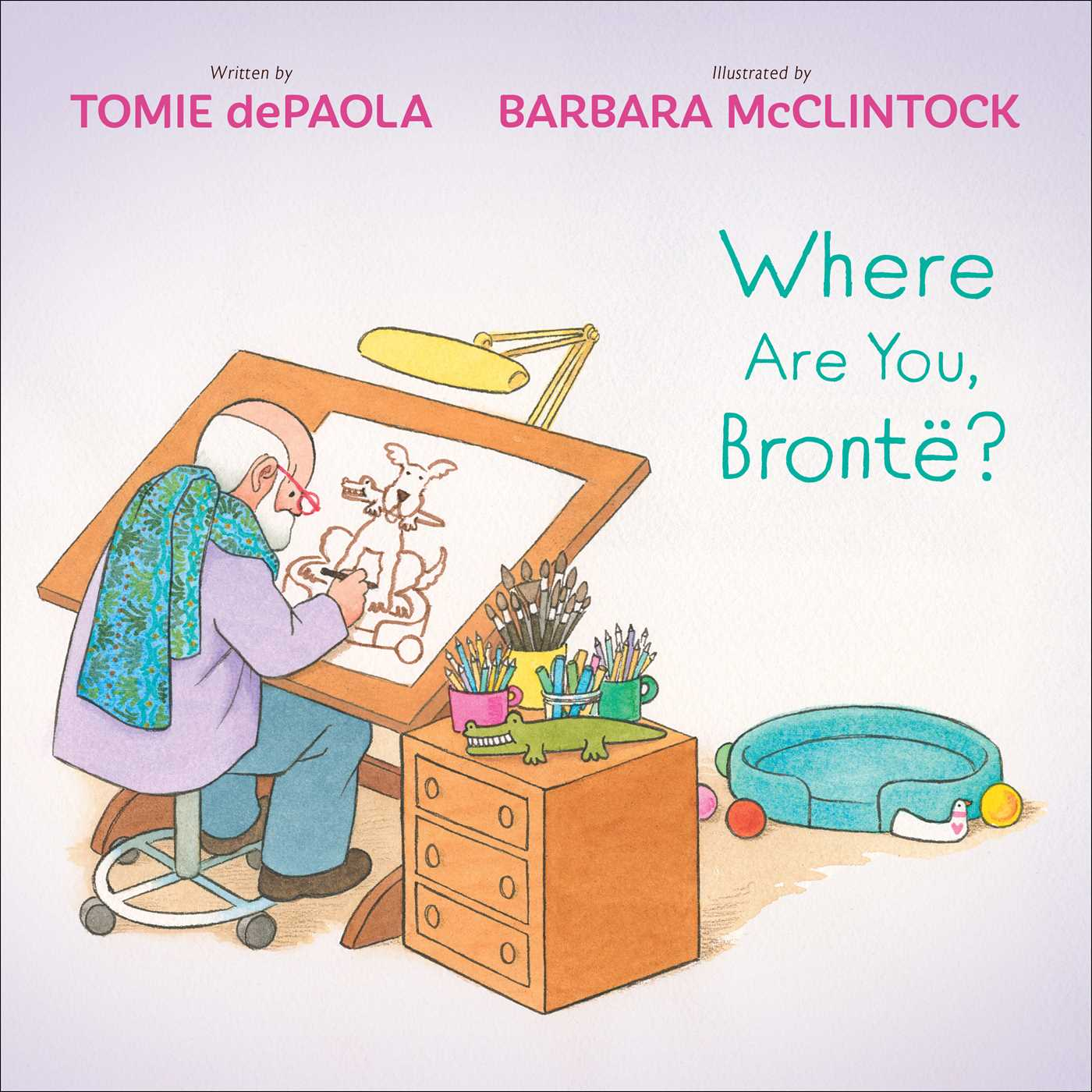
Where Are You, Brontë? by Tomie dePaola, illustrated by Barbara McClintock (Simon and Schuster Books for Young Readers, 48 pages, ages 4-8). The opening spread shows Tomie dePaola looking at a picture of a dog in a heart frame. Turn the page, and Tomie uses a second-person narration that addresses his dog Brontë to show readers how he met his puppy, and how that puppy grew into an adorable dog who loved his toys, his pink collar, and most of all, Tomie. Even after Brontë goes blind, he learns how to find his way and enjoy life. When he dies, Tomie grieves, holding an empty pink collar, drawing a broken heart, and gazing at a vacant dog bed. Seeing a rainbow, the artist is inspired to go home and draw a picture of Brontë, which he puts into the heart-shaped frame, knowing that his beloved dog will always live in his heart. Includes an illustrator’s note about how she created the art for this story that Tomie dePaola left when he passed away in 2020.

Is someone chopping onions in here? Not only is this about the death of a beloved dog, but it’s a reminder of the loss of the beloved Tomie dePaola. The story is simple, but beautiful, with different chapters of Brontë’s life shown, each beginning with the question, “Where are you, Brontë?” Barbara McClintock’s art is a lovely homage that feels very much inspired by dePaola’s work. The ending felt a bit too easy to me but probably just right for the intended young audience.

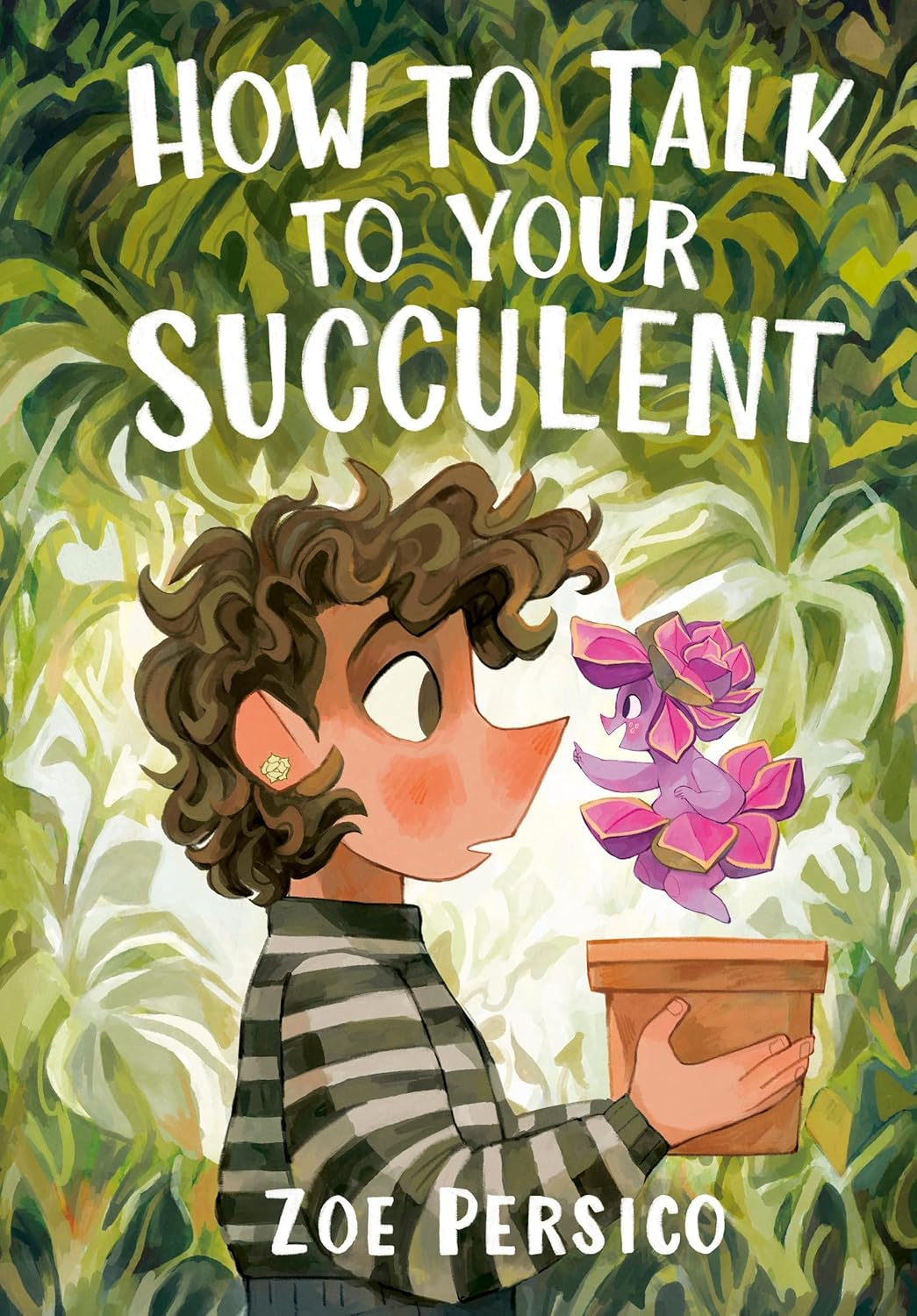
How to Talk to Your Succulent by Zoe Persico (Tundra Books, 224 pages, grades 4-7). Adara and her father are almost overwhelmed by the death of Adara’s mother. Her dad decides to move them from California to Michigan where they move in with her grandmother. There, much to her amazement, Adara learns that she has inherited her mother’s ability to talk to plants, starting with a small succulent named Perle that her grandmother buys for her. Talking to plants makes Adara feel closer to her mom, but the rest of life still feels overwhelming, and sometimes her own needs mean that she neglects those of others, including Perle and a new friend named Winnie. Meanwhile, Dad is having a hard time seeing what Adara needs, and everyone–Adara, Perle, and Winnie–learn some lessons about advocating for themselves. By the end, Adara and her father are slowly embracing a new normal, which is shown in the photo of them together on the last page with the caption “Light after the dark.” Includes an author’s note, photos of some of the inspirations for the artwork, information on how the book was created, and instructions for propagating succulents.

This is a moving and endearing exploration of grief, with the interesting twist of Adara’s ability to talk to plants. I liked how the author showed how grief can close you off to those around you, and how it’s okay to ask for what you need. The artwork is truly amazing, particularly the depictions of the plants coming to life.

Independence Day reading

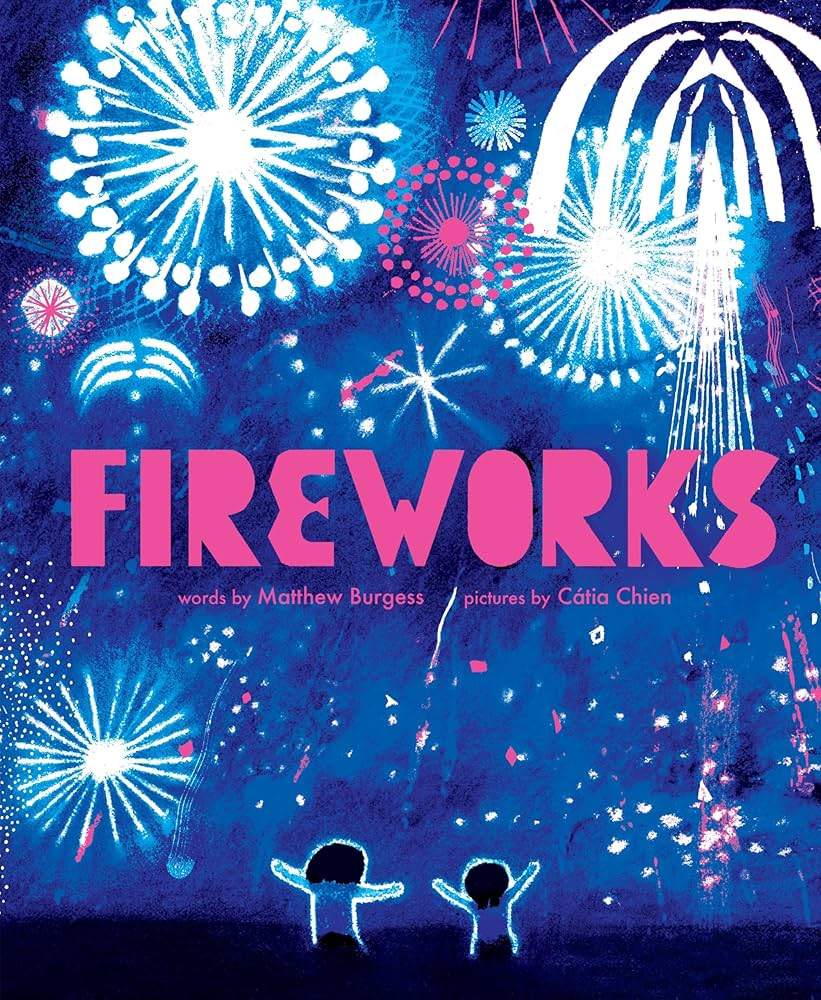
Fireworks by Matthew Burgess, illustrated by Cátia Chien (Clarion Books, 44 pages, ages 4-8). Two children describe a summer day in the city, from the sun rising between the buildings on their block, to an open fire hydrant that helps them beat the heat, to the sweet juiciness of a slice of watermelon. This summer day is special, though, and after dinner, they climb to the roof and wait for darkness to fall. An explosion of color and sound lights up the night sky as the fireworks begin. And just when you think the show is over–ka-boom!–a foldout page shows the brilliant grand finale. A few sparks and a sharp burning smell linger in the night air as the kids return home and get ready for bed.

The poetic text and brilliant illustrations, highlighted with fluorescent pink, engage all the senses to bring an urban summer day to life. I’m sure that grand finale page won’t last long in a public library, but it is truly spectacular. A perfect read-aloud for a July 4th celebration.

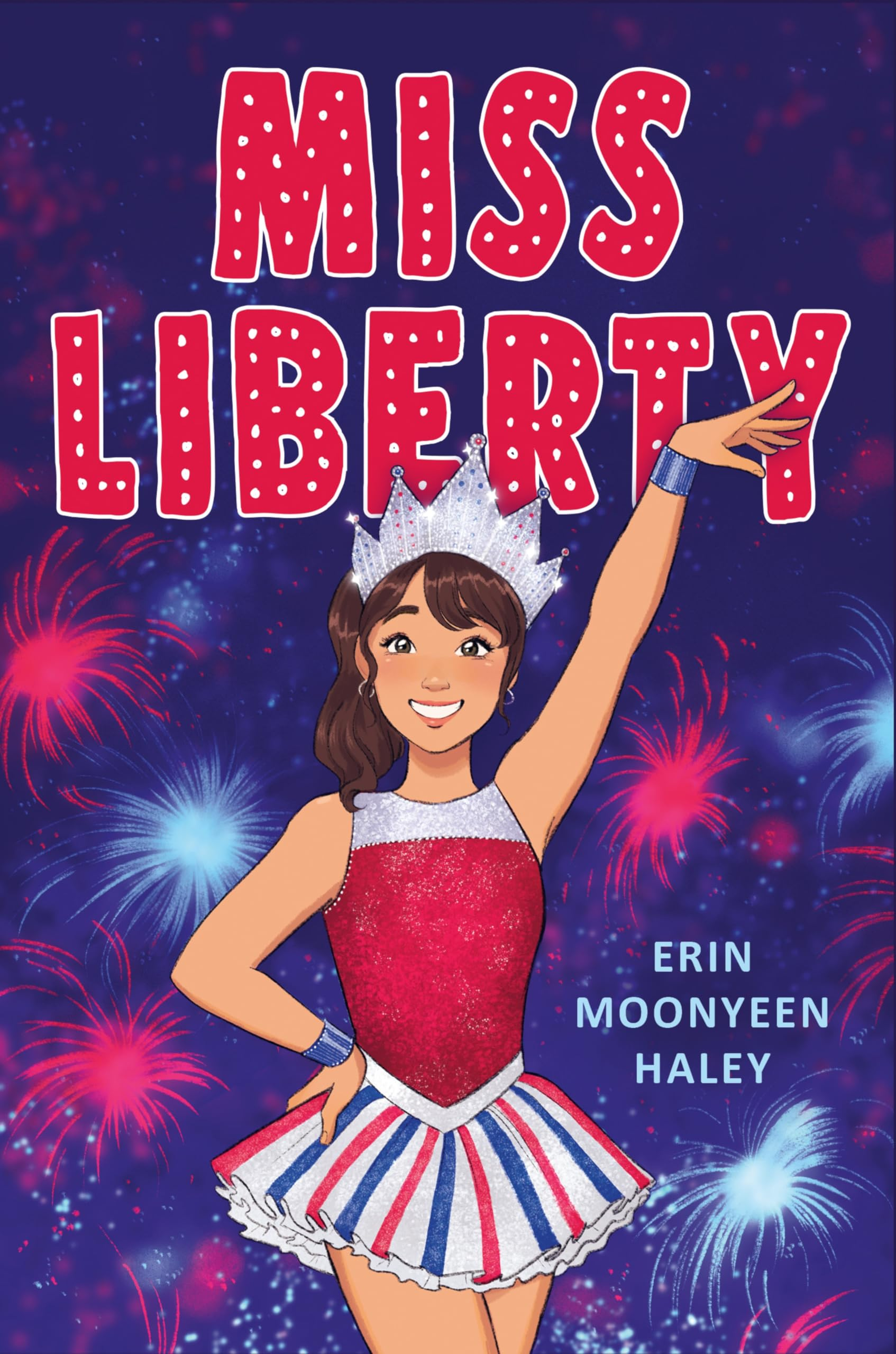
Miss Liberty by Erin Moonyeen Haley (Storytide, 224 pages, grades 4-7). Savvy’s greatest wish is to someday be Miss Liberty in her town’s Fourth of July celebration. This year for the first time, she’s one of the Liberty Line dancers backing up her sister Levi, who’s been Miss Liberty for three years in a row. But this year, things are happening that make Savvy’s anxiety kick into high gear. For starters, people around town are starting to say the Fourth of July celebration isn’t what it used to be, and that maybe it’s time to call it quits. Then Levi starts using her platform to speak out for voting rights…when everyone knows Miss Liberty is supposed to be silent and just look beautiful! Savvy and her aunt, another diehard Miss Liberty fan, take it upon themselves to save the big event, but as the summer goes on, Savvy starts to see that there is more than one side to a story and that sometimes it’s okay to live with uncertainty about what’s going to happen next.

This debut novel is filled with memorable characters: not only Savvy, but Levi, Aunt Bobbi, and her good friends Seymour, the only boy dancer in the Liberty Line and a budding fashion designer, and Dulce, an aspiring journalist and historian who has her own blog. I liked the way Savvy comes to terms with her anxiety and learns to express herself in ways that work for her, and how she learns to let go of the need for a definite outcome.

Creature features

Creaky Acres by Calista Brill, illustrated by Nilah Magruder (Kokila, 272 pages, grades 3-7). Nora is happiest winning ribbons at shows with her horse Hay Fever, but when her mom gets a new job, the family moves to a small rural town where the only barn around is Creaky Acres. Filled with quirky humans and animals, including a bunch of opossums and an instructor who doesn’t believe in competing, Creaky Acres feels like a huge disappointment to Nora. On top of that, she’s the only Black kid at her school and finds herself dealing with microaggressions from both students and teachers. But Nora’s love for riding remains strong, and before long, she’s made some tentative connections with the other kids at Creaky Acres. When she hears about an upcoming riding event, she’s determined to compete. Her fellow riders, having heard about Nora’s experiences and seen her ribbons, beg to let them join her, and before she knows it, Nora is coaching a Creaky Acres team. On the day of the event, the results are mixed and sometimes hilarious, but when Nora reunites with friends from her old riding school, she realizes she has found her new place at Creaky Acres.

Give this to fans of Ride On by Faith Erin Hicks, who will enjoy another graphic novel about a group of underdogs who find their own ways in the elite world of horseback riding. It’s a cheery story with endearingly quirky characters, but it also deals with the more serious topics of dealing with racism and learning to be yourself in a new place.

Creature Clinic by Gavin Aung Than (First Second, 224 pages, grades 3-7). Creature Clinic, run by the imperious Dr. Orc, treats all kinds of creatures: trolls, unicorns, griffins, and more. But when an injured human boy is discovered on the bottom of an unconscious giant’s shoe, Dr. Orc refuses treatment, stating that humans are nothing but trouble. Her long-suffering daughter, Dr. Kara Orc, takes pity on the human and secretly helps him on the condition that he leaves the next day. But Mitch, the boy, is fascinated by the clinic, and a sympathetic custodian hides him in a trash bin and wheels him around for a tour. Mitch is able to show Kara and some of the others how his empathetic listening skills can help the patients, but when the senior Dr. Orc discovers Mitch and learns that Kara has been harboring a fugitive, she is furious. Some of the other creatures intercede, reminding the doctor how she defied her father to do what she thought was right, even though it damaged their relationship. Eventually, Dr. Orc sees the error of her ways, lets Mitch stay, and mends things with her daughter. And they all live happily ever after, unless, of course, there’s a sequel in the works. Includes an author’s note and seven illustrated steps that explain how the book was created.

I would love to see that sequel to this imaginative, funny, and original graphic novel that I know kids will love. The world building of the clinic is so clever and detailed, and the issues the various creatures deal with make them seem, well, human. The author’s note relating how the time his daughter spent in the NICU inspired the story adds an extra dimension.

Girl detectives

Gus and Glory by Sarah Guillory (Roaring Brook Press, 240 pages, grades 4-7). Glory’s mother disappears the summer she’s 12 years old, and since her dad spends most of his time on the road as a truck driver, Glory is sent to live with her grandparents in Louisiana. Glory aspires to be a detective, and she’s determined to solve the mystery of what has happened to her mother. When a bloodhound named Gus finds Glory and leads her to his owner who has broken his leg, she gets an assistant with a big personality and a keen nose. While Gus’s owner recuperates, the dog comes to live with Glory and her grandparents, causing some unexpected changes in their lives. When Glory tries to train Gus in tracking, her grandfather, who’s been depressed since suffering a stroke, takes an interest and begins to rejoin the family. Gus also leads Glory to a new best friend, whose big, warm family welcomes her to the community. As the summer winds down, Glory uncovers some difficult truths about her mother and starts to come to terms with the fact that her life has changed forever. When Gus’s owner admits that Gus is too much for him and offers to let Glory keep him, she sees that sometimes love means letting someone move on to a life that is better suited for them. Gus’s big voice helps Glory to speak up and advocate for herself, and those honest conversations with her dad and grandparents lead to a rich new life for Gus, Glory, and the rest of their family.

I got the impression from reviews that this was going to be more of a mystery, but while Glory aspires to be a detective and does some investigating into her mother’s disappearance, the focus is more on her difficult family situation and the way a beloved new dog helps her come to terms with what’s going on in her life. While I would probably not shelve it in the mystery section, it’s a heartwarming story that will be enjoyed by dog lovers everywhere.

Opal Watson: Private Eye by Brittany J. Thurman (Storytide, 224 pages, grades 4-7). Based on a podcast, this mystery features feisty Opal Watson, a seventh grader who doesn’t let her retinitis pigmentosa slow her down, although she does sometimes use a white cane named Pinkerton to help her find her way. Returning home to Chicago from a visit with her grandmother Meme in Louisiana, Opal discovers that her usually calm father is stressed by the slow renovations being done on the Crescent, the apartment building he manages and that Opal’s family lives in. Some of the other residents report hearing strange sounds and feeling mysterious drafts, and Opal is determined to figure out what’s going on, with the help of her best friend Madison and cousin Frank. A class project with a new girl named Ivy sparks Opal’s interest in the Great Migration that Meme was a part of and turns out to have a surprising connection to the Crescent. Opal and her friends solve the mystery and save the Crescent, but another mystery connected to her school project offers the promise of a sequel.

Opal is an inspiring character as well as a persistent detective, and the story offers not just a mystery but a compelling family story with some interesting Chicago history woven in. I wish there had been some back matter about the historical stuff, as well as a reference to the podcast, which I only learned about from reading the reviews. I look forward to listening to some episodes!

Classic novels to graphic novels

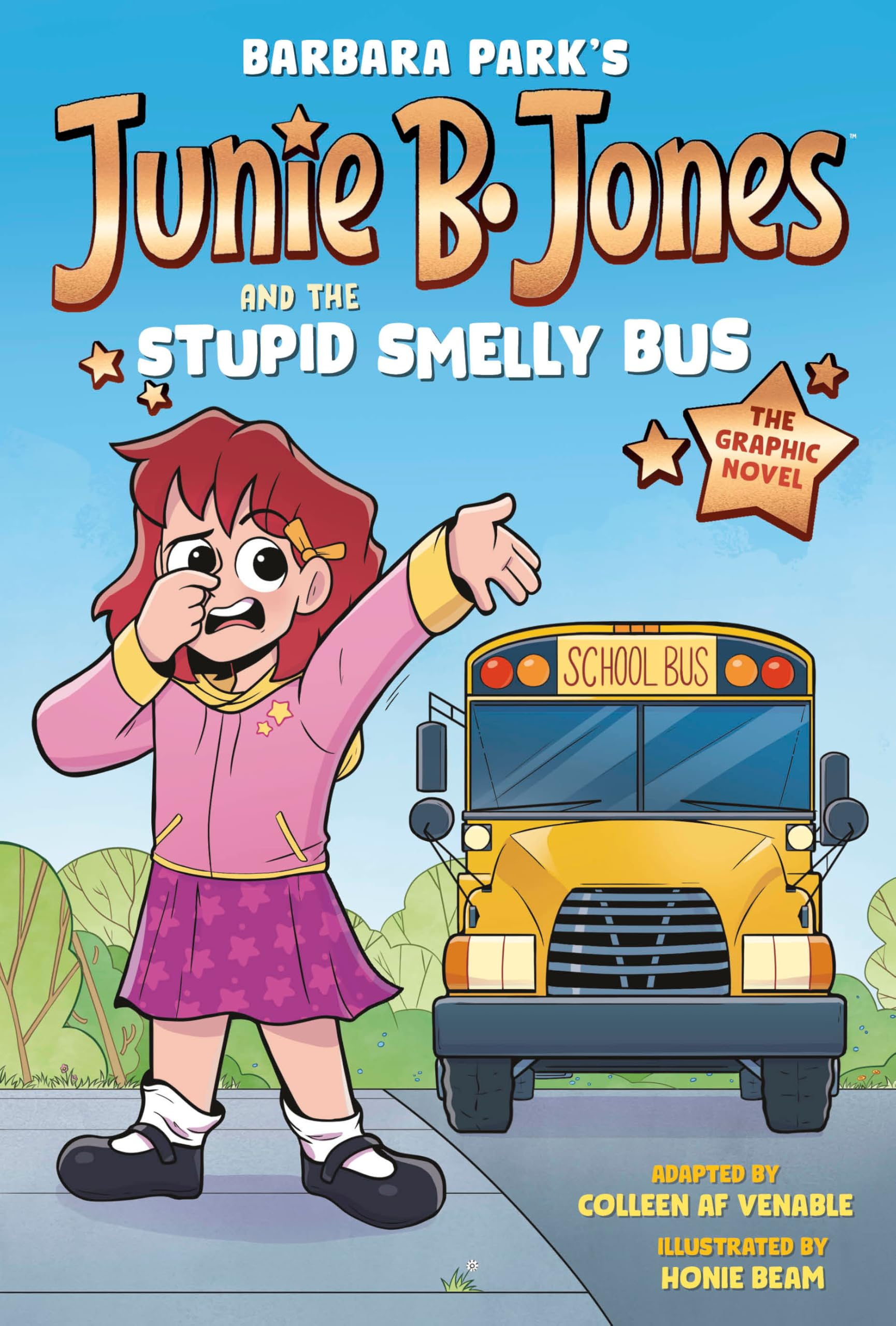
Barbara Park’s Junie B. Jones and the Stupid Smelly Bus: the graphic novel by Colleen AF Venable, illustrated by Honie Beam (Random House Books for Young Readers, 160 pages, grades 1-3). Junie B. is excited about going to kindergarten after acing her orientation, but she’s less thrilled about riding on the stupid, smelly bus. The reality turns out to be even worse than she had imagined, and as she end of the day approaches, she decides she can’t face a return trip. She hides during dismissal, then roams the school after hours, exploring the library, gym, nurse’s office, and more, all with her own unique take on things. Her frantic parents and teacher finally track her down, and the introduction of a new friend helps Junie B. feel like she can face the bus ride in the morning.

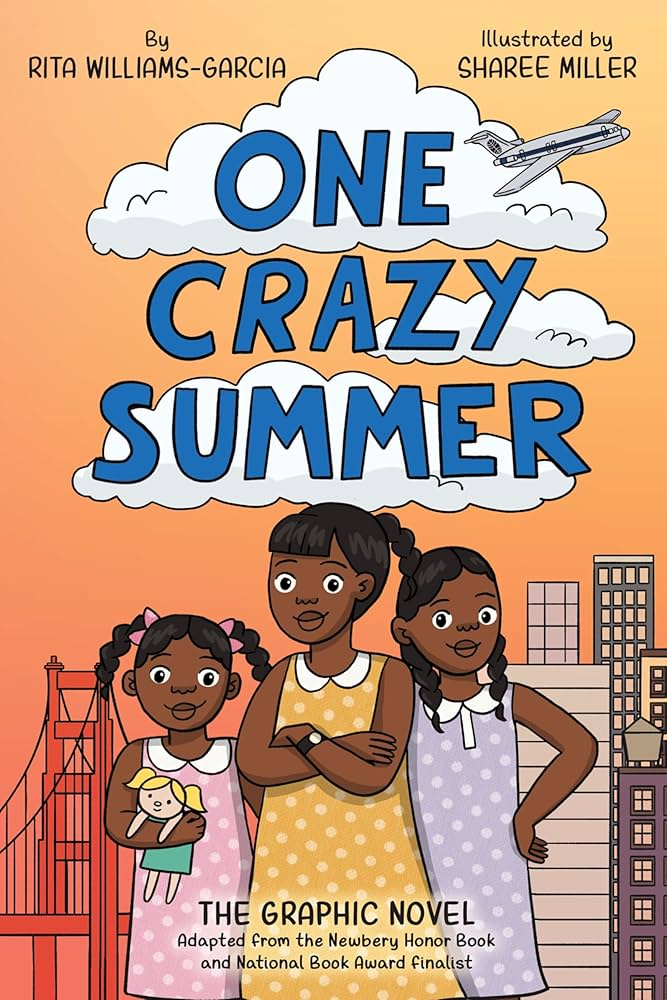
One Crazy Summer: the graphic novel by Rita Williams-Garcia, illustrated by Sharee Miller (Quill Tree Books, 304 pages, grades 4-7). 11-year-old Delphine tells the story of spending the summer of 1968 with their mother, Cecile, when she and her two younger sisters, Vonetta and Fern, are sent to Oakland to get to know the mother who abandoned them when Fern was a baby. The trip was decided on by their father and grandmother back in New York, and Cecile wants no part of the visit. Busy with her mysterious work, she sends the three girls to the kids’ program at the Black Panthers’ People’s Center. There, they get free meals along with lessons in Black Power and resisting the police. After Delphine leads them on an excursion to San Francisco, the girls return to see their mother being arrested along with a few others from the Black Panthers. After cleaning up Cecile’s destroyed workspace and discovering some of her poems, they move in with friends. A performance of one of her poems at a Black Panther rally concludes with a reunion with Cecile, whose time in jail seems to have changed her enough to have an honest conversation with Delphine about why she left. The girls return home with some new ideas and insights about their family and what it means to be Black in America.

Is it okay to have mixed feelings that it feels like every classic book is being turned into a graphic novel? Both of these are extremely well done, both the art and the storytelling, and I’m delighted that new audiences will be introduced to these characters. Junie B. will find a ready audience with fans of Baby-Sitters Little Sisters and the Magic Tree House (both now graphic novels that are way more popular than the originals). And reading One Crazy Summer reminded me of how that trilogy introduced me to so much from that era, completely changing my childhood perceptions of the Black Panthers. I missed the nuances of the original, though, for instance, the way Cecile’s complex character is slowly (and only partially) revealed throughout the story. In this version, the changes she makes toward the end of the story feel somewhat abrupt. So it does make me both a little sad to see Newbery books like A Wrinkle in Time, Turtle in Paradise, and now, One Crazy Summer turned into graphic novels, yet glad that these stories will now reach a wider audience.

Immigrant kids

Don’t Cause Trouble by Arree Chung (Henry Holt and Co., 256 pages, grades 4-7). Things don’t look good for Ming on his first day of middle school: his mom has given him his usual bowl haircut, and he’s dressed in the thrift store clothes she insists on buying. Ming’s accidentally placed in an ESL class, even though he only speaks English, but with his parents’ injunction, “Don’t make trouble” ringing in his ears, he goes along with it. Eventually, the teacher figures things out, and he’s moved to honors English, where he finds a couple of new friends,. When Ming’s desire to fit in lands the three of them in some serious trouble, he’s forced to reconsider what’s really important to him and try to make amends with his parents and his friends. Sixth grade ends on a high note, with the possibility of summer basketball, a new family business making egg rolls, and a new girl in the picture who may or may not a crush on him. Includes an author’s note and family photo telling how his own childhood inspired this story and several pages of instructions on making a graphic novel.

The story and art in this graphic novel are fairly simple and straightforward but really capture the feeling of being torn between two worlds: the Chinese one at home and the American one at school, as well as the pressure Ming feels as his parents, whose own dreams have been deferred, pin all their hopes on his success.

Outsider Kids by Betty C. Tang (Graphix, 288 pages, grades 5-8). In this sequel to Parachute Kids, the three Li kids are still living on their own in California while their parents try to supervise them from Taiwan. The burden falls on oldest daughter Jessie, who is trying to get into Harvard while working at a job where her boss knows he can cheat her because she’s in the country illegally. Meanwhile, middle brother Jason falls in love and must deal with his sisters finding out that he is gay. When cousin Josephine comes to stay, 10-year-old Ann’s excitement turns to dismay as Josephine is constantly mean to Ann and tries to steal her new friends at school. When Ann’s attempt at revenge on her cousin results in Josephine calling the police on them, the three siblings have a panicky scramble trying to figure out what to do next. They wind up at a new home in San Francisco, which I hope sets things up for a possible third installment. Includes an author’s note about her own life as a Parachute Kid from Taiwan.

I was excited to discover a sequel to Parachute Kids, and it didn’t disappoint. The Li kids are incredibly resourceful and supportive of each other despite their constant squabbling. The tension of their undocumented status is particularly relatable today. The book tackles subjects like Jason’s coming out and Josephine’s father’s adultery that made this feel like it was geared for a slightly older audience than the first one.

Some of Us: A Story of Citizenship and the United States by Rajani LaRocca, illustrated byHuy Voun Lee (Christy Ottaviano Books, 32 pages, grades K-4). “Some of us are born American. Some choose.” With just a sentence or two of text to accompany the vibrant illustrations on each page, the book shows people from all over the world, of all ages, in all sorts of circumstances, who choose to leave their homes, families, and native countries to come to America. They may come seeking jobs or education, or to escape poverty, war, or oppression, and they bring music, languages, food, and stories that enrich their new country. There’s a description of the process involved in becoming a naturalized citizen, including the rights and responsibilities that come with citizenship. An author’s note traces the history of US immigration and citizenship and tells her own story of becoming a naturalized citizen at age 15. Includes the United Nations’ Universal Declaration of Human Rights and a bibliography.

This book celebrating immigration and U.S. citizenship could hardly be more timely and important to share with kids right now. LaRocca does a masterful job of conveying lots of information and emotion in spare, simple language that’s easy to understand. Her text is illuminated by the beautiful illustrations that celebrate the many different cultures of people immigrating to the U.S. and that capture the pride of becoming a citizen.

It’s on!

J vs. K by Kwame Alexander & Jerry Craft (Little, Brown Books for Young Readers, 240 pages, grades 3-6). K is new at the Dean Ashley Public School (DAPS), but he’s already making a name for himself with his writing. J is the best artist at DAPS, hoping to win the school’s annual story contest with one of his wordless comics, but worried that K will be stiff competition. Before long, K and J are out to sabotage each other, with K giving J bogus writing tips, and J purposely leaving a notebook full of bad drawing advice for K to find. When they team up on the basketball court, though, they turn out to be unstoppable, leading them to a decision to put their differences aside and work together on creating a graphic story. Although a dark horse wins it all, the two still place in the contest, and it looks like it will be the beginning of a beautiful friendship.

This is a cute illustrated chapter book which will undoubtedly appeal to Diary of a Wimpy Kid fans, but somehow I expected more from the Newbery Award winning team of Kwame Alexander and Jerry Craft. The plot was predictable from the beginning, and the authors seemed more concerned with inserting jokes and jabs at each other and making references to their other books than developing interesting characters. I’m sure the names on the cover will sell lots of copies, though, and I would not be surprised to see a sequel.

The Lemonade War: the graphic novel by Jacqueline Davies, illustrated by Karen De la Vega (Clarion Books, 207 pages, grades 3-7). Evan is feeling angry that his younger sister Jessie is skipping a grade and will be in his class at school. He lashes out at her, hurting her feelings. So when he and Scott (who turns out to be the neighborhood bully) team up to sell lemonade, Jessie asks another girl to partner with her for a rival stand. The siblings end up making a winner-take-all bet about which enterprise will make more money. Jessie has business and math smarts, while Evan is more gregarious and makes friends easily. The rivalry grows until things get completely out of hand and the two wind up sabotaging each other…and themselves. Admitting how things went wrong leads them to realize all the business lessons they learned, and they’re able to create a prize-winning project at the Rotary Club’s Labor Day contest.

It’s been years since I read the original version of this book, and it was fun to revisit it, with its innocent introduction to the world of capitalism. Each chapter begins with a definition of a business term that is relevant to the story, and all of that new vocabulary is incorporated into their final project. Many readers will relate to both siblings: Jessie shows signs of neurodivergence with her struggles to read people’s expressions and make friends, and Evan’s academic issues make him worry about getting upstaged by his younger sister. The ending is somewhat lame, and the bully appears to get away with stealing most of their money, but don’t worry, The Lemonade Crime gives him his comeuppance. Thanks to Clarion Books for providing me with a review copy.

Graphic novels for budding scientists

Barnacle Bay by Jana Curll (Greystone Kids, 76 pages, grades 1-4). When a slightly crabby crab meets a slightly lost larva, Crab reluctantly becomes Larva’s tour guide around the bay. As they travel and meet all kinds of different sea creatures, readers will effortlessly learn plenty of interesting facts about marine life. Packed with both information and clever marine-related wordplay that was appreciated and enjoyed by this reviewer, the story winds up with Larva transforming overnight. I won’t spoil the surprise, but the two creatures decide that life in the bay is a good fit for both of them, and it appears to be the beginning of a beautiful friendship.

Although I would love to see another adventure with these two, I’m equally delighted that the next book in this series is about a fern forest. Like Remy Lai’s Surviving the Wild series, this graphic novel seamlessly weaves together a story of cute animals and a lot of factual information.

Diary of a Nature Nerd by Tiffany Everett (Graphix, release date August 19, 128 pages, grades 2-5). Brooke and her scientist mother live in an RV, traveling for her mom’s research. Brooke loves nature and keeps a detailed notebook with all of her observations. She’s seen many, many animals, but she’s still missing one: a moose. Her mom recently remarried; Brooke loves her new stepsister Jayla and shows her how to safely explore the woods. The two of them enjoy many adventures until one day when Jayla and her dad head off to explore a river. Brooke opts to stay home and update her notebook, and wouldn’t you know it, Jayla sees a moose. Brooke is jealous and becomes obsessed with finding a moose herself, leaving Jayla behind and forgetting many safety rules as she explores every inch of the woods. When her negligence puts both girls in danger, Brooke realizes that her relationship with Jayla is more important than any moose. The two talk things out, and just as Brooke has accepted that Jayla was fortunate enough to have an experience she hasn’t had, she turns around and sees…a moose!

This cute graphic novel about two animal-loving girls will appeal to fans of the PAWS and Animal Rescue Friends series. Brooke occasionally comes off as an annoying know-it-all, but her enthusiasm is contagious, and Jayla seems like a good friend for her. I hope this will be book one of a new series. Thanks to Scholastic for providing me with a free advance copy.

I’m a Dumbo Octopus! A Graphic Guide to Cephalopods by Anne Lambelet (Graphic Universe, 72 pages, grades 2-5). Grimpy–short for Grimpoteuthis–is a dumbo octopus who lives deep in the ocean. He gives readers an introduction to other cephalopods, a class of animals that includes octopuses, nautiluses, squids, and cuttlefish. Although they look quite different, they share common traits like blue blood, no backbone, and tentacles or arms. Many species have unique abilities, such as squirting ink amazing hiding skills, which make Grimpy a bit envious. Just as he’s starting to feel bad about himself, some of the others come along to tell him what his talents are, many of which are related to living in the deepest water of any octopus (over four miles deep). Feeling better, Grimpy says goodbye to his new friends and heads for his home in the depths. Includes an illustrated glossary, a photo and facts about the real-life Grimpy, a bibliography, and a list of books for further reading.

Grimpy is an endearing narrator in a relatively short graphic nonfiction book that’s packed with information about cephalopods. There are all kinds of the sorts of fun facts that kids love learning and sharing, and the illustrations really bring those facts to life. This is Anne Lambelet’s first books, but I hope it won’t be her last…readers will definitely be looking for more after meeting Grimpy.