Horse Power

The Trouble With Sunshine by Yamile Saied Méndez (Scholastic Press, 272 pages, grades 4-7). Dorani has gotten in trouble (again), this time for reading a banned book at school. But when her mother suffers a fatal heart attack on the way to pick her up, Dori is wracked by guilt and grief. Forced to leave her beloved Miami friends and family to go live with her seemingly cold and uncaring aunt on a Montana ranch, Dori finds an unexpected bond with a traumatized horse named Sunshine. The two begin healing together, and in the process, Dori finds new friends, a new family, and new causes to fight for. When Dori and Sunshine have to deal with an unexpected crisis at the ranch, they are able to rise to the occasion together, cementing their bond, as well as Dori’s new connection with her aunt. Thanks to Scholastic for providing me with a free review copy.

This heartfelt story will appeal to animal lovers. Dori’s journey through her grief will resonate with many readers, who will cheer her on as she discovers family secrets that lead her to a better understanding of both her mother and her aunt. The epilogue, told in three sets of texts to Dori’s best friend in Miami, felt a little rushed, although it was nice to see most of the loose ends tied up happily.

Please Pay Attention by Jamie Sumner (Atheneum Books for Young Readers, 240 pages, grades 5-8). Although Beatrix uses a wheelchair due to cerebral palsy, she’s a confident and happy sixth-grader. But that sense of security is shattered when a school shooter invades her small Christian school, killing five people including Bea’s teacher. Afterwards, Bea is supported by her adoptive mother Max and the kind couple who share their duplex, but she still is traumatized by nightmares and a fear of indoor spaces. When Max discovers a therapeutic horseback riding program that specializes in working with kids with disabilities, Bea is surprised to find herself bonding with a horse there whose connection starts a healing process. By the end of the book, she’s able to attend the reopening of the school and begin to find a new normal for herself. Includes an author’s note in which she writes about the school shooting at Covenant School near her home in Nashville in which a close friend was killed, and how this event influenced the creation of the book.

This novel in verse explores how trauma suddenly disrupts the fabric of everyday life, leaving a world in which nothing can ever be the same again. Bea is a funny and compassionate narrator, often a bit too hard on herself, who finds healing through riding and by advocating for better gun control laws. As I often find in novels in verse, her emotional journey felt a little hurried and not as deeply explored as other formats allow, but it also felt raw, realistic, and ultimately hopeful.
Family Secrets

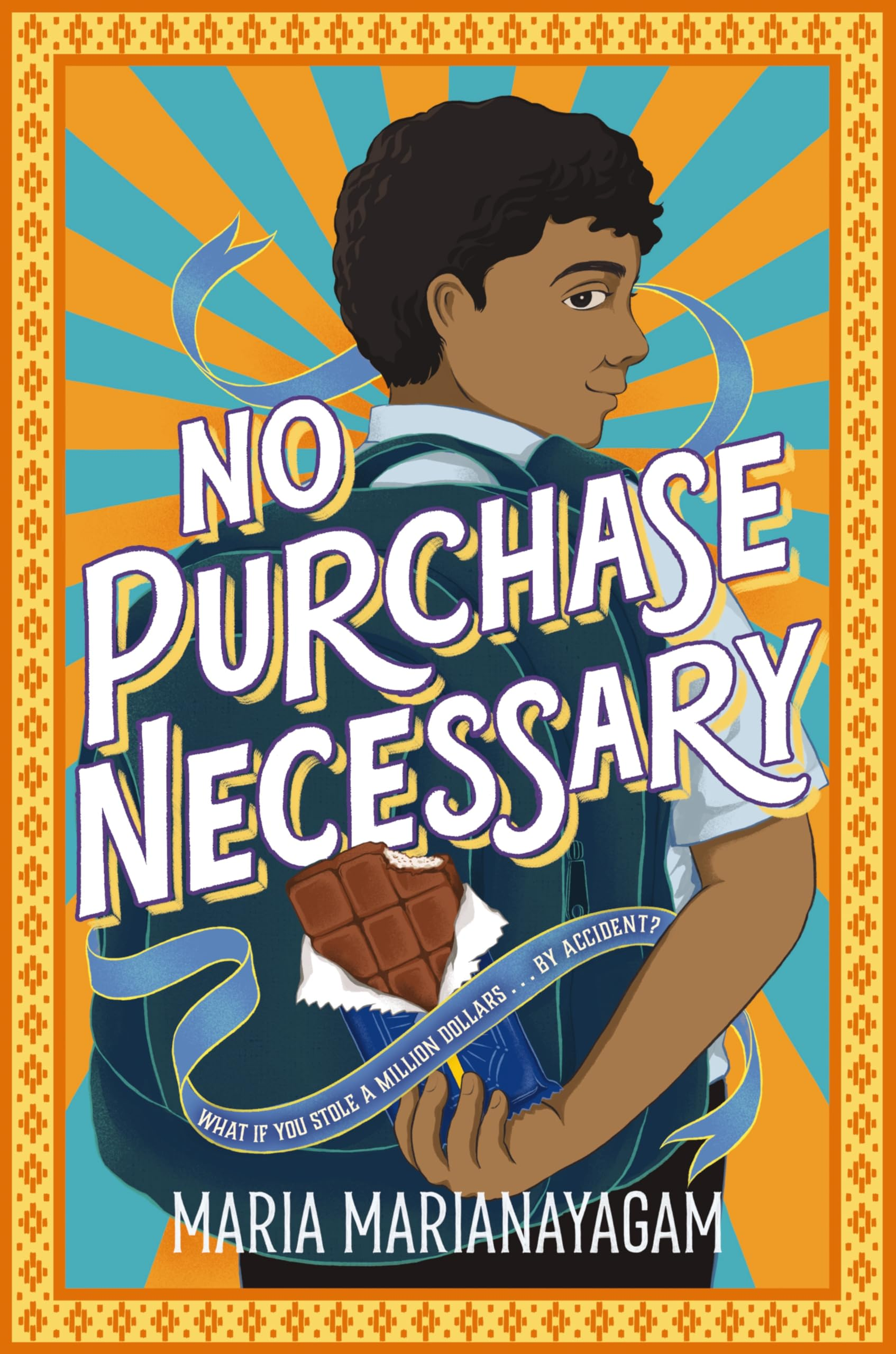
No Purchase Necessary by Maria Marianayagam (HarperCollins, 256 pages, grades 5-8). Ajay’s problems start when he gets a 79 on an English assignment. Since his parents expect nothing less than straight A’s, he’s afraid to tell them about his grade. Desperate to make friends at his new school, Ajay accepts a dare from cool kid Jacob to steal a candy bar, only to discover there’s a million dollar prize inside the wrapper. As Ajay’s lies snowball, he’s consumed with guilt but unsure how to make things right. His parents, Sri Lankan immigrants who are struggling to make ends meet while his dad finishes school, put unrelenting pressure on Ajay and his younger sister, compounding his guilt, fear, and frustration. Ajay volunteers to help out at the store where he stole the candy, hoping to erase the security footage that may have recorded his deed, but to his surprise finds that he likes helping the store owner, who is gruff but also kind and supportive. A new friend, Mindy, also eases some of Ajay’s stress. When Ajay’s emotions boil over into a fight with Jacob, he finds himself in a lot of trouble, but some surprising consequences offer him away to start communicating what he needs and to make some changes that help make things easier for him.

I’ve just finished a week of school vacation, which seems like the perfect time for a little light reading, but instead I found myself deep into books about kids with tough home lives and complicated ethical dilemmas. My heart went out to Ajay, and it was easy to blame his parents for the pressure he put on himself, but as the story unfolded, it also became clear how much they were struggling and how fervently they wanted the best for their children. This would make a great middle school book club book that could open up all kinds of discussions about what to do when you make a mistake and how to communicate with friends and family.

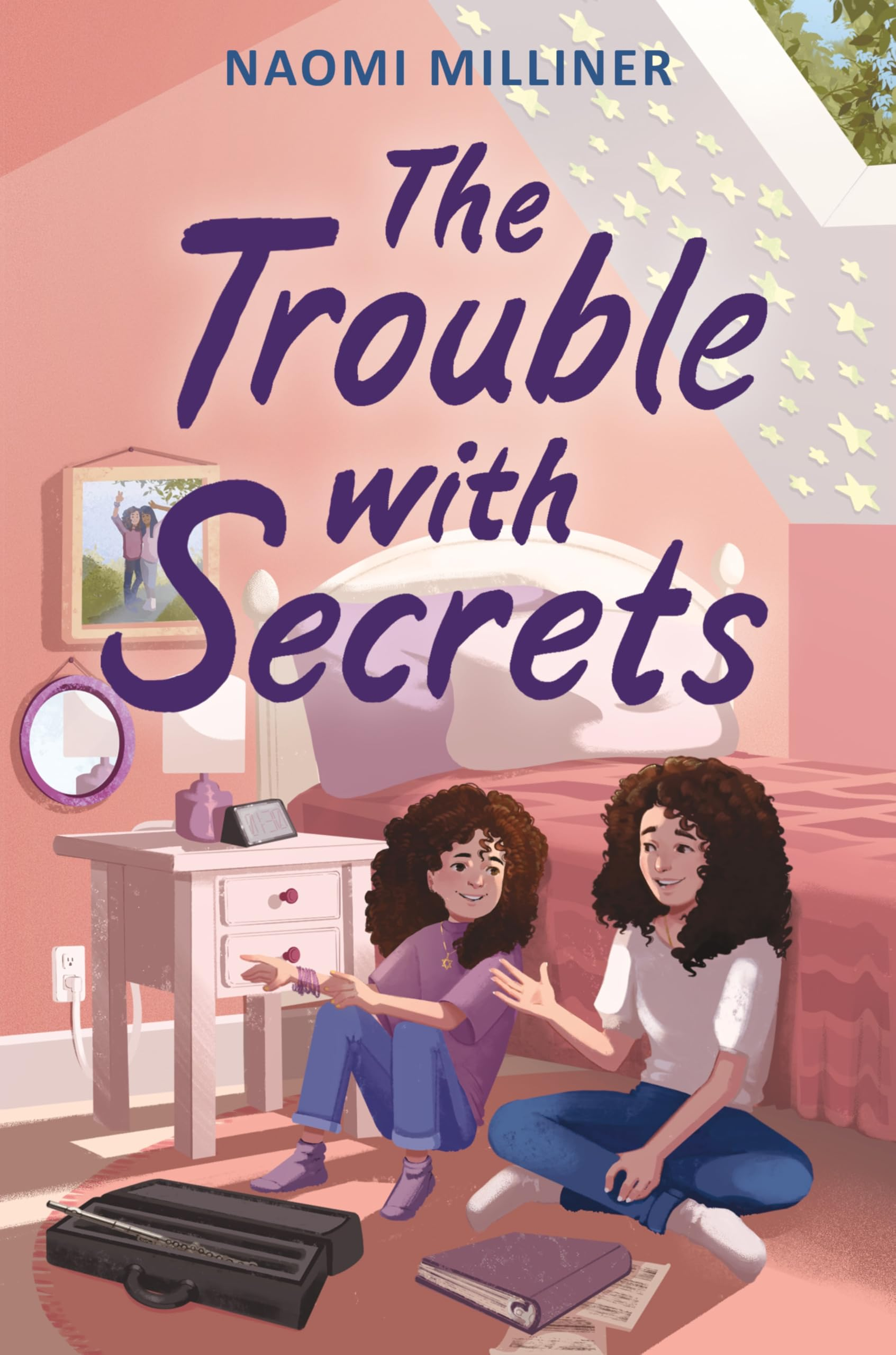
The Trouble with Secrets by Naomi Milliner (Quill Tree Books, 336 pages, grades 5-8). Becky is thrilled when her music teacher recommends her to audition on her flute for the all-county band, but her rabbi father tells her she needs to wait until next year so she can prepare for her upcoming bat mitzvah. Disappointed and angry, Becky forges her mother’s signature and goes ahead with the audition. Her older sister Sara is in on the secret, and Becky soon learns Sara’s secret: she’s in love with the new boy at school, the son of a local Protestant minister. Their father has made it clear that he expects all four of his children to only date people who share their Jewish faith. Sara is afraid to tell their parents, especially when their cousin secretly marries outside the faith, causing a huge rift in her family. The story begins with a chapter called “Now,” in which Becky is getting ready for a funeral, then goes back to tell the events leading up to that day. Part two of the book is back to “Now,” which is a time filled with shock and grief, but also slow healing as Becky and her family come to terms with what has happened and learn to move forward into a new normal.

This beautifully written book had me in tears for pretty much the last third or so. Like No Purchase Necessary, it shows readers the destructive power of keeping secrets, even though doing so may feel like the easiest way in the moment. Becky is part of a wonderfully loving family, who lives their Jewish faith every day, although her older siblings Jon and Sara felt a little too good to be true. I also felt like the authors of both of these books kind of went to extremes to communicate their message about secrets, as most secrets don’t involve winning a million dollars or result in the kind of tragedy in this book.

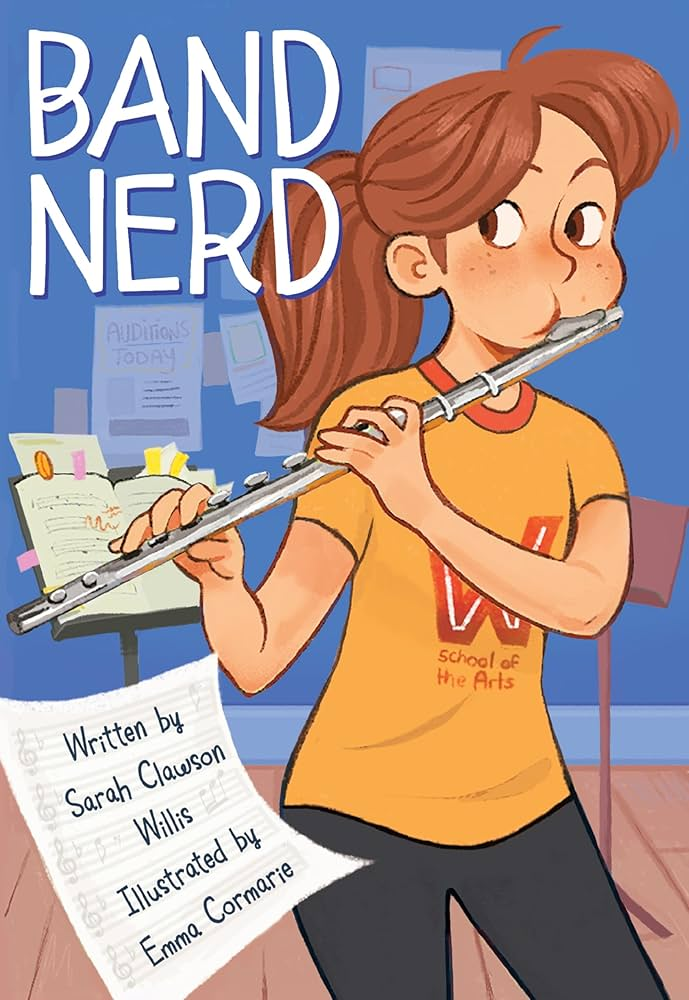
Band Nerd by Sarah Clawson Willis (HarperAlley, 272 pages, grades 5-8). Lucy’s excited to be starting seventh grade at Windley School of the Arts, where she can pursue her love of flute in the school band. It’s clear from the first page that there are some tensions at home, and as time goes on, her dad’s drinking problem creates an increasing amount of chaos. Lucy escapes through her music, putting enormous pressure on herself to beat her rival Tolli for the first chair position in band. As she becomes more obsessed with this goal, her schoolwork suffers, and her parents threaten to send her back to her old middle school. A bungled attempt to sabotage Tolli results in Lucy getting into trouble, which ultimately leads to a conference with school administrators and her parents. As the truth about their family situation emerges, Lucy is able to communicate to her parents how their home life is affecting her and to get help from sympathetic teachers and a counselor at school. Although things don’t turn out exactly as she had hoped, Lucy is back on track for success at school and her family is working to give her the support she needs.

Middle school readers will love this graphic novel, although some of the scenes with Lucy’s dad are difficult to get through. Many of Lucy’s new friends are also dealing with challenging family issues, and this book does a great job of showing kids how to cope and reach out for help.

Summer reading

A Day at the Beach by Gary Schmidt and Ron Koertge (Clarion Books, 224 pages, grades 3-7). These 28 stories take place over the course of a single summer day at Rockcastle Beach on the Jersey Shore. They’re divided into four sections by time of day, bookended by a brother and sister going for early morning and evening runs on the beach. Dealing with a wide variety of issues including a father’s cancer, bullying, a stray dog, and a lost phone, the stories are studies of the kids’ emotions as well as the human interactions and compassion that help them through. As anyone who has spent a day on a crowded beach knows, meetings can be fleeting, and lives can intersect, then diverge again forever.

I’m not much of a short story fan, since the hardest part of a book for me is starting it and getting to know the characters. But the writing in this book is so amazing, the stories so compelling, and the feeling of being on a crowded New Jersey beach on a hot summer day so perfectly captured, that I could not put this book down. Anyone who aspires to write fiction would do well to study this collection of stories to see how engaging characters and situations can be created in just a few pages.

Blood in the Water by Tiffany D. Jackson (Scholastic Press, 272 pages, grades 5-8, publication date July 1). Kaylani’s nervous about spending the summer with the Watsons, family friends who live on Martha’s Vineyard, but after dealing with her dad’s arrest and imprisonment, her parents both feel she could benefit from time away from Brooklyn. While Mr. and Mrs. Watson are welcoming, their granddaughters Cassie and London are not, and Kaylani questions whether she belongs in their affluent Black community that has long history on the island. When one of Cassie’s friends, popular and friendly Chadwick, dies mysteriously one night, the whole community is shocked, and Kaylani decides to use her keen powers of observation to try to figure out what happened. Her investigations lead her to a tangled web of family allegiances and deceit, putting her own life in jeopardy, but ultimately she is able to find out what happened, getting justice not only for Chadwick but for her father as well.

This mystery features a spirited and determined protagonist, with an interesting setting on Martha’s Vineyard that made me want to learn more about the island’s Black history. The mystery is compelling and will have readers guessing right up to the last few pages. I can’t think of too many middle grade mysteries that feature a murder, leading me to recommend this more as a middle school book. Thanks to Scholastic for providing me with a free advance copy of this book.

Culture shock

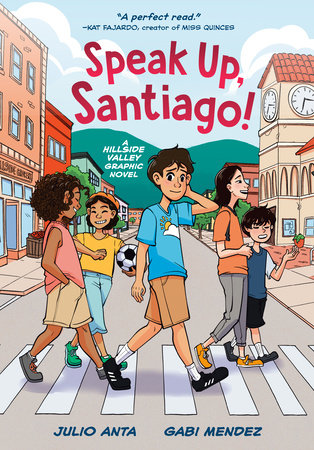
Speak up, Santiago! (Hillside Valley Graphic Novel, book 1) by Julio Anta, illustrated by Gabi Mendez (Random House Graphic, 224 pages, grades 3-7). Santi is spending a month with his Colombian American abuela Emma to try to improve his Spanish. His parents hoped to raise him to be bilingual, but because he struggled with speech as a baby, they focused on getting him to speak English. Now he’s studying Spanish but is extremely self-conscious about his level of fluency and his accent. At first things go well as Santi meets a group of kids who love soccer as much as he does and seems to be communicating well with his abuela. But when he overhears some of her friends making disparaging comments about his accent, his confidence plummets, and he shuts himself off from both his grandmother and his friends. Abuela Emma has a fall that’s partially Santi’s fault, and the guilt he feels about that leads him to have a heart-to-heart conversation with her and with his friends that gets him back on the right track. When Santi sees his parents at the big soccer tournament at the end of the month, they’re amazed at how much his Spanish has improved, and he realizes that progress is better than perfection. Includes notes from the author and illustrator telling how their own heritages influenced them in creating this book.

I loved this series opener, which not only addresses the difficulties of balancing dual heritages but shows readers not to put too much pressure on themselves when learning new things. Santi makes a lot of mistakes, but he’s able to learn from them and emerges as an extremely likable protagonist. I can’t find a publication date for book 2, but a preview at the end of this book shows that it will feature Sol, one of Santi’s new soccer friends.

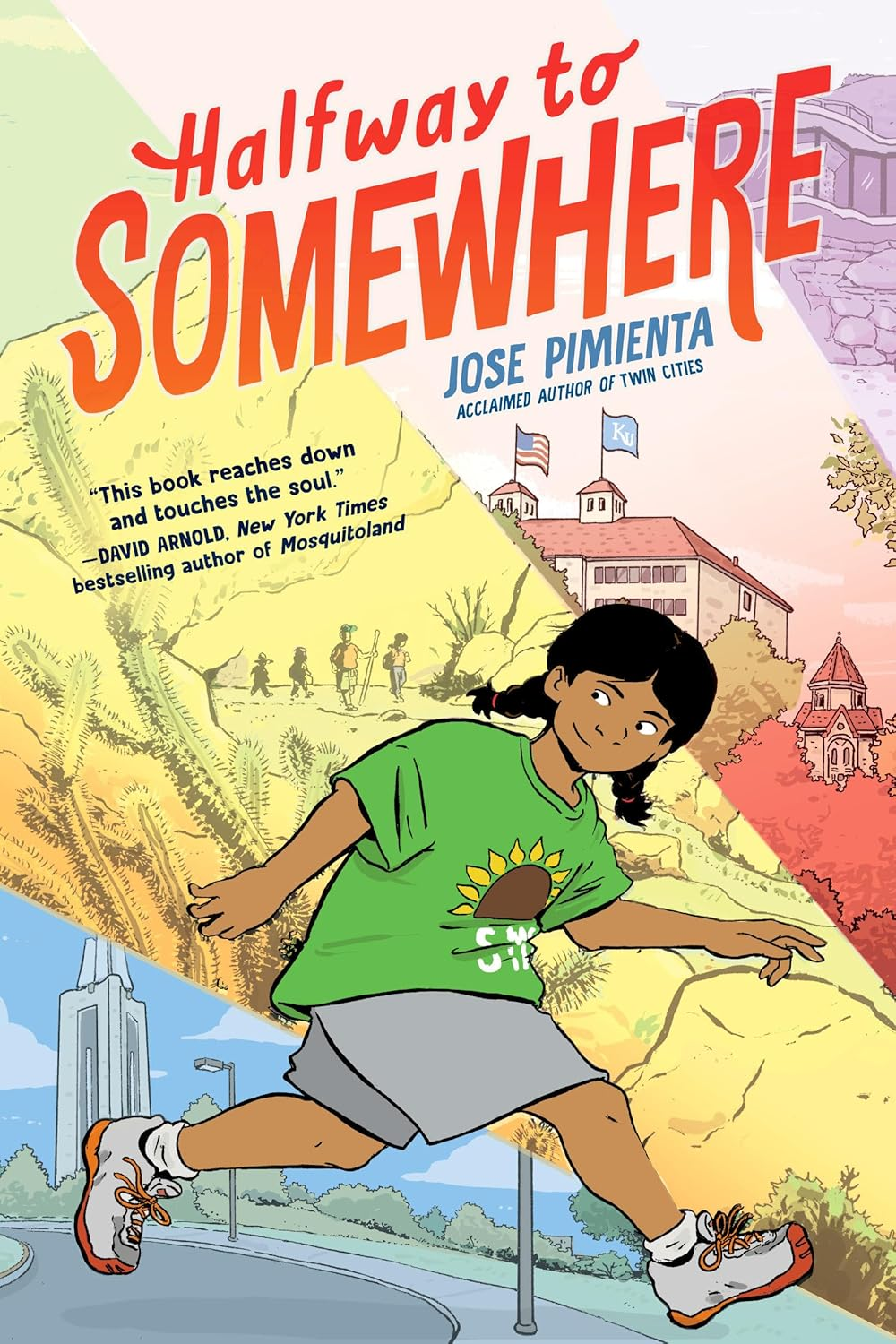
Halfway to Somewhere by Jose Pimienta (Random House Graphic, 256 pages, grade 4-8). Nonbinary tween Ave feels torn in two when they move with their mother and younger brother Ramón to Kansas while their father and older sister Cruz stay in Mexicali. Cruz encourages Ave not to assimilate and to keep speaking Spanish, while Ramón embraces English and renames himself Ray. At school, Ave meets some other kids who have connections to Mexico and other countries and learns to value her heritage while enjoying some American activities like running track and hanging out at the comics store. Through flashbacks and conversations with different family members, Ave remembers their past and learns that the split in the family may be permanent. The last few pages show them enjoying life in both places, leaving some ambiguity about which place they call home. Includes a lengthy author’s note about the evolution and creation of this book.

Jose Pimienta explores timely questions of heritage, language, and belonging in this beautifully illustrated graphic novel about a 12-year-old dealing with a lot of big questions about themself and their family. This is the final installment in his Mexicali trio that includes Suncatcher and Twin Cities.

Supernatural friends

As You Wish by Nashae Jones (Aladdin, 272 pages, grades 5-8). Birdie and Deve have been best friends since the first day of kindergarten, but when Birdie tells Deve of her plans to be more “normal” in eighth grade by getting a boyfriend, Deve reacts coldly and before long they’re in a fight. A mysterious new girl named Nancy turns out to be the mythological spider Anansi, who grants Birdie three wishes. Each wish plunges Birdie into a new reality where she gets to see what life would be like as a popular girl, free of her overprotective mother, and worst of all, if she and Deve had never met. By the time she realizes her mistakes, she’s out of wishes, but Anansi has one more surprise in store for her.

This romance is perfect for those just getting into the genre, providing a fun introduction to the Ghanaian Anansi. The romance element is pretty clear from the start, with the plot twists coming from revelations about other characters as well as Birdie’s discoveries about herself as she fumbles her way through alternative realities.

To Catch a Ghost by Rachel Michelle Wilson (Orchard Books, 40 pages, ages 4-8, publication date July 1, 2025). “Bringing nothing to show-and-tell is like wearing shoes without socks. It stinks.” To avoid this situation, the narrator decides to catch a ghost to share with the class. Part one is the search, followed by part two: observe, in which he tries to determine what kind of ghost he’s found. Likes hide-and-seek? Mischievous. Enjoys gardening? An old soul. And almost any kind will appreciate pizza. The third and final part involves catching a ghost, but after building a cage, the narrator can’t stand the sad look on the ghost’s face and lets it go. The friendly ghost leaves behind a picture of the two of them eating pizza, though, and that is good enough for show-and-tell. Thanks to Orchard Books for an advanced copy of this book, which will be available July 1.

Fans of Wilson’s How to Pee Your Pants will enjoy this follow-up about finding a ghost. It would make a great mentor text for procedural writing, a good Halloween read-aloud that includes those who don’t celebrate the holiday, and a nice story for starting a conversation about friendship.

Life during wartime

The Enemy’s Daughter by Anne Blankman (Viking Books for Young Readers, 288 pages, grades 4-7). Marta and her papa are traveling aboard the Lusitania, trying to get back to Germany with falsified documents. Just as her father’s true identity is discovered, the Lusitania is torpedoed, and the two must fight for their lives. Although they both survive, Papa is arrested immediately upon their arrival in England, while Marta manages to slip away. Hiding in a barn, she’s befriended by an Irish girl named Claire, whose family is poor but manages to find food and shelter for Marta. Marta’s talent for acting and imitating accents comes in handy to conceal her German identity and impersonate a Dutch girl. The two girls work together in a chocolate factory, and Marta saves her earnings for a train ticket to Amsterdam, where she hopes she can book passage back to Berlin. Despite having been taught to hate the British, Marta can’t help but respond to Claire’s friendship and the loving kindness of her family. When Marta’s true identity is discovered by a factory employee, Claire is horrified at first, but eventually she too realizes that their friendship is real and helps Marta escape. The last pages see Marta getting ready to travel to Amsterdam, worried but hopeful that her family will be reunited at last in Germany.

Readers will be drawn into this book right away with the tragic sinking of the Lusitania in the early chapters, followed by Marta’s struggle to survive and find her way home. I was hoping for a bit more resolution to her story, as well as finding out what happened to her father, but it’s a realistic ending given the time and place. The reflections on humanity and who is an enemy occasionally felt a little didactic but could definitely engender some interesting discussions.

Revolutionary Mary: The True Story of One Woman, The Declaration of Independence, and America’s Fight for Freedom by Karen Blumenthal and Jen McCartney, illustrated by Elizabeth Baddeley (Roaring Brook Press, 40 pages, grades 2-5). Mary Katharine Goddard didn’t get to go to school like her younger brother William did, but her mother taught her reading and math at home. When William decided to pursue bigger ambitions, Mary and her mother took over his print shop. After her mother died, Mary took charge, running a successful business until her brother asked her to move to Baltimore to help him with another shop. Once again, he left to pursue other interests, and Mary took over. As news of a revolution made its way through the colonies, Mary engaged in the risky business of publishing news and opinions about independence. After the Declaration of Independence was signed, the Continental Congress moved from Philadelphia to Baltimore, where they made the bold decision to send a copy of the document to each of the thirteen colonies. Mary was chosen as the printer, and she included her name on the declaration, using her full name, Mary Katharine Goddard instead of her usual M. K. Goddard signature. Includes additional information about Mary Katharine Goddard, the Declaration of Independence, and printing and publishing in colonial times; also a bibliography and an author’s note from Jen McCartney that tells how she completed this book after her mother (Karen Blumenthal) died in 2020.

This engaging story of a courageous woman deserves a place in any study of the American Revolution. The text and illustrations are lively, with action words like crank, whoosh, pound, and revolution woven into the pictures. The author’s note about completing the book after her mother passed away unexpectedly at the age of 61 adds a poignant note to the story of a woman who was inspired by her own strong mother.

Let’s hear it for the boys

Old School by Gordon Korman (HarperCollins, 288 pages, grades 3-7). Dexter is a 12-year-old who has spent the last six years living with his grandmother in a retirement community while his diplomat parents travel the world. He’s always been homeschooled, receiving an excellent education from a variety of experienced educators in the community. Unfortunately, his grandma never officially registered him as a homeschooler, and in seventh grade, truancy officers catch up with them and force Dexter off to middle school. At first, he’s a complete fish out of water who talks and dresses like an old man, not a middle schooler. But slowly his kindness and handyman skills start to win over some of the other kids. When Dexter fixes a vending machine with his Swiss army knife and gets expelled for having a weapon, the other kids rally to his defense and start visiting him at his home, where they soon befriend many of the older residents. Young and old alike show up for Dexter’s hearing before the school committee, where a few surprise twists result in an unexpected outcome for both Dexter and his school.

Although Gordon Korman is less than two weeks older than I am, he has written over 100 books more than I have. His books, while somewhat formulaic (this one is told in chapters that alternate among several narrators in classic Korman style), are always engaging and funny, perfect for reluctant readers. The homeschooled hero winning over middle school students reminded me a lot of another Korman book, Schooled (2008) I’ve read quite a few middle grade books with girl main characters this year, so I’m glad to have a couple that feature boys.

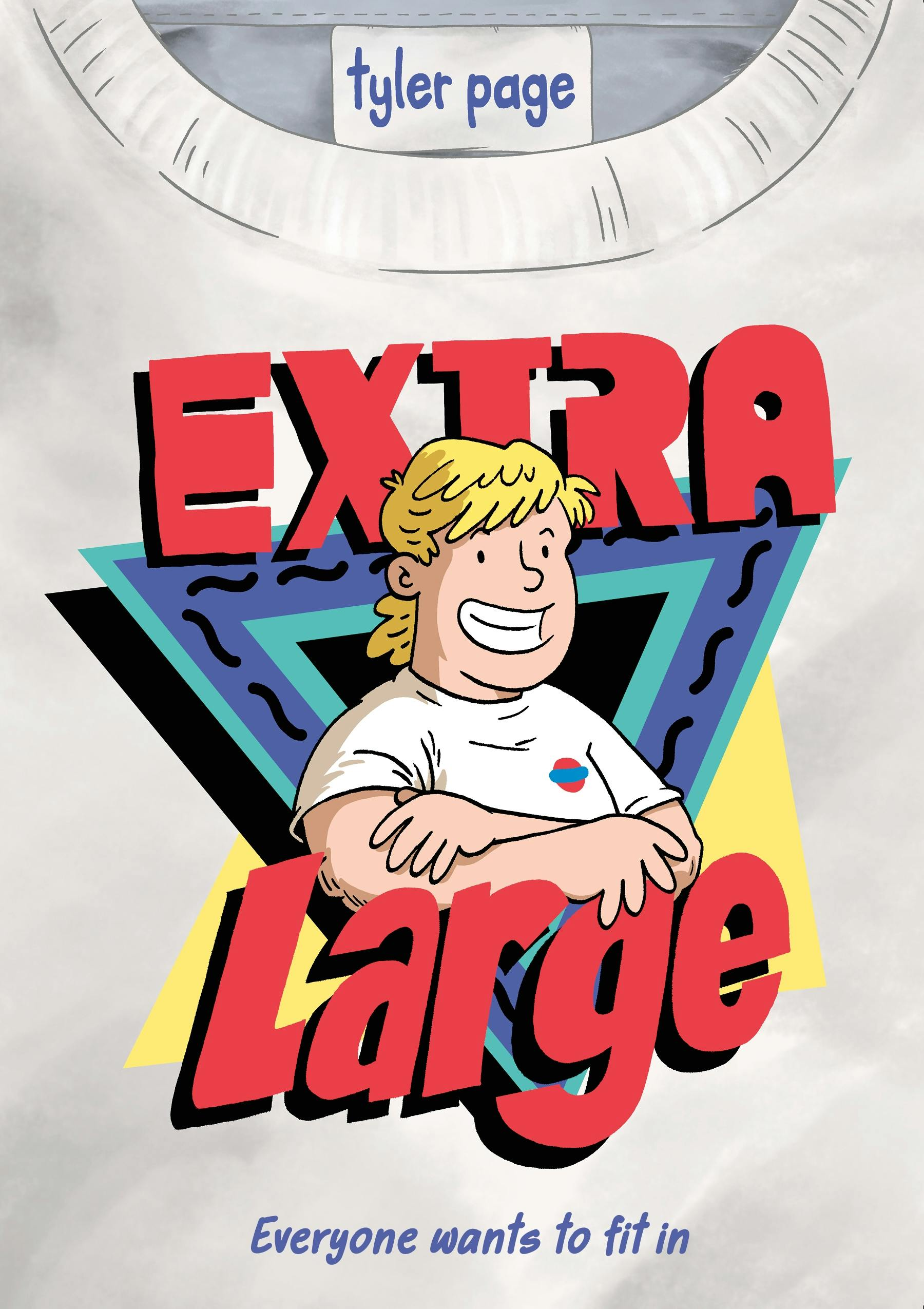
Extra Large by Tyler Page (First Second, 208 pages, grades 4-8). The summer before seventh grade, Tyler starts to be more aware of his body size. When he wins an extra-large T-shirt, he’s told he’ll grow into it. Shopping for back-to-school clothes, he has to get “husky” jeans to be able to fit into them. His dad decides to give up sugar in an attempt to get back to his high school weight and encourages the rest of the family to join him, not always in the kindest way. Tyler notices kids get bullied for their size and for other body issues, and he’s always relieved when it’s not him, taking pains to be the last to change for gym with the hope that no one will see him with his shirt off. When a new girl gets teased about her ears, Tyler joins in, even though he doesn’t see what the big deal is. As the year goes on, Tyler notices more and more that some of his closest friends can be bullies, and he starts to hang out with other kids who are kinder and make him feel good about himself. He saves money for a new bike, enjoying the way he feels when he’s active, and even gets to enjoy some of his family’s menu changes. By the end of the story, Tyler has learned a lot about accepting himself as he is.

Tyler Page’s memoir is funny and realistic, and plenty of upper elementary and middle school readers will see themselves in the pages. It’s nice to see a graphic novel addressing bullying and body image issues with a boy main character.

Home is where the heart is

Sea Legs by Jules Bakes, illustrated by Niki Smith (Graphix, 256 pages, grades 3-7). Janey’s lived on board her parents’ sailboat before, but it’s harder going back to that life this time, after going to public school for third grade and making a good friend named Rae. But she doesn’t have much say in the matter, as her family sets sail for the Caribbean. Life onboard is much different, with unique adventures and natural wonders every day, but also sometimes with boredom and loneliness. When they anchor at one of the islands so her parents can make some money, Janey’s excited to see another girl who looks just a little older than she is. Soon, she’s hanging out with Astrid, who seems cool and courageous, but who is sometimes mean to Janey and takes her on adventures that occasionally turn dangerous. Janey slowly realizes that Astrid is living with an abusive father, forced to take care of her younger half siblings and not allowed to go to school, and that the older girl envies Janey’s secure family and opportunity to get an education. When hurricane season hits hard, Janey is sent to live with her grandmother for several months. On her return, the ship is damaged, Astrid is gone without a trace, and Janey has to learn from her parents how to be resilient and get back out to sea once again. Includes notes from the author and illustrator, friends since the age of 12, about how Jules’s childhood at sea and their friendship inspired this book.

Who can resist the lure of a life at sea? I was curious to read this fictionalized graphic memoir about Jules Bakes’s unique childhood. It ended up surprising me, showing both the good and more difficult sides of this life, with Astrid’s story offering a particularly dark version of it. I was hoping for a little more resolution of Astrid’s story and her friendship with Janey, but the ambiguity felt very realistic.

Home by Matt de la Peña, illustrated by Loren Long (G. P. Putnam’s Sons Books for Young Readers, 48 pages, ages 4+). As they did with their picture book Love, Matt de la Peña and Loren Long offer meditations about home. Whether it’s an apartment next to the highway, a house near the airport, Grandpa’s houseboat, or the back of Dad’s big rig, home has a feeling of familiarity, comfort, and security. But what if you lose your home? “Hurricane rains flood your streets. Or a thick black smoke blankets the sky. Or Papa’s garment factory closes down.” You may have to leave the only home you’ve ever known, but slowly you will find your way back with the help of a father or a grandma or a teacher, because it’s those people who really are your home. And when you look up into the sky at a hawk or a mountain or the stars, you’ll remember the home we all share, “promising that all life is one life and when the winds do come they will carry you home.”

I was blown away by how much is contained in this seemingly simple picture book that could be enjoyed by a preschooler or used in a college class to reflect on all the meanings of the word “home.” The text is lyrical and thought-provoking, and as for the illustrations…well, let’s get on with it already and finally give Loren Long the Caldecott recognition he deserves.

Teamwork makes the dream work

Neecy and Nay Nay and the Tangled, Hairy Mess (Neecy and Nay Nay, book 1) by Simone Dankenbring and Syrone Harvey, illustrated by Maya Henderson (little bee books, 112 pages, grades 2-4). When Nay Nay wakes up with a big wad of gum in her hair, Big Mama takes her and her twin sister Neecy to Ms. Yvonne’s hair salon, where a spoonful of peanut butter takes care of the problem. The girls are inspired to open their own salon, which fits in nicely with the entrepreneurship project that they’re working on at school. After a successful style with one of their friends, they expand to facials and manicures, using a creative assortment of household items and producing some disastrous results. Instead of giving up, the girls learn from their mistakes and put together an A+ report on the do’s and don’ts of starting a small business. Includes Big Mama’s snickerdoodle recipe, a glossary of the big words Neecy likes to use, and a preview of book 2, which was released at the same time as this book.

Early chapter book readers will enjoy this new series. Each twin has her own distinctive personality and style, and there’s an interesting cast of supportive characters, including a close friend who lives in a foster family. The girls aren’t afraid to try new endeavors and are resilient when things don’t go as planned. Books 3 and 4 are due out by the end of the year.

Jojo vs. Middle School (Team Awkward, book 1) by Joy McCullough and Veeda Bybee (Aladdin, 192 pages, grades 3-7). Jojo’s first day of sixth grade gets off to a rough start: her mom’s embarrassing new boyfriend, online cat influencer Mr. Meow, has given Jojo a new kitten, who (unbeknownst to her) has chewed a hole in her new leggings. After she realizes that her cat-patterned underwear has been visible to the whole school all morning, Jojo retreats to an abandoned part of the school where she meets three other girls hiding from their catastrophic first mornings. A tentative friendship is born, and when they meet on the second day, they wind up sheltering in place after a bobcat sighting at the school. This results in not only a two-hour conversation that deepens their friendship, but a series of hilarious mishaps that cements it into Team Awkward. They wind up back at Mr. Meow’s with the “bobcat,” having inadvertently saved the day, and Jojo begins to see that Mr. Meow, whom she now calls Paul, may not be so bad. Book 2, featuring Team Awkward member Leah, will be out in June.

This book feels like a bit of a throwback, in a good way, since so many stories like this are being written as graphic novels these days. The chapter book format allows the introduction of many interesting characters, both at school and in each girl’s family, whom I hope we will get to see more of in upcoming books. Try it out on fans of Dork Diaries.

Graphic novels that deal with tough issues

Crumble by Meredith McClaren, illustrated by Andrea Bell (Little, Brown Ink, 208 pages, grades 3-7). Emily’s mother is often traveling to promote the family bakery, so Aunt Gina and Emily run the shop and keep things going back home. The two of them know how to infuse their baked goods with feelings, helping people to feel happier or more relaxed when they eat them. When Aunt Gina suddenly dies in a car accident, Emily and her mom are overwhelmed by grief. The only way Emily knows how to process her feelings is to bake, but baking while sad results in terrible-tasting pastries that somehow no one can stop eating. When Emily ends up making all of her classmates sick, she has to slow down and find new ways to deal with her feelings. She and her mom slowly create a new normal, and the last chapter shows them running a new baking school, while Emily has developed more empathy for people around her who are suffering.

This cheery graphic novel takes an unexpected twist when a panel showing Aunt Gina’s wrecked car changed everything for Emily. From there, the story does an excellent job showing how she processes her grief, feeling overwhelmed by it at first, then slowly finding a way to acknowledge her feelings and move on, even though things will never be the same. The reactions from the other kids–trying to cheer Emily up, asking too many questions about her aunt’s funeral–are helpful in showing readers what may or may not be helpful to those who are grieving.

Cassi and the House of Memories by Dean Stuart (Viking Books for Young Readers, 272 pages, grades 4-7). Cassi loves spending time with her grandparents, but sometimes Grandpa’s mind wanders. When he forgets who she is, Grandma reassures her that he is still there and that he loves her. One day, Cassi goes into the backyard with him, and he disappears into the woods. When she goes in search of him, she discovers a giant structure that looks like Grandpa’s head. Inside, she discovers all kinds of memories from Grandpa’s early life. Cassi is able to put herself into those memories, and in an exciting climax, to help change one of them from a traumatizing event to one that makes Grandpa into a hero. Eventually, she meets up with her present-day grandpa, and he leads her back home, where Grandma is waiting with dinner, not worried at all, just sure that the two of them have been having fun together. An author’s note tells of his experiences with his own father’s dementia and how he created this book for kids who may be dealing with someone in a similar situation.

I saw this book described as “melancholy” in a review, and that’s a perfect word for both the story and the artwork that creates an alternate world inside Grandpa’s head, where memories come and go. Cassi’s ability to change some of the memories demonstrate how selective and imperfect all of our memories are. A thought-provoking book that will help kids see those with dementia in a new way.