Halfway Normal by Barbara Dee

Published by Aladdin
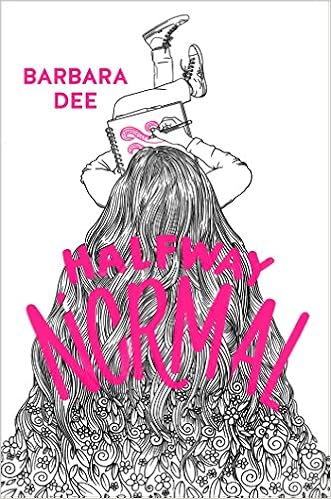
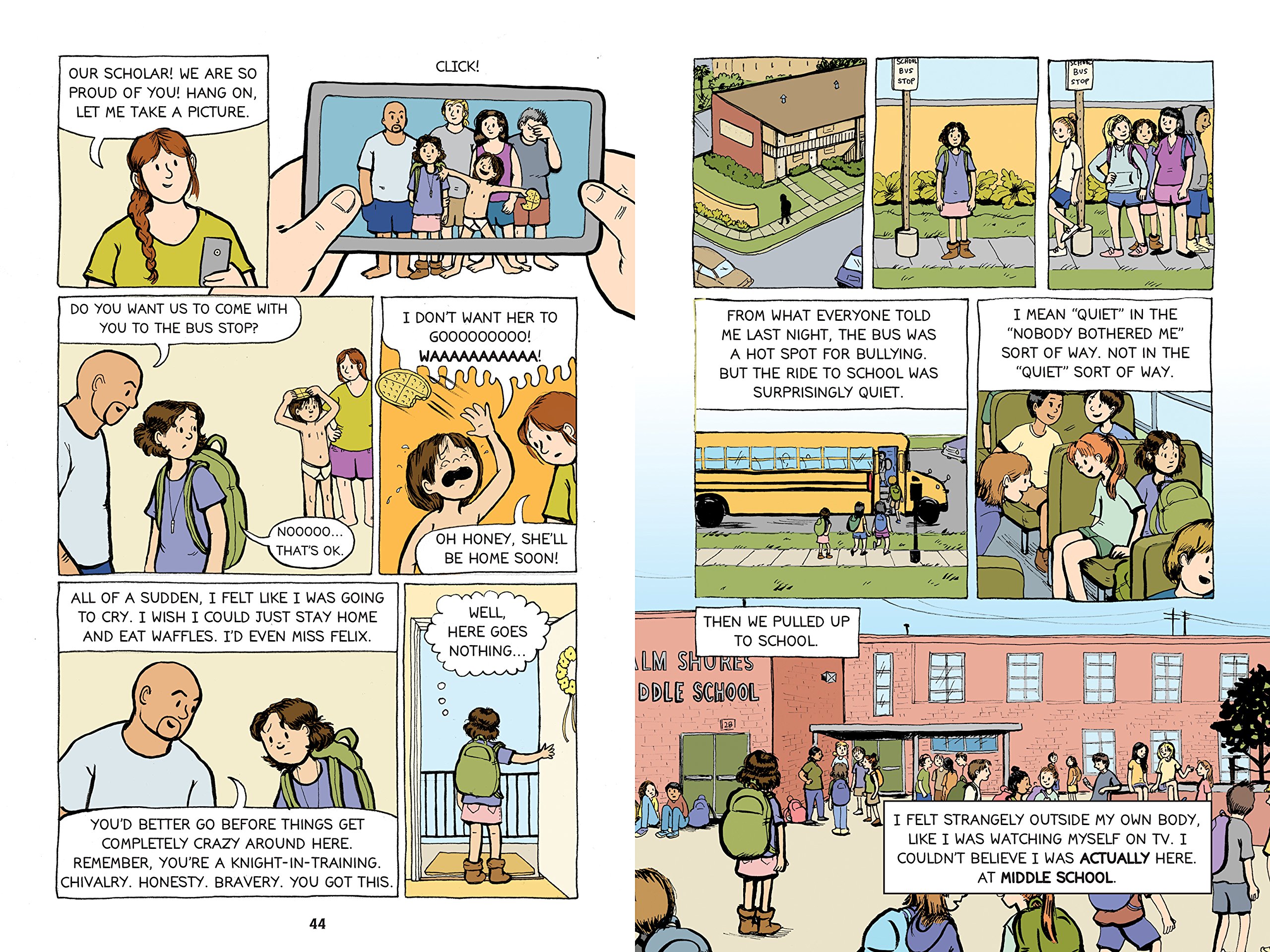
Summary:  Norah is off to a great start in seventh grade.  She has an awesome best friend, she’s acing all her classes, and there’s a boy in her math class who may reciprocate her crush.  One big difference between Norah and her classmates–she is returning after a two-year absence she spent battling leukemia.  Kids who know she’s been sick have different reactions.  Some pity her, while others think she’s trying to get extra attention.  It doesn’t help that her parents have strict rules for her first six months back, including no after school activities and no socializing on weekends.  Norah’s overly gushing guidance counselor wants her to talk to the whole school as part of a program on overcoming challenges, but Norah’s positive that’s the last thing she wants to do.  A sympathetic English teacher and a unit on one of Norah’s favorite subjects–Greek mythology–finally give her the chance to tell others about her experience in her own way.  256 pages; grades 4-7.

Pros:  A realistic look at what it’s like to re-enter life after a long illness.  The author’s afterword indicates that she has had first-hand experience with one of her own children, and this comes through in Norah’s voice as she works through her various emotions at trying to fit in after an experience that most of those around her can’t fully understand.

Cons:  The cover has kind of a 1975 vibe to it.
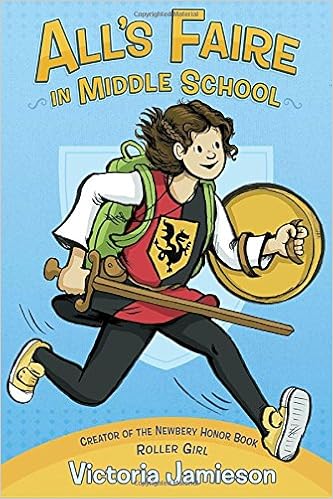
All’s Faire in Middle School by Victoria Jamieson

Published by Dial Books

Summary:  Imogene has grown up at the Renaissance Faire, where her parents both work, and been homeschooled all her life.  When she decides to go to public middle school, she’s not quite prepared for a new world of tough teachers, cafeteria food, and figuring out the social hierarchy and where she fits into it.  Each chapter begins with a page that looks like an illuminated manuscript, and chapters switch back and forth between Imogene’s life at school and at home.  The two worlds collide occasionally, once when she realizes that a girl she’s seen bullied is a big Renaissance Faire fan and a potential friend, and again when a group of girls who may or may not be her friends show up for a birthday party.  After a tough week in which Imogene herself is accused of bullying and she throws her little brother’s beloved stuffed squirrel into the lake, she’s ready to move from her role at the Faire from squire to hermit.  But her loving, if unconventional, family and Renaissance community help her come through it all stronger than ever.  248 pages; grades 4-7.

Pros:  Victoria Jamieson’s follow-up to her Newbery-honored Roller Girl does not disappoint in any way.  Imogene is a likeable and believable protagonist, and readers will enjoy learning about the world of the Renaissance Faire the way they did roller derby.  The middle school scenes ring true, and the be-yourself message is inspiring.

Cons:  A couple mentions of sex and a language incident or two may raise a few elementary parent eyebrows.

Patina by Jason Reynolds

Published by Atheneum

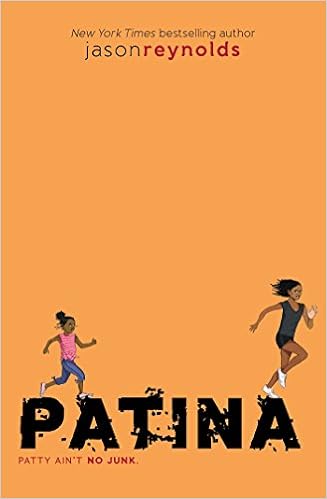
Summary:  Patina, or Patty, is a ferociously competitive member of the Defenders track team.  In the opening scene she comes in second place in a race, and is so angry at herself she can’t watch the rest of the meet or root for her teammates.  The next week, the coach puts her in a key position of the new relay team, hoping to help her become more of a team player.  Patty struggles with this issue off the team, too, trying to figure out how to deal with the wealthy white girls at her new private school.  Her aunt and uncle are sending her to the school, after Patty and her younger sister Maddie have to move in with them.  Patty’s father is dead, and her mother has lost both legs to diabetes, making Patty fiercely protective of Maddie.  Like Ghost before her, Patina works through her problems through the course of the book in a realistic and sympathetic way, and is struggling to be the first to cross the finish line at a crucial race when the book ends.  240 pages; grades 4-8.

Pros:  The second book in Jason Reynolds’s Track series does not disappoint, offering the same grit and heart as Ghost, with a narrator whose voice is just as true and honest.  Reynolds shows that he can vividly portray a wide range of interesting female characters.  Readers (including this one) will be anxiously awaiting book #3.

Cons:  Patina’s story is a bit more of an internal odyssey than Ghost’s was; readers may miss some of the action from the first book.

Confessions from the Principal’s Kid by Robin Mellom

Published by HMH Books for Young Readers

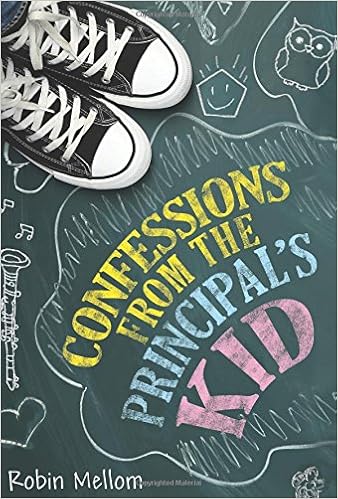
Summary:  What would it be like if the principal was…your mom?  Allie give an insider’s view, sharing her stories of staying after school with a small group of kids (the Afters) whose parents all work at school.  It’s fun to have behind-the-scenes access to school, but a drag to have to stay after every day.  Plus, Allie’s best friend Chloe hasn’t spoken to her since an incident in fourth grade where Chloe thought Allie ratted her out to her mom.  Allie’s got some other problems, too–her overworked mom isn’t as much fun as she was when she was a teacher, and Graham–another old friend and fellow After–is acting weird.  Author Robin Mellon draws on her own experiences as a principal’s kid to explain the ups and downs of that role.  272 pages; grades 3-6.

Pros:  Fans of Dork Diaries and other realistic school stories will enjoy Allie’s authentic voice as she shows readers what it’s like to have the insider track at school.  Short chapters keep the action moving quickly.

Cons:  Allie occasionally sounds a little wise beyond her years.

A Boy Called Bat by Elana K. Arnold, illustrated by Charles Santoso

Published by Walden Pond Press

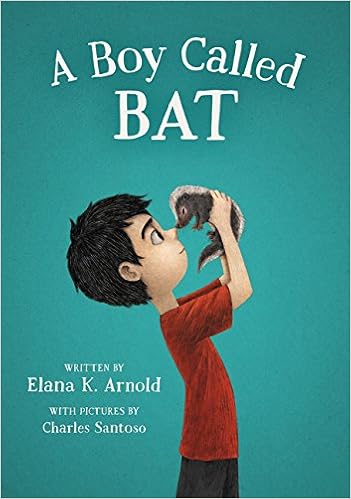
Summary:  Bixby Alexander Tam is known as Bat, not only because of his initials, but also because he loves animals, has a tendency to flap his hands like wings when he gets nervous, and is sensitive to sound, sometimes leading him to don his sister’s earmuffs at school.  When his veterinarian mother brings home an orphaned baby skunk, Bat is thrilled, and sets out to be the best baby skunk caretaker ever.  His teacher helps him send an email to a skunk expert, and Bat is excited to get an encouraging reply from him.  Although it’s never stated, it’s pretty clear Bat is somewhere on the autism spectrum, and he must find his own way to navigate the world, dealing with his divorced parents, occasionally annoying older sister, and a boy in his class who just might be a friend.  208 pages; grades 2-5.

Pros:  A thoughtful and humorous story told through the eyes of Bat, a sympathetic character with difficulties that many young readers will recognize.  I hope there will be more stories forthcoming about Bat and his family.

Cons:  The whole skunk-as-pet premise seems unsustainable.

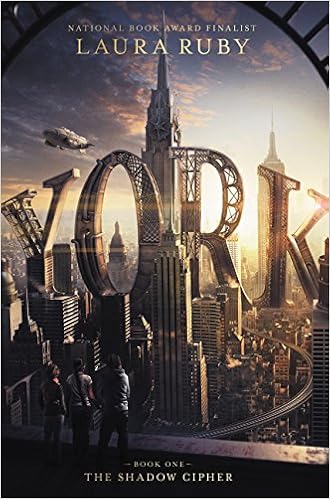
The Shadow Cipher (York: Book 1) by Laura Ruby

Published by Walden Pond Press

Summary:  In an alternate New York City, three seventh graders rush to solve a century-old puzzle that they hope will save their home.  When the unique building they live in is bought by an uncaring billionaire, twins Theo and Tess and their friend Jaime decide to try to solve the Cipher.  Created by the Morningstarr twins in the nineteenth century, the Cipher has baffled people for years, including the twins’ grandfather, now suffering from dementia.  When the kids discover a letter sent to their grandfather that appears to be from one of the Morningstarrs, they think they have stumbled upon a new version of the Cipher that may lead to its solution and the treasure that awaits the solver.  Rushing from one adventure to the next, the reader learns about some of the steampunk-inspired inventions of the Morningstarrs that are part of daily life in this version of NYC.  Although the kids discover important clues, the case of the Cipher is still not cracked by the end, and a cliffhanger will leave readers anxiously awaiting book 2.  496 pages; grades 4-8.

Pros:  Fans of Rick Riordan will eagerly consume this tale featuring three gifted, quirky protagonists, an intriguing mystery, and plenty of adventure.

Cons:  The kids seemed to solve the extremely difficult puzzles with remarkable ease…although at least some of that may be part of the mystery.

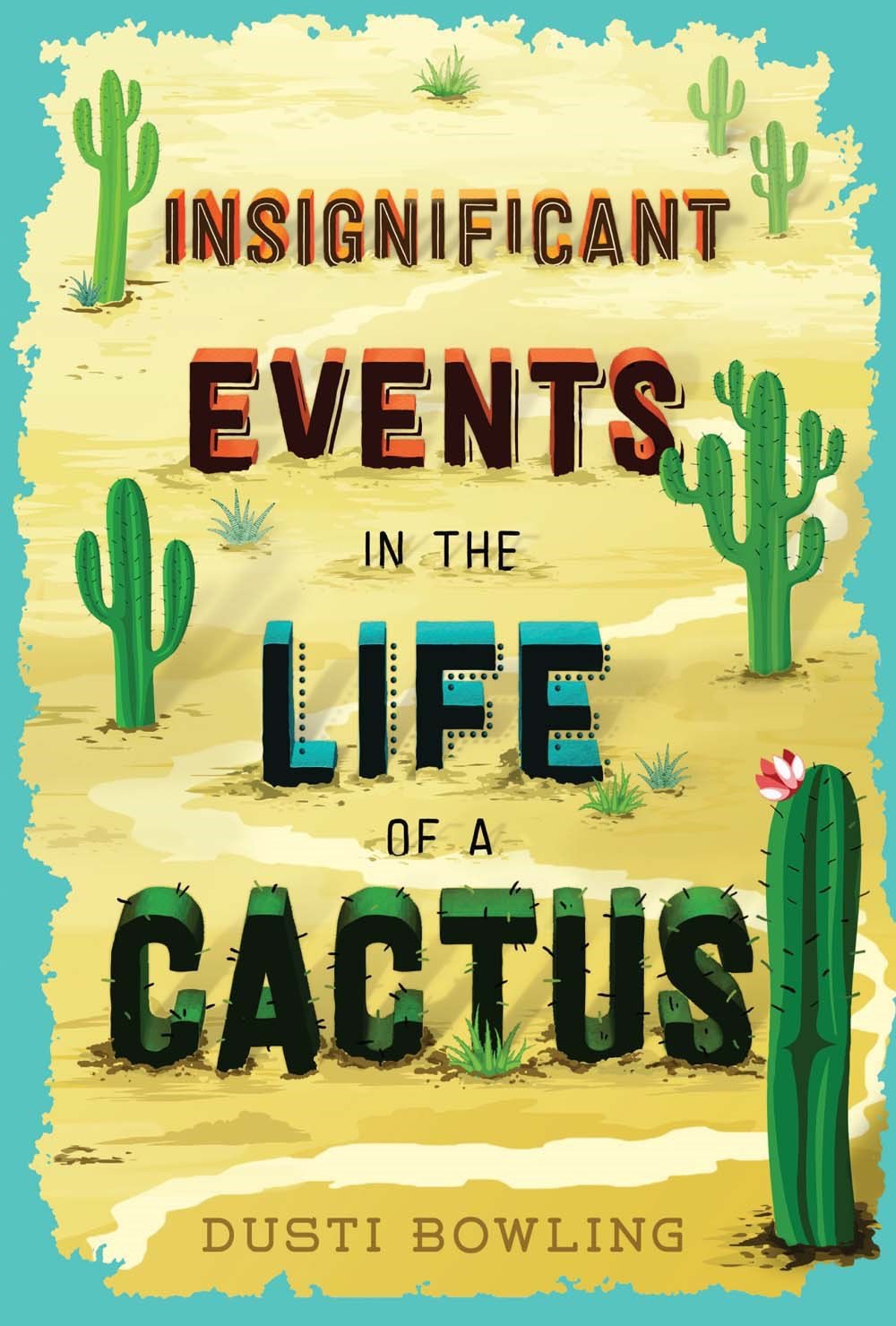
Insignificant Events in the Life of a Cactus by Dusti Bowling

Published by Sterling Children’s Books

Insignificant Events in the Life of a Cactus (Volume 1): Bowling, Dusti,  Bowling, Dusti: 9781454923459: Amazon.com: Books

Summary:  Aven has always believed she can do whatever she wants, and being born without arms hasn’t stopped her from playing guitar, excelling at soccer, and making plenty of friends at her Kansas middle school.  But when her parents suddenly decide to take over Stagecoach Pass, a has-been theme park in Arizona, Aven has to start eighth grade in a new school.  Unable to face the stares of her new classmates, she takes to eating her lunch in the library, where she meets Connor, a boy with Tourette’s syndrome and Zion, a boy struggling with weight and self-esteem issues.  The three become friends, and uncover a mystery at Stagecoach Pass involving tarantulas, a locked desk, and a mysterious girl who bears an uncanny resemblance to Aven.  In the process of solving the mystery, the kids also have to acknowledge their own limitations and learn to reach out and help each other reach their full potential.  272 pages; grades 4-7.

Pros:  Aven is a confident, hilarious narrator whose fun and supportive parents have taught her to face life head-on and learn to do as much as she can for herself.  The story ends on a realistically uplifting note for all the characters.

Cons:  Zion seemed like a bit of an afterthought.  I would have liked to have known more about him and seen a little growth and change for him.

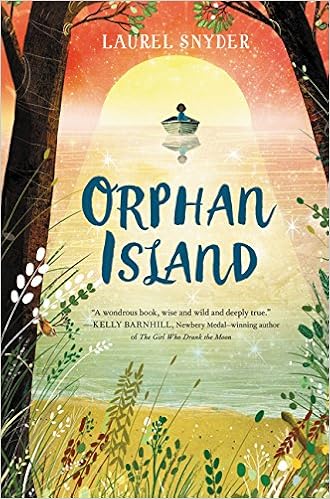
Orphan Island by Laurel Snyder

Published by Walden Pond Press

Summary:  When the bell rings on the island inhabited by nine children, a green boat appears out of the mist, carrying a new orphan ashore.  Then the oldest child gets in the boat and leaves for places unknown.  When Deen leaves, Jinny becomes the Elder.  She is in charge of Ess, the little girl who has just arrived in the boat, and must teach her the ways of the island so that Ess will be independent by the time Jinny leaves.  A year goes by, the bell rings again, and the boat returns, this time with a little boy named Loo.  But Jinny can’t bear the thought of leaving.  She pulls the boat onto the shore and announces that she’s staying.  Slowly, things begin to change on the island; the safe routines are disrupted and the idyllic environment is threatened.  When disaster finally strikes, Jinny realizes she has one chance to try to make things right again, even if it means giving up what she wants most of all.  288 pages; grades 3-7.

Pros:  A beautifully written tale about a kids’ fantasy world that could be a metaphor for growing up or even life and death.  I’ve seen this book on a Newbery list or two.

Cons:  The question of why the children are on the island is never answered, and some readers will undoubtedly find the ambiguous ending unsatisfying, particularly if there isn’t a sequel.  Also, be aware there is a scene where Jinny gets her first period that may be confusing to those who haven’t yet had the “puberty talk”.

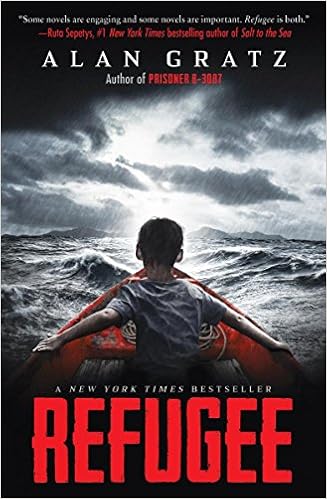
Refugee by Alan Gratz

Published by Scholastic

Summary:  Josef is a Jewish refugee from Germany headed to Cuba in 1939.  Isabel is leaving Cuba for Miami in 1994.  Mahmoud is fleeing Syria and heading for Germany in 2015.  All three of these children face enormous obstacles as they travel with their families across sea and land to try to find new homes where they will have peace and security.  Their stories are told in alternating chapters, with a cliffhanger at the end of each one.  All three stories tie together at the end.  Maps of each of the journeys are shown at the end, and a lengthy author’s note tells about the historical facts behind each tale.  There’s also a “What You Can Do” section, encouraging kids to donate money to UNICEF or Save the Children.  352 pages; grades 5-8.

Pros:  Fans of the I Survived series will find this book irresistible, with the exciting storylines and courageous kids finding their way in an unimaginably frightening world.

Cons:  Occasional language and a graphic concentration camp description may make this better suited for middle school than elementary.

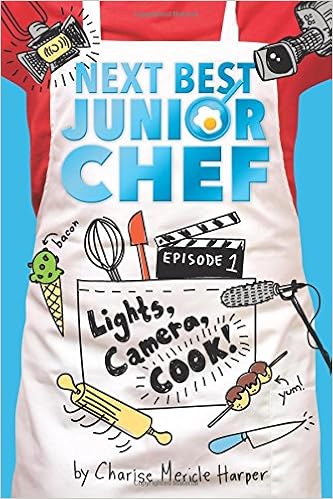
Lights, Camera, Cook! (Next Best Junior Chef) by Charise Mericle Harper, illustrated by Aurelie Blard-Quintard

Published by Houghton Mifflin Harcourt

Summary:  Rae, Tate, Caroline, and Oliver all want to be the Next Best Junior Chef, but only one can win the title.  They’ll have to survive three big competitions in which one chef will be eliminated.  Along the way are field trips and mini contests that allow them to choose kitchen gadgets or get private cooking lessons that may help them in their quests to be the best.  They’re surrounded by professional chefs and strict rules about TV behavior.  Friendships are formed and rivalries develop as the four kids try to do their best under the pressure of trying to be the best.  Includes tips for how to use a chef’s knife and a preview of book two.  192 pages; grades 3-5.

Pros:  A series based on a reality cooking show in which one contestant is eliminated at the end of each book…how has no one thought of this before?  Kids will love this quick and easy read, with plenty of illustrations and illustrations of each character talking to the reader in cartoon bubbles every few pages.

Cons:  Who will be next?  Readers have to wait until mid-February to find out!