Read at your own risk!

The Secret Dead Club by Karen Strong (Simon and Schuster Books for Young Readers, 240 pages, grades 4-7). Wednesday has always been able to see ghosts, a power she inherited from her mother, grandmother, and great-grandmother. When an encounter with a wicked ghost almost kills her, Wednesday and her mother end their extended RV trip and return to her great-grandmother’s house in Georgia. There, Wednesday finds herself drawn to two girls who have formed a secret Dead Club for those who can either see ghosts or believe that they exist. A third girl has left the club under somewhat mysterious circumstances, and a fourth member died the previous year and starts appearing to Wednesday as a ghost. Most of the women in her family have lost their ability to see ghosts when they hit puberty, so Wednesday isn’t sure how much longer she’ll hold onto her powers. When the girls in the club need her help to resolve a potentially dangerous ghostly mystery, Wednesday has to decide how much she is willing to trust them, herself, and the ghosts to try to set things right.

Full disclosure: this is the only book in this post that I actually read from start to finish. Although there was some creepy ghost stuff–including a prologue in which a grieving father becomes possessed by an evil spirit and kills his two children–a lot of the focus is on the changing nature of middle school friendships and the emotions that accompany those transitions. I saw a review that called this book the Baby-Sitters Club meets Stranger Things, and I feel like that is an apt description.

Give Me Something Good to Eat by D. W. Gillespie (Delacorte Press, 272 pages, grades 4-7). Every year, the town of Pearl, North Carolina celebrates Halloween with a big blowout, but before the night is over, a child disappears, and all the residents’ memories of that kid are wiped clear. All of them, that is, except for seventh grader Mason, who still recalls the time five years ago that his best friend Marcus vanished, and even his own mother forgot that he had ever existed. When Mason’s younger sister Meg goes missing, it’s up to him and his three friends, Serge, Becca, and Mari, to discover the town’s dark underside and rescue Meg. UnderPearl is filled with monsters, giant spiders, and a horrifying witch who controls everything and has no intention of letting Meg escape.

I started reading this book just before bed, and after two nights of bad dreams, I finally decided it was not for me. Horror fans will undoubtedly love the monsters and frightening situations the kids find themselves in, but be warned that this is a genuinely scary book that may not be for everyone.

Once They See You: 13 Stories to Shiver and Shock by Josh Allen, illustrations by Sarah Coleman (Holiday House, 192 pages, grades 4-7). Holiday House sent me a copy of this book recently. I was delighted, since Josh Allen’s other other short story collections, Only if You Dare and Out to Get You are extremely popular in my library. Fans of Alvin Schwartz’s classic Scary Stories collections will also enjoy these.

War

A Star Shines Through by Anna Desnitskaya (Eerdmans Books for Young Readers, 40 pages, grades 1-5). “We used to live in a big city,” the narrator begins. Her family kept a star-shaped lamp in their apartment window, which would welcome her home at night. But then war came, and she and her mother (the father disappears without explanation) flee to another country. Everything is new: the language, the food, the apartment, even her mom and her. One night, Mom brings home a package with cardboard, scissors, and glue, and together they make a cardboard star with a light inside. Putting the lamp in the window marks a turning point, and soon their new country is feeling more like home. Includes an author’s note telling how a one-week family vacation in Cyprus turned into a refugee situation when Russia invaded Ukraine.

The author packs a big punch with just a few words on the beautifully illustrated pages of this book. It felt a little optimistic that making a lamp would turn things around so quickly, especially with the loss of the father, whether he was killed or had to stay behind. But the story offers hope to kids forced to move due to wars and other difficulties that make them and their families refugees.

The Night War by Kimberly Brubaker Bradley (Dial Books, 288 pages, grades 4-7). When there’s a roundup of Jews living in Paris, Miriam (Miri) is captured and separated from her parents. A neighbor helps her escape, on the condition the Miri take the woman’s two-year-old daughter Nora with her. Helped by a nun, Miri and Nora are sent to a town near Tours, where an old castle stands on the border of occupied France and Vichy France. En route to the town, Miriam falls asleep and awakens to find that Nora has been taken away and sent to live with another family. Miri is placed in a convent school, joining the nuns and a few students who have stayed for the summer, and is renamed Marie to hide her Jewish identity. While there, she gets involved in a secret operation to help escaping Jews cross the border, aided by a mysterious old woman who turns out to be the ghost of former castle owner Catherine de Medici. Miriam/Marie’s last mission is to save herself and Nora, which she is able to do with the help of the friends she has made at the convent, in an exciting and daring escape. Includes a lengthy author’s note with additional historical information.

I’m on a mission to read some of the Newbery contenders, so I finally got around to this one, written by the author of some of my favorite World War II historical fiction books, The War That Saved My Life and its sequel. While it’s currently at number 3 on the Goodreads Newbery list, I confess I did not much care for it. I’m sure the circumstances of 1942 France made kids grow up fast, but Miri and her friend Beatrice were way too wise beyond their years. Their other friend Jacqueline seemed to exist mostly to show how oblivious many French people were to the suffering of their Jewish neighbors. I had kind of mixed feelings about the ghost plot twist; it was cool in some ways and made for an interesting subplot, but also felt somewhat jarring. Finally, the epilogue wrapped things up WAY too neatly for a book about the Holocaust. This book has gotten glowing reviews, though, and the history is super interesting, so take a look for yourself!

Dealing with middle school

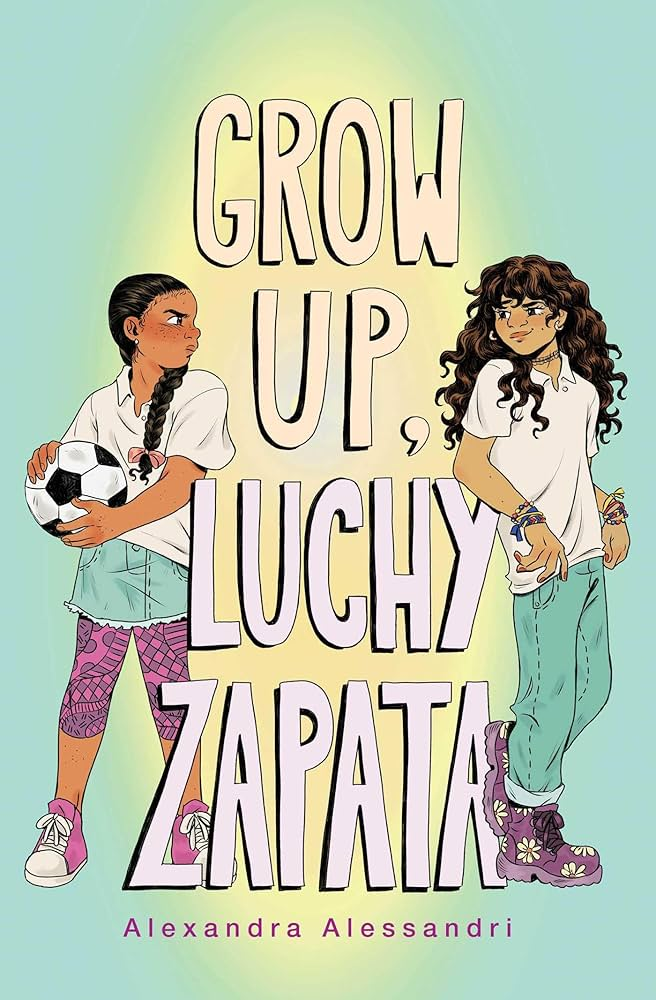
Grow Up, Luchy Zapata by Alexandra Alessandri (Atheneum Books for Young Readers, 256 pages, grades 4-7). Luchy’s excited to be starting middle school, joined by her two best friends, Mateo and Cami. Cami and Luchy are both Colombian American, and they’ve been friends since their moms met years before, but they’ve never gone to the same school. Middle school brings changes, though, and Cami, who spent the summer in Colombia, starts acting cool toward Luchy and Mateo. Luchy attempts to figure out what’s happening, first by making Cami a fancy scrapbook to remind her of their long friendship, and, when that doesn’t work, declaring war on Cami and her new friend Melissa. One act of revenge leads to another until Luchy finally does something that jeopardizes her place on the soccer team, something she’s worked hard for all fall. Even though Mateo and Luchy’s parents keep encouraging her to try talking to Cami, it takes a near catastrophe for the two girls to finally sit down and communicate about what’s been going on.

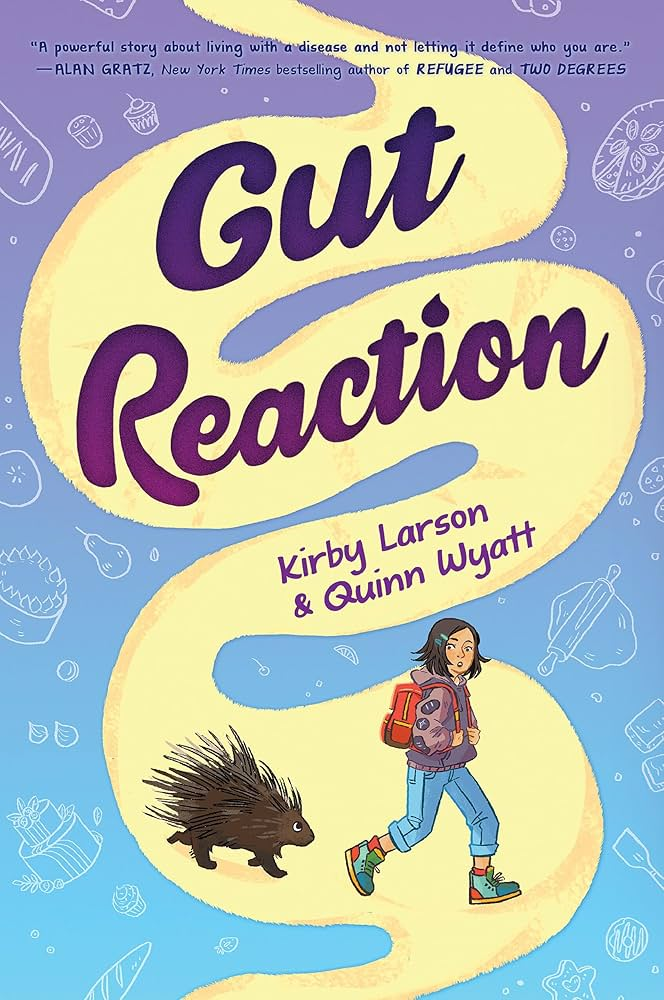
Gut Reaction by Kirby Larson and Quinn Wyatt (Scholastic Press, 272 pages, grades 4-7). Tess is starting eighth grade at a new middle school, where, after a bit of a rocky start, she finds some good friends. They support her dream of competing in the Jubilee Flour Junior Baker contest, something Tess knows her late father, a baker who taught her everything she knows, would also support. But Tess is experiencing increasingly debilitating stomach issues, and a painful episode at school lands her in the hospital. She’s devastated to get a diagnosis of Crohn’s disease and to learn that the symptoms can only be managed, not cured. Her friends help her get back on track, and she’s able to compete in the baking contest, where an unfortunate turn of events forces Tess to have to make a difficult decision.

Both of these realistic middle school books feature engaging protagonists and realistic issues. Gut Reaction is written by a mother-daughter team who drew on their real-life experience with Crohn’s disease to write sympathetically about Tess’s symptoms, diagnosis, and gradual acceptance of her illness. Grow Up, Luchy Zapata has many elements of middle school angst: changing friendships, a possible crush, academic and athletic struggles, and embarrassing parents. There are also some issues facing second-generation American immigrants Luchy, Camila, and Mateo (who is Chilean-American). Both books used plots that felt a little timeworn: the cooking/baking prodigy who competes in some kind of contest or reality show, and the friend who goes away the summer before middle school and comes back different and trying to fit in with the cool kids.

Graphic novels that root for the underdogs

We Are Big Time by Hena Khan, illustrated by Safiya Zerrougui (Knopf Books for Young Readers, 240 pages, grades 3-7). Aliya’s not happy that her family is moving from Tampa to Milwaukee just as she’s about to start high school. Although it’s nice to be close to her grandparents, she misses the Florida weather and her basketball friends. Her new Islamic school has a girls’ basketball team, but they’re not very good. A new coach arrives at the school at the same time Aliya does, and before long the girls are working harder than ever on their conditioning and teamwork. Slowly, huge losses turn into smaller losses, then wins. As the team improves, they start attracting some media attention, which more often than not focuses more on their clothing and religion than on their basketball playing. The girls learn to navigate all kinds of new situations as they slowly build a winning season and make their way to the big end-of-the-year tournament. When the season finally comes to an end, the team and their families have plenty to celebrate. Include’s an author’s note about the real-life team that inspired this book and a behind-the-scenes look at the development of some of the artwork.

This is sure to be a big hit with fans of Raina Telgemeier-inspired graphic novels. The story reminded me a little bit of Hoops, with its team of scrappy underdogs breaking barriers for girls’ sports. Their turnaround from huge losses to wins seemed to happen very quickly, reminding me of the storytelling limitations of graphic novels.

Lion Dancers by Cai Tse (Simon and Schuster Books for Young Readers, 304 pages, grades 4-7). Wei is trying to find his place in middle school, but despite academic success, he hasn’t found a place where he feels he belongs. When he literally runs into a teenager wearing a lion dance t-shirt, Wei begs him for a chance to join his team. Wei’s late father was a championship lion dancer, and Wei danced a few years back, but he quit when he had some conflicts with another boy named Hung. Hung is part of the new team as well, and Wei struggles to work with him. When Lunar New Year comes around, the team is booked solid with performances all over the city, and everyone has to pitch in to make things work. When Wei and Hung’s rivalry gets in the way of one of their dances, it threatens everything the team has worked for. Wei has to decide if he’s going to work through his problems to continue with the dance form he loves or once again walk away from it.

I struggled a little at the beginning trying to keep the various characters straight and get up to speed with lion dancing, but once I figured things out, I very much enjoyed learning more about the dance and seeing how all the interpersonal drama played out. After reading this and Lunar New Year Love Story, I am ready to attend my first lion dance performance.

New books for reluctant readers

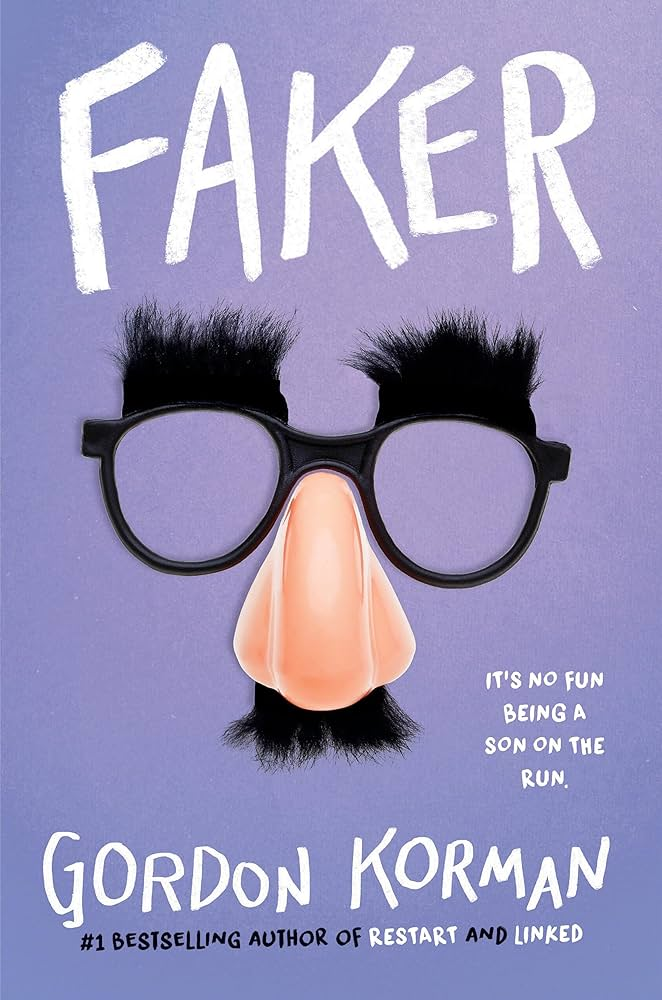
Faker by Gordon Korman (Scholastic, 224 pages, grades 3-7). Trey’s family–his father and his sister Arianna–have always been the most important people to him. They move from place to place, with their father planning a different scam in each new town, and Trey and Arianna making friends to provide Dad with connections. When people start to get suspicious, the family pulls a “Houdini,” leaving town in a hurry and hanging out at an island resort until things blow over and they can start their next scheme. But when they get to Boxelder, Tennessee, things feel different to Trey. He begins to form some real friendships, including one with a girl named Kaylee. Kaylee and her family live in the less affluent part of town, and when her father decides to invest in Trey’s dad’s latest get-rich-quick scheme, Trey is torn between loyalty to his family and guilt that Kaylee’s family will lose their life savings to his family, leaving him with some tough decisions to make.

Gordon Korman’s many fans will enjoy his latest, featuring a likable protagonist and a cast of other middle school kids who will seem familiar to readers. There’s plenty of humor, and Trey’s ethical dilemma could make for some interesting discussions. This is the second book I’ve read this year featuring a main character with an unrepentant criminal for a parent (although Trey’s father has a change of heart–sort of–at the end), which I’m finding is a premise that makes me a little uncomfortable.

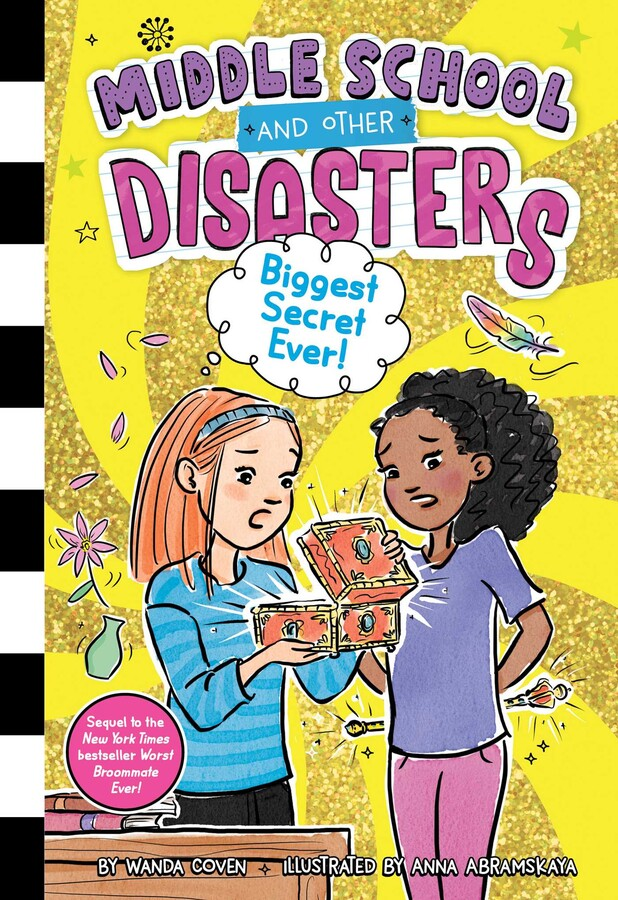
Biggest Secret Ever! (Middle School and Other Disasters, book 3) by Wanda Coven, illustrated by Anna Abramskaya (Simon Spotlight, 352 pages, grades 3-7). Heidi Hecklebeck is back, having been promoted from her early chapter books series of a decade ago to a new middle school series. I missed the series start last year, so I read the latest, which is book 3. Heidi’s a student at Broomsfield Academy, a boarding school for both magical and non-magical students. The non-magical ones don’t know that some of the kids, like Heidi, are witches and wizards. Heidi’s working on learning to read people’s thoughts, which is her special gift, and also how to use magic to remedy emergency situations, which she seems to find herself in fairly frequently. When her new friend Isabelle confides to Heidi that she’s a princess but swears her to secrecy, Heidi’s not sure she can keep from sharing the secret. Her gossipy roommate Melanie guesses what it is, and Heidi has to try to use a spell to erase just the parts of Melanie’s brain that contain the secret. After a slight hiccup, Heidi succeeds, proving herself to be a loyal friend to Isabelle and a pretty good witch as well.

I’ve never read the Heidi Hecklebeck books, but this was a fun and light middle school tale with a bit of magic thrown in. The cover has a Dork Diaries vibe, and I imagine it would appeal to fans of that series. Inside, there are plenty of illustrations with a font that resembles handwriting and that varies in size so that some pages only have seven or eight sentences. Readers who may feel daunted by the 300+ page count will find it easier going than they may have expected. If you’re looking to get some good discussion going with this book, you might want to start by asking if you’d really want to be able to read other people’s minds.

The cat’s meow

Picture Purrfect (Bodega Cats, book 1) by Hilda Eunice Burgos (Henry Holt and Company, 144 pages, grades 2-5). Told in the alternating voices of Miguel, a human boy, and Lolo, a cat, this story unfolds in Miguel’s parents’ New York City bodega. When Miguel finds a stray cat outside, he brings it into the bodega and convinces his parents to let him keep it. Lolo’s nervous at first, but eventually he feels comfortable enough in the bodega to head upstairs to the family’s apartment. He tries to be a good friend to Miguel, who’s having issues with his parents. They want him to excel in math and science, while real passion is art. Meanwhile, Lolo has worries of his own about a yellow stray cat who starts coming around the bodega. One memorable day, Miguel lies to his parents so he can go on a field trip to the Cloisters, and Lolo rescues the yellow cat right before she’s due to have kittens. After narrowly escaping disaster, Miguel finally has an honest conversation with his parents that results in a happy ending for all.

With a relatively low page count and plenty of illustrations–including Miguel’s comic book art–this is an engaging start to a new series for kids moving up to chapter books. Miguel’s family issues are relatable, with his hardworking Dominican immigrant parents and some interesting extended family members. Some kids may struggle with the alternating points of view, but it’s fun to get things from a cat’s perspective. A bodega full of newborn kittens in the last chapter should make for an interesting segue to book 2, due out in the spring.

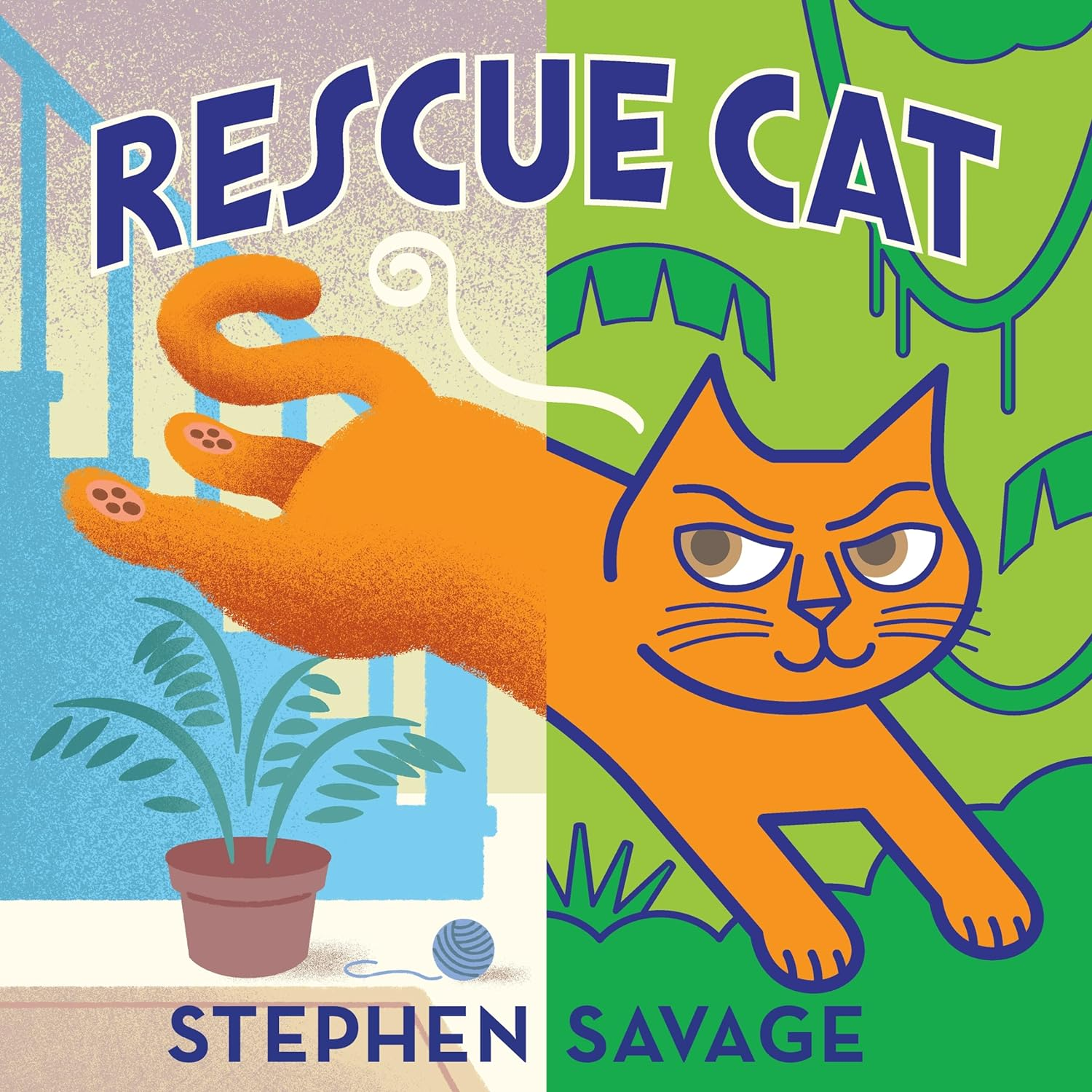
Rescue Cat by Stephen Savage (Roaring Brook Press, 32 pages, ages 3-7). Butterscotch lives a cushy life, but it wasn’t always that way. Before she became a rescue cat, she lived on the streets, alone and scared. Now she finds new meaning in the term rescue cat: when she sees a lion cub being hunted by a hungry crocodile on TV, she jumps through the screen and roars at the crocodile. He chases Butterscotch and the cub, but they leap back to the safety of the living room. The cub plays there for a few minutes before returning to his TV family. Butterscotch knows that she is a brave rescue cat as she settles down for a nap with her toy crocodile.

Young readers will enjoy this cute story and be inspired by Butterscotch’s courage, even when she’s feeling scared. The “rescue cat” double meaning makes for some fun wordplay.

Time travelers

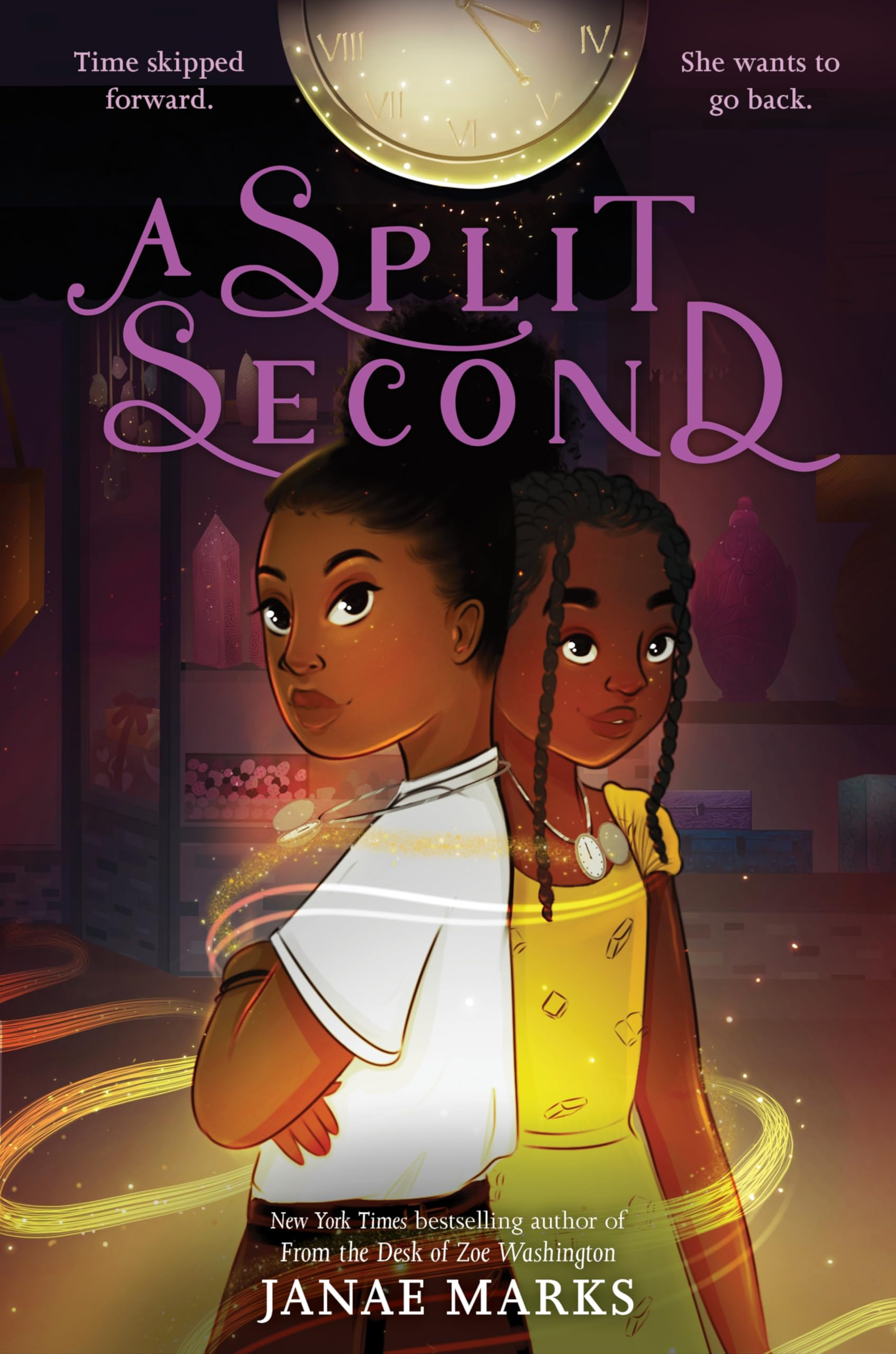
Countdown to Yesterday by Shirley Marr (Simon and Schuster Books for Young Readers, 272 pages, grades 4-7). James is shocked to learn that his mom is moving out into her own apartment. As he struggles to navigate his new custody arrangements, he recalls “Things That Will Never Happen Now That My Parents Are Not Together”: six happy memories of his family that he wishes he could go back to and never leave. When he meets a slightly mysterious girl named Yan who claims she has a time machine, he’s ready to travel back to the way things were. At first, it seems like she can’t make good on the claim, but one day, she and James travel into an old photo of his dad’s. From there, they make plans for James to visit all six of his happy memories and decide which one he wants to stay in. But when he arrives at each one, he discovers details he had forgotten that reveal how unhappy his parents were before their breakup. Ultimately, James decides that the present moment is the only one where he–and everyone else–truly belongs.

I’m leaving out quite a few fun details in my summary: there’s an intense cake competition/school fundraiser, a class bully whose mother is James’s mom’s best friend, some interesting controversy over the David Bowie song “Space Oddity” and the fate of Major Tom, and the touching friendship between Yan and James, which explores the Chinese immigration experience in Australia. This book is by an Australian author, so there may be a few words or situations that are unfamiliar to American readers.

The Things We Miss by Leah Stecher (Bloomsbury Children’s Books, 288 pages, grades 4-7). J.P. heads to her neighbor’s tree house after her first day of seventh grade, looking for a refuge after enduring fat-shaming from some of the other girls and her gym teacher. What she finds there is a portal that allows her to skip over three days of her life. When she walks through the door, she emerges three days later, having been present to others but with no memories of anything that happened. She confides to her best friend Kevin, a fellow sci-fi enthusiast, about her time-travel adventure. At first he’s enthusiastic and works with J.P. to test various theories about the portal, but it doesn’t work for him, and as J.P. starts using it more to get through tough times in her life, Kevin pulls away, telling her that she’s not there for him the way a friend should be. Not only that, but J.P. starts discovering there are good and important parts of her life that she is missing out on. When she misses out on a crucial interaction with her sick grandfather, J.P. realizes that each moment in life is too important to give up, even if that means having to deal with the difficult times.

This story is thought provoking and will resonate with anyone going through difficult times. It raises interesting questions about life and would make a great book discussion read. I do always find myself poking holes in time-travel theories, and I also felt like a little humor would have been nice to mix in with some of the heavier topics. Takeaway for time travelers from both of these books: there’s no time like the present.

Summer camp

Gamerville by Johnnie Christmas (HarperAlley, 256 pages, grades 3-7). Max feels like he doesn’t need friends when he immerses himself in the world of video games, and he’s excited to qualify for the big Gamerville championship. In some unfortunate timing, his mother signs Max up for Camp Reset, a monthlong summer camp designed to get kids unplugged and back to nature, which takes place the same time as Gamerville. The gaming venue is right across the lake from the camp, and Max spends his days plotting an escape. His nemesis is a girl named Zanzi, great-great-granddaughter of the camp’s founder, who eschews all technology. Surprisingly, the two eventually become friends, along with a third boy, Dylan, who has anger issues and has been shunned for being a bully. When they finally succeed in getting Max to Gamerville, he ends up using the lessons he’s learned about teamwork and friendship to make some surprising decisions at the competition.

Although this lacked the interesting historical flashbacks that made Johnnie Christmas’s Swim Team one of my favorites, it’s an engaging story with interesting characters and some good messages about friendship and finding a balance with technology. I’m sure you can introduce this as “a graphic novel about a gamer,” and kids will be clamoring for it.

Camp Prodigy by Caroline Palmer (Atheneum Books for Young Readers, 256 pages, grades 4-7). Tate is just starting viola, and they’re feeling unsure about their musical talents as well as their nonbinary identity, which is still a secret. Their original inspiration for learning viola was another nonbinary violist named Eli; when Tate went to see Eli’s debut concert, Eli got stage fright and never performed. The two meet at a summer music camp, Camp Prodigy, where they both struggle to find a balance between a love of music and a quest for perfection. Other campers help them to have fun or to perfect their playing. By the end of camp, they’ve both come a long way toward discovering what works for them, Tate has come out to friends and family, and Eli has loosened up on their perfectionism. Several pages at the end show how Caroline Palmer created the art for the book.

Kids are going to be begging their parents to go to camp after a handful of graphic novels this summer that portray it as a middle school paradise for making friends and experiencing personal growth. This one is an excellent addition, with two loveable nonbinary characters and a host of other interesting kids (I had a little trouble keeping track of them all) that make Camp Prodigy a fun and rewarding time for everyone.

Mystery, fantasy…it must be summer

Mystery and fantasy aren’t my favorite genres, so I usually hold off on reading them until I have a little extra mental energy to devote to reading…which, not surprisingly is during summer vacation.

Medusa (Myth of Monsters, book 1) by Katherine Marsh (Clarion Books, 288 pages, grades 4-7). Ava tries to control her anger using the techniques that her mother has taught her, but when class bully Owen goes too far, she loses her temper, and Owen mysteriously freezes. The next day, Ava and her older brother Jax are suddenly told they’ll be starting immediately at their mother’s alma mater, the Accademia del Forte in Venice. It’s a startling enough change, but things really get weird when Ava learns on the first day that the Greek myths she loves are all true, gods and goddesses still exist, and that the students are all descended from monsters, sent to the school to be taught to control their powers. With her curly hair and freezing power, Ava soon discovers, to her dismay, that her ancestor is Medusa. But a group of faithful friends help her to discover the misogyny of Greek mythology and that many monsters and other mythological beings–especially the female ones–have been misrepresented. When Ava and her friends stand up to the gods, chaos ensues, and they find themselves one step ahead of angry deities, looking to discover the truth about Medusa and Ava’s family.

Fans of Rick Riordan will love this Greek mythology-inspired fantasy, which features engaging kid characters, each with an emerging superpower, and plenty of white-knuckle adventures. I loved the feminist message and the reimagining of many of the myths, although it occasionally felt a little heavy-handed. Nevertheless, it’s a fast-paced and inspiring story, and it appears that readers can look forward to at least one sequel.

The Cookie Crumbles by Tracy Badua and Alechia Dow (Quill Tree Books, 320 pages, grades 4-7). Best friends Lucy and Laila dream of attending high school at Sunderland, a private school where Lucy hopes to hone her journalistic skills while Laila gets to explore her passion for baking. When Laila’s given the chance to compete in the Golden Cookie Competition with a grand prize of a free ride at Sunderland, Lucy goes along to write about the contest with the hope of improving her scholarship chances. Five competitors, two chefs, and the one of the chef’s assistants are the only occupants of Sunderland as the contest begins. Laila’s in the lead when Chef Remi takes a bite of her cookie and collapses. He ends up in a coma in a nearby hospital, with Laila the prime suspect in his attempted murder. As Lucy and Laila investigate, they learn that everyone had a reason for wanting to get rid of Chef Remi. When a storm strands them at the school, it soon becomes obvious that unless they can identify the would-be killer, the two of them may be in danger as well.

This is a classic mystery setup: a group of strangers is brought together in an unfamiliar location, a crime is committed, and the detective(s) must figure out who that criminal is before it’s too late. Laila and Lucy’s alternate-chapter narrations keep things moving along, and the reality show-style baking competition adds to the fun.

Marching to the beat of your own drum

Frankie D., Vegan Vampire by Sally and Brian Dutra (Kids Can Press, 192 pages, grades 2-5). Frankie and his family have moved from Transylvania to the U.S., hoping, like so many immigrants before them, for a better life. In their case, that life is eternal, since they’re a family of vampires. Being immortal is just the beginning, as Frankie and his family struggle to hide their fangs, their ability to turn into bats, and the fact that they’re used to sleeping during the day (and in coffins). Switching to a healthy vegan diet has fortunately dampened their taste for blood, and Frankie enjoys starting fourth grade and making new friends. He suspects that one classmate, Eddie, might be a troll, but as he learns more about Eddie, he comes to realize why he’s such a bully. The family successfully negotiates having one of Frankie’s new friends and his family to dinner, and Frankie has fun at a human birthday party, but the grand finale comes with the school concert, when Frankie and Eddie save the fourth-grade performance. Pumped after this success, Frankie decides to fly home and burn off some of his excess energy, only to realize that Eddie has seen him transform into a bat.

There’s plenty of humor in this de-fanged vampire story, and the last page makes me hopeful that there will be a sequel. It’s an illustrated chapter book, but at close to 200 pages, I wouldn’t exactly call it an early chapter book. Still, I think it could find an audience with fluent readers in the earlier years of elementary school, and maybe older kids who are reading a bit below grade level.

Band Camp #1: All Together Now! by Brian “Smitty” Smith (little bee books, 80 pages, grades 1-4). This early graphic novel gives summer camp a new twist: all the campers are musical instruments. Bunk J, a.k.a. Junk Bunk, the cabin that always loses all the competitions, has four unique residents this summer: Trey the triangle, Kaylee the ukelele, Zook the kazoo, and Cordelia the accordion. Each instrument has a unique personality and well-defined likes and dislikes, but they’re united in their determination to put an end to the Bunk J legacy. In a relay race at the end of this book, they combine their talents for an unexpected victory. Camp’s not over yet, though, and book 2 is due out in September.

As a veteran of eight–yes, eight!–band camps, I love this premise and was amazed at how Smith was able to create instruments with real personalities. Early readers will get a kick out of the story and illustrations. The ending seemed abrupt, and I kind of wish the whole camp session had been included in a single volume.