The Book of Turtles by Sy Montgomery, illustrated by Matt Patterson

Published by Clarion Books
Summary:  Naturalist Sy Montgomery writes engagingly about turtles, starting with descriptions of their anatomy and evolution.  She describes turtle species who hold the records for most colorful, stinkiest, fastest, largest, and more.  There are celebrity turtle profiles and information on how turtles communicate.  Turtles, protected by their shells, have survived for more than 200 million years, but now many species are endangered due to human activities.  The final few pages tell readers different ways they can help them survive.  Includes a glossary, bibliography, and list of resources.  40 pages; grades K-4.

Pros:  Montgomery has a knack for focusing on facts and information that will be of most interest to readers.  The acrylic paintings look almost like photos and show incredible details of a wide variety of turtles.  Kids who already love turtles will be thrilled, and others may become fans after reading this book.

Cons:  I wish this book had been around during my daughter’s decade-long obsession with turtles.

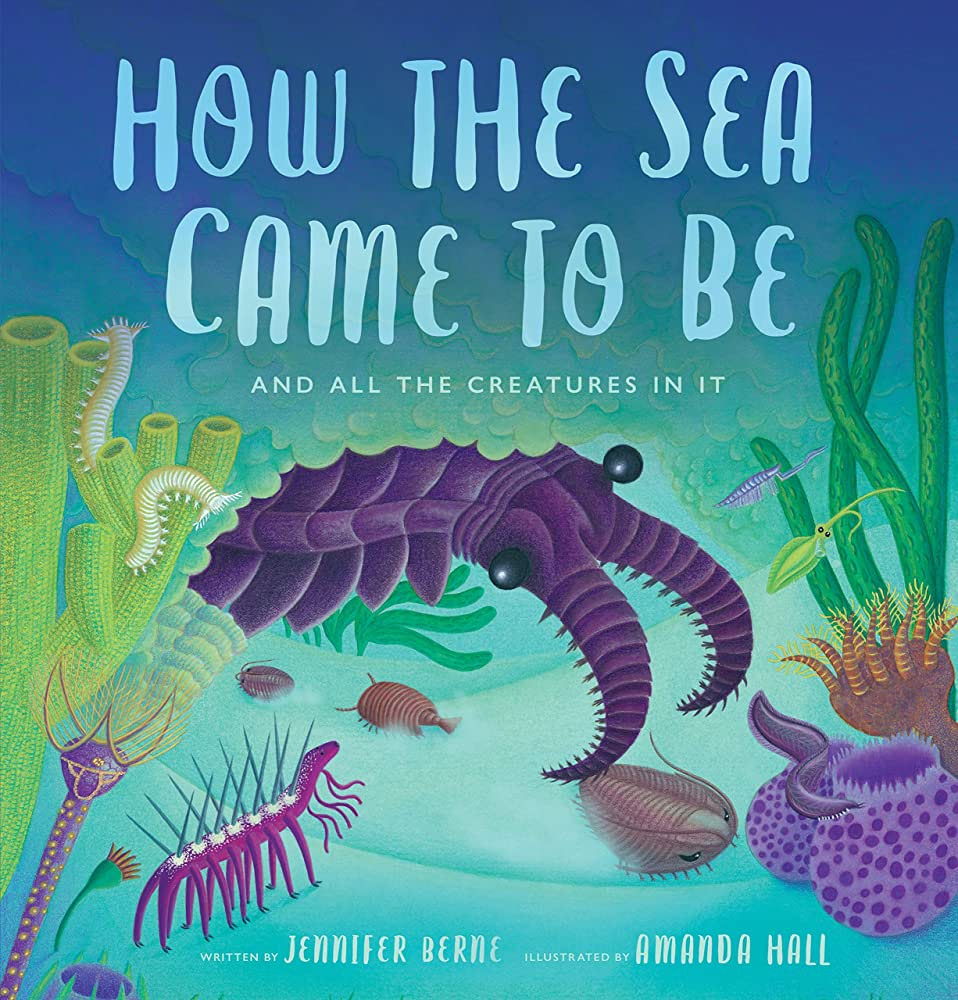
How the Sea Came to Be (And All the Creatures In It) by Jennifer Berne, illustrated by Amanda Hall

Published by Eerdmans Books for Young Readers

Summary:  Rhyming quatrains describe the history of the sea in three parts: the birth of the sea, the birth of life, and the sea from then until now.  All are accompanied by colorful illustrations that sometimes show the sun-dappled waters of the sea and other times take readers down into the black ocean depths.  Includes notes from the author and illustrator; two pages of ocean creatures that include illustrations and a paragraph of information about each; a four-panel gatefold timeline showing seven eras of the Earth’s history; key terms and concepts with definitions; and two pages of additional resources. 56 pages; grades 1-5.

Pros:  A spectacular nonfiction book that should be considered for a Sibert award.  The rhyming text is both catchy and impressive, making this a great choice to read aloud, and the illustrations are truly spectacular, conveying both the powerful forces that created the seas and the incredible diversity of life within them.  The timeline is a masterpiece, and the rest of the back matter makes this an excellent resource for research.

Cons:  I would have liked the timeline to have also been incorporated into the text to show the eras of each of the three parts.

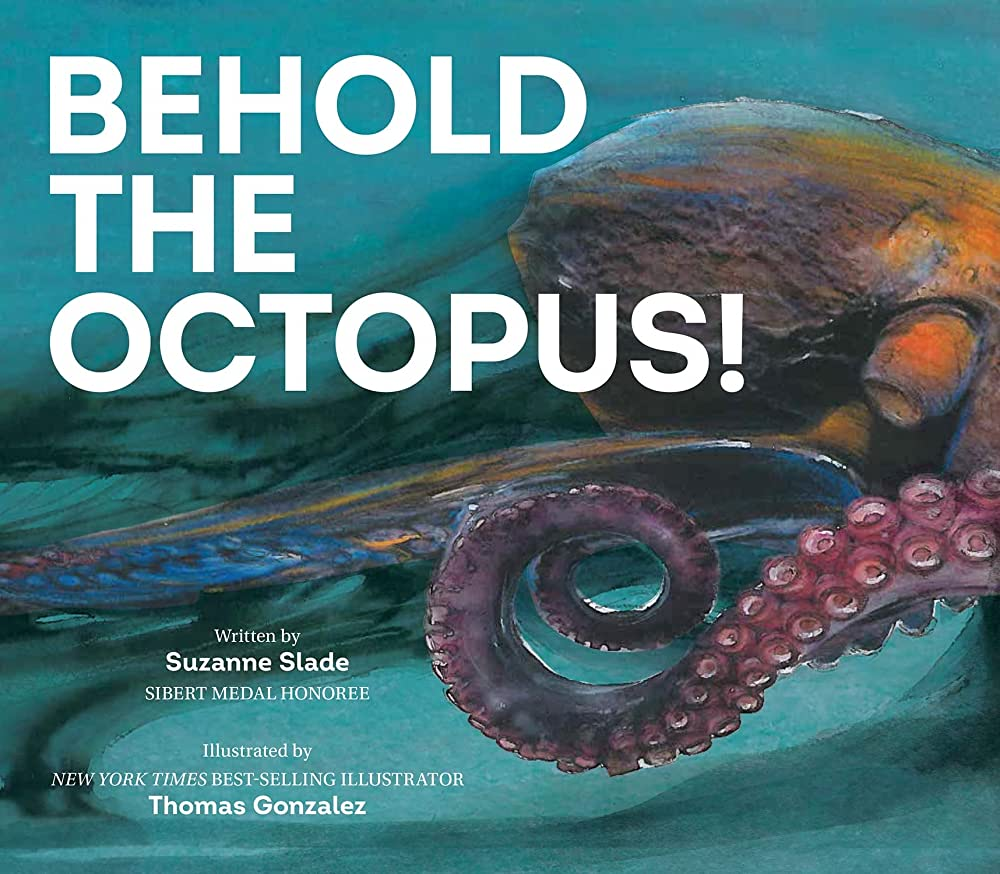
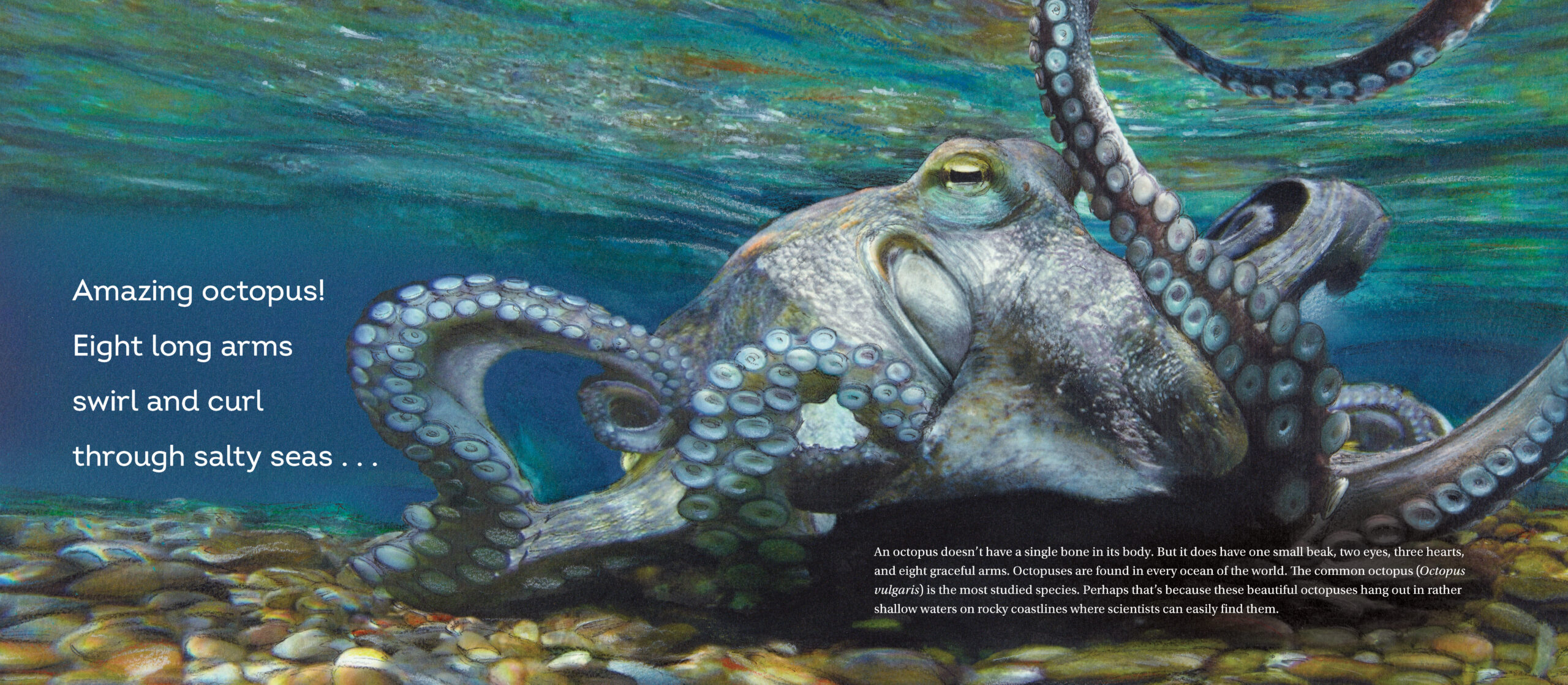
Behold the Octopus! By Suzanne Slade, illustrated by Thomas Gonzalez

Published by Peachtree

Summary:  The amazing octopus is introduced in a series of two-page spreads, each one portraying a different species of octopus with a verb (hunting, changing, graphing) or adjective (luminous, dangerous) and a paragraph of information inspired by that word.  Includes additional information about octopuses, several photos, a list of resources, and a bibliography.  32 pages; ages 4-8.

Pros:  This visually appealing book makes an excellent octopus introduction for preschoolers but provides enough information and back matter to make it a good research resource for older kids. Fans of the Candace Fleming/Eric Rohmann books, especially Giant Squid, will want to check this out.

Cons:  The last two very cool-looking octopuses in the photos at the end aren’t identified.

Contenders: Two Native Baseball Players, One World Series by Traci Sorell, illustrated by Arigon Starr

Published by Kokila

Summary:  The story opens with a key moment of the 1911 World Series: Charles Bender of the Philadelphia Athletics pitching to John Meyers of the New York Giants, who hits a double, then goes on to score the winning run of Game One.  Both Charles and John were from Native Nations, and the book goes back to trace the stories of how each one got to play in the World Series.  Charles grew up on the White Earth Reservation in Minnesota before being sent to an Indian boarding school in Philadelphia.  John’s childhood was spent on the Cahuila reservation in California.  Each endured poverty and racism as they pursued their love of baseball and eventually wound up in the major leagues.  Together, they played in nine World Series; Charles was elected to the Baseball Hall of Fame in 1953, and both were inducted into the American Indian Hall of Fame when it opened in 1972.  The book ends with a list of Native MLB players today, and the racism that’s still present with racist team mascots.  Includes an author’s note, timeline, and list of sources.  48 pages; grades 1-5.

Pros:  A fascinating look at two men who faced hardship and racism throughout their lives but rose above it to become excellent athletes who exemplified sportsmanship and teamwork.

Cons:  Kids I work with seem to have no interest in professional baseball these days.

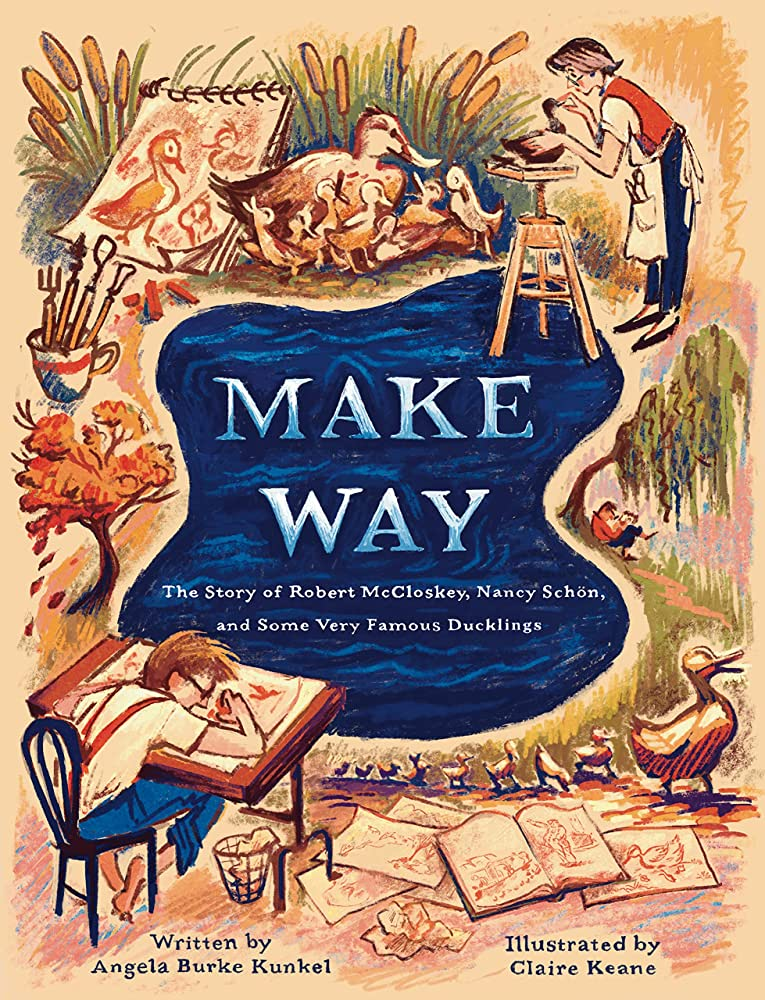
Make Way: The Story of Robert McCloskey, Nancy Schön, and Some Very Famous Ducklings by Angela Burke Kunkel, illustrated by Claire Keane

Published by Random House Studio

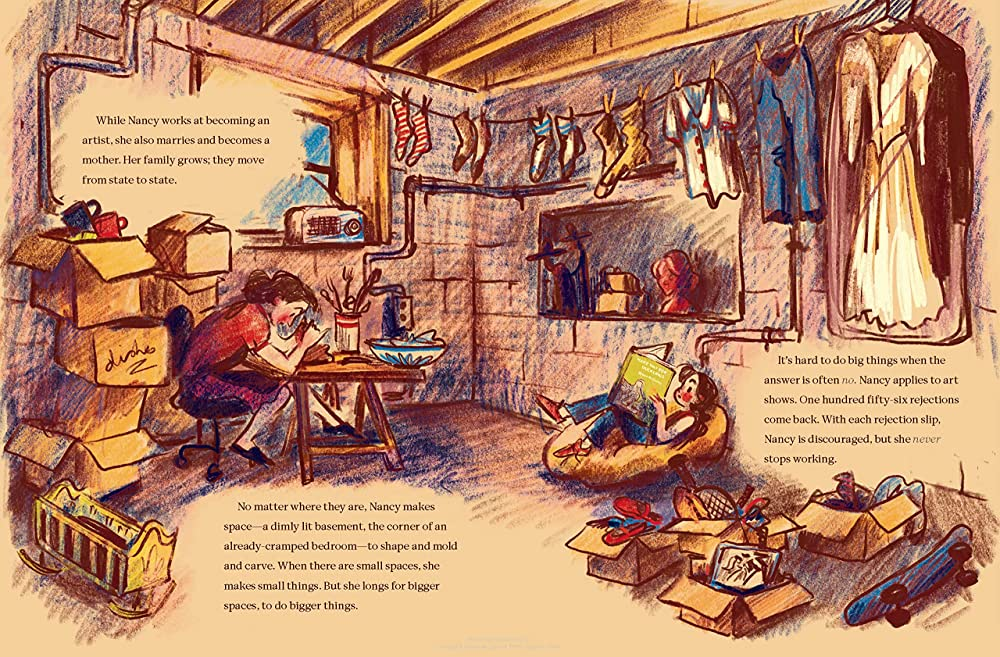
Summary:  Robert “Bob” McCloskey spent his childhood in Hamilton, Ohio, his active mind and hands always creating.  Nancy Schön spent hers–many years later–in Newton, Massachusetts, where she found solace in working with clay in art class.  Bob moved to Massachusetts to study art, and eventually wrote the classic Make Way for Ducklings.  Nancy struggled with her art for years, receiving one rejection after another, before being inspired to create a sculpture of Bob’s ducklings.  It wasn’t an easy process, but she was finally ready to unveil her project to Bob, who gave it a hesitant seal of approval.  When he saw kids interacting with the ducks, he became more enthusiastic.  The statues were installed in October 1987, and you can visit them in the Boston Public Garden today.  Includes an author’s note, timeline, and bibliography.  48 pages; ages K-4.

Pros:  A heartwarming story of two artists and the famous book and statues they created, with cozy illustrations that are reminiscent of Robert McCloskey’s books.  

Cons:  There’s a photo of several of the ducks (wearing rainbow sweaters for Pride) with the author’s note, but it would have been nice to include a photo of the entire family.

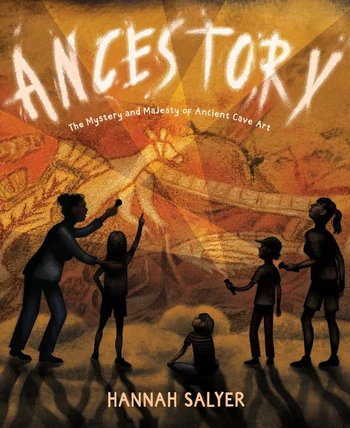
Ancestory: The Mystery and Majesty of Ancient Cave Art by Hannah Salyer

Published by Clarion Books

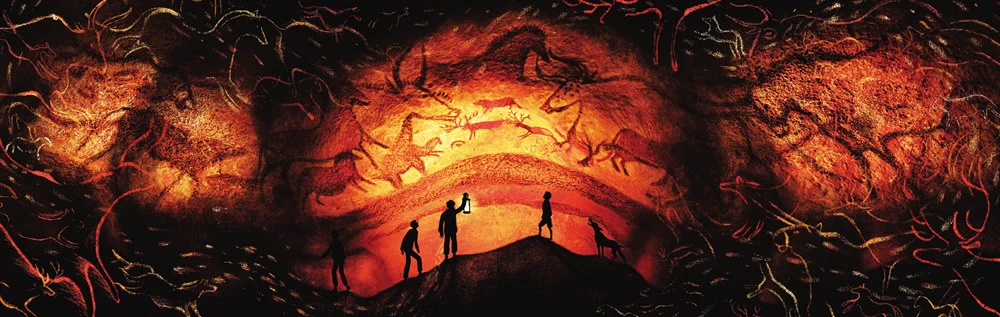
Summary:  All over the world, ancient rock paintings, drawings, and etchings have been discovered.  Who made them?  How did they create the artwork?  This book looks at the answers to some of those questions, showing some of the works and looking at the materials ancient people might have used to make them.  A gatefold spread shows an amazing cave painting illuminated only by the lamps of the people who are looking at it.  The art is part of our “ancestory”–the story of humanity that continues with our own lives.  Includes a site map showing where rock art can be found around the world; the story of the discovery of the Lascaux Caves; an author’s note; a glossary; a timeline; and resources for further investigation.  48 pages; grades 2-5.

Pros:  Budding archaeologists will find this book fascinating and will want to dive into the additional resources to learn more.  The illustrations are gorgeous, using light and dark to highlight the artwork.

Cons:  I was curious to know if the art shown in the illustrations was based on real art and, if so, I wish there had been some labels to tell where it could be found.

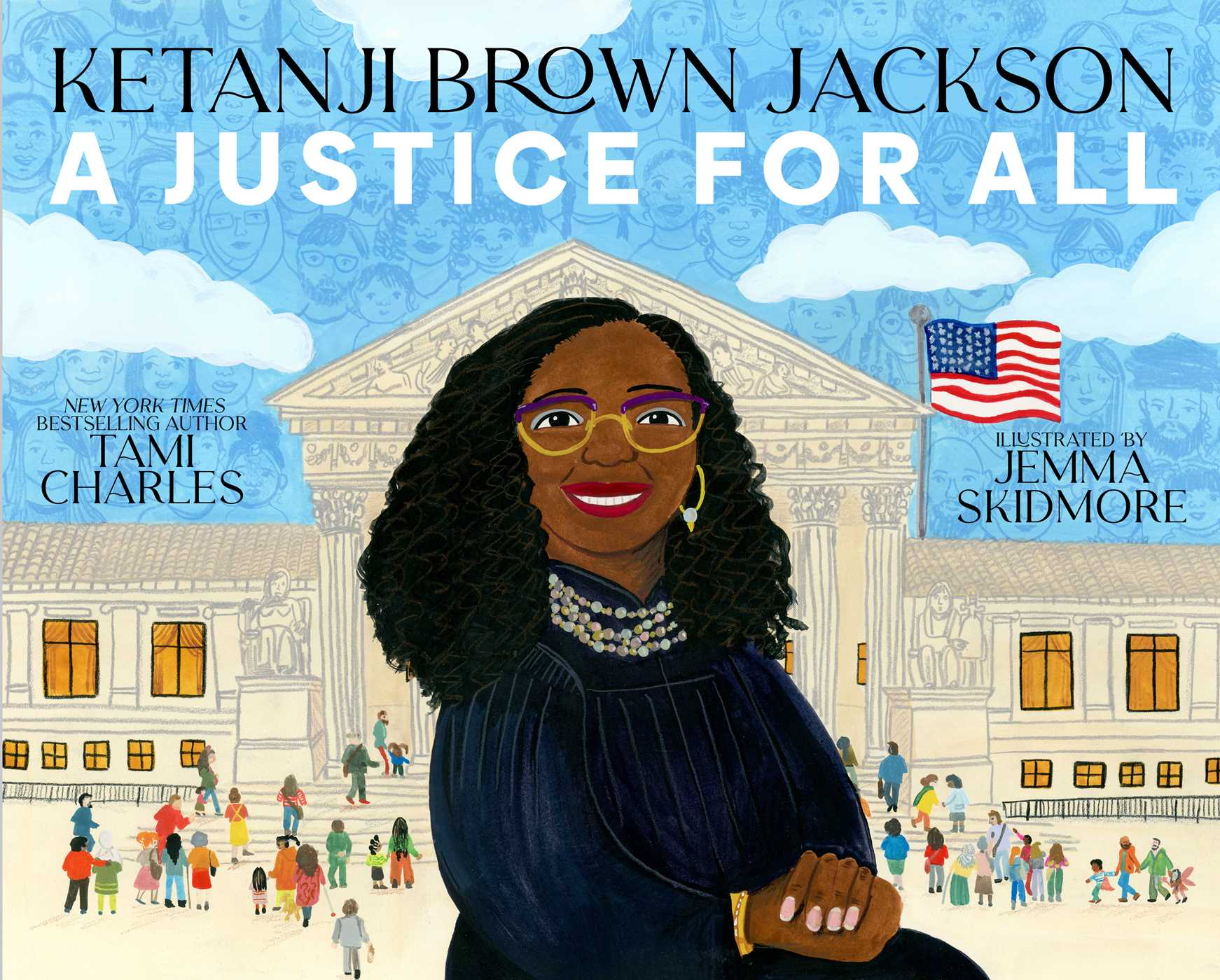
Ketanji Brown Jackson: Justice for All by Tami Charles, illustrated by Jemma Skidmore

Published by Simon and Schuster Books for Young Readers

Summary:  “Every dream begins with the smallest step.”  A young girl visits the Supreme Court Building with her mother, where they see statues of the 115 justices, only six of them women, and none of those women Black…until now.  The story of Ketanji Brown Jackson’s life is told, along with the story of the ancestors who lived in Africa, then were enslaved and forced to come to America.  There’s also the story of her parents, who attended segregated schools and became the first in their families to graduate from college.  Important civil rights cases and other Black female lawyers and judges that helped Ketanji get to the Supreme Court are woven into the narrative.  “And now,” says the girl, “because of them, because of her, I know one day I will and certainly can!”.  Includes an author’s note with additional information, a list of important dates, and facts about the important people and history shown in the art.  40 pages; grades K-5.

Pros:  Like All Rise by Carole Boston Weatherford, this picture book biography of Ketanji Brown Jackson shows not only her own hard work and determination to overcome racist and sexist obstacles, but also the people who came before her that made her rise possible.  The poetic text and illustrations convey big ideas but are presented in ways that make them easily understood by younger readers.

Cons:  While the author’s note mentions how she was inspired by a photo of Brown’s daughter Leila Jackson looking at her mother with loving pride, the photo is not in the book.

Woven of the World by Katey Howes, illustrated by Dinara Mirtalipova

Published by Chronicle Books

Summary:  As a child learns how to weave from a master, the two of them take a tour through history to look at how weaving has played a role in many past cultures.  From the “silken threads” of ancient China to the “backstrap loom tied to a tree” of nomadic tribes to the “trail of yarn” of immigrants moving to new countries, there are weaving traditions from all around the world.  The final page uses a weaving metaphor for life, with patterns unfolding as the work is done.  Includes additional information on weaving tools and the various cultures described, as well as notes from the author and illustrator.  44 pages; grades K-5.

Pros:  Anyone with even a passing interest in weaving will appreciate the excellent rhyming text and beautiful patterned illustrations, as well as the history lessons from both the main story and the back matter showing how weaving has been a part of so many people and places in history.

Cons:  I had a little trouble figuring out which description in the back matter went with which pages in the main text.

The Story of the Saxophone by Lesa Cline-Ransome, illustrated by James E. Ransome

Published by Holiday House

Summary:  Although the saxophone is known for its role in American jazz music, its story starts in 19th-century Belgium with a young man named Joseph-Antoine Adelphe Sax.  The son of an instrument maker, Adolphe was curious and inventive.  He loved creating new instruments and decided that symphonies and marching bands needed one whose volume was between a clarinet and a trumpet.  The result, the saxophone, was mostly met with disdain or even downright hatred until the French composer Hector Berlioz fell in love with it.  Soon, the saxophone was sweeping through regimental bands all over Europe.  When France went to war with Mexico in 1861, a member of the Mexican Cavalry Band got his hands on a saxophone and eventually brought it to New Orleans, where jazz musicians embraced it and continue to do so today.  Includes portraits of jazz saxophonists on the endpapers.  40 pages; grades 1-5.

Pros:  This would make an excellent addition to a music library, and budding saxophonists will find the history of their instrument inspiring.  James Ransome’s illustrations bring the various characters and time periods to life.

Cons:  I was looking forward to additional information about Sax and his instrument, with maybe a timeline and additional resources, but there were none of those things.

How Old Is a Whale? Animal Life Spans from the Mayfly to the Immortal Jellyfish by Lily Murray, illustrated by Jesse Hodgson

Published by Big Picture Press

Summary:  From the mayfly (5 minutes to 24 hours) and the honeybee (5 to 7 weeks) to the glass sponge (11,000 years) and the immortal jellyfish (in some sense, forever), this book takes a look at the lifespans of a wide variety of animals.  Each two-page spread shows the animal in its habitat with several paragraphs of information about the it over the course of its lifespan.  The introduction raises interesting questions about lifespans, and the final two pages show all the animals with a list of where to find them in the book.  64 pages; grades 1-5.

Pros:  This engaging book will intrigue all kinds of animal lovers.  I found the animals with the shortest and longest lifespans to be the most fascinating, but all of them had some pretty interesting information.

Cons:  One of my favorite books to read to kids is Steve Jenkins’s Biggest, Strongest, Fastest, which states that the animal that lives the longest is the Galapagos tortoise, with a lifespan of 150 years.  This book listed animals that live even longer.