Shell Beak Tusk: Shared Traits and the Wonders of Adaptation by Bridget Heos

Published by HMH Books for Young Readers
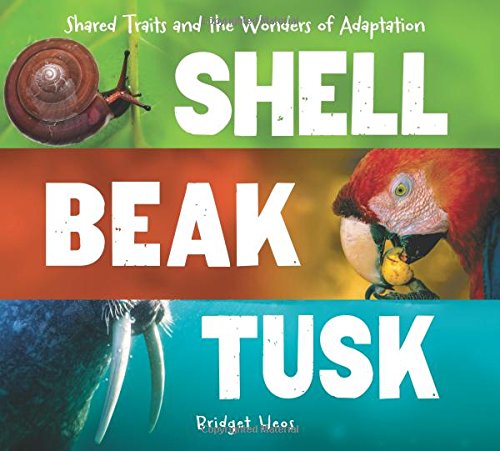
Summary:  Porcupines and echidnas both have spiky spines.  Turtles and snails both have shells.  Yet these animals aren’t related to each other, and, in the case of the porcupine and echidna, don’t live on the same continents.  Animals often evolve with shared traits, even if they’re not closely related.  Each two-page spread shows a photograph of both of the animals with a paragraph about that animal and the trait the two share.  The first and last page give additional information about adaptation and evolution.  Includes a pretty extensive bibliography and an index.  32 pages; grades 1-4.

Pros:  The large, colorful photos provide a draw to pick up this book.  The idea of shared traits is an interesting concept that could be extended by having kids think of and research other animals who have shared traits.

Cons:  The writing and format are pretty straightforward, and may not have as much appeal as some flashier books about animals.
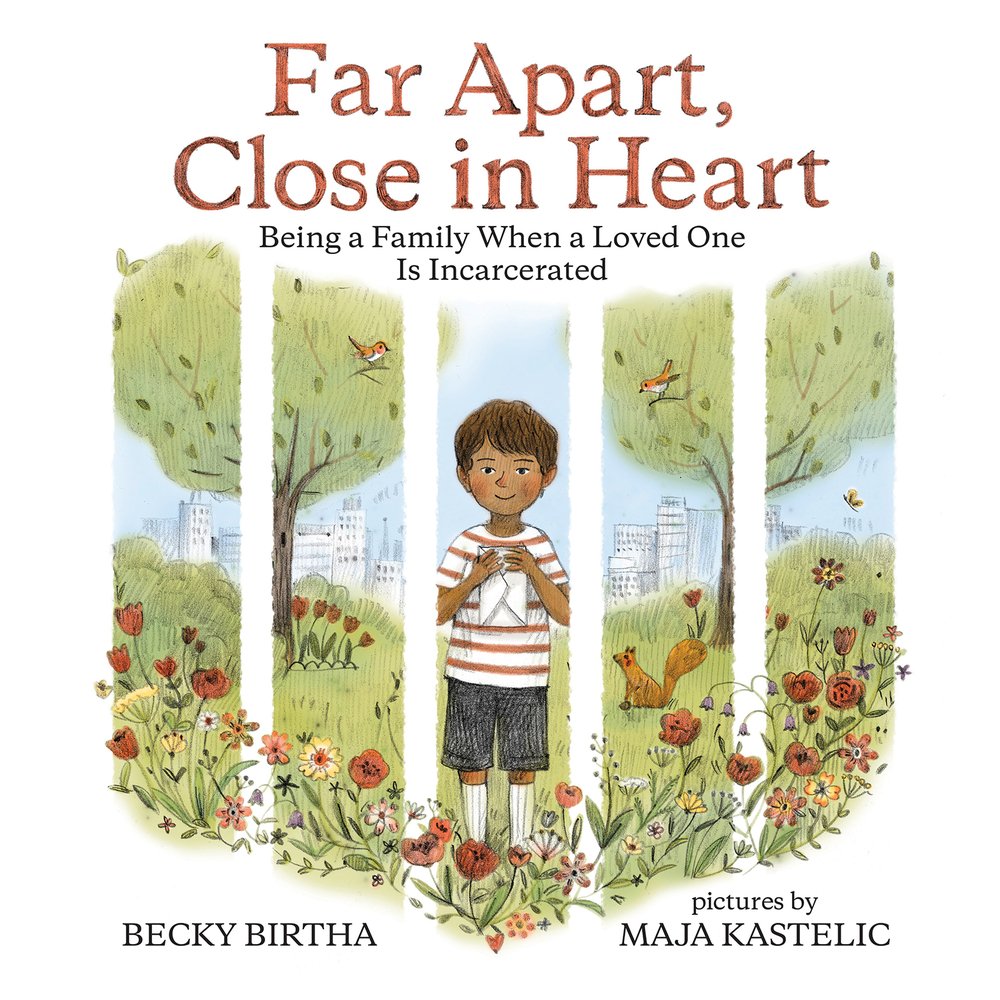
Far Apart, Close in Heart: Being a Family When a Loved One is Incarcerated by Becky Birtha, illustrated by Maja Kastelic

Published by Albert Whitman and Co.

Summary:  What does it feel like to have a parent in jail, and how do you deal with those feelings?  The children in this book all react differently to their parents’ incarceration.  They feel scared, angry, and confused.  One girl wonders if it was her fault her mom went to jail.  A boy’s mom begs him not to tell anyone about his dad, so he stops talking altogether.  Another girl’s family is torn apart when her mom gets arrested and sent to jail, just like her dad.  Kids are encouraged to share their feelings with other adults in their lives, and to try to stay in touch with their incarcerated parents through visits, or, if that’s not possible, phone calls and letters.  One mom writes to assure her daughter that, “You and I may be far apart, but you’re always close to me in heart.”  Includes an author’s note and tips for adults from the National Resource Center on Children and Families of the Incarcerated.  32 pages; ages 4-8.

Pros:  A useful and engaging book to help kids feel more accepting of having a parent in prison, and to learn how to deal with their feelings about it.

Cons:  With nine kids featured, there were a lot of people to keep track of in such a short book.

The Quilts of Gee’s Bend by Susan Goldman Rubin

Published by Harry N. Abrams

Summary:  In 1845, plantation owner Mark Pettway moved his plantation to Gee’s Bend Alabama.  When the Civil War ended, the former slaves from that plantation stayed and formed a community that still exists today.  The women of Gee’s Bend have made quilts for generations, primarily to keep warm in the drafty cabins they lived in on the plantation, but also as a form of creative expression.  The history of this community and their quilts includes a visit from Martin Luther King, Jr. and participation by many in the Civil Rights movement.  The quilts were “discovered” in the 1960’s, and the women formed a collective that for a few years produced items to be sold in Bloomingdales and Saks Fifth Avenue.  In 2002, art collector Bill Arnett helped organize a quilt exhibit at New York City’s Whitney Museum, attracting record-breaking crowds.  The acclaim has helped the women to see their work as an art form that reflects the history of their unique community.  Includes instructions for making a quilt square, bibliography, and index.  56 pages; grades 5-8.

Pros:  The story is fascinating, but the real attraction of this book is the gorgeous full-page color photos of the quilts.

Cons:  The photo on page 8 appears to have been mislabeled with the wrong date.

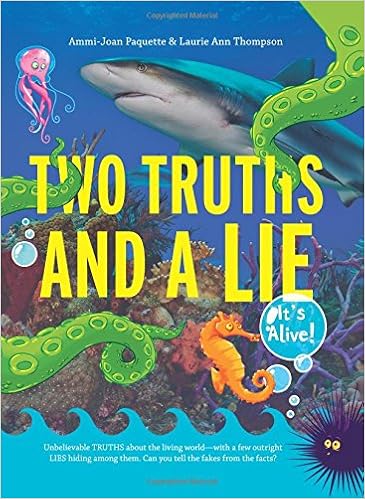
Two Truths and A Lie: It’s Alive! by Ammi-Joan Paquette and Laurie Ann Thompson, illustrated by Lisa K. Weber

Published by Walden Pond Press

Summary:  “Two truths and a lie” used to be a dinnertime staple in our family, as I tried to ensnare my hapless young children into believing a convincing-sounding falsehood about my day.  The co-authors of the first entry in this series use their powers for good, telling three brief tales from the natural world, only two of which are true. For instance, in the first section, there are stories about a plant whose roots sometimes resemble a person, a forest whose trees all sprout from the same root system, and the secret lives of plants (how they learn and communicate).  Turn to the back to learn that the first one is false, although it’s based on pictures that can be found on the Internet.  Other chapters delve more into plants, then move on to animals and humans.  These authors are serious about doing good research, as they include a research guide and a 17-page bibliography.  Also includes an index.  176 pages; grades 3-7.

Two pros and a con:  This is a great resource to use to encourage critical thinking, particularly about what can be found on the Internet.  Both the writing style and illustrations are easygoing and engaging.  The story about the headless chicken that lived for years is just gross, although (spoiler alert) true.

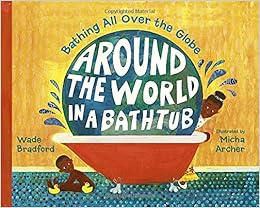
Around the World in a Bathtub: Bathing All Over the Globe by Wade Bradford, illustrated by Micha Archer

Published by Charlesbridge

Summary:  “Bath time!” says the mama.  “No, no!” says the boy.  “Yes, yes!” says the mama.  This scenario is repeated throughout the book in different countries, and with the no’s and yesses in different languages.  In Japan, family members bathe in age order in a large square tub called and afuro.  In Alaska, the family enters a steamy maqil.  Some day, a weightless mother may be chasing her floating child for a bath on board a space station.  From the Ganges River in India to the hot springs of Himalayan valleys to a muddy volcano in South America, kids resist taking baths, but often don’t want to get out once they’ve gotten in.  Includes two final pages of additional information on bathing in all the places mentioned in the text.  32 pages; ages 3-7.

Pros:  An unusual geography lesson based on a universal experience kids will be able to connect with.  The illustrations feature a multicultural cast, with the bathtub scene reminiscent of a similar one in Ezra Jack Keats’ The Snowy Day.

Cons:  Naked kids on almost every page will be sure to elicit a lot of giggling at storytime.

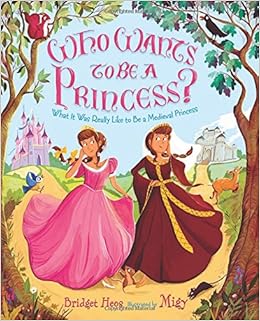
Who Wants to Be a Princess? What It Was Really Like to Be a Medieval Princess by Bridget Heos, illustrated by Migy

Published by Henry Holt and Co.

Summary:  For those dreaming about Disney life, this book provides a bit of a wake-up call as to what life for a princess was really like.  The author explains in her note that the “real” princess shown here is based on what life was like circa 1100-1300 in Great Britain.  Each two-page spread contrasts a fantasy princess with a real one.  Pink and purple castle?  Nope, it would have been drab stone surrounded by a moat stinking of sewage.  Beautiful gown?  Itchy brown wool was more like it  There might have been a handsome prince to marry…at around the age of 12, and that marriage would have been arranged.  The final page shows the princess falling asleep and dreaming of being “you”, the modern reader.  Includes an author’s note and a bibliography.  32 pages; ages 4-8.

Pros:  A clever way to teach a bit of history, using a concept that’s sure to catch the eye of certain readers.  The illustrations are kind of Disney-esque, which will add to the appeal.  There’s also a nicely subtle message about being happy with who you are.  If you’re struggling to loose your little cherub from her “Elsa” costume, this, just might do the trick.

Cons:  It’s a pretty cursory look; those wanting much information will have to look elsewhere.


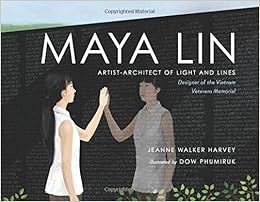
Maya Lin: Artist-Architect of Light and Lines by Jeanne Walker Harvey, illustrated by Dow Phumiruk

Published by Henry Holt

Summary:  Maya Lin grew up surrounded by nature, books, and parents “who never told her what to be or how to think”, having left China to escape that kind of doctrine.  Maya loved to create, inspired by her artist father and poet mother.  In college, she decided to study architecture, combining her love of art, science, and math.  When she was a senior, she entered a contest to design a memorial for the Vietnam War.  Her entry was selected from 1,421 others.  When the judges found out how young she was, they were shocked, and many felt that another design should be chosen.  Maya persisted, however, and her dream of a beautiful black wall with the names of those who died in the Vietnam War became a reality. It was the first of many art-architecture installations that Maya continues to create today.  Includes an author’s note with additional information about Maya Lin and the memorial.  32 pages; grades K-4.

Pros:  A quiet, beautiful work about a talented artist who persisted in bringing her creation to fruition.  The digital watercolors by first-time illustrator Phumiruk perfectly capture tone of the book and the Vietnam Veterans Memorial.

Cons:  This only touches on details of Lin’s life, and is not a complete biography.

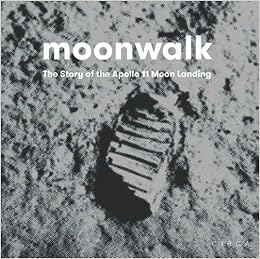
Moonwalk: The Story of the Apollo 11 Moon Landing by David Jenkins, illustrated by Adrian Buckley

Published by Circa Press

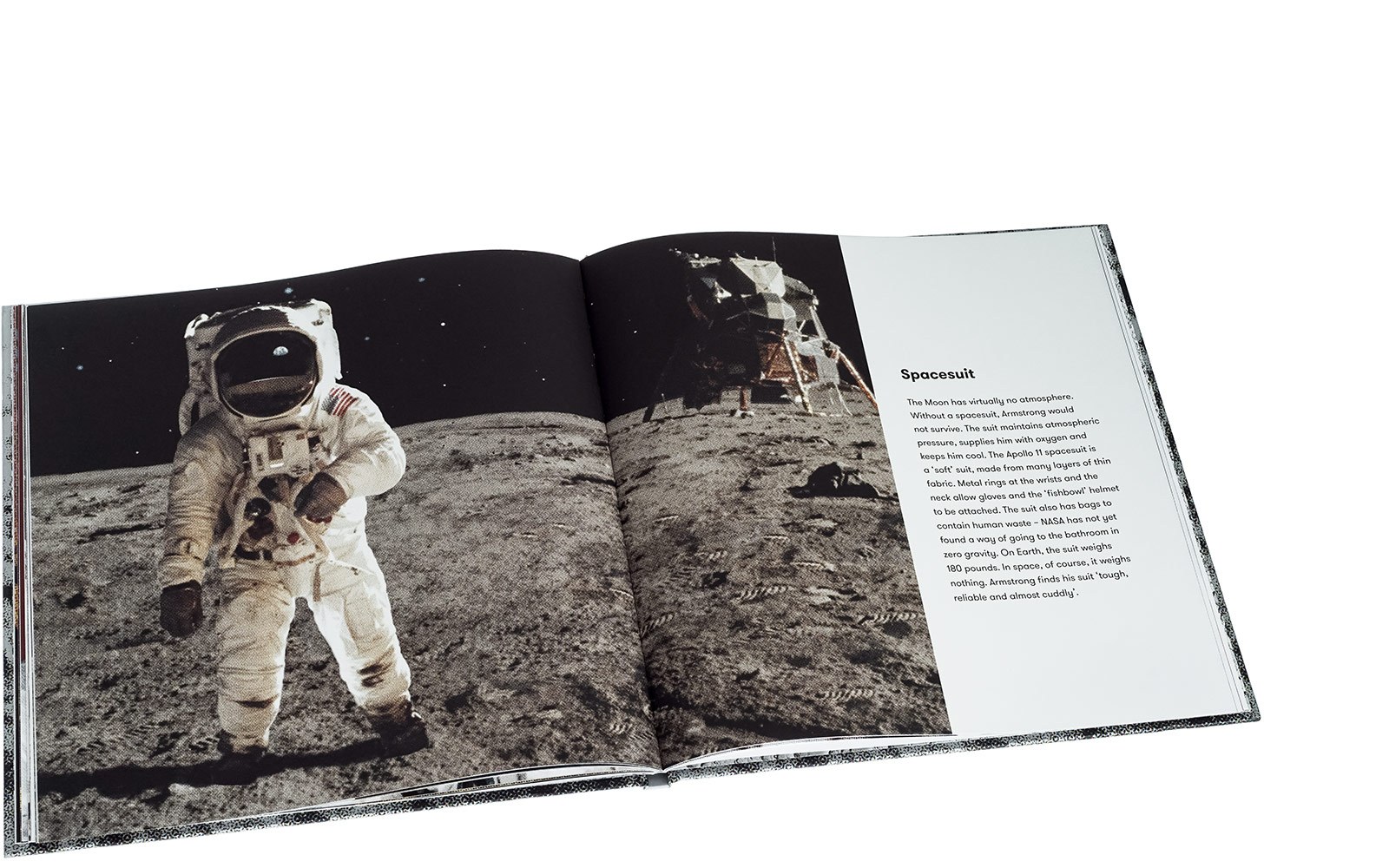
Summary:  48 years ago today, Neil Armstrong and Buzz Aldrin became the first two men to walk on the moon.  This book looks at what happened each day of that Apollo 11 mission.  It begins with a bit of context to clarify the importance of the mission, then starts in on July 15, 1969 as people are arriving to camp out and witness takeoff the next morning.  Each two-page spread covers one aspect of the journey, with a paragraph of information and a large digitally enhanced photo.  The excitement builds as the various parts of the trip unfold, climaxing with Neil Armstrong’s one small step onto the moon on July 20.  The final page shows the New York City ticker tape parade a few weeks later, celebrating the triumphant return of Armstrong, Aldrin, and Michael Collins.  The final two pages include a collection of interesting facts.  48 pages; grades 2-5.

Pros:  An excellent combination of exciting storytelling and clear explanations of the more technical parts of the space voyage.  The illustrations provide a you-are-there feeling.

Cons:  Some back matter like a bibliography or resource list would have been a nice addition.

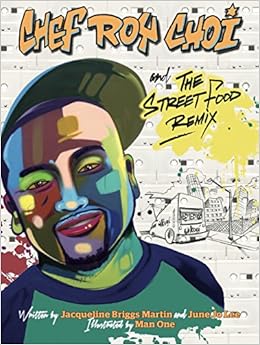
Chef Roy Choi and the Street Food Remix by Jacqueline Briggs Martin and June Jo Lee, illustrated by Man One

Published by Readers to Eaters

Summary:  Roy Choi’s family moved from South Korea to Los Angeles when he was two.  He grew up exploring the streets of L.A. and coming home to his mom’s delicious Korean cuisine.  After graduating from culinary school, Roy became a chef in a fancy restaurant.  When he lost his job, he decided to partner up with a friend and open a taco truck with a Korean twist.  The Kogi Korean taco trucks were a hit, and Roy built on this success by starting the Locol restaurant in the Watts neighborhood of L.A.  He continues to expand his culinary offerings, bringing his cooking to as many different types of places and people as he can.  Includes notes from both authors and the illustrator, as well as a bibliography and list of resources.  32 pages; grades 1-5.

Pros:  The third collaboration between Jacqueline Briggs Martin and Readers to Eaters, this mouth-watering, fast-paced biography is designed to inspire kids to cook and eat new foods.  The graffiti-influenced illustrations are the perfect complement for this ode to the city streets.

Cons:  You’ll be craving a Korean taco before you’re halfway through this book.

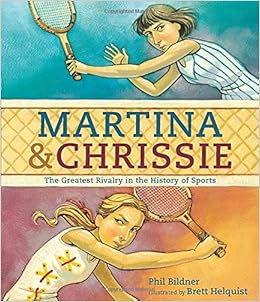
Martina and Chrissie: The Greatest Rivalry in the History of Sports by Phil Bildner, illustrated by Brett Helquist

Published by Candlewick Press

Summary:  During the 1970’s and 1980’s, women’s tennis was dominated by Chris Evert and Martina Navratilova.  Although they were staunch competitors and from countries that were engaged in a cold war (the U.S. and Soviet Union-controlled Czechoslovakia), the two were friends off the court and remain so to this day.  In the early years, Chrissie won the most; then Martina got more serious, and was ultimately victorious more times over the course of their careers.  But the important takeaway from their rivalry isn’t winning or losing, but how each one pushed and encouraged the other to be a better player and a better person.  Includes a three-page annotated timeline, a paragraph about both women’s lives after tennis, and a page of sources.  40 pages; grades 1-5.

Pros:  The fast-paced, chatty writing will engage readers who may have never heard of these two tennis superstars from a generation ago.  Lessons on hard work and good sportsmanship can effortlessly be extracted from their story.  And don’t worry, Series of Unfortunate Events illustrator Helquist has rendered both players more Violet Baudelaire than Count Olaf.

Cons:  “The Greatest Rivalry in the History of Sports” is arguably a bit of an overstatement.