Two artists from Harlem

Jimmy’s Rhythm and Blues: The Extraordinary Life of James Baldwin by Michelle Meadows, illustrated by Jamiel Law (HarperCollins, 48 pages, grades 2-5). Growing up in Depression-era Harlem, the oldest of nine children, James “Jimmy” Baldwin had plenty to do to help support the family. But he always loved words and found time to read everything he could get his hands on. His love of writing and art eventually led him to Paris, where he published his first novel, Go Tell It on the Mountain. Jimmy divided his time between France and the U.S., working for civil rights and interviewing Southerners for his essay collection The Fire Next Time. In 1971, devastated by the assassinations of Malcolm X, Medgar Evers, and Dr. Martin Luther King, Jr., he moved to an idyllic village in the south of France, creating a home that became a gathering place for friends and family from around the world. Includes an author’s note, James Baldwin’s oeuvre, a timeline, and photos on the endpapers.

This is a captivating biography of James Baldwin, with striking art by debut illustrator Jamiel Law. I’m ashamed to admit that I’ve never read anything by James Baldwin, but this book piqued my curiosity about his novels and essays. I do find it difficult to figure out the niche for picture books like this. Many reviewers recommend it for ages 4-8, but in my opinion, there’s not much here that would hold the interest of that age group. I would almost save it for middle school or high school, where it could serve as an introduction to Baldwin’s writing.

Everywhere Beauty Is Harlem: The Vision of Photographer Roy DeCarava by Gary Golio, illustrated by E. B. Lewis (Calkins Creek, 48 pages, grades 2-5). The narrative follows photographer Roy DeCarava as he wanders through Harlem after work on a summer evening, taking pictures as he goes. Most of his subjects are people, although one is a close-up of a crumpled soda can. The narrative, interspersed with quotes from Roy, is like a snapshot from his life. Readers will learn more about him through the additional information, photos, and timeline at the end, with resources provided to do more research.

The text and illustrations feel impressionistic, with just enough of a story to whet readers’ appetites. It would make a great introduction to photography, encouraging kids to look around their own neighborhoods for interesting subjects. Although there’s a list of museums featuring Roy’s photographs, it would have been nice to include a few in the book.

Two picture books that may inspire a family camping trip

Eclipse by Andy Rash (Scholastic Press, 40 pages, ages 4-8). ”Two months ago, I learned there would be a total solar eclipse,” the narrator begins. ”A month ago, I picked out the perfect place and time to watch the eclipse.” The countdown is on as he orders official eclipse glasses a week before the eclipse, travels with his dad a day before to a campsite near the big event, packs up to go to the perfect viewing site an hour before, and arrives a minute before. ”Now, Dad and I are in the dark.” Following this climactic moment, he and his dad will sit in traffic, finally get home, and savor their memories. 

I learned from reading this book that there’s a total solar eclipse in the United States on April 8! It looks like my school will be at about 90-95% totality, occurring right at dismissal, which could very well spell the end of the world. To prepare, I plan to read this fun and informative book to as many classes as I can. I liked the format of story, placing the eclipse as the central event, with the past and future referenced from the moment of totality. There’s additional information about different types of eclipses at the end, and the endpapers have a map showing annular and total eclipses in the US from now until 2048. I couldn’t see the path the April 8 one will take over Massachusetts, because it was hidden by the taped-down dust jacket.

Climbing the Volcano: A Journey in Haiku by Curtis Manley, illustrated by Jennifer K. Mann (Neal Porter Books, 48 pages, ages 4-8). A boy narrates his family’s adventure to climb South Sister, a dormant volcano in the Cascade Mountains of Oregon, using haiku poetry to tell the story. It’s an all-day hike, up past the tree line, into the snow, and finally to the summit! The descent is easier, and they finish the day back at their campsite for dinner and a well-earned rest. There’s additional information at the end about South Sister, the Cascades, what to bring on a hike, the flora and fauna encountered in the book, and haiku.

I love Jennifer Mann’s illustrations; just like in The Camping Trip, she makes you want to get out in nature. And of course, haiku is all about nature, making it an excellent format for describing the journey. This haiku doesn’t follow the 5-7-5 rule that’s often taught in schools, so read the end material to prepare if you’re reading with kids who know that format. 

New Black history picture books

With Martin Luther King, Jr. Day in January and Black History Month in February there are always new books about Black history to start the year off. Today, I bring you three nonfiction picture books, but there’s more to come! Stay tuned for some historical fiction and longer nonfiction–even a YA book, as I expand my horizons in the new year.

Fighting With Love: The Legacy of John Lewis by Lesa Cline-Ransome, illustrated by James Ransome (Simon and Schuster/Paula Wiseman Books). This comprehensive look at Lewis’s life begins with John’s Alabama childhood, surrounded by the love of family and church, and continues through his early years of activism, particularly with the Freedom Riders, ending with him about to lead the march across the Edmund Pettus bridge. 

The back matter gives some additional information about Lewis’s life, including a timeline, sources, a bibliography, and photos of the author and illustrator with John Lewis. At 48 pages, each with a pretty good chunk of text, it’s a great and thorough biography, although perhaps a tad long for younger listeners. (48 pages, grades 2-5)

When the Schools Shut Down by Yolanda Gladden, as told to Dr. Tamara Pizzoli, illustrated by Keisha Morris (HarperCollins). When Yolanda Gladden was ready to start school, the public schools in her town of Farmville, Virginia were closed. From 1959-1963, Prince Edward County closed its schools to avoid integration, opening a private academy for white children. Black parents scrambled to find ways to educate their children, and Yolanda went to school at First Baptist Church until she was 10 years old, when the public schools finally re-opened. She was at the top of her class and kept the lessons she had learned in resiliency and pride in her heritage. Includes authors’ notes, photos, a timeline, and sources for further reading.

This is an inspiring story about an important–and shocking–chapter of U.S. history that has often been neglected. However, having just finished a longer book on this topic (coming soon in another blog post), I found Yolanda’s story a bit too rosy. The real story is more complicated and didn’t have this happy of an ending for many kids. (40 pages; grades 1-4)

We Dream a World by Yolanda Renee King, illustrated by Nicole Tadgell (Orchard Books). Yolanda Renee King, the only grandchild of Dr. Martin Luther King, Jr. and Coretta Scott King, expresses gratitude to her grandparents for their vision and hard work. She then shares her own dreams for the future, inviting others of her generation to create a better world. Yolanda has been an activist from a young age, as her parents explain in the back matter, describing the 2018 March for Our Lives where she was asked to address the crowd and made an excellent impromptu speech (watch it here). There are plenty of photos in the back matter, too, as well as some information about Martin Luther King, Jr.

It’s an inspiring read that encourages kids to dream and to speak up for what they think is right, all beautifully illustrated with soft watercolors. It would be easy to get some writing prompts from the text, and I can imagine kids being extremely interested in the backmatter with the photos and description of Yolanda’s activism. A little more editing would have served the book well, giving it a sharper focus. (40 pages; grades K-5)

Please note, I’ve updated my Black History book list, adding books from last year. 

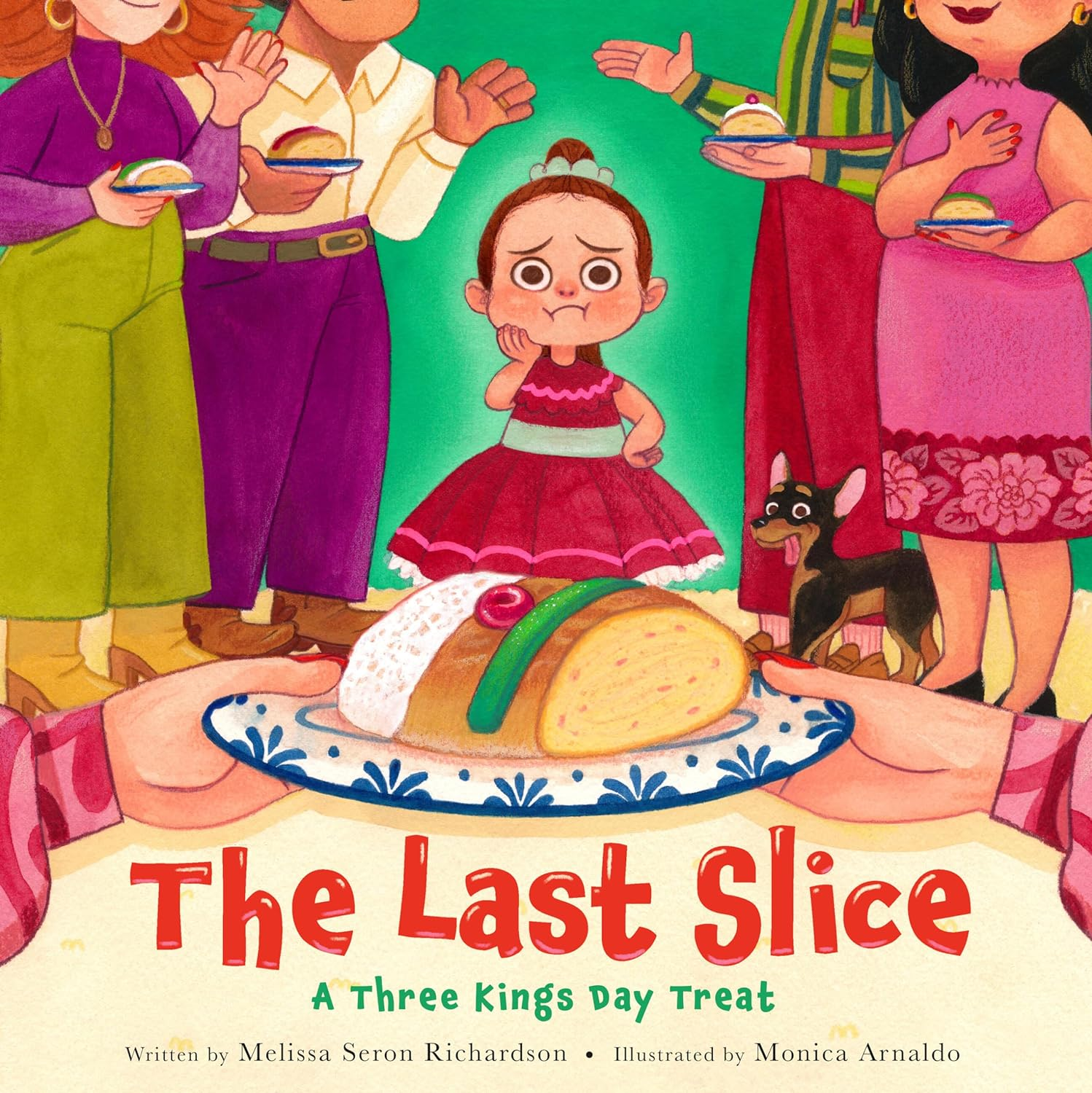
The Last Slice: A Three Kings Day Treat by Melissa Seron Richardson, illustrated by Monica Arnaldo

Published by Little, Brown Books for Young Readers

Summary: Marta suspiciously eyes La Rosca de Reyes, the cake made specially for Three Kings Day. It looks delicious, but she knows there’s a plastic baby hidden inside, the Niño Dios. In past years, she’s sampled others’ slices, but this year, the relatives say she’s big enough for her own piece. She’s worried that she’ll accidentally swallow the baby, causing it to grow inside her like a seed. Marta resolves not to eat her cake, but one by one, the other family members eat theirs, and the baby Jesus isn’t found. Finally, Marta can’t stand it. She takes a huge bite, and chomps right down on the baby. Everyone cheers, and Marta goes to bed that night feeling pleased that she was so brave and promising herself to eat two slices next year. 40 pages; ages 4-8. 

Pros: A fun and funny celebration of Three Kings Day, and a girl who overcomes her fears and finds her courage rewarded.

Cons: It honestly does feel a little creepy to have a baby baked into a cake.

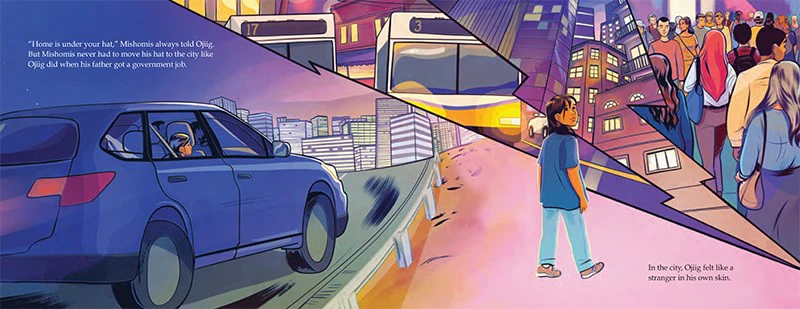
When the Stars Came Home by Brittany Luby, illustrated by Natasha Donovan

Published by Little, Brown Books for Young Readers

Summary: When Ojiig’s father gets a government job, the family moves to the city. Ojiig misses fishing and picking blueberries, having friendly neighbors, his grandparents Mishomis and Kookum, and seeing the stars at night. His parents buy him glow-in-the-dark stars for his ceiling and a star nightlight, but it’s not the same. One day, Ojiig wakes up to discover that his mother is making him a quilt. With each piece she sews, she tells him a story of one of his ancestors. Finally, she’s done, and Ojiig realizes that the quilt has a giant star design. He’s happily wrapping it around himself when Mishomis and Kookum knock on the door. As he joyfully greets them, he realizes that “Home is where you learn who came before you. Home is where you discover who you are. Home is where you imagine who you might become.” Includes additional information about the author’s Anishinaabeg heritage and quilt making, and a pronunciation guide. 40 pages; ages 4-8. 

Pros: A touching story about discovering what makes home, with indigenous stories and history woven into the contemporary text.

Cons: The back matter was printed on the endpapers.

Butt or Face? By Kari Lavelle

Published by Sourcebooks

Summary:  This guessing game style book shows a close-up photo of part of an animal, asking the reader: is it the animal’s butt or face?  Turn the page to find out the answer, see a full photograph of the animal, and learn some interesting facts and where in the world it lives.  The author’s note tells how she was inspired by an article she read about farmers in Botswana who painted eyes on the rear ends of their cattle to scare away predators.  Includes a map showing where each animal lives and a chart telling where each one rests its butt and what food goes in its face.  40 pages; grades K-3.

Pros:  I wasn’t sure how this book would be received by exhausted teachers the week before vacation, but so far, they have enjoyed it as much as the kids–which is a lot.  It’s an amazing introduction to animal adaptations.  Look for book 2 in the spring.

Cons:  The photos are pretty hard to figure out, and many of the animals aren’t well known.

Two books about the immigration experience

Salma Makes a Home by Danny Ramadan, illustrated by Anna Bron

Published by Annick Press

Mina Belongs Here by Sandra Niebuhr-Siebert, illustrated by Lars Baus

Published by Floris Books

Summary: Two girls navigate their new homes after moving from a different country. Readers may know Salma from her picture book, Salma the Syrian Chef. She and her mom have settled into a new apartment in Vancouver, and when the story opens, her dad is on his way to join them. Although she’s thrilled to have Baby back with the family, Salma worries that he won’t like Canada and will go back to Syria. Some heartfelt conversations resolve the issue, and Salma learns that it’s possible to have two homes–the one where you live and the one you remember in your heart. Includes directions for making lanterns like the ones Salma and her mom create in the story. Book 2, Salma Writes a Book, is also available. 120 pages; grades 1-4.

Mina is scared to start kindergarten, even though her mother assures her that she’ll have fun and that the people will be kind. This turns out to be the case, as her teacher warmly greets her the first day, and Mina makes a friend. Each night, she dreams about her experiences, and each day school gets a little easier. The illustrations slowly change from gray to full color, as Mina learns English and becomes a member of the kindergarten community. When a new boy is introduced to the class, Mina is the first to greet him and invite him to play. 40 pages; ages 4-8.

Pros: Both books show resilient main characters who successfully deal with the difficulties of moving to a new country and learning a new language, serving as excellent mirrors for those going through the same challenges and windows for kids who may be welcoming new students to their classes.

Cons: Neither book had quite the light touch of Young Vo’s Gibberish, which is still my favorite on this topic.

They Hold the Line: Wildfires, Wildlands, and the Firefighters Who Brave Them by Dan Paley, illustrated by Molly Mendoza

Published by Chronicle Books

Summary: When a fire lookout spots smoke coming from the forest following a lightning strike, firefighters spring into action, digging a fireline to try to keep the fire from spreading. When the fire jumps the line, more strategies are needed, including fighting the fire from airplanes and helicopters. As people are evacuated and animals flee, other workers have jobs setting up camps for the evacuees and the firefighters. Even after the fire has been contained there is still work to be done, extinguishing burning material. Finally, the exhausted firefighters get a well-earned rest, but soon they are back on call awaiting the next fire. Includes additional information on fire ecology, describing old and new approaches, and facts about firefighters with labeled diagrams of their protective gear and supplies. 44 pages; grades 2-5.

Pros: This is a fascinating and timely look at many aspects of wildfires and the people who fight them. Each page has several sidebars with definitions of all kinds of terms used by firefighters. The art resembles old WPA posters, an appropriate style for the topic.

Cons: Some additional resources would have been nice.

One Chicken Nugget by Tadgh Bentley

Published by Balzer + Bray

Summary: Frank is a monster with a passion for chicken nuggets, especially the ones Celeste sells on her food truck. Since Frank isn’t exactly an ideal customer (scares away other customers, doesn’t pay, terrible table manners), Celeste is desperate for a way to get rid of him. Some library research gives her an idea: the 30-Day Double Nugget Challenge. Each day the number of nuggets offered will doubled, and anyone who can eat them all wins free chicken nuggets for life. Seems easy enough on the first few days but by day 14 (8,192 nuggets), Frank is the only customer left. On day 30, he starts in on the pile of 536,870,912 nuggets and makes it all the way to the final one, and then…. Includes an author’s note and additional information on exponential growth. 40 pages; grades K-3.

Pros: Similar stories have been told for ages (as the author acknowledges in his note), but this is a particularly fun one with humorous monster illustrations that really bring home the concept of exponential growth.

Cons: The interesting endnotes were printed on the back cover, where the taped-down dust jacket obscured approximately one-sixth of them.

Creep, Leap, Crunch! A Food Chain Story by Jody Jensen Shaffer, illustrated by Christopher Silas Neal

Published by Knopf Books for Young Readers

Summary:  For the first part of this book, the rhyming text builds like The House That Jack Built, with the sun shining down on a cricket munching grass that’s eaten by a mouse, who’s swallowed by a snake, which is scooped up by a hawk, who gets trapped by a fox that gets chased by a bear.  But on some days things are different, and the story takes a twist as each animal escapes its predator, leaving the bear to munch on “flowers and seeds…all that she needs.”  Includes an illustrated glossary that gives more information about each of the animals.  48 pages; ages 4-8.

Pros:  A fun and clever introduction to food chains, with the second version of the story perhaps makes the case for vegetarianism.  

Cons:  Some of the main characters meet a gory end in the first version.