Mole Is Not Alone by Maya Tatsukawa

Published by Henry Holt and Company

Summary:  Mole wakes up to the realization that today is Rabbit’s moon harvest party, and he has to make the torturous decision about whether or not he’s going to go.  He decides to bring some homemade cream puffs, then sets off through tunnels that go under the town.  Readers can see other animals traveling to the party aboveground, while Mole goes back and forth between encouraging himself to talk to other party guests and recalling how awkward previous social gatherings have been.  He wants to push himself to be better, but as he approaches Rabbit’s house, he starts to think he should have stayed home.  At the front door, he meets Skunk, a kindred spirit who is also debating whether or not he’ll go inside.  Rabbit invites them in, but the two hand off their gifts and head for Mole’s place, where they enjoy a quiet cup of tea together.  40 pages; ages 4-8.

Pros:  Socially anxious introverts of the world, unite!  Rarely has a book spoken to me quite this accurately, as I recognized almost word for word Mole’s internal dialog while he overthought going to a party.  The underground illustrations are adorable, and I was delighted that Mole found a true friend at the end.

Cons:  I wish this book had been around in my younger days.

Game of Freedom: Mestre Bimba and the Art of Capoeira by Duncan Tonatiuh

Published by Harry N. Abrams

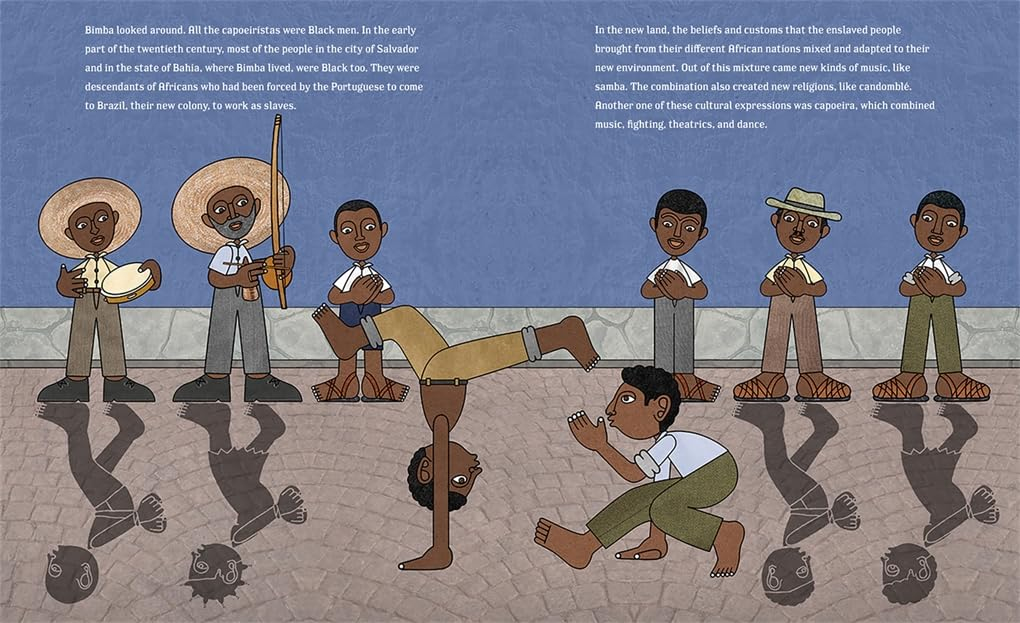
Summary:  Manoel dos Reis Machado, a.k.a. Bimba, loved capoeira, a sport involving martial arts-like moves done to musical accompaniment.  Involving predominantly Black players, the sport had been banned in Brazil by the all-White government who considered it barbaric.  In 1932, Bimba became Mestre Bimba when he opened a school to teach the art of capoeira, introducing a rigor and discipline that eventually made it appealing to a wealthier clientele.  It took twenty years of hard work, but in 1953, Mestre Bimba and his students were invited to do a demonstration for the president of Brazil.  This removed the last of the discrimination against capoeira, and although Mestre Bimba passed away in 1974, the sport is widely popular throughout Brazil today.  Includes a glossary, an author’s note, photos, and a bibliography.  48 pages; grades 3-6.

Pros:  Illustrated in Duncan Tonatiuh’s trademark folk-art style, this fascinating biography will have readers heading over to YouTube to see some live demonstrations of capoeira.  Tonatiuh has won both the Pura Belpré Award and Robert F. Sibert Medal, and this book could be a contender for both.

Cons:  I saw some recommendations for as young as preschool, but I would say this is definitely for upper elementary and middle school kids.

In the Night Garden by Carin Berger

Published by Neal Porter Books

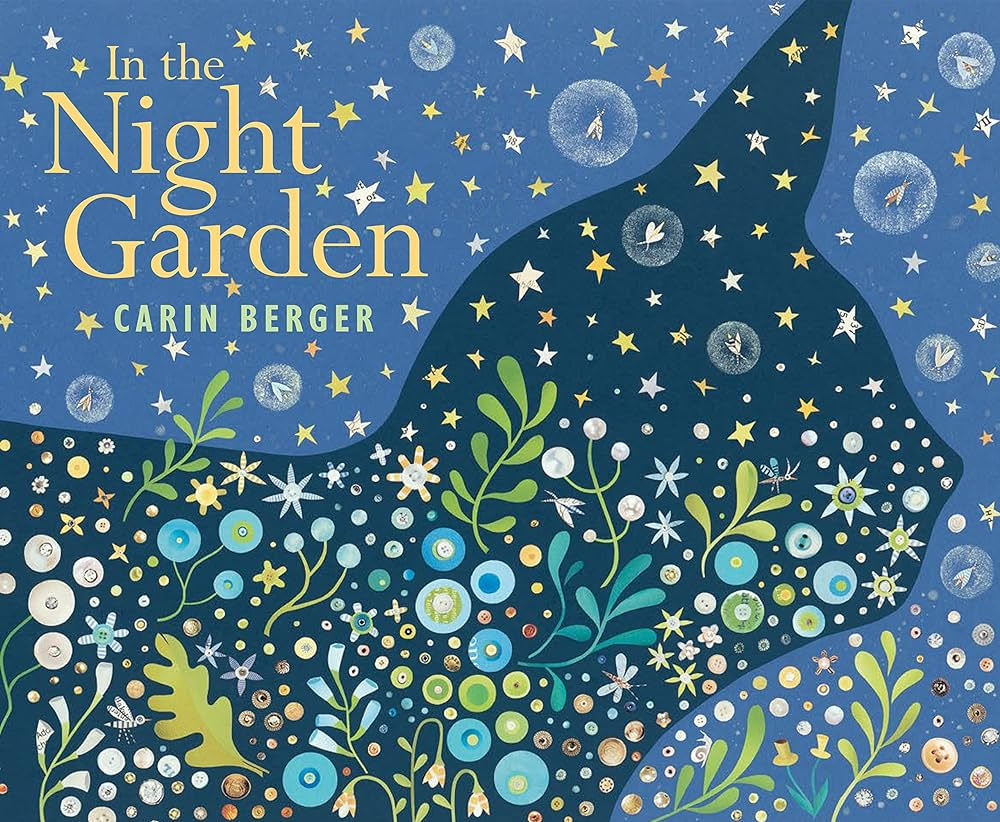
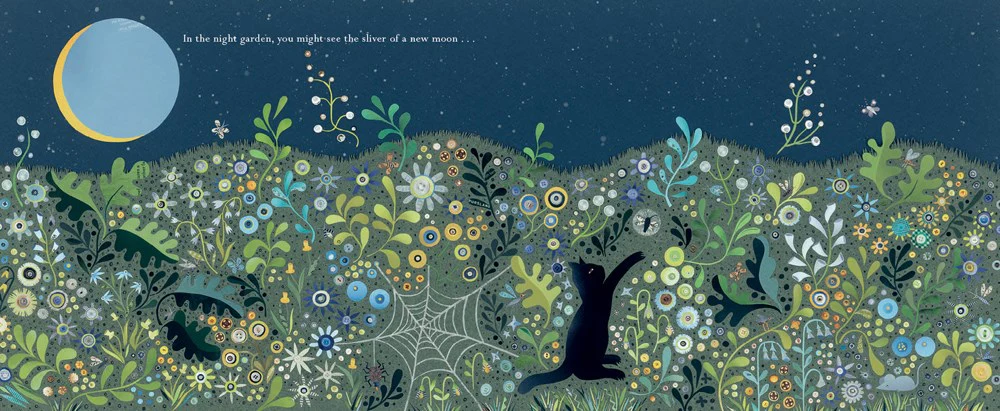
Summary:  “In the night garden, you can lie on the cool grass and look up to the millions and trillions of stars.”  A girl in the night garden gazes at the sky as the text takes the reader on a tour.  You might see or hear animals like a cat on a roof, a bat swooping through the air, or a fox leading her sleepy cubs home.  The moon may be a tiny sliver or a giant harvest moon. The sounds of crickets, bullfrogs, and the wind will lull you to sleep; the last page shows the girl tucked into bed.  40 pages; ages 4-8.

Pros:  A beautiful bedtime story with amazing collage illustrations, each one of which would be suitable for framing and displaying as a stand-alone work of art.  I’m adding this to my Caldecott contender list.

Cons:  As I prepare for my annual Caldecott vote at school, I wish there were more contenders that tell an engaging story for my second- and third-grade listeners.

The Real Story by Sergio Ruzzier

Published by Harry N. Abrams

Summary:  “WHAT?!” shouts Cat when she sees the broken cookie jar on the floor.  Then “MOUSE!”  “Yes?” replies an innocent-looking Mouse.  When pressed, Mouse weaves some good tales about what happened to the cookies and their jar: the cookies themselves broke free; it was a slimy monster; no, it was an alien named Georgette; okay, it was actually a bug.  Finally, Cat insists that Mouse tell the truth, which is that Mouse ate all the cookies and the jar fell on the floor.  “That’s such a boring story,” says Cat.  “Can you tell me another cookie story?”  Mouse agrees, in exchange for a cookie.  32 pages; ages 3-7.

Pros:  An adorable ode to the power of storytelling that is sure to be a hit as a read-aloud.

Cons:  Kind of a squishy message about telling the truth.

The Bees of Notre-Dame by Meghan P. Browne, illustrated by E. B. Goodale

Published by Random House Studio

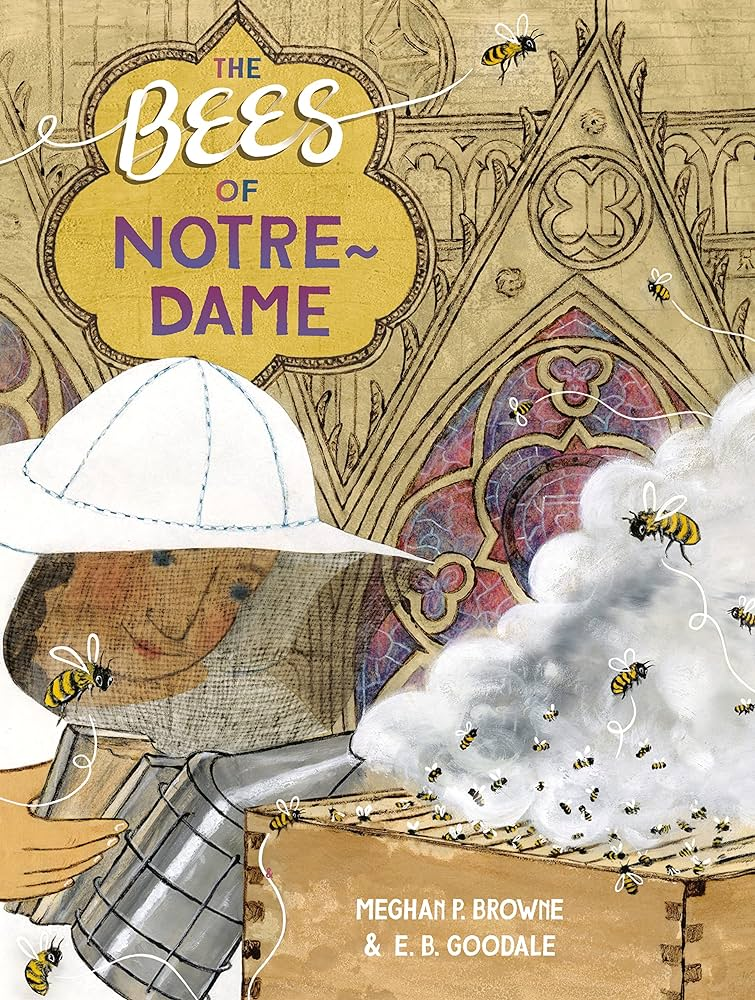
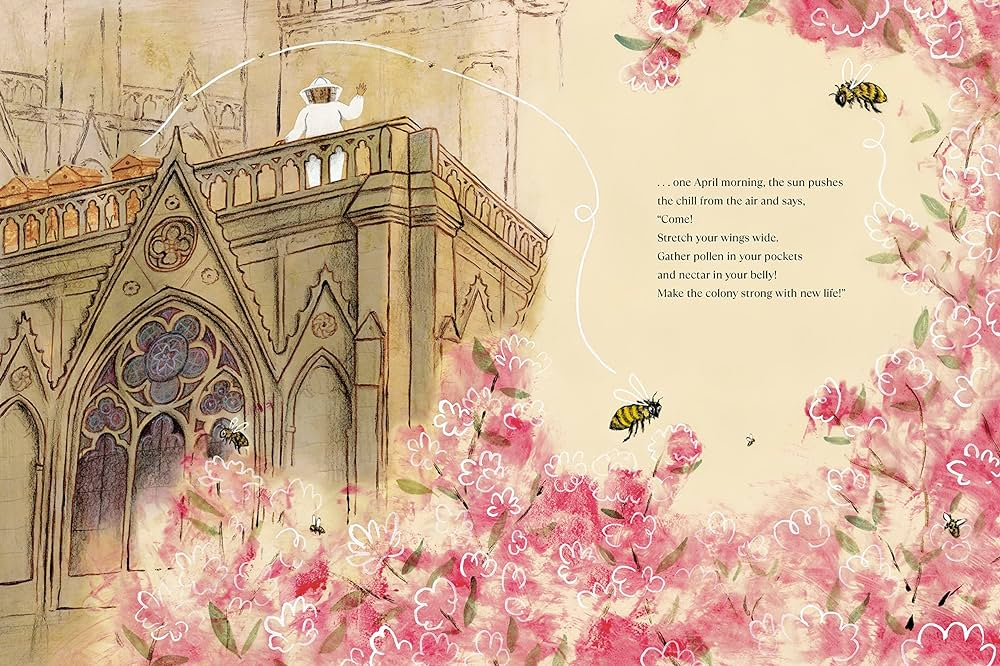
Summary:  It’s springtime in Paris, and while most people are out enjoying the warm weather, Sibyle is on the roof of Notre-Dame Cathedral taking care of the bees that live up there.  They enjoy the spring weather, too, going out into the city to find the abundant flowers.  No one is expecting the fire that sweeps across the cathedral’s roof one April morning.  When the fire is finally extinguished, Parisians rally to restore their ancient treasure…working hard to rebuild, just like the bees.  Includes additional information about the bees that live on the roof of Notre-Dame and the 2019 fire at the cathedral, as well as a few photos and a list of recommended reading.  40 pages; grades 1-4.

Pros:  The lyrical text and detailed illustrations of both the cathedral and the beehives introduce two topics that readers will find intriguing.

Cons:  The ending felt abrupt.

The Wishing Machine by Jonathan Hillman, illustrated by Nadia Alam

Published by Simon and Schuster Books for Young Readers

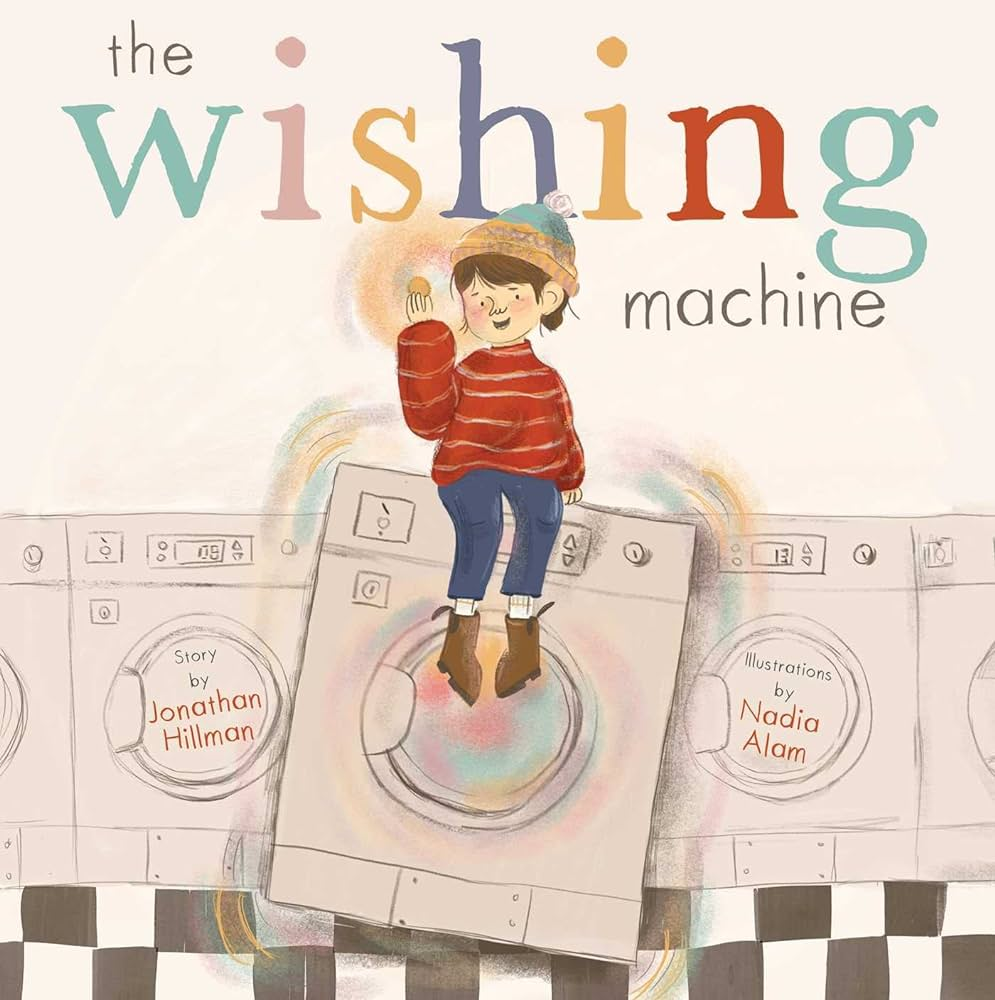
Summary:  A boy and his mom make their usual Sunday visit to the laundromat, but this week is different.  It’s their last time, because they have to leave their apartment and move in with his grandparents in their trailer.  While he tries to look at the bright side–being with grandparents, having a dog–he’s sad to be leaving his familiar home and his friends.  He pretends the washing machine and dryer are wishing machines, and he wishes to be able to stay.  While they wait for the machines to run, he asks his laundromat friends what their wishes are: a new scooter, a green card, a cat.  Finally, the laundry is done, and there are enough coins left for a bag of cookies from the vending machine, which he shares with his friends.  As he and his mom leave, she shares her wish with him–to be together and happy–and he realizes that being with his mom is the most important thing.  40 pages; ages 4-8.

Pros:  A poignant story about a family facing hard times, with a resilient mom who helps her son stay focused on the good in their lives.

Cons:  Seems like pretty tough times for everyone at the laundromat.

The Voice in the Hollow by Will Hillenbrand

Published by Holiday House

Summary:  Young mouse Hubert Cumberbun loves stories and can often be found at the branch (in a tree) library.  One day, a blizzard hits when he’s there, and Hubert has to find his way home through the hollow.  A kind woman appears, offering to lead him, and together they make a journey that grows increasingly spooky.  Trees and rocks appear to have faces, and a gatefold page shows a large bear with two frightened-looking cubs.  They make it to a familiar lamppost, and Hubert strikes out on his own.  When he turns back to say thank you, the woman is gone, and he can only see his own footprints.  He finally makes it home, where his family is gathered around the fire drinking hot chocolate and reading books.  “Welcome home,” says his mother.  “It looks like you have a new story for us.”  40 pages; ages 4-8.

Pros:  A deliciously creepy tale with gorgeous snowy artwork and a reassuringly cozy ending.

Cons:  As I’ve no doubt mentioned before, I have mixed feelings about those fragile gatefold pages in the library.

Zora, the Story Keeper by Ebony Wilkins, illustrated by Dare Coulter

Published by Kokila

Summary:  Zora loves hearing her Aunt Bea’s stories about family members.  Aunt Bea used to teach acting, and she dresses up and acts out the tales, or reads from the pages of a family scrapbook she keeps.  Lately, though, Aunt Bea has been sick, and Zora has to help with the storytelling.  When her aunt has to go to the hospital, Zora visits and tells her the stories she remembers.  Aunt Bea doesn’t come home from the hospital.  At her funeral, people bring photos and share memories.  Later, Uncle Ralph gives Zora Aunt Bea’s scrapbook with the photos, saying Aunt Bea wanted her to have it, and together they start piecing together the story of Aunt Bea’s life.  40 pages; grades 1-4.

Pros:  A beautifully illustrated book that celebrates the power of stories and family love.

Cons:  This seems like it will have more appeal for adults or older kids than for the recommended age group.

If I Was a Horse by Sophie Blackall

Published by Little, Brown Books for Young Readers

Summary:  The narrator imagines life as a horse, with more freedom to do things like not take a bath, not wear clothes (unless he was in a parade), and getting to go wherever he wants.  He would still enjoy some of the comforts of home, coming into the kitchen when he got hungry and giving his sister a ride to school.  It would be fun to roll in the mud, and the swim team would be thrilled to have him.  The last wordless page shows a boy giving his sister a piggyback ride, revealing the human narrator.  32 pages; ages 4-8.

Pros:  An ode to the power of pretending, gorgeously rendered with Sophie Blackall’s imaginative illustrations.

Cons:  I assumed this would be one of my Caldecott contenders, but it didn’t quite rise to that level for me.

It’s Fall! By Renée Kurilla

Published by Little, Brown Books for Young Readers

Summary:  Fall is introduced with rhyming text and lively illustrations.  A diverse group of kids, who appear to be in a class together, enjoy apple picking, pumpkin carving, Halloween, and Thanksgiving.  The illustrations reflect the season, with their predominantly yellow, orange, and red shades.  Be sure to check out the endpapers for kid-style drawings of their favorite fall things.  Between that and the question on the last page: “What things to you love about fall?” kids should be ready to write and draw about the season.  32 pages; ages 3-8.

Pros:  Preschool and kindergarten teachers will be thrilled to see this bouncy introduction to the simple joys of autumn with plenty of material to get kids thinking about what they enjoy about fall.

Cons:  I don’t see similar books about the other seasons, although this is listed on Amazon with a parenthetical “Celebrate the Seasons, 1”, so we can hope they’re on their way.