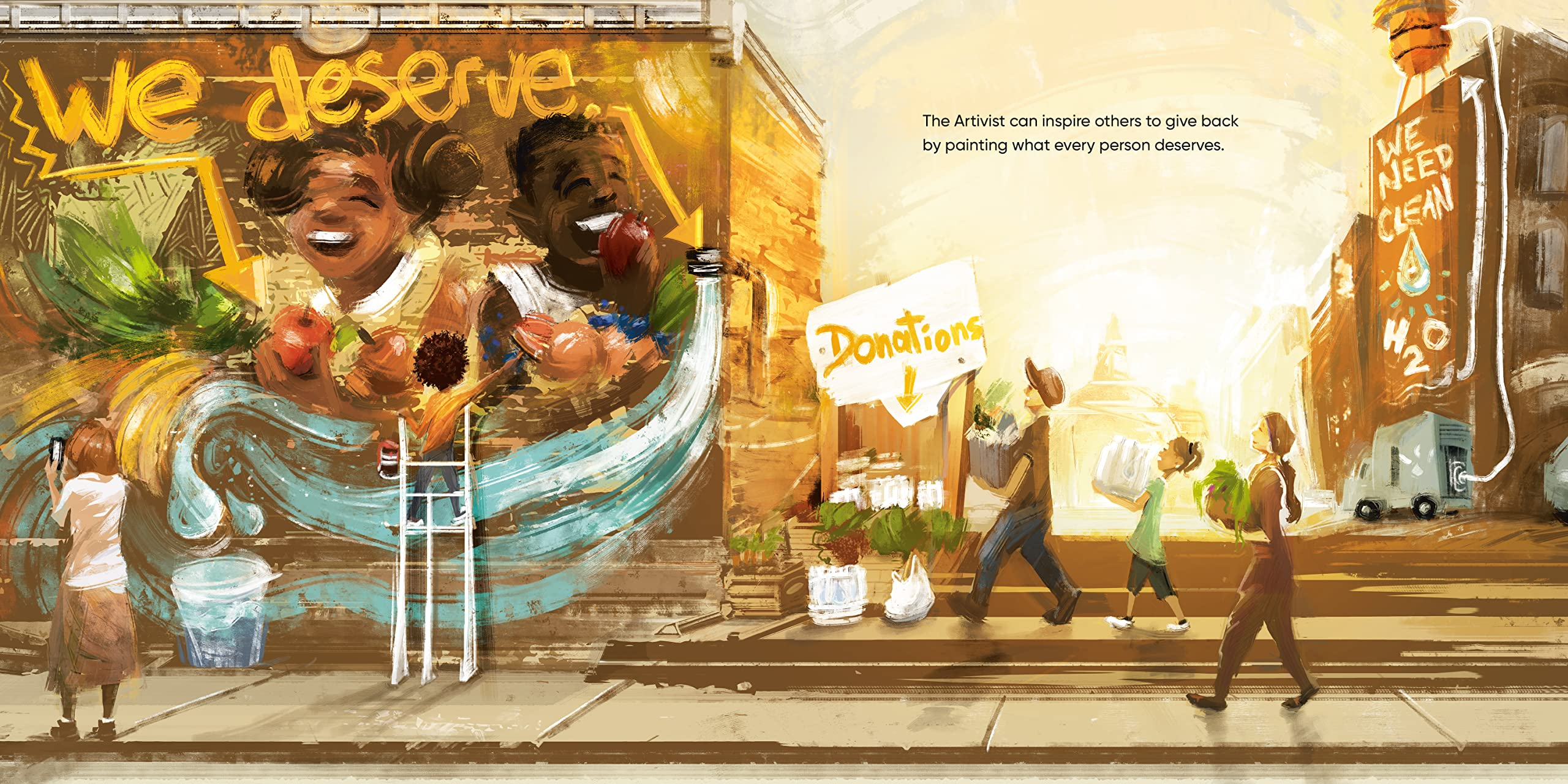
What’s Inside a Caterpillar Cocoon? And Other Questions About Moths and Butterflies by Rachel Ignotofsky

Published by Crown Books for Young Readers

Summary:  From egg to caterpillar to pupa (called a cocoon for moths and a chrysalis for butterflies), butterflies and moths have similar life cycles.  Readers will learn the intriguing answer to the title question, as well as answers to many other questions about butterflies and moths.  Detailed illustrations portray a wide range of caterpillars, butterflies, and moths with labels to identify each one.  In addition to the life cycle, there is plenty of fascinating information about anatomy, food, defenses, and more.  Includes a page of sources and resources.  48 pages; grades K-3.

Pros:  I missed last year’s What’s Inside a Flower? and am delighted that I discovered this beautiful and informative science book.  The illustrations are unique and detailed, containing at least as much information as the text.  Just as I was wishing I knew the differences between butterflies and moths, I turned the page to discover a detailed comparison suitable for framing and hanging in the science corner.

Cons:  This book seemed a little long for the intended audience.  With so much information, you might want to break it up into several sections and read one at a time.

A Place Called America: A Story of the Land and People by Jennifer Thermes

Published by Harry N. Abrams
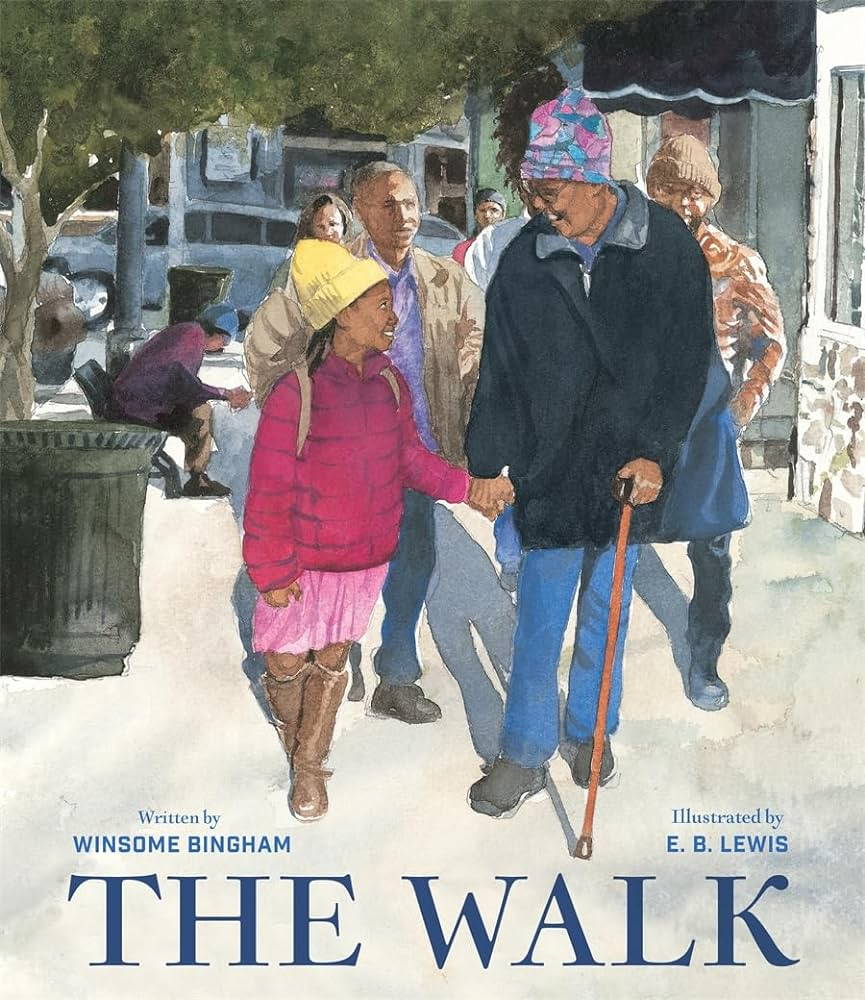
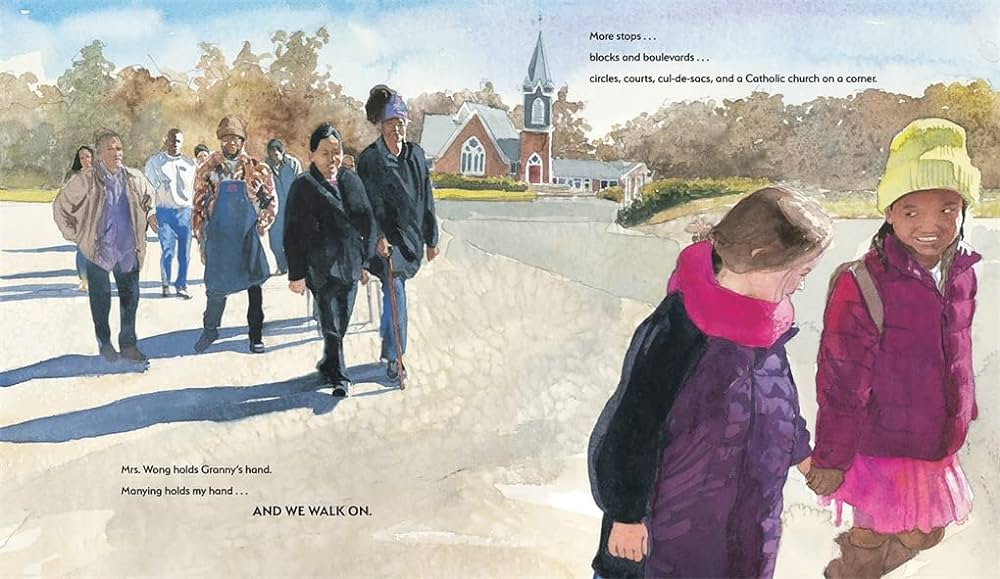
Summary:  Beginning with a global view of the Earth when “the land was owned by no one,” Jennifer Thermes dives into American history and the drive to acquire its land, shown by illustrated maps.  She focuses on marginalized people–indigenous, enslaved, immigrants–and how they helped shape history.  The two-page spreads look at a specific year or an era, portraying people and/or maps that show important events and movements of that time.  Includes an afterword about maps and history, a list of sources, and a timeline on the endpapers.  64 pages; grades 3-6.

Pros:  I am always thrilled to learn of a new Jennifer Thermes book featuring her amazing maps. You could use this one to cover a whole school year of American history, beginning with the author’s note with the assertion that “the stories we tell ourselves about what is happening make us who we are.”  Readers will spend hours poring over her beautiful maps and other complex illustrations of the people who made up the various eras that she writes about so engagingly.

Cons:  Except for a spread about 9/11, the history pretty much ends in the middle of the 20th century.

Bunny and Tree by Balint Zsako

Published by Enchanted Lion Books

Summary:  The prologue of this wordless book shows a seed flying through the air, landing on the earth, and sprouting to eventually become a full-grown tree.  In Act One, the tree watches as a wolf chases a pack of rabbits.  Turning itself into a monster, the tree scares away the wolf and offers refuge to one of the rabbits.  Bunny asks Tree for help finding the rest of its pack, and the two set off on a wondrous journey.  After Bunny digs up Tree and puts it in a little red wagon, Tree is able to transform into a train, a boat, and a plane to carry them into the mountains where they at last find the rest of the rabbits.  The tree is transplanted and enjoys a symbiotic relationship with the bunnies, offering them food and shelter in exchange for fertilizer and friendship.  184 pages; ages 7 and up.

Pros:  This incredible wordless story unfolds over the course of nine acts and an epilogue, celebrating a wondrous friendship as well as the magic of the changing seasons.  

Cons:  I didn’t completely understand the beginning of the story until I read some of the book reviews.

Remembering by Xelena González, illustrated by Adriana M. Garcia

Published by Simon and Schuster Books for Young Readers

Summary:  The narrator is grieving the loss of her dog.  As she and her family remember him, she gathers his favorite things to create an ofrenda, or offering, for him.  Each photo she looks at reminds her of a time she and her beloved pet shared. She makes his favorite meal and pours him a bowl of water.  When everything is ready, the family celebrates their dog together on Día de Muertos.  Includes notes from the author and illustrator about the loss of their pets and additional information about Día de Muertos and how to make an ofrenda.  40 pages; ages 4-8.

Pros:  I’m adding this beautiful book to my list about grief and loss.  The simple text and realistic illustrations capture the bittersweet experience of grieving the loss of a pet and provide an excellent introduction to Día de Muertos.

Cons:  Keep the Kleenexes handy.

Water Day by Margarita Engle, illustrated by Olivia Sua

Published by Atheneum Books for Young Readers

Summary:  A young girl describes the excitement of water day, when a man comes to her Cuban neighborhood to deliver water.  The family needs water to bathe, cook, drink, and flush the toilet. Bisabuelita (great-grandmother) remembers her childhood when rain fell every day, filling the water tanks. “What changed? Everything. Weather. Rivers. Groundwater. Lakes.” After the water man arrives and fills their blue tank, the fish lady shows up, selling tiny fish to eat the mosquitoes that come to the water, carrying malaria and other diseases.  The girl says good-bye, knowing she will see the water man and fish lady in another five days.  Includes an author’s note with additional information about the global water crisis and mosquitofish.  40 pages; ages 4-8.

Pros:  Cuba’s water crisis is described succinctly and quite matter-of-factly by the young narrator who sees it as part of her life.  The colorful illustrations add a cheery note to a pretty dire topic.  The additional information helps flesh out what is going on in the story.

Cons:  I was thirsting for a list of additional resources, but the well was dry.

See the Ghost: Three Stories About Things You Cannot See by David LaRochelle, illustrated by Mike Wohnoutka

Published by Candlewick

Summary:  The dog and cat from See the Cat and See the Dog are back for this trio of tales about things you cannot see: namely, a scary ghost, a strong wind, and a mischievous fairy.  The animals get scared, blown away, and transformed by the invisible beings. In the end, all is to put to rights, and a fun and happy day is had by all, both those you can see and those you cannot.  64 pages; ages 4-8.

Pros:  This delightful series needs no introduction. I don’t usually review sequels, but I loved this one enough to make an exception.  This is one of the most popular early reader series in my library, and I can’t wait to introduce fans to the newest entry, perfect for fall.  See the Cat won a Geisel award, and I would love to see the same for See the Ghost.

Cons:  I thought the fairy’s transformations of the dog and cat could have been milked a bit more for humor.

When You Can Swim by Jack Wong

Published by Orchard Books

Summary:  Adults show children the wonders of what awaits them once they learn how to swim.  Oceans and lakes beckon, with the beauty of nature and the adventures of jumping into the water and diving beneath the surface.  There’s diversity in the types of water and landscapes, the swimming experiences, and the people who are enjoying the water.  “When you can swim I’ll take you there,” a parent tells a child standing by the side of the pool.  “So swim, little one!”  Includes an author’s note about his own mixed experiences with learning to swim that were influenced by the experiences of his parents and grandparents.  48 pages; ages 4-8.

Pros:  I learned about this book when I saw that it won the Boston Globe-Horn Book Award for best picture book.  It’s a beautiful meditation on the glories of swimming, perfectly complemented with gorgeous illustrations that capture the light and shadows of the water.  You could pair it with one of the other books about swimming from this summer: Our Pool or Together We Swim.

Cons:  Because it is more of a meditation than a story, it may not hold the attention of every child.

Ways to Play by Lyn Miller-Lachmann, illustrated by Gabriel Alborozo

Published by Levine Querido

Summary:  When Bossy Older Cousin Violet comes over, she doesn’t hold back in her opinion: Riley is playing with toys the wrong way and needs to be shown the right way.  Riley can play all day with a pile of newspapers, and instead of having dolls and stuffies to a tea party like Violet does, Riley likes to line them up by size.  Riley creates art by sharpening crayons and making little spirals with them.  Fortunately, Riley’s dog Charlie is more understanding than Violet is, and all the kids enjoy playing fetch and running around the yard with him.  “See,” Riley tells Violet, “There are lots of ways to play with toys.  And everyone’s way is the right way.”  Includes an author’s note about her personal childhood experiences, similar to Riley’s, and how she got some answers when she was diagnosed with autism as an adult.  32 pages; ages 4-8.

Pros:  A charming story that will appeal to many kids, both those who are neurodivergent and those who simply enjoy doing their own thing.

Cons:  Cousin Violet.

Follow the Flyway: The Marvel of Bird Migration by Sarah Nelson, illustrated by Maya Hanisch

Published by Barefoot Books

Summary:  The text follows a variety of birds, starting with hatchlings emerging from eggs, and continuing as those babies learn to fly.  By the time autumn comes, they are strong enough flyers to join the flyway of birds migrating to warmer places.  Flying in groups of all sizes, they head south, stopping for a week or two to rest until the cold catches up and sends them on their way.  When they reach the ocean, they settle in and wait until spring arrives to call them back north again.  Includes additional information about bird migration, including ways to help migratory birds; a map of the four North American flyways; thumbnail portraits and additional information about the twelve birds in the book; and sources of additional information.  32 pages; grades K-4.

Pros:  A great introduction to bird migration, with poetic text and lots of interesting pictures of a variety of birds.  The back matter makes it a good resource to begin further research.

Cons:  The only birds covered were water birds.

Stranded! A Mostly True Story from Iceland by Ævar Þór Benediktsson, illustrated by Anne Wilson

Published by Barefoot Books

Summary:  “This is the story of my grandfather: how he got stranded on a volcanic island, was almost turned into barbecue and found the most important moment in the world.”  The island is Surtsey, formed in the 1960’s by underwater volcanic explosions off the coast of Iceland, where Ævar’s grandfather (also named Ævar) was from.  Ævar Senior was an explorer, a scientist, and a photographer, so when he heard about Surtsey, he wanted to go check it out.  A fisherman dropped him and a friend off, and the two scientists enjoyed a day of exploring.  Unfortunately, the fisherman never returned, and they spent two days trying to keep warm (the molten lava helped) and surviving on the small amount of food and drink they had with them.  On the third day, an American man, part of a U.S. scientific expedition, found them (at the most important moment in the world).  They made it back to Iceland and lived happily ever after, although they never found out why the fisherman didn’t pick them up.  Includes additional information about Iceland, Surtsey, volcanoes, a few Norse gods, and the legend of Surtsey’s tomatoes, which involves poop.  32 pages; grades 2-5.

Pros:  This quirky book is a total delight, both the folksy story and the illustrations that perfectly capture the magic and colors of Iceland.  The author states on the title page that everything in the story is true, except for one little thing, and invites readers to see if they can spot it.  That made me want to read carefully, which we can hope will be the result for kids as well.  

Cons:  The detail that is not true turns out to be quite the anticlimax, although Benediktsson has fun pointing out the outlandish parts that are true throughout the story.