Two books about Sister Rosetta Tharpe

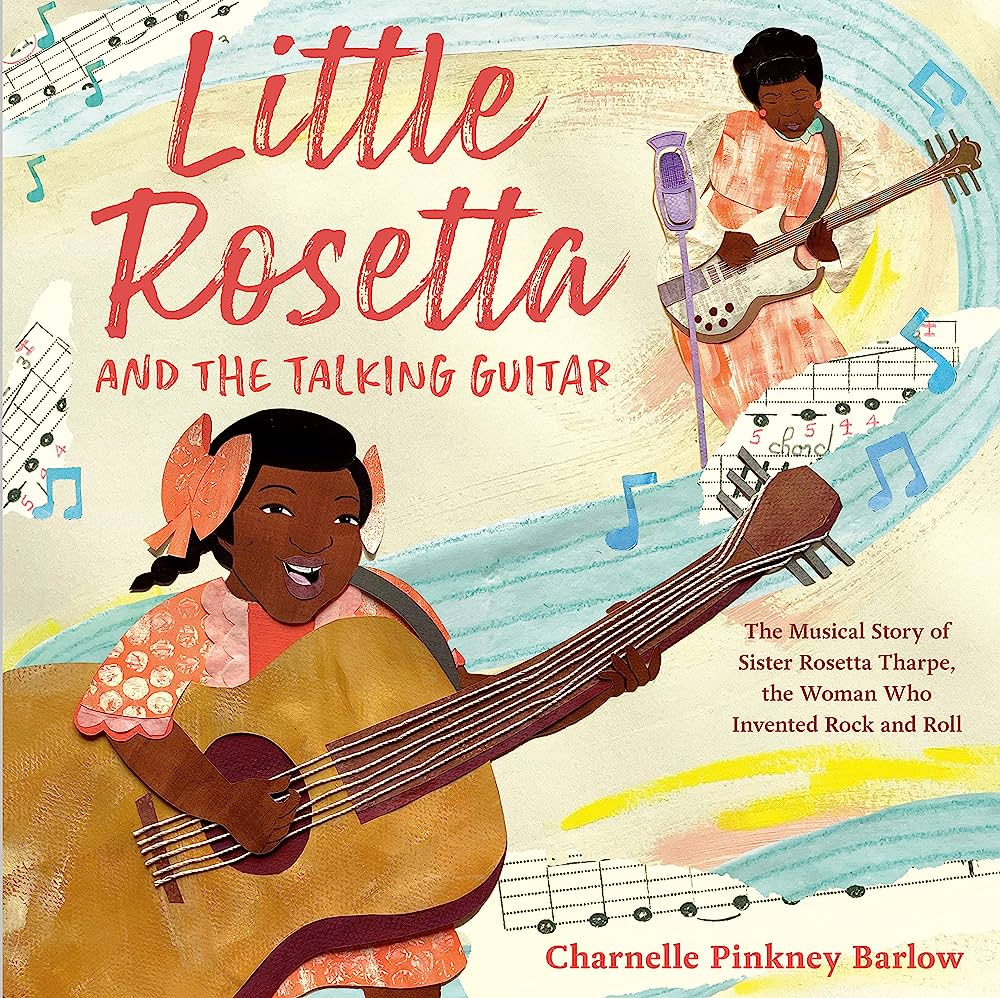
Little Rosetta and the Talking Guitar: The Musical Story of Sister Rosetta Tharpe, the Woman Who Invented Rock and Roll by Charnelle Pinkney Barlow

Published by Doubleday Books for Young Readers

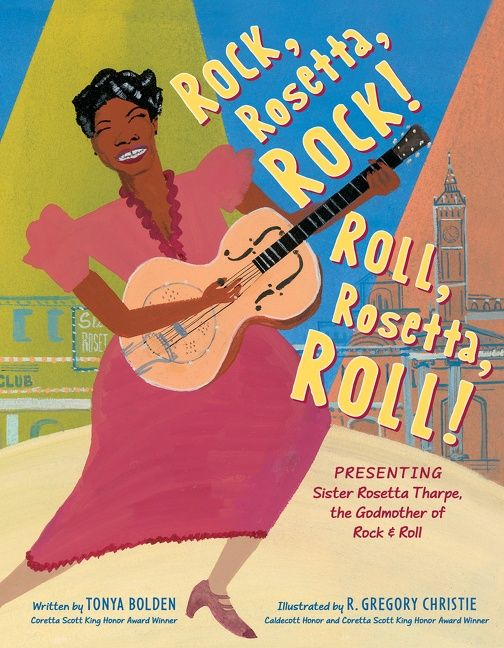
Rock, Rosetta, Rock! Roll, Rosetta, Roll! Presenting Sister Rosetta Tharpe, the Godmother of Rock and Roll by Tonya Bolden, illustrated by R. Gregory Christie

Published by HarperCollins

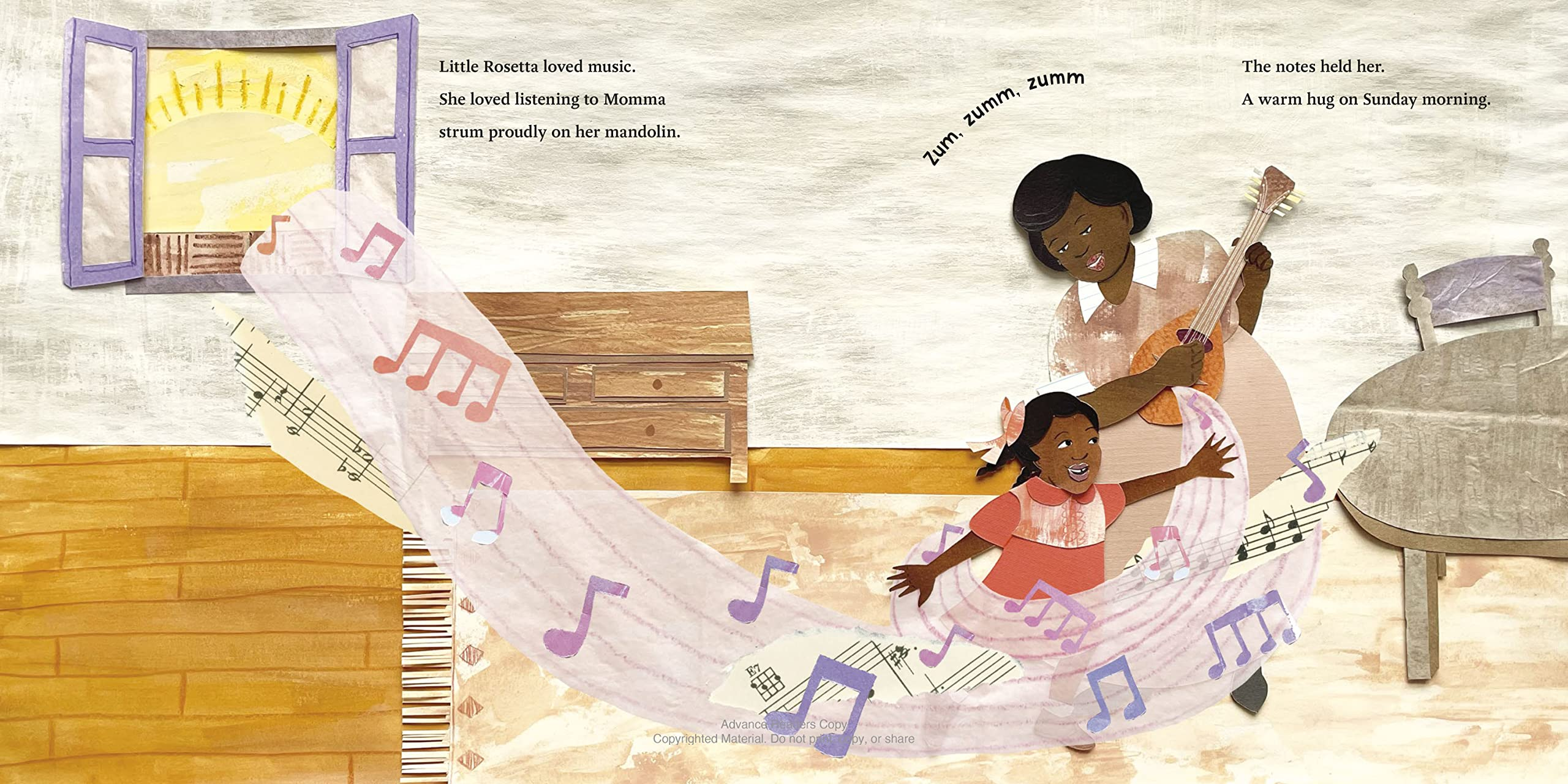
Summary: Two picture books celebrate the life of Sister Rosetta Tharpe, an early pioneer of the music that would become known as rock and roll. Little Rosetta and the Talking Guitar focuses on Rosetta’s childhood in Cotton Plant, Arkansas. When her musical mother gives her a guitar, Rosetta plays it night and day, incorporating the sounds she hears in her community to create a song that she performs at her church’s anniversary. The last few pages tell about Sister Rosetta’s career as an adult, and there’s an author’s note with a photo and additional information.

Rock, Rosetta, Rock! Roll, Rosetta, Roll! is a celebration of Sister Rosetta’s entire life, told in a rhythmic second-person narrative (“With music in your air, in your hair, in your bones, wiggling your toes–that travelin’ bag sure stayed packed.”). The celebration is all about her music, which was some of the earliest rock and roll. The book ends with a two-page timeline and an author’s note, citing her influence on such musicians as Elvis Presley, Chuck Berry, Little Richard, Johnny Cash, and Aretha Franklin. Both books are 40 pages; ages 4-8.

Pros: I knew nothing about Sister Rosetta Tharpe, so I very much enjoyed these high-energy celebrations of her life, each with their own distinctive illustrations. Take a look at this YouTube video to hear how ahead of its time her music was. These books will bring her some much-deserved recognition.

Cons: There’s not a lot of biographical information in the stories and no additional resources listed, although Rock, Rosetta, Rock! does have a list of sources.

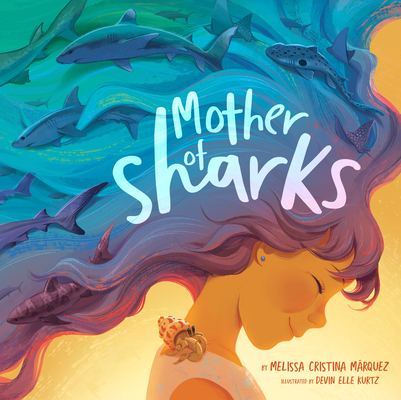
Mother of Sharks by Melissa Cristina Márquez, illustrated by Devin Elle Kurtz

Published by Penguin Workshop

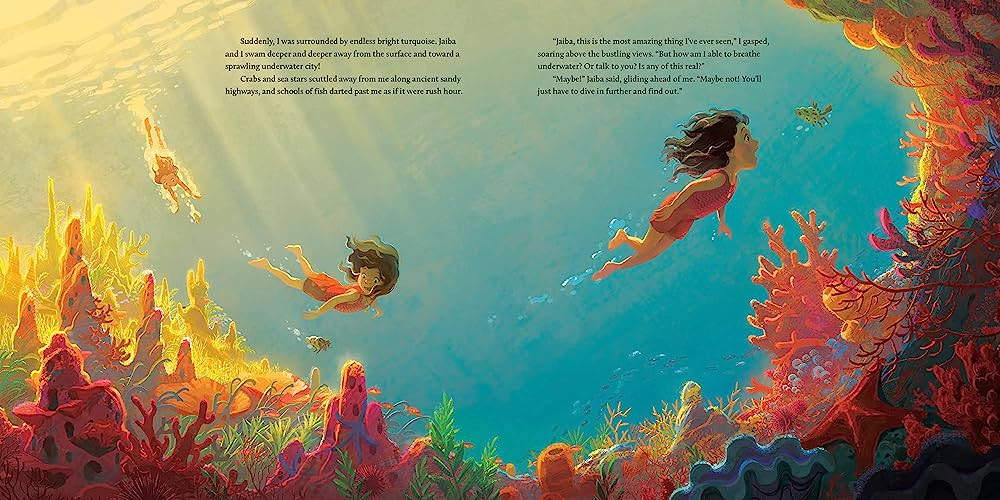
Summary:  Enjoying her last swim of the day at Puerto Rico’s Playita del Condado, Meli is amazed to find a talking hermit crab named Jaiba in one of the tidal pools.  Jaiba takes Meli on a magical journey underwater where she sees bleached coral and rescues a mako shark that’s tangled up in a plastic net. As Meli learns more from Jaiba about sharks and environmental damage that’s affecting them, she wonders if she can grow up to help them, since she’s never seen a scientist who looks like her.  Jaiba then takes her to meet one, a Hispanic woman known as the Mother of Sharks.  Inspired, Meli returns to the beach and her mom, excited to pursue her dreams.  Includes a letter from the author, a renowned marine biologist who grew up in Puerto Rico; a glossary; a list of resources; a translation of the Spanish words and phrases used in the story; and endpapers with about two dozen different types of sharks and their names. 48 pages; grades K-3.

Pros:  Gorgeous underwater illustrations (I love the cover!) depict a world that may inspire others to follow dreams of marine biology; the story offers positive affirmations that those dreams available to everyone.

Cons:  The font was small and hard to read in some of the darker-hued illustrations.

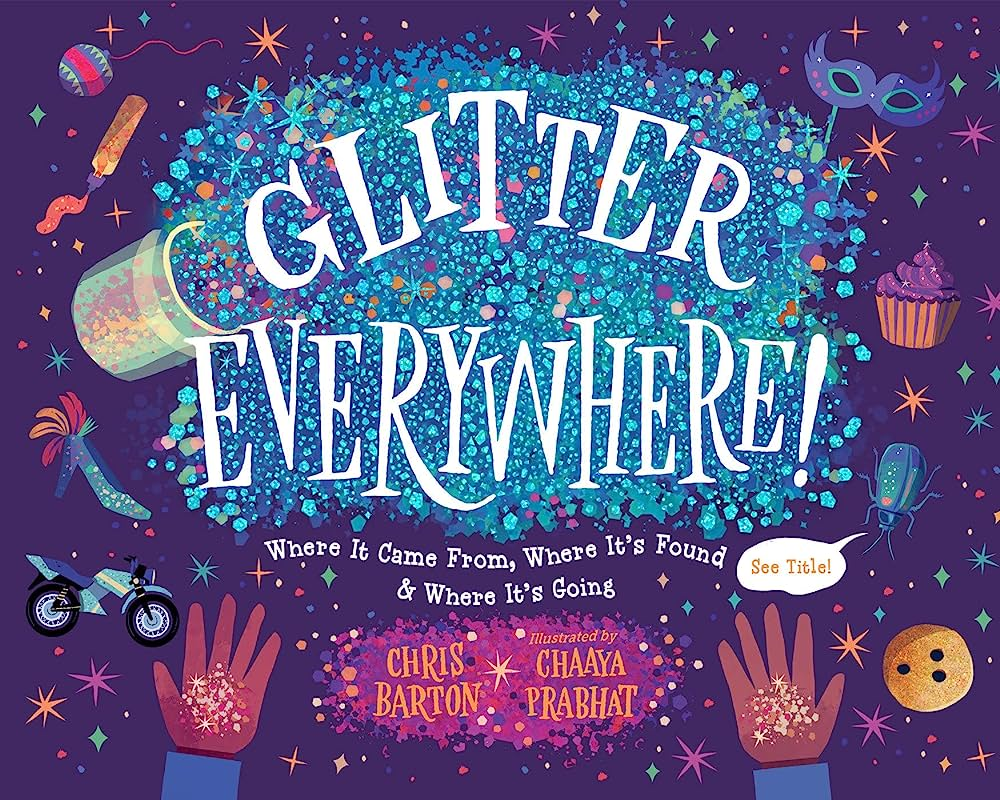
Glitter Everywhere! Where It Came From, Where It’s Found & Where It’s Going by Chris Barton, illustrated by Chaaya Prabhat

Published by Charlesbridge

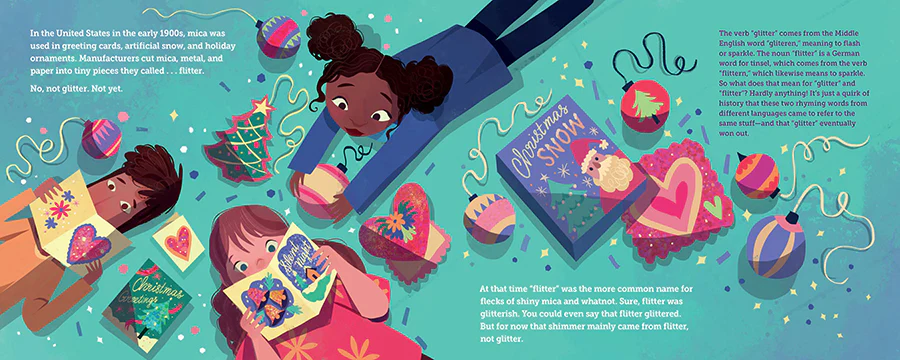
Summary:  Since early times, humans have been attracted to things that are iridescent, like beetles and mica.  In more recent history, people have learned to manufacture this iridescence, starting with “flitter”, a mix of ground-up mica, metal, and paper that was sold in the early 1900’s.  During World War II, mica was needed for industry, so a man named Henry F. Ruschmann began making plastic glitter from his factory in Bernardsville, NJ.  This product, which has become ubiquitous in our society, has its downsides, being the very definition of microplastic, a material that is wreaking all kinds of environmental havoc.  Alternative glitters are being created, so it looks as though, one way or another, glitter is here to stay.  Includes an author’s note that talks about how he researched the book, an illustrator’s note, books for further reading, and a bibliography.  48 pages; grades 2-5.

Pros:  Chris Barton tells the story of glitter with some history, some science, and a lot of humor in this extremely engaging nonfiction book.  The illustrations are lots of fun, and what kid is not going to want to read about glitter?

Cons:  My vacuum cleaner and I have kind of a love/hate relationship with glitter.

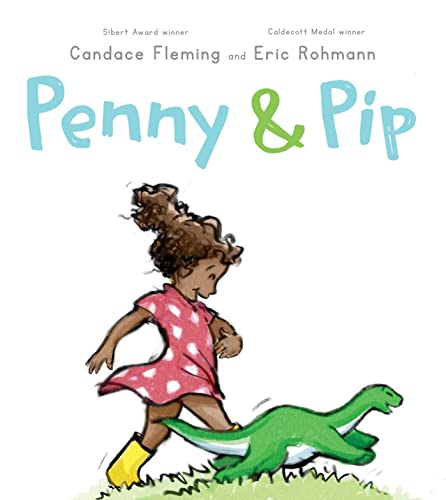
Penny & Pip by Candace Fleming, illustrated by Eric Rohmann

Published by Atheneum/Caitlyn Dlouhy Books

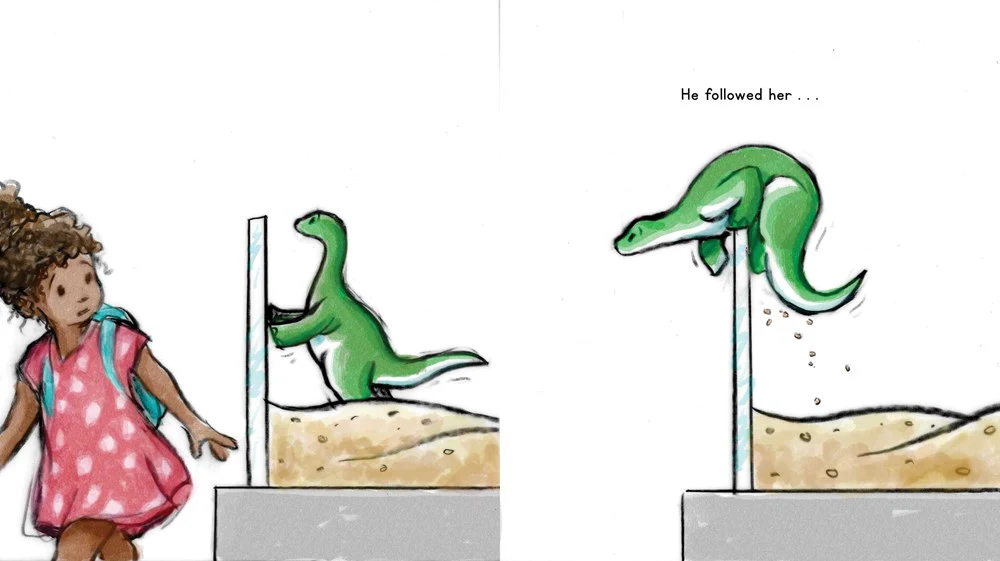
Summary:  Penny’s on a field trip to the natural history museum when “something astonishing” happens: a baby dinosaur hatches from one of the eggs on exhibit.  Only Penny notices; the baby notices, too, and it starts following Penny around the museum.  She shares her lunch, and when the baby dinosaur makes a “pip, pip” sound, she names it Pip.  When it’s time to go home, Penny doesn’t want to leave her new friend behind, but Pip doesn’t fit in her backpack.  Pip hides in the pile of stuffed animals at the gift shop, Penny pays for her new “toy,” and the two are on their way.  40 pages; ages 4-8.

Pros:  This award-winning team has produced another fun story with adorable illustrations that is sure to become a favorite of dinosaur aficionados.

Cons:  I suspect that Penny & Pip: The Next Day might not end quite this happily.

Remember by Joy Harjo, illustrated by Michaela Goade

Published by Random House Studio

Summary:  Former U.S. Poet Laureate Joy Harjo’s poem celebrates life: the cosmos, the Earth, the plants and animals, and people, especially parents.  “Remember you are the universe.  And this universe is you.  Remember.”  Caldecott Medalist Michaela Goade’s illustrations depict a child traveling through the universe, with images inspired by traditions from her Tlingit culture.  Includes an author’s note about poetry that encourages readers to write their own poems and an illustrator’s note with additional information about her inspirations for the pictures.  40 pages; ages 5 and up.

Pros:  This beautiful book created by two Indigenous American artists celebrates the complexity of life and the universe, reminding the reader to stop and pay attention.  A Caldecott contender for sure.

Cons:  Young readers will need some adult guidance to fully appreciate both the text and the illustrations.

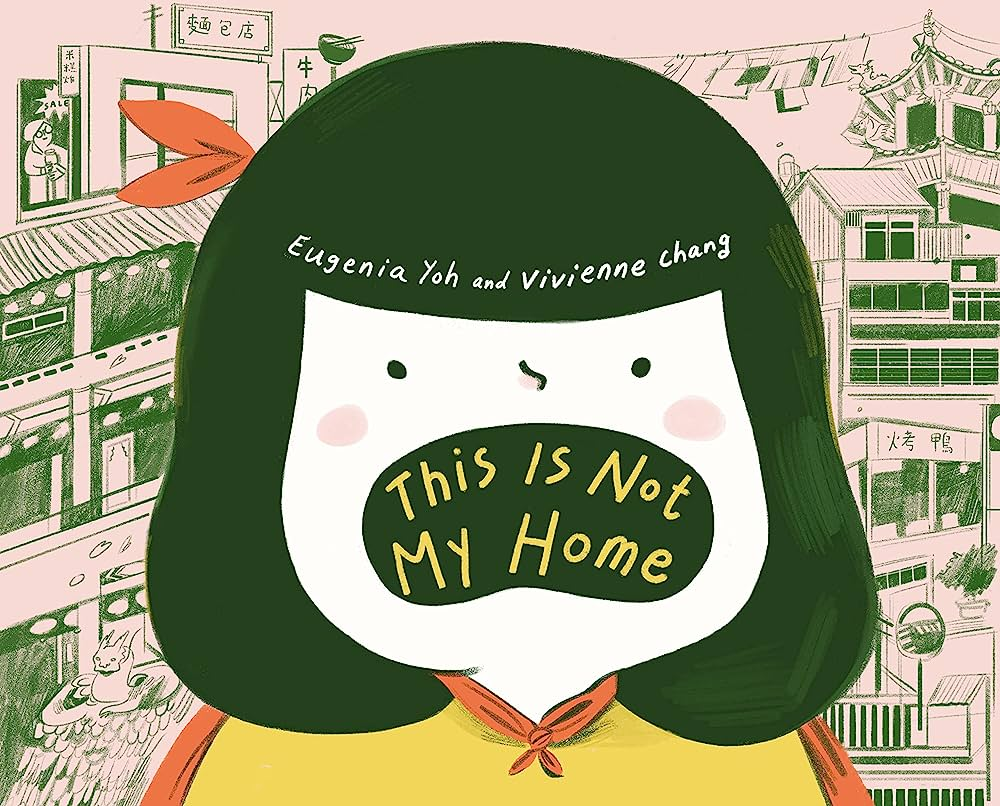
This Is Not My Home by Eugenia Yoh, illustrated by Vivienne Chang

Published by Little, Brown Books for Young Readers

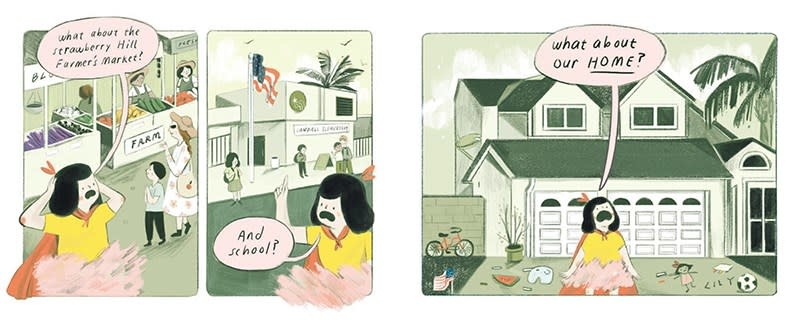
Summary:  When Lily’s mother tells her they are moving back to Taiwan to take care of Ah Ma, Lily rebels.  What about school?  The farmers’ market?  The fireflies in the park?  Her friend Jill?  Mom asks Lily to be understanding, but Lily refuses as they pack, get on the plane, and are greeted by Ah Ma.  As Lily is reluctantly guided through her new neighborhood, she keeps up a steady narration, “This is not the farmers’ market!  This is not my school!  This is not my home!”  A turning point comes when her mother calmly explains that it may not be Lily’s home, but it is her home.  A few wordless spreads show Lily making a couple of friends at school and enjoying a moped ride through the city, as calendar pages mark the passage of several months.  The last page declares, “This is my home,” in English and Mandarin.  Endpapers show Lily’s American neighborhood at the beginning and her Taiwanese one at the end.  48 pages; ages 4-8.

Pros:  A cute and funny debut picture book that poignantly captures the process of reverse immigration.

Cons:  I’m not sure I could be as patient as Lily’s mother is.

Like Lava in My Veins by Derrick Barnes, illustrated by Shawn Martinbrough

Published by Nancy Paulsen Books

Summary:  Bobby Beacon has a superhero’s name (“beacons lead people and show them the way”), and now he’s off to a superhero’s school, Academy of Kids With Awesome Abilities, or AKWAA.  His superpower is light and fire, but sometimes if he gets angry, his powers overwhelm him, and he ends up destroying things.  His first teacher, Ms. Flores, doesn’t always treat him respectfully, and Bobby ends up melting his chair.  Having witnessed another student, Pause, get expelled and sent to the Institute of Superpowers for misusing her superpowers, Bobby is afraid he’s headed in that direction.  But a smaller class and a more understanding teacher, Miss Brooklyn, make him feel welcome at school and give him strategies for channeling his powers.  He needs those strategies when the head of the Institute and Pause come looking for him.  He manages to defeat the head and puts in a good word for Pause to get her readmitted to AKWAA.  It’s a happy ending, and the final page hints that a sequel may be in store.  40 pages; grades 1-4.

Pros:  Fun comic book meets Black empowerment in this story of superhero kids learning to channel their powers for goods.  Miss Brooklyn provides a great model for a compassionate teacher, showing the importance of listening and using empathy to reach kids.  The cover and illustrations make this a book that will fly off the library shelves.

Cons:  This felt like it would have worked better as a longer graphic novel with more character and plot development.

Whale Fall: Exploring an Ocean-Floor Ecosystem by Melissa Stewart, illustrated by Rob Dunlavey

Published by Random House Studio

Summary:  When a whale dies, its massive body sinks to the bottom of the deep sea, beginning a 50-year process that supports all kinds of ocean life.  Hagfish, sleeper sharks, and other scavengers are the first to arrive, eventually picking the bones of the whale clean.  Zombie worms feed on the bones, and squat lobsters eat the zombie worms.  The process continues for decades, supporting millions of animals in the deep sea, until every trace of the whale has disappeared.  Includes additional information on the 22 animals included in the main text, a list of selected sources, and resources offering additional information.  40 pages; grades K-4.

Pros:  A fascinating look at a process scientists didn’t know occurred until 1987.  The illustrations perfectly capture the deep sea, with close-ups of some of the creatures featured in insets.  A unique topic that is sure to capture the interest of budding marine biologists.

Cons:  The picture of hungry hagfish descending on the whale carcass may be a bit disturbing to whale lovers. Circle of life, man.

Cake vs. Pie by Sudipta Bardhan-Quallen, illustrated by Stephani Stilwell

Published by Clarion Books

Summary:  Cake is the best kind of friend and rules the bakery until Pie comes along.  “Pie was warm and open.  Charming to the core, Pie was always surprising.”  Cake and Pie become friends, until Cake starts to feel jealous of the attention Pie is getting.  Cake challenges Pie to a food fight, then gets all decked out for the occasion with extra frosting and candles.  It turns into a disaster, prompting Cake and Pie to talk and resolve their differences.  All is well until the last page, which shows Hot Dog and Hamburger going at it in the ring.  32 pages; ages 4-8.

Pros:  A fun and funny celebration of friendship with illustrations that are positively yummy.

Cons:  If you carrot stand food puns, donut pick up this book.

Spanish Is the Language of My Family/El español es la lengua de mi familia by Michael Genhart, illustrated by John Parra

Published by Neal Porter Books

Summary:  Manolo is excited to sign up for his school’s Spanish spelling bee, because “Spanish is the language of my family,” or “es la lengua de mi familia.”  He already knows how to spell a lot of Spanish words, but some are unfamiliar to him, and his abuela helps him prepare.  While they study, she tells him how she and her classmates were punished for speaking Spanish in school.  On the big day, there’s stiff competition, but Manolo wins the bee by correctly spelling “respeto,” the Spanish word for respect, which he has for his abuela, his family, and his Spanish language.  Includes an author’s note with additional information about the history of the Spanish language in the United States and the National Spanish Spelling Bee.  40 pages; ages 4-8.

Pros:  Manolo’s pride in his bilingualism is evident, with Spanish words easily woven into the text, and a contrast to abuela’s shameful experiences with the language when she was growing up.  John Parra’s illustrations are always a treat. I hope this story will inspire educators to check out the Spanish spelling bee.

Cons:  The disgraceful history of the Spanish language in the U.S.