Danbi’s Favorite Day by Anna Kim

Published by Viking Books for Young Readers
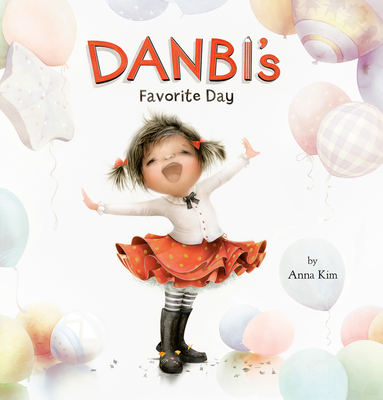
Summary:  In this follow-up to Danbi Leads the School Parade, Danbi is excited to celebrate Children’s Day.  “Back in Korea,” Danbi tells her friends when she invites them to the celebration, “it’s the day when all your wishes come true.”  But Danbi’s parents, who have to work at their deli, can’t host a big party. Her mother reminds her that Children’s Day is “about celebrating the children on Earth who will one day lead the world.”  They compromise with a party behind the deli, and all the children arrive on the big day.  There’s dancing and drawing with sidewalk chalk until a sudden storm sends everyone inside.  Danbi is sure the party is ruined, but her parents give the kids permission to eat whatever they want from the deli, and that, combined with her mother’s special rainbow cake, makes Children’s Day a true celebration of children.  40 pages; ages 4-8.

Pros:  The story and illustrations convey the joyful energy Danbi seems to bring to all aspects of her life and can serve as a good introduction to the Children’s Day holiday.

Cons:  No additional information about Children’s Day.

A Girl Can Build Anything by e. E. Charlton-Trujillo and Pat Zietlow Miller, illustrated by Keisha Morris

Published by Viking Books for Young Readers

Summary:  Girls and women in these pages learn to build increasingly larger, more complex objects.  First, it’s a box or birdhouse, then they move on to designing a trellis, a table, and a treehouse for a new playground.  There can be setbacks when projects don’t go as planned, but taking a break and starting again can get you where you want to go.  By the end, a team of women has created a new building at the entrance of the playground.  32 pages; ages 4-8.

Pros:  The cheery text and illustrations provide an empowering introduction to get girls (and boys) excited about learning to use tools and building their own projects.  

Cons:  That it still seems like something of a novelty for girls and women to be using tools and building things.

The Book of Turtles by Sy Montgomery, illustrated by Matt Patterson

Published by Clarion Books

Summary:  Naturalist Sy Montgomery writes engagingly about turtles, starting with descriptions of their anatomy and evolution.  She describes turtle species who hold the records for most colorful, stinkiest, fastest, largest, and more.  There are celebrity turtle profiles and information on how turtles communicate.  Turtles, protected by their shells, have survived for more than 200 million years, but now many species are endangered due to human activities.  The final few pages tell readers different ways they can help them survive.  Includes a glossary, bibliography, and list of resources.  40 pages; grades K-4.

Pros:  Montgomery has a knack for focusing on facts and information that will be of most interest to readers.  The acrylic paintings look almost like photos and show incredible details of a wide variety of turtles.  Kids who already love turtles will be thrilled, and others may become fans after reading this book.

Cons:  I wish this book had been around during my daughter’s decade-long obsession with turtles.

Papá’s Magical Water-Jug Clock by Jesús Trejo, illustrated by Eliza Kinkz

Published by Minerva

Summary:  Jesús is excited to be spending Saturday helping Papá with his landscaping job.  It’s hot work, and Jesús is put in charge of the water jug, which Papá tells him is like a magical clock–when the jug is empty, it’s time to go home.  Jesús enjoys sharing water with the customers’ pets and splashing some on his face to cool off.  In no time at all, the jug is empty, and Jesús is ready to go home.  Unfortunately, it’s only 10:30 and there are 11 more customers waiting!  Papá straightens his son out about the “magic”, then sends him to the house to refill the jug.  Lesson learned, Jesús works hard for the rest of the day, realizing that the real magic is the teamwork between him and Papá.  48 pages; ages 4-8.

Pros:  A charming memory recounted by comedian Jesús Trejo.  The comic style illustrations perfectly complement the funny text (be sure to check out the cartoon landscapers on the endpapers), which also shows the heartwarming bond between father and son.  

Cons:  I wish there had been more information about the real Jesús and his Papá.

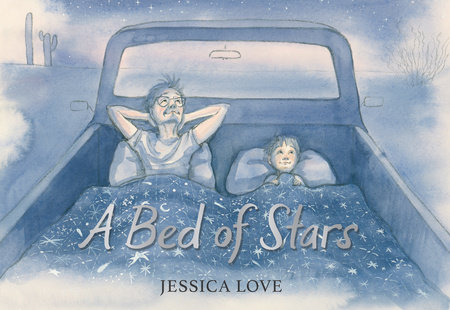
A Bed of Stars by Jessica Love

Published by Candlewick

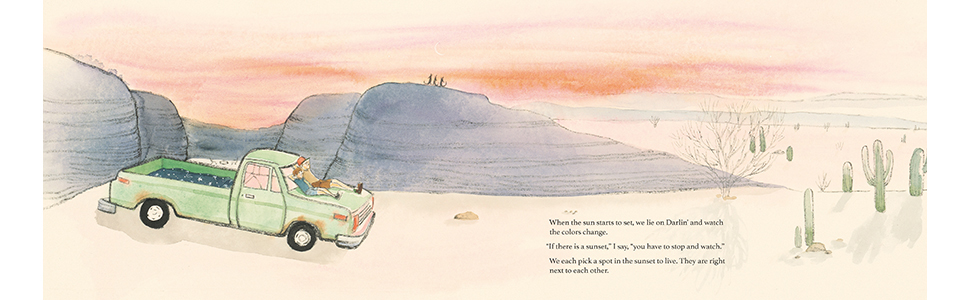
Summary:  The narrator has trouble falling asleep, feeling tiny when thinking of the vastness of the universe.  Dad announces one morning that the two of them are going camping, and they pack the pick-up truck and drive off to the desert.  Once there, they jump in the dunes, observe beetles and birds, build a campfire, and watch the sun set.  When it’s time to sleep in the bed of the pick-up, Dad explains that stars are made of the energy, just like the beetles, the birds, and the two of them.  They start to name the stars after people they know, and before long, both are asleep.  In the morning, they pack up and drive home, where they discover that Mom has been busy in their absence, painting glow-in-the-dark stars all over the child’s bedroom walls and ceiling.  40 pages; ages 4-8.

Pros:  The watercolor paintings capture the beauty of the desert, and the simple story shows the love between parents and child and the safety that provides.

Cons:  Campfires are better after sunset, not before.

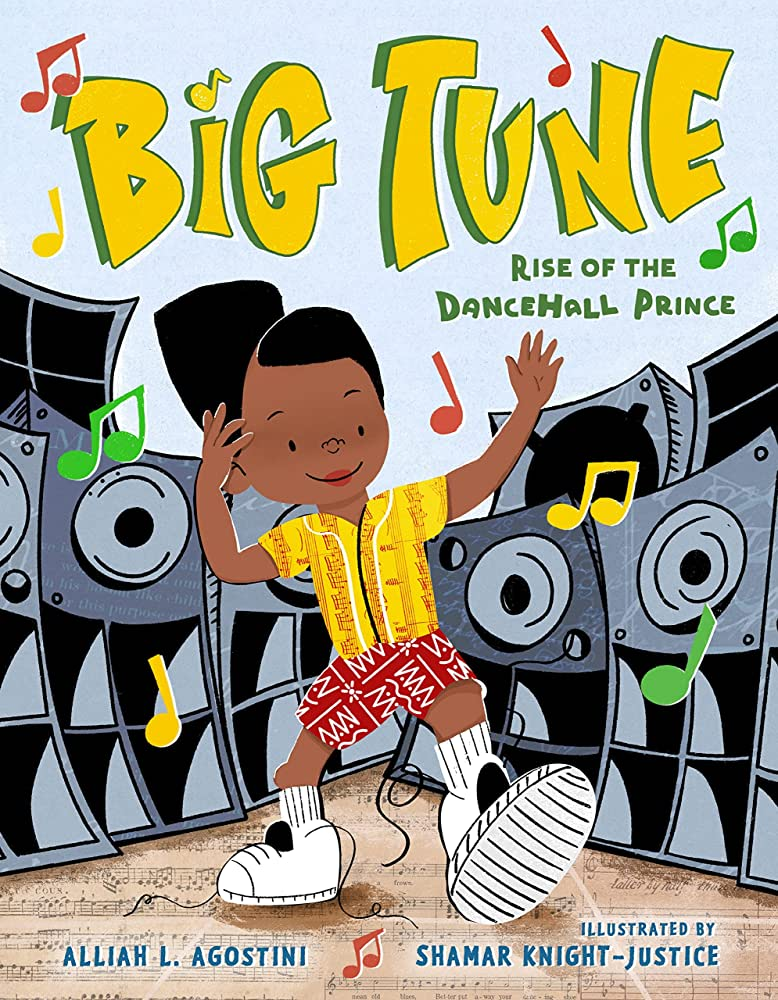
Big Tune: Rise of the Dancehall Prince by Alliah L. Agostino, illustrated by Shamar Knight-Justice

Published by Farrar, Straus and Giroux

Summary: Shane comes from a family of dancers, but he’s too shy to dance at the big gatherings held every weekend. He focuses on collecting cans to buy the high-tops he wants, only busting out his dance moves in the privacy of his own room. He’s just about reached his goal when a speaker breaks, and the big dance party gets cancelled. Shane gathers his money and heads to the local music store, where he’s able to buy a new speaker. The party is saved, Shane is a hero, and he celebrates by finally going public with his dance moves. The family passes the hat, and before long, Shane has all his money back AND has become the dancehall princes. Includes an author’s note with additional information about Jamaican dancehalls and how the music influenced musicians like DJ Kool Herc and the Notorious B.I.G. 40 pages; ages 4-8.

Pros: The bouncy rhyming text and brightly colored illustrations make this a celebration of both Jamaican dancehall music and Shane, a hardworking kid who does his own thing, helps his family, and has all the moves on the dance floor.

Cons: Shane’s jerky older brothers only partially redeemed themselves at the end of the story.

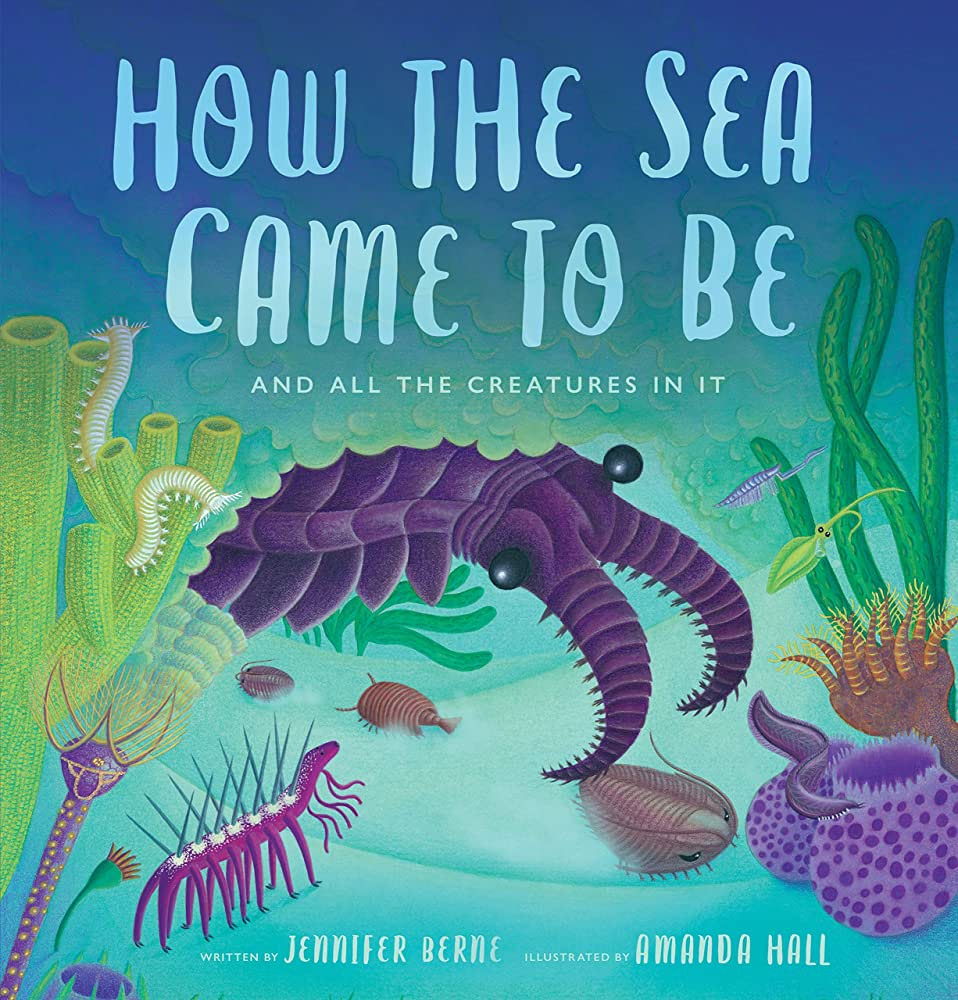
How the Sea Came to Be (And All the Creatures In It) by Jennifer Berne, illustrated by Amanda Hall

Published by Eerdmans Books for Young Readers

Summary:  Rhyming quatrains describe the history of the sea in three parts: the birth of the sea, the birth of life, and the sea from then until now.  All are accompanied by colorful illustrations that sometimes show the sun-dappled waters of the sea and other times take readers down into the black ocean depths.  Includes notes from the author and illustrator; two pages of ocean creatures that include illustrations and a paragraph of information about each; a four-panel gatefold timeline showing seven eras of the Earth’s history; key terms and concepts with definitions; and two pages of additional resources. 56 pages; grades 1-5.

Pros:  A spectacular nonfiction book that should be considered for a Sibert award.  The rhyming text is both catchy and impressive, making this a great choice to read aloud, and the illustrations are truly spectacular, conveying both the powerful forces that created the seas and the incredible diversity of life within them.  The timeline is a masterpiece, and the rest of the back matter makes this an excellent resource for research.

Cons:  I would have liked the timeline to have also been incorporated into the text to show the eras of each of the three parts.

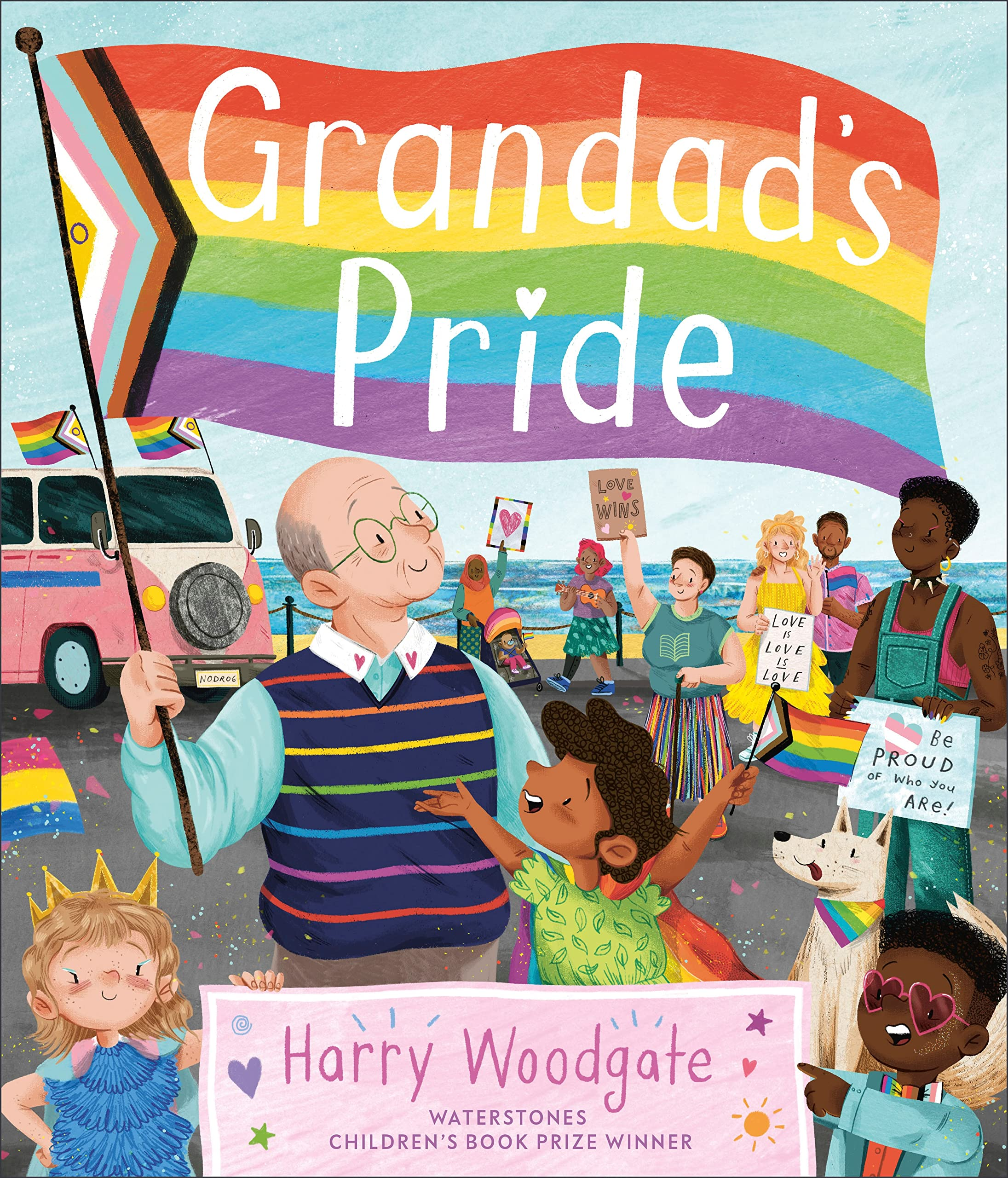
Grandad’s Pride by Harry Woodgate

Published by little bee books

Summary:  Grandad and Milly from Grandad’s Camper are back for another summer visit.  When Milly discovers Grandad’s old Pride flag in the attic, she gets to hear some reminiscences about how Grandad and the late Gramps traveled around the country in their camper, marching with groups that were calling for equality and respect and making new friends in the process.  When Grandad claims that his partying days are over, Milly convinces him to organize a Pride celebration in his village.  Before long, everyone is getting into the spirit, hanging flags and other decorations, creating book displays, and baking rainbow cakes.  On the big day, Grandad surprises Milly by leading the parade in the camper.  A sudden rainstorm fails to put a damper on the festivities, and the resultant rainbow makes Grandad think Gramps is with them in some way.  32 pages; ages 4-8.

Pros:  This upbeat story with its rainbow-hued illustrations makes a perfect addition to any Pride book list.

Cons:  Having a character say that each color of the Pride flag has a special meaning with no back matter to explain.

Contenders: Two Native Baseball Players, One World Series by Traci Sorell, illustrated by Arigon Starr

Published by Kokila

Summary:  The story opens with a key moment of the 1911 World Series: Charles Bender of the Philadelphia Athletics pitching to John Meyers of the New York Giants, who hits a double, then goes on to score the winning run of Game One.  Both Charles and John were from Native Nations, and the book goes back to trace the stories of how each one got to play in the World Series.  Charles grew up on the White Earth Reservation in Minnesota before being sent to an Indian boarding school in Philadelphia.  John’s childhood was spent on the Cahuila reservation in California.  Each endured poverty and racism as they pursued their love of baseball and eventually wound up in the major leagues.  Together, they played in nine World Series; Charles was elected to the Baseball Hall of Fame in 1953, and both were inducted into the American Indian Hall of Fame when it opened in 1972.  The book ends with a list of Native MLB players today, and the racism that’s still present with racist team mascots.  Includes an author’s note, timeline, and list of sources.  48 pages; grades 1-5.

Pros:  A fascinating look at two men who faced hardship and racism throughout their lives but rose above it to become excellent athletes who exemplified sportsmanship and teamwork.

Cons:  Kids I work with seem to have no interest in professional baseball these days.

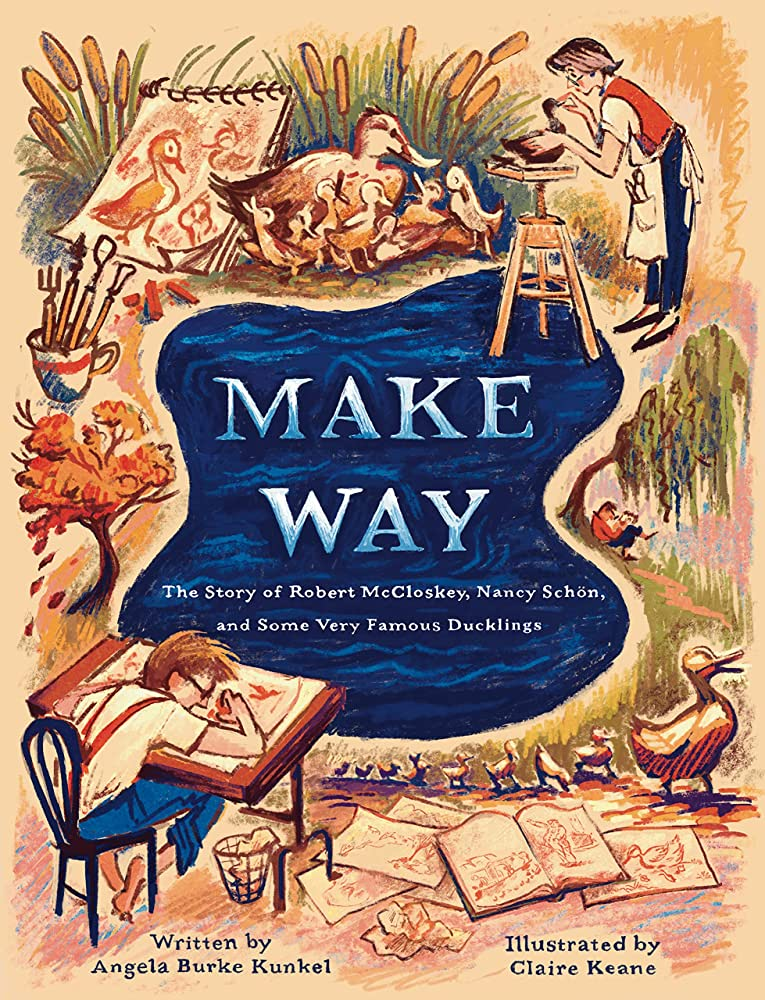
Make Way: The Story of Robert McCloskey, Nancy Schön, and Some Very Famous Ducklings by Angela Burke Kunkel, illustrated by Claire Keane

Published by Random House Studio

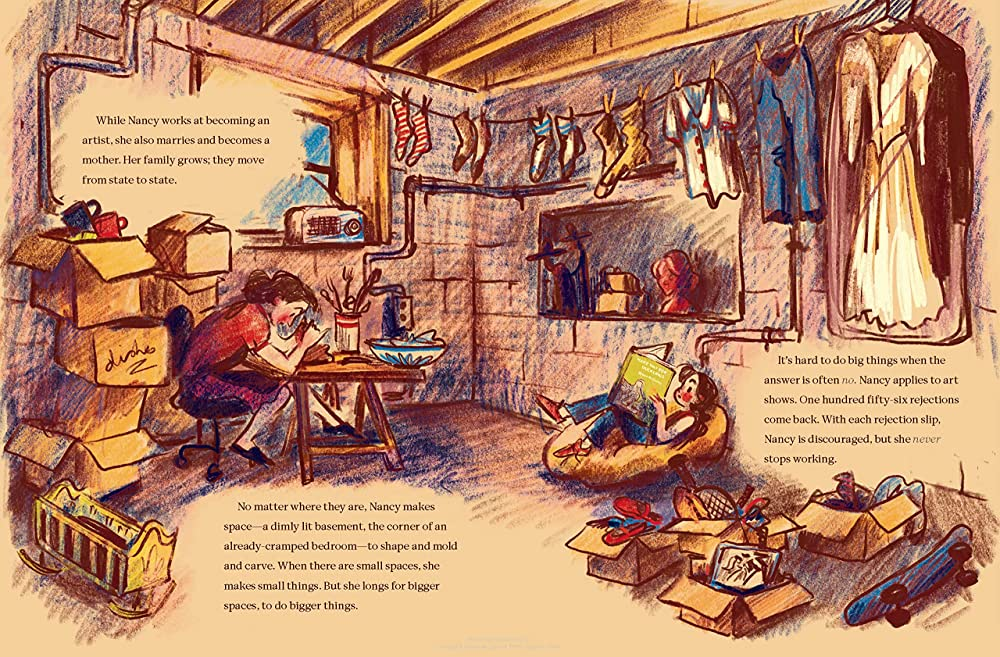
Summary:  Robert “Bob” McCloskey spent his childhood in Hamilton, Ohio, his active mind and hands always creating.  Nancy Schön spent hers–many years later–in Newton, Massachusetts, where she found solace in working with clay in art class.  Bob moved to Massachusetts to study art, and eventually wrote the classic Make Way for Ducklings.  Nancy struggled with her art for years, receiving one rejection after another, before being inspired to create a sculpture of Bob’s ducklings.  It wasn’t an easy process, but she was finally ready to unveil her project to Bob, who gave it a hesitant seal of approval.  When he saw kids interacting with the ducks, he became more enthusiastic.  The statues were installed in October 1987, and you can visit them in the Boston Public Garden today.  Includes an author’s note, timeline, and bibliography.  48 pages; ages K-4.

Pros:  A heartwarming story of two artists and the famous book and statues they created, with cozy illustrations that are reminiscent of Robert McCloskey’s books.  

Cons:  There’s a photo of several of the ducks (wearing rainbow sweaters for Pride) with the author’s note, but it would have been nice to include a photo of the entire family.