The Hospital Book by Lisa Brown

Published by Neal Porter Books
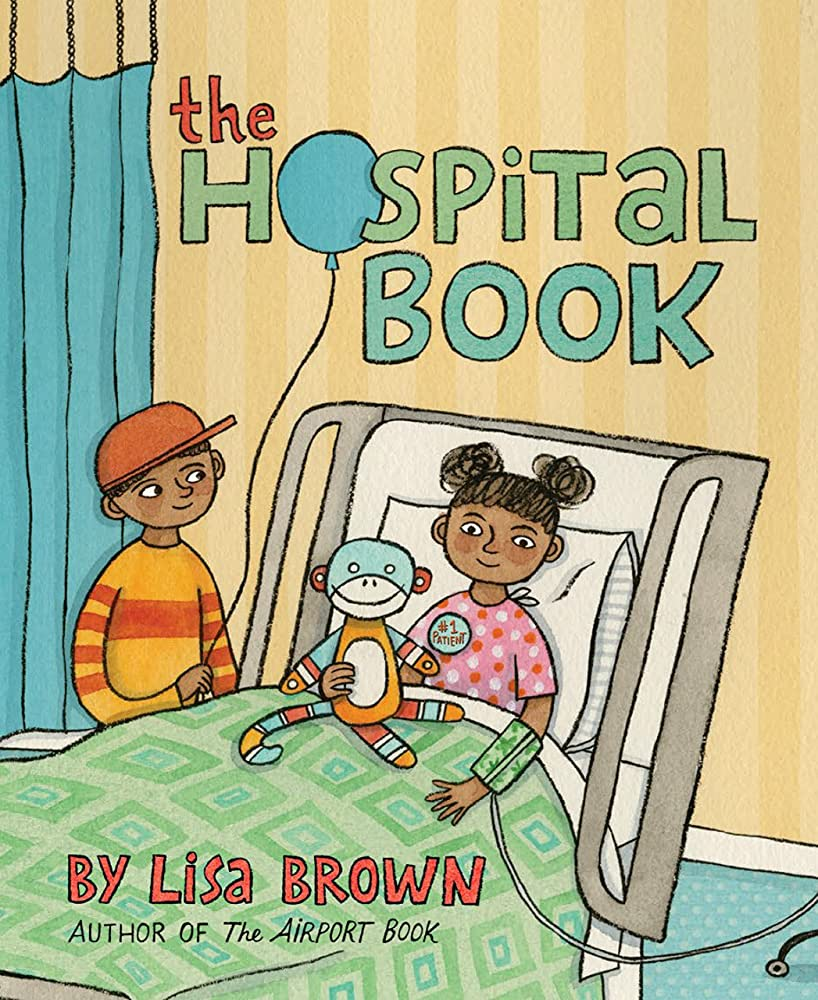
Summary:  “When I went to the hospital, I cried nine times,” begins the girl narrator, then recounts what each of those times was.  Sometimes the pain makes her cry, like when her stomach starts hurting, and when the car goes over a bump on the way to the hospital.  Other times, it’s from fear, when she finds out she has appendicitis, and she needs an operation.  And once the procedure is done, and she’s staying overnight at the hospital, she sheds a few tears of loneliness.  But in the morning, her family visits, there are pancakes for breakfast, and then she gets to go home.  There are a few tears of joy when she arrives, but those, she says, don’t count.  40 pages; ages 4-9.

Pros:  Just as she did in The Airport Book, Lisa Brown offers a comforting tour through the hospital (based on the reappearance of the sock monkey, I’m pretty sure this is the same family).  There is some sly humor, with hospital staffers Nurse Nightingale and Drs. Zhivago and Watson, but Brown doesn’t shy away from some of the less happy emotions kids may feel in the hospital and matter-of-factly explains some of the procedures they may encounter there.  

Cons:  I’ll take an airport visit over a hospital one any day.
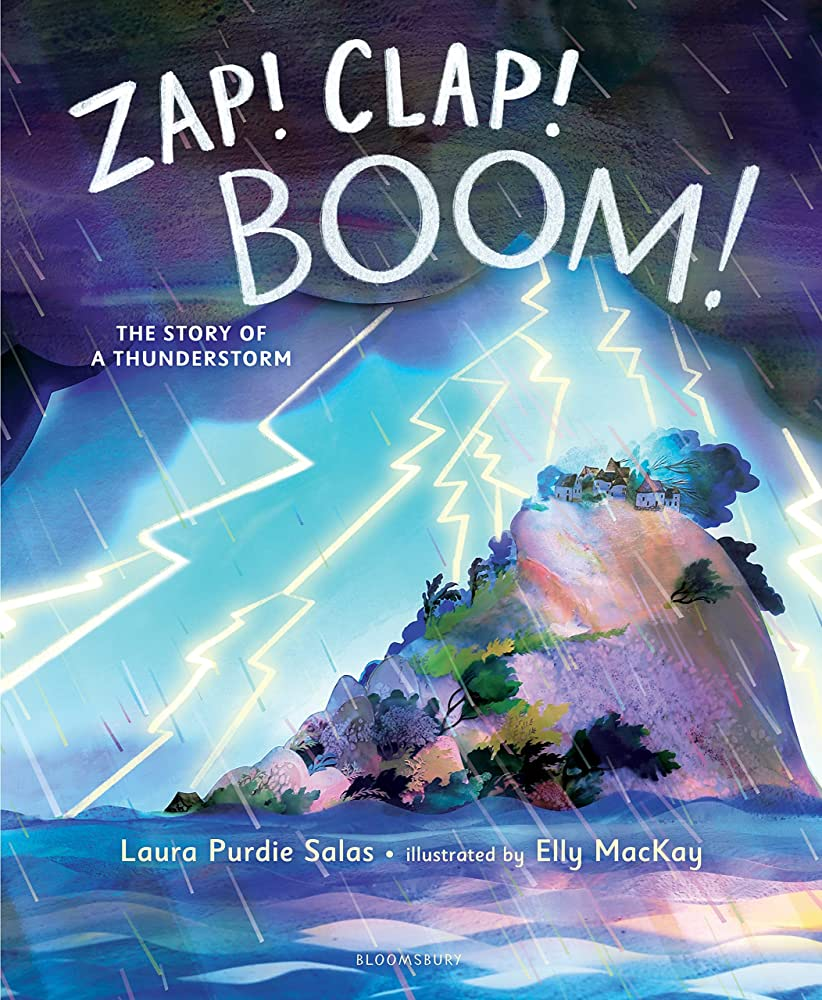
Zap! Clap! Boom! The Story of a Thunderstorm by Laura Purdie Salas, illustrated by Elly MacKay

Published by Bloomsbury Children’s Books

Summary:  Three children play on a sunny day.  Then dark clouds roll in, and suddenly, “ZAP! CLAP! BOOM!” there’s a clap of thunder and lightning is seen in the distance.  The children head for home and three goats run for shelter as the rain arrives.  Safe in their house, the kids watch the lightning and rain.  Then just as quickly, the storm moves on, and both sets of kids head outside again, as “the world now shines.”  Includes additional information on the science of thunderstorms, as well as a list of books and websites.  40 pages; ages 4-9.

Pros:  The rhyming text is very catchy, and kids will enjoy saying the repeated “Zap! Clap! Boom!” refrain.  The dramatic illustrations capture all the phases of a thunderstorm, and the back matter makes this a useful resource for older readers.

Cons:  I thought the kids could have moved toward home a little quicker when the storm arrived.

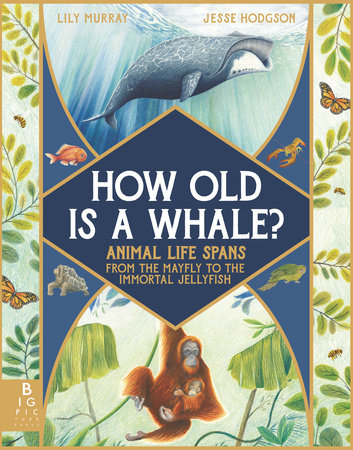
How Old Is a Whale? Animal Life Spans from the Mayfly to the Immortal Jellyfish by Lily Murray, illustrated by Jesse Hodgson

Published by Big Picture Press

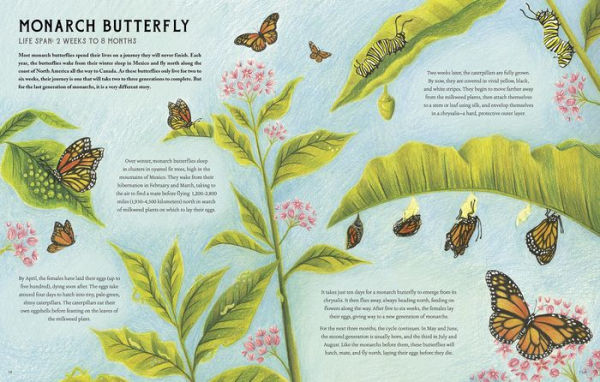
Summary:  From the mayfly (5 minutes to 24 hours) and the honeybee (5 to 7 weeks) to the glass sponge (11,000 years) and the immortal jellyfish (in some sense, forever), this book takes a look at the lifespans of a wide variety of animals.  Each two-page spread shows the animal in its habitat with several paragraphs of information about the it over the course of its lifespan.  The introduction raises interesting questions about lifespans, and the final two pages show all the animals with a list of where to find them in the book.  64 pages; grades 1-5.

Pros:  This engaging book will intrigue all kinds of animal lovers.  I found the animals with the shortest and longest lifespans to be the most fascinating, but all of them had some pretty interesting information.

Cons:  One of my favorite books to read to kids is Steve Jenkins’s Biggest, Strongest, Fastest, which states that the animal that lives the longest is the Galapagos tortoise, with a lifespan of 150 years.  This book listed animals that live even longer.

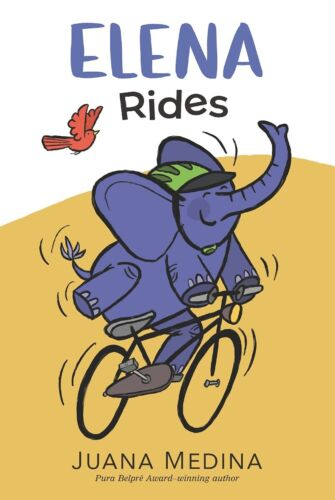
Elena Rides by Juana Medina

Published by Candlewick

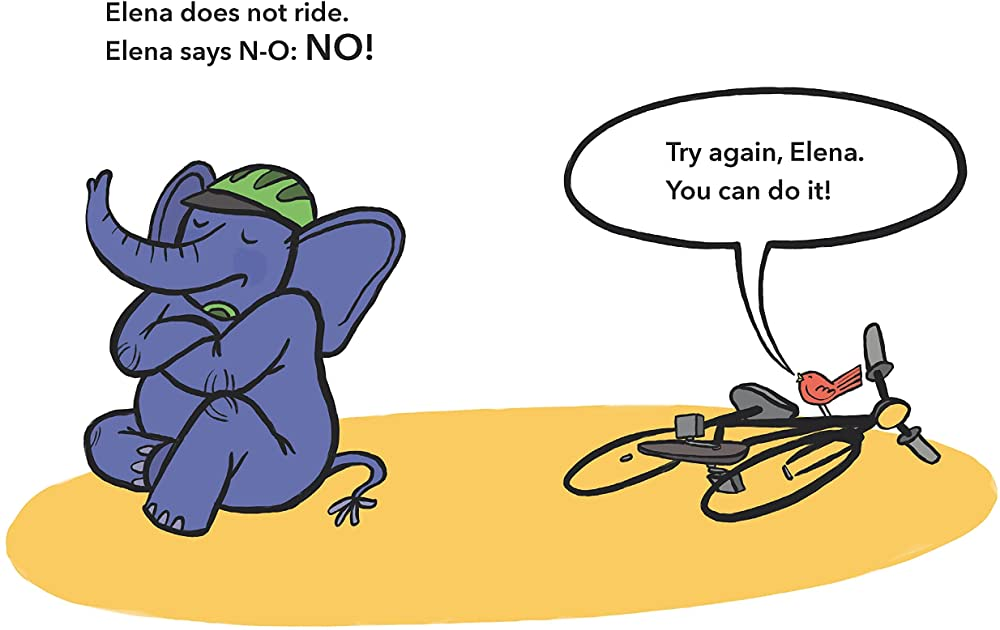
Summary:  Elena is learning to ride a bike, an experience that requires persistence and comes with a few falls.  Sometimes she can motivate herself to get back on the bike and try again; other times she needs some help.  In the end, her hard work pays off, and Elena rides!  Available in three editions: English, Spanish, and bilingual with both English and Spanish.  32 pages; ages 3-7.

Pros:  This cute early reader has plenty of action in the words and illustrations, with a big “KA-BANG!”, “KA-PLUNK!” and “KA-RASH!” when Elena falls.  Kids will relate to her experiences and see how persistence can lead to success.

Cons:  Ouch.

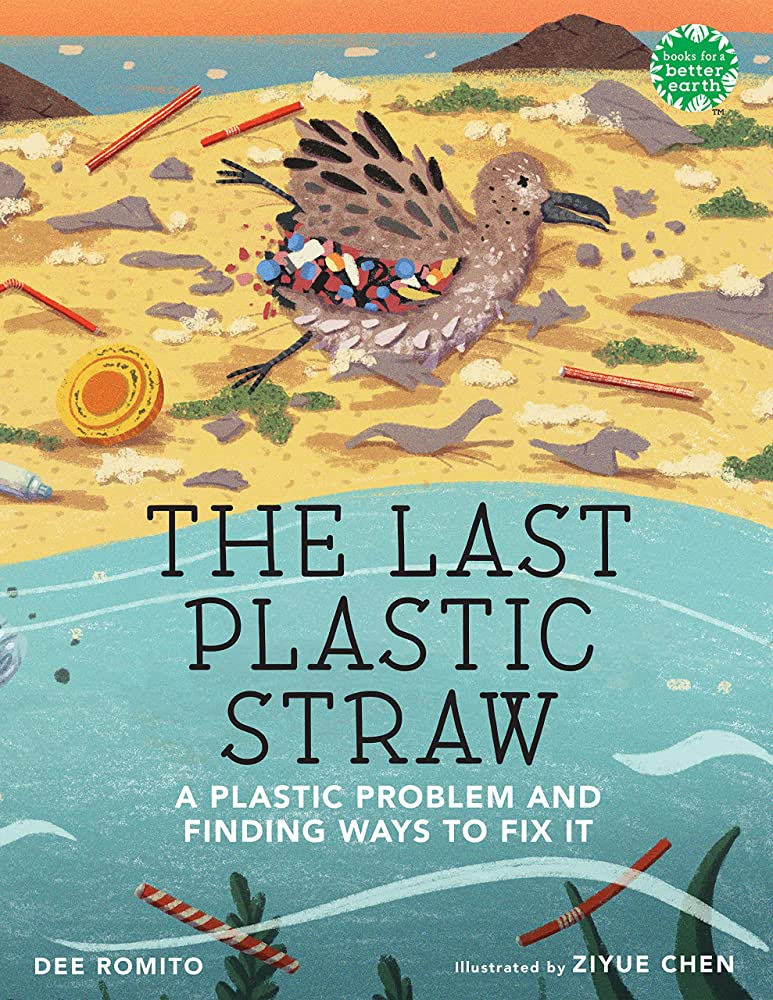
The Last Plastic Straw: A Plastic Problem and Finding Ways to Fix It by Dee Romito, illustrated by Ziyue Chen

Published by Holiday House

Summary:  Straws have been around since Queen Puabi, Queen of Ur, used a gold tube to slurp up the barley-based drink Sumerians were partial to 5,000 years ago (her subjects just used reeds).  Dr. Marvin Stone patented a paper straw in 1888, created to sip his mint julep, and Joseph Friedman invented the first bendy straw in 1937.  The post-World War II plastics boom led to the sturdier plastic straws that are still ubiquitous today and that are adding tons of microplastic pollution to the planet.  In 2011, 11-year-old Milo Cress started his “Be Straw Free” campaign to cut back on the 500 million straws Americans toss out each day.  It’s a small change, but an important one for all of us to make.  Includes an author’s note that gives additional information about straws and other single-use plastics, a list of sources, and an index.  40 pages; grades 1-5.

Pros:  A fascinating history of the straw that easily leads to a discussion of single-use plastics and how to cut back on your own personal use.  A great Earth Day read-aloud!

Cons:  I really enjoy using plastic straws.  Guess I will just have to suck it up.

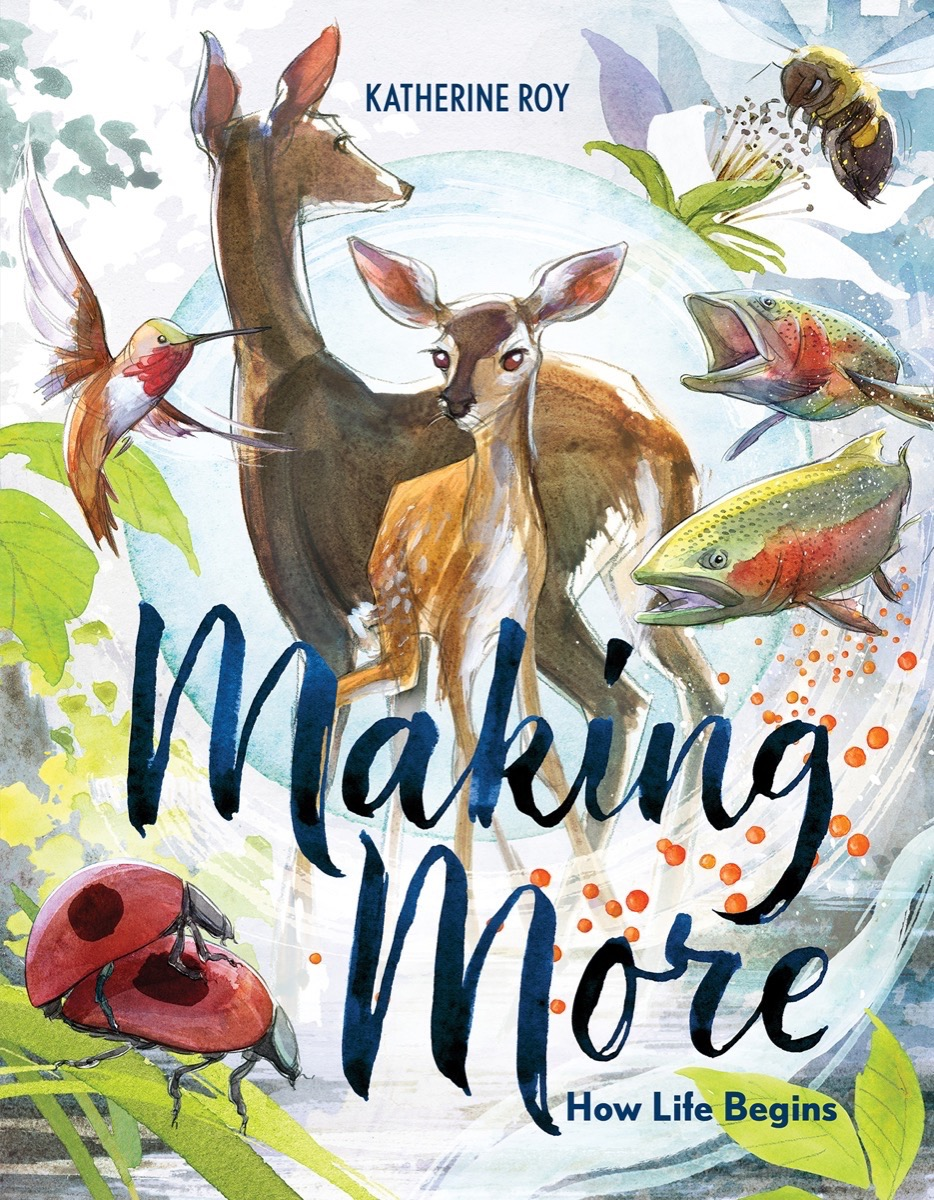
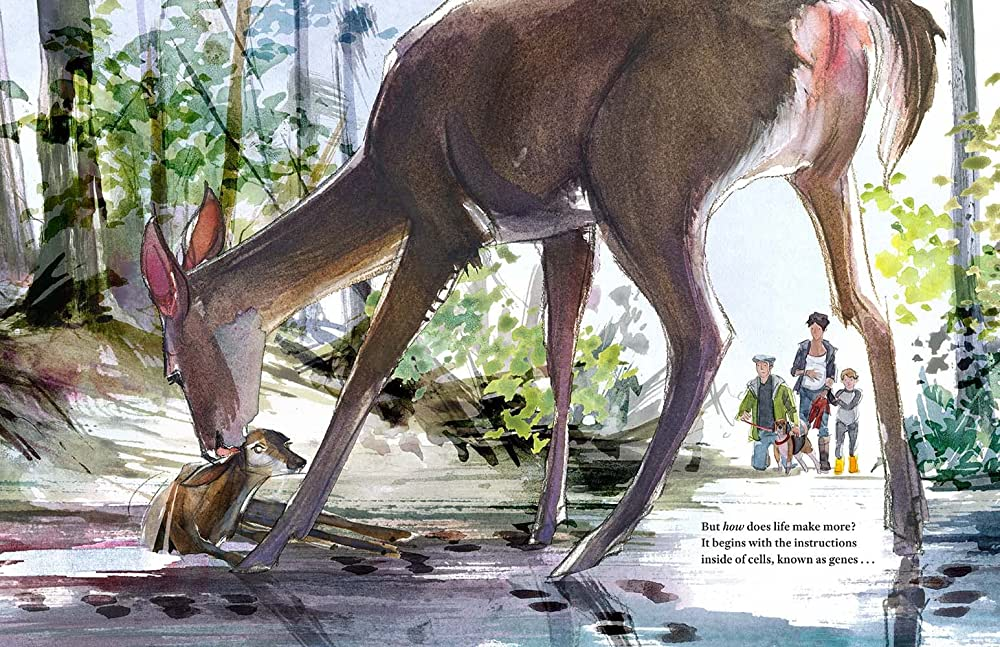
Making More: How Life Begins by Katherine Roy

Published by Norton Young Readers

Summary:  A family that’s expecting a baby is out for a hike, where they see signs of reproduction all around them: a robin building a nest, two snakes mating, a deer with her fawn.  From there, the text and illustrations proceed to an explanation of reproduction that covers all sorts of living things, both animals and plants.  Beginning with the process of fertilizing an egg cell, the story moves to embryonic development, then birth.  There’s information on genes and how they create diversity within a species.  The final gatefold spread shows the human family celebrating their new baby at an outdoor party, with some of the animals from the text visible in the background.  72 pages; grades 3-6.

Pros:  An outstanding introduction to reproduction with a lot of technical information explained in terms that will be understandable to upper elementary and middle school readers.  The illustrations are excellent as well, celebrating the diversity of life on Earth.

Cons:  I’m sure the pictures of rabbits and snakes mating will cause some in the book censoring world to break into a sweat.

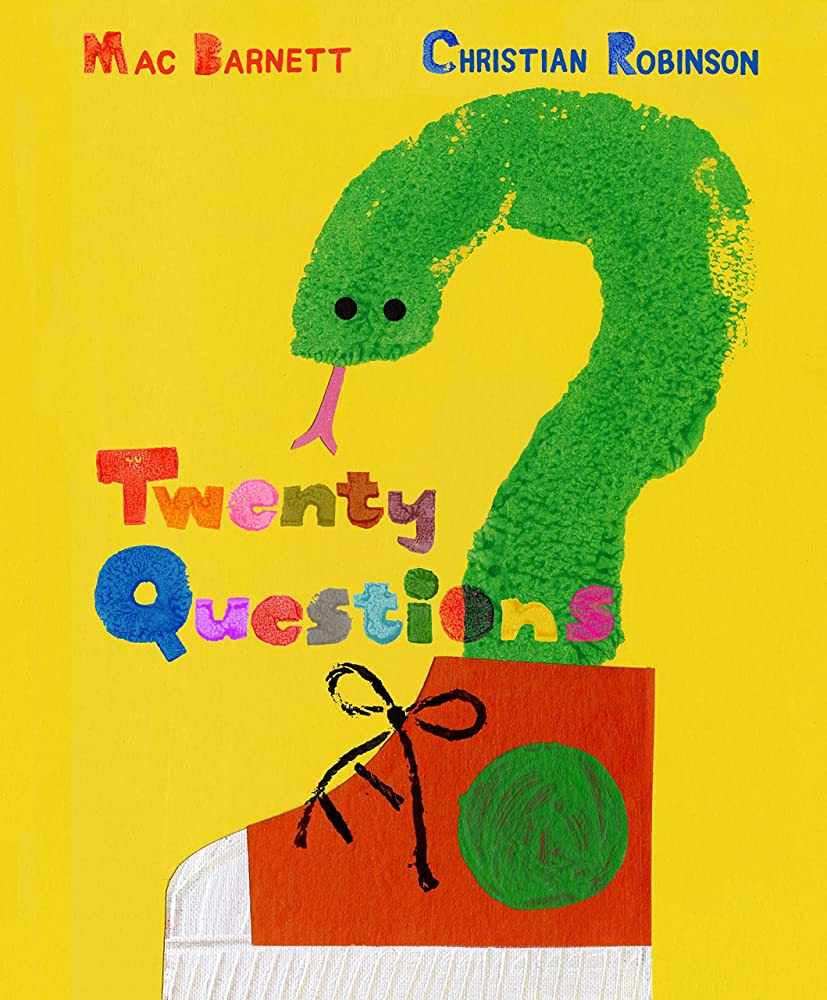
Twenty Questions by Mac Barnett, illustrated by Christian Robinson

Published by Candlewick

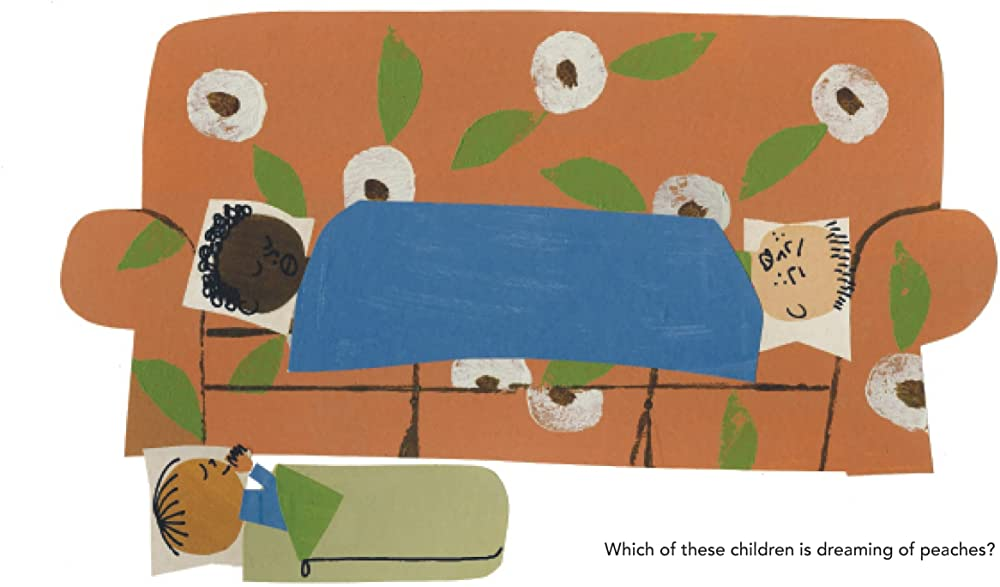
Summary:  Each spread poses an open-ended question like “Why is the elephant so upset?” and “What is this boy hiding behind his back?” with simple yet thought-provoking illustrations.  For instance, the boy with his hands behind his back is accompanied by an ostrich and a small turtle using wheels to make up for its missing hind legs.  The last page asks, “Where is this ship sailing away to? Will you go with it? Are you ever coming back?”  40 pages; ages 4-8.

Pros:  This would be a fun book to use for writing prompts or discussion starters.  Both the questions and the illustrations are quirky and just the sort of thing any kid (or adult) will have an opinion about.

Cons:  I wasn’t crazy about the question “Which of these ladies just robbed a bank?’ that shows six different women, each with a different color of skin, and a white woman in a police car.

The Fire of Stars: The Life and Brilliance of the Woman Who Discovered What Stars Are Made Of by Kirsten W. Larson, illustrated by Katherine Roy

Published by Chronicle Books

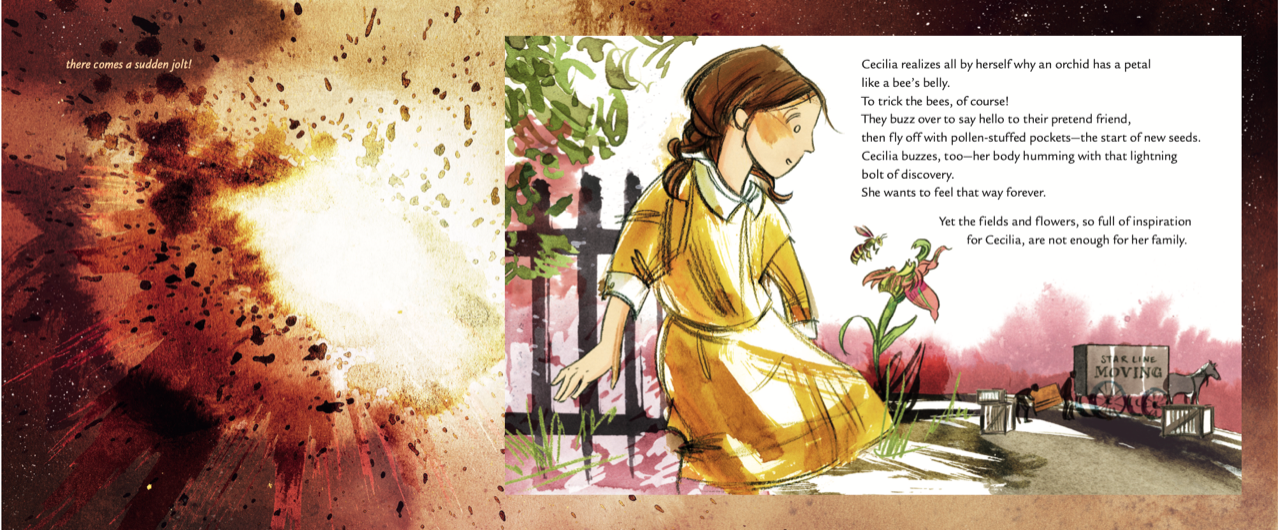
Summary:  Cecilia Payne’s curiosity about the natural world didn’t get much support when she was growing up in England.  Her family moved from the country, where she loved to explore nature, to London so her brother could go to school in the city.  Cecilia was sent to a religious school that didn’t offer any of the math and science classes that she loved.  She went on to study at Cambridge, where she switched her focus from botany to astronomy after hearing a talk by astronomer Arthur Eddington.  There was no place for her at Cambridge after graduation, so she moved to the other Cambridge (Harvard), where she was surrounded by like-minded women scientists.  Persistence with her research paid off as she made important discoveries about what the stars are made of, discoveries that fired up her imagination to ask even more questions.  Includes additional information about both Cecilia Payne and the birth of stars, as well as a timeline and a bibliography.  48 pages; grades 2-5.

Pros:  This fascinating biography is enhanced by the beautiful illustrations that show the parallels between Cecilia Payne’s life and the birth of a star.  A great read for Women’s History Month.

Cons:  There wasn’t much about Payne’s research after she discovered what stars are made of, a discovery she made at the age of 25.

Hidden Hope: How a Toy and a Hero Saved Lives During the Holocaust by Elisa Boxer, illustrated by Amy June Bates

Published by Harry N. Abrams

Summary:  Jacqueline Gauthier was a French teenager working with the Resistance during World War II.  She used a hollowed-out toy duck to smuggle papers to Jews who needed to change their identities to survive, eventually saving over 200 lives.  Jacqueline herself had changed her identity from Judith Geller to hide the fact that she was Jewish.  In addition to her work smuggling papers, she was hiding her parents and brother, having to find enough food to keep them all alive as she rode her bicycle for miles each day all over Paris.  Despite some close calls, Jacqueline/Judith survived to see the end of the war and the liberation of the people she had saved.  Includes two-page notes from both the author and illustrator with additional information about Judith and a list of additional resources.  48 pages; grades 3-6.

Pros:  This exciting story is told in spare, poetic text that conveys the danger Judith faced and the courage that kept her going for the long years of the war.  

Cons:  The only photo provided is from war-era identification papers.  I’m guessing there aren’t others available, but I would have loved to have seen more.

Elbert in the Air by Monica Wesolowska, illustrated by Jerome Pumphrey

Published by Dial Books

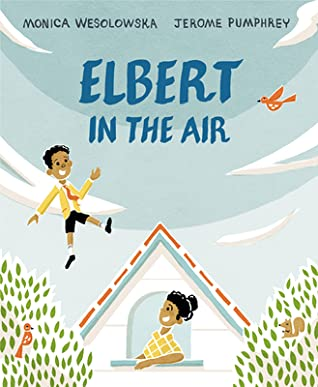
Summary:  Shortly after Elbert is born, he floats into the air.  His mother gets all kinds of advice from so-called experts: catch him in a net like a butterfly, reel him in like a kite, or deflate him like a balloon.  But Elbert’s wise mother ignores all the suggestions and lets him be himself.  This pattern is repeated as Elbert gets older and starts school, then grows into a teenager.  When Elbert feels lonely, his mom assures him that he will find his place in the world.  Finally, with his mother’s support–and a full picnic basket she’s supplied–Elbert floats higher and higher until he finds a whole community of floating people just like him.  Happy in the world he’s always wished for, he sends a rope down to his mother who climbs up and joins them.  40 pages; ages 4-8.

Pros:  This is a sort of how-to manual for raising a child who doesn’t always fit in.  Elbert’s mother is steadfast in her support, and consequently, Elbert grows up to find his people without having to compromise who he really is.  As always, Jerome Pumphrey’s unique illustrations are a delight.

Cons:  I hope if one of my children is ever in this position, she sends me an easier way to ascend than climbing a rope.