Cut! How Lotte Reiniger and a Pair of Scissors Revolutionized Animation by C. E. Winters, illustrated by Matt Schu

Published by Greenwillow Books

Summary:  Who created the first full-length animated film, inventing the multiplane camera and storyboarding in the process?  If you answered Walt Disney, it’s time for you to pick up this book and learn about Lotte Reiniger, a German artist who developed a love of shadow puppetry as a child and became renowned for her creations.  After studying filmmaking and stop-motion animation with director Paul Wegener, she started making short animated films but didn’t think any audience would be interested in a feature-length one.  A friend convinced her to try, though, and she spent the next three years creating The Adventures of Prince Achmed. When it was finally completed in 1926, she had trouble finding a theater that would show it, but it eventually became a big success.  Lotte went on to make approximately sixty films, including one in a basement during the bombing of Berlin before she emigrated to England.  Includes a timeline, a list of sources, and an author’s note with additional information about Lotte.  40 pages; grades 1-5.

Pros:  Don’t forget, March is Women’s History Month, and this would make a fascinating read-aloud, maybe shown with the Prince Achmed trailer.  The story is well-told, and the illustrations capture the feel of Lotte’s work with film and silhouettes.

Cons:  The thought of making a film like this makes me want to lose my mind.  Lotte must have had incredible patience.

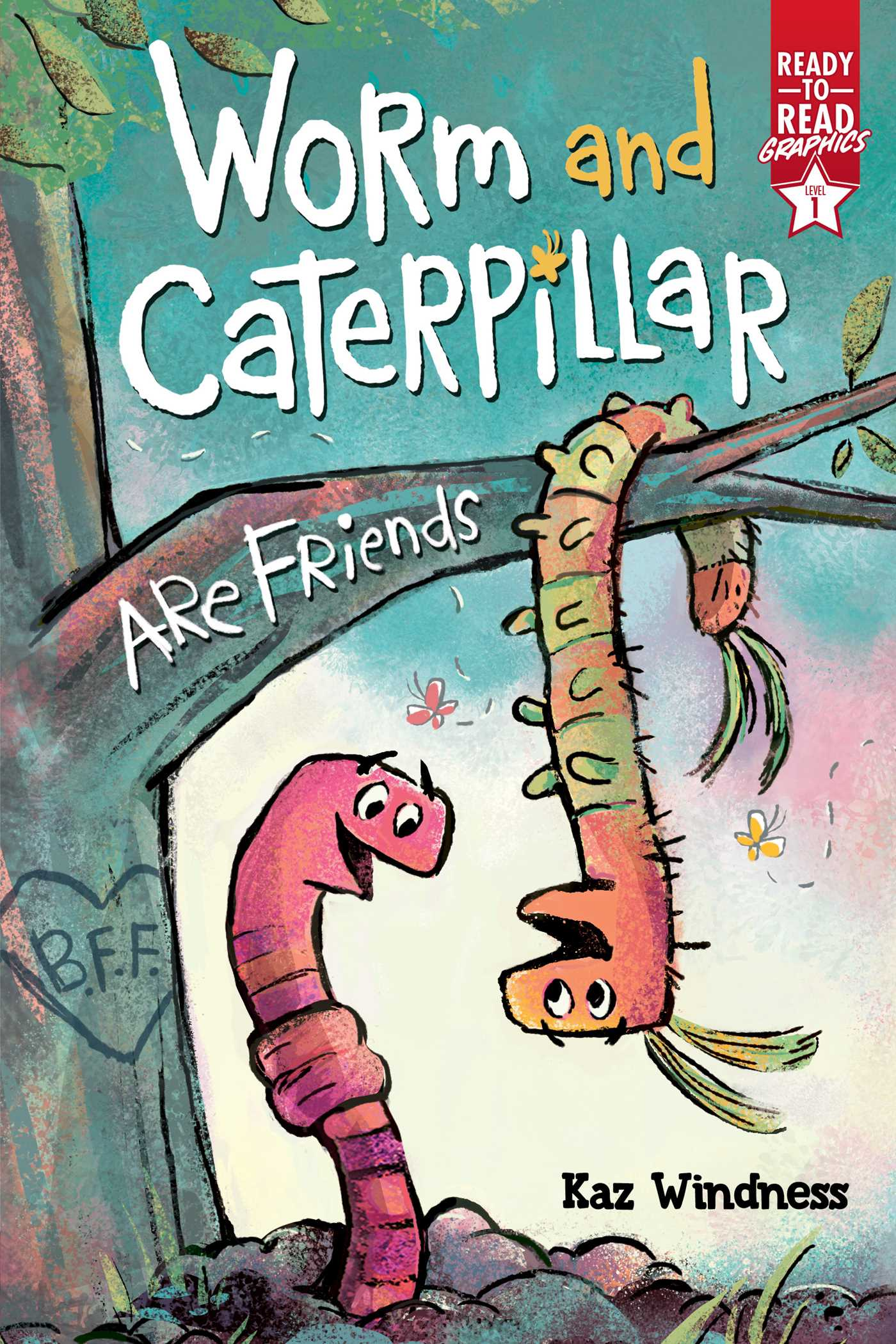
Worm and Caterpillar Are Friends by Kaz Windness

Published by Simon Spotlight

Summary:  Worm and Caterpillar are best friends share many similarities but also have some differences.  Worm is nervous when Caterpillar begins to change even more, eventually falling silent inside of a chrysalis.  When Caterpillar finally wakes up, he’s afraid that if he emerges, Worm will no longer like him.  Finally, Caterpillar reveals himself in his new incarnation as Butterfly.  At first Worm thinks he is a scary bird and hides deep underground, but eventually the two reclaim their best friendship.  Includes directions for drawing Worm and Butterfly.  64 pages; ages 4-7.

Pros:  A fun early reader, with a comic format that includes just a sentence or two of text on each page. The message is positive about keeping friends even when one or both parties go through some changes. There’s a nice introduction to reading comics before the main story begins.

Cons:  Early reader comics about two animal friends seem to be a bit of a glut on the market these days.

Watch Out for the Lion! by Brooke Hartman, illustrated by Anna Süßbauer

Published by Page Street Kids

Summary:  On the first page, readers are shown a labeled diagram of a lion–tail, ears, snout, fangs, and claw–so that they’ll know what to look for and avoid danger.  On the next page, watch out, it’s a lion’s tail!  Or is it?  Another page turn reveals the tail actually belongs to a giraffe.  And so it goes, with different body parts revealed to be a sloth, a hamster, and a walrus.  When a lion finally comes along, it turns out to be a cute baby cub.  But there really was a lion, so stay on your toes!  You never know what may be lurking around the corner.  32 pages; ages 3-8.

Pros:  Any story that is this interactive is a win in my book, and I can’t wait to read it to kindergarteners sometime in the near future.

Cons:  I wish there had been a few more animals included. It was over too quickly.

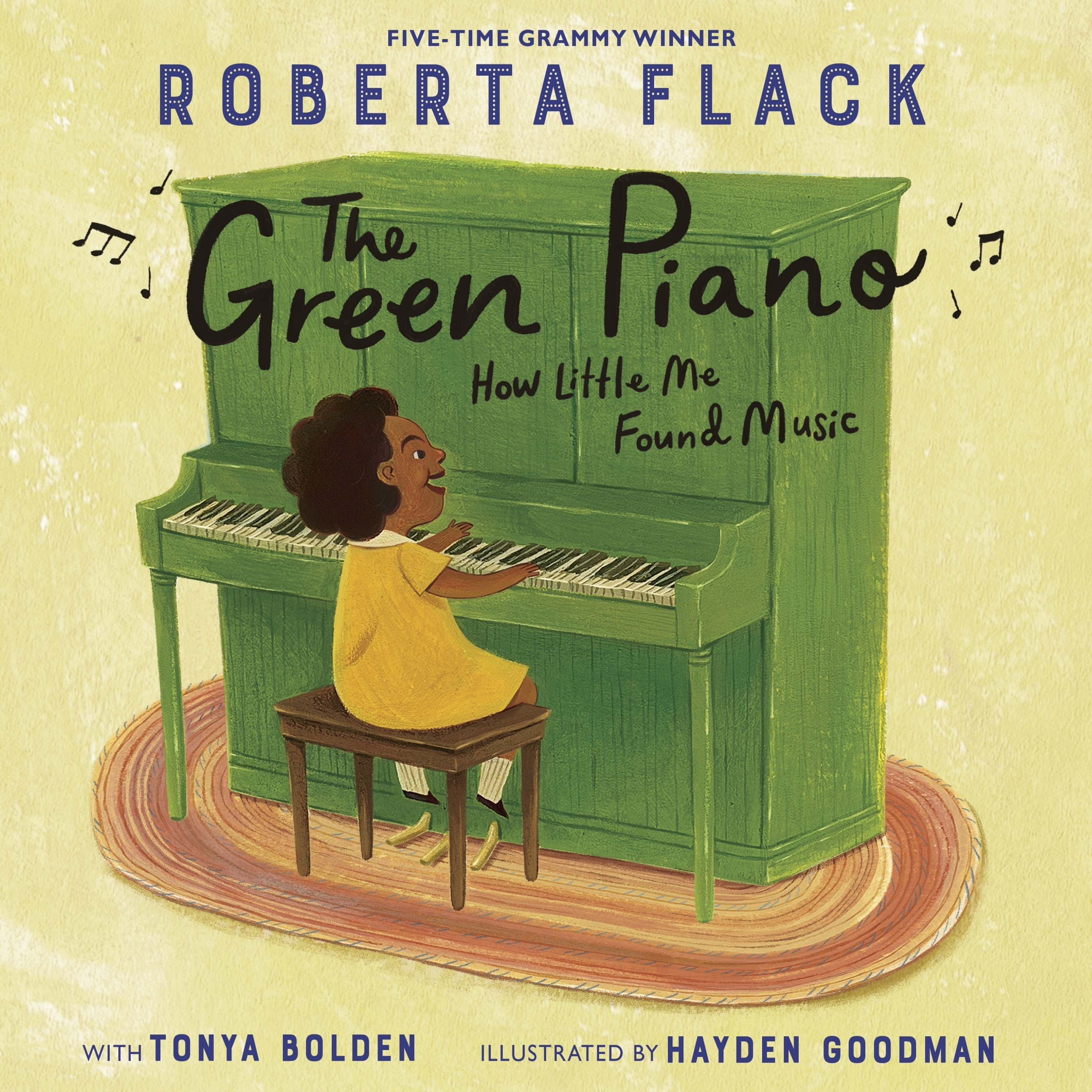
The Green Piano: How Little Me Found Music by Roberta Flack and Tonya Bolden, illustrated by Hayden Goodman

Published by Anne Schwartz Books

Summary:  Roberta Flack’s family didn’t have a lot of money, but they had plenty of love–for each other and for music.  From the time she was three, Roberta played the piano at church, and she started lessons at the age of six.  Her most fervent wish was to have a piano of her own, and her father was able to grant that wish when he found an old piano in a junkyard.  He hauled it home, cleaned it, tuned it, and painted it green.  She practiced for hours, dreaming of a life of a musician, a dream that is shown coming true on the last page.  Includes a timeline of Flack’s career highlights and an author’s note describing her training as a classical musician, which led to her career as a pop singer.  40 pages; grades K-4.

Pros:  A great story to share with early elementary kids, because so much of it is focused on Roberta’s early life.  I love the message of the author’s note, summarized in the last line: “Find your own ‘green piano’ and practice relentlessly until you find your voice, and a way to put that beautiful music into the world.”

Cons:  Kids may need an introduction to Roberta Flack’s music.

Nell Plants a Tree by Anne Wynter, illustrated by Daniel Miyares

Published by Balzer + Bray

Summary:  Before children climbed the giant pecan tree, Nell planted a seed.  Before they ran races to the base of the tree, Nell watered a sprout and made sure it had sun.  Before grandchildren helped their grandmother Nell bake goodies with pecans from the tree, Nell dug a hole and planted her sapling.  Over the years, that sapling became a tree, putting down roots and spreading its branches as Nell grew up, too, and created a family in the house next to the tree.  At sunset, that family eats at a long table beneath the spreading branches of the giant pecan tree.  Includes notes from the author and illustrator.  40 pages; ages 4-8.

Pros:  A celebration of trees and families, and the long-term commitment needed to see both of them flourish, with beautiful illustrations that help tell the story.  I love the final spread with its gorgeous sunset colors and the tree sheltering the family.

Cons:  It looked like Nell had at least three kids, but only one made it back for the dinner under the tree.

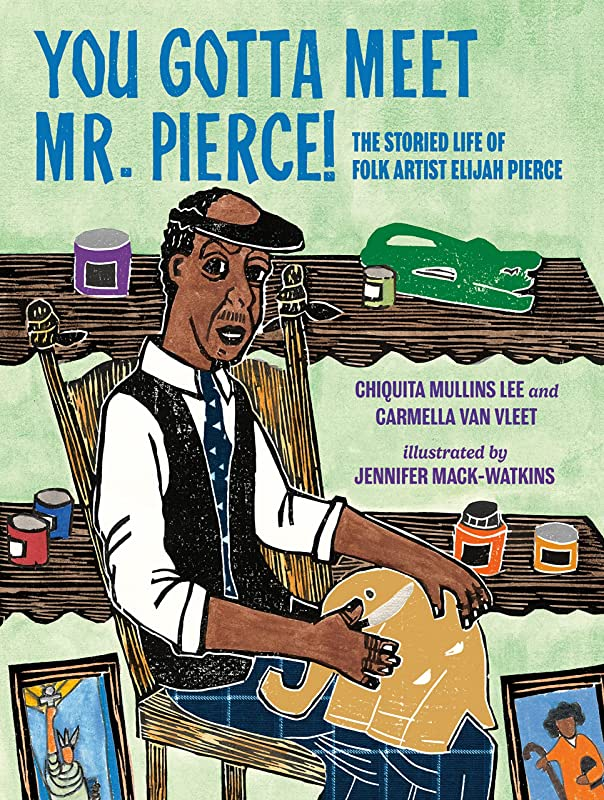
You Gotta Meet Mr. Pierce! The Storied Life of Folk Artist Elijah Pierce by Chiquita Mullins Lee and Carmella Van Vleet, illustrated by Jennifer Mack-Watkins

Published by Kokila

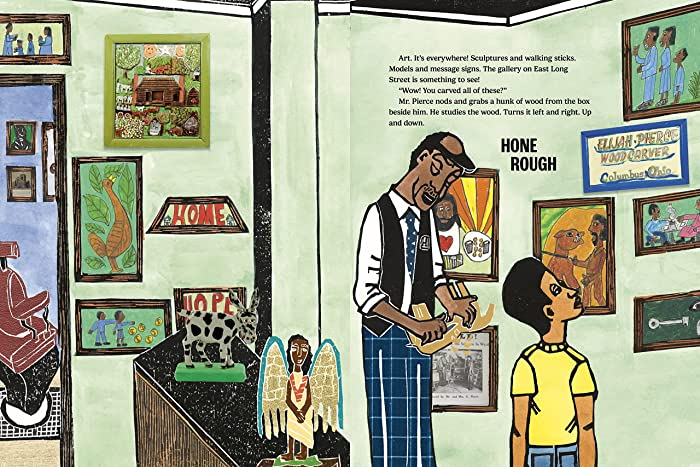
Summary:  In this fictionalized story about real-life artist Elijah Pierce, a boy and his dad enter Mr. Pierce’s barbershop.  The shop is full of wood carvings, and Mr. Pierce is happy to share stories about his life and art.  The boy has some new colored pencils and is trying to get an idea for a picture.  Mr. Pierce tells him how his art often came from stories, whether they were from his own life, the Bible, or something someone told him.  After the haircut and the stories are finished, Mr. Pierce gives the boy a carved elephant.  “I think I know what I want to draw…” he says as he and his dad leave the shop.  The final page shows a father and son (I think the father is the boy who is now grown up) about to enter a museum with an exhibit of Elijah Pierce’s work.  Just like the dad at the beginning of the story, the man tells his son, “You gotta meet Mr. Pierce!”  Includes a timeline of Elijah Pierce’s honors, additional information about the exhibit at the Corcoran Gallery in Washington, D.C., places to see Elijah’s work, and notes from the author and illustrator with additional information about Elijah Pierce, the book, and the illustrations.  40 pages; grades 1-5.

Pros:  A charming story about a little-known artist who will get some well-deserved recognition with this book.  The fictional format is engaging, and the folk-art inspired illustrations are the perfect complement.

Cons:  I found the ending a little confusing, as I couldn’t figure out what the boy had decided to draw, and I wasn’t sure who was pictured on the last page. 

To Boldly Go: How Nichelle Nichols and Star Trek Helped Advance Civil Rights by Angela Dalton, illustrated by Lauren Semmer

Published by HarperCollins
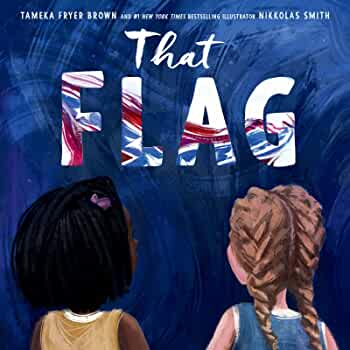
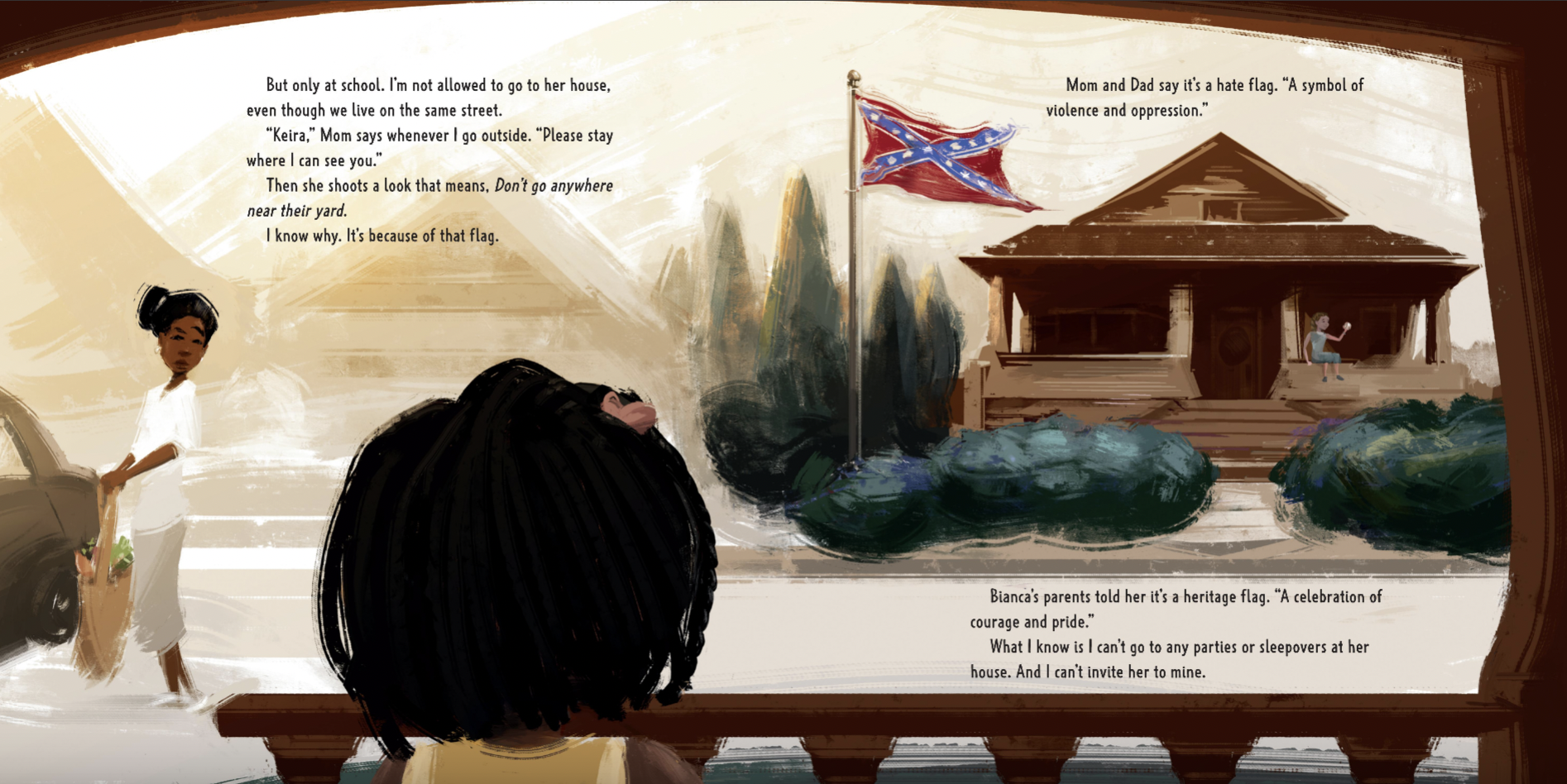
Summary:  The story begins with the author recounting how her family loved watching the original Star Trek, particularly because of Lieutenant Uhuru, acted by Nichelle Nichols, a Black woman who played the communications officer on the Enterprise.  The narrative then goes back to Nichelle’s childhood where she was encouraged by her parents to do whatever she wanted.  She loved performing, first as a ballet dancer and later as a singer and actress.  This gave her confidence when she got the part on Star Trek, but that confidence began to wane when she experienced racism on the show.  She told Gene Rodenberry that she was quitting, but changed her mind when she met a fan–Martin Luther King, Jr. who told her Star Trek was the only show he and his wife let the kids stay up late to watch.  He convinced her to stay on the show and serve as a role model to Black children.  Includes information on Nichelle’s role with NASA helping to recruit a more diverse workforce, including Mae Jemison and Guion Bluford; also an author’s note.  40 pages; grades 1-5.

Pros:  I’m excited to read this book to several of my classes beginning today.  The subject matter, the engaging writing style, and the colorful illustrations make it an excellent choice for sharing Black history…and the cameo by MLK was a fun surprise!

Cons:  No additional resources listed.

Yoshi, Sea Turtle Genius: A True Story About an Amazing Swimmer by Lynne Cox, illustrated by Richard Jones

Published by Anne Schwartz Books

Summary:  Yoshi the sea turtle gets another picture book about her record-breaking swim from South Africa to Australia.  After getting entangled in a fishing net, she was rescued and sent to Two Oceans Aquarium in Cape Town, South Africa, where she lived for the next twenty years.  She spent 18 months training to swim in the ocean before being released with a tracker attached to her shell.  The tracker showed when she left Africa and began heading to her native Australia.  Over the next twenty-six months, Yoshi swam 22,998 miles, the longest recorded swim of any animal.  She found her way back to where she had started her life, laying eggs on the very same beach.  Includes a note from the author, who is also a long-distance swimmer, with additional information about Yoshi and sea turtles.  40 pages; grades K-4.

Pros:  Like Yoshi and the Ocean, this picture book will appeal to animal lovers, telling Yoshi’s story with a sense of awe that is reflected in the gorgeous underwater illustrations.

Cons:  I wouldn’t have objected to a larger font.

9 Kilometers by Claudio Aguilera, illustrated by Gabriela Lyon, translated by Lawrence Schimel

Published by Eerdmans Books for Young Readers

Summary:  It’s still dark when the boy leaves to walk the nine kilometers (5.5 miles, 15,000 steps) to school.  His walk takes him through the forest, across a stream, and under a barbed wire fence that he props up with a forked stick.  Some days the walk feels like “a stone inside a worn-out shoe” while other days it is “as sweet as a handful of blackberries or a ripe apple.”  He meets up with friends as he approaches the school, a small building in the middle of acres of farmland.  The last several pages tell about kids in other countries who walk as much as 30 kilometers round-trip to get to school.  There are also descriptions of all the birds the narrator sees on his trek.  56 pages; grades K-3.

Pros:  This book, originally published in Chile in 2021, reminded me of My First Day, with its beautifully illustrated description of a child in another country traveling to school.  The back matter showing other kids’ journeys is an important part of the book: “We hope that their steps guide us toward the construction of a society in which education is a right and not a privilege, and we hope that their footprints serve as a reminder of one of the greatest inequalities of our world.”

Cons:  Imagine all the reasons–disability, illness, fatigue, bad weather–that would make this journey to school impossible.

Milloo’s Mind: The Story of Maryam Faruqi, Trailblazer for Women’s Education by Reem Faruqi, illustrated by Hoda Hadadi

Published by HarperCollins

Summary:  The author of Unsettled tells the story of her grandmother, Milloo, who grew up in India in the early 20th century.  Milloo loved school, but her parents told her at the end of fifth grade that she was done with education.  Milloo launched a campaign all summer long and finally got her parents’ permission to enter sixth grade.  She went on to finish high school and college at the top of her class, then became a teacher herself.  After getting married, she tried staying at home as her husband wanted, but found that cooking and sewing were not her thing.  She started a girls’ school in her home, and when classes outgrew that space, she founded a series of schools.  The author’s note tells that the Happy Home Schools in Karachi, Pakistan are still thriving.  40 pages; grades K-4.

Pros:  Both the text and the collage illustrations exude a bright energy that reflects Milloo’s enthusiasm and passion for education.  File this away to read for Women’s History Month next month.

Cons:  I was a bit confused by Milloo being referred to as Maryam in the subtitle, which was not explained until the author’s note (Milloo was her father’s nickname for her, and she’s referred to by that name throughout the story).