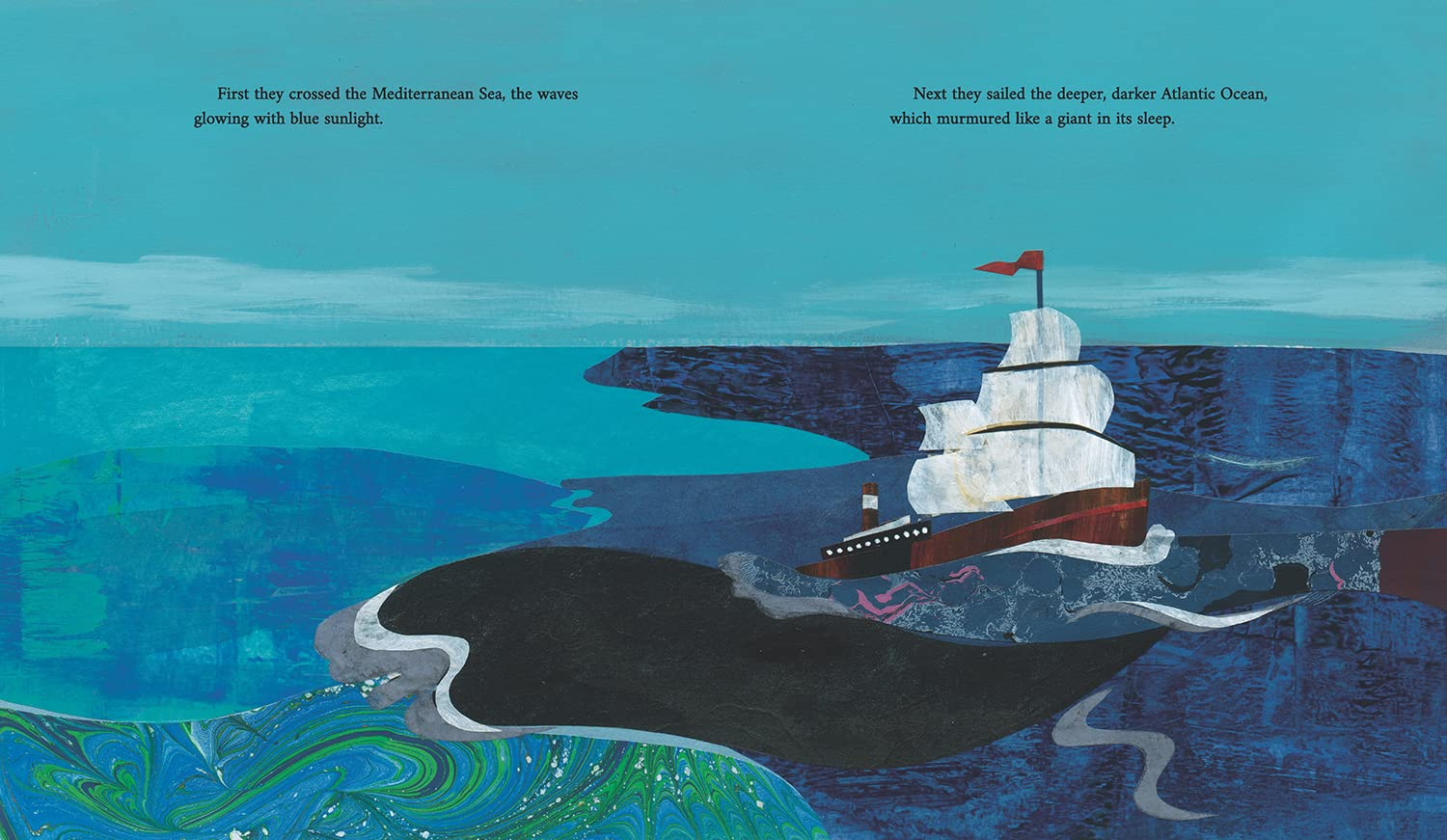
This Is a School by John Schu, illustrated by Veronica Miller Jamison

Published by Candlewick

Summary:  “This is a school.  This is a kid.  This is a kid in a class.  This is a class in a hall.  This is a hall in a school – WELCOME!”  As school starts, kids learn that school is a place to learn and discover, to make mistakes, and to find out what they’re good at.  The school becomes a community that grows, transforms, and cares about each other.  The school community is made up of all sorts of people: teachers, students, principals, and staff, and each one of them is an important part of that community.  40 pages; ages 4-8.

Pros:  A wonderful back-to-school book that celebrates many different aspects of school through both the text and the illustrations.  A good companion to Alexandra Penfold’s All Are Welcome and a perfect springboard for discussing classroom and school communities.

Cons:  I should have reviewed this before school started. 

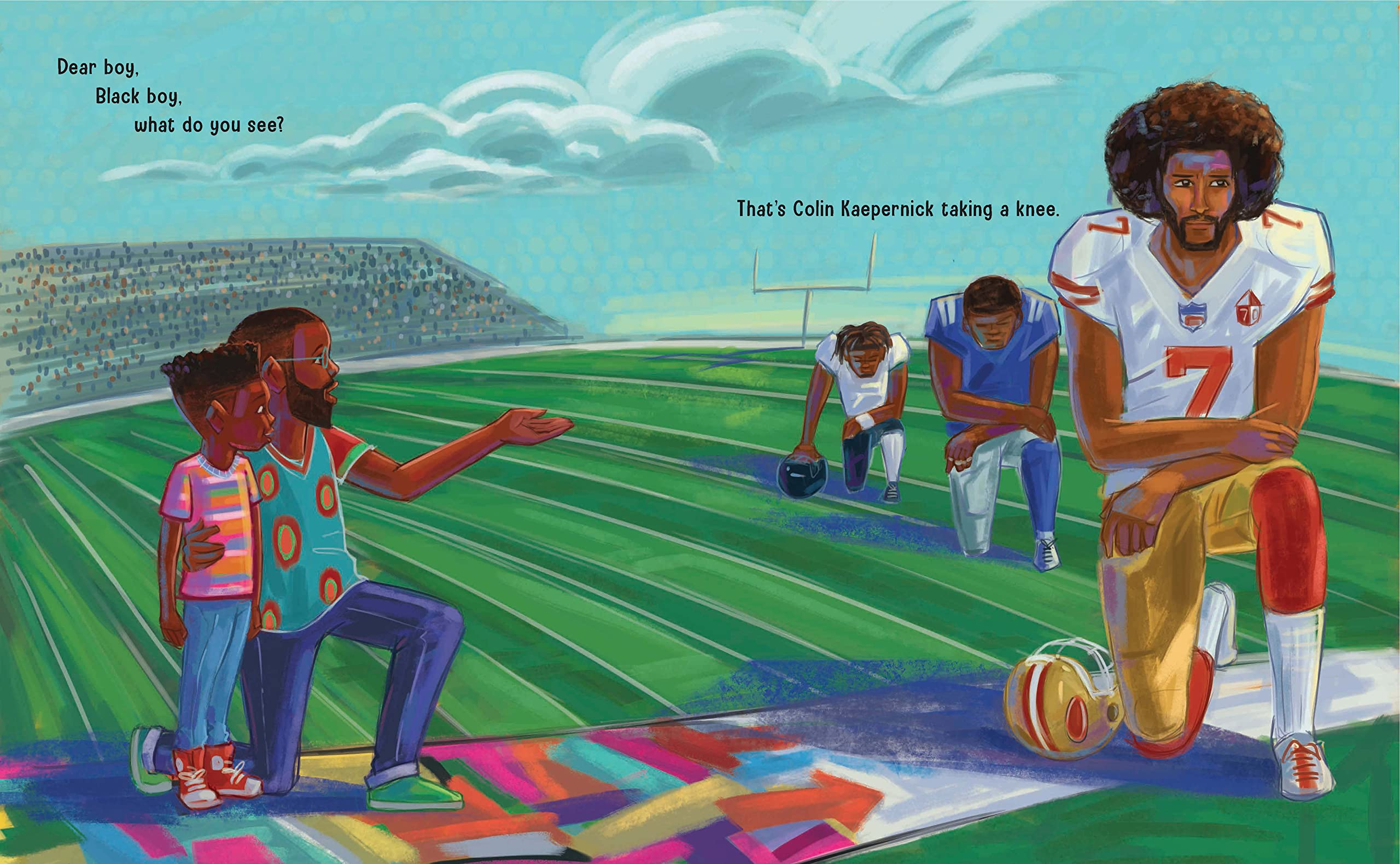
Black Boy, Black Boy: Celebrate the Power of You by Ali Kamanda and Jorge Redmond, illustrated by Ken Daley

Published by Sourcebooks Explore

Summary:  A Black man and boy walk together on a colorful path that takes them past Black heroes from the present and past, like Colin Kaepernick (football player), Elijah McCoy (inventor), and William Goines (first Black Navy Seal).  Famous men like Dr. Martin Luther King, Jr. and Barack Obama are also on the path, which ends with the man encouraging the boy to believe in himself and work hard so that he can have his own adventurous journey.  The final page shows the boy off and running down the path on his own, with the men from the book watching him and cheering him on.  Includes brief information of the nine men mentioned in the book.  40 pages; grades K-4.

Pros:  An empowering book for Black boys that would make an excellent choice for a Black History Month read-aloud and belongs in all libraries for any time of year.  Here’s hoping there will be a Black Girl companion book.

Cons:  The rhyming felt a little forced, making me wonder if rhyming text was the best choice for this book.

Some Bodies by Sophie Kennen, illustrated by Airin O’Callaghan

Published by Sleeping Bear Press

Summary:  “Our bodies can get us from here to there/When we have big feelings, it’s our bodies that share.  So bodies are useful, you’ll surely find/but they’re also unique–one of a kind!”  The rhyming text and illustrations explore all sorts of different bodies.  Size, color, wheelchairs, prosthetics, glasses, tattoos, top surgery, hair, and the amount covered by clothing are all touched upon in a light-hearted body-positive way.  The author is an elementary school teacher who based the book on questions and comments she’s heard in the classroom, and she includes some sample scripts for answering children’s questions, encouraging adults to have those conversations in a positive manner.  32 pages; ages 3-8.

Pros:  Both the text and the illustrations celebrate all kinds of bodies in a way that will both engage young children and encourage them to talk about what they notice about their own bodies and others’.  

Cons:  Although one of the sample questions is “Why is that man fat?” fat people are not represented in the illustrations.

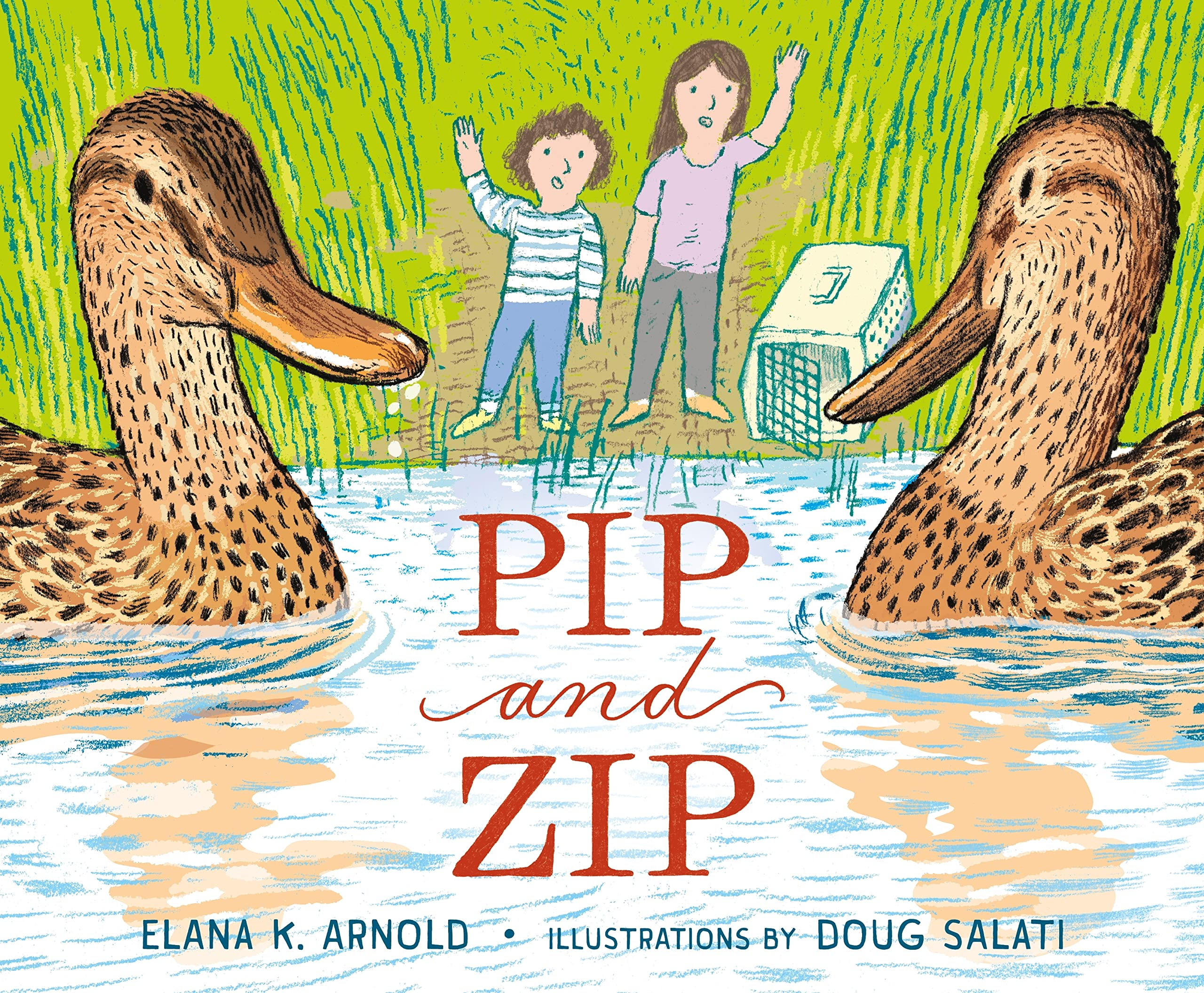
Pip and Zip by Elana K. Arnold, illustrated by Doug Salati

Published by Roaring Brook Press

Summary:  Bored by the pandemic’s stay-at-home orders, a family of four goes for a walk around the lake.  They’re surprised to find an egg floating in the water, and even more surprised when they find a second one half-buried in the mud.  They take them to their neighbor, Ted, who seems to be some sort of wildlife rehabilitator.  He explains that ducks sometimes don’t know what to do with their first eggs, and he lends them an incubator to see if they will hatch.  After a long month of waiting, both eggs hatch, and the family names the ducklings Pip and Zip for the sounds the eggs make when they open.  Ted helps them raise Pip and Zip until they learn to fly, then accompanies them to the lake to release them back into the wild.  On the last page, the family and their neighbors are out and about again, unmasked, sharing stories about their adventures.  Includes an author’s note about her family’s experiences on which she based this book and information about what to do if you find a duck egg, including several websites.  48 pages; ages 4-8.

Pros:  A fun family story that shows that joy and adventure can be found even during a dark time and includes a good environmental message.  I had never heard of Doug Salati before this year, but he seems to be launching a promising career.

Cons:  The real pandemic lasted a lot longer than this fictional one seemed to.

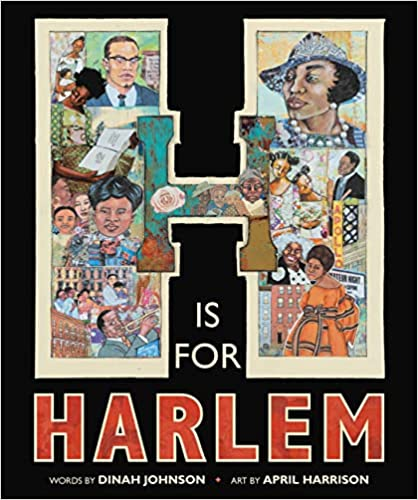
H Is for Harlem by Dinah Johnson, illustrated by April Harrison

Published by Christy Ottaviano Books

Summary:  An author’s note introduces Harlem, giving a little historical context before exploring the neighborhood from A to Z.  Whether historical (W for Madam C. J. Walker, X for Malcolm X) or contemporary (C for Harlem Children’s Zone, I for Impact Farm), the text and illustrations combine to bring Harlem to life as a vibrant neighborhood with a rich history.  Readers will learn of places to visit like the Apollo Theater and the National Jazz Museum and of performances like the Boys (and Girls) Choir of Harlem and the Harlem Globetrotters that they may want to attend someday.  48 pages; grades K-4.

Pros:  I was ready to hop on the train and take a trip to Harlem after reading this colorful book with its lively illustrations of so many fascinating people and places that have shaped this amazing neighborhood over the years. A definite contender for a Coretta Scott King Award.

Cons:  Some additional resources, particularly websites, would have been a great addition.

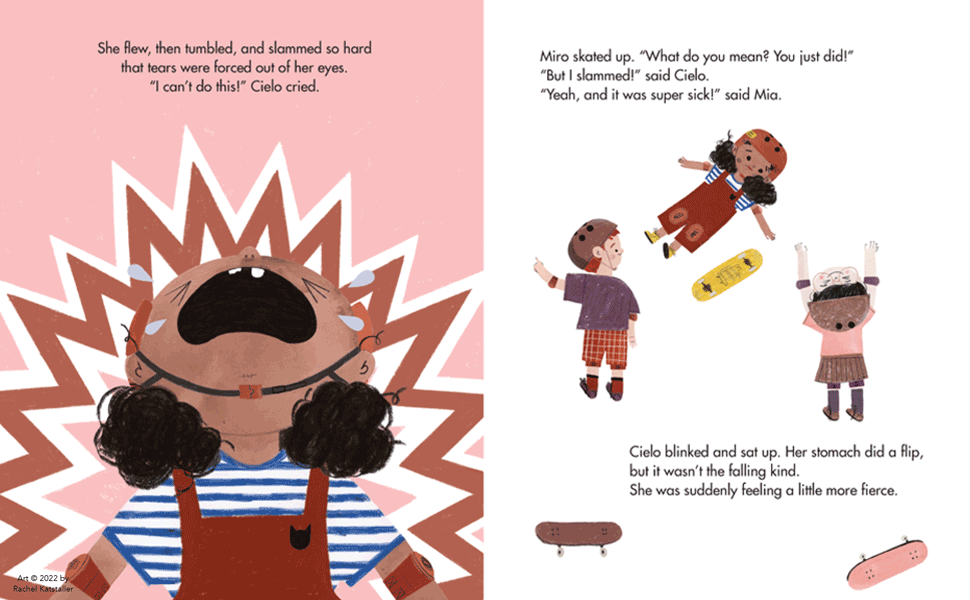
Skater Cielo by Rachel Katstaller

Published by Orchard Books

Summary:  Cielo loves to skateboard and is excited when she discovers a new park with deep pools (ramps in the shape of swimming pools) opens in her town.  She tries the biggest one, called The Whale, and ends up falling harder than she ever has before.  Her confidence shaken, she finds she can’t do her usual tricks and tearfully shoves her skateboard in a closet when she goes home.  Yet she can’t help walking past the park and watching others on The Whale.  One day a girl invites her to try again, and once again Cielo falls.  But her new friends encourage her to keep trying, and after many, many falls, Cielo finds herself flying higher than she ever has before.  Includes a glossary and an author’s note.  40 pages; ages 4-8.

Pros:  I’ve found skateboarding books to be popular with kids and this one delivers a great message about persistence, with lots of action-packed illustrations.

Cons:  Some of those falls looked pretty painful.

Pizza! A Slice of History by Greg Pizzoli

Published by Viking Books for Young Readers

Summary:  Sure, everyone loves pizza, but where did it come from originally?  A pizza-loving rat guides readers through a somewhat random assortment of facts (Americans eat 350 slices of pizza every second!) to trace its history from pizza-like (but not quite pizza) foods of the ancient world to the early pizzas of Italy (it helped that Italians, unlike other Europeans, didn’t think tomatoes were poisonous).  The immigration of four million Italians to the US between 1880 and 1924 brought pizza to America, and its popularity increased after World War II when American soldiers returned from Italy.  A review of different pizzas around the US and the world rounds things out.  “Right now somewhere in the world, someone is enjoying a pizza.  Are you?”  56 pages; grades 1-4.

Pros:  A fun and quirky nonfiction book about a topic that everyone will enjoy.  The text draws the reader in with lots of questions and the colorful cartoon illustrations are appealing.

Cons:  Some of the text could have used a bit more context, like comparing the colors of a pizza to the Italian flag with no flag pictured.  Also, I was sad to find no back matter.

School Is Wherever I Am by Ellie Peterson

Published by Roaring Brook Press

Summary:  A boy introduces his school as a building where he goes to a classroom that has desks, a teacher, and his classmates.  But then he wonders if school can be in other places too.  He thinks about field trips to museums or a pumpkin patch, as well as experiences he’s had with his family like cooking and woodworking.  Sometimes school is on a computer screen.  School can even look like making a mistake, figuring out how to fix it, and apologizing.  Inside or outside, the boy decides that school is wherever he is.  40 pages; ages 4-8.

Pros:  A great back-to-school book that encourages curiosity, both in the traditional school setting and outside of it.  Kids can brainstorm their ideas about school before reading this.  I love the endpapers that show different sets of collections associated with places mentioned in the book.

Cons:  Flashbacks to remote learning with the teacher on the computer screen.

Hope Is an Arrow: The Story of Lebanese-American Poet Kahlil Gibran by Cory McCarthy, illustrated by Ekua Holmes

Published by Candlewick

Summary:  Gibran Khalil Gibran was a shy boy growing up in Lebanon.  He loved his country, but there was unrest there, and he often escaped into nature, hiking in the woods or swimming in the ocean.  After his father was jailed, he and his mother and three siblings left for America.  They settled in Boston’s South End, where a teacher changed his name to Kahlil Gibran, and where he often saw his mother treated disrespectfully despite her hard work as a shopkeeper.  Kahlil often felt divided between his American self and his Lebanese self and began expressing himself through his poetry and art.  Studying in Beirut and losing his mother, sister, and brother in a short period of time deepened and intensified his art, and in 1923, he published his most famous work, The Prophet.  Includes source notes and additional stories from Kahlil Gibran’s life.  40 pages; grades 2-5.

Pros:  The lyrical text and beautiful illustrations capture Kahlil Gibran’s spirit.  Many of his quotes are included (including my favorite, “Work is love made visible”) which are helpful in introducing his writing.  As usual, Ekua Holmes’s art is worthy of award consideration.

Cons:  I wasn’t crazy about the format of the source notes and additional stories, which did not seem particularly kid friendly.

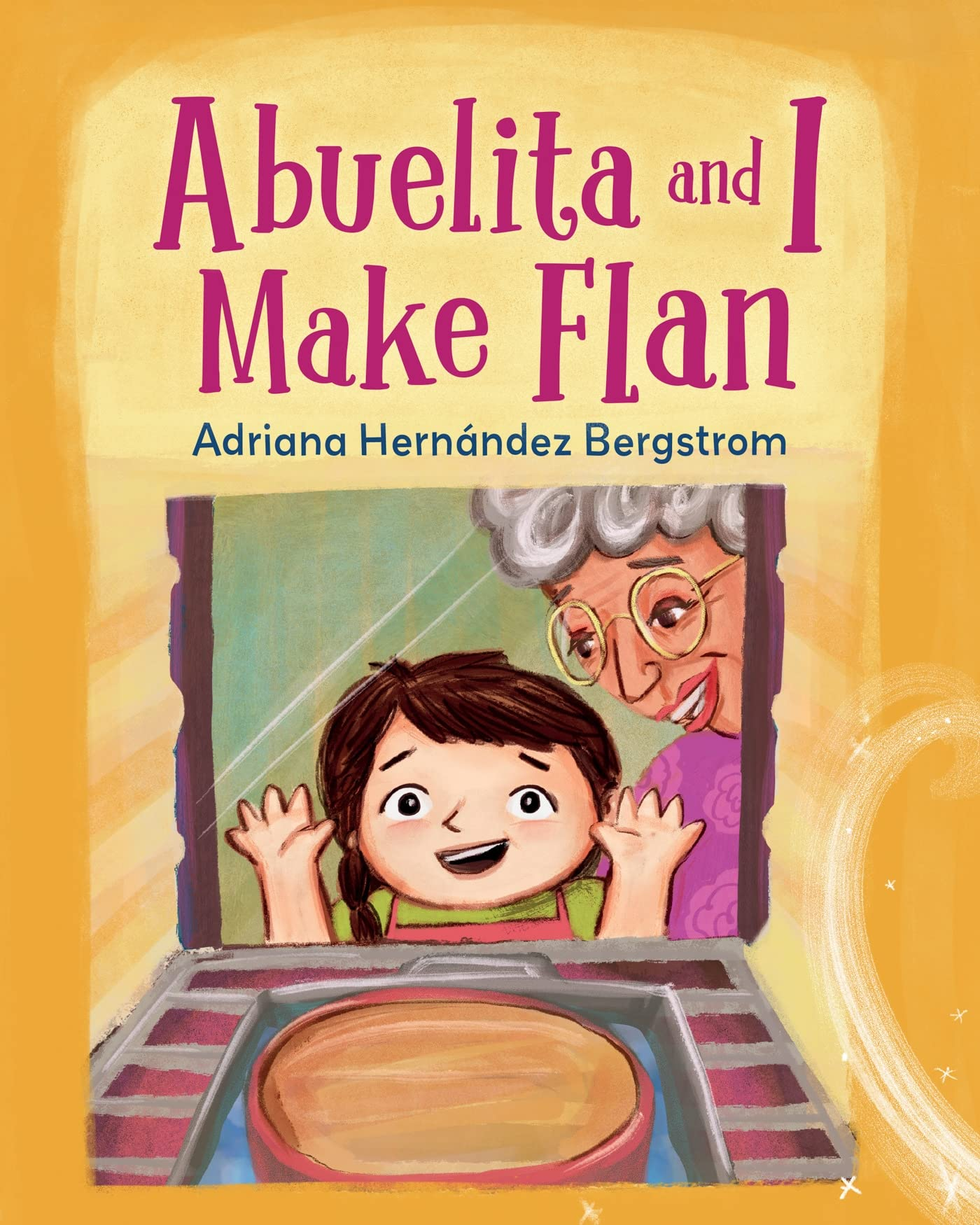
Abuelita and I Make Flan by Adrian Hernández Bergstrom

Published by Charlesbridge

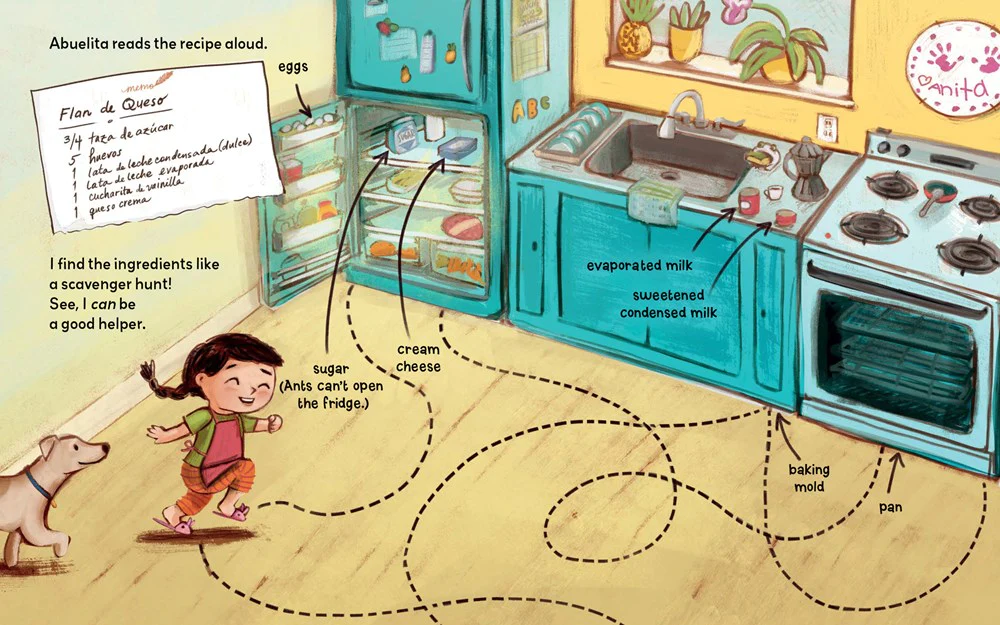
Summary:  Anita is excited to be learning how to make flan with Abuelito as they prepare the treat for Abuelo’s birthday.  But before they can even get started, Anita accidentally drops the beloved glass flan plate.  She sweeps up the pieces, hoping no one will notice.  She and Abuelita have a great time working their way through the flan-making process, but at last the moment comes when it’s time to get out the plate.  Anita tearfully confesses what happened, to which Abuelita replies, “A plate is a plate, but YOU are irreplaceable.”  Turns out that Abuelo broke the first flan plate years ago, and the one Anita dropped was a replacement.  They end up using a plate Anita made for grandparents’ day, and the birthday celebration goes off without a hitch.  Includes a recipe for cheese flan and English translations of the Spanish words used in the story.  32 pages; ages 4-8.

Pros:  A heartwarming intergenerational story about a shared love of food and cooking.  The illustrations are appealing with their cartoon bubbles and labeling of items around the kitchen, activities Abuelita needs help with due to arthritis, etc.

Cons:  Making flan looks pretty complicated
.