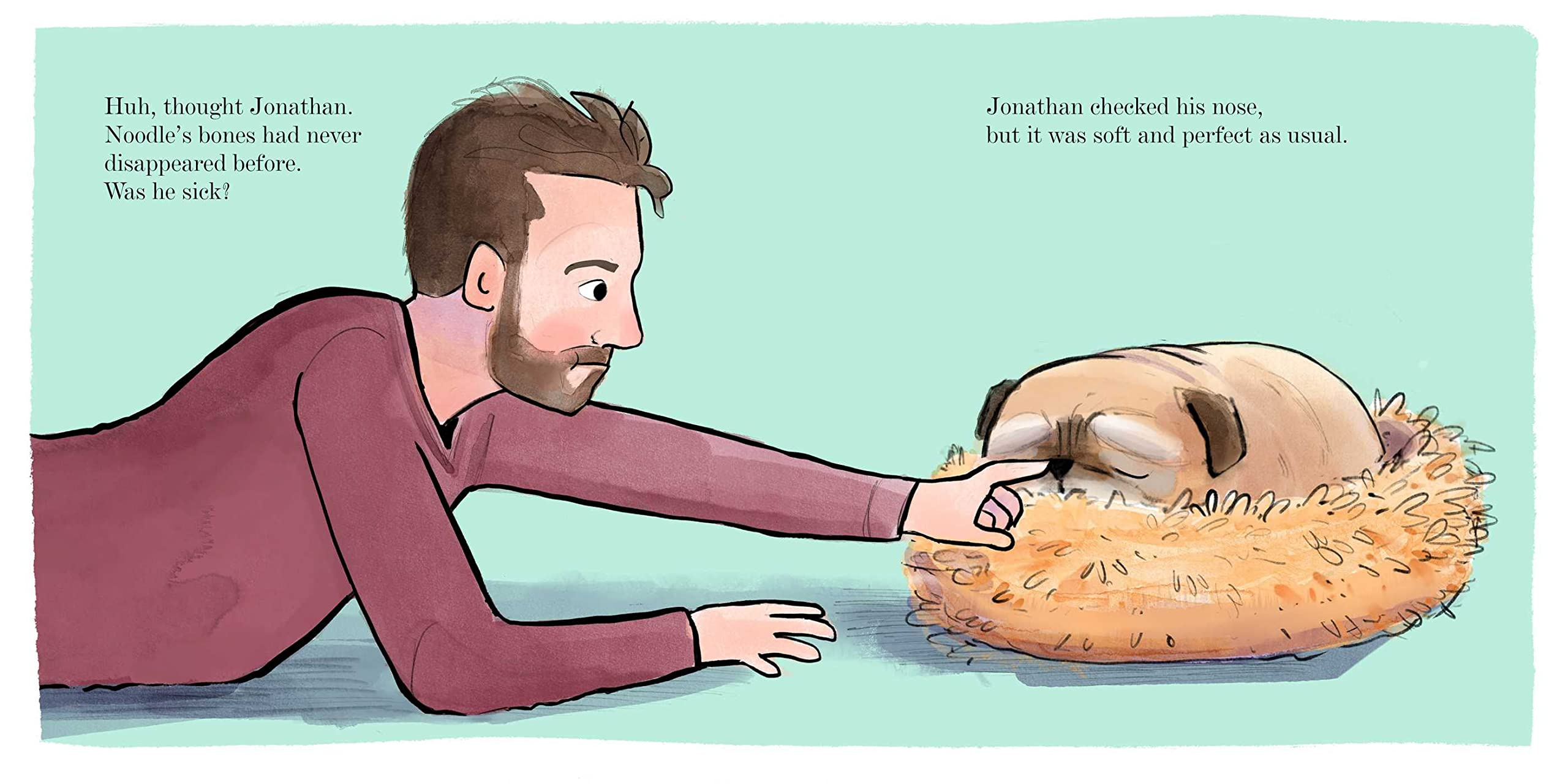
Noodle and the No Bones Day by Jonathan Graziano, illustrated by Dan Tavis

Published by Margaret K. McElderry Books

Summary:  Apparently Jonathan and Noodle the Pug are a TikTok sensation (don’t worry, I had no idea either), and a No Bones Day is one in which Noodle acts as though he has no bones.  He stays in his bed, not interested in playing or walking.  He does enjoy it when Jonathan rubs his belly and eats when Jonathan brings him his dish.  At first, Jonathan is concerned that he’s sick, but eventually he realizes that Noodle just needs a day of rest, snuggling in bed and eating snacks.  Inspired, Jonathan plants himself on the couch with a bowl of popcorn for a No Bones Day of his own.  Includes a brief author’s note.  32 pages; ages 3-8.

Pros:  Pugs are always a big hit at my school, and I’m sure kids will love this story that uses cuteness and gentle humor to deliver a message about self-care.

Cons:  I was forced to go on TikTok to check out Noodle and Jonathan (@jongratz).

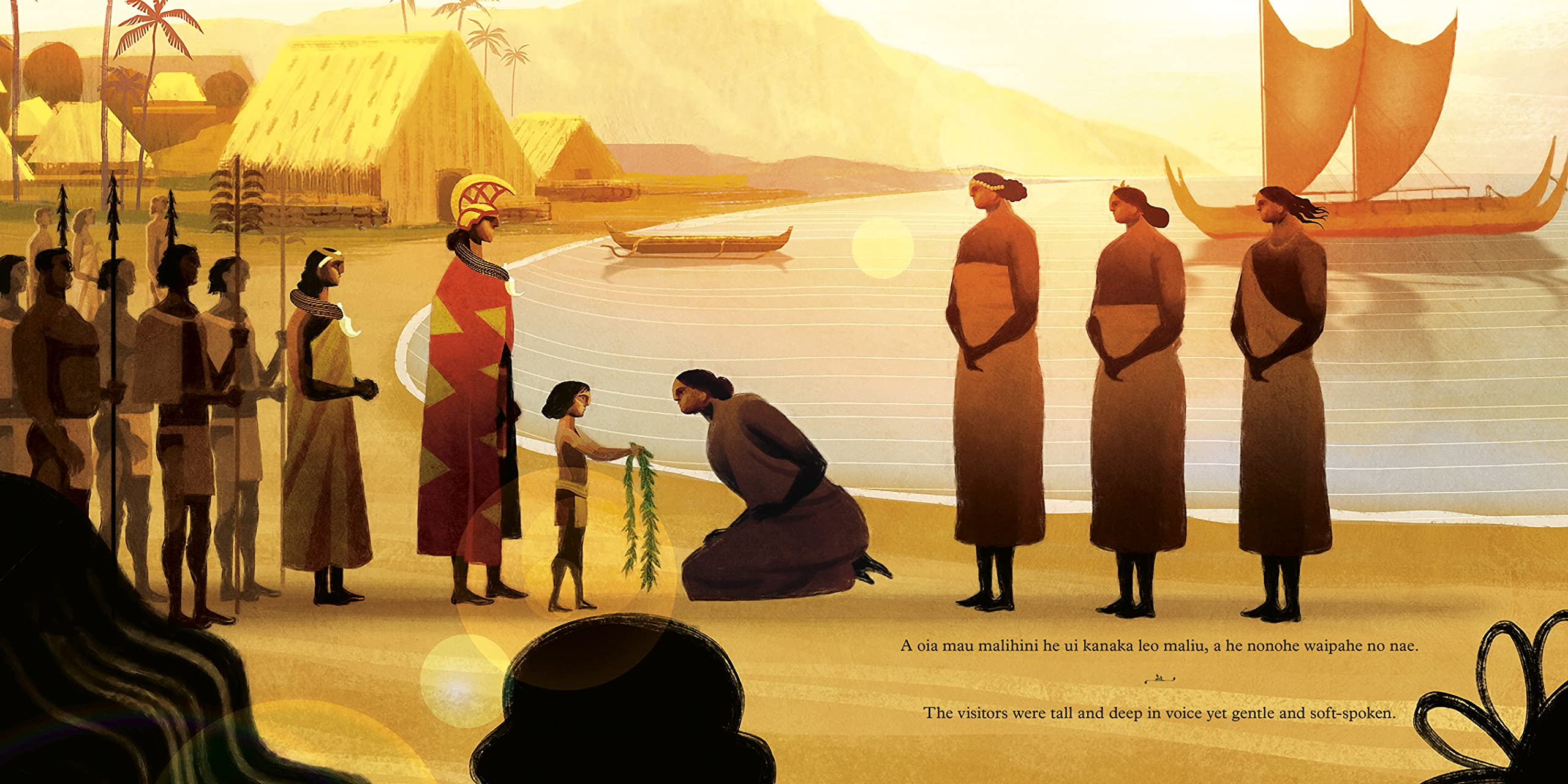
Kapaemahu by Hinaleimoana Wong-Kalu Dean Hamer, and Joe Wilson, illustrated by Daniel Sousa

Published by Kokila

Summary:  This Hawaiian legend tells the story of four healers, or mahu, who traveled from Tahiti.  They were neither male nor female, but “a mixture of both in mind, heart, and spirit.”  Each one had their own healing power: spiritual, all-seeing, healing from afar, and laying on of hands.  After bequeathing their powers on the people of the island, the Hawaiians wanted to build a monument to show their gratitude.  They moved four huge boulders onto the beach at Waikiki.  Even after the mahu left, the stones remained for many centuries until more and more people arrived in Hawaii and the area was built up.  The stones have been recovered, but the true nature of the mahu has often been written out of the story.  This book (and the film on which it is based) seeks to correct that.  Includes authors’ notes, a history of the healer stones, additional information about the Olelo Niihau language, and a glossary.  40 pages; grades 1-5.

Pros:  Written in both English and the indigenous Hawaiian Olelo Niihau language, this beautiful legend inspired both this book and a short film, released in 2021.  The author’s note reveals that the nature of the mahu was removed from the story for many years, due to their possession of both male and female spirits.  An excellent addition to collections of both folklore and bilingual books.

Cons:  A Google search revealed to me that the stones are popularly known as the Wizard Stones, which feels like kind of a trivialization of the true story. 

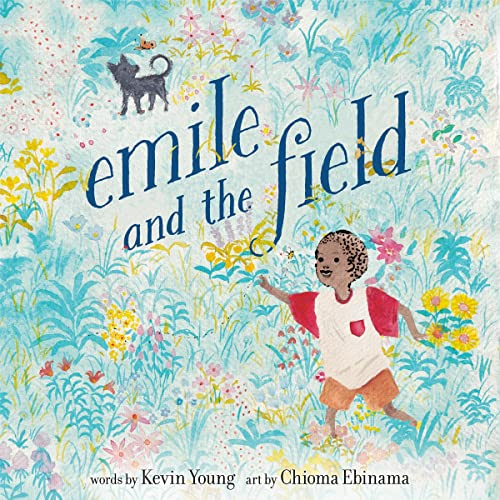
Emile and the Field by Kevin Young illustrated by Chioma Ebinama

Published by Make Me a World

Summary:  “There was a boy named Emile/who fell in love with a field.”  Emile loves the flowers and insects he finds in the field and how the colors change with the seasons.  He wonders if the field ever misses seeing things like the sea or skyscrapers or airplanes (up close).  What he doesn’t like is when snow covers the field and other kids come to play there.  His dad reminds him that the field doesn’t belong to him, and that if other people love it like Emile does, they’ll help him take care of it so that it can be there forever.  Includes a note from Make Me a World’s Christopher Myers.  40 pages; ages 4-8.

Pros:  The lyrical rhyming-ish text and dreamy watercolor illustrations will help readers appreciate nature and realize that the beautiful things in the world are made for us to share.  Definitely a book for Caldecott or Coretta Scott King consideration.

Cons:  While Christopher Myers’s note is addressed to readers, it seems more directed to adults.

To Change a Planet by Christina Soontornvat, illustrated by Rahele Jomepour Bell

Published by Scholastic Press

Summary:  One person, one carbon molecule, one degree of warmth can all seem insignificant, but when they are multiplied, they can wreak havoc on a planet.  Likewise, one person can also feel insignificant when it comes to making positive changes to help our planet, but combined with the efforts of others, they can make a real difference.  Includes back matter with additional information about climate change and what people can do to make a difference.  40 pages; ages 4-8.

Pros:  A perfect introduction to climate change and the need for environmental activism.  The text is spare, just a sentence or two per page, but it really shows the impact, both positive and negative, of small changes.  The colorful illustrations help show this as well.

Cons:  I find every book about climate change anxiety-inducing.

A Synagogue Just Like Home by Alice Blumenthal McGinty, illustrated by Laurel Molk

Published by Candlewick

Summary:  Rabbi Ruben loves his synagogue and its congregants, but it’s clear that the old building needs some work.  He sets out to fix the drafty windows, the creaky library floor, and the leaky kitchen sink, ignoring offers of help from his friends.  Friday night Shabbat services go off without a hitch, but afterward, some playful kids pull down the tablecloths he used around the windows, a floorboard pops up in the library, and worst of all, the kitchen sink causes a flood.  The whole community convinces Rabbi Ruben to accept their help and expertise, leading to lasting renovations for all of them to enjoy.  Includes a glossary.  40 pages; ages 4-8.

Pros:  An excellent portrayal of community with a Jewish setting that’s not represented as often enough in children’s books.  There’s plenty of humor in the story and the illustrations for readers to enjoy.

Cons:  It’s not clear how all those repairs are financed.

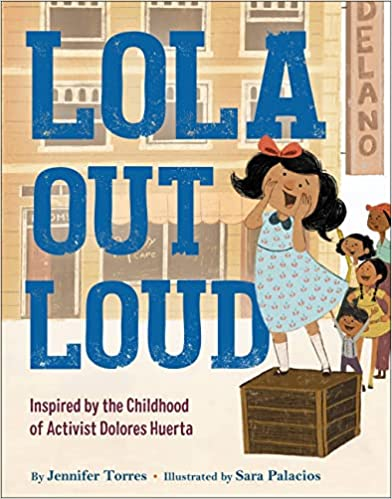
Lola Out Loud: Inspired by the Childhood of Activist Dolores Huerta by Jennifer Torres, illustrated by Sara Palacios

Published by Little, Brown Books for Young Readers

Summary:  Lola loves helping out at the hotel where she lives with her mother and grandfather.  Her mother is always ready to help guests; if they don’t have money to pay, she’ll accept food or even just a handshake and a promise.  Lola is an enthusiastic worker, but she sometimes gets in trouble for talking too much.  “Lolita Siete Lenguas (seven tongues)” her grandfather calls her teasingly, reminding her that sometimes it’s good to be quiet but other times “one strong voice is just what we need.”  Lola remembers this lesson when she’s the only one who sees a woman and girl thrown off the streetcar in front of her house because they can’t pay the fare.  She stays quiet about the two at first, but, remembering Grandpa’s words, she rallies her family and the other hotel guests to help them, using words that she would later become famous for, “¡SÍ se puede!”  Includes additional information about the labor leader Lola grew up to be: Dolores Huerta.  32 pages; ages 4-8.

Pros:  Keep this book in mind for the upcoming Hispanic Heritage Month, especially if you’re looking for something for younger readers.  They’ll enjoy the story of young Lola, learn a little about Dolores Huerta, and take away an empowering message about using your voice to speak up about injustice. The illustrations add just the right touch of fun and energy.

Cons:  It would have been nice to have a list of additional resources for older kids to dive into.


A Spoonful of Frogs by Casey Lyall, illustrated by Vera Brosgol

Published by Greenwillow Books

Summary:  A witch hosting a cooking show is teaching her viewers how to make frog soup.  “It’s easy to make and healthy, too.”  She puts the ingredients in a cauldron: carrots, potatoes, 22 cloves of garlic, a cup of fly extract.  Then it’s time for the frogs, guaranteed to add “a kick of flavor and a pop of color.”  Carefully, she lowers her wooden spoon into a tank full of frogs, and then…for the next 20 pages, she chases after the frogs who escape from the tank, hop through the kitchen, jump out a window, and travel across a city street to a pond.  The witch is in hot pursuit, trying everything she knows to catch just one frog, but in the end, she has to substitute a spoonful of pickles.  “Enjoy with friends,” she tells viewers on the last page, sipping her soup surrounded by frogs perched on the edge of the bowl.  40 pages; ages 3-8.

Pros:  A fun book to read at Halloween or any time of year.  It’s Halloween-ish without specifically mentioning the holiday. Kids will laugh out loud at the slapstick illustrations.

Cons:  No recipe?

Nana, Nenek, & Nina by Liza Ferneyhough

Published by Dial Books

Summary:  Nina’s grandmothers live a world away: Nana is in England and Nenek is in Malaysia.  Nina and her family are in San Francisco, so they fly toward the rising sun to get to Nana and toward the setting sun for visits to Nenek.  Nina compares the two homes: there are different toys, languages, clothes, climates, and food.  When Nina’s at home, she misses her grandmothers; when she’s visiting one, she misses home.  But no matter what, Nana and Nenek love her visits and both are good at tucking her into bed each night.  32 pages; ages 4-8.

Pros:  A loving and kid-friendly description of what it’s like to grow up with families from two different cultures.  Both the text and the illustrations do a great job of comparing and contrasting.

Cons:  A map to show the three different locations would have been helpful.

Keepunumuk: Weeâchumun’s Thanksgiving Story by Danielle Greendeer, Anthony Perry, and Alexis Bunten illustrated by Garry Meeches Sr. 

Published by Charlesbridge

Summary:  Maple and Quill love visiting N8hkumuhs (pronounced NOO-kuh-mus), their grandmother, and hearing her stories.  One story she tells is of Weeâchumun (corn), and how she and her sisters Beans and Squash helped new people who came to their land.  They sent dreams to the First People to alert them of the newcomers’ plight, and the people sent Ousamequin and Tisquantum to greet them and show them how to plant corn, beans, and squash.  When there was a successful harvest, the First People and the new people celebrated together with a three-day feast.  “Many Americans call it a day of thanksgiving,” concludes N8hkumuhs.  “Many of our people call it a day of mourning.” Includes a glossary and introduction at the beginning and additional information about the Wampanoag tribes, storytelling tradition, harvest feasts, and tradition of giving thanks at the end, as well as a recipe and a photo of the real Maple and Quill.  32 pages; grades K-4.

Pros:  An excellent addition to Thanksgiving collections that gives the Wampanoag perspective and includes some good information in the back matter.  The illustrations beautifully portray various animals and the spirits of the Three Sisters.

Cons:  Kids might need some help with the transition between the opening scene with N8hkumuhs, Maple, and Quill and the main story. I was confused until I realized that the weeâchumun (corn) that N8hkumuhs mentioned was the same as Weeâchumun, the spirit of corn and the protagonist of N8hkumuhs’ story.

Everything In Its Place: A Story of Books and Belonging by Pauline David-Sax, illustrated by Charnelle Pinkney Barlow

Published by Doubleday Books for Young Readers

Summary:  Nicky prefers helping out in the library to joining the other kids at recess.  When Ms. Gilliam tells her she’s going to a week-long conference, Nicky starts to feel anxious about having to go outside for recess.  After school, she hangs out at her mom’s cafe, where one of her favorite customers is Maggie, a woman who is fearless about being herself and riding a motorcycle.  The weekend before the library conference, Maggie comes in with a group of women she calls her “motorcycle sisters”.  They don’t look like sisters, but they eat and laugh together in a way that Nicky admires.  On Monday, Nicky sits against the wall at recess reading a book of poetry that Maggie gave her.  A girl walks over to her and tells her that she loves poetry.  Nicky remembers something Maggie told her about taking a risk, and she replies, “Me too.”  40 pages; grades K-4.

Pros:  An understated story about taking risks and finding your people.  I love the illustrations which include elements of collage including library stuff.

Cons:  I wish the poem Nicky reads (“Wild Geese” by Mary Oliver) had been included.  Also, Nicky’s question “Who needs recess when you can reshelve books?” hit a little too close to home.